
 Paver PatioView full size
Patio, steps and a kept lawn
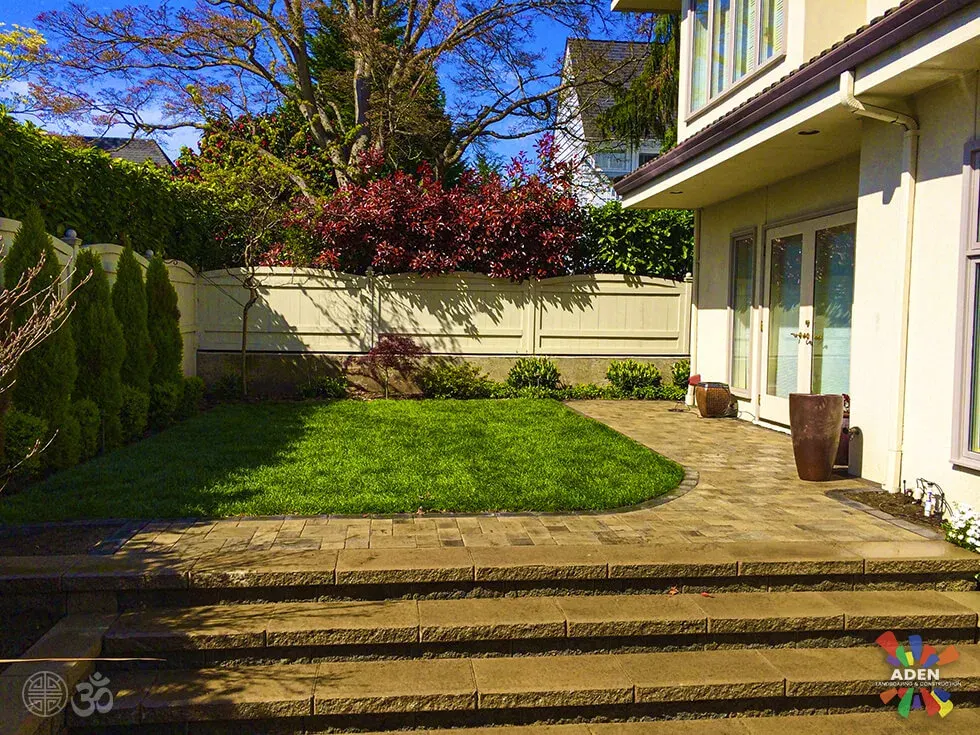
A wide run of paver steps down from the house to a terrace that stops where the lawn begins. Not every garden wants paving all the way to the fence.
No down payment. You pay when the project is finished.
Monday – Friday, 9:00 AM – 7:00 PM · Capitol Hill, Seattle
Paver Installation · Mercer Island
Mercer Island projects are more often specified around a material than around a budget, and that changes what the installation has to get right. Natural stone, large-format units and blended ranges all behave differently from a standard concrete paver, and the differences are practical rather than aesthetic: stone varies in thickness within the same pallet, large formats are unforgiving of any deviation in the bedding, and a blended range only looks blended if the units are drawn from several packs as they are laid. None of that is difficult, but all of it is a laying discipline rather than a specification, which means the same material can produce two visibly different results depending on who set it out.
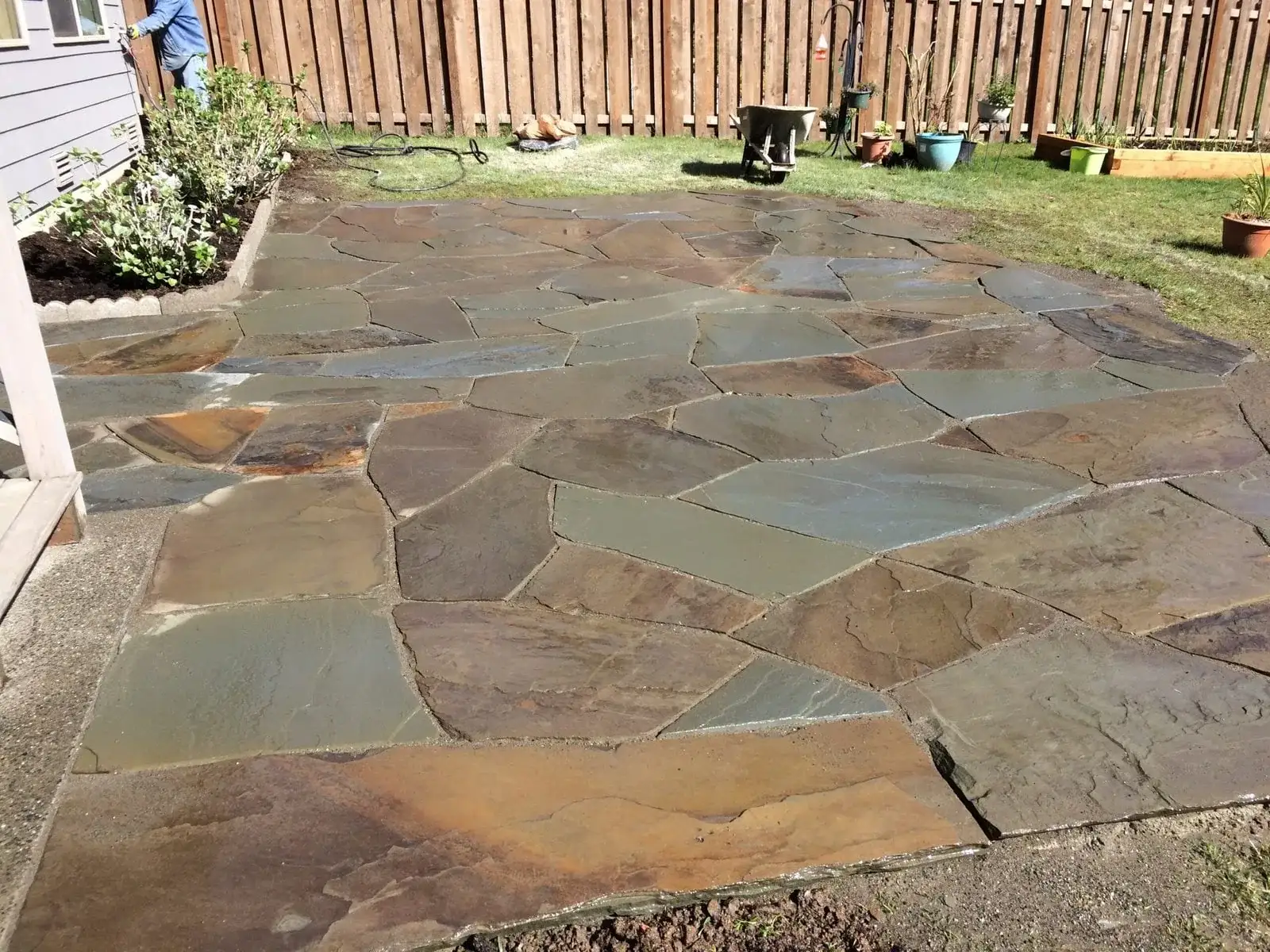
Hand-fitted natural flagstone patio in a fenced Mercer Island back garden
What we get called about
Mercer Island is large lots, mature trees and a shoreline slope on every edge, and the trees are the defining constraint. The city regulates removal on private property more tightly than most, and the canopy on these lots is dense enough that light and root plates govern where hard surfaces can realistically go. Toward the shoreline the ground steepens and slope stability becomes a design factor rather than a formality. Access is generally excellent, which is one reason island projects tend to be full renovations rather than piecemeal work.
Worth knowing on Mercer Island
Look at any sample outdoors, wet, at the time of day you will actually use the space. Paving is chosen indoors under artificial light far more often than anyone admits, and the same unit can read warm in a showroom and distinctly grey under a Seattle sky.
The method
The sequence does not change between neighbourhoods — what changes is the ground it is applied to. Full detail on the paver installation service page.
What the subgrade is, how wet it gets, and where water currently goes. On a till lot those three answers change the build more than the choice of paver does.
Every surface gets a fall, including the ones that look flat. Where water leaves is decided before a shovel moves, not adjusted at the end once the levels no longer allow it.
Down to competent ground, then compacted before any rock goes in. A good base built on an uncompacted subgrade just moves the failure one layer down.
Layer by layer to the specified depth, with a plate or roller sized for the job rather than whatever is on the van. This stage decides whether the surface is still flat in ten years.
Bedding course screeded to depth, units laid off a string line, perimeter saw-cut, and edge restraint fixed before any joint is filled.
Polymeric sand swept in, the field compacted to seat the units, then the whole area washed off — the last step is the one a rushed crew skips.
What it costs on Mercer Island
Mercer Island paver installation runs $18 to $40 per square foot for concrete units, with natural stone and large formats above that range. Material is a bigger share of the total here than on most jobs, but the laying labour rises with it rather than staying flat — large formats are heavier and slower to place, and stone of variable thickness has to be individually bedded rather than screeded to one level.
You pay after the project is fully completed.
The estimate you sign is the price you pay.
Spread the cost with no interest.
Covers hardscape work; vegetation excluded.
Local questions
General questions about this service are on the service page. These are the ones that only come up here.
Almost always because it was laid pack by pack rather than mixed as it went down. A blended range is manufactured with deliberate colour variation across the whole production run, and any individual pallet contains only part of that range — so laying one pallet out before opening the next produces bands of colour across the surface rather than a blend. The correct method is to draw from three or more packs simultaneously and mix as you lay, which distributes the variation evenly. It is a laying discipline that costs nothing and cannot be corrected afterwards without lifting and relaying the affected area.
A more exacting one, yes. A small unit sitting on a slightly uneven bedding course will bed down and find its level under compaction; a large one bridges the same imperfection and rocks, because there is no give in a big rigid slab. That makes the screed accuracy and the consistency of the bedding layer far more important than with a conventional size, and it means large formats are usually laid individually onto a properly prepared bed rather than compacted down as a field. They also need more people to handle, which is a labour consideration rather than an aesthetic one.
Thickness variation, mainly, and it is what separates a good stone installation from a poor one. Concrete units are manufactured to a consistent depth so a screeded bed produces a level surface automatically. Natural stone is split or sawn and varies within the same pallet, sometimes considerably — so laying it to a single bedding depth guarantees an uneven surface. Each piece has to be individually bedded to bring its top face to the correct level, which is slower and requires a different technique. Stone also frequently needs sorting and dry-laying before it is fixed, so the sizes and tones distribute properly across the area rather than clustering.
From the edge you will look at most, working the cuts to the edge you will not. Every paved area of a fixed size will produce cut units somewhere, and the only real decision is where they land. Setting out from the house, from a doorway or from the principal sightline puts full units where the eye goes and pushes the cuts to a boundary, a planting bed or a corner. Setting out from a convenient starting point instead — which is faster — frequently leaves narrow slivers along the most visible edge. It is a ten-minute decision at the start of the laying and it is visible for the life of the surface.
Serving Mercer Island and surrounding neighbourhoods
North End · East Seattle · First Hill · Mercerwood · Island Crest · South End
98040
Recent work
Paver PatioView full sizeA wide run of paver steps down from the house to a terrace that stops where the lawn begins. Not every garden wants paving all the way to the fence.
 FlagstoneView full size
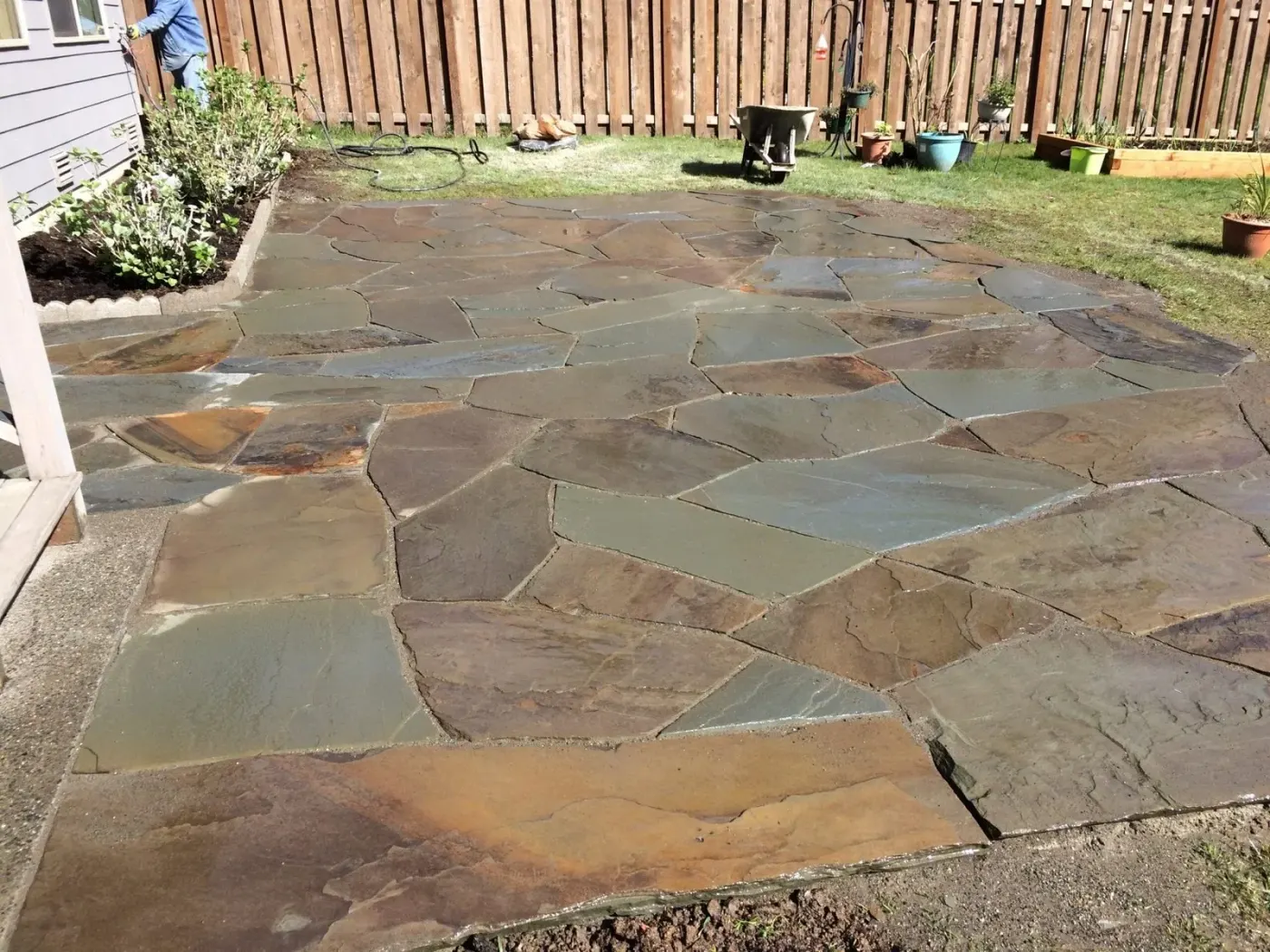
Hand-fitted flagstone laid tight, replacing a tired lawn that never drained properly.
 Retaining WallsView full size
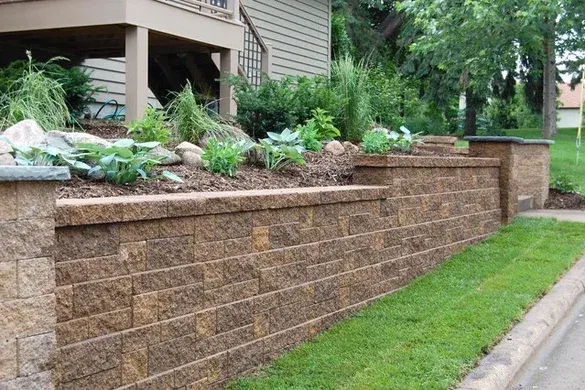
A long run of split-face block turning the fall between house and street into a raised bed at standing height, capped flat so the whole length reads as one line.
 Retaining WallsView full size
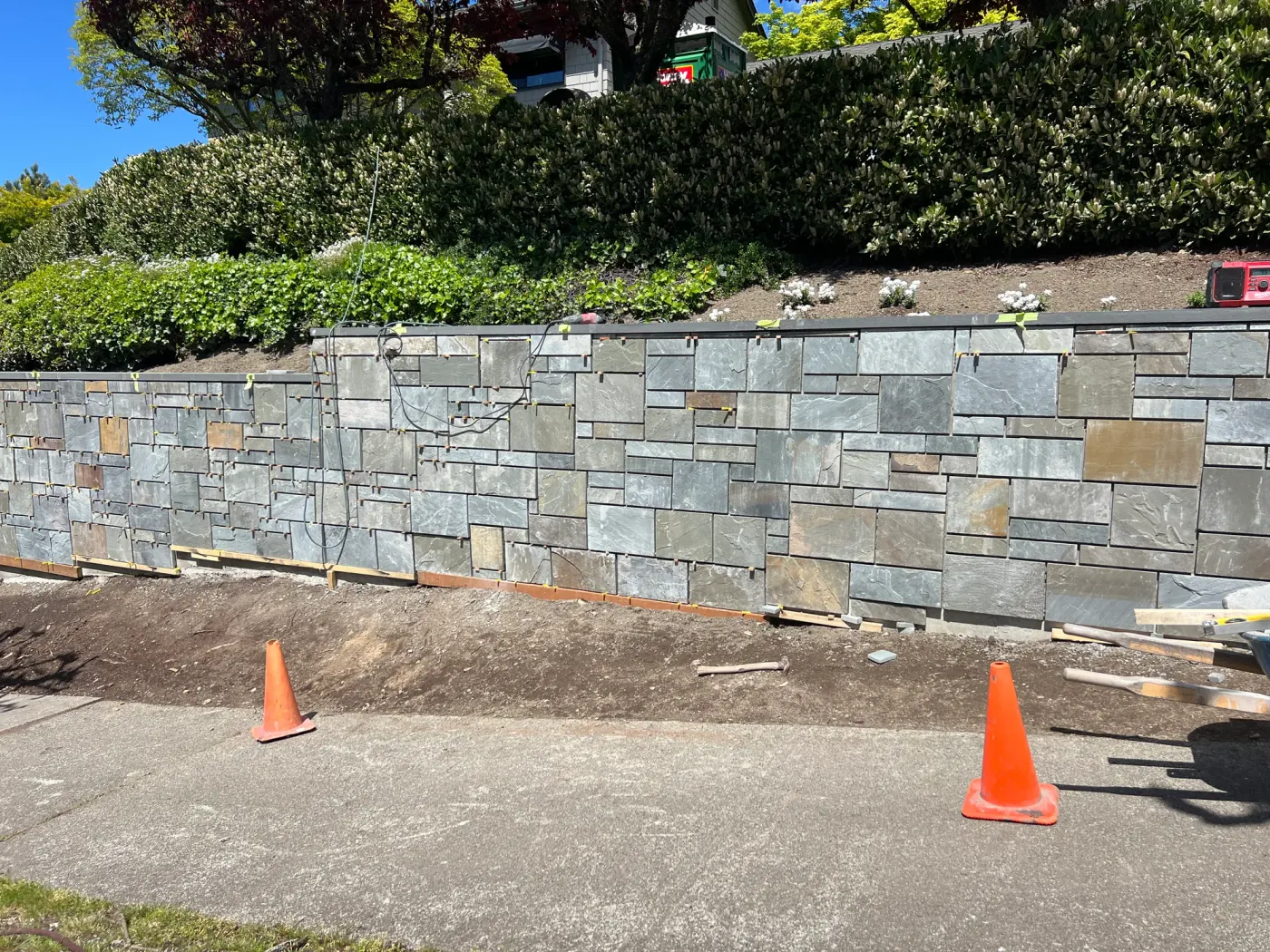
A long frontage wall going up in cut stone, cones out and the base course still showing. The bed above it was regraded to drain towards the street rather than back into the wall.
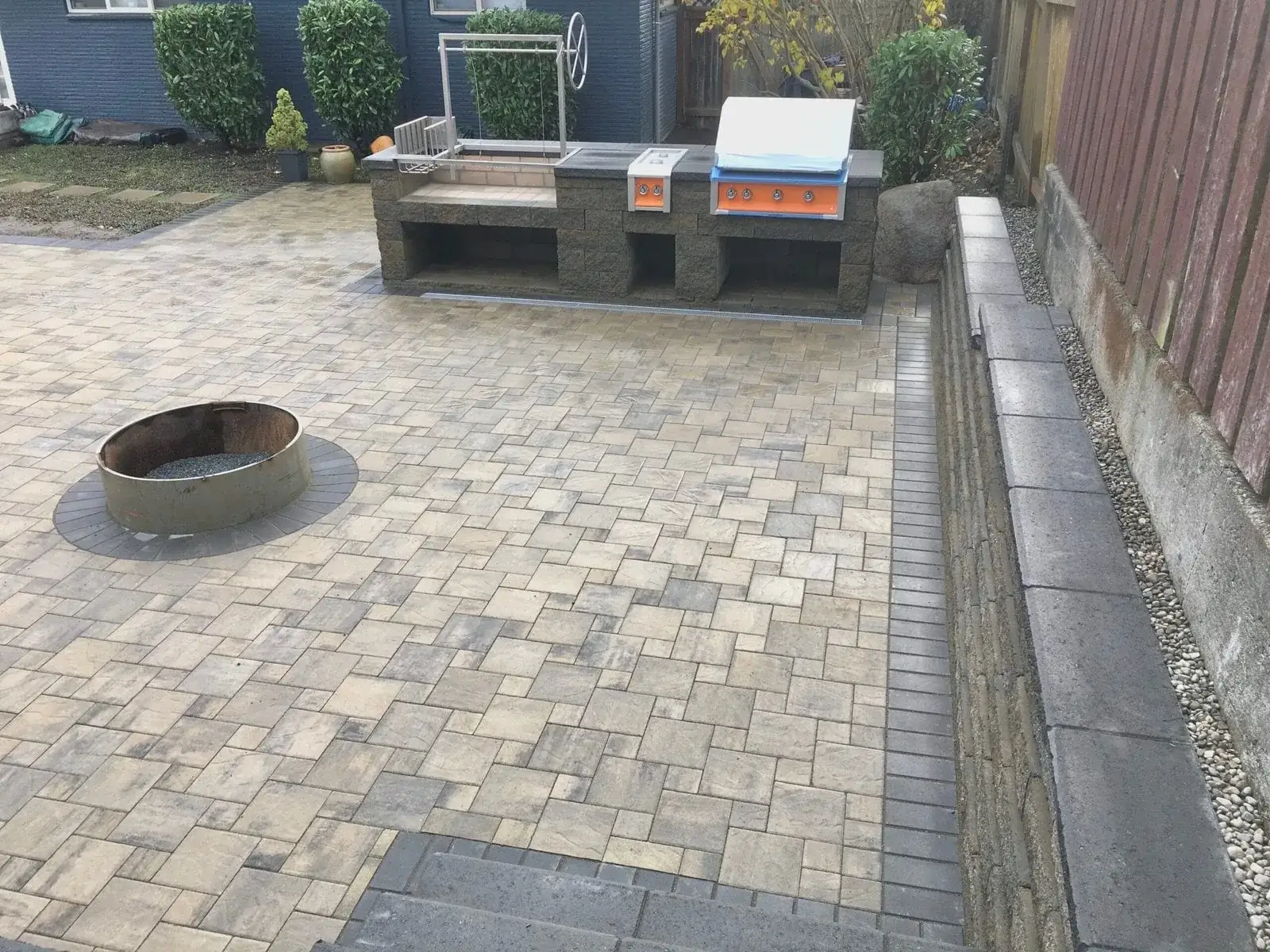
We come out, look at the ground, and put a fixed written price together. No deposit, and it does not change once agreed.
Free estimate
Three minutes on the form. We reply during office hours, Monday – Friday, 9:00 AM – 7:00 PM, and we come out and look at the site before quoting anything.
Or call (425) 533-9734
Thank you — we have your details. We reply during office hours, Monday – Friday, 9:00 AM – 7:00 PM. If it is urgent, call (425) 533-9734.