
 FlagstoneView full size
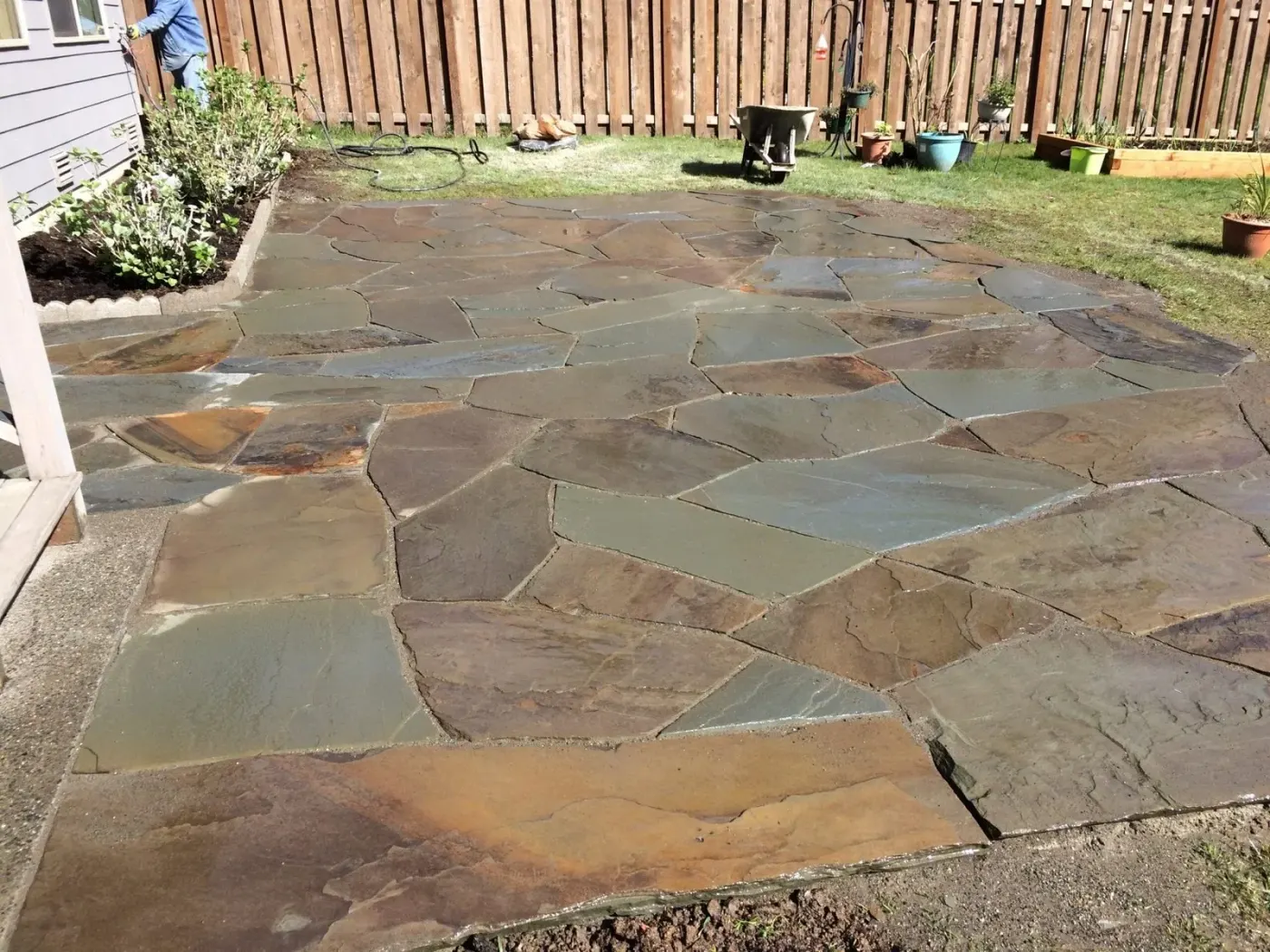
Natural flagstone patio
Hand-fitted flagstone laid tight, replacing a tired lawn that never drained properly.
No down payment. You pay when the project is finished.
Monday – Friday, 9:00 AM – 7:00 PM · Capitol Hill, Seattle
Service
Masonry is the part of a landscape that will still be there when everything else has been replaced twice. It is also the part where the gap between competent and skilled is most visible to a non-expert: joint consistency, how corners are turned, whether stone coursing looks deliberate or accidental. Seattle brings two specific demands to it. The first is water — constant moisture means the mortar specification, the bedding and whether the assembly can dry between rainfalls all matter more than in a dry climate. The second is that most of what we build sits on ground that moves a little, so the foundation under a masonry element is doing as much work as the stonework on top of it.
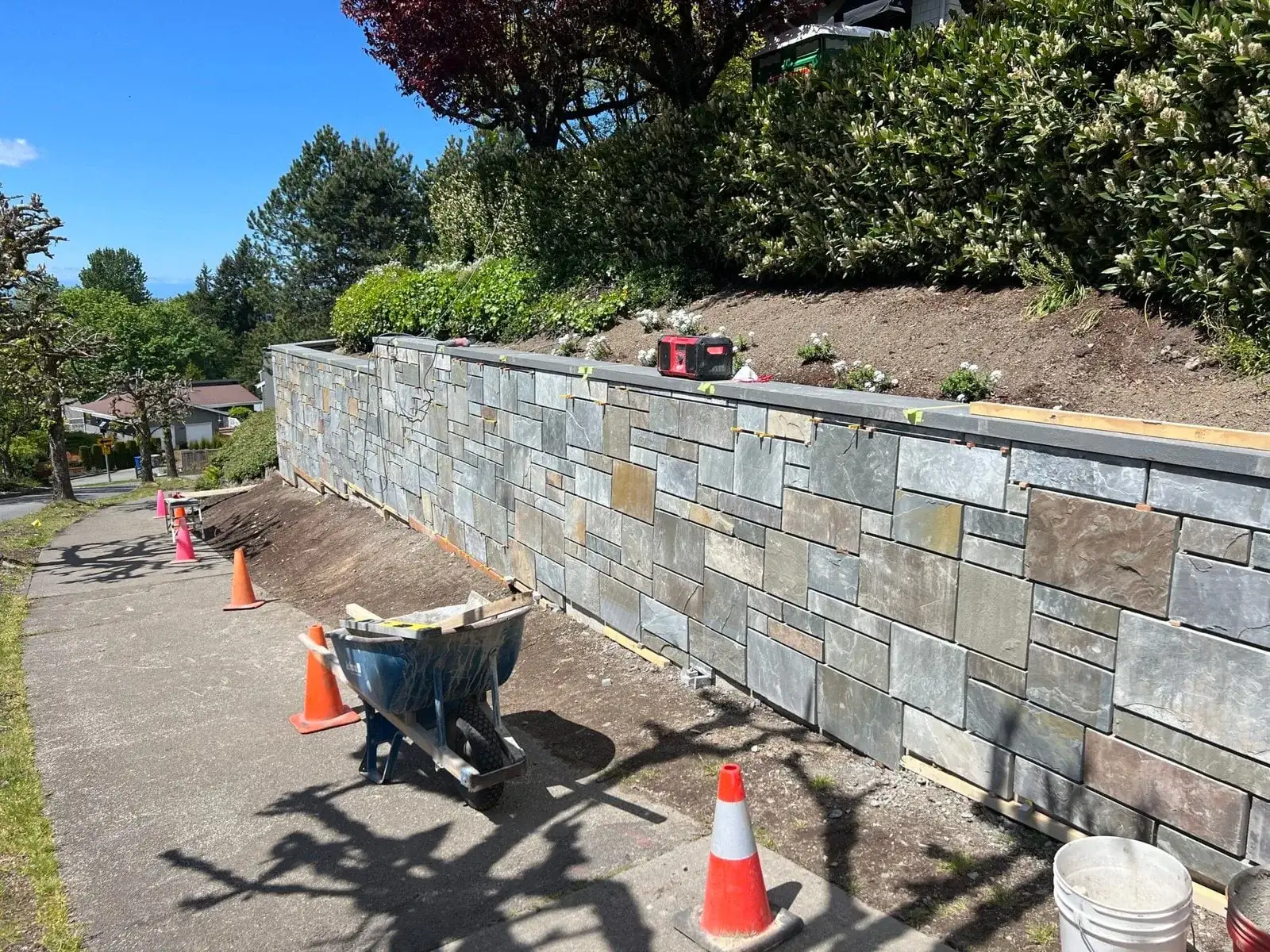
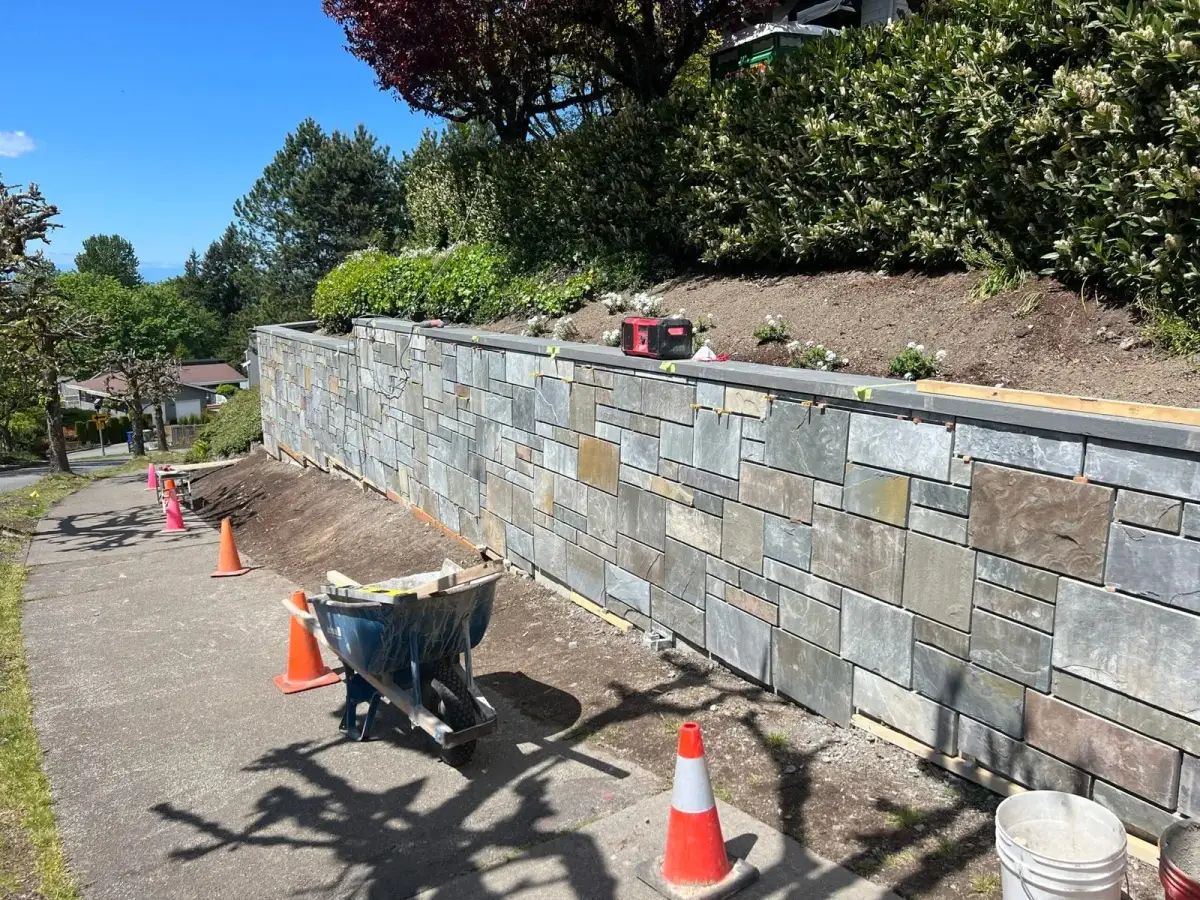
Natural stone veneer retaining wall under construction with tools and materials on site
What is included
Walls, columns, steps and veneers built to last generations.
Stone facing over a structural core — the way almost all "stone" walls are built now. The core carries the load, the stone carries the appearance, and the detailing at corners and caps is what separates the two visually.
Garden walls, piers, edging and repair to existing brick. Matching an old brick and an old mortar is a real skill and is most of what makes a repair invisible.
Entrance piers, gate posts and lighting columns. The structural detail people never think about is the footing under them and the fixing for whatever they carry.
Solid stone treads or built-up masonry steps. Consistent rise and a texture that is not lethal wet — both non-negotiable in this climate.
Failing mortar joints, spalled brick and moved stone. Repointing with the wrong mortar is worse than leaving it, and it is a common error on older Seattle brickwork.
Why people call us
How we build it
Seasonality. April to October is the honest window. Mortar is temperature-sensitive — it should not be laid in near-freezing conditions and it wants to cure without being rained on for the first day or two. Winter masonry is possible with protection and admixtures but it is slower, more expensive and produces a less reliable result, so where the schedule allows we would rather book it for spring.
Masonry is unforgiving of movement. What sits under the visible work — depth, bearing and drainage around it — decides whether joints crack in five years.
Stone is sorted before it is laid so colour and size distribute evenly across the face rather than clustering. Skipping this is why some stonework looks patchy.
Block or poured core with any reinforcement and, on retaining elements, drainage behind it before a single piece of facing stone goes on.
Coursing, joint width and corner detail carried consistently. Corners and terminations are where masonry is judged, and where it takes the most time.
Caps that throw water clear of the face, joints finished to a consistent profile, and the work cleaned down before mortar residue sets on the stone.
What it costs
Natural stone is the most expensive facing per square foot and the slowest to lay; manufactured stone veneer is markedly cheaper and, well laid, reads convincingly at normal viewing distance. Brick sits between the two. The bigger cost driver on most masonry jobs is not the facing but what has to be built and dug behind it, particularly on anything retaining.
That is a market range, not a quote. Your price is fixed in writing after we have seen the site, and it does not move once agreed.
No deposit is required to start. Payment comes after the work is finished — not before.
A fixed, accurate price is guaranteed before the job starts. We do not quote low and raise it mid-project.
A 0% interest payment plan is available for up to 6 months.
Hardscaping work carries a warranty. Vegetation is excluded.
Masonry we have built
FlagstoneView full sizeHand-fitted flagstone laid tight, replacing a tired lawn that never drained properly.
 StoneworkView full size
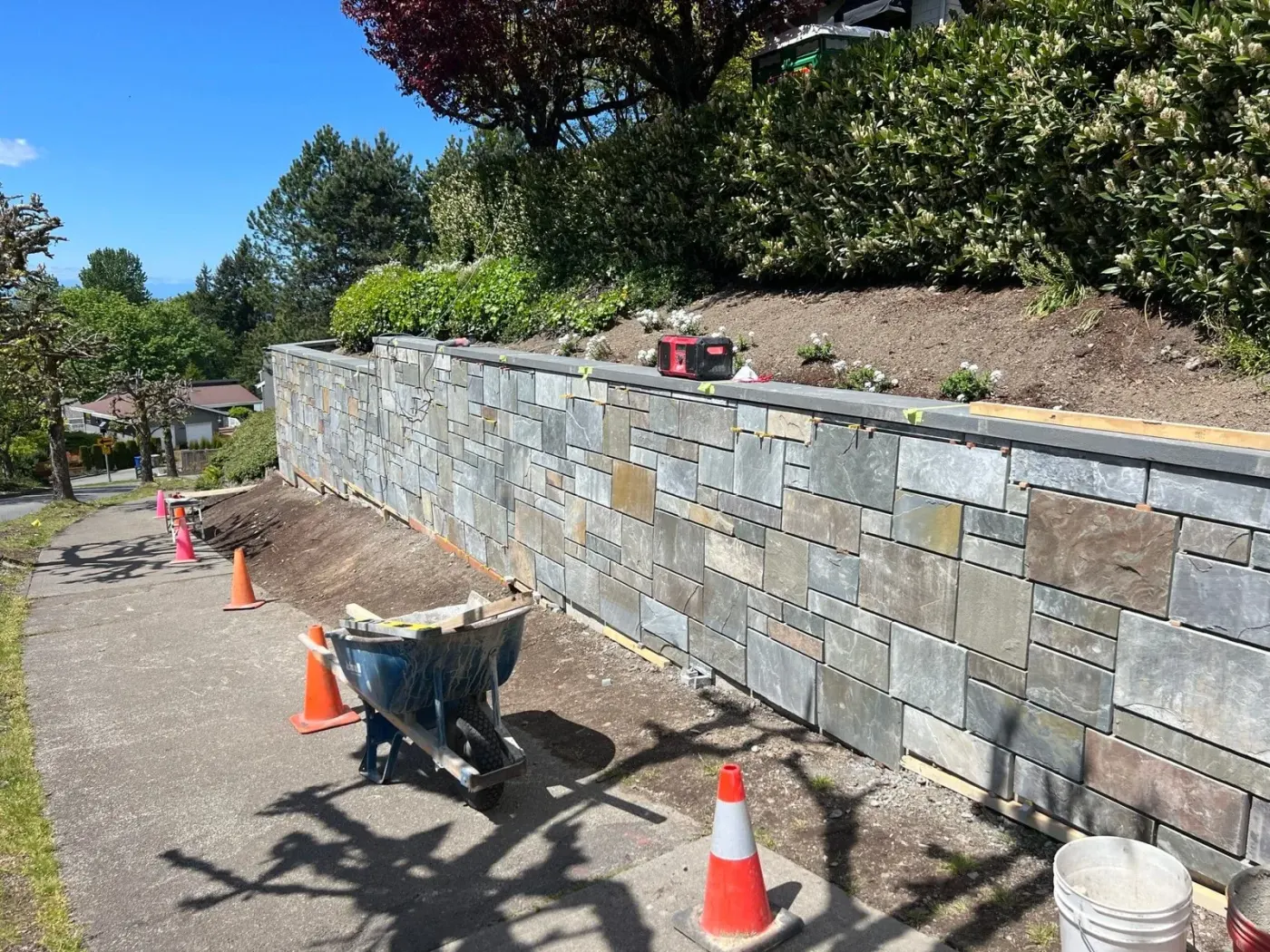
Stone veneer going up over a structural core — the part of the job nobody photographs, done properly.
 HardscapingView full size
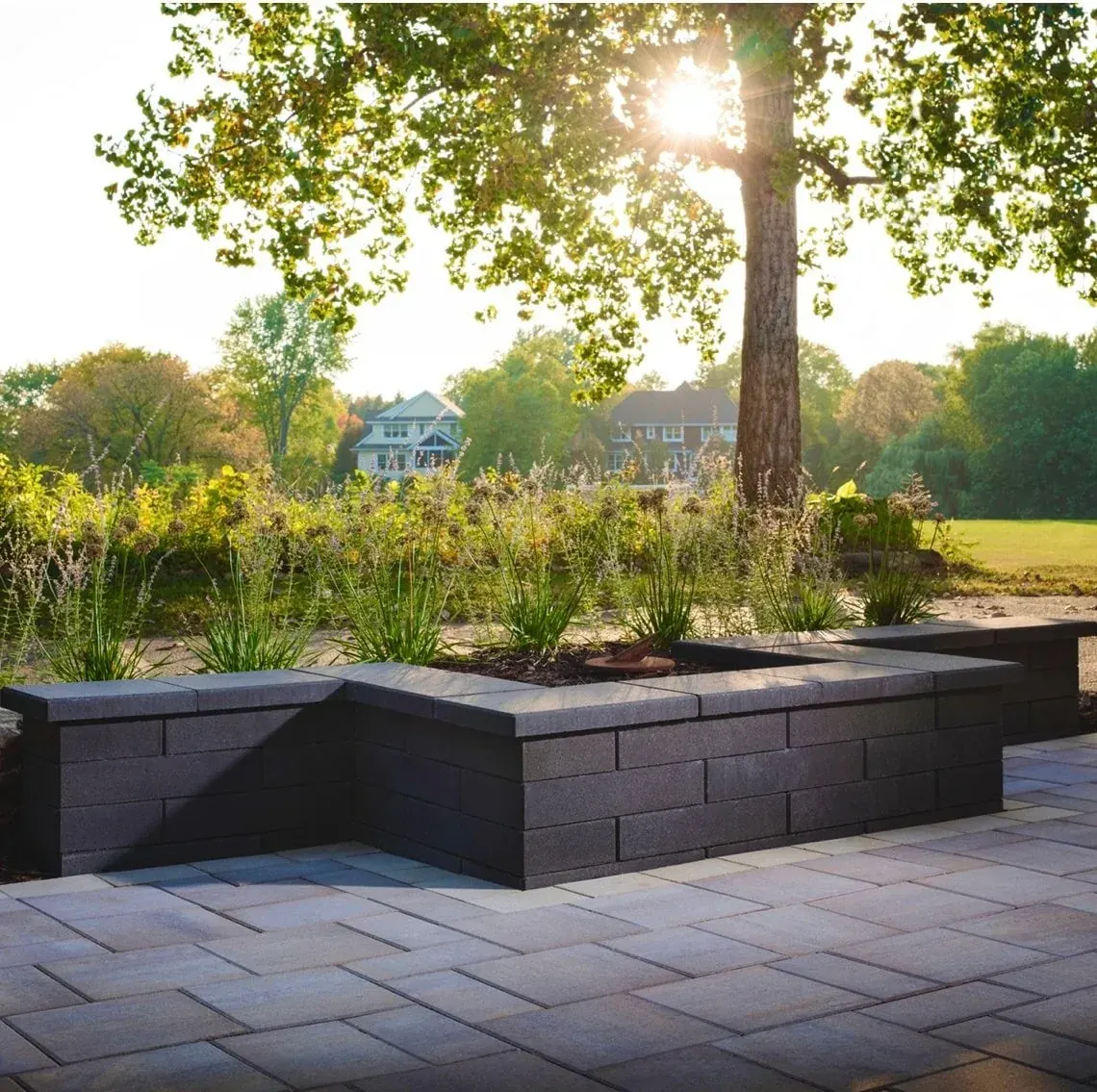
Charcoal block planters framing a stone terrace, photographed the evening it was finished.
 FlagstoneView full size
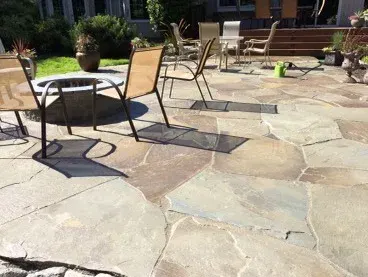
Hand-fitted flagstone laid tight, with a fire bowl and seating where the lawn used to sit wet.
 StoneworkView full size
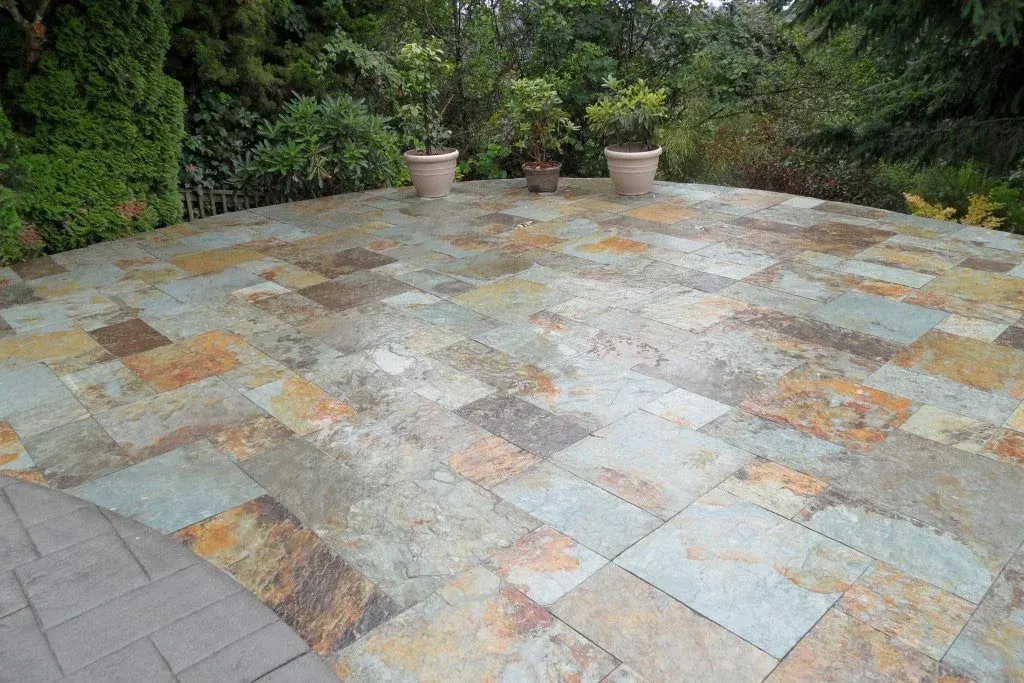
Multi-tone slate laid in a random pattern, running out to a clipped hedge at the edge of the property.
 HardscapingView full size
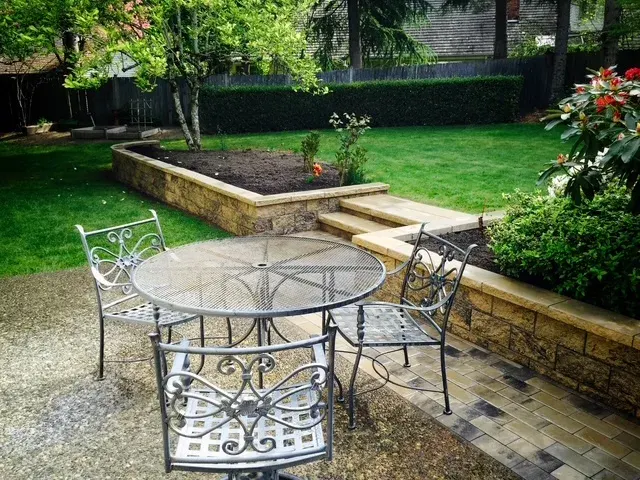
A stone seat wall doubling as the edge of a raised bed, with steps up to the lawn and a paved terrace for the table.
 Outdoor LivingView full size
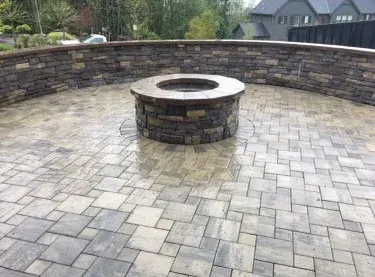
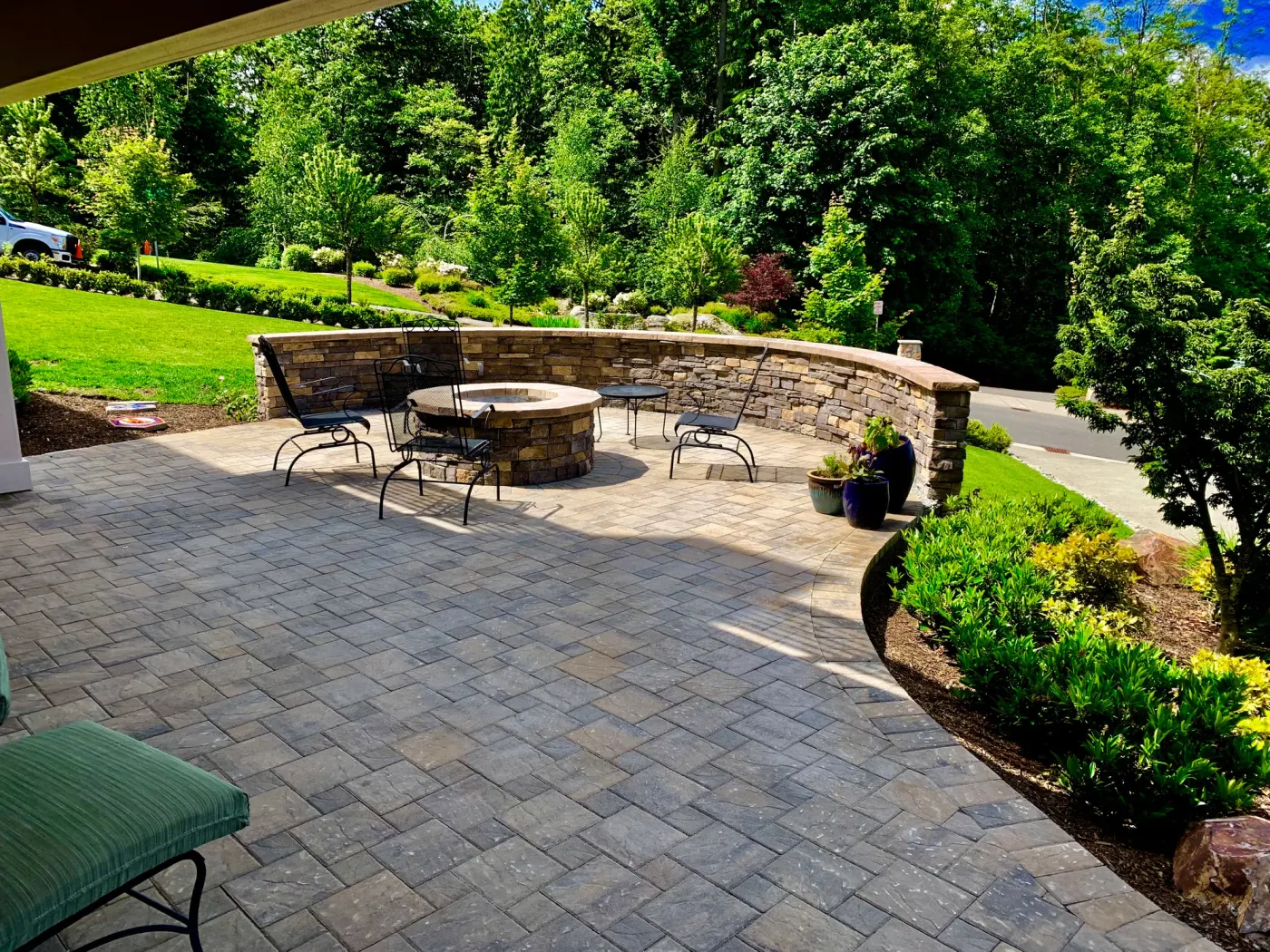
A curved seat wall wrapping a stone fire pit, set into a paver patio at the top of the garden.
 HardscapingView full size
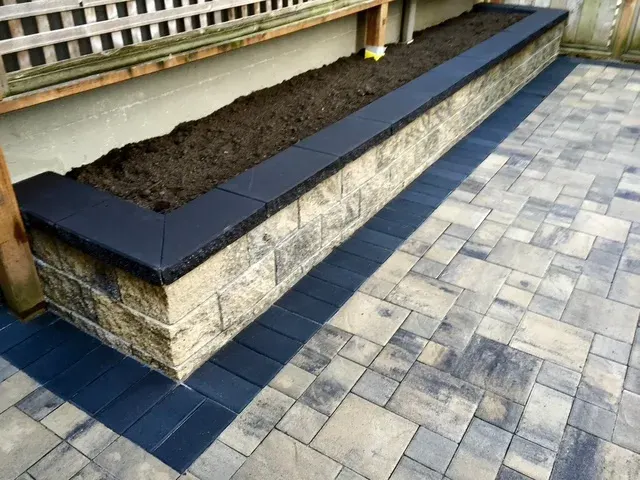
A raised planter running the length of the terrace, capped in charcoal to pick up the darker banding in the paving.
 StoneworkView full size
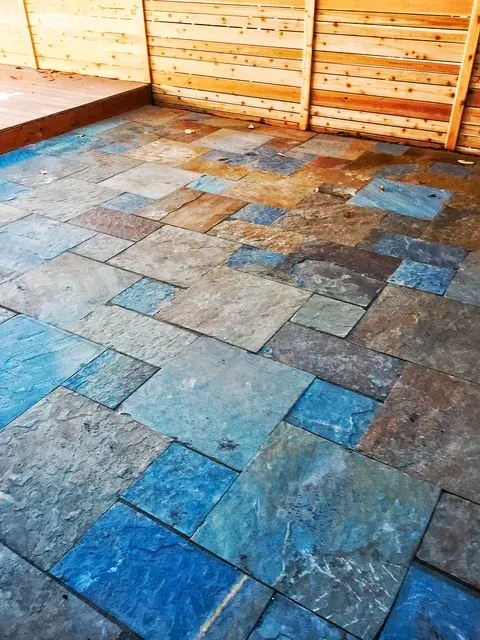
Blue and rust slate laid in a random pattern, enclosed by a new horizontal cedar screen.
 Design & BuildView full size
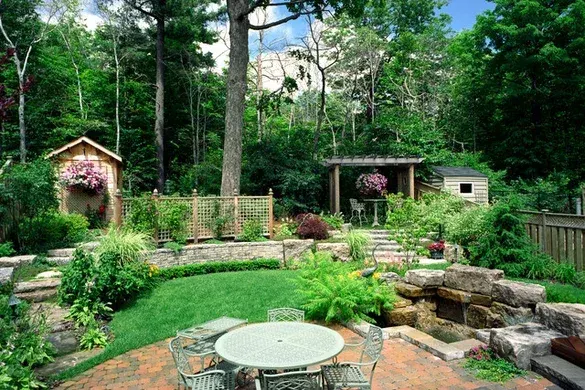
A whole garden built in one go on a wooded lot: brick terrace at the bottom, stone rockery holding the bank, a waterfall running through it, and a pergola marking the top level.
 Retaining WallsView full size
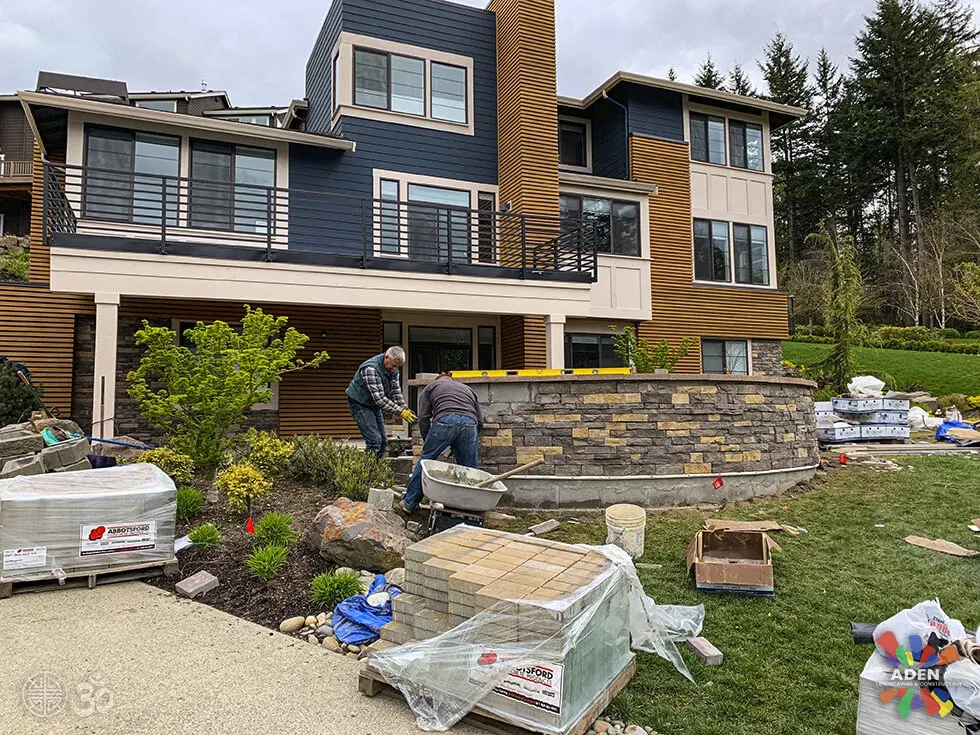
The crew setting veneer on the front terrace of a new build. The block core does the structural work and the stone is what you end up looking at — two different jobs, done in the right order.
 Retaining WallsView full size
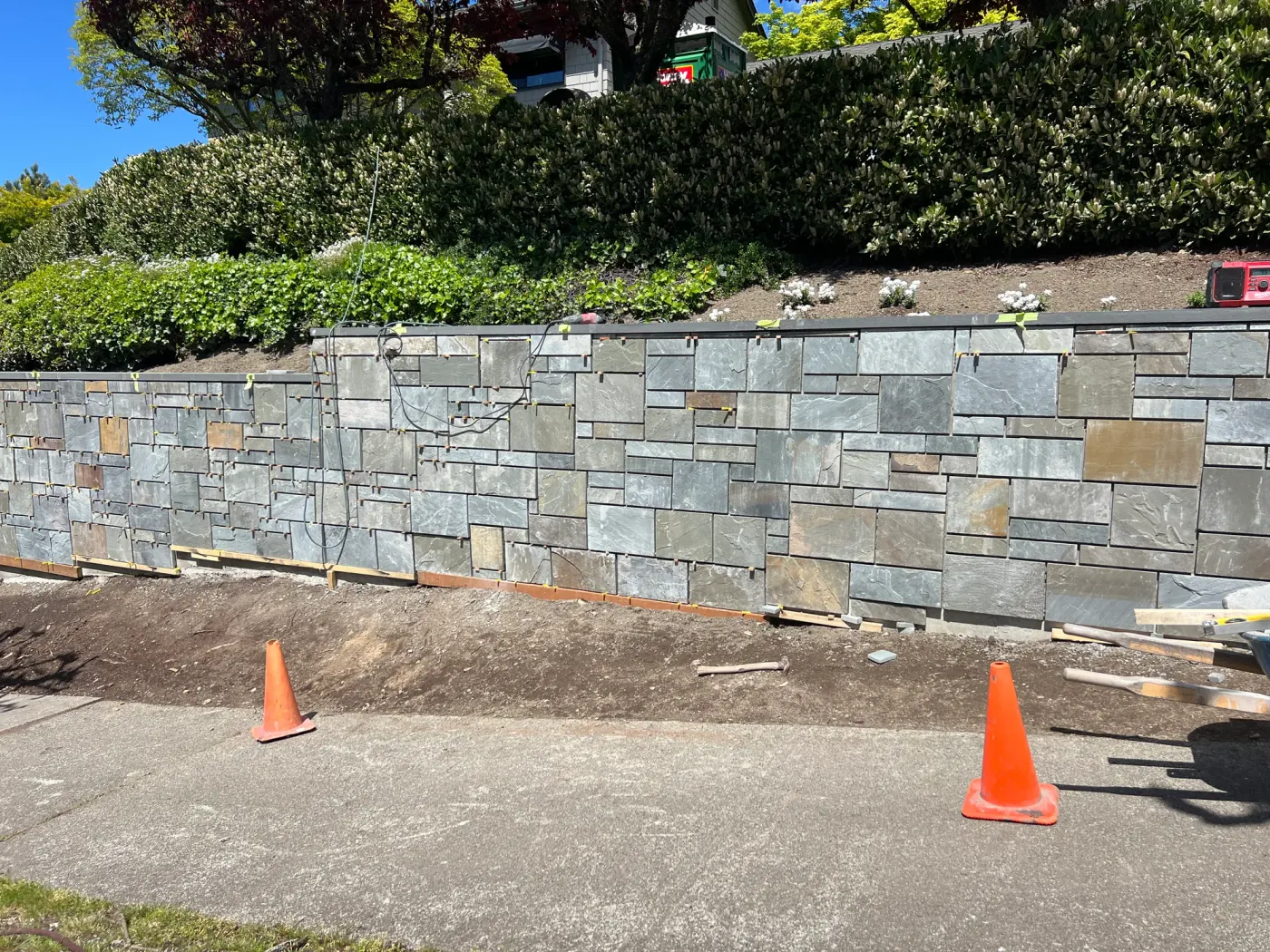
A long frontage wall going up in cut stone, cones out and the base course still showing. The bed above it was regraded to drain towards the street rather than back into the wall.
 Paver PatioView full size
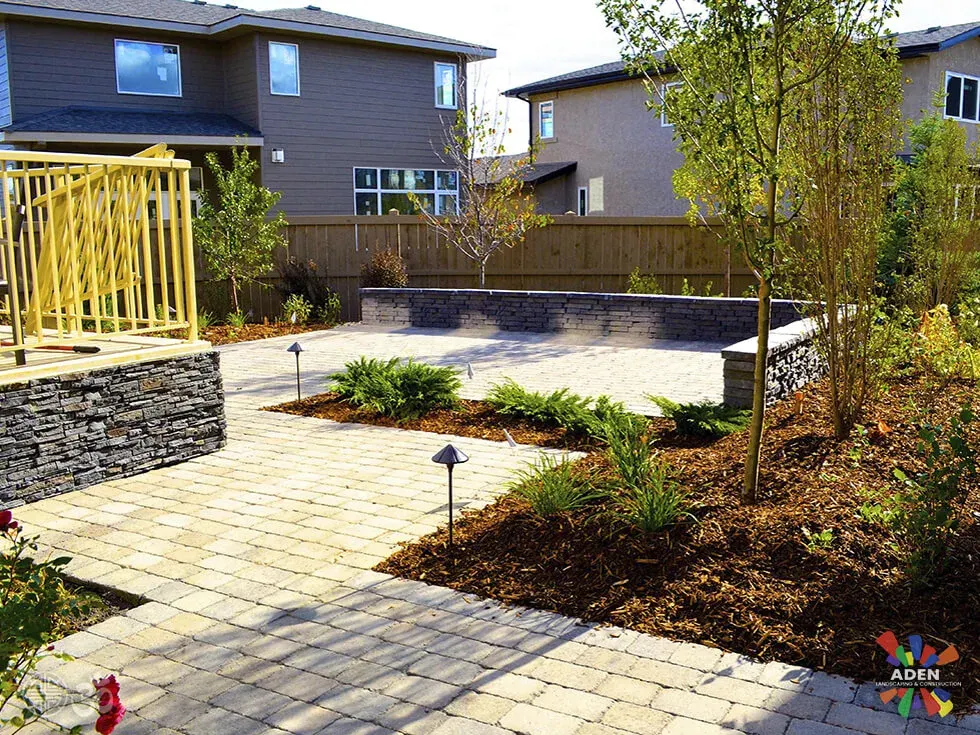
Pale paver field, stone-faced seat wall, beds planted the same week. The wall does two jobs at once: it holds the grade, and it is where people end up sitting.
 Paver PatioView full size
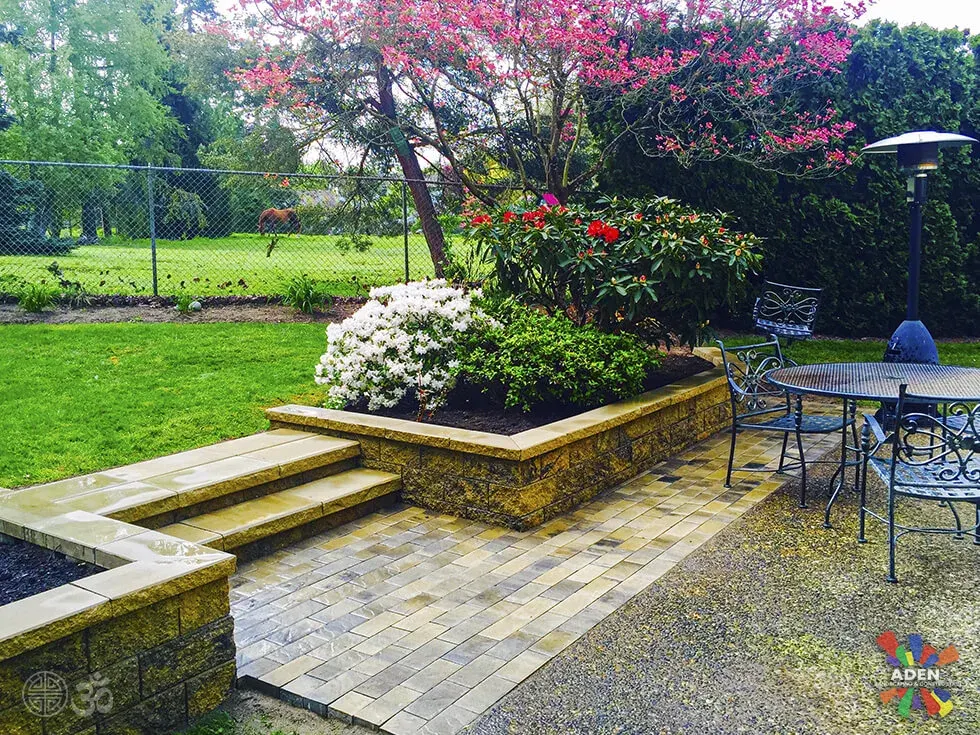
The bed wall doubles as the terrace edge and as somewhere to put a drink down. Two functions out of one course of stone is usually the cheapest line in the estimate.
 Outdoor LivingView full size
The wall follows the edge of the terrace rather than boxing it in, so the seating faces the garden instead of facing itself. Clipped hedging behind does the rest of the enclosing.
 StoneworkView full size
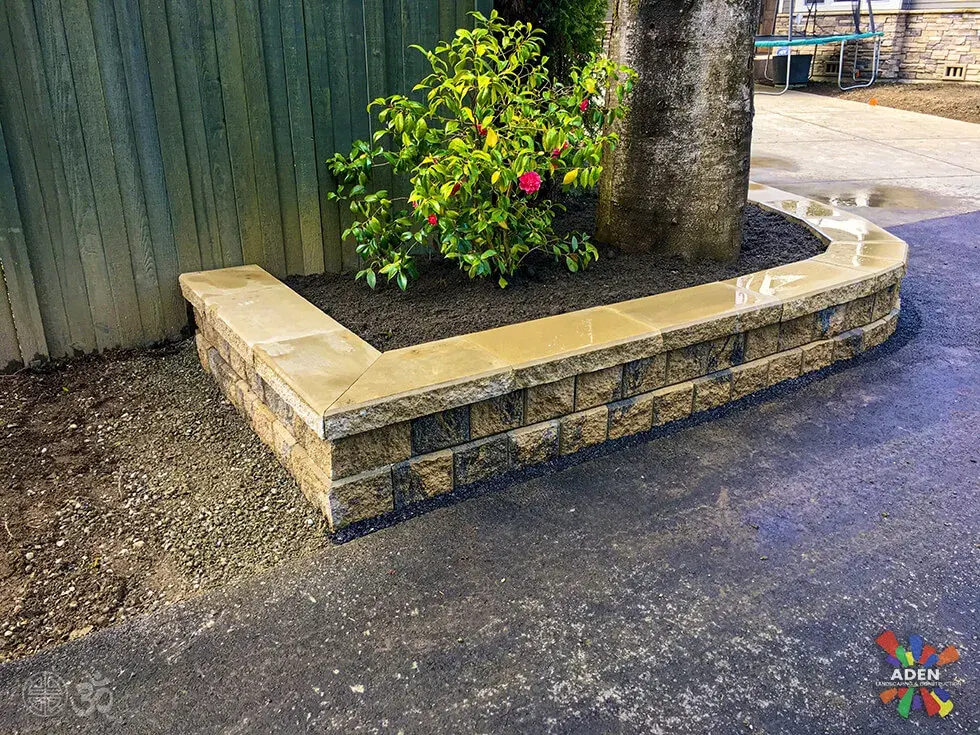
A low cut-stone wall holding a bed against the driveway edge. The cap is wide enough to sit on, which is the only reason anyone ever actually does.
 StoneworkView full size
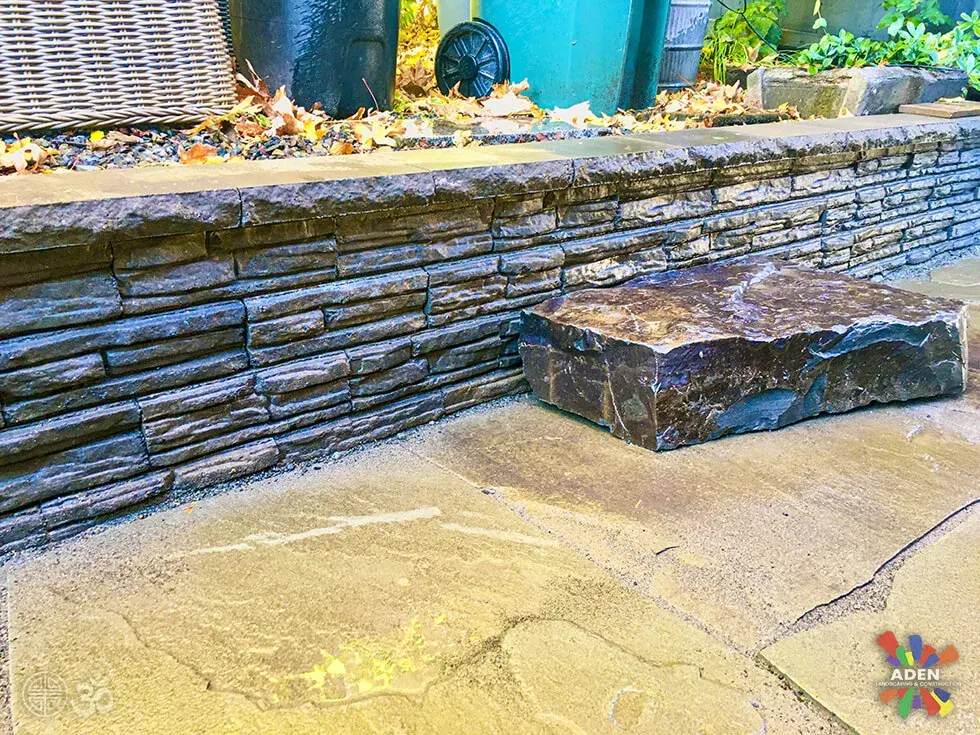
Thin stacked stone across the face, and one solid slab set in front of it as a bench. The bench weighs more than the section of wall it sits against.
 StoneworkView full size
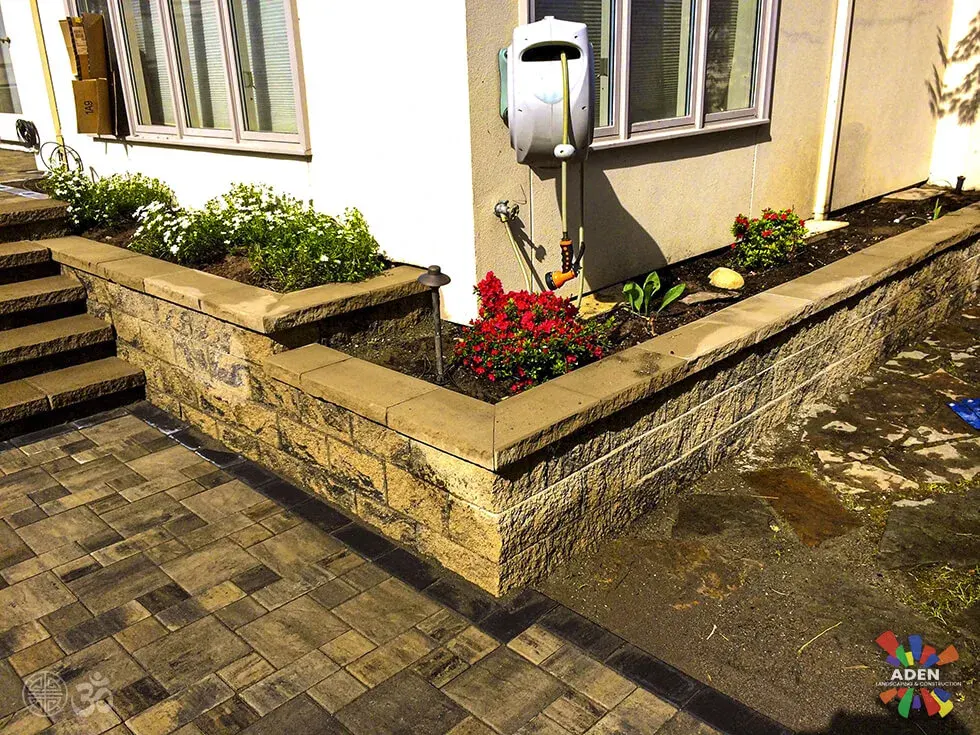
Stone-faced beds following the footing line, planted the day they were finished. Raising the soil away from the wall is what keeps water off the render.
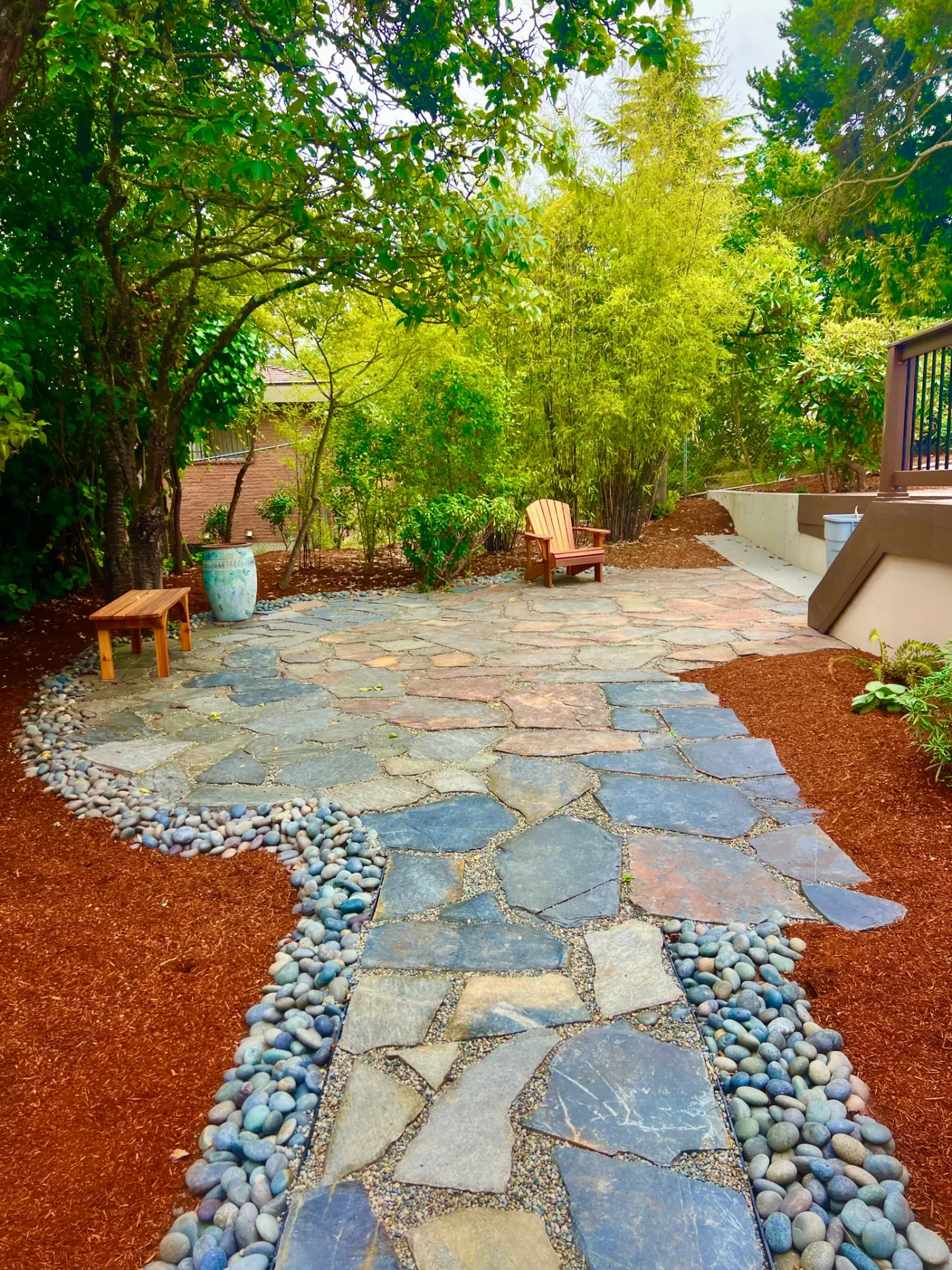 FlagstoneView full size
Irregular flagstone fitted tight, with a washed rock margin doing the drainage where the ground falls away. Every stone is cut to the ones it touches.
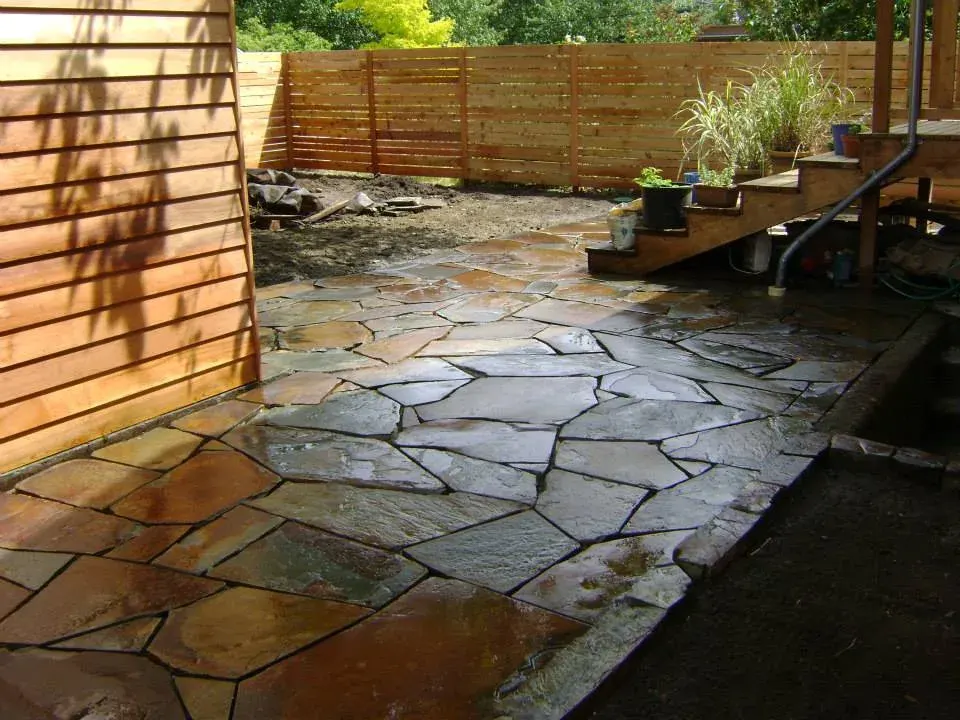 FlagstoneView full size
A small back garden given over almost entirely to stone, closed in with a horizontal cedar fence. Wet, because it had just been jointed when this was taken.
In their words
Real Google reviews, unedited. We publish the ones that name the work rather than a generic five stars.
Dale Struble
June 2026
Alex and his crew do AMAZING work. I had a really great experience and can't recommend them enough. First, Alex was prompt and courteous when responding to any questions both before and during the work.
Where we build it
Before you call
Something not answered here? Call (425) 533-9734 and ask — we would rather talk it through than have you guess.
Manufactured veneer is the pragmatic choice for most budgets and it has improved to the point where, laid properly and viewed from a normal distance, most people cannot tell. It is lighter, more consistent to work with, and considerably cheaper per square foot. Natural stone wins on close inspection, on the way it weathers, and on the fact that it will look better in thirty years rather than worse. Where we would push toward natural stone is anywhere you touch or stand close to daily — a seat wall, an entrance pier by the front door — and where we would happily use veneer is a large retaining face seen mainly from across the garden.
Nearly always yes, and it is worth doing before water gets past the joints into the wall itself. Mortar is designed to be the sacrificial element — softer than the brick, so it weathers and can be replaced while the brick survives. Crumbling joints on an older Seattle wall are usually just age plus persistent moisture. The critical point is what it gets repointed with: modern hard cement mortar on old soft brick traps moisture inside the brick, which then spalls its face off in the first hard frost. That damage is permanent. Matching mortar to the original in strength and permeability is the whole job, and it is where most cheap repointing goes wrong.
Yes, and it is how most stone-faced retaining walls are actually built. The structural work is done by a block or poured concrete core with the correct reinforcement and — critically — the drainage behind it, and the stone is a facing applied to that. What matters is that the drainage is not compromised by the facing detail and that the cap throws water clear of the stone rather than letting it run down the face. Where clients get into difficulty is assuming a stone-faced wall is a dry-stacked stone wall; they behave completely differently, and one of them needs a footing and a drain the other does not.
Usually to a good approximation, and occasionally exactly. Older Seattle brick varies in colour, texture and size, and some of it is no longer made — so matching means sourcing the closest current equivalent, or in the best case reclaiming brick of the same era. The other half of matching is the mortar: joint colour, width and profile affect how a wall reads at least as much as the brick does, and a perfectly matched brick with the wrong joint still looks like a repair. Where an invisible match matters, taking the brick from a less visible part of the structure and using the new material there is often the better answer.
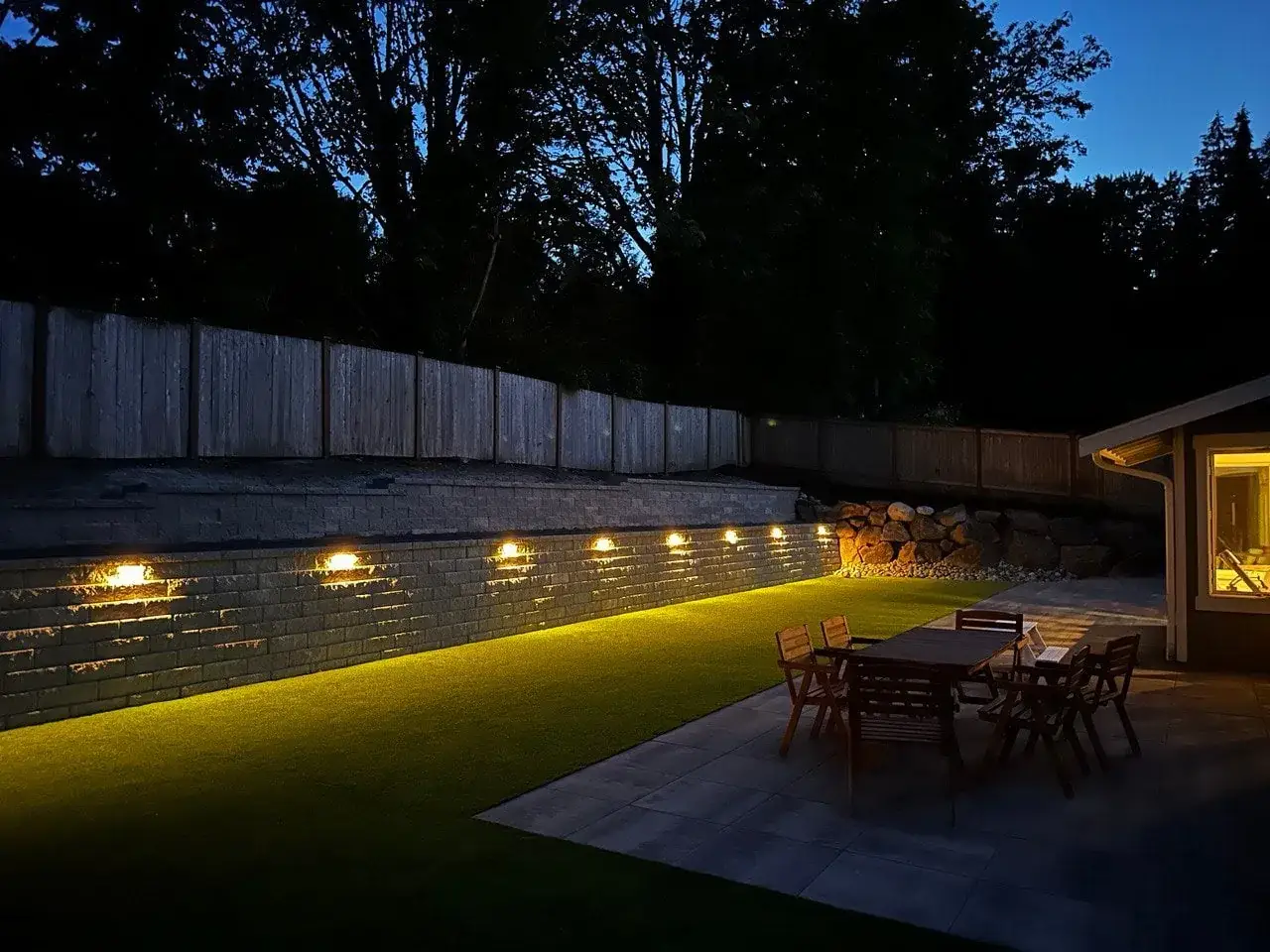
We come out, look at the site properly, and put a fixed written price together. No deposit, and nothing changes once the price is agreed.
Usually done alongside
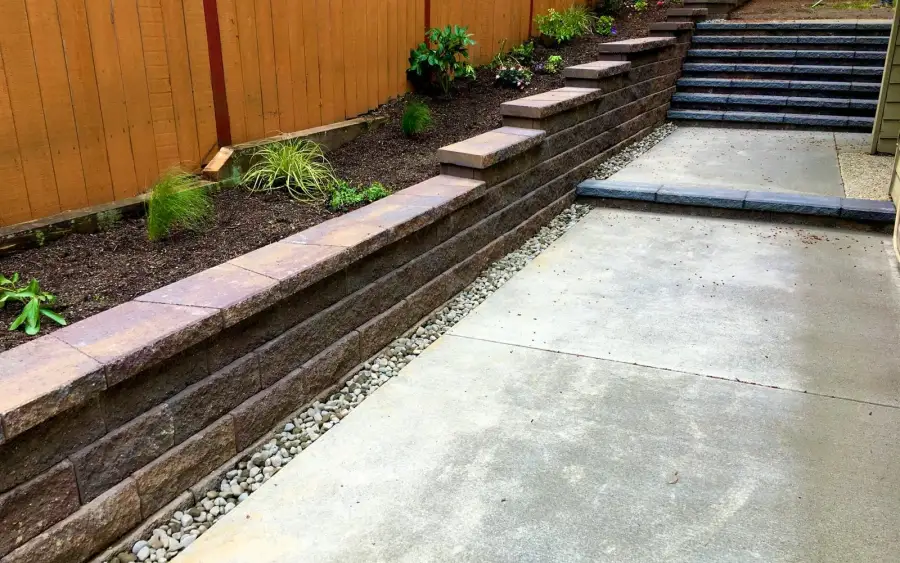
Turn an unusable bank into flat, usable ground.
$5–$45 per square foot of wall face
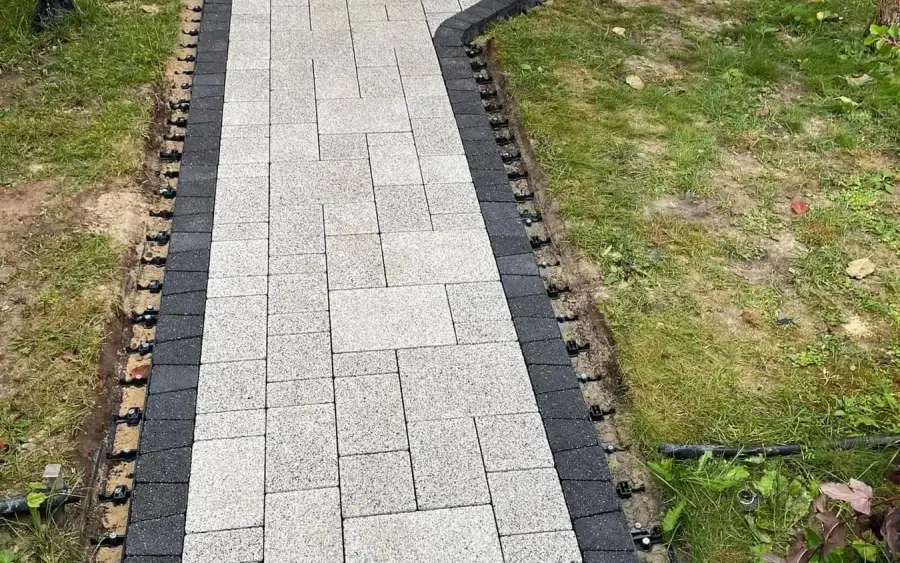
Get from the street to the door, and around the house, without mud.
$18–$45 per square foot installed
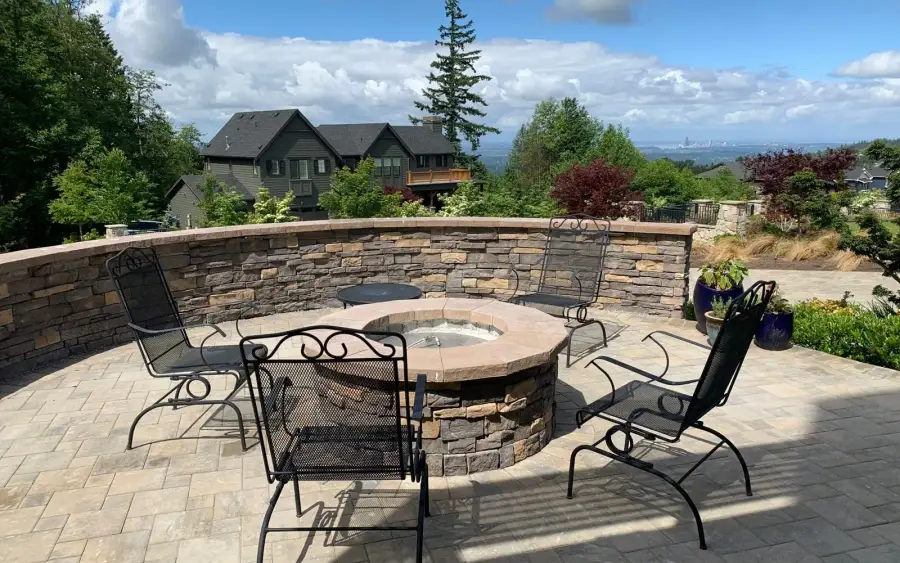
A garden that gets used on a cool Seattle evening.
$3,000–$18,000
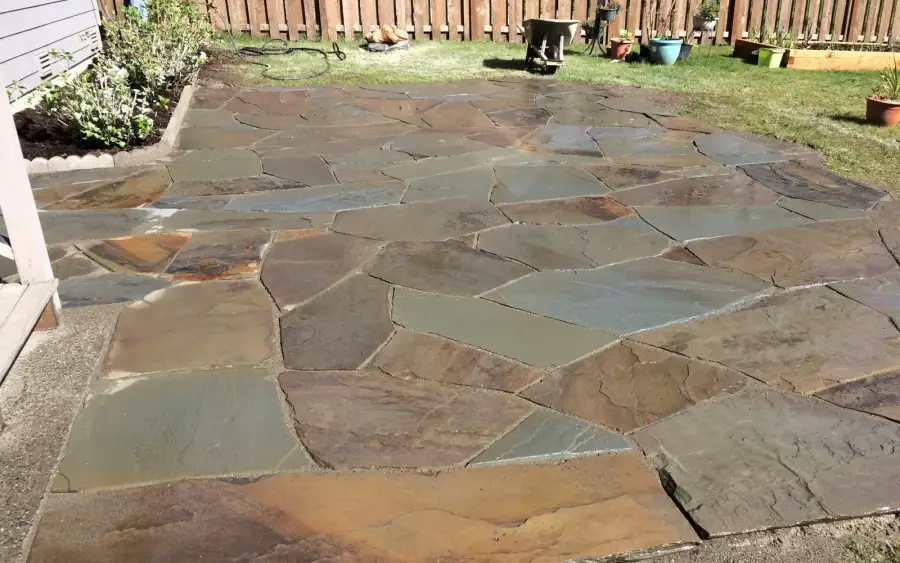
A patio you can actually use nine months of the year.
$20–$50 per square foot installed
Free estimate
Three minutes on the form. We reply during office hours — Monday – Friday, 9:00 AM – 7:00 PM.
Or call (425) 533-9734
Thank you — we have your details. We reply during office hours, Monday – Friday, 9:00 AM – 7:00 PM. If it is urgent, call (425) 533-9734.