
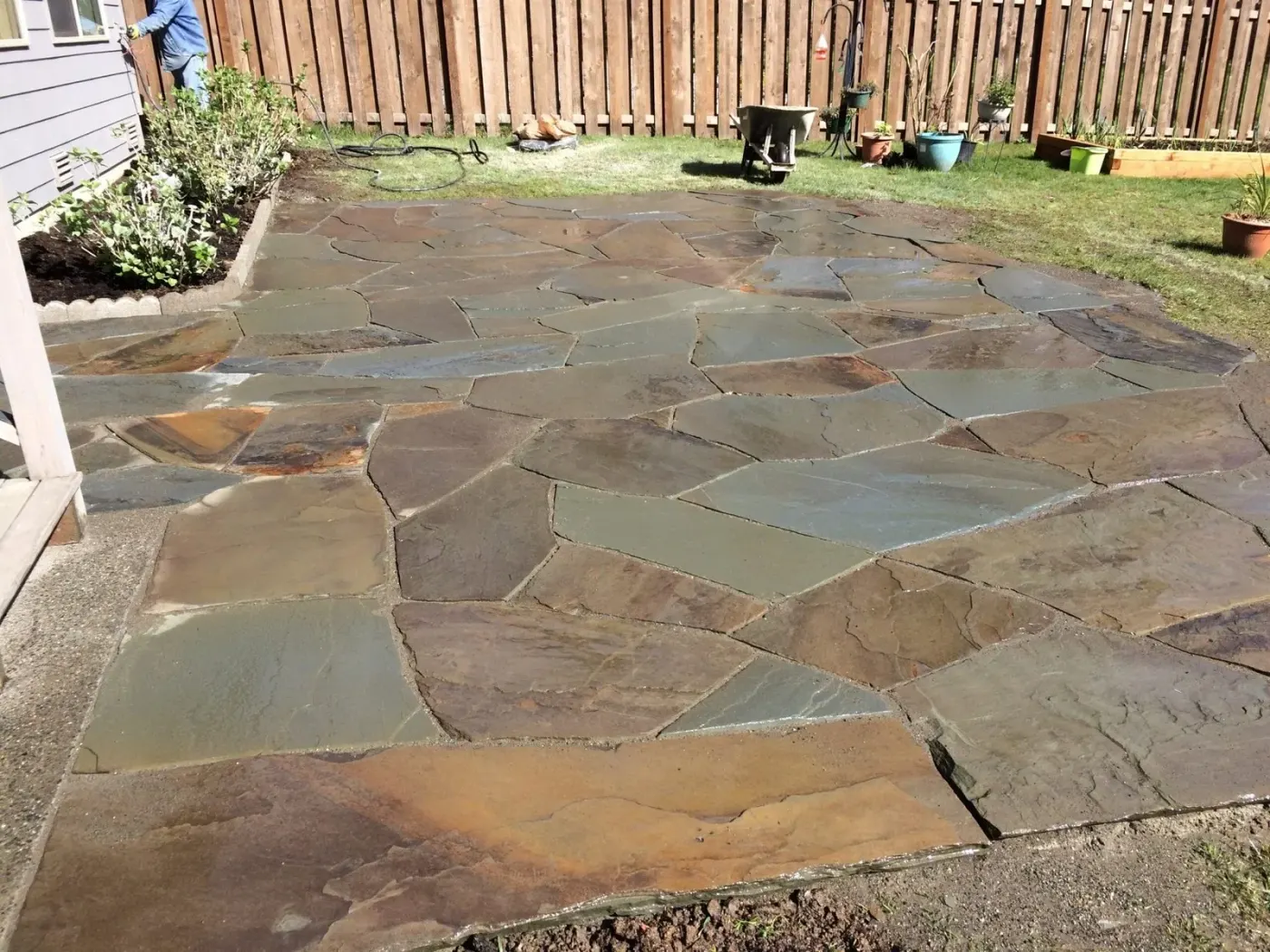
 FlagstoneView full size
Natural flagstone patio
Hand-fitted flagstone laid tight, replacing a tired lawn that never drained properly.
No down payment. You pay when the project is finished.
Monday – Friday, 9:00 AM – 7:00 PM · Capitol Hill, Seattle
Irrigation · Mercer Island
Irrigation on Mercer Island runs into something counter-intuitive: the shadiest parts of these gardens are frequently the driest. Ground beneath an established fir or cedar is dry in August not because of sun but because the tree is drawing an enormous volume of water out of it, and a mature conifer transpires far more than anything planted beneath it. So a shaded island bed can need more water than an open one, which is the opposite of what most schedules assume. The second island factor is trenching: irrigation lines are shallow, but on these heavily treed lots the route still has to respect root plates the city protects.
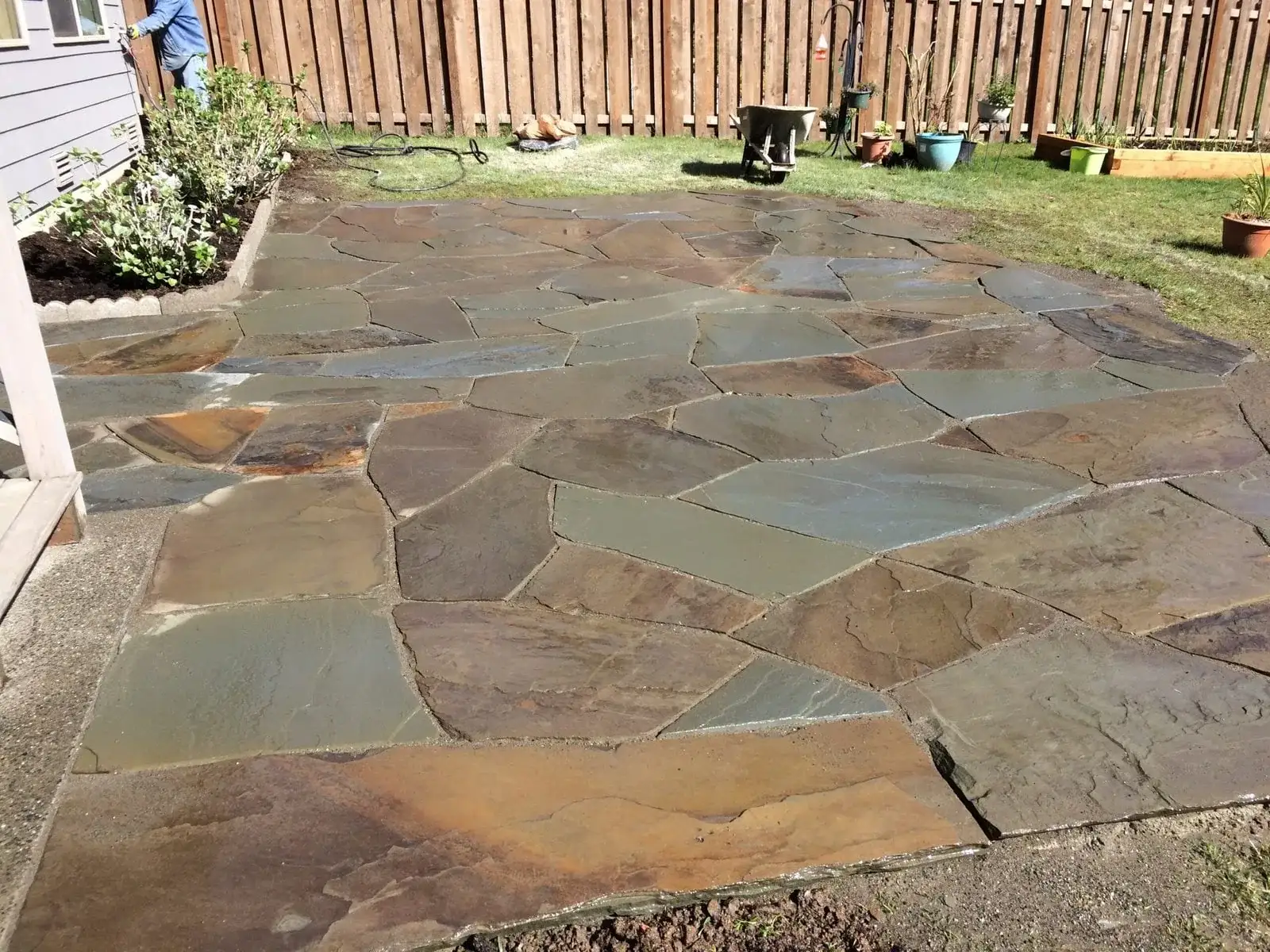
Hand-fitted natural flagstone patio in a fenced Mercer Island back garden
What we get called about
Mercer Island is large lots, mature trees and a shoreline slope on every edge, and the trees are the defining constraint. The city regulates removal on private property more tightly than most, and the canopy on these lots is dense enough that light and root plates govern where hard surfaces can realistically go. Toward the shoreline the ground steepens and slope stability becomes a design factor rather than a formality. Access is generally excellent, which is one reason island projects tend to be full renovations rather than piecemeal work.
Worth knowing on Mercer Island
Water the shade, not just the sun. On an island lot the driest ground in August is frequently under the canopy, because the tree is taking it — and a schedule built on the assumption that shaded beds need less is why so many of them fail.
The method
The sequence does not change between neighbourhoods — what changes is the ground it is applied to. Full detail on the irrigation service page.
Everything downstream depends on this. A design drawn without knowing what the supply actually delivers produces zones that cannot run properly, and it is the most common fault in existing systems.
Lawn, beds, containers and any shaded area separated, because they want different volumes and different frequencies. This is where most retrofits earn their money.
Sprinkler spacing calculated for head-to-head coverage; drip laid to the planting rather than in a grid that ignores where the roots are.
Lines trenched to depth and sleeved under any hard surface. Where a patio or drive is being built at the same time, the sleeves go in then — it costs almost nothing and saves a great deal later.
Zones timed, seasonal schedule set, and you shown how to adjust it. A system nobody knows how to change gets left on the install setting for a decade.
What it costs on Mercer Island
Island systems run $3,000 to $9,000, with the labour efficient given good access and a short run from our Capitol Hill base. What adds cost here is routing trenches around trees — hand digging within root zones is slower than machine trenching, and on a heavily wooded lot that can apply to a meaningful share of the run.
You pay after the project is fully completed.
The estimate you sign is the price you pay.
Spread the cost with no interest.
Covers hardscape work; vegetation excluded.
Local questions
General questions about this service are on the service page. These are the ones that only come up here.
Because a mature conifer moves a very large volume of water out of the ground through the growing season, far more than anything planted beneath it uses. So while a shaded bed loses less to evaporation than an open one, it is competing with a tree that is drawing hard on the same soil — and the tree wins. That is why shaded island beds are frequently drier in August than a sunny border twenty feet away, and why a schedule that gives shade less water than sun is exactly backwards on a lot like this.
Usually, with care, and it is worth planning rather than assuming. Irrigation trenches are shallow compared with a drainage run or a patio base, which helps considerably — but on these lots the roots that matter sit in the top twelve to eighteen inches and spread well beyond the canopy, which is exactly the depth involved. The workable approach is routing around critical root areas where possible and hand digging where a line genuinely has to cross one, rather than machine trenching through. Significant excavation within a root zone may also engage the city's tree provisions.
Establishment watering, then very little. Sword fern, salal, evergreen huckleberry and the rest of the palette that thrives under an island canopy evolved in exactly these conditions and, once rooted, cope with dry summer shade without help. Where irrigation earns its place is the first two or three seasons while that planting establishes and cannot yet compete with the tree roots around it. After that, a drip zone that can be run occasionally in a genuinely dry August is more useful than a system running all summer.
It is worth being efficient about, for the same reason drainage matters there. The island's edges carry looser material than the level crown and respond more to water, so adding volume to that ground is not entirely neutral — though irrigation is a modest amount compared with a Puget Sound winter. The sensible measures are drip rather than spray on any planted area so nothing runs off the slope, weather-responsive control so the system is not adding water during wet spells, and planting chosen so the area does not need much once established.
Serving Mercer Island and surrounding neighbourhoods
North End · East Seattle · First Hill · Mercerwood · Island Crest · South End
98040
Recent work
FlagstoneView full sizeHand-fitted flagstone laid tight, replacing a tired lawn that never drained properly.
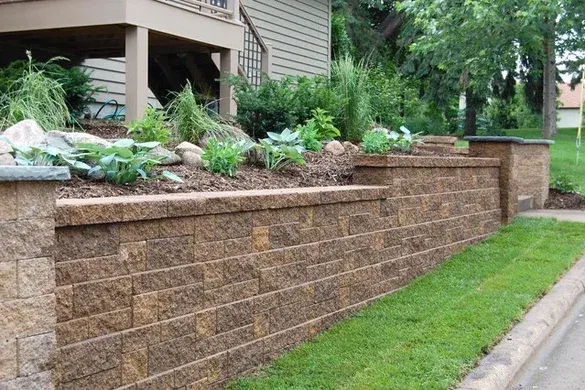 Retaining WallsView full size
A long run of split-face block turning the fall between house and street into a raised bed at standing height, capped flat so the whole length reads as one line.
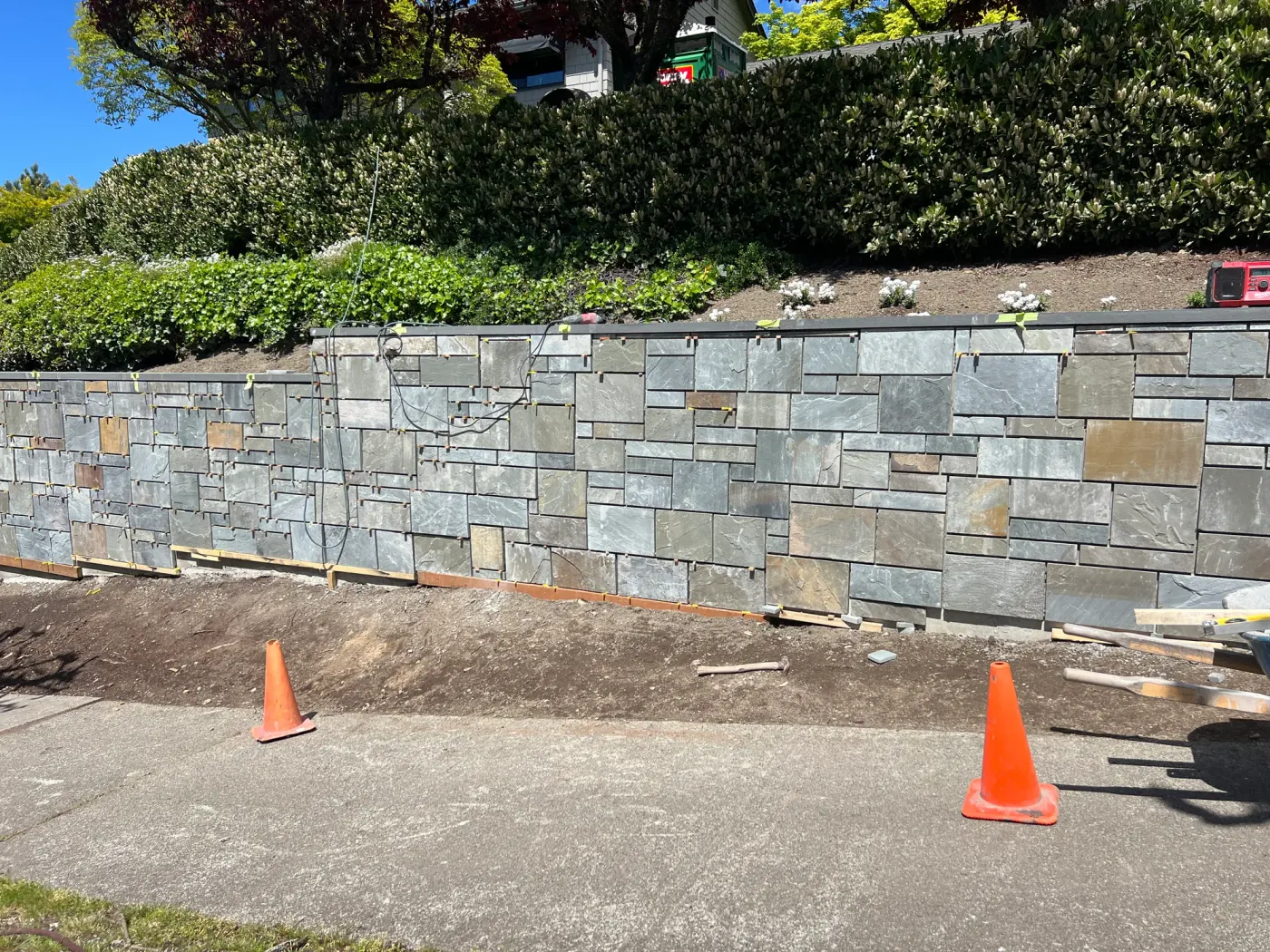 Retaining WallsView full size
A long frontage wall going up in cut stone, cones out and the base course still showing. The bed above it was regraded to drain towards the street rather than back into the wall.
 Paver PatioView full size
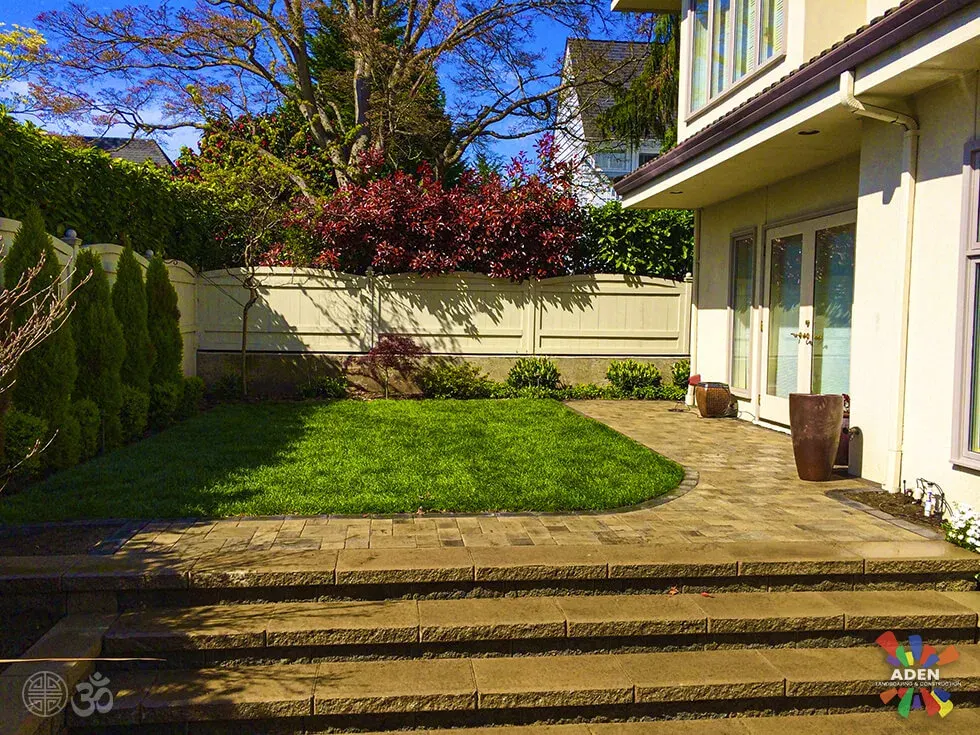
A wide run of paver steps down from the house to a terrace that stops where the lawn begins. Not every garden wants paving all the way to the fence.
We come out, look at the ground, and put a fixed written price together. No deposit, and it does not change once agreed.
Free estimate
Three minutes on the form. We reply during office hours, Monday – Friday, 9:00 AM – 7:00 PM, and we come out and look at the site before quoting anything.
Or call (425) 533-9734
Thank you — we have your details. We reply during office hours, Monday – Friday, 9:00 AM – 7:00 PM. If it is urgent, call (425) 533-9734.