
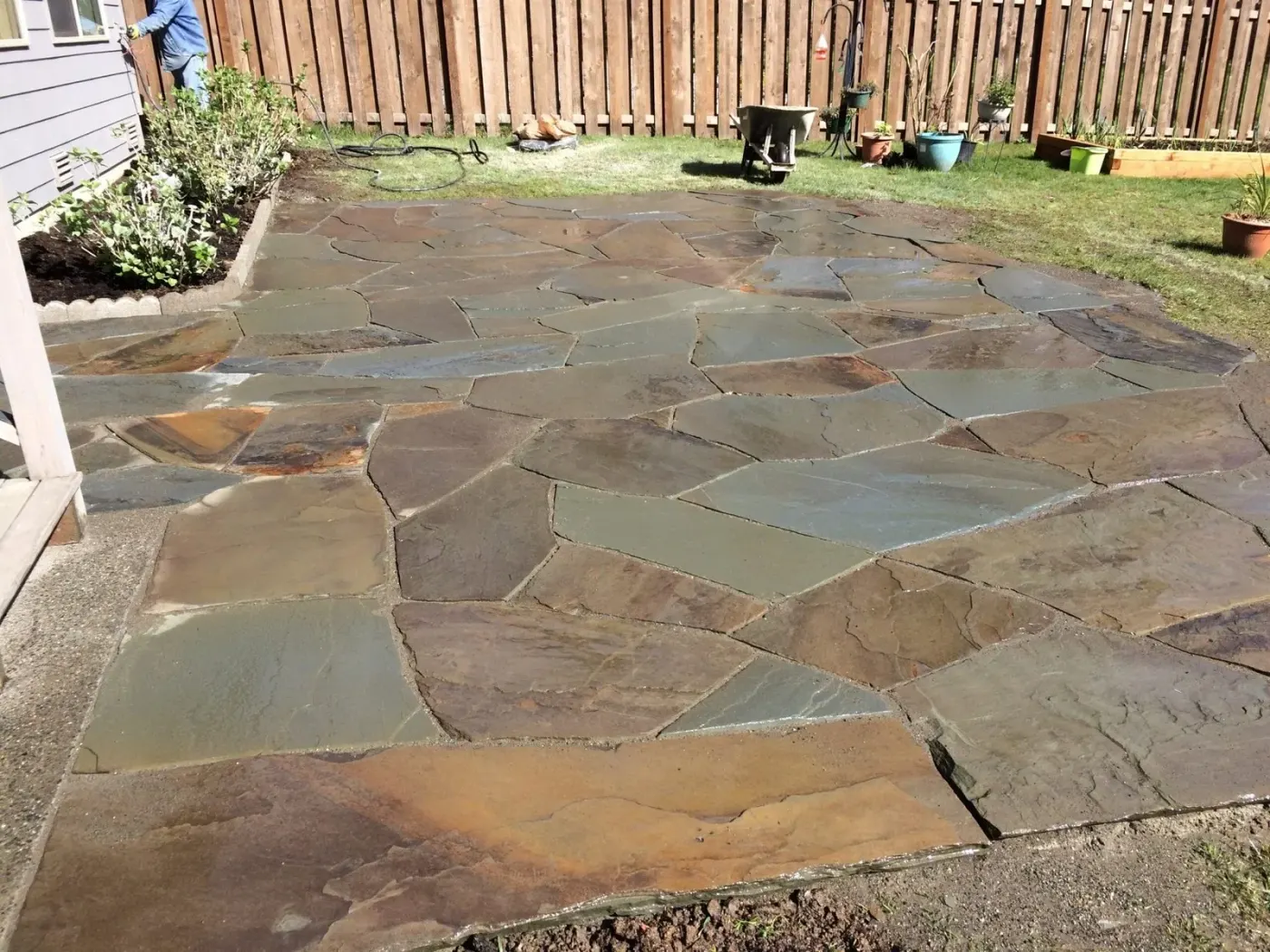
 FlagstoneView full size
Natural flagstone patio
Hand-fitted flagstone laid tight, replacing a tired lawn that never drained properly.
No down payment. You pay when the project is finished.
Monday – Friday, 9:00 AM – 7:00 PM · Capitol Hill, Seattle
Drainage · Mercer Island
Mercer Island drainage runs into a constraint that barely applies anywhere else on this list: you frequently cannot put the trench where the water wants it. These are the most heavily treed lots we work on, the city regulates removal on private property more protectively than most, and the roots keeping a mature fir or maple alive spread well beyond its canopy in the top foot or so of soil — which is exactly the depth a drainage trench occupies. On top of that, ground under a closed canopy dries far more slowly than open ground, so a shaded island garden can stay saturated for weeks after rain has stopped even where the soil itself is unremarkable.
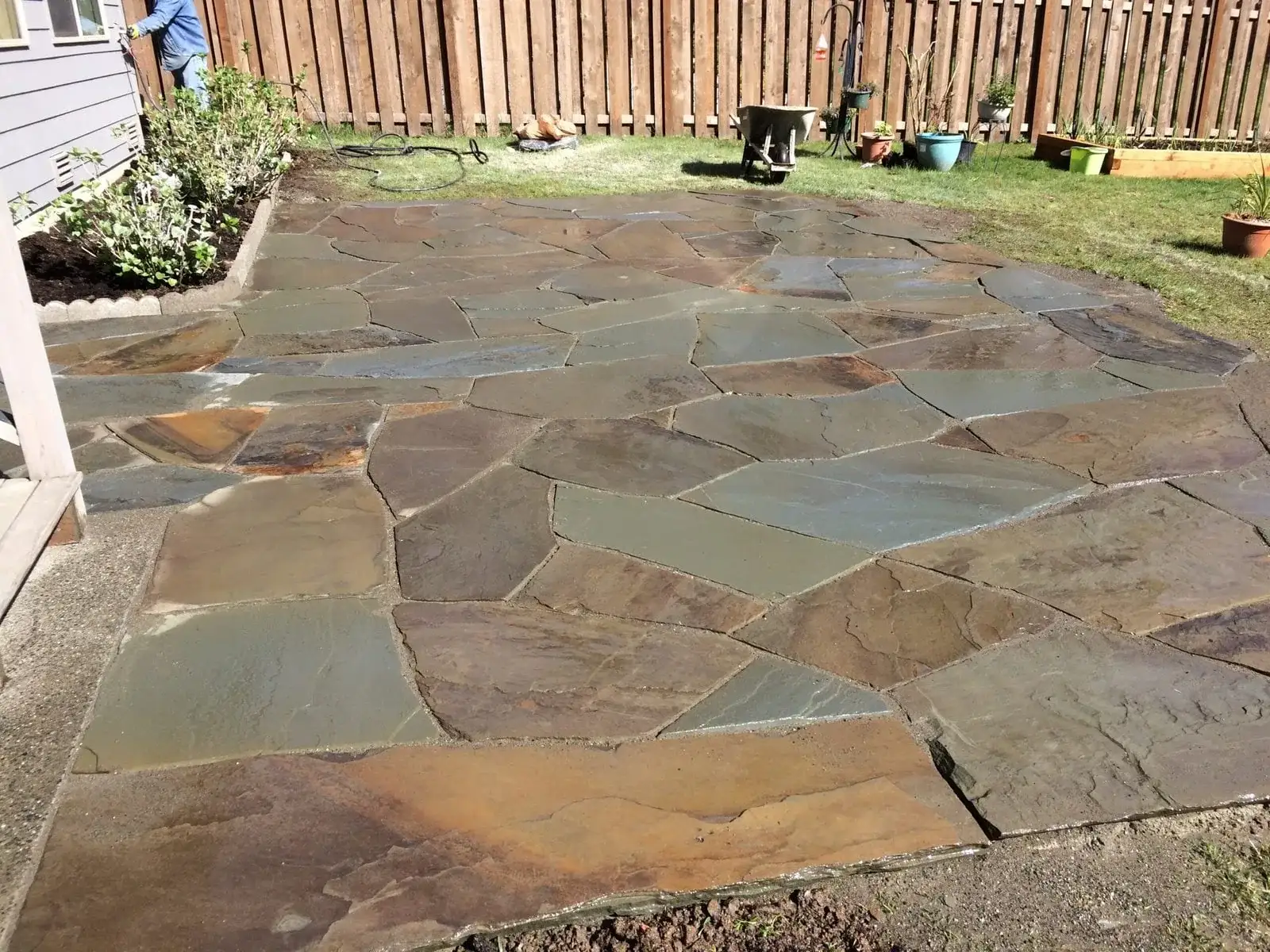
Hand-fitted natural flagstone patio in a fenced Mercer Island back garden
What we get called about
Mercer Island is large lots, mature trees and a shoreline slope on every edge, and the trees are the defining constraint. The city regulates removal on private property more tightly than most, and the canopy on these lots is dense enough that light and root plates govern where hard surfaces can realistically go. Toward the shoreline the ground steepens and slope stability becomes a design factor rather than a formality. Access is generally excellent, which is one reason island projects tend to be full renovations rather than piecemeal work.
Worth knowing on Mercer Island
Clear the needle litter before you conclude you have a drainage problem. A thick mat of conifer needles sheds water rather than absorbing it and can produce standing water on ground that drains perfectly well underneath — it is worth ruling out before anyone quotes a trench.
The method
The sequence does not change between neighbourhoods — what changes is the ground it is applied to. Full detail on the drainage service page.
Roof, surface runoff, a neighbouring property's grade, or groundwater sitting on the till. These need different answers and guessing wastes the whole job.
A drain needs somewhere legal and physical to go — daylight at a lower point, or an approved connection. A drain that terminates in a hole is a soakaway on ground that does not soak.
Continuous fall along the whole run. A trench that dips holds water and silts up, which is the most common reason a retrofit drain stops working.
Perforated pipe bedded in clean washed rock, wrapped in geotextile so the surrounding soil cannot migrate in and clog the void.
Turf, planting or hard surface put back so the finished job does not read as a scar across the garden.
What it costs on Mercer Island
Island access is excellent and the run from our Capitol Hill base is short, so the machine work is efficient and the job sits comfortably in the $10 to $25 per linear foot range. What adds cost here is trenching around trees: hand excavation within root zones and adjusted alignments are considerably slower than a machine cutting a straight line, and on a heavily treed lot that can apply to a meaningful share of the run.
You pay after the project is fully completed.
The estimate you sign is the price you pay.
Spread the cost with no interest.
Covers hardscape work; vegetation excluded.
Local questions
General questions about this service are on the service page. These are the ones that only come up here.
Sometimes, with a modified approach, and it needs establishing before the alignment is fixed. Most of the roots keeping a large tree alive sit in the top foot or so of soil and spread well beyond the branch line — the same zone a drainage trench occupies. Cutting straight through that severs a substantial share of them, and the tree may take three or four years to show it. The workable options are shifting the alignment outside the critical root area, hand excavation with root pruning kept to a minimum, or in some cases a shallower system. The city's tree regulations may also bear on significant excavation within a root zone.
Both, and the balance is worth understanding before removing anything. A mature conifer moves a substantial volume of water out of the ground through the growing season, so it is doing real drainage work for free, and its roots bind the soil around it. Against that, a closed canopy keeps sun and wind off the ground so it dries very slowly, and heavy needle litter mats down and sheds water rather than absorbing it. Clearing litter and thinning a crown usually improves matters. Removing a large tree on a sloped island lot can leave you with a wetter garden than you started with.
Yes, in the same way it is on any sensitive slope. The edges of the island carry looser material than the level crown and are more responsive both to loading and to water, so a system that collects a garden's worth of water and delivers it as a concentrated stream onto the slope is creating a problem rather than solving one. The discharge has to be controlled and designed rather than simply daylighted at the most convenient point. On the flat ground through Island Crest none of that applies and the work is straightforward, which is why we look at where on the island you are first.
Woodland planting, and it is genuinely the better answer than fighting the conditions. Under an established canopy you have low light, ground that stays damp for long stretches in winter and dries out in summer because the trees take the water, and acidic needle litter. Sword fern, salal, evergreen huckleberry, hellebores and woodland groundcover thrive in exactly that combination and need no drainage intervention at all. Where drainage is worth installing is around the areas you actually use — a patio, a path, the ground against the house — rather than across a whole wooded lot.
Serving Mercer Island and surrounding neighbourhoods
North End · East Seattle · First Hill · Mercerwood · Island Crest · South End
98040
Recent work
FlagstoneView full sizeHand-fitted flagstone laid tight, replacing a tired lawn that never drained properly.
 Retaining WallsView full size
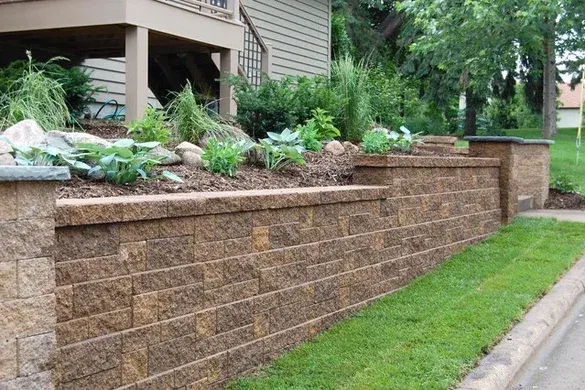
A long run of split-face block turning the fall between house and street into a raised bed at standing height, capped flat so the whole length reads as one line.
 Retaining WallsView full size
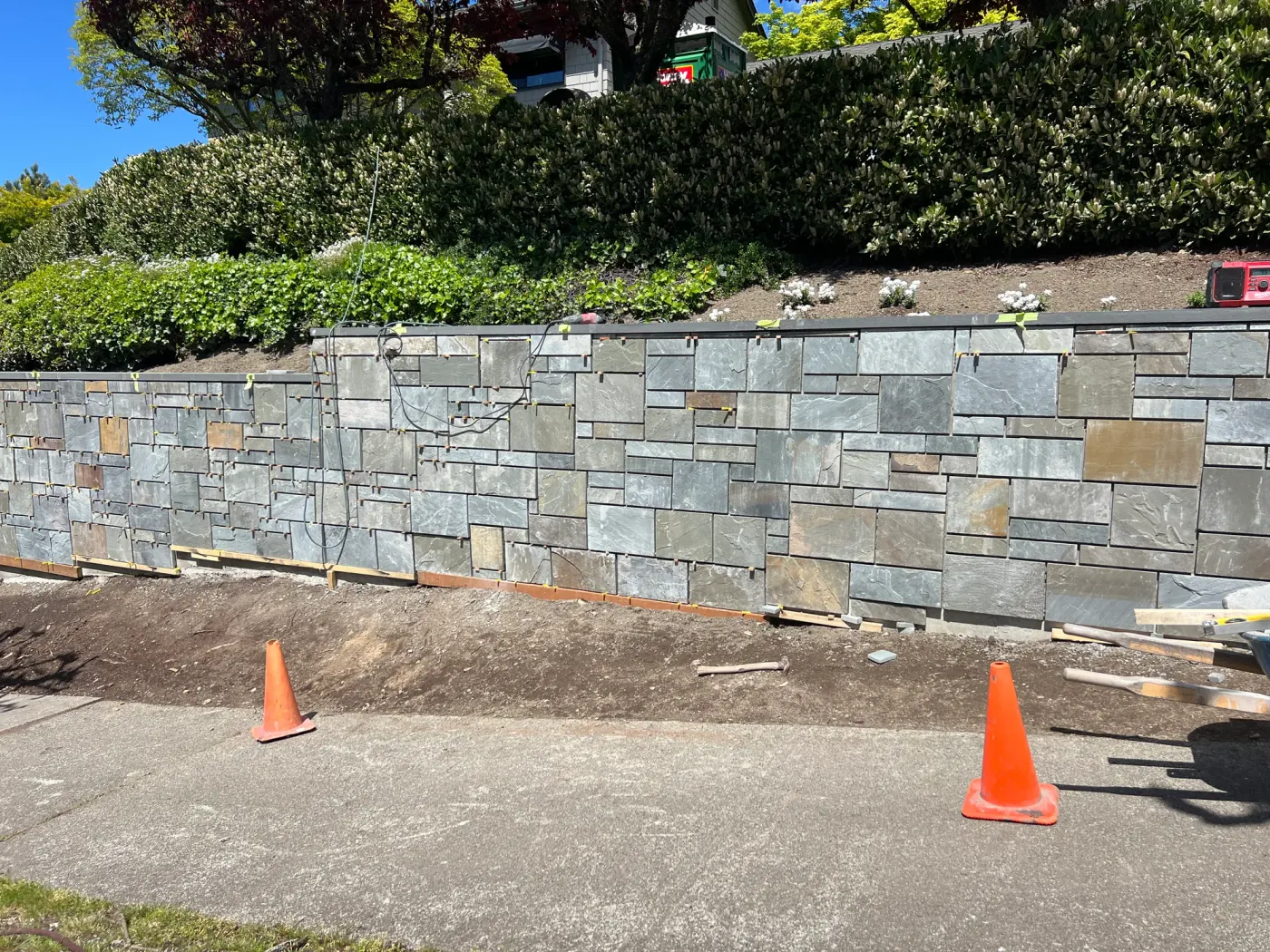
A long frontage wall going up in cut stone, cones out and the base course still showing. The bed above it was regraded to drain towards the street rather than back into the wall.
 Paver PatioView full size
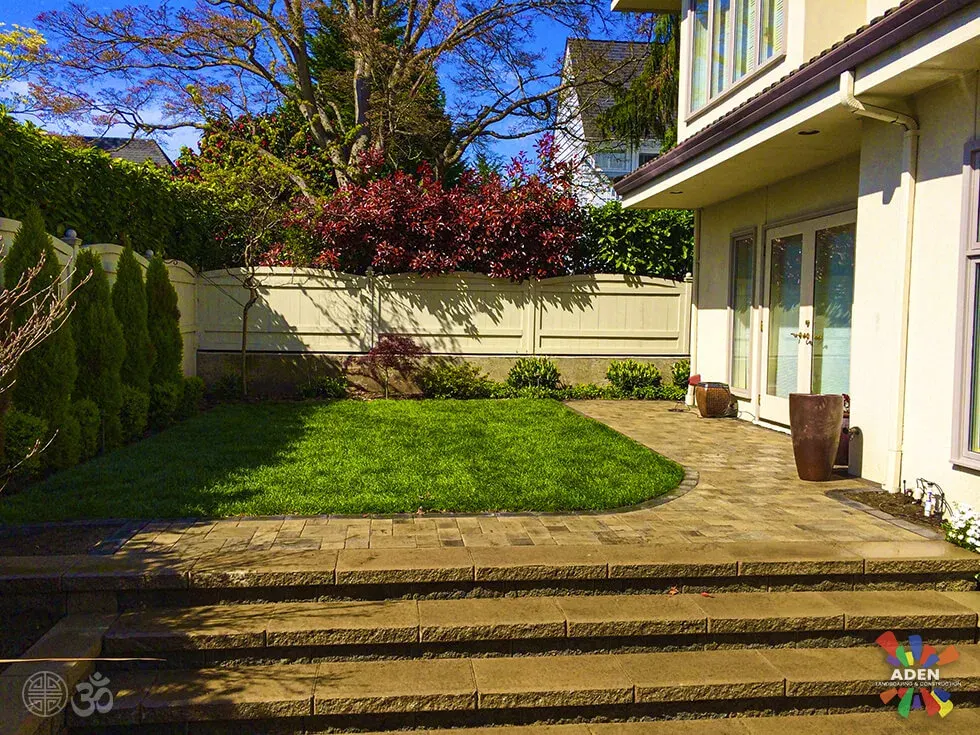
A wide run of paver steps down from the house to a terrace that stops where the lawn begins. Not every garden wants paving all the way to the fence.
We come out, look at the ground, and put a fixed written price together. No deposit, and it does not change once agreed.
Free estimate
Three minutes on the form. We reply during office hours, Monday – Friday, 9:00 AM – 7:00 PM, and we come out and look at the site before quoting anything.
Or call (425) 533-9734
Thank you — we have your details. We reply during office hours, Monday – Friday, 9:00 AM – 7:00 PM. If it is urgent, call (425) 533-9734.