
 Artificial TurfView full size
Turf lawn with cedar raised beds
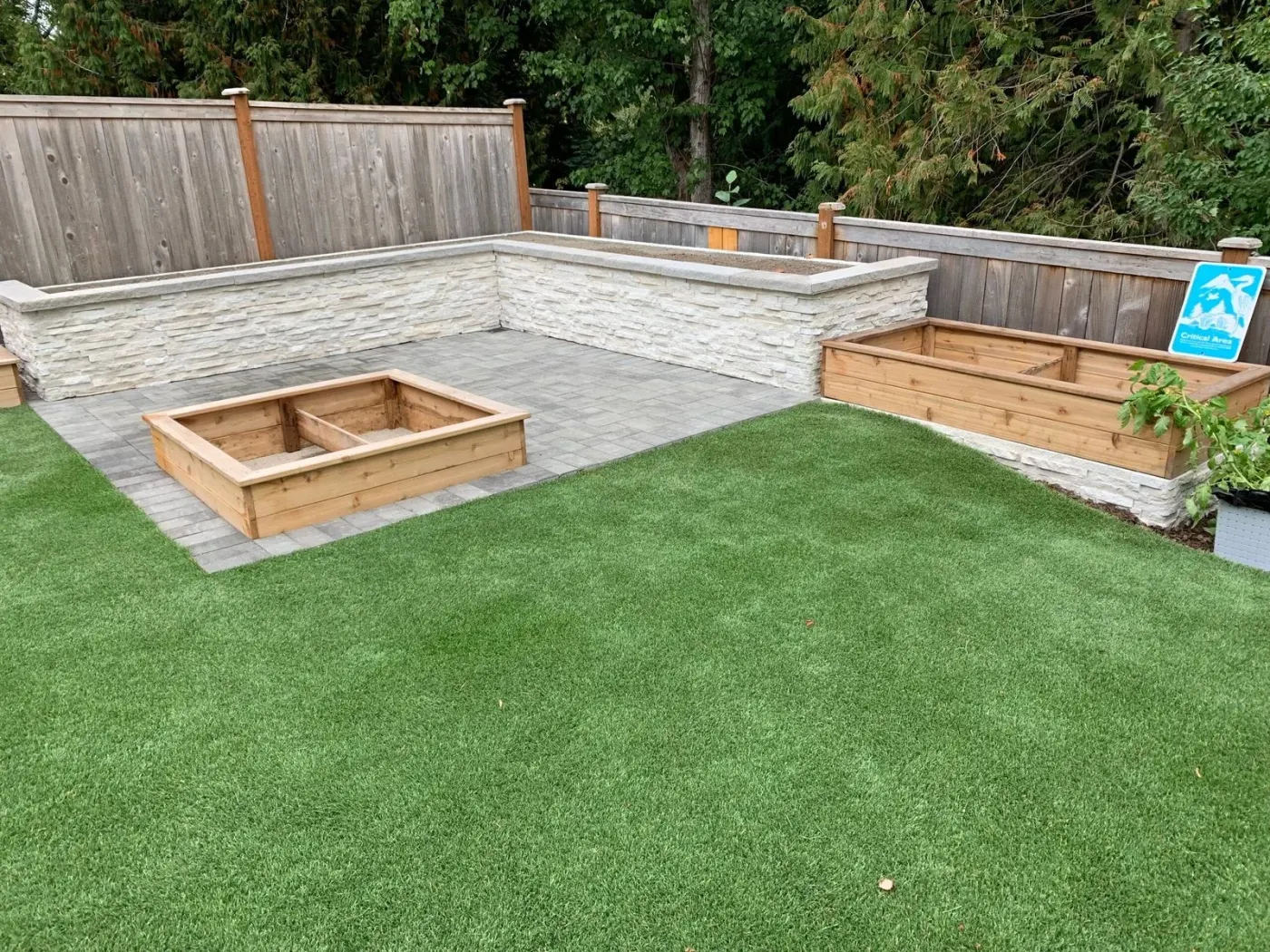
A no-mow lawn for a small city yard, with cedar planters and a paved seating edge.
No down payment. You pay when the project is finished.
Monday – Friday, 9:00 AM – 7:00 PM · Capitol Hill, Seattle
Service
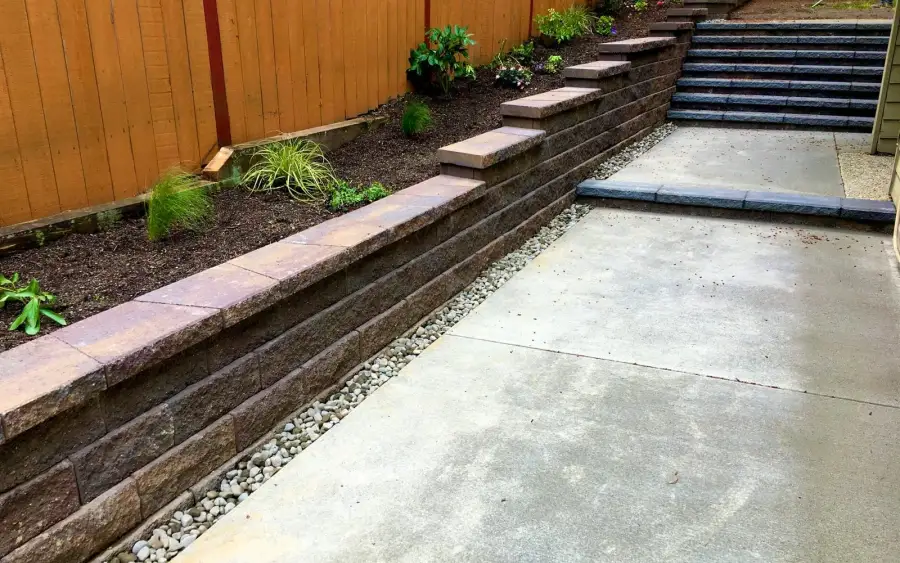
A garden wall is holding soil, which makes it a retaining wall that happens to be short and have plants behind it. That distinction is the whole job. A raised bed built as a decorative edge, with no drainage and no thought about what saturated soil weighs, will bow outwards within three winters in this climate — and it will do it faster than a bare retaining wall, because a planted bed is watered deliberately on top of everything the sky delivers. We build these with the same drainage thinking as a full retaining wall, scaled down: free-draining material behind the face, a route for water to leave, and a base that was compacted rather than scraped level. The result is a bed at a height you can work at without kneeling, that still looks the same in ten years.
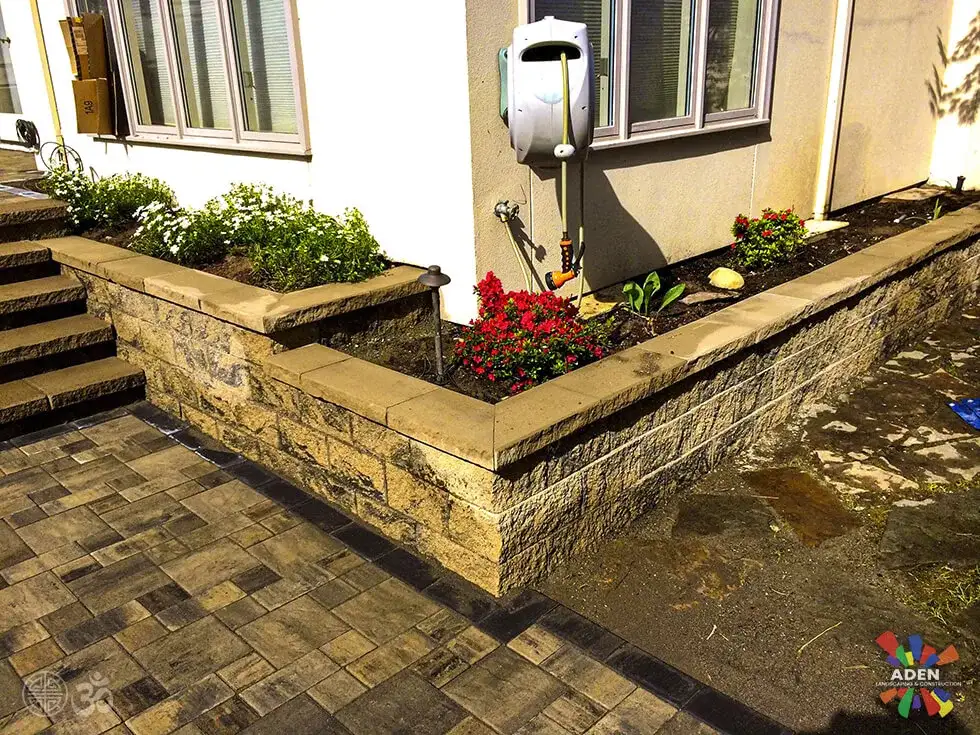
Stone-faced raised planting beds filled with fresh soil beside a paved path
What is included
Planting at a height you can reach, in soil that stays put.
Freestanding beds at eighteen to thirty inches, which is the range that lets you plant and weed standing up. Popular with anyone who has given up kneeling on wet ground.
Two or three low walls stepping up a slope, each holding a planted terrace. Turns a bank that cannot be planted into the most usable growing space on the plot.
A single course defining lawn from planting, set flush enough that a mower wheel runs along it and nobody has to strim an edge.
Block for value and consistency, natural stone where it has to look like it grew there, cedar or sleepers where the look is informal and the budget is tighter. All three get drained the same way.
Filled with a growing medium chosen for what is going in it, not with whatever came out of the excavation. A new bed backfilled with subsoil is a bed that disappoints for five years.
Why people call us
How we build it
Seasonality. Best built in autumn or early spring so the soil has time to settle before a growing season. Buildable any time the ground is workable, but filling a bed in midsummer means watering it hard for the first month.
Vegetables want depth and drainage; shrubs want width; a terrace on a slope wants to know what is uphill of it. The use sets the height and the wall type, not the other way round.
Below the finished level, compacted. Short walls get away with less, but a bed wall carrying wet soil is carrying more weight per foot than people expect.
Free-draining material directly behind the units and a route to daylight. This is the step that separates a bed wall that stays straight from one that bows.
Geotextile between the growing medium and the drainage layer, so the fines from the soil do not wash into the rock and silt it up over a couple of seasons.
Topsoil and compost blended for the planting, filled in lifts and settled rather than heaped in one go and left to subside six inches over a winter.
A cap where it will be sat on or leaned against, a plain top course where it will be hidden by planting within a season.
What it costs
A pair of raised beds, twenty feet of wall in total at two feet high, usually falls between $2,200 and $4,500 including a proper growing medium. Timber is the cheaper end, natural stone the top. Soil is a bigger share of the cost than people expect on a deep bed.
That is a market range, not a quote. Your price is fixed in writing after we have seen the site, and it does not move once agreed.
No deposit is required to start. Payment comes after the work is finished — not before.
A fixed, accurate price is guaranteed before the job starts. We do not quote low and raise it mid-project.
A 0% interest payment plan is available for up to 6 months.
Hardscaping work carries a warranty. Vegetation is excluded.
Garden Walls we have built
Artificial TurfView full sizeA no-mow lawn for a small city yard, with cedar planters and a paved seating edge.
 Retaining WallsView full size
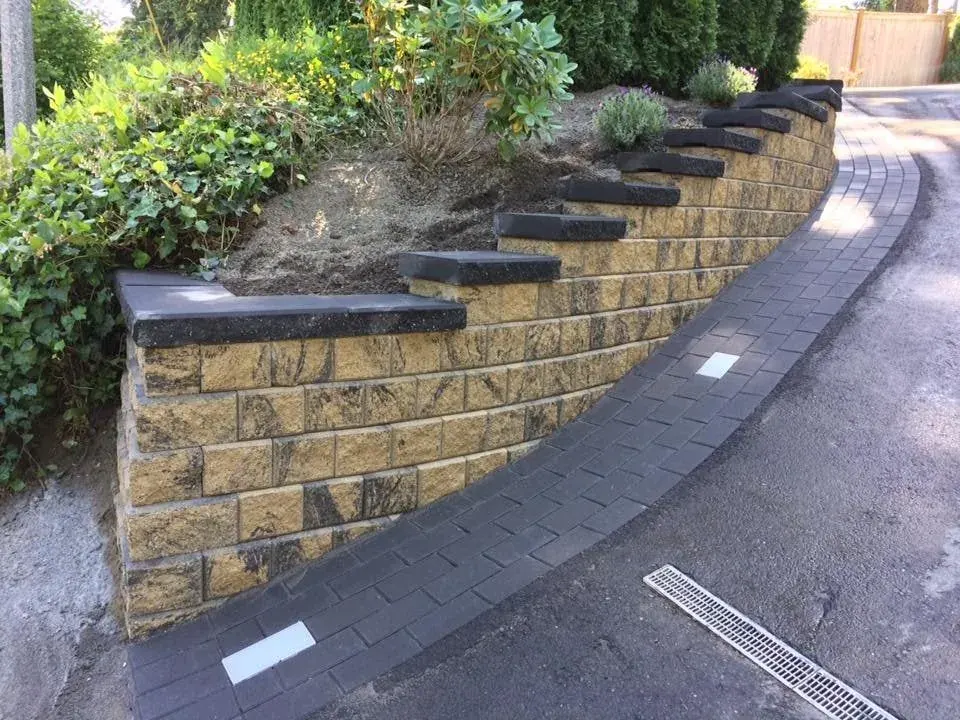
A curved wall along the street edge with lighting set into the face and new planting above.
 HardscapingView full size
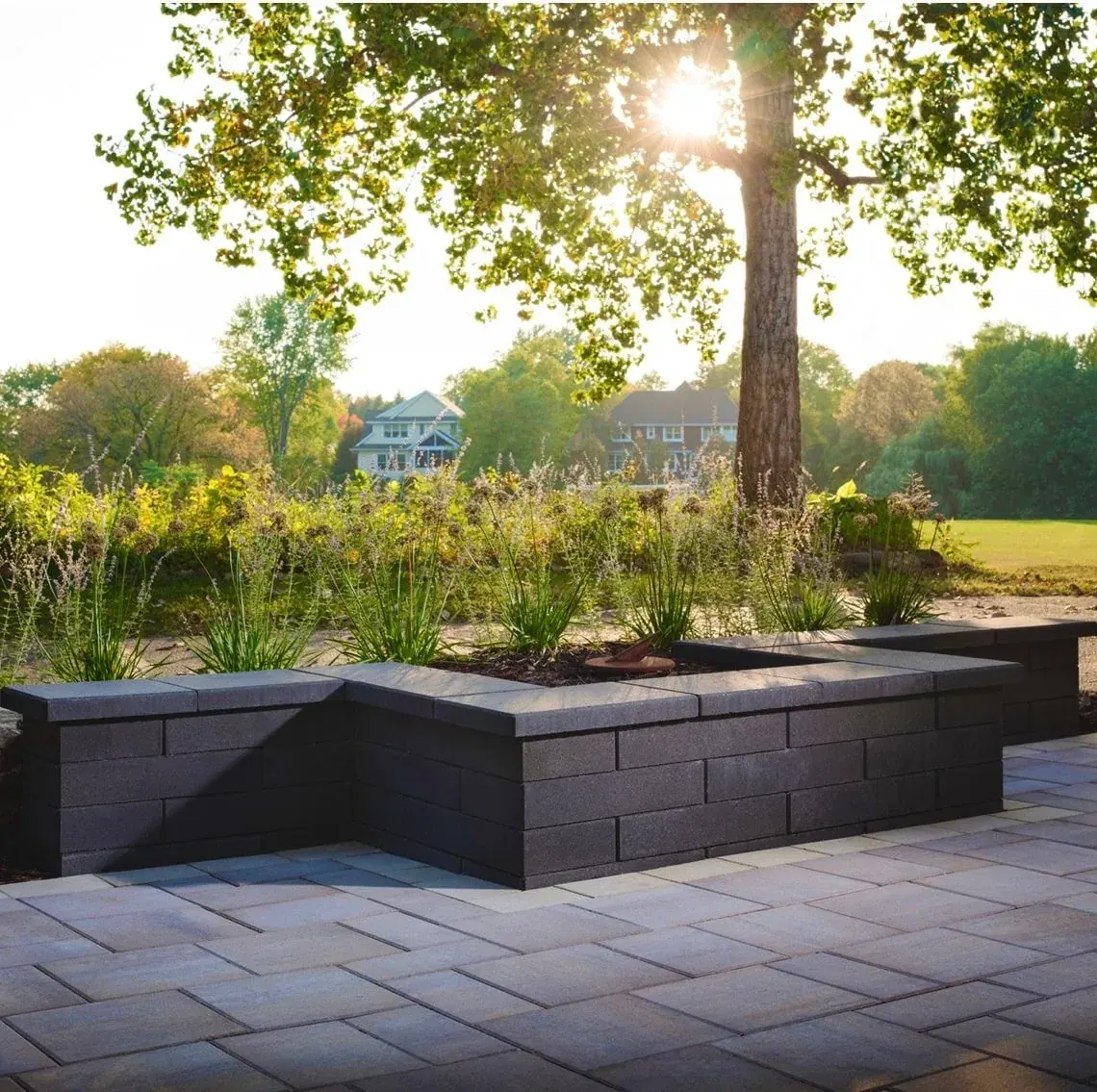
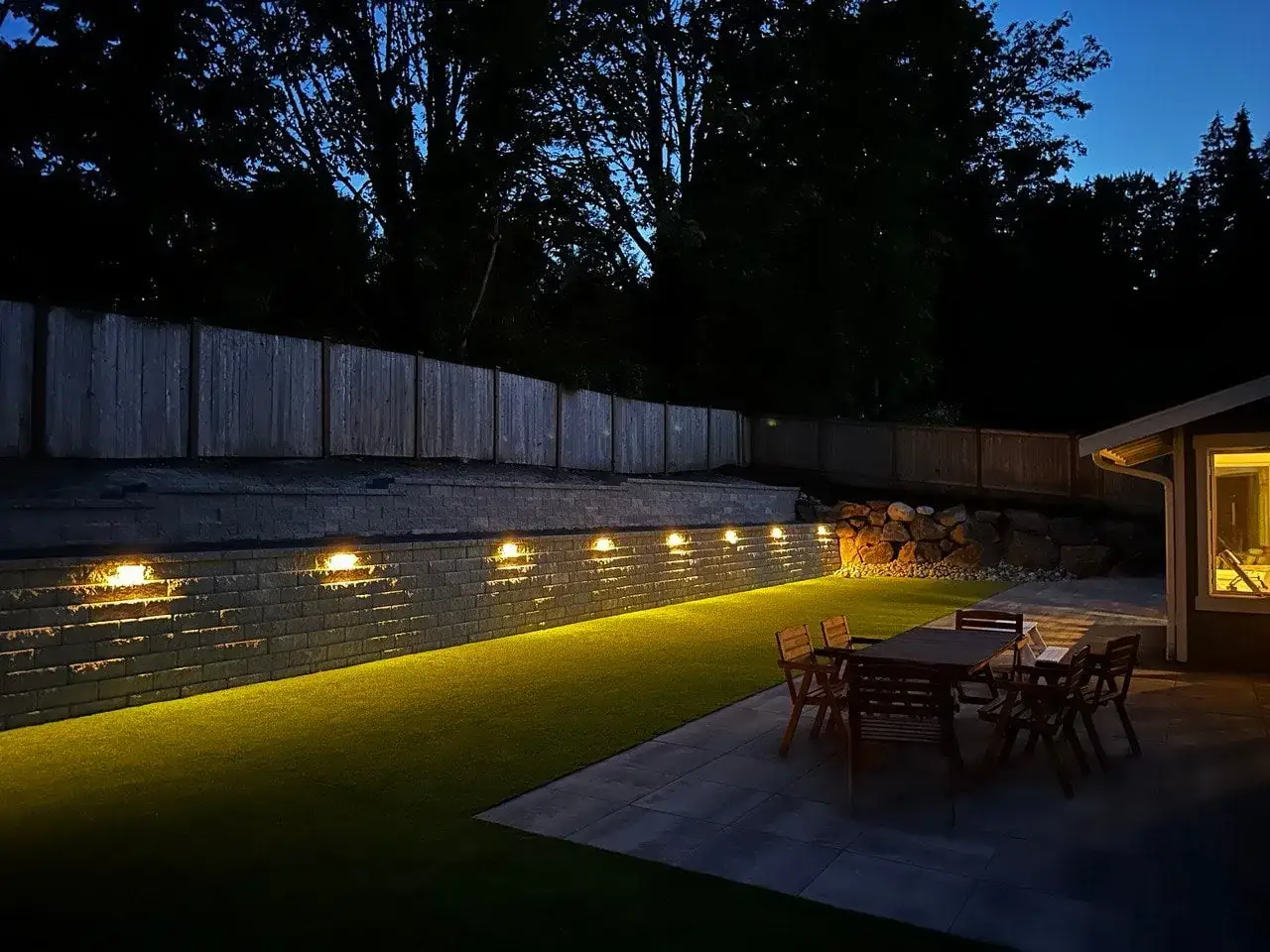
Charcoal block planters framing a stone terrace, photographed the evening it was finished.
 Retaining WallsView full size
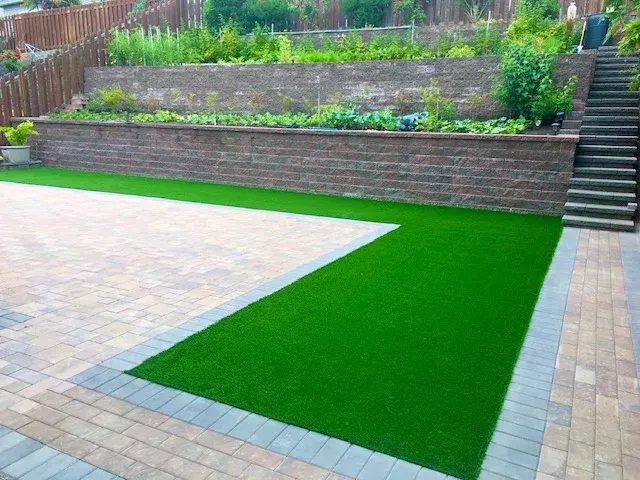
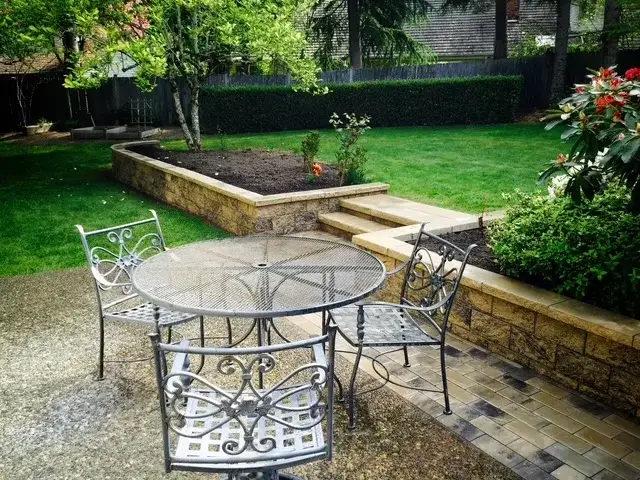
A brick-faced wall the full width of the garden, carrying raised vegetable beds above a level turf lawn and paver terrace.
 HardscapingView full size
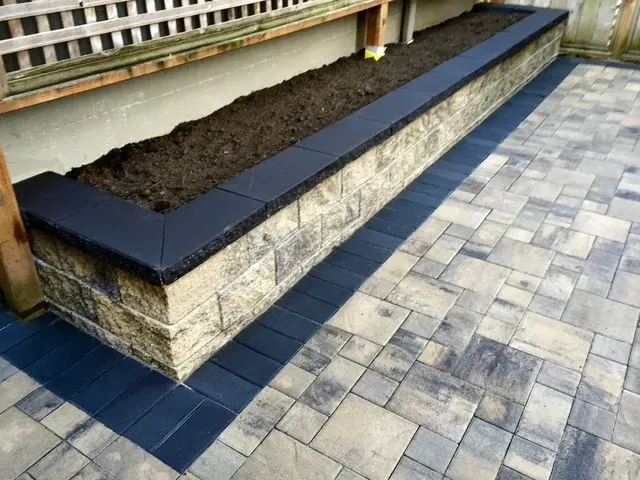
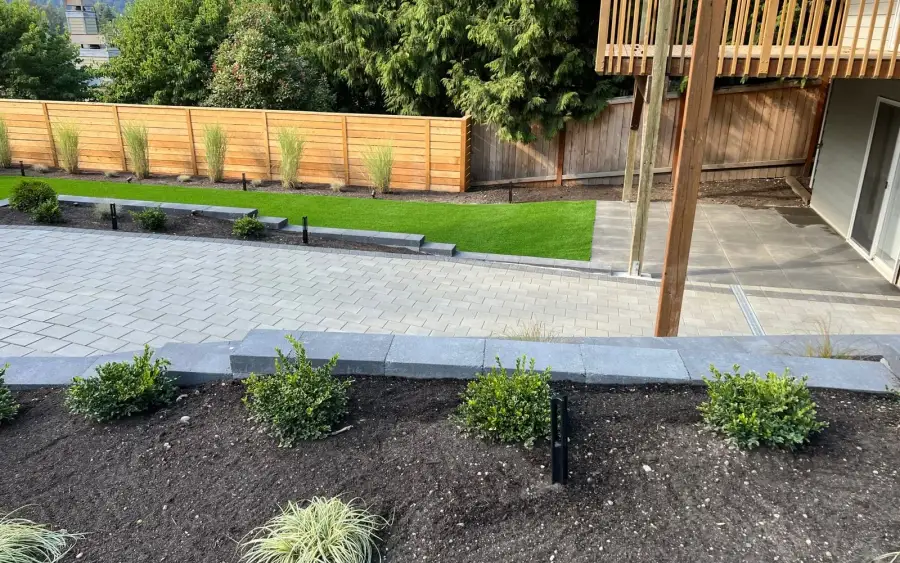
A raised planter running the length of the terrace, capped in charcoal to pick up the darker banding in the paving.
 Retaining WallsView full size
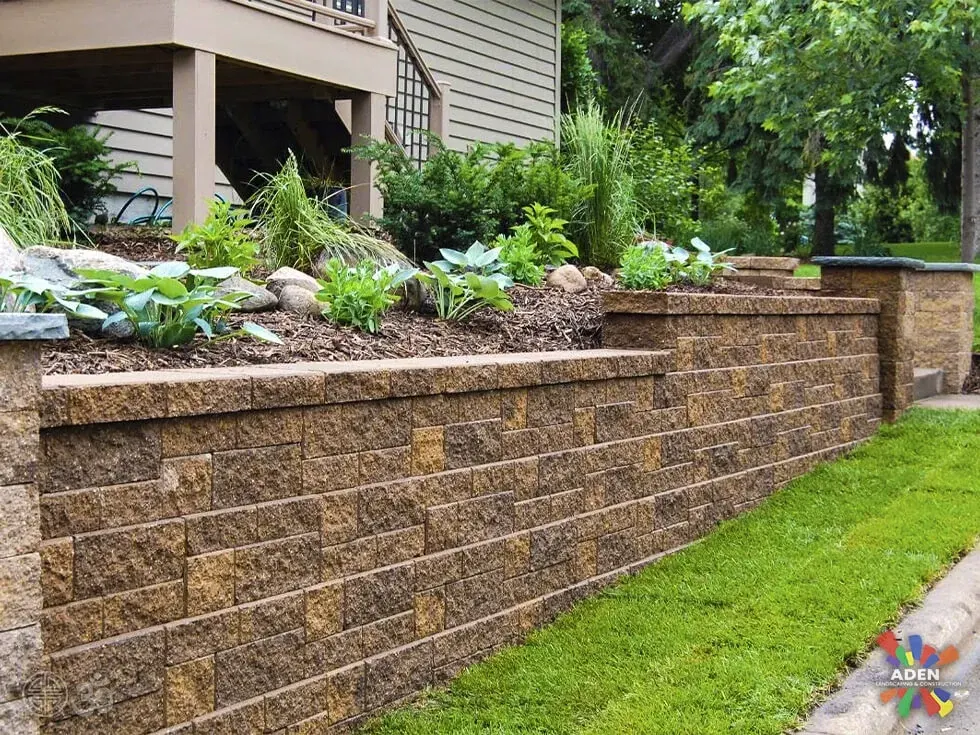
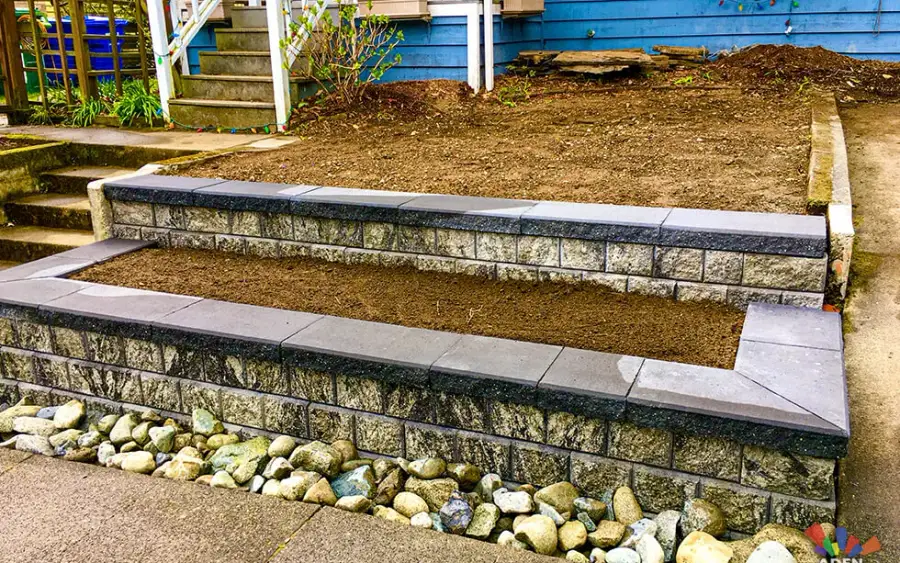
One course of tan split-face block turns a soft slope into a level bed and a level lawn. The planting sits above the wall instead of sliding down it, which is the entire reason the wall is there.
 Paver PatioView full size
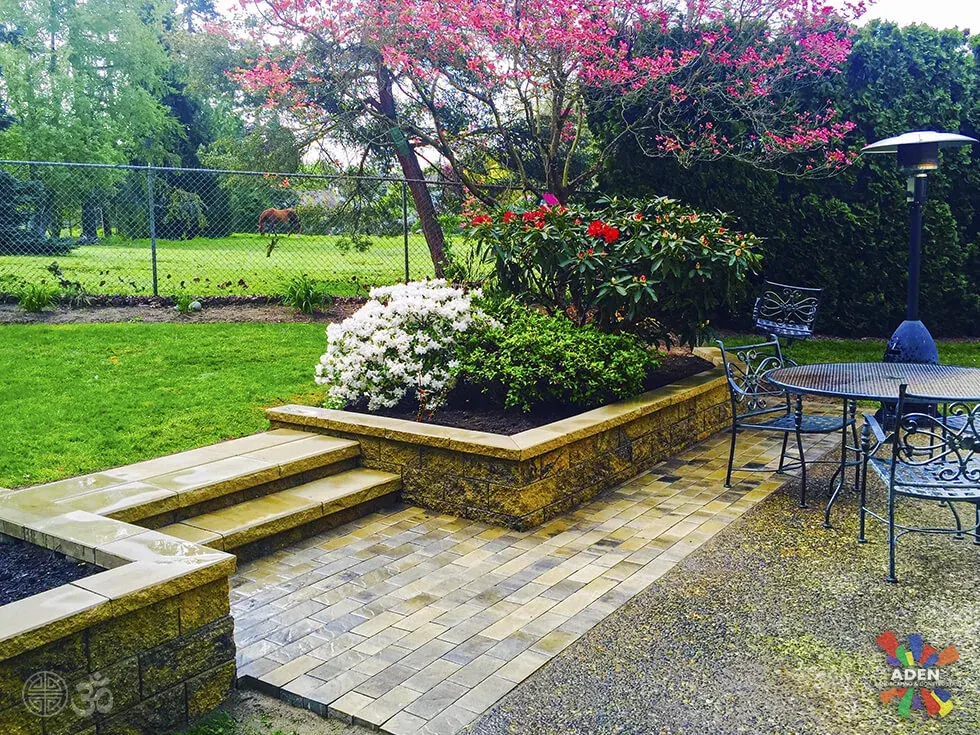
The bed wall doubles as the terrace edge and as somewhere to put a drink down. Two functions out of one course of stone is usually the cheapest line in the estimate.
 StoneworkView full size
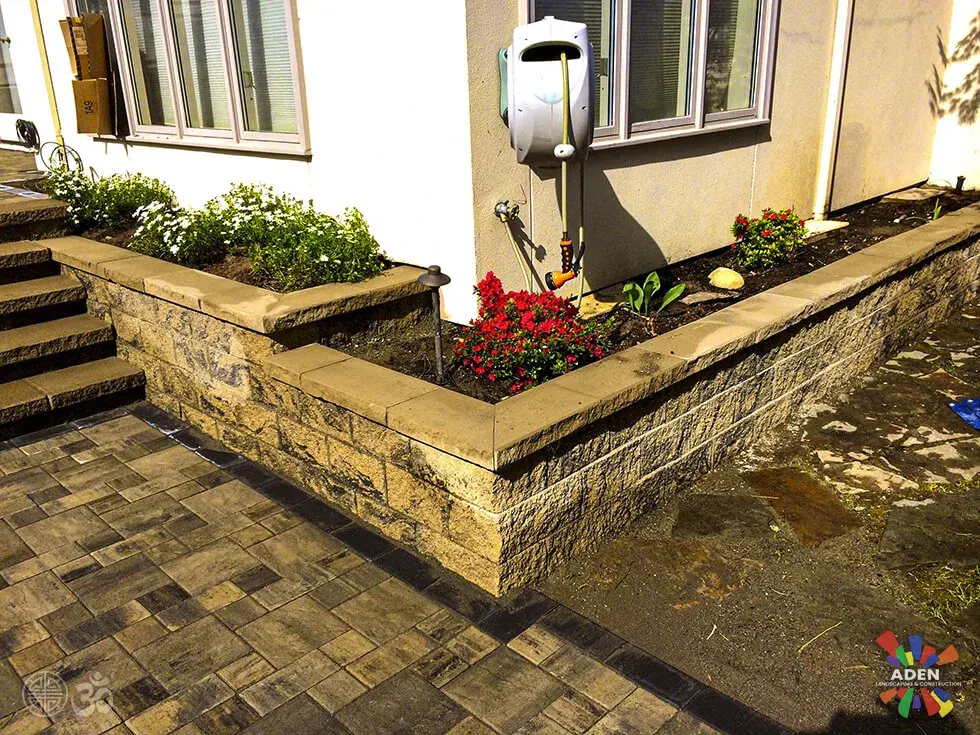
Stone-faced beds following the footing line, planted the day they were finished. Raising the soil away from the wall is what keeps water off the render.
In their words
Real Google reviews, unedited. We publish the ones that name the work rather than a generic five stars.
Valerie Madison
January 2025
Aden Landscaping did an incredible job transforming the side yard at my townhome! I needed some detailed weeding, shrubs trimmed, and for some bark to be laid down. The results exceeded my expectations, and I was so impressed with their reasonable pricing, prompt availability, and seamless communication throughout the project. I especially appreciated how they were gentle with my existing in-ground plants and no damage was done to them. They made the entire process easy. Highly recommend their services to anyone looking for quality landscaping work! Thank you Eric!
Where we build it
We work across Seattle, the Eastside and the north end — see every area we cover.
Before you call
Something not answered here? Call (425) 331-9811 and ask — we would rather talk it through than have you guess.
Not for a normal raised bed. A retaining wall is exempt from a construction permit when it is four feet or lower measured from the bottom of the footing, outside an Environmentally Critical Area, and causing no damage to adjoining property — and garden walls are usually one to three feet. The two things that catch people: the measurement is from the footing rather than from the ground you see, so a tall bed on a slope can be over four feet on the downhill side, and inside an ECA the exemption does not apply at any height.
Eighteen to twenty-four inches for general planting, which is high enough to work at without bending double. Thirty inches is the comfortable standing height if the point is to avoid kneeling entirely, and it roughly doubles the soil volume and therefore the fill cost. For vegetables, twelve to eighteen is plenty of root depth as long as what is underneath drains. Deeper is not better; it is just more soil to buy.
Wet soil pushing, with nowhere for the water to go. Saturated soil weighs far more than dry soil and exerts a lot of lateral force on a wall that was built as an edging rather than as a structure. Add deliberate watering on top of Seattle rainfall and a bed wall sees more water than most retaining walls do. The fix is the same as for any retaining wall: free-draining material behind the face, geotextile keeping soil out of it, and a route for water to leave.
Timber is cheapest and looks right in an informal or productive garden, but even cedar and treated sleepers have a life in this climate — plan on fifteen years or so for the course sitting in wet ground. Block is the value option that lasts indefinitely and comes in enough finishes to look deliberate. Natural stone costs roughly double block and is the one that still looks good in thirty years. All three need the same drainage; the material choice is aesthetic and budgetary rather than structural.
What is behind it. A garden wall holds soil, so it is a low retaining wall with the drainage that implies. A seat wall is freestanding and built to a specific height to sit on. The two get confused because they look similar from the front and are often the same height — but a seat wall built to hold a bed will bow, and a bed wall built at seating height without a comfortable cap is unpleasant to sit on. See our seat walls page if seating is the point.
Yes, and it is one of the better things to do with a slope. Terracing turns an unplantable bank into a series of level beds, each wall holding the one above. Two or three shorter walls almost always cost less than one tall one, and they avoid the engineering and permit that a single wall over four feet triggers. The thing to get right is drainage between the terraces, because water moving down the slope now has walls in its way.
We come out, look at the site properly, and put a fixed written price together. No deposit, and nothing changes once the price is agreed.
Usually done alongside
Flat, dry, usable ground that stays where you put it.
$18–$120 per square foot, depending on the element
Turn an unusable bank into flat, usable ground.
$5–$45 per square foot of wall face
Permanent seating that never blows over and never gets put away.
$60–$140 per linear foot
A yard designed as one thing, not six jobs stitched together.
$8,000–$70,000 for a full design and installation
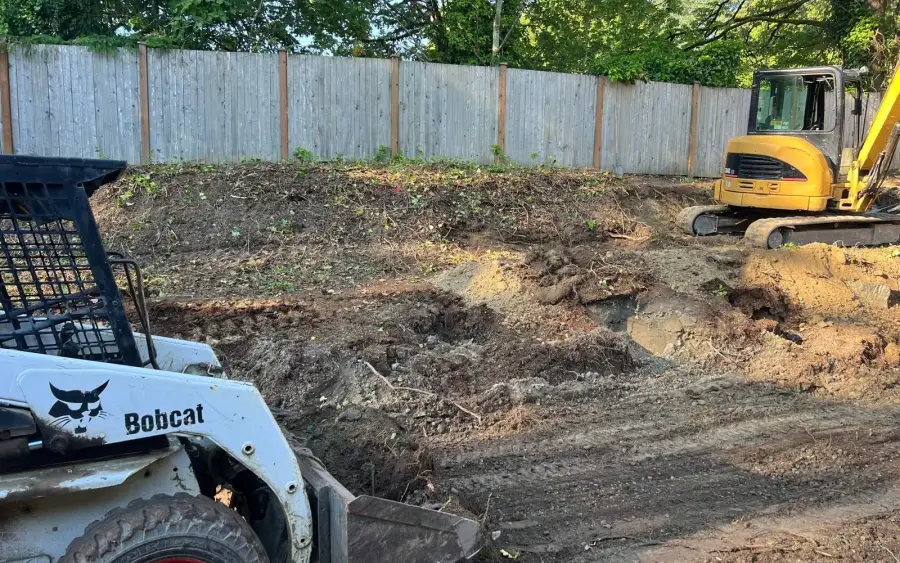
A yard that drains through a Seattle winter instead of holding it.
$10–$25 per linear foot
Free estimate
Three minutes on the form. We reply during office hours — Monday – Friday, 9:00 AM – 7:00 PM.
Or call (425) 331-9811
Thank you — we have your details. We reply during office hours, Monday – Friday, 9:00 AM – 7:00 PM. If it is urgent, call (425) 331-9811.