
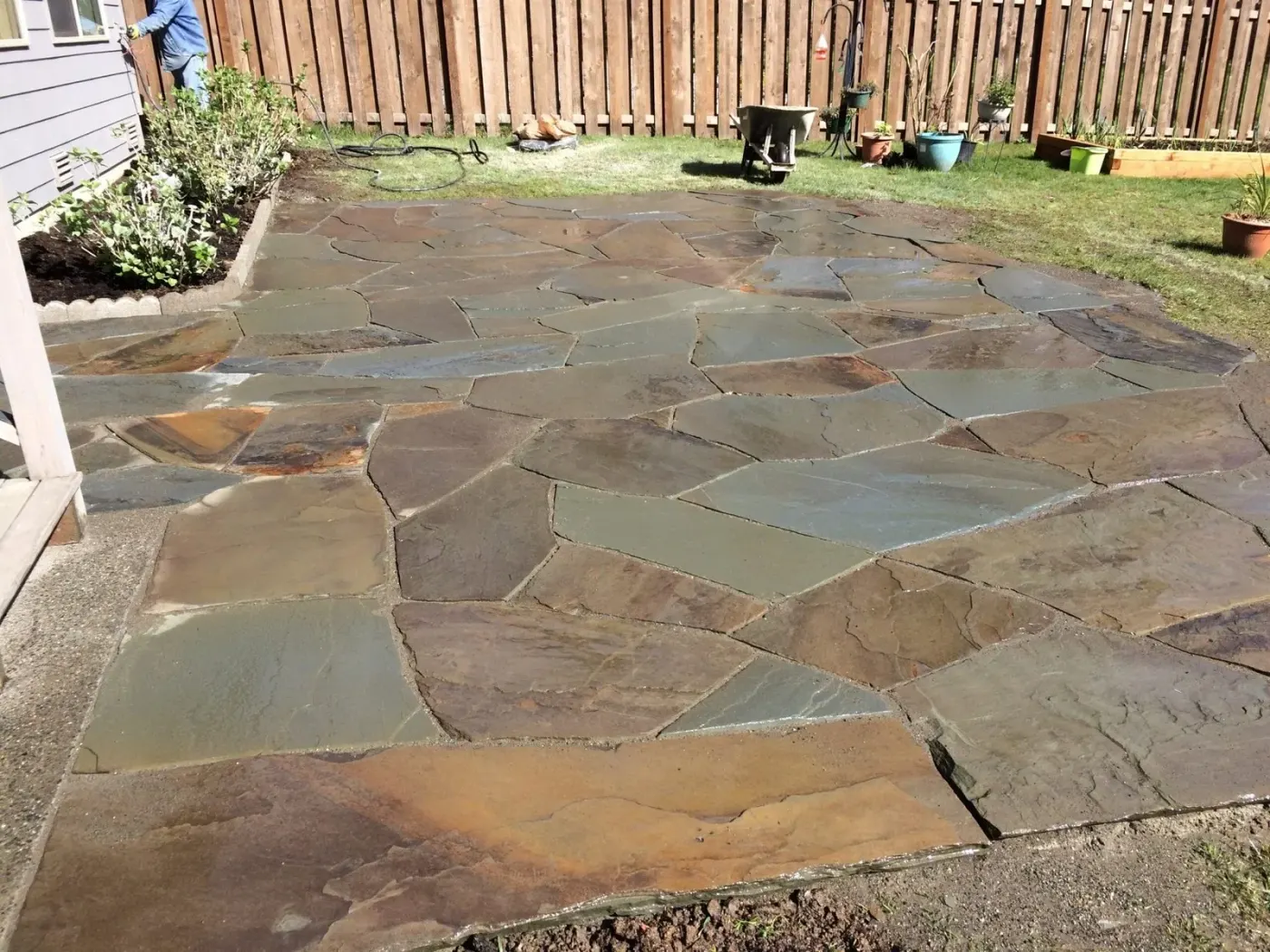
 FlagstoneView full size
Natural flagstone patio
Hand-fitted flagstone laid tight, replacing a tired lawn that never drained properly.
No down payment. You pay when the project is finished.
Monday – Friday, 9:00 AM – 7:00 PM · Capitol Hill, Seattle
Service area
Mercer Island has the biggest private lots and the densest tree cover of anywhere we work regularly, and both change how a project is planned. The canopy here is not decoration — it governs how much light a garden gets, where roots make excavation inadvisable, and what will actually grow. The city also regulates tree removal on private property more tightly than most of the region, so that question gets answered before a design is drawn rather than after. Toward the shoreline the ground falls away steeply on every side of the island, which is where the retaining and drainage work concentrates.
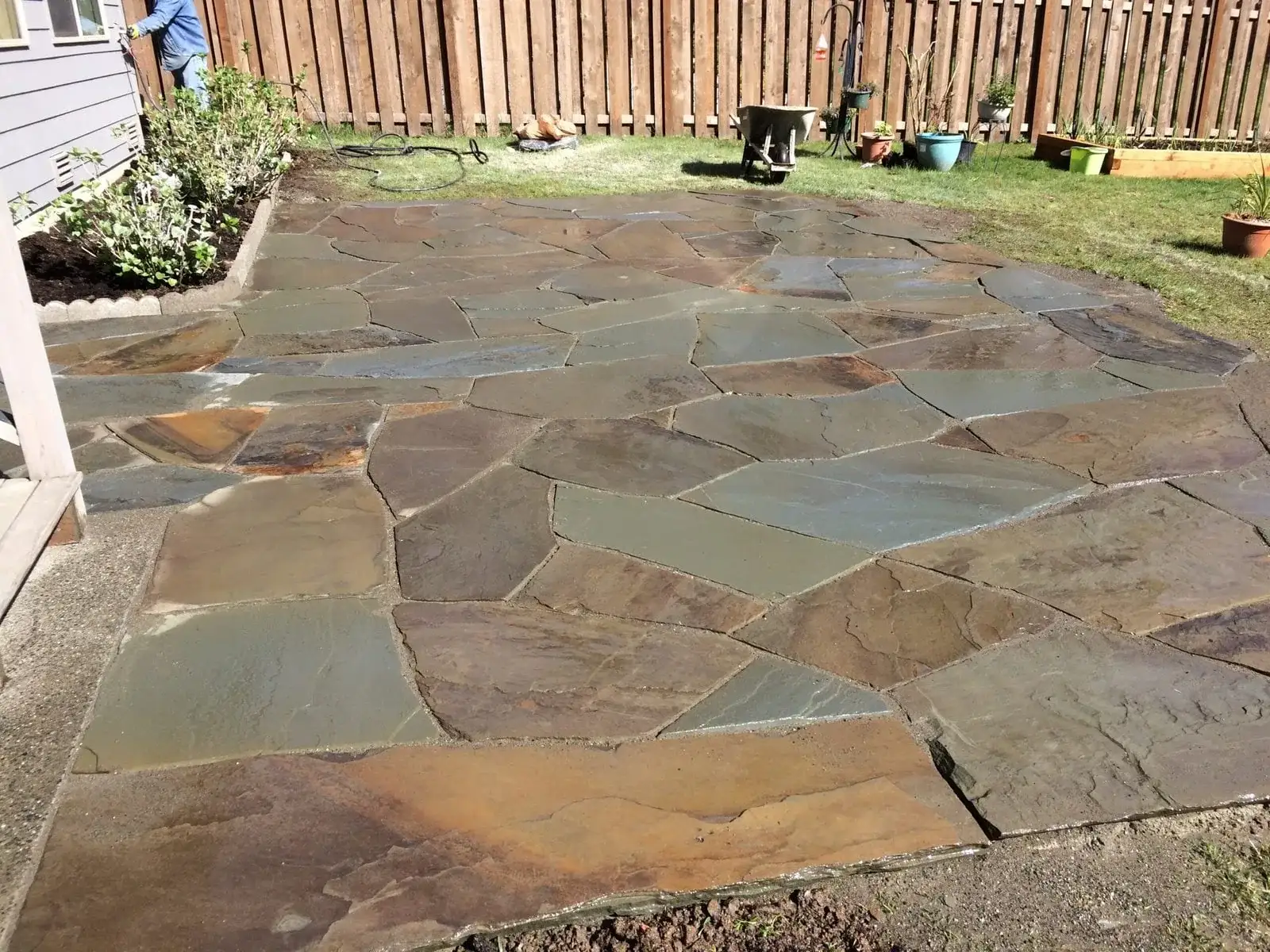
Hand-fitted natural flagstone patio in a fenced Mercer Island back garden
What we plan around here
Mercer Island is large lots, mature trees and a shoreline slope on every edge, and the trees are the defining constraint. The city regulates removal on private property more tightly than most, and the canopy on these lots is dense enough that light and root plates govern where hard surfaces can realistically go. Toward the shoreline the ground steepens and slope stability becomes a design factor rather than a formality. Access is generally excellent, which is one reason island projects tend to be full renovations rather than piecemeal work.
Mercer Island has the densest mature tree cover of anywhere we work, and the city regulates removal on private property more protectively than most jurisdictions in the region. Between them, those two facts mean most island projects are designed around trees that are staying rather than starting with a clearance.
The constraint is not only the trunk. Most of the roots keeping a large tree alive sit in the top foot or so of soil and spread well beyond the branch line, so a conventional patio base or wall footing excavated through that area severs a substantial share of them — and the tree may take three or four years to show it, long after anyone would connect the two events. Where a tree matters we shift the layout, reduce the excavation depth, or float the surface over the root zone rather than digging through it.
The upside is that a garden designed for the canopy rather than against it is far less work to keep. Woodland planting — sword fern, salal, evergreen huckleberry, hellebores — thrives in exactly the low light, summer-dry soil and acidic litter that defeats a lawn here, and it looks intentional rather than compromised.
What we build on Mercer Island
Serving Mercer Island and surrounding neighbourhoods
Seventy-seven acres of shoreline on the island's north-east side, with the mature canopy that characterises most of the island's gardens.
A hundred and thirteen acres of second-growth forest at the island's south end — the clearest statement of what the tree cover here means.
The park behind the town centre, on the flatter central ground where island lots are least constrained by grade.
North End · East Seattle · First Hill · Mercerwood · Island Crest · South End
98040
Recent work
FlagstoneView full sizeHand-fitted flagstone laid tight, replacing a tired lawn that never drained properly.
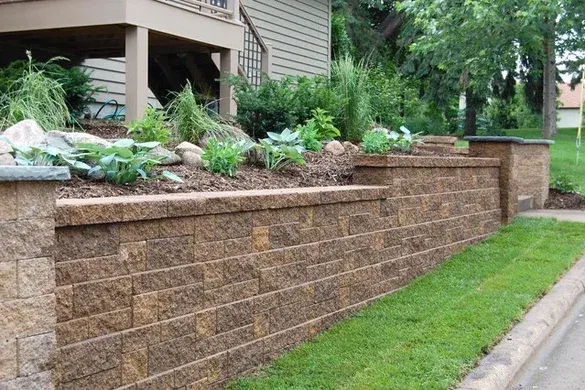 Retaining WallsView full size
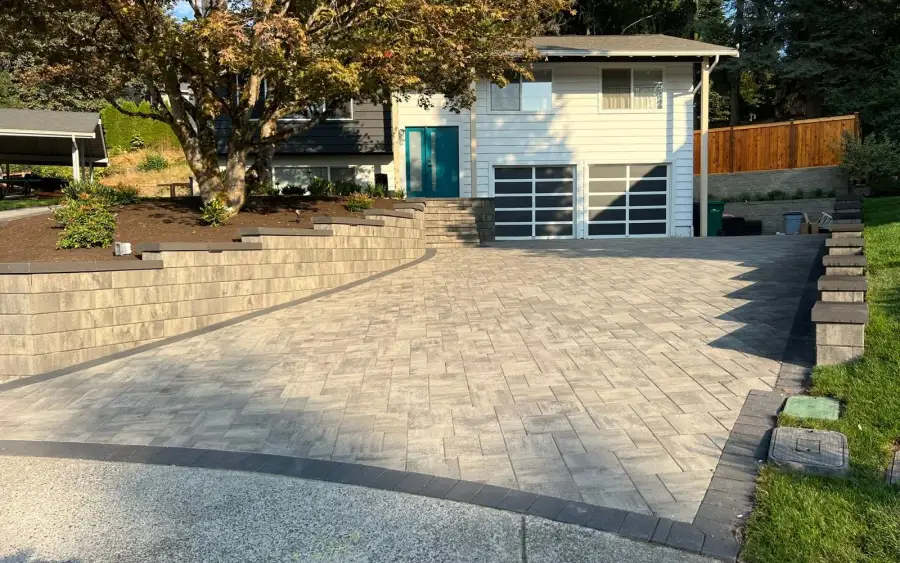
A long run of split-face block turning the fall between house and street into a raised bed at standing height, capped flat so the whole length reads as one line.
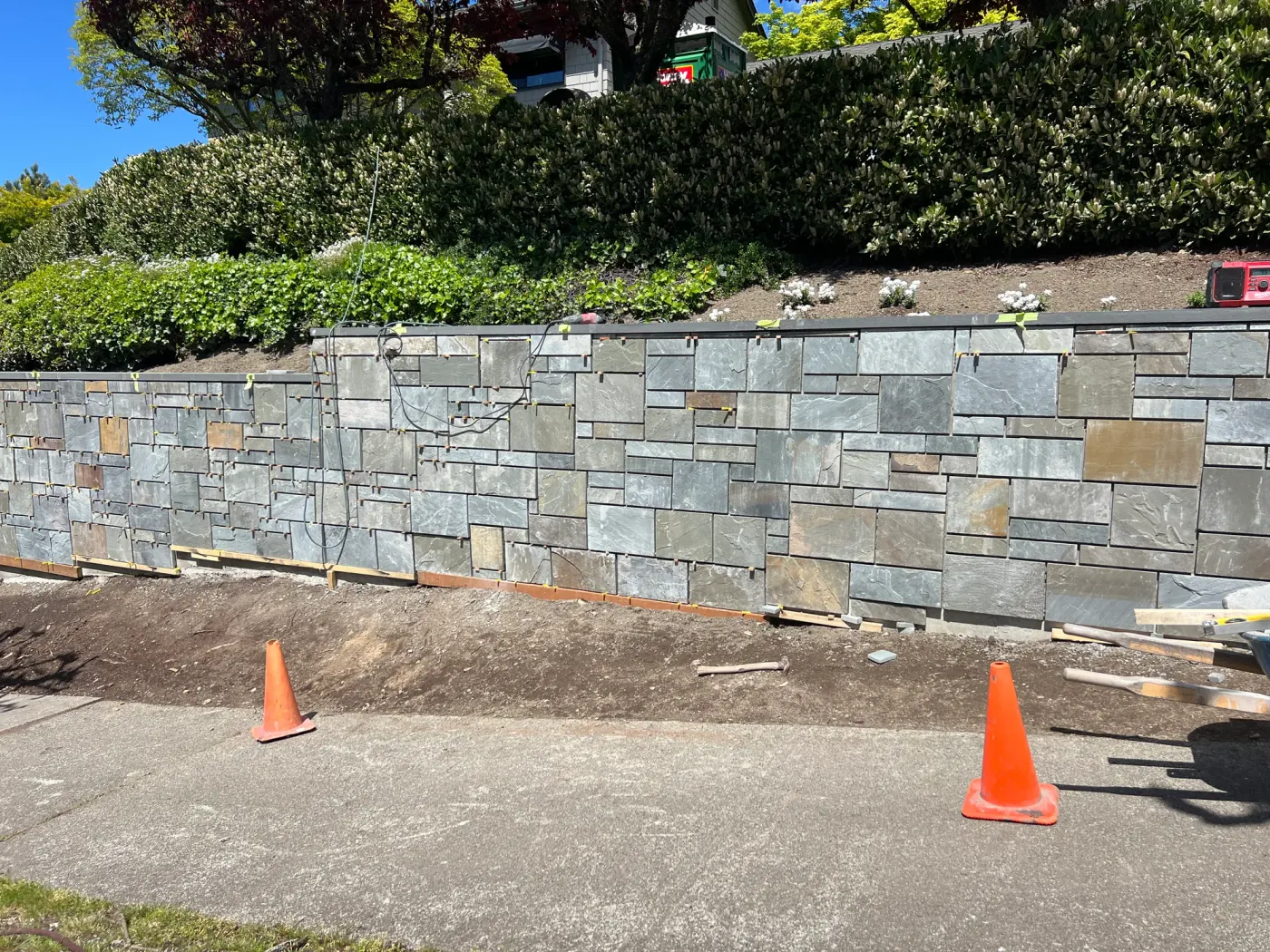 Retaining WallsView full size
A long frontage wall going up in cut stone, cones out and the base course still showing. The bed above it was regraded to drain towards the street rather than back into the wall.
 Paver PatioView full size
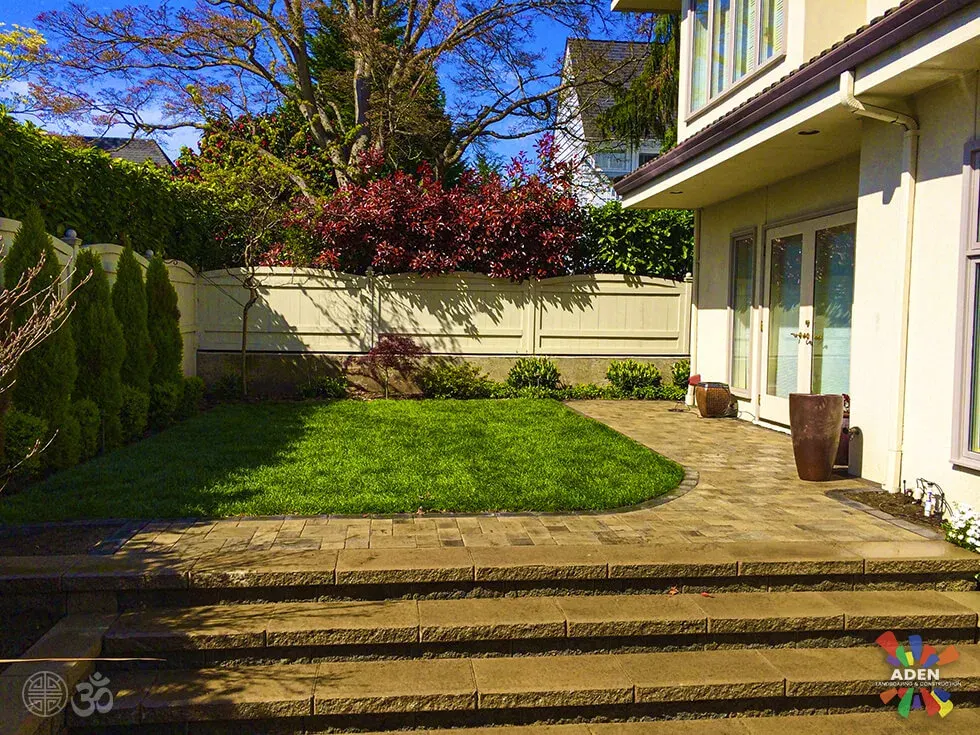
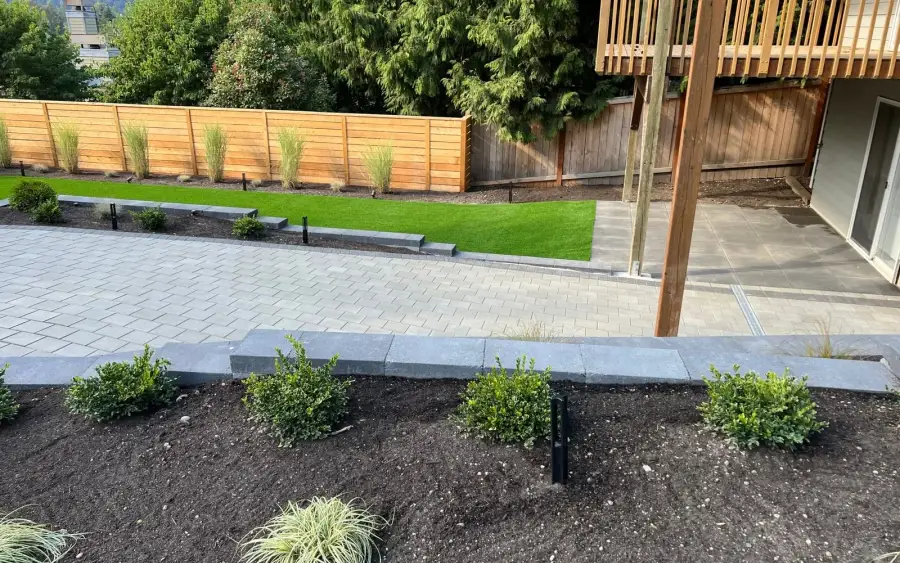
A wide run of paver steps down from the house to a terrace that stops where the lawn begins. Not every garden wants paving all the way to the fence.
 StoneworkView full size
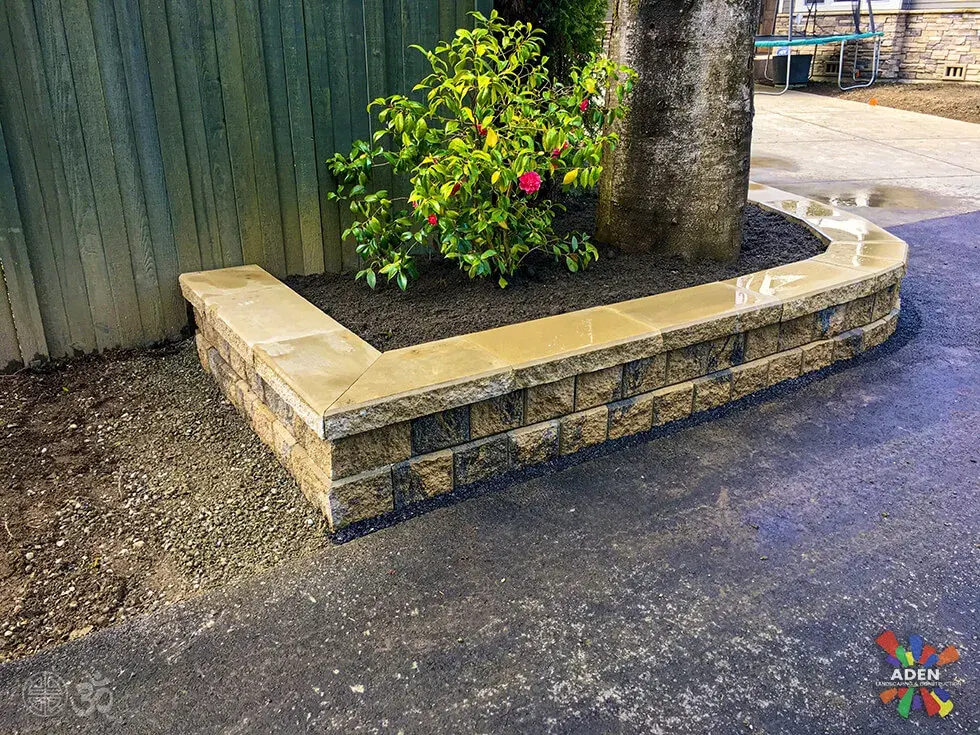
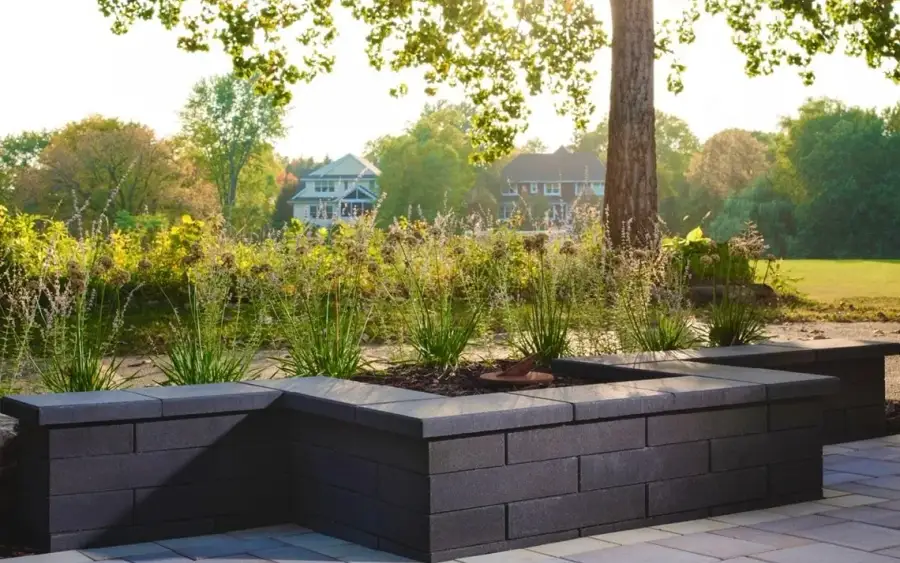
A low cut-stone wall holding a bed against the driveway edge. The cap is wide enough to sit on, which is the only reason anyone ever actually does.
 Landscape LightingView full size
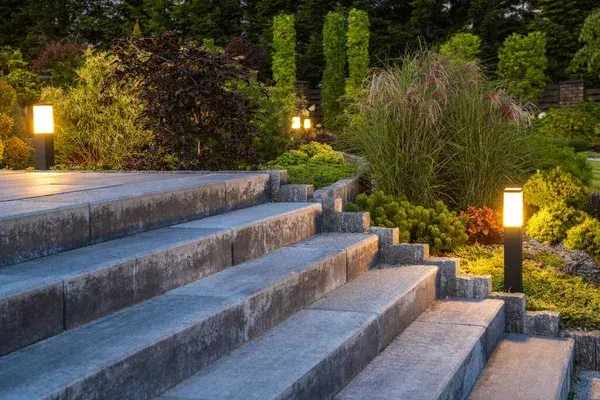
Bollards set beside the treads rather than in front of them, so the light lands on the step and not in your eyes on the way down. Aiming is most of this trade.
Local questions
Something specific to your street? Call (425) 533-9734 — we would rather look at it than guess.
They affect it early, which is the useful thing to know. The city regulates removal of trees on private property more protectively than most jurisdictions in the region, and given the size and density of the canopy here that touches a large share of projects — not only obvious removals but sometimes significant excavation within a root zone. Rather than design a garden and then discover a tree cannot move, we establish what is on the lot and what its status is at the start, and design around the trees that are staying. Where a removal is genuinely justified we will tell you what the process involves rather than proceeding and hoping.
Woodland planting, and a great deal of it does very well. Under an established canopy you are dealing with low light, summer soil dryness because the trees take the water, and acidic needle or leaf litter — so the planting has to tolerate all three. Native ferns, salal, evergreen shade shrubs, hellebores and woodland groundcover thrive in exactly those conditions and look considerably better than a struggling lawn. The single most common mistake on island lots is repeatedly reseeding grass in deep shade. Where an open lawn area genuinely matters, it usually needs to go where the canopy is thinnest rather than where the house happens to face.
It is a design factor rather than an obstacle, but it is one to take seriously. The island falls away to the water on every side, and the shoreline slopes carry looser material and are more sensitive to loading and to water than the level crown is. Building there means paying real attention to what is being added above the slope, where surface water is being routed, and whether the wall or terrace is transferring load into ground that can carry it. On the level ground through Island Crest none of that applies and the work is straightforward. We look at where on the island a property sits before we look at anything else.
Yes, and it is one of the reasons we like working here. The island is a fifteen to twenty-five minute run from our Capitol Hill base across I-90 — closer than several Seattle neighbourhoods and considerably closer than Redmond or Sammamish. Combined with generally excellent site access on these lots, that means crews spend their time building rather than travelling, and a project runs in continuous blocks instead of stop-start visits. It does not change our pricing approach — you get a fixed written price before anything starts — but it does mean scheduling here is more flexible than at the far end of the Eastside.
We come out, walk the property, look at the grade and the drainage, and put a written price together. No deposit, and it does not change once agreed.
Nearby
Rolling, with real elevation on Somerset, Cougar Mountain's western flank and Newport Hills, and low, flat, slow-draining ground through the Mercer Slough basin.
20–35 minutes from Capitol Hill via I-90
Rolling, with a defined fall from the ridge toward Lake Washington and the peninsula. Less severe than Mount Baker to the north but rarely genuinely level.
15–25 minutes from Capitol Hill
Steep. Newcastle is built on the western flank of Cougar Mountain, and substantial grade across a single lot is the norm rather than the exception.
25–40 minutes from Capitol Hill via I-90
A steady, substantial west-to-east fall from the ridge crest down to Lake Washington. Grade changes of twenty feet or more across a single lot are ordinary here.
10–20 minutes from Capitol Hill
The steepest of our Eastside markets. Issaquah sits in a valley ringed by the Issaquah Alps — Cougar, Squak and Tiger Mountain — so a large share of properties are built into real grade.
30–45 minutes from Capitol Hill via I-90
Free estimate
15–25 minutes from Capitol Hill via I-90 from our Capitol Hill base. Three minutes on the form and we will come out and look at it properly.
Or call (425) 533-9734
Thank you — we have your details. We reply during office hours, Monday – Friday, 9:00 AM – 7:00 PM. If it is urgent, call (425) 533-9734.