
 Artificial TurfView full size
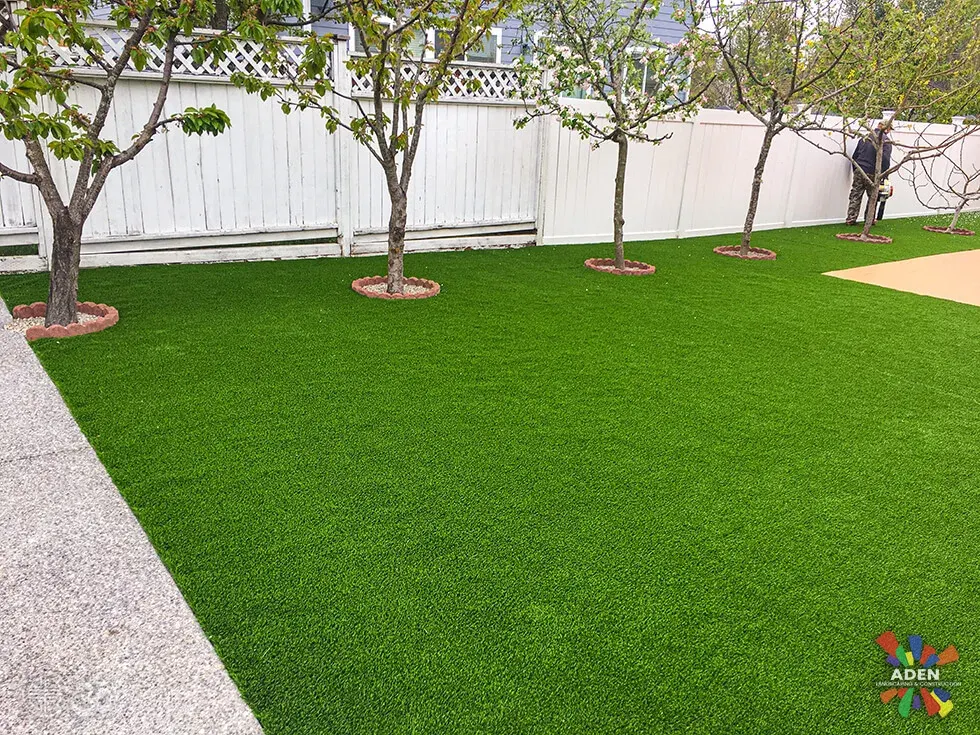
Turf laid around established trees
Cutting turf around mature trunks and leaving each one a mulch ring is the difference between a lawn that lasts and a tree that does not.
No down payment. You pay when the project is finished.
Monday – Friday, 9:00 AM – 7:00 PM · Capitol Hill, Seattle
Service
Seattle is an unusually treed city for its density, and the trees on an established lot here are often bigger and older than anything the house has seen. Douglas fir, western red cedar, big-leaf maple: sixty to a hundred feet is ordinary, and a mature fir near a house is a genuinely serious piece of work to prune or remove. That changes the conversation from a price per tree to a question about access, rigging and what is underneath. It also means the right answer is frequently not removal. A tree that is structurally sound and merely inconvenient is worth keeping — it is doing more for the property value and the drainage of your lot than most of what you could plant instead.
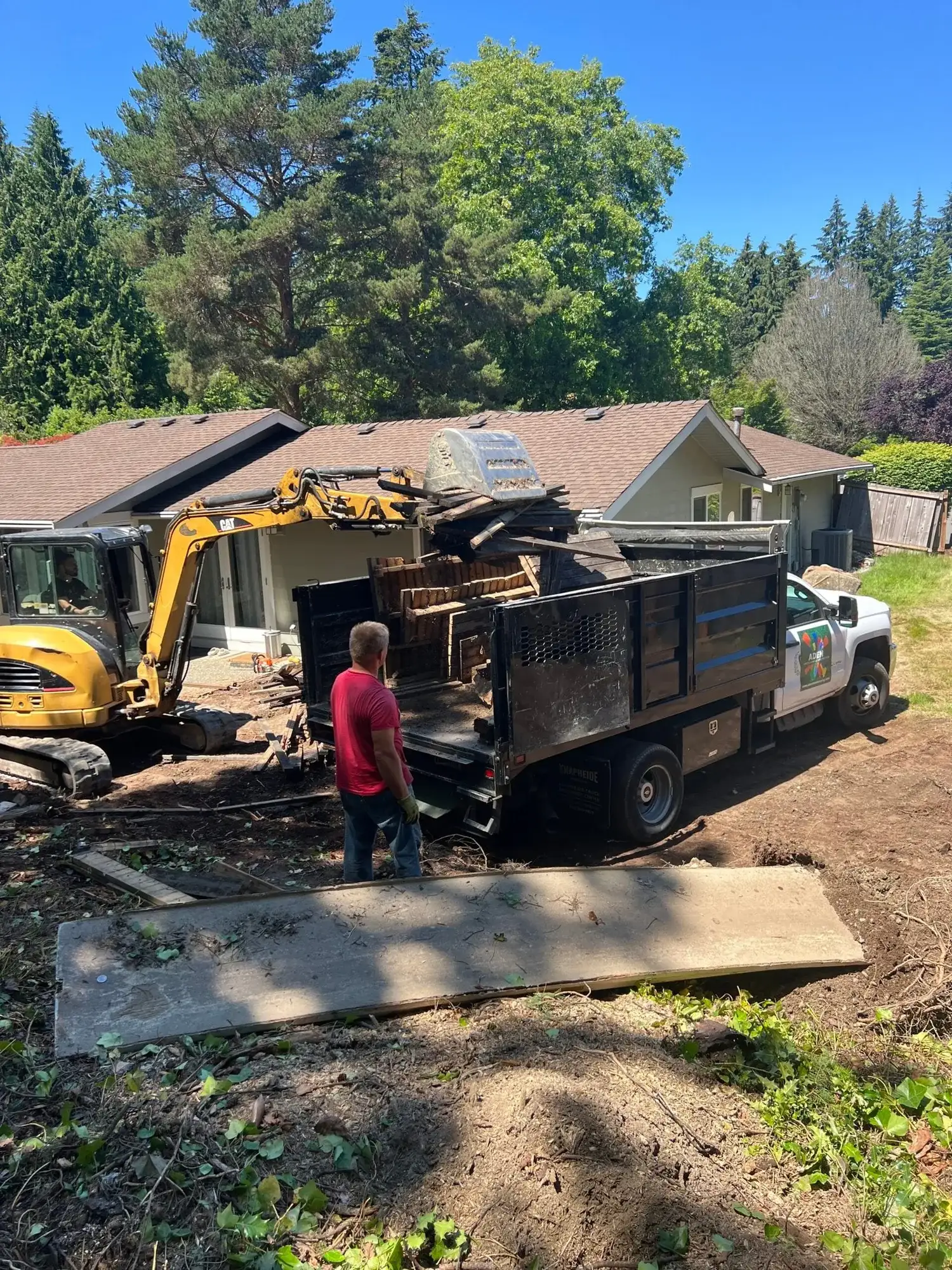
Excavator loading cleared timber and vegetation into an Aden Landscaping dump truck on a Seattle property
What is included
Mature trees kept healthy — or removed safely when they are not.
Reduction, thinning and deadwooding done to what the species tolerates. Over-pruning a conifer permanently disfigures it; topping a fir creates the hazard it was supposed to prevent.
Sectional dismantling and rigging where a tree cannot simply be felled, which on a Seattle lot with a house on one side and a neighbour on the other is most of them.
Ground out below grade so the area can be planted, turfed or built over, rather than left as an obstacle nobody can dig through.
Overgrown laurel, holly and photinia brought back into shape, and hedges cut on a cycle that keeps them dense rather than woody.
Limbs over a roof, branches into power lines, deadwood over a driveway or a play area. Usually cheaper and always less drastic than removal.
Why people call us
How we build it
Seasonality. Genuinely a winter service, and it works in our favour. Deciduous trees are easier to assess and prune without leaves, ground disturbance matters less on dormant planting, and the crews have capacity between October and March when hardscape work slows. Storm damage does not follow a schedule; we prioritise anything that has become a hazard.
Species, structure, lean, root plate, what has changed recently. A lot of trees people want removed need pruning, and a few that people want pruned need removing.
Seattle regulates tree removal, and exceptional trees and trees in Environmentally Critical Areas carry additional protection. We establish the position before scheduling anything, not after.
Where sections come down, where the chipper stands, whether anything needs protecting. This is what makes the difference between a tidy day and a damaged fence.
On a constrained lot, controlled lowering rather than felling. Slower, and the only responsible method with a structure underneath.
Stump ground below grade, brush chipped, and the site raked down. Chip can stay as mulch if you want it — a lot of clients do.
What it costs
The variable is almost never the species — it is what stands underneath. A large fir in an open back garden that can be felled is a fraction of the cost of the same tree between a house and a neighbour's conservatory, which has to be dismantled in sections and lowered. Stump grinding is usually priced separately by diameter. Pruning a small ornamental is a couple of hours; crown work on a mature big-leaf maple is a day with a crew.
That is a market range, not a quote. Your price is fixed in writing after we have seen the site, and it does not move once agreed.
No deposit is required to start. Payment comes after the work is finished — not before.
A fixed, accurate price is guaranteed before the job starts. We do not quote low and raise it mid-project.
A 0% interest payment plan is available for up to 6 months.
Hardscaping work carries a warranty. Vegetation is excluded.
Tree Care we have built
In their words
Real Google reviews, unedited. We publish the ones that name the work rather than a generic five stars.
Dale Struble
June 2026
Alex and his crew do AMAZING work. I had a really great experience and can't recommend them enough. First, Alex was prompt and courteous when responding to any questions both before and during the work.
Andrew Chung
July 2019
I worked with Alex. Upfront, honest and very transparent about the work we requested. As an overview, this is what we requested and had done.
Where we build it
Before you call
Something not answered here? Call (425) 533-9734 and ask — we would rather talk it through than have you guess.
Frequently yes, and it is the first thing to check rather than the last. Seattle regulates tree removal on private property, with additional protection for larger and designated exceptional trees and for anything inside an Environmentally Critical Area — which covers steep slopes, landslide-prone ground and riparian corridors across much of West Seattle, Magnolia and the eastern hillsides. Rules also differ between Seattle and the Eastside cities we work in, so a Bellevue or Sammamish property is a separate question. We establish the position for your specific parcel before work is scheduled. Removing a protected tree without approval carries real penalties.
No, and it is worth being direct about this because it is still commonly requested. Topping a conifer removes the crown that the tree balances against, triggers a mass of weak regrowth from the cut, and creates decay pockets where water sits in the severed leaders. The result within a decade is a tree that is genuinely more likely to fail than the one you started with, and one that can no longer be made safe by any means short of removal. The legitimate alternatives are crown thinning to reduce wind loading, deadwood removal, and honest assessment of the root plate and lean. If a tree really is a hazard, removal is the answer, not topping.
It can, and on a sloped Seattle lot it sometimes does. A mature conifer moves a substantial volume of water out of the ground through the growing season and its root system binds the soil it sits in. Take it out on a hillside and you may find both a wetter lot and, over the following years, a slope that has lost some of what was holding it. That is not an argument against ever removing a tree — a dangerous one has to go — but it is an argument for knowing before you commit, particularly on the bluff and hillside properties where these two effects matter most. Where it applies, we would look at drainage as part of the same conversation.
After it is ground out properly and the void is dealt with, yes. Grinding leaves a hole full of wood chip and soil, and wood chip decomposes and settles — build a patio base straight over it and you get a dip in the surface two or three years later, exactly in the spot you cannot patch invisibly. The correct sequence is grinding below grade, excavating out the grindings and any large residual roots, and backfilling with compacted structural material before the base goes on. It adds a stage, and it is a great deal cheaper than lifting a section of finished patio.
We come out, look at the site properly, and put a fixed written price together. No deposit, and nothing changes once the price is agreed.
Usually done alongside
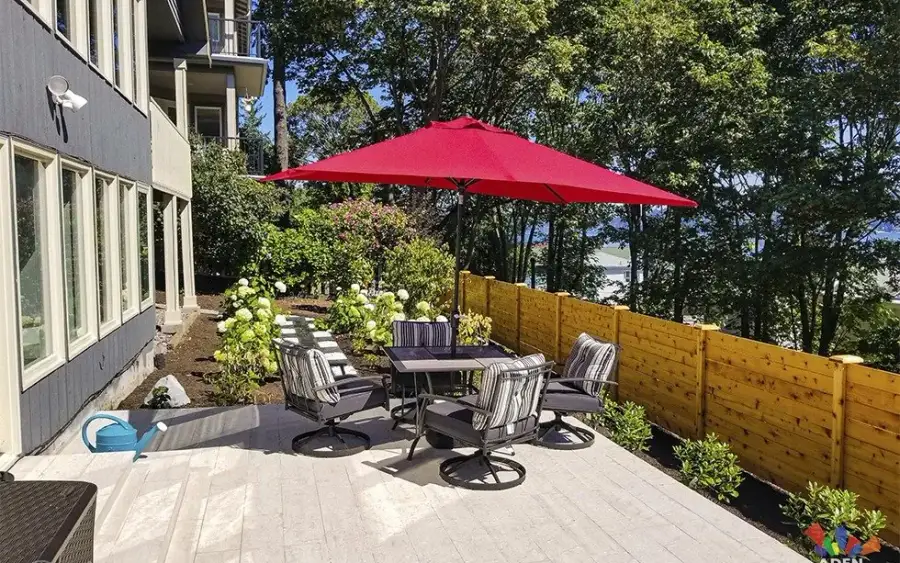
Common areas maintained and capital work delivered on a schedule.
Quoted per property against a written scope
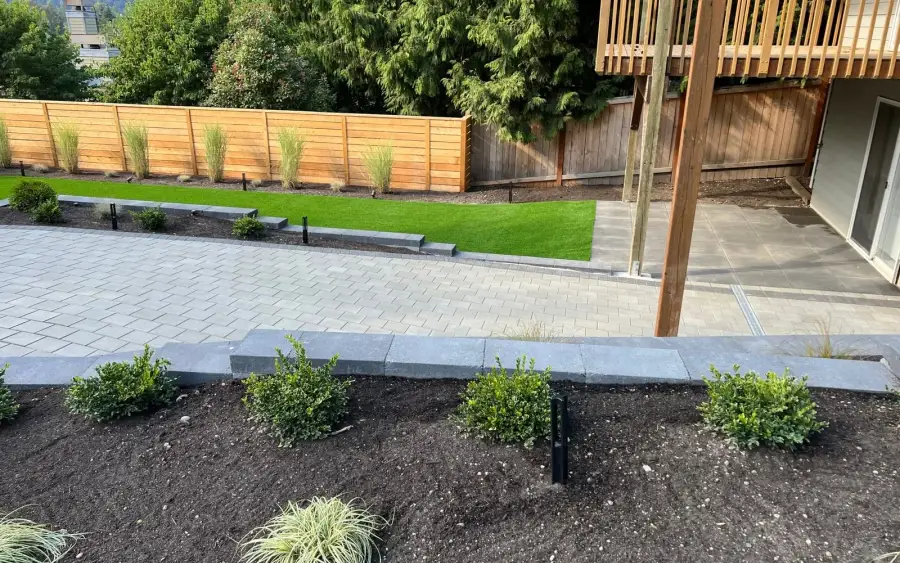
A yard designed as one thing, not six jobs stitched together.
$8,000–$70,000 for a full design and installation
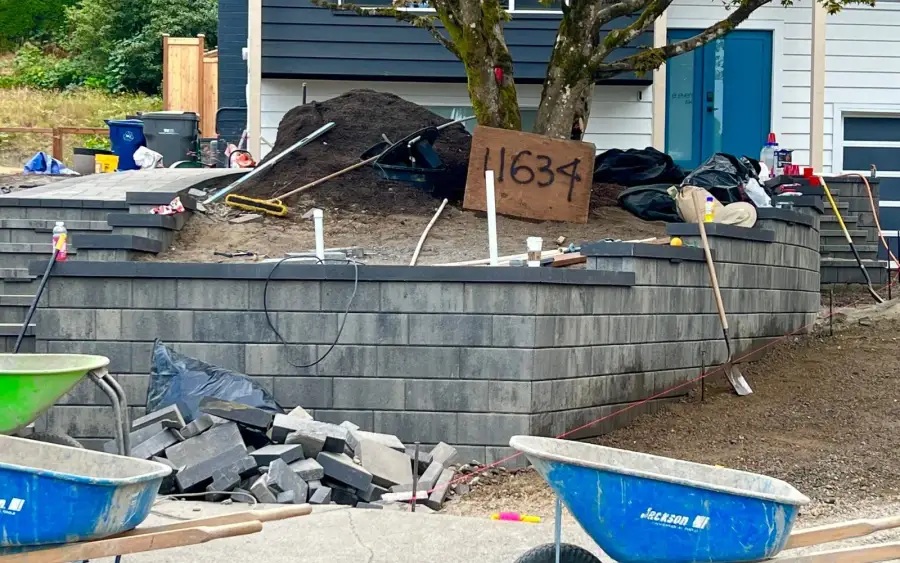
Ground that is ready to build on, properly.
$1,800–$15,000 depending on volume and access
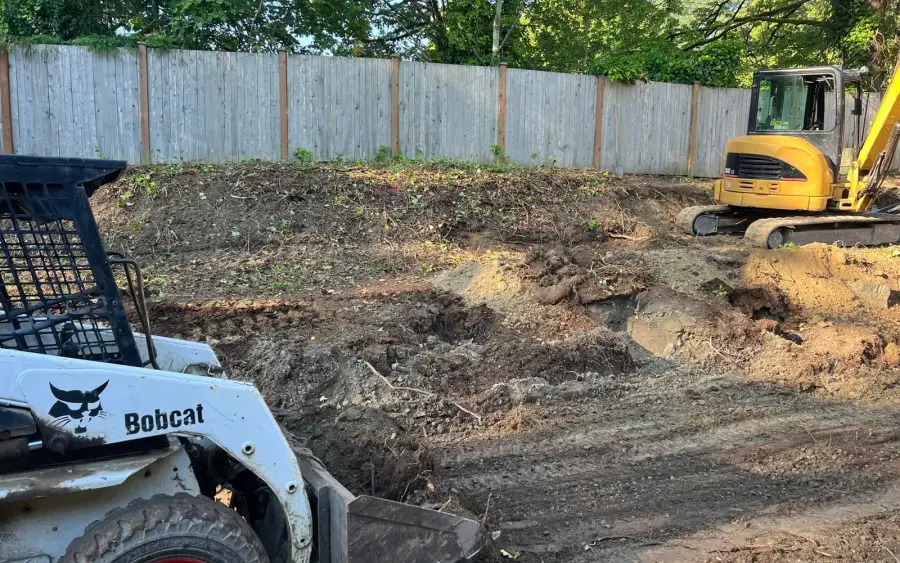
A yard that drains through a Seattle winter instead of holding it.
$10–$25 per linear foot
Free estimate
Three minutes on the form. We reply during office hours — Monday – Friday, 9:00 AM – 7:00 PM.
Or call (425) 533-9734
Thank you — we have your details. We reply during office hours, Monday – Friday, 9:00 AM – 7:00 PM. If it is urgent, call (425) 533-9734.