
 Artificial TurfView full size
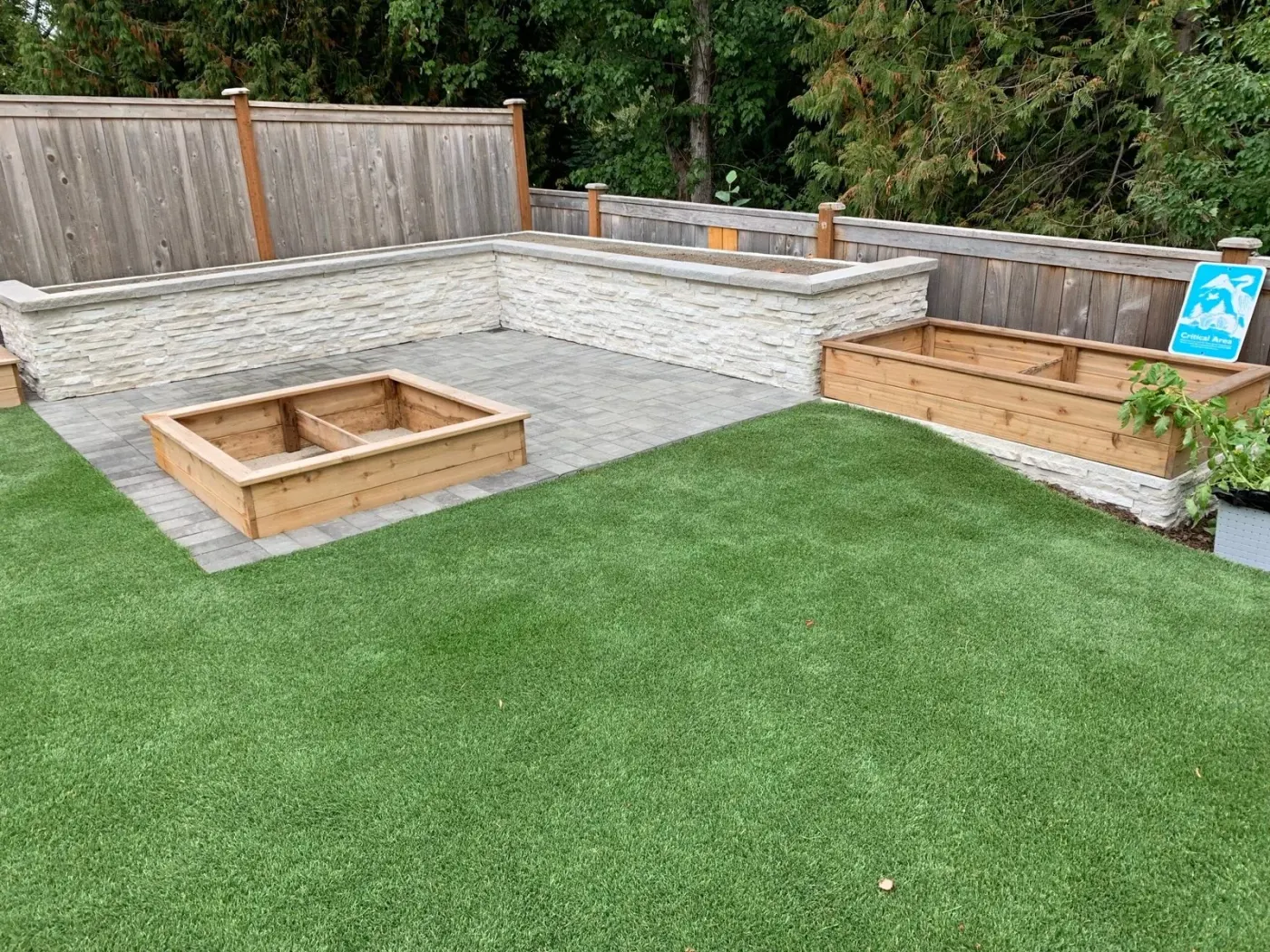
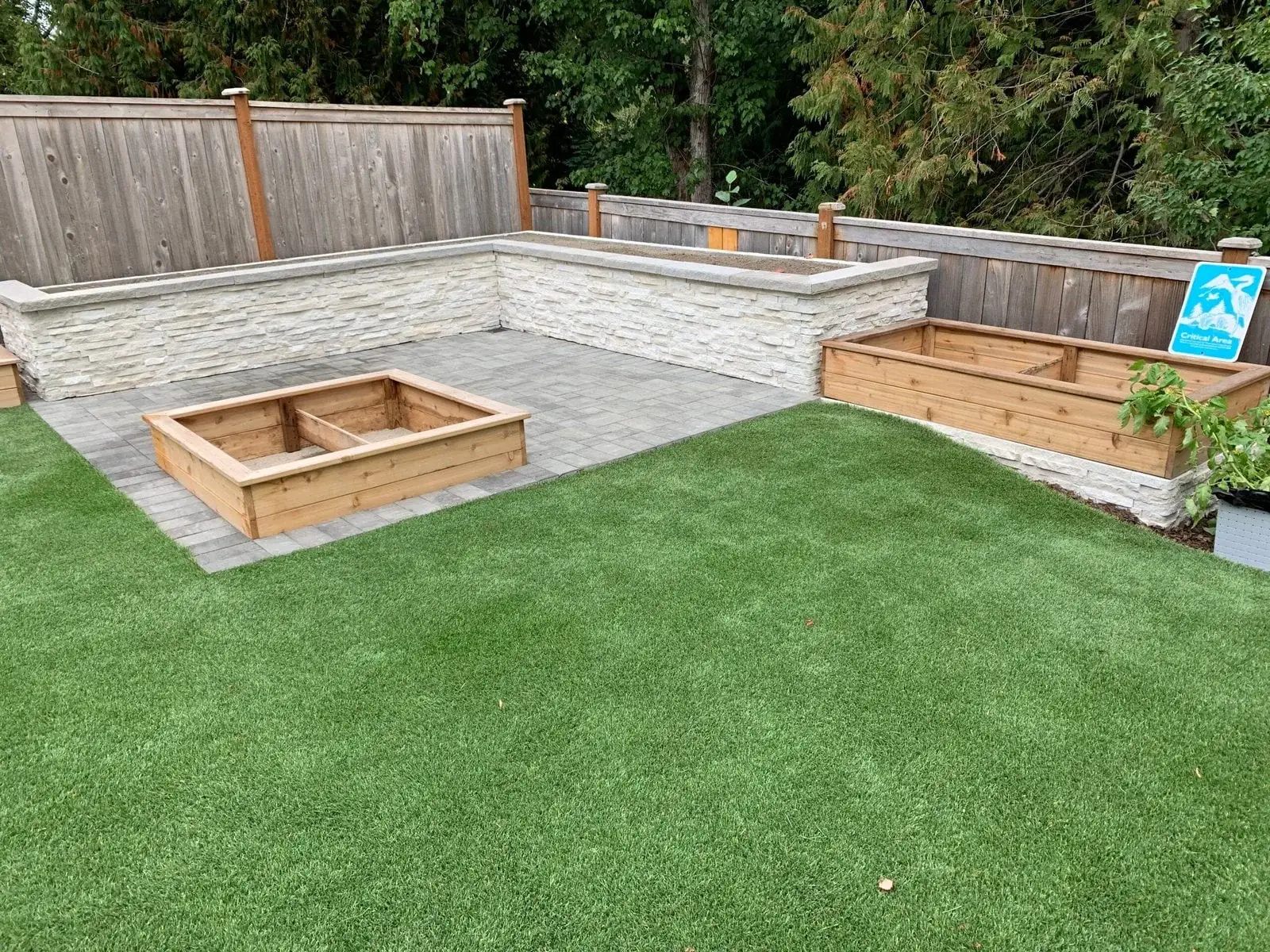
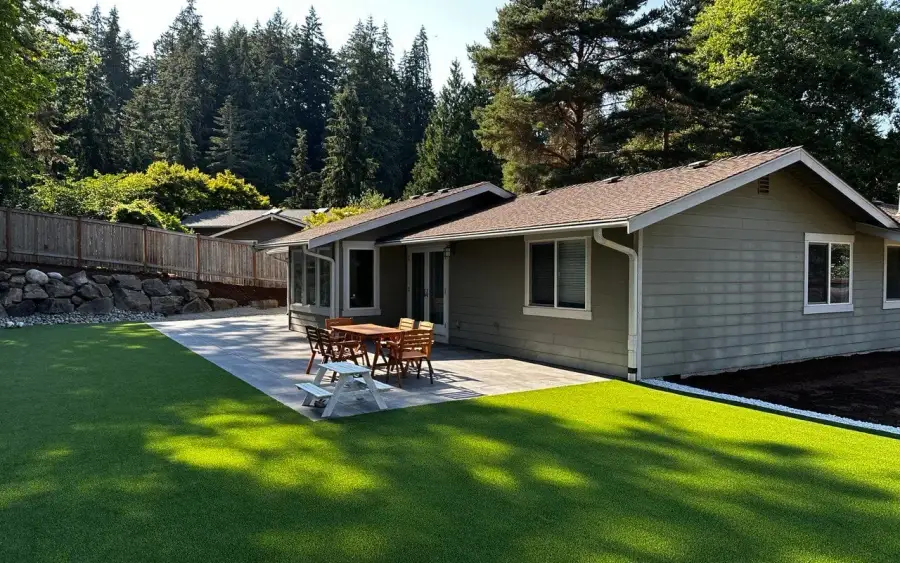
Turf lawn with cedar raised beds
A no-mow lawn for a small city yard, with cedar planters and a paved seating edge.
No down payment. You pay when the project is finished.
Monday – Friday, 9:00 AM – 7:00 PM · Capitol Hill, Seattle
Service area
West Seattle is a plateau with steep edges, and which part of it you own decides what the job is. Level lots around the Junction and Westwood build quickly and predictably. The bluff-edge properties toward Alki, Fauntleroy and down the Delridge side are a different proposition entirely: ground with genuine landslide history, frequently inside Environmentally Critical Area designations, where a retaining wall is a structural question rather than a landscaping one. We treat those two halves of the peninsula as different jobs, because they are.
Artificial turf lawn framed by cedar raised planter beds and a paved seating area in West Seattle
What we plan around here
West Seattle is a plateau with cliffs around it, and which of those two you are on decides the whole job. Plateau lots in the Junction and Westwood are straightforward, level and fast to build on. Bluff lots toward Alki, Fauntleroy and Delridge sit on ground with real landslide history, and a lot of them fall inside Environmentally Critical Area designations where the usual four-foot wall exemption does not apply. The view lots are the ones that need engineering, not just building.
The west and south edges of this peninsula are not ordinary sloped ground. They carry looser material than the plateau behind them, they have documented movement in living memory, and a large share of those parcels sit inside steep slope or landslide-prone designations. Two things destabilise ground like that: adding load above the slope, and changing where water goes. A retaining wall or a terrace does both at once.
That makes work on the bluff a structural question rather than a landscaping one. On these lots we look at where surface water leaves the property before looking at what goes on it, and we would rather tell you a wall belongs somewhere else than build it in the wrong place. Uncontrolled discharge over a bluff edge, or a downspout running onto the slope, is exactly the mechanism that turns stable ground into moving ground over several wet seasons.
What we build in West Seattle
Serving West Seattle and surrounding neighbourhoods
Bluff, forest and shoreline — the same three conditions most West Seattle gardens deal with in miniature.
The flat shoreline strip, and the one part of the peninsula where salt exposure genuinely changes planting choices.
Sixty-eight wooded acres in the middle of the peninsula, backing onto the Delridge slope.
Alki · Admiral District · The Junction · North Admiral · Fauntleroy · Gatewood · Morgan Junction · Delridge · Highland Park · Arbor Heights · Roxhill · Westwood
98106 · 98116 · 98126 · 98136 · 98146
Recent work
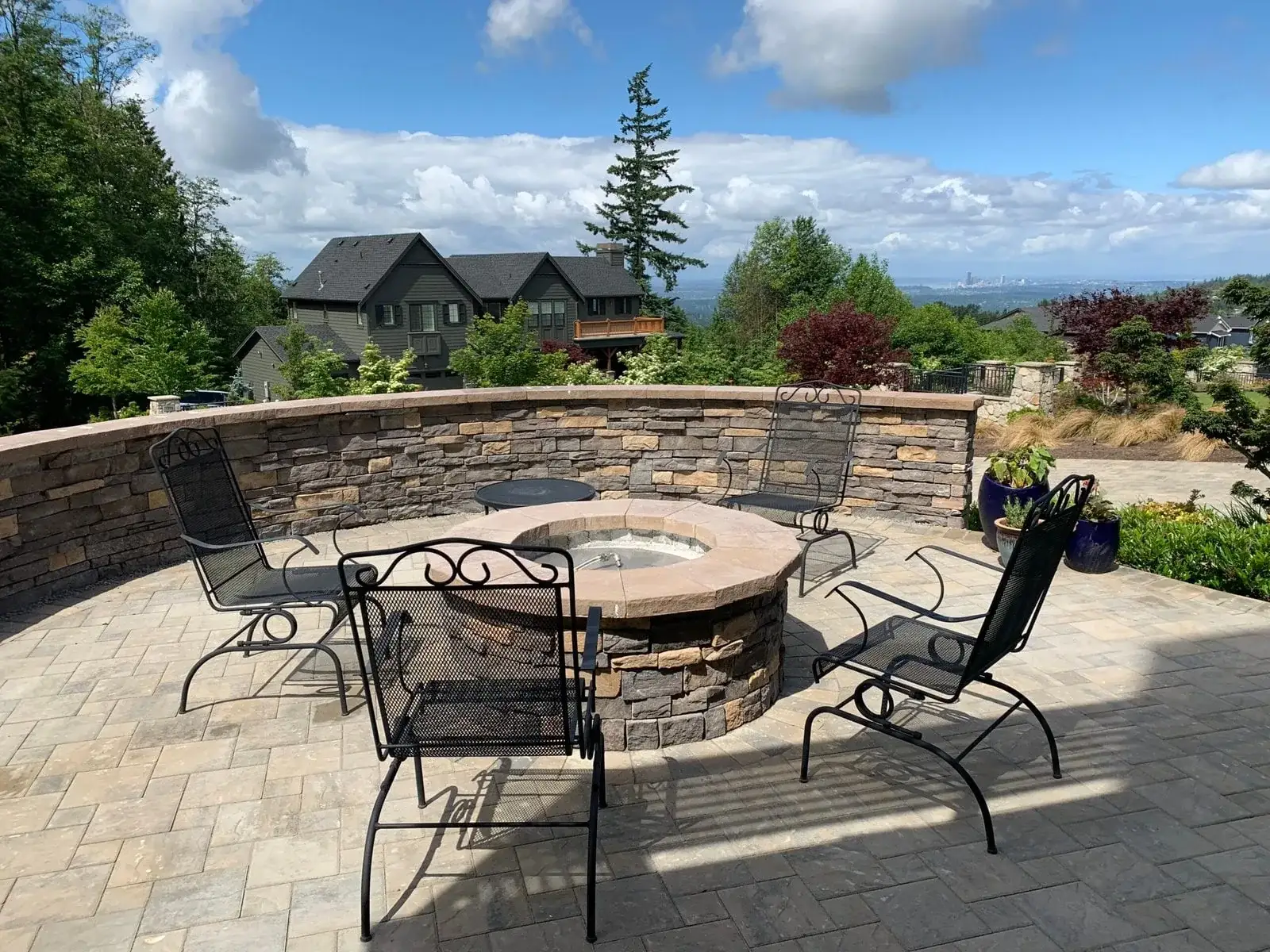
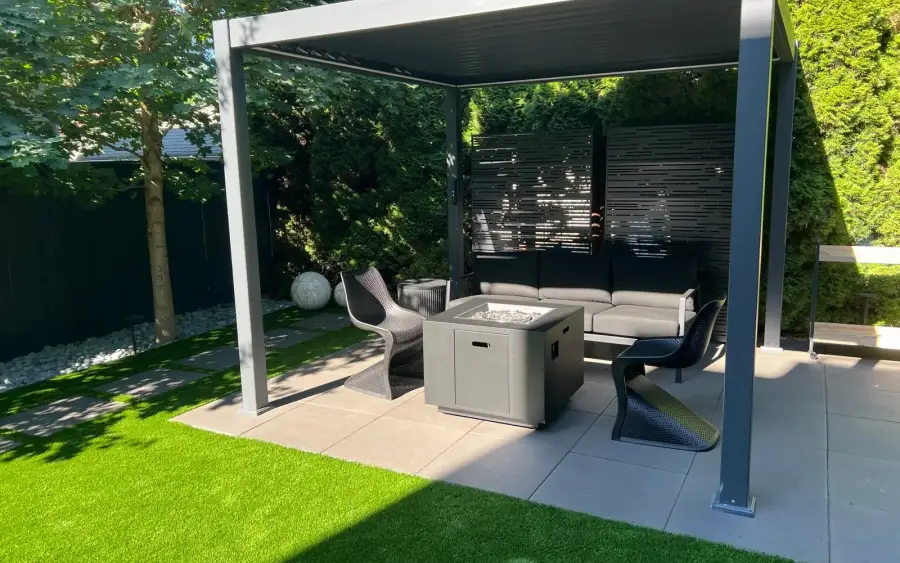
Artificial TurfView full sizeA no-mow lawn for a small city yard, with cedar planters and a paved seating edge.
 HardscapingView full size
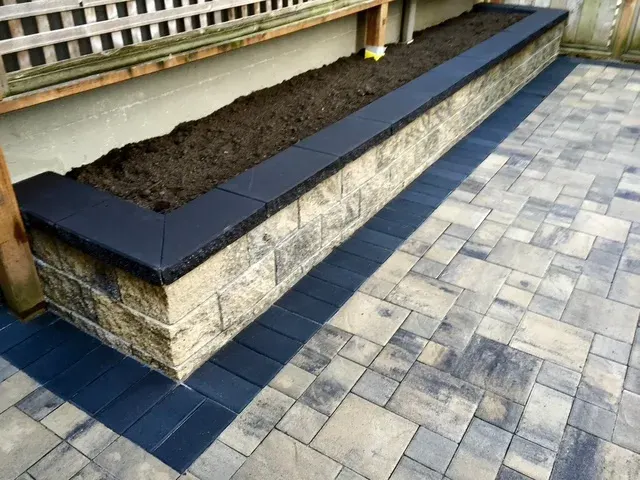
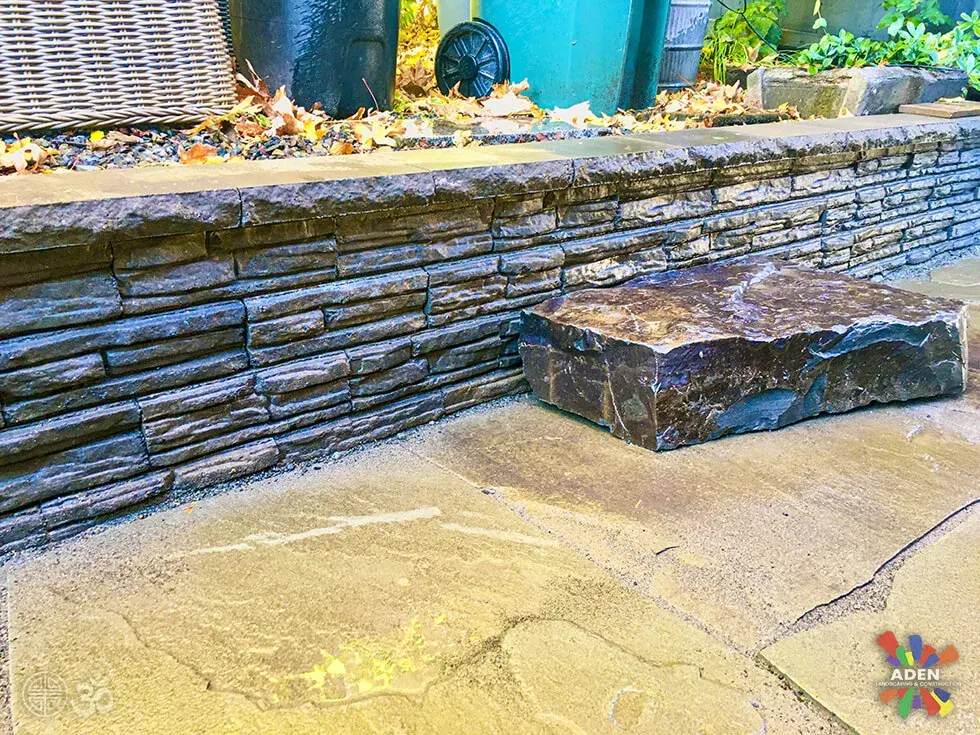
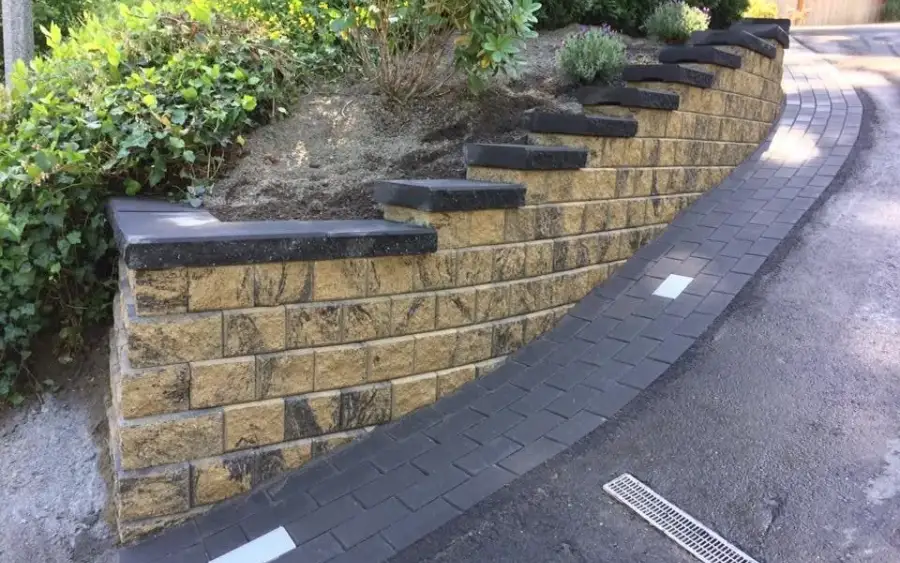
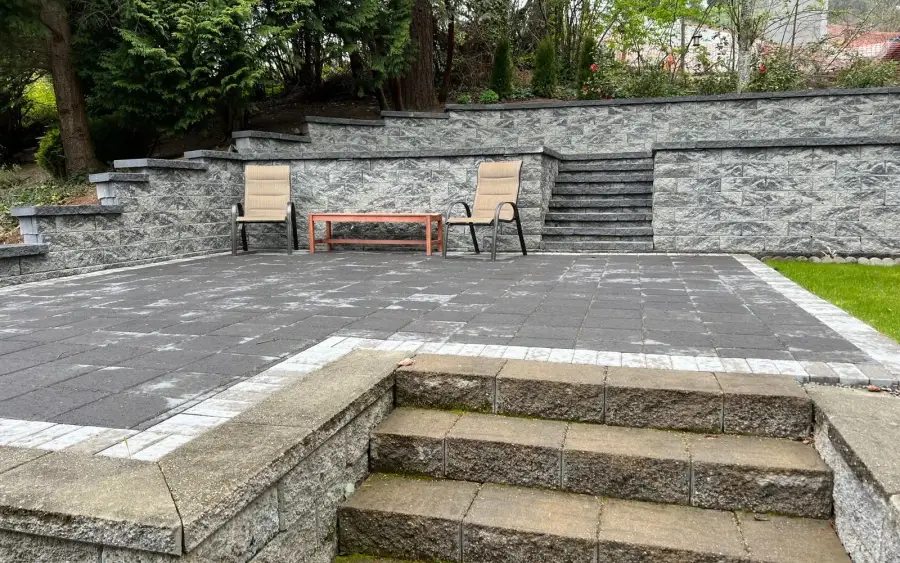
A raised planter running the length of the terrace, capped in charcoal to pick up the darker banding in the paving.
 DeckingView full size
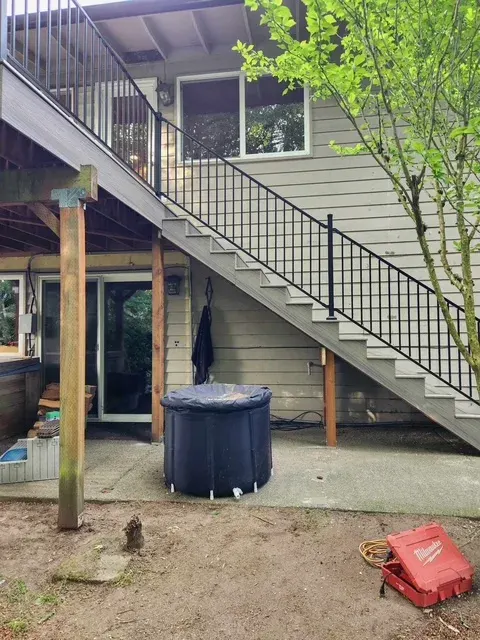
A West Seattle split-level where the only way to the bottom of the garden was through the house. A full-height run of stairs off the deck fixed that.
 Retaining WallsView full size
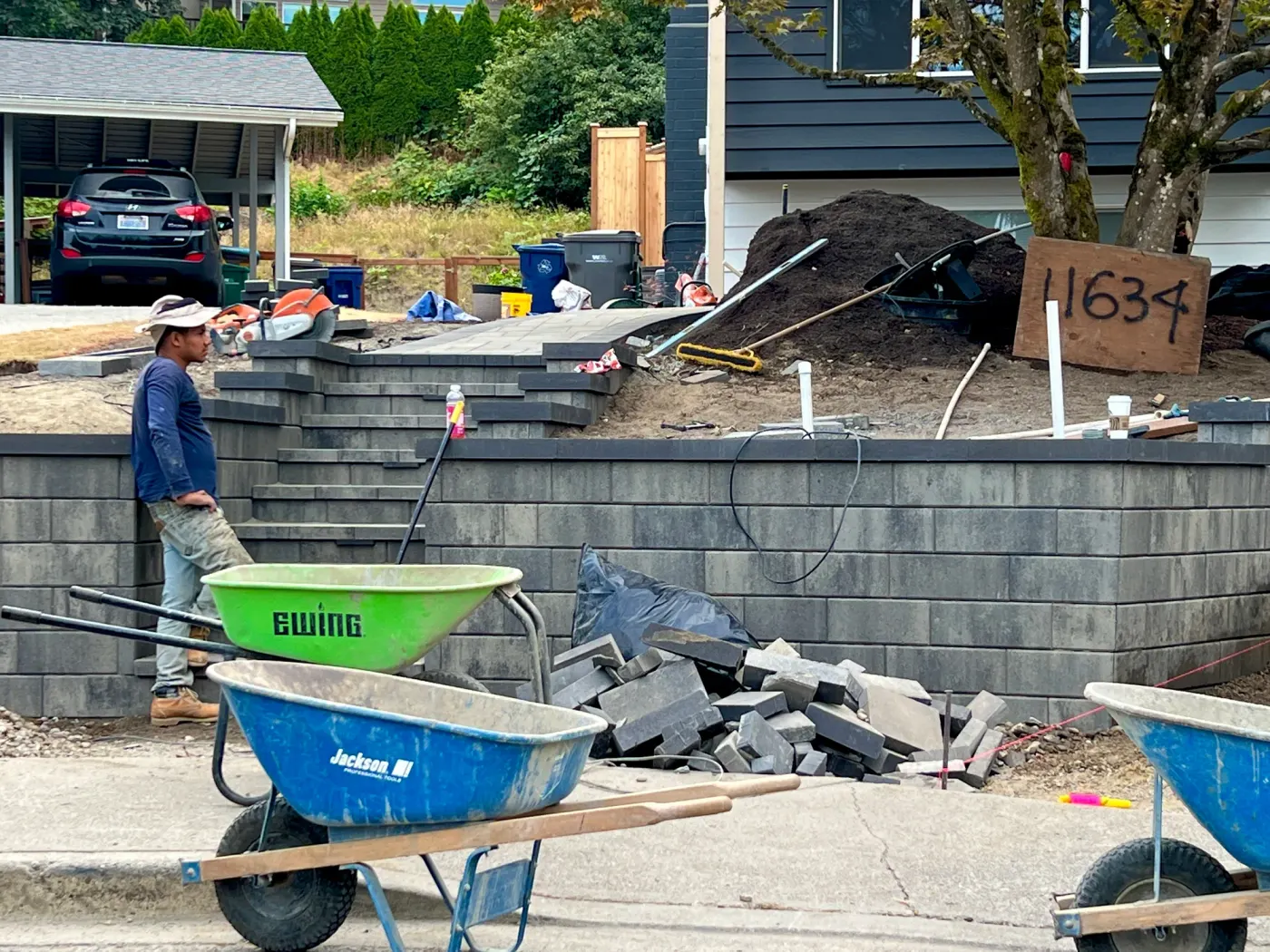
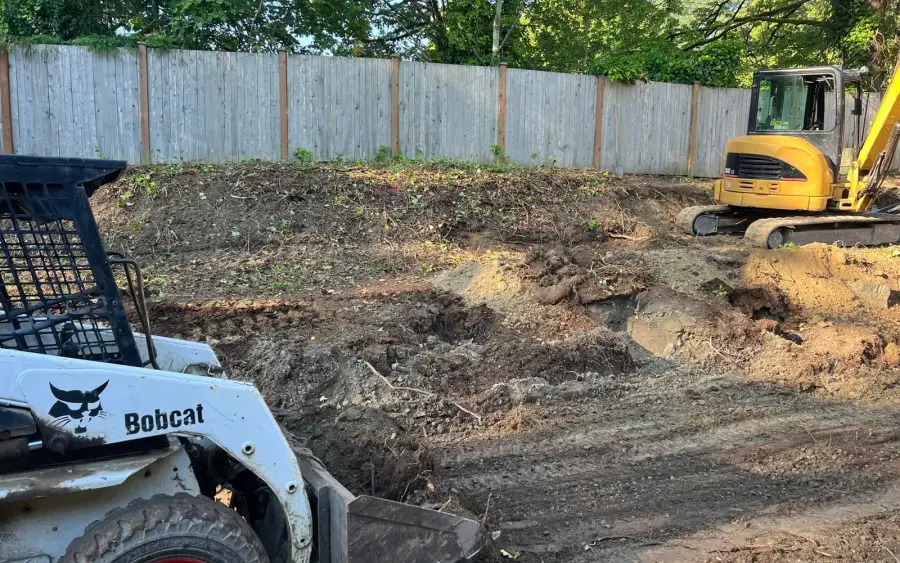
Mid-build on a West Seattle slope: block stacked, barrows running, the old surface still down. One crew on one site until it is finished, which is the only way the levels stay honest.
 WalkwaysView full size
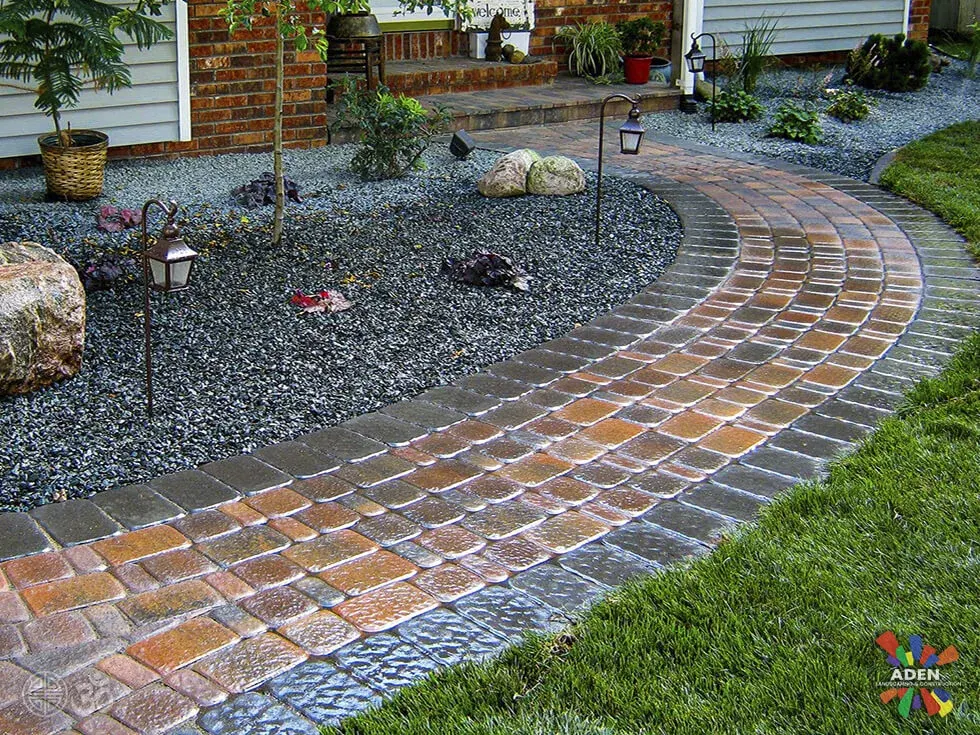
Brick pavers in a double soldier course, edged in cobble and lit low along one side. The curve is there because a straight line across this grade would have needed a step.
 StoneworkView full size
Thin stacked stone across the face, and one solid slab set in front of it as a bench. The bench weighs more than the section of wall it sits against.
 DeckingView full size
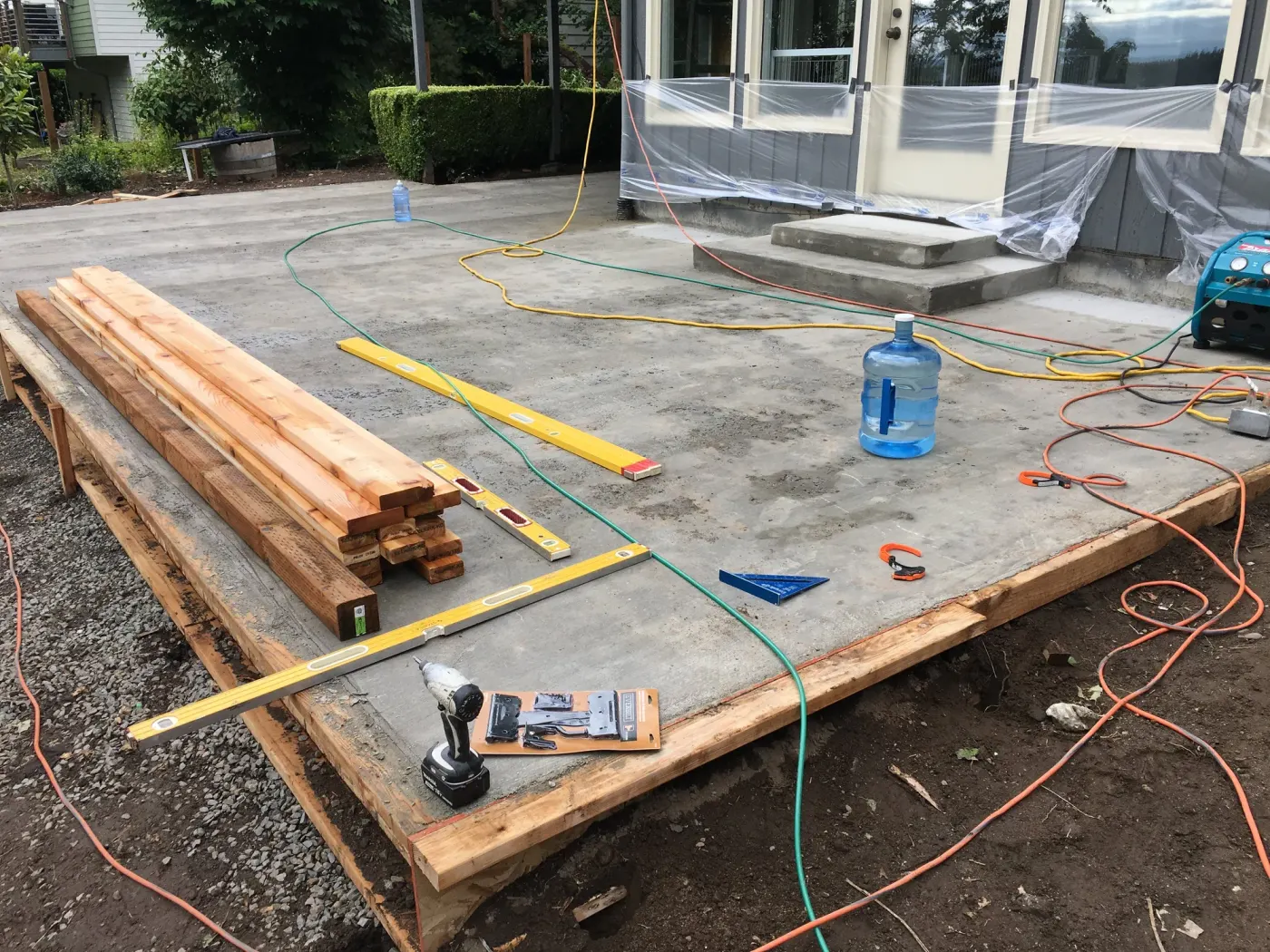
Timber cut and laid out on the old slab, edges masked, hoses run. The photograph nobody asks for, of the day that decides whether the finished deck is level.
Local questions
Something specific to your street? Call (425) 533-9734 — we would rather look at it than guess.
Very often yes, even for a low wall. The usual Seattle exemption covers walls four feet or lower that are not in an Environmentally Critical Area, but a large share of the West Seattle bluff — along Alki, through Fauntleroy and down the Delridge side — carries steep slope or landslide-prone designations that void the exemption entirely. Inside an ECA a wall of any height can require a permit, and a steep slope is defined as 40% or more grade over ten feet of vertical change, with fifteen-foot buffers at the top and toe. We check the parcel against the city map before quoting.
It affects planting and metalwork more than it affects hardscape. Exposed positions along Alki and the Fauntleroy shoreline get salt-laden wind that burns tender foliage and shortens the life of untreated or low-grade metal fixings. Concrete, stone and pavers are essentially unaffected. The practical adjustments are choosing plants that tolerate coastal exposure, specifying better-grade fixings and fittings on anything structural, and accepting that a hedge on the exposed side will always look different from the same hedge on the sheltered side.
Because the rainfall figure describes the winter, not the growing season. Almost all of Seattle's 38 inches falls between October and March, and July and August are genuinely dry. West-facing plateau and bluff gardens on this side get the strongest afternoon sun and the most wind of anywhere in the city, so they lose moisture faster than an equivalent garden in a sheltered east-facing position. It is the main reason we specify zoned irrigation more often on this side of the water than in the central neighbourhoods.
Terrace, in almost every case where the fall is more than about a foot across the intended area. Building one large patio on a slope means either a tall retaining wall at the low edge or a surface that is subtly wrong to stand on, and both are worse than the alternative. Two or three smaller level platforms stepping down the fall give you more usable space, need shorter and cheaper walls, and read better from the house. On a view lot they also keep the sightline open, which one tall wall close to the building does not.
We come out, walk the property, look at the grade and the drainage, and put a written price together. No deposit, and it does not change once agreed.
Nearby
Two ridges with a valley between them. Beacon Hill and the Mount Baker/Seward Park side both fall hard toward the water; the Rainier Valley floor between them is flat and drains slowly.
10–20 minutes from Capitol Hill
Seven hills and then some. Grade changes of 20–40% inside a single lot are ordinary in Queen Anne, Magnolia, Mount Baker and West Seattle.
Base of operations — Capitol Hill
Rolling, with a defined fall from the ridge toward Lake Washington and the peninsula. Less severe than Mount Baker to the north but rarely genuinely level.
15–25 minutes from Capitol Hill
Ridge-top flat through central Capitol Hill, then steep falls east toward Lake Washington and west toward downtown. Leschi and Madrona are steep by default.
0–10 minutes — this is where we are based
A hill with a cliff on two sides. Gentle through Magnolia Village and Lawton Park, then severe falls toward Puget Sound and down into Interbay.
15–25 minutes from Capitol Hill
Free estimate
20–30 minutes from Capitol Hill from our Capitol Hill base. Three minutes on the form and we will come out and look at it properly.
Or call (425) 533-9734
Thank you — we have your details. We reply during office hours, Monday – Friday, 9:00 AM – 7:00 PM. If it is urgent, call (425) 533-9734.