
 Paver PatioView full size
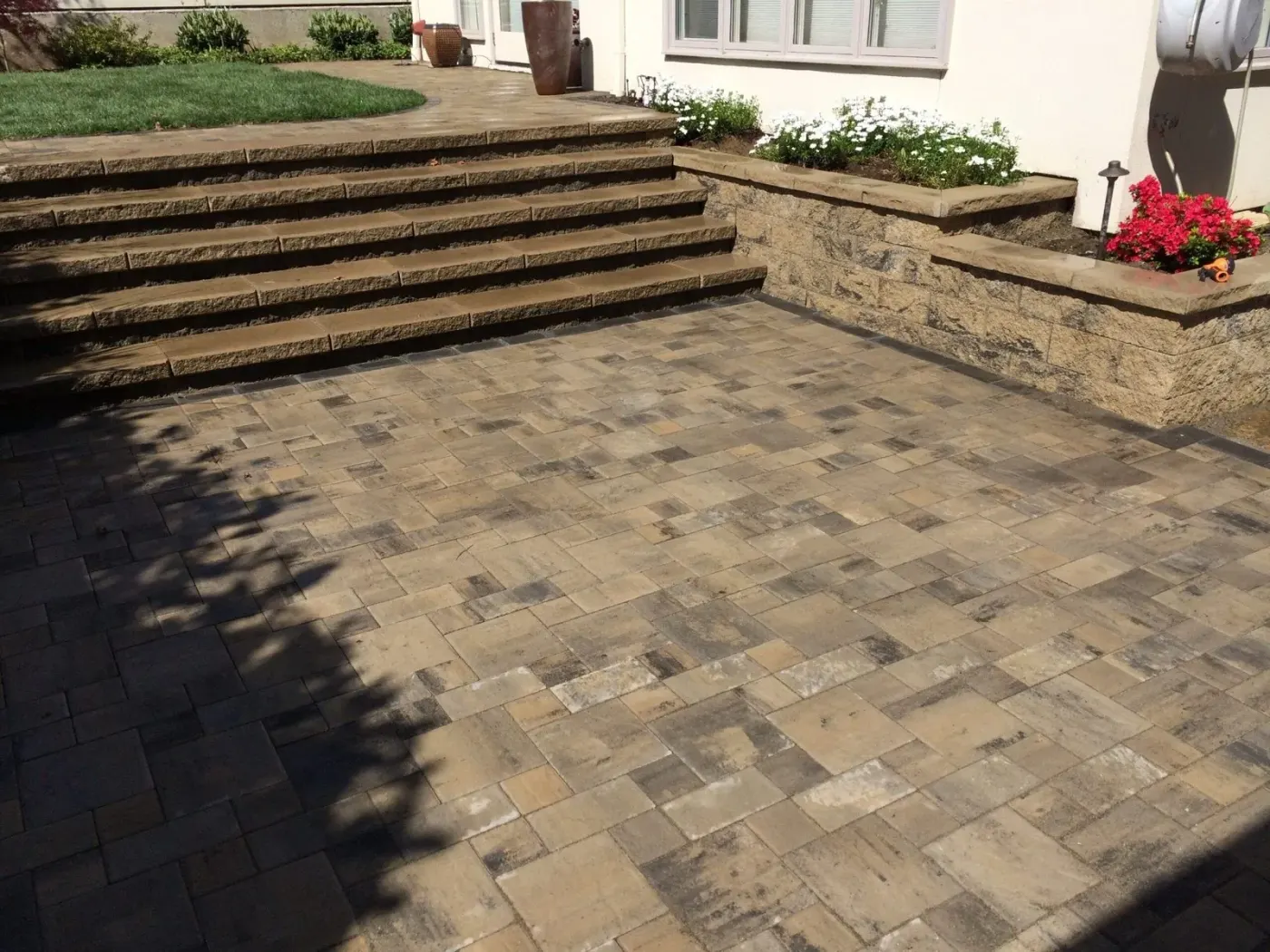
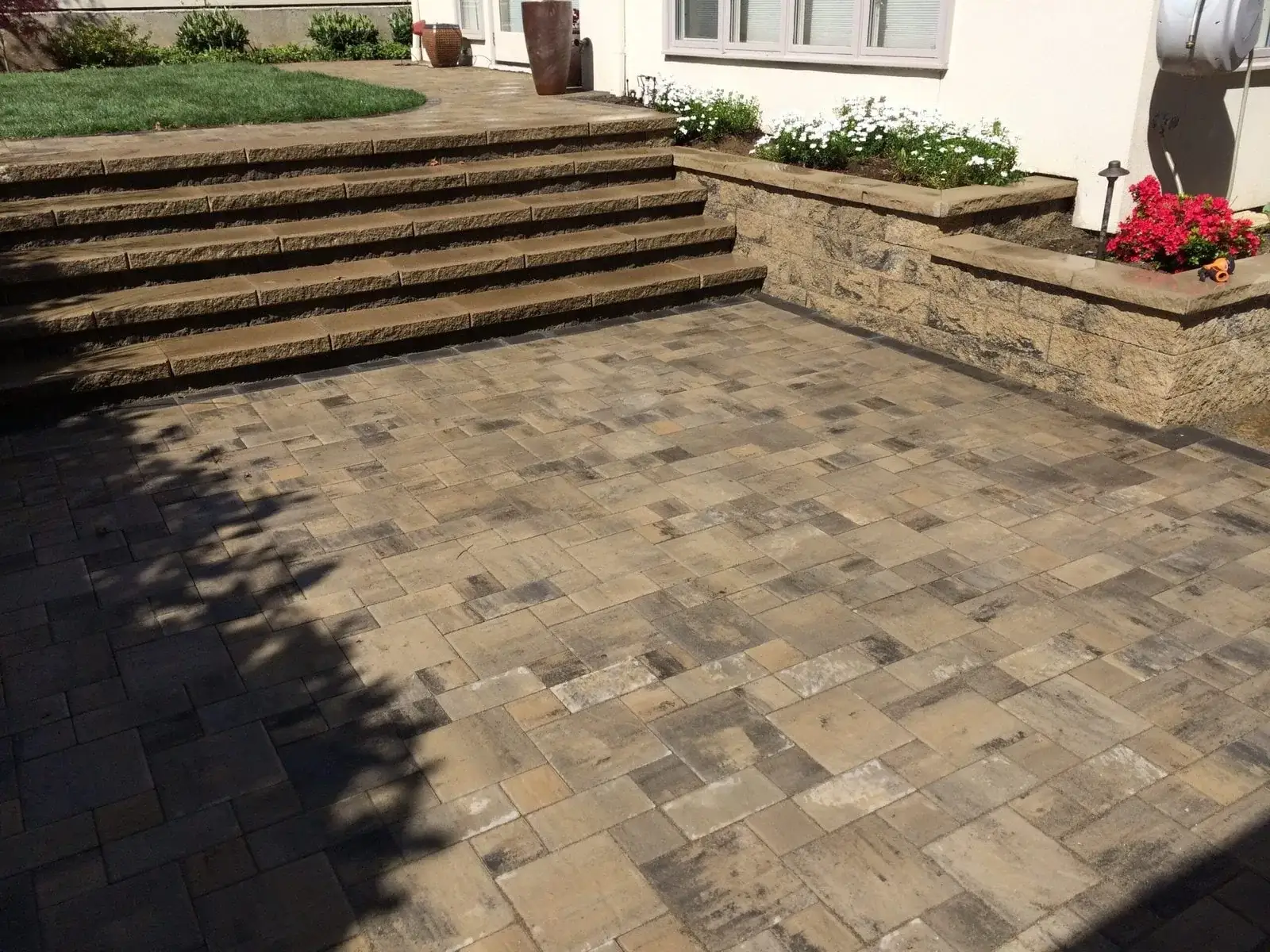
Patio with steps up to the lawn
Two levels connected properly — paver patio below, steps up to the planted lawn above.
No down payment. You pay when the project is finished.
Monday – Friday, 9:00 AM – 7:00 PM · Capitol Hill, Seattle
Service area
Laurelhurst has the space that most Seattle neighbourhoods do not. Lots of eight to fifteen thousand square feet mean a garden can be designed as several connected areas rather than one compromise, and the ground is gentle enough that the work goes into what you can see rather than into holding a slope up. The constraint that replaces slope here is the tree canopy. Established firs, cedars and maples are a defining feature of these streets and a genuine design factor — their roots reach well past the canopy line, and a patio base cut through a major root plate can kill a tree years after anyone would connect the two.
Paver patio with wide steps leading up to a planted lawn on a two-level Laurelhurst garden
What we plan around here
Laurelhurst is large lots and big established trees, and that combination sets the agenda. The gardens here have room for a full design — separate zones, a real route through, planting with depth — rather than the single-decision layouts that small city lots force. What has to be worked around is the canopy: mature Douglas fir, western red cedar and big-leaf maple are everywhere, they are a significant part of what the neighbourhood is, and their root plates constrain where hard surfaces can go far more than most people expect.
What we build in Laurelhurst
Serving Laurelhurst and surrounding neighbourhoods
The private waterfront club at the peninsula's edge, and a fair marker of how the neighbourhood is laid out around the lake.
Three hundred and fifty acres on the old naval air station just north, and the closest large open space to most Laurelhurst gardens.
The retail anchor on the neighbourhood's western edge, and the reason Laurelhurst traffic runs the way it does.
Laurelhurst · Windermere edge · Sand Point Way corridor · Union Bay · Bryant edge
98105
Recent work
Paver PatioView full sizeTwo levels connected properly — paver patio below, steps up to the planted lawn above.
 Paver PatioView full size
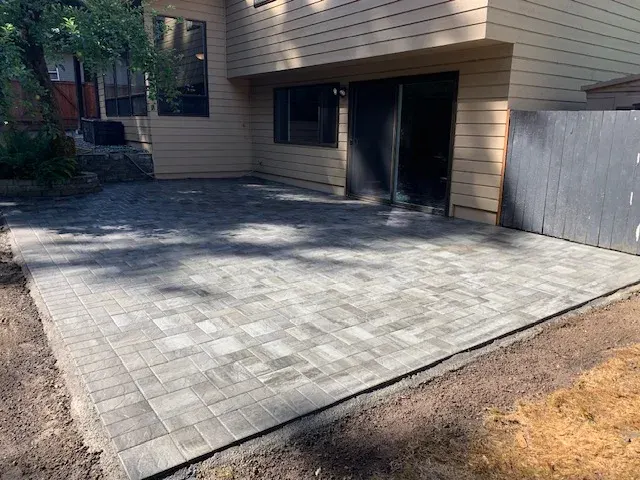
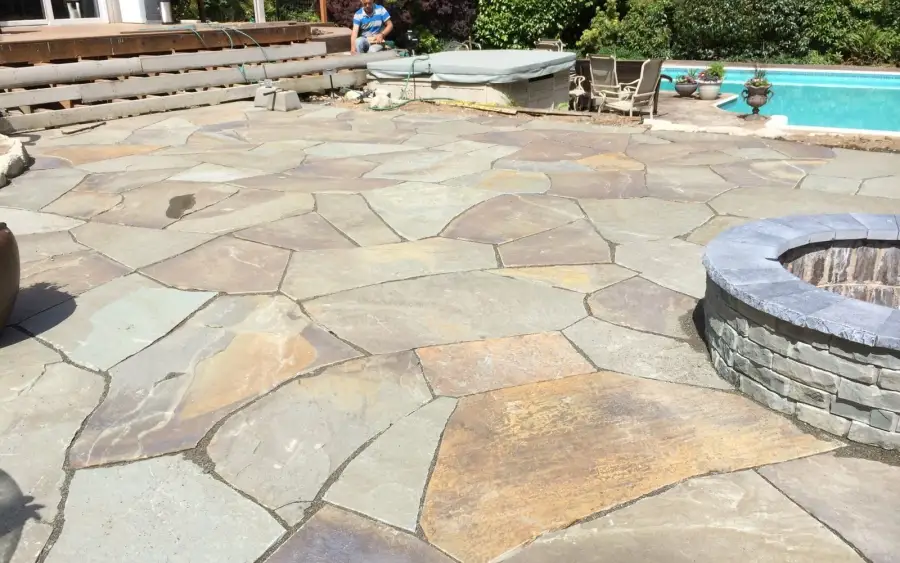
Photographed before the edges were backfilled. The base under a patio is what decides whether it is still flat in ten years, and it is the part nobody photographs.
Local questions
Something specific to your street? Call (425) 533-9734 — we would rather look at it than guess.
Often yes, but not by excavating a conventional base through the root zone. The roots that keep a large tree alive are mostly in the top eighteen inches of soil and extend well beyond the branch spread, so a standard six to eight inch excavation across that area severs a substantial share of them. The alternatives are a shallower build-up, a surface floated over the root zone on a suspended or permeable system, or shifting the layout so the hard surface sits outside the critical root area. Each has trade-offs and we will explain them. What we will not do is dig it out and tell you the tree will be fine.
Because size does not help when the subsoil is till. Under most of the neighbourhood is a dense hardpan that water passes through very slowly, and it is covered by only a foot or two of good topsoil. Through summer you would never know. From October the rain arrives faster than the topsoil can move it sideways, it saturates, and the surplus sits on the surface — and a large flat lawn has nowhere for it to run to. Aeration and reseeding do nothing about this. The fix is a drain routed to a real discharge point, sometimes combined with a slight regrade so the ground itself moves water away from the house.
The whole thing, even if only part of it gets built. On a lot this size the expensive mistake is building three good areas at three different times that do not relate to each other, and then discovering the route between them was never planned. A full design costs a fraction of the build and lets you stage it sensibly — with the critical rule that everything buried goes in during the first stage. Drainage, irrigation sleeves and lighting conduit are cheap while the ground is open and expensive once there is a finished patio over them. Structure first, surfaces second, planting and lighting last is the sequence that works.
Very possibly, and it should be established before anything is scheduled. Seattle regulates tree removal on private property with additional protection for larger and designated exceptional trees, and several of the species common on these lots reach that threshold comfortably. Removing a protected tree without approval carries real penalties. There is also a practical argument for asking a second question first: a mature conifer moves a substantial volume of water out of the ground through the growing season, so taking one out of a garden that already drains poorly can make the winter worse. We look at both before recommending removal.
We come out, walk the property, look at the grade and the drainage, and put a written price together. No deposit, and it does not change once agreed.
Nearby
Gentler than the rest of Seattle. Broad flat platforms around Green Lake, Wedgwood and Maple Leaf, with real grade at the ravine edges and toward the Sound.
15–25 minutes from Capitol Hill
Genuinely flat. Wedgwood is one of the largest areas of level residential ground in Seattle, which is exactly why it drains the way it does.
20–30 minutes from Capitol Hill
Gentle by Seattle standards. A steady fall from Washington Park down to the lake, with the genuinely steep ground sitting just south in Denny-Blaine rather than in Madison Park proper.
10–15 minutes from Capitol Hill

Flat around the lake basin itself, rising to genuine grade on the Phinney Ridge side to the west and toward Maple Leaf to the north-east.
15–25 minutes from Capitol Hill
Seven hills and then some. Grade changes of 20–40% inside a single lot are ordinary in Queen Anne, Magnolia, Mount Baker and West Seattle.
Base of operations — Capitol Hill
Free estimate
15–25 minutes from Capitol Hill from our Capitol Hill base. Three minutes on the form and we will come out and look at it properly.
Or call (425) 533-9734
Thank you — we have your details. We reply during office hours, Monday – Friday, 9:00 AM – 7:00 PM. If it is urgent, call (425) 533-9734.