
 WalkwaysView full size
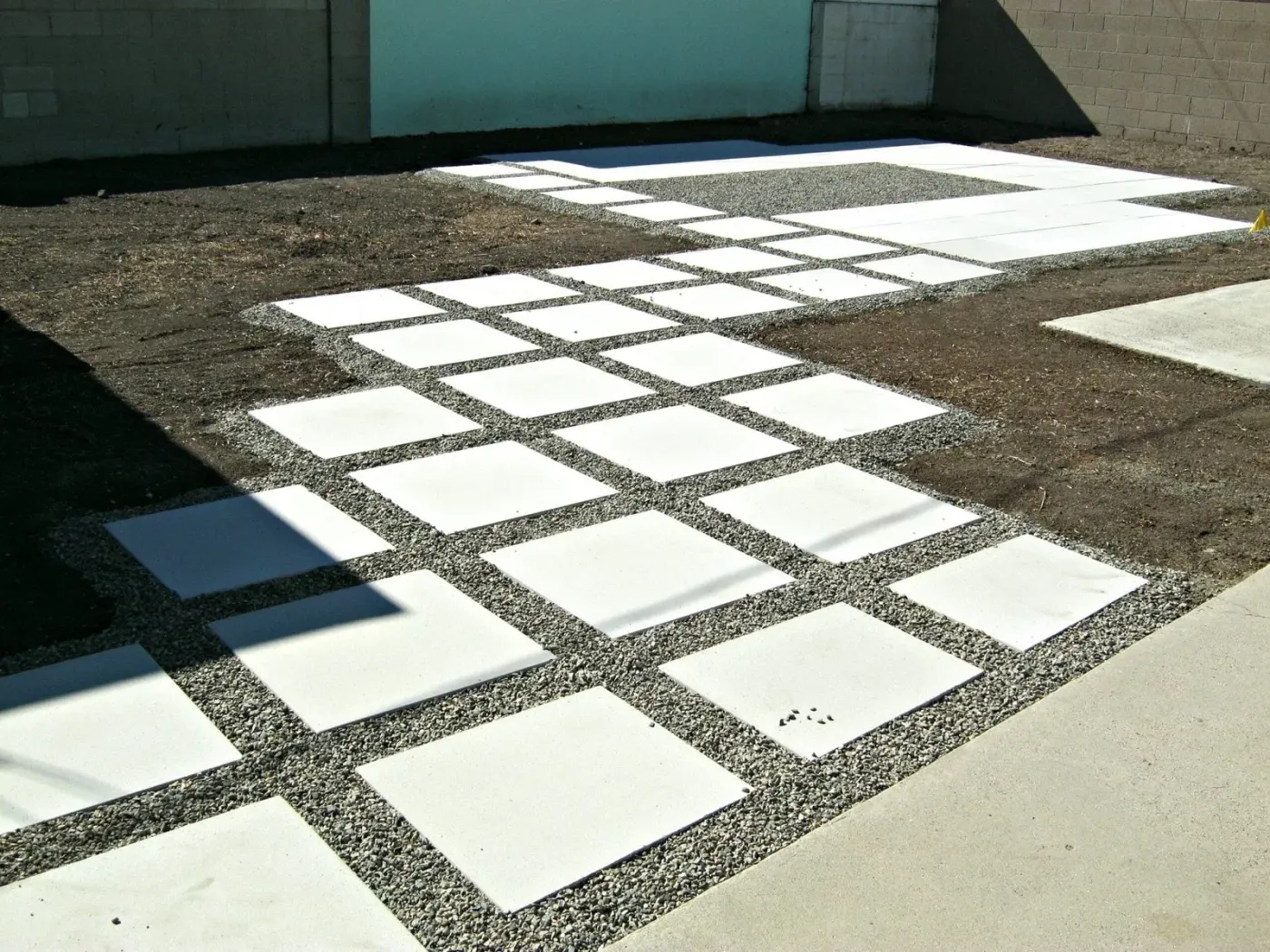
Floating slabs in a gravel bed
Oversized concrete slabs set in gravel — a clean modern route across a rebuilt yard.
No down payment. You pay when the project is finished.
Monday – Friday, 9:00 AM – 7:00 PM · Capitol Hill, Seattle
Service
This is the least glamorous service we offer and the one that quietly determines whether anything built afterwards survives. Site preparation is excavation, grading, compaction and the import of the right material in the right depth — the work that happens before there is anything to photograph. It is also the stage most commonly compressed on a cheap quote, because nobody inspecting a finished patio can see how deep the base under it goes. On Seattle's glacial till the margin for cutting corners is smaller than in most markets: the subgrade will not drain, so the base has to do two jobs at once, and an undersized one fails within a couple of winters.
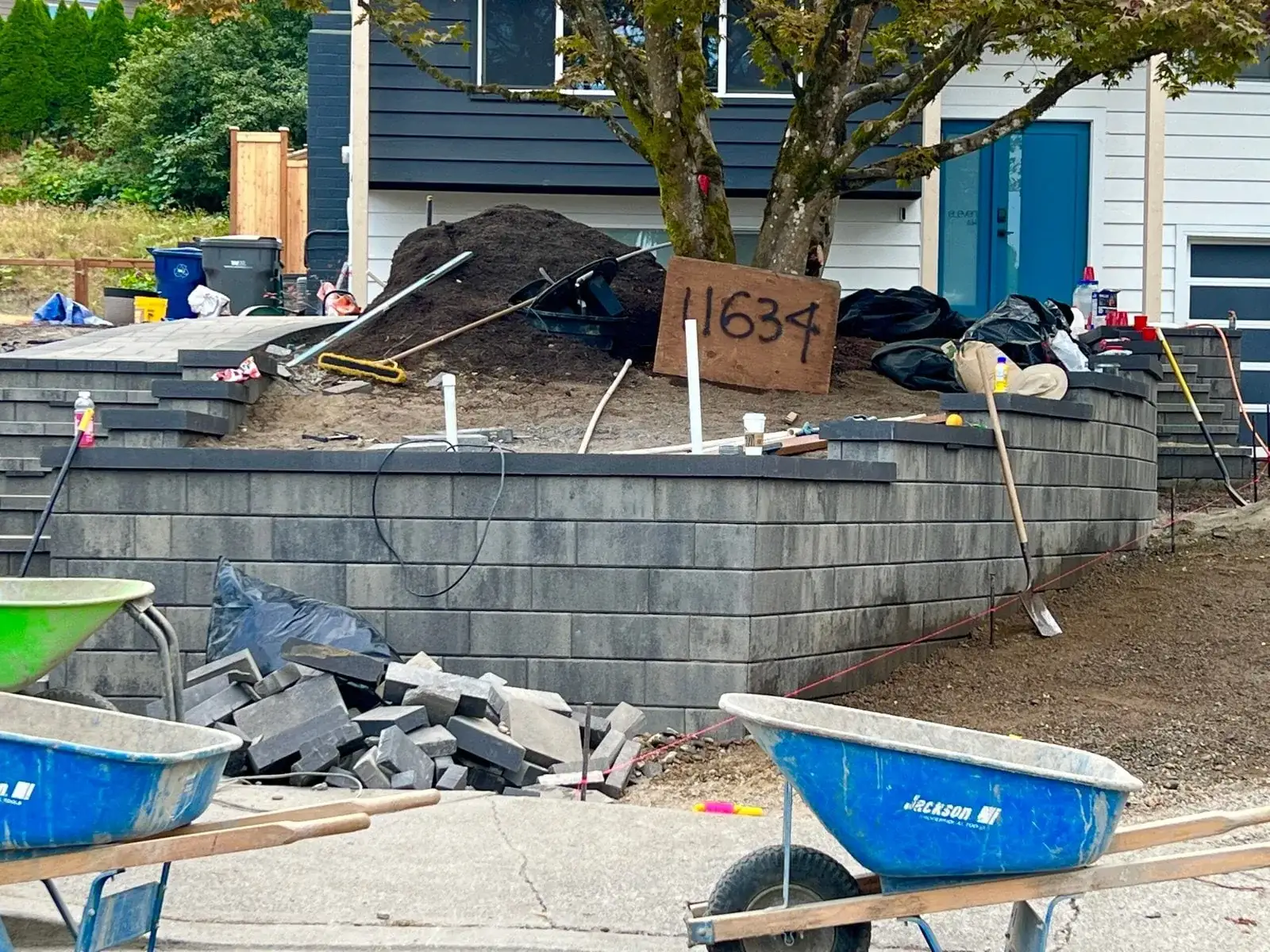
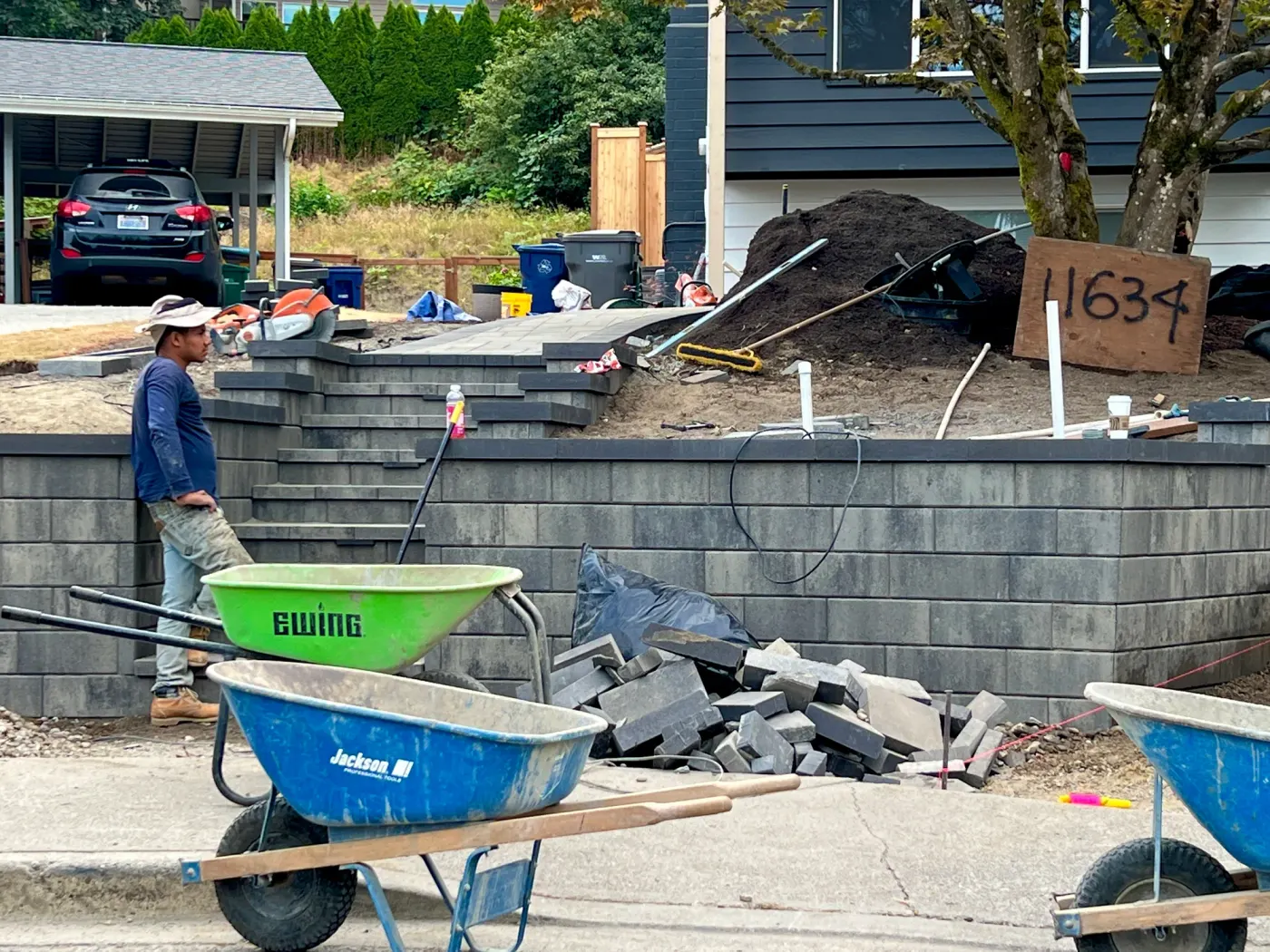
Charcoal block retaining wall under construction with capping units, wheelbarrows and stacked material on site
What is included
Ground that is ready to build on, properly.
Machine work to cut a site to level and set falls. Our own excavators and operators, which matters on constrained lots where the machine choice decides whether the job is possible at all.
Crushed rock placed and compacted in lifts to the depth the finished use requires — pedestrian, vehicle or structural are three different specifications.
Gravel surfaces, dry riverbeds and rock mulch, laid over a proper membrane and edge so they stay where they were put instead of migrating into the lawn.
Feature boulders and rock groupings set with a machine and seated into the ground rather than sitting on top of it, which is the difference between a landscape feature and a delivery.
Material out and material in. On a Seattle lot with no access this is frequently the single largest line in the job, and pricing it honestly up front avoids the mid-build conversation.
Why people call us
How we build it
Seasonality. Best March to October. Excavation and compaction both suffer badly in saturated ground — wet material will not compact to specification, and machine work on soft ground damages more of the lot than the job itself. We do winter site prep where it is necessary, but the honest advice is that it takes longer and costs more, and where the schedule allows it is worth waiting.
What machine can physically reach the work area decides the method and the cost of everything else. On a tight city lot this is the first question, not a detail.
Topsoil and unsuitable material off, cut to the level the build-up requires. Excavating to the right depth is what everything above depends on.
If what is exposed is soft, wet or made ground, it gets addressed — usually with geotextile separation and a deeper base — rather than being built straight over.
Material placed in layers and compacted layer by layer. A base dumped in one go and rolled on top is not a compacted base, whatever it looks like.
Grade checked against the plan before anything covers it, because a fall that is wrong is essentially uncorrectable once a surface is on it.
What it costs
Two variables dominate: how much material moves, and whether a machine can reach the work. The same cubic yardage costs several times more moved by barrow through a three-foot gate than by excavator off a driveway. Spoil disposal is charged by volume and is frequently underestimated in quotes that look cheap at first glance.
That is a market range, not a quote. Your price is fixed in writing after we have seen the site, and it does not move once agreed.
No deposit is required to start. Payment comes after the work is finished — not before.
A fixed, accurate price is guaranteed before the job starts. We do not quote low and raise it mid-project.
A 0% interest payment plan is available for up to 6 months.
Hardscaping work carries a warranty. Vegetation is excluded.
Gravel & Site Prep we have built
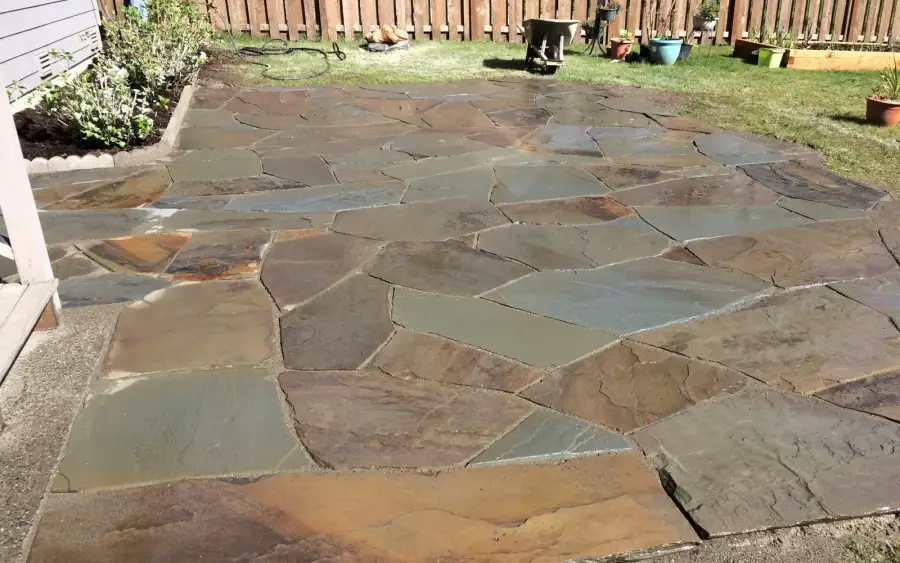
WalkwaysView full sizeOversized concrete slabs set in gravel — a clean modern route across a rebuilt yard.
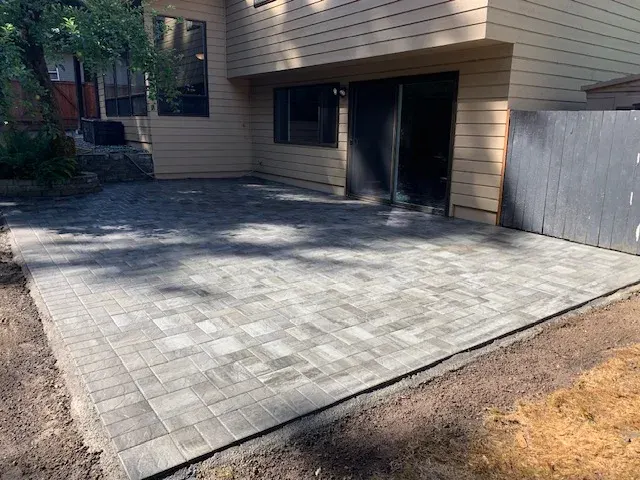 Paver PatioView full size
Photographed before the edges were backfilled. The base under a patio is what decides whether it is still flat in ten years, and it is the part nobody photographs.
 HardscapingView full size
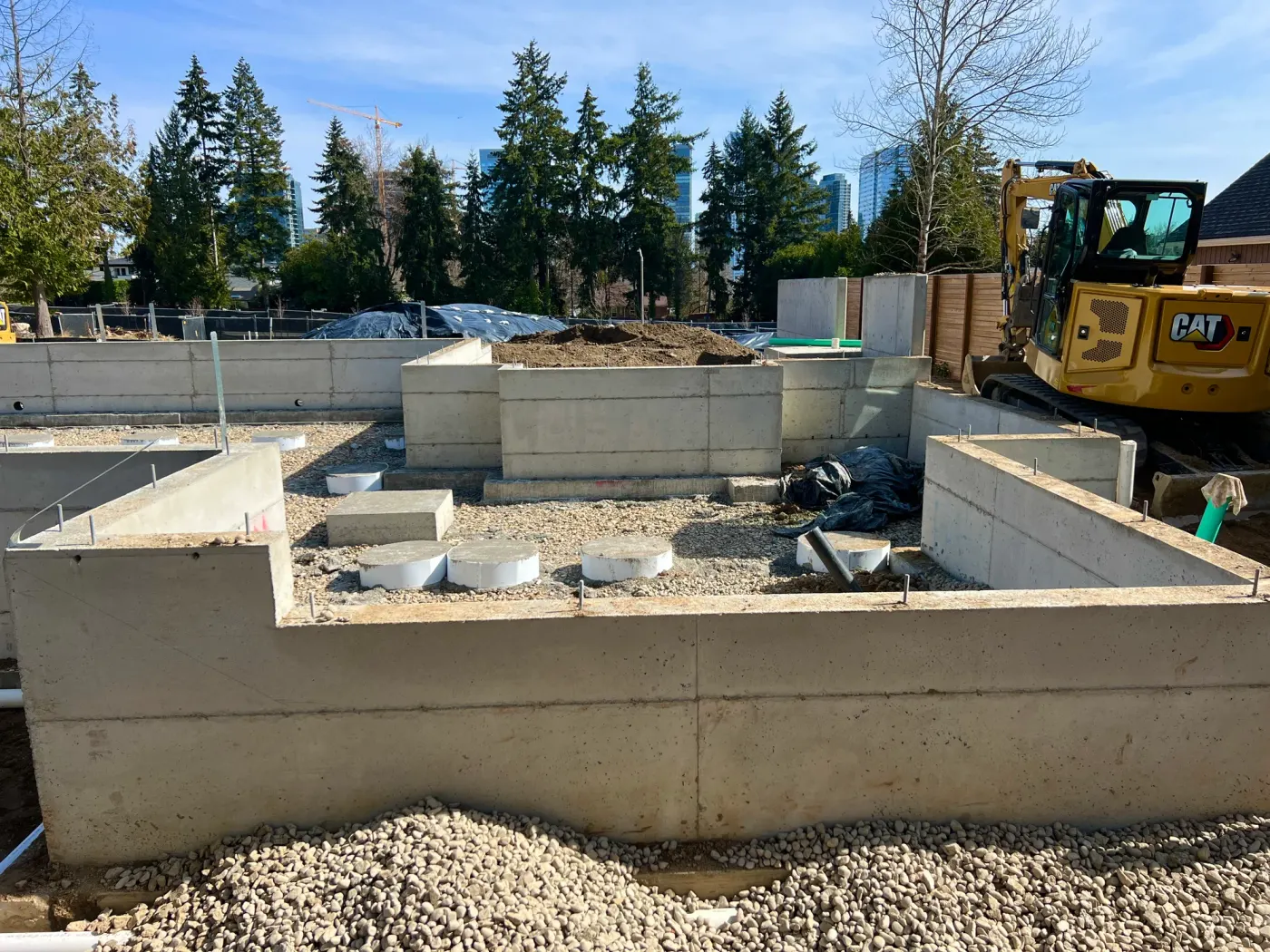
Machine work around a foundation on a tight Bellevue lot: dig to level, keep the cut clean at the footings, and get the drainage in before anything is backfilled over it.
 Retaining WallsView full size
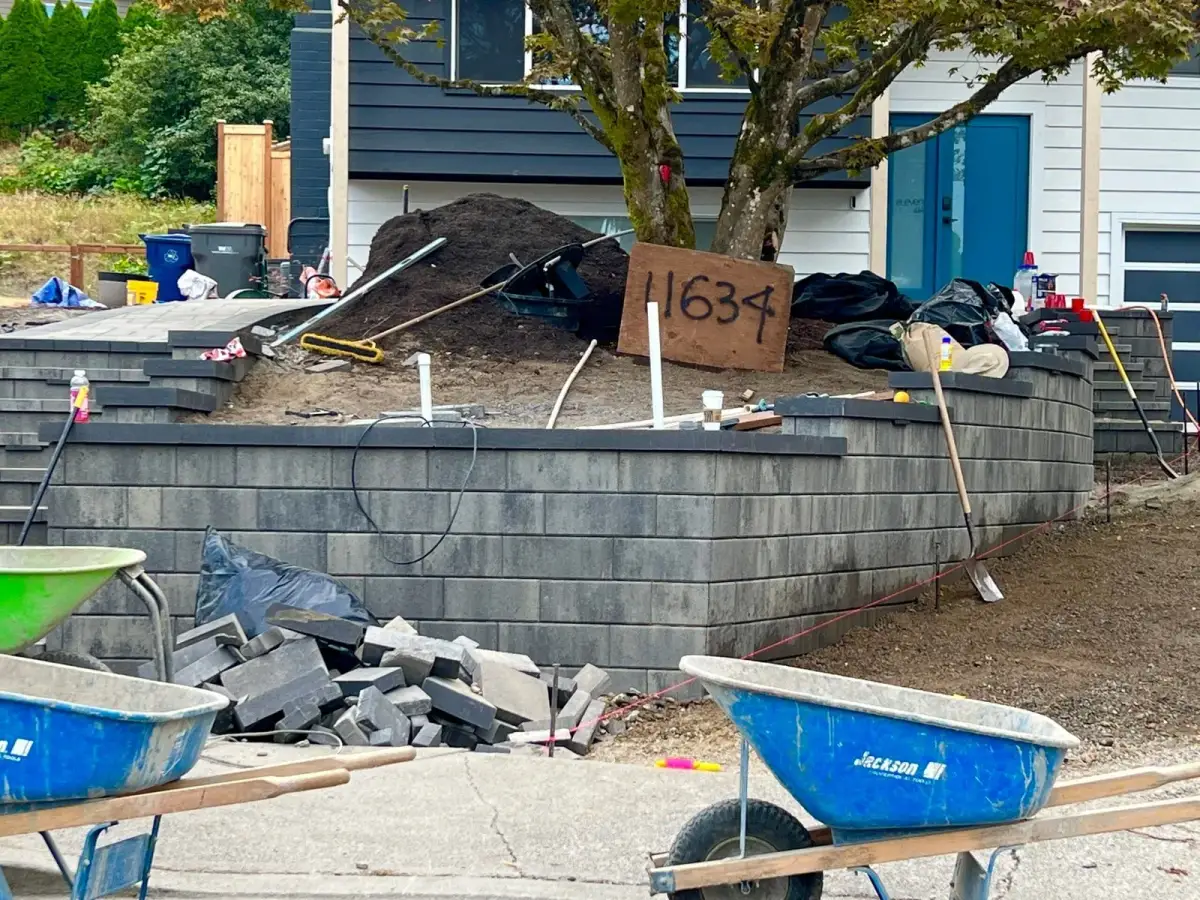
Mid-build on a West Seattle slope: block stacked, barrows running, the old surface still down. One crew on one site until it is finished, which is the only way the levels stay honest.
 HardscapingView full size
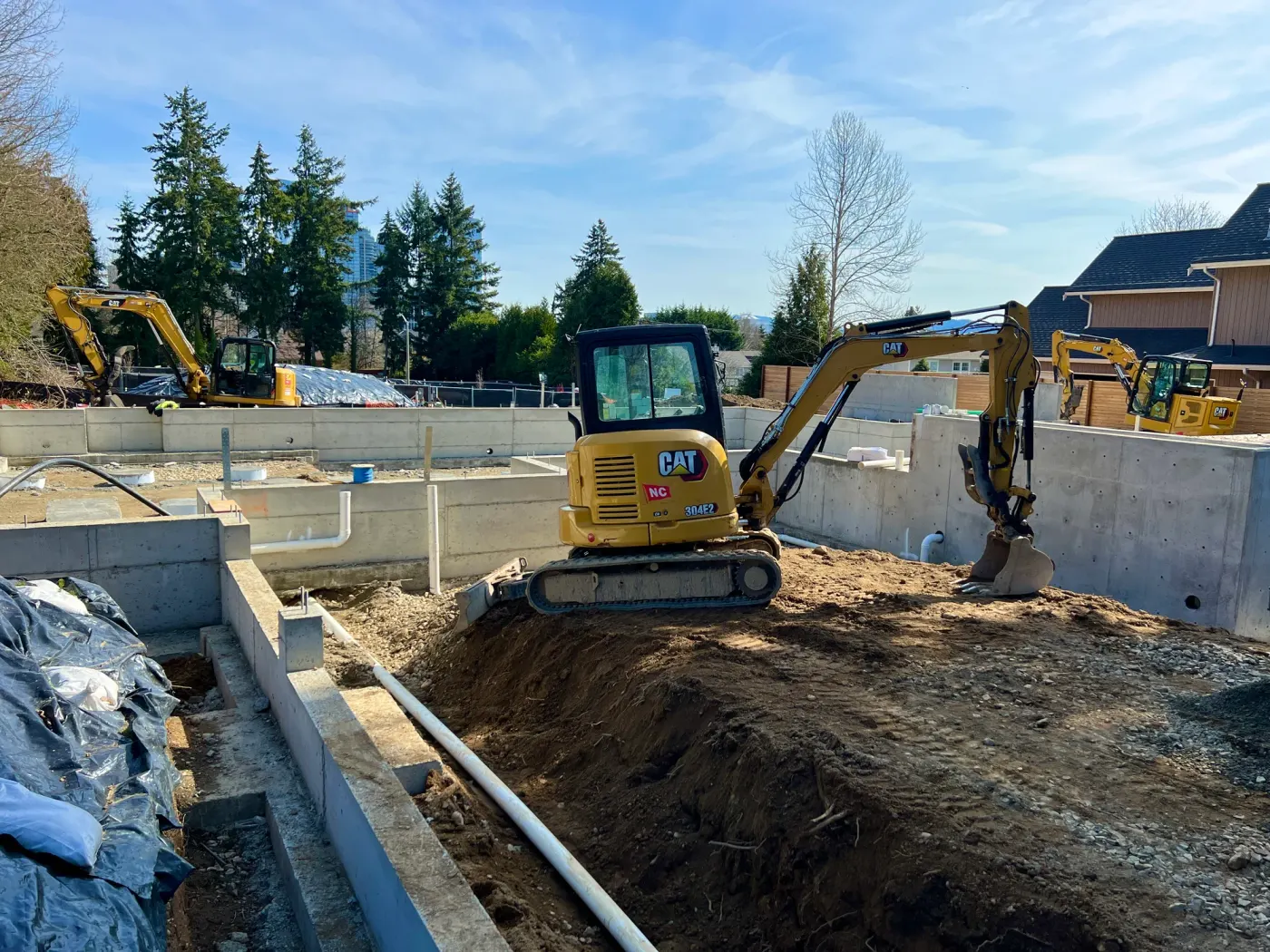
The part of a hardscape budget that buys nothing you will ever see: excavation, levels, trenching and drainage. Every machine in this photograph is ours; the foundation they are working around is not.
 DeckingView full size
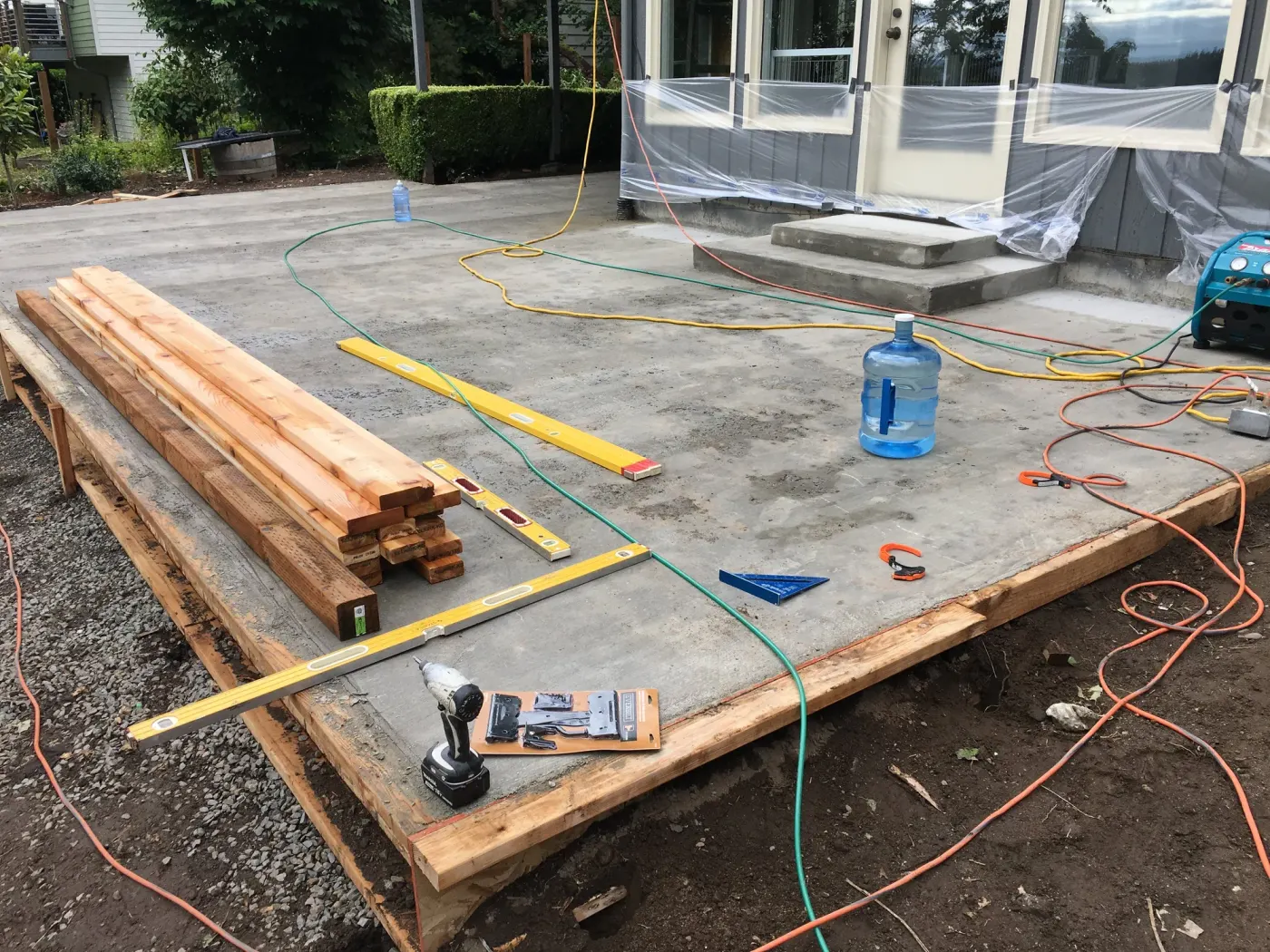
Timber cut and laid out on the old slab, edges masked, hoses run. The photograph nobody asks for, of the day that decides whether the finished deck is level.
Where we build it
Before you call
Something not answered here? Call (425) 533-9734 and ask — we would rather talk it through than have you guess.
Because the ground underneath will not help. In a well-drained sandy subsoil, a modest base works partly because water passing through the surface keeps going down and away. On glacial till it does not — it reaches the hardpan and stops, then moves sideways through whatever base was laid. That means the base is doing two jobs here: spreading load and providing the drainage path the subgrade cannot. Undersize it and water sits in it, fines migrate, voids form and the surface above starts to move. This is the single most common reason we are called to rebuild someone else's patio.
It means placing base material in shallow layers, usually a few inches at a time, and compacting each layer before adding the next. It matters because a compactor only transmits meaningful force a limited depth into loose material — run one over twelve inches of freshly tipped rock and you get a firm crust with uncompacted material underneath it. That looks identical on the day and settles over the following two years. Lifts are slower and use more machine time, and they are the reason two quotes for the same patio can differ substantially while describing the same finished surface.
Yes, and a large share of our Seattle work is exactly that. The methods are hand excavation, barrowing through the house with floor protection, conveyor, or in a few cases craning material over the roof. What changes is not whether it can be done but what it costs and how long it takes — a job that is two days with an excavator on the drive can be four or five by hand. We walk the access route before quoting and price it explicitly, which sometimes makes our figure look higher than a quote from someone who has not yet worked out how the material is getting in.
It leaves in our trucks and goes to appropriate disposal or recycling depending on what it is. Clean excavated soil and clean broken concrete have different routes, and material with contamination or debris in it has another again. It is worth knowing that spoil volume is always greater than the hole it came out of — excavated ground bulks up considerably once it is loose — which is why disposal is routinely underestimated. Where the site can genuinely use it, regrading spoil on your own lot is cheaper than hauling it, and we will suggest that when it is a real option rather than a way of leaving a problem behind.
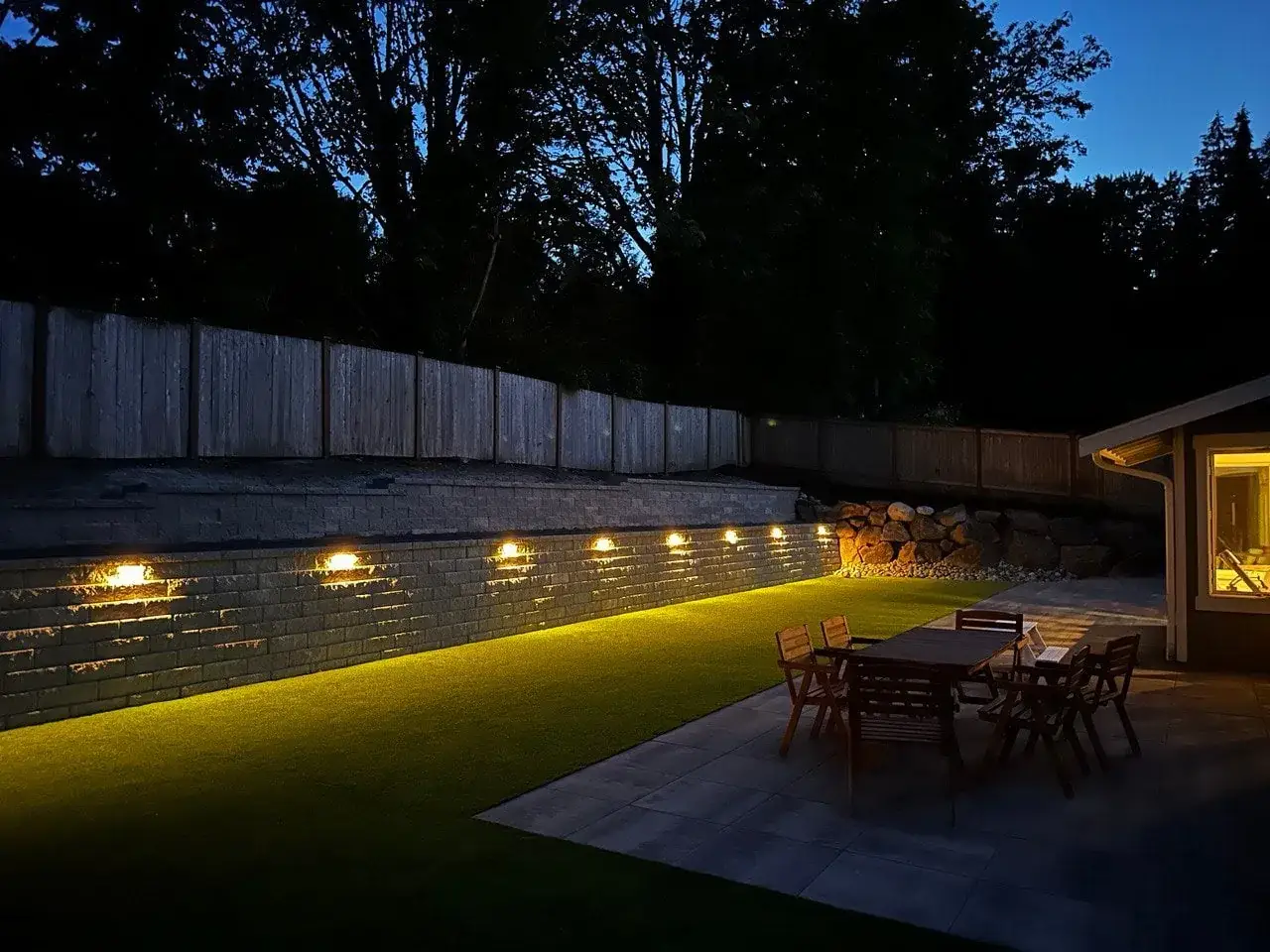
We come out, look at the site properly, and put a fixed written price together. No deposit, and nothing changes once the price is agreed.
Usually done alongside
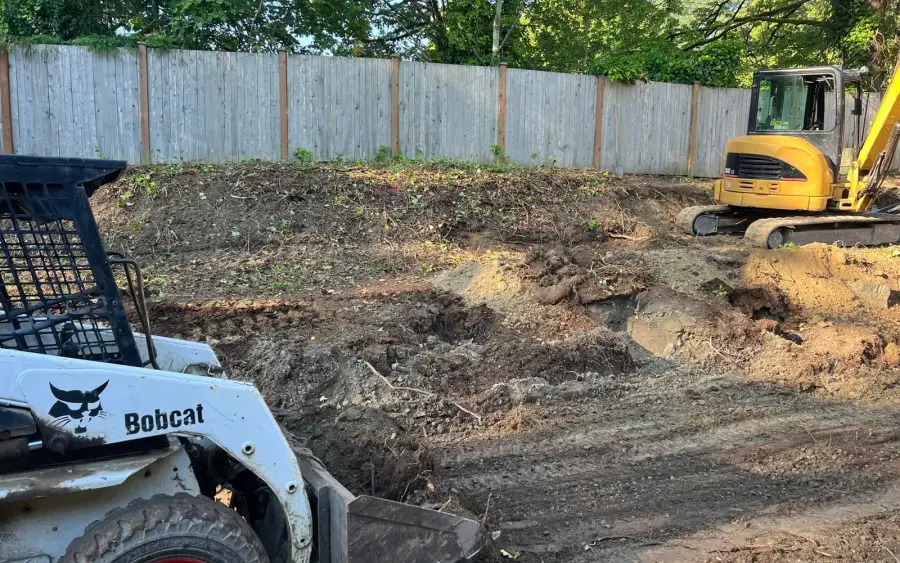
A yard that drains through a Seattle winter instead of holding it.
$10–$25 per linear foot
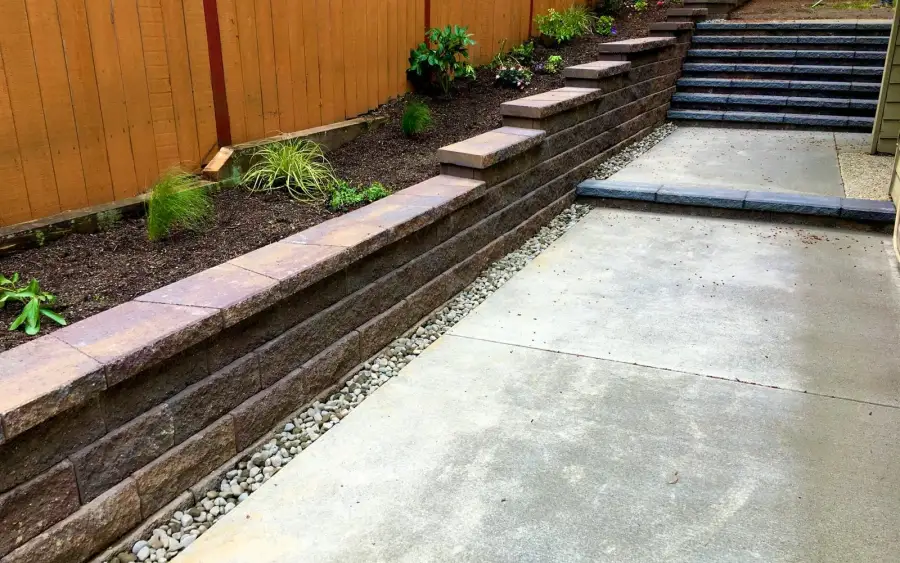
Turn an unusable bank into flat, usable ground.
$5–$45 per square foot of wall face
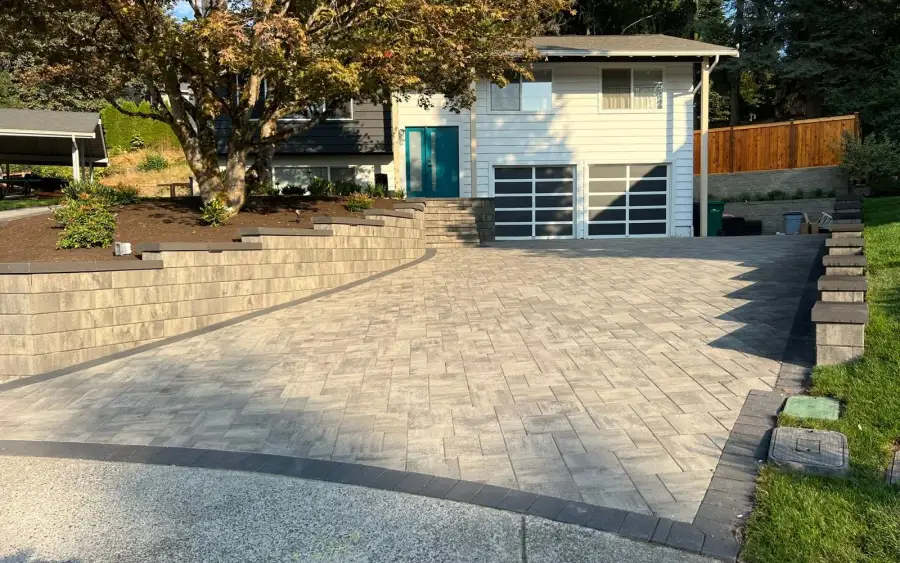
A driveway that carries the weight and sheds the water.
$12–$32 per square foot installed
A patio you can actually use nine months of the year.
$20–$50 per square foot installed
Free estimate
Three minutes on the form. We reply during office hours — Monday – Friday, 9:00 AM – 7:00 PM.
Or call (425) 533-9734
Thank you — we have your details. We reply during office hours, Monday – Friday, 9:00 AM – 7:00 PM. If it is urgent, call (425) 533-9734.