
 Outdoor LivingView full size
Circular terrace with a seat wall
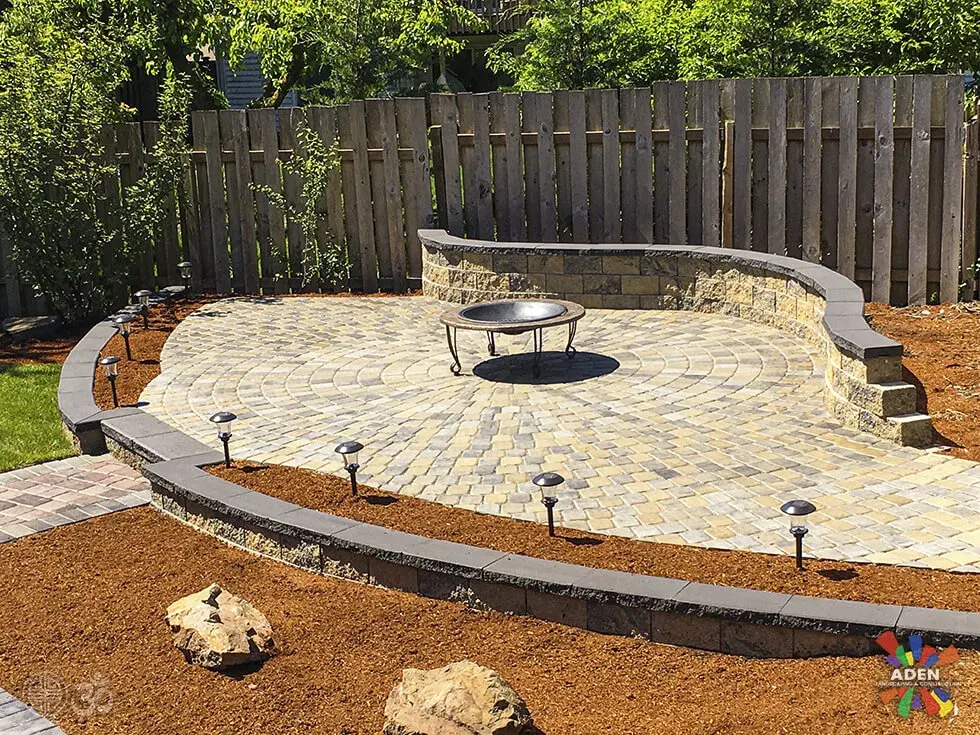
A circular paver terrace wrapped by a curved seat wall, lit at the edge and mulched beyond it. Every unit on that curve is cut on site; there is no kit for this shape.
No down payment. You pay when the project is finished.
Monday – Friday, 9:00 AM – 7:00 PM · Capitol Hill, Seattle
Paver Installation · Sammamish
The Sammamish plateau sits higher than the lowland cities around it, and it gets colder. That matters for paving in one specific way: this region rarely freezes hard, but it does freeze occasionally, and when it does the ground is almost always saturated. Water in a base expands when it freezes and the surface above it lifts; the base does not return to exactly where it was on thaw, and a few cycles of that produce a surface that has gone subtly out of level for no reason anybody can point at. A free-draining base is the answer, and it is the answer whether or not it ever actually freezes — because a base that holds no water cannot be heaved by it.
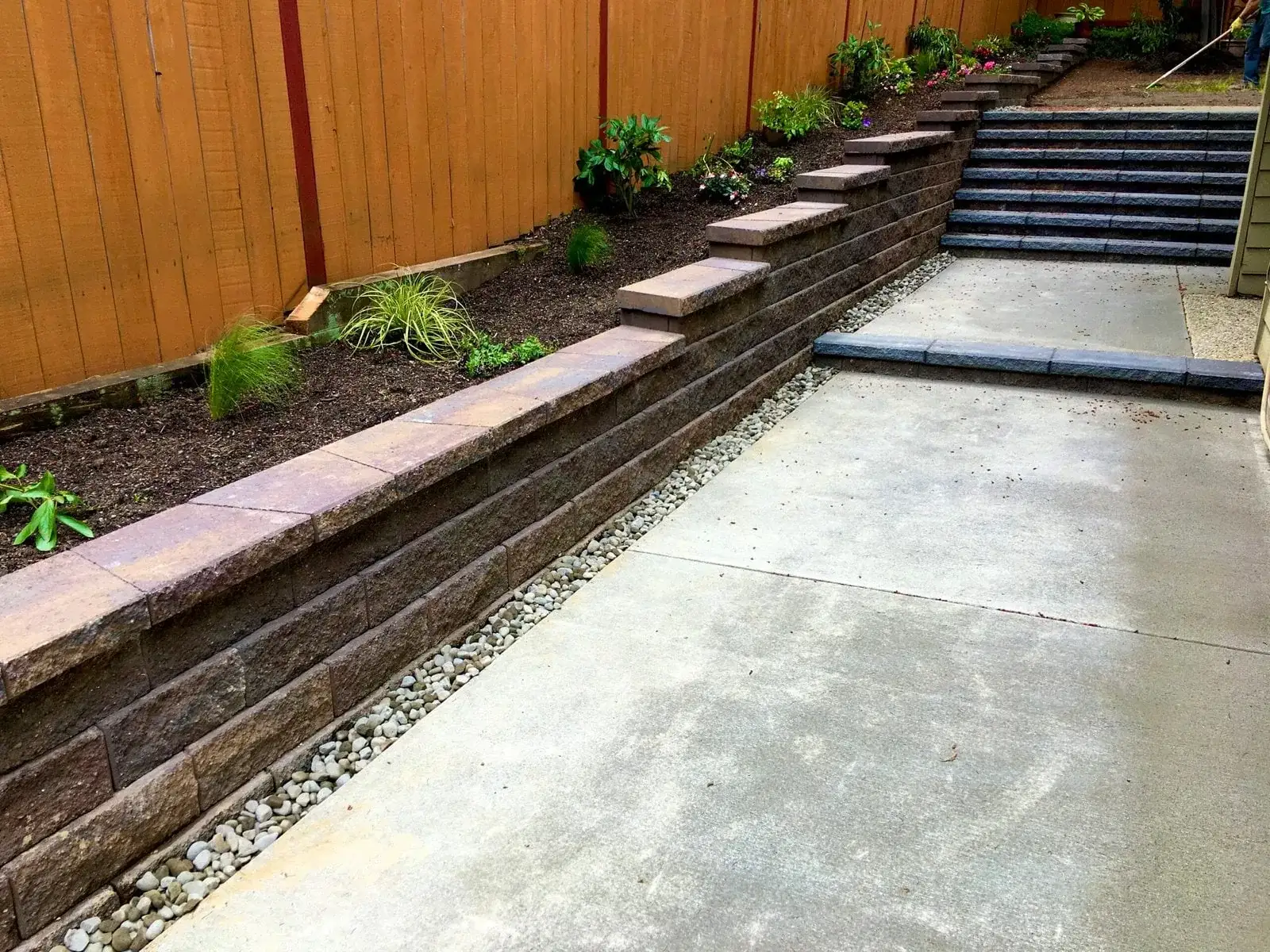
Two-tier block retaining wall with stone steps and new planting on a sloped Sammamish side yard
What we get called about
Sammamish has the big flat-ish lots that most of this market does not, and the catch that comes with them: a plateau holds water rather than shedding it, and seasonally saturated pockets turn up in places that look perfectly ordinary in July. That makes drainage the first question on a surprising number of these properties. The second Sammamish fact is HOA density — Klahanie, Trossachs, Sahalee and most newer developments have architectural standards that apply to fencing, materials and front-of-house work, so approval is a scheduling item on nearly every project.
Worth knowing in Sammamish
Ask what the base material actually is, by name, not just how deep it goes. A clean angular crushed rock and a cheaper pit-run with fines through it look similar in a barrow and behave completely differently once a wet winter and a cold snap have worked on them.
Frost heave is usually described as a cold-climate problem, which is why it gets dismissed here. The mechanism needs three things: water in the base, a freeze that reaches it, and fine material that holds the water in place rather than letting it drain away. This region supplies the first in abundance and the second occasionally, so the only one worth controlling is the third.
Base material with fines in it behaves like a sponge. It retains moisture at every level, so a freeze acts on the whole depth at once and the lift is spread across the surface rather than confined to one spot — which is exactly why the result reads as a surface that has gone gently wrong rather than one that has obviously subsided.
A clean, open, angular rock has voids that water passes through rather than sitting in. Even at the same depth and the same compaction effort, it heaves far less, drains faster after a wet spell, and stays where it was put. It is a small line on a quote and the single most durable thing in a Sammamish installation.
The method
The sequence does not change between neighbourhoods — what changes is the ground it is applied to. Full detail on the paver installation service page.
What the subgrade is, how wet it gets, and where water currently goes. On a till lot those three answers change the build more than the choice of paver does.
Every surface gets a fall, including the ones that look flat. Where water leaves is decided before a shovel moves, not adjusted at the end once the levels no longer allow it.
Down to competent ground, then compacted before any rock goes in. A good base built on an uncompacted subgrade just moves the failure one layer down.
Layer by layer to the specified depth, with a plate or roller sized for the job rather than whatever is on the van. This stage decides whether the surface is still flat in ten years.
Bedding course screeded to depth, units laid off a string line, perimeter saw-cut, and edge restraint fixed before any joint is filled.
Polymeric sand swept in, the field compacted to seat the units, then the whole area washed off — the last step is the one a rushed crew skips.
What it costs in Sammamish
Sammamish paver installation runs $18 to $40 per square foot. A properly free-draining build is not dramatically more expensive than a poor one — the aggregate costs a little more and the compaction takes longer — which is why the difference so rarely shows up as a big number on a quote and so reliably shows up as a problem in year four. Where a base has to be dug out and replaced rather than built new, disposal is the line that moves.
You pay after the project is fully completed.
The estimate you sign is the price you pay.
Spread the cost with no interest.
Covers hardscape work; vegetation excluded.
Local questions
General questions about this service are on the service page. These are the ones that only come up here.
Occasionally, and that is enough. This is not a climate with months of deep frozen ground, so the dramatic heave seen in genuinely cold regions does not happen here. What does happen is a handful of freeze events each winter acting on ground that is thoroughly saturated, because it always is by then. A few small lifts a year, over a decade, produce a surface noticeably out of level with no single event to blame it on. The reason to build free-draining is not that a hard freeze is coming — it is that the cost of being wrong is a surface you eventually lift, and the cost of being right is a slightly better grade of rock.
Base material with the fine particles washed or screened out of it, so the spaces between the stones stay open and water moves through rather than being held. In practice that means a specified clean angular crushed rock rather than a general fill or a cheaper pit-run material that arrives with sand and silt through it. Angular matters as much as clean: crushed faces lock together under compaction where rounded stone rolls, so a clean angular rock compacts to a stable, load-bearing, still-porous layer. It is worth asking the question by name, because both materials look broadly similar to anyone who is not looking for the difference.
Usually because the edge restraint has given way and the field is creeping outward, and freeze cycles accelerate it. Every unit is held by friction against its neighbours and ultimately by whatever restrains the perimeter — and once that restraint fails, small seasonal movements accumulate outward rather than returning. Wider joints then let more water into the base, which makes the next cycle worse. The fix is to reinstate a proper restraint at the perimeter and re-joint the field, and where the movement has been going on for years, lifting and resetting the outer courses back to their original line.
More than most people want, and it is worth arguing about at design stage rather than living with it afterwards. A surface laid genuinely level does not shed water — it holds a thin film across it after every rainfall, which in a shaded winter garden simply stays there, grows algae and freezes. A modest fall is imperceptible underfoot, does not affect furniture, and is the difference between a surface that dries between rainfalls and one that does not. The important part is not the number but the direction: away from the house, toward somewhere the water is entitled to go, and settled before the base is built.
Serving Sammamish and surrounding neighbourhoods
Pine Lake · Beaver Lake · Klahanie · Trossachs · Inglewood Hill · Sahalee
98074 · 98075
Recent work
Outdoor LivingView full sizeA circular paver terrace wrapped by a curved seat wall, lit at the edge and mulched beyond it. Every unit on that curve is cut on site; there is no kit for this shape.
 Driveway PavingView full size
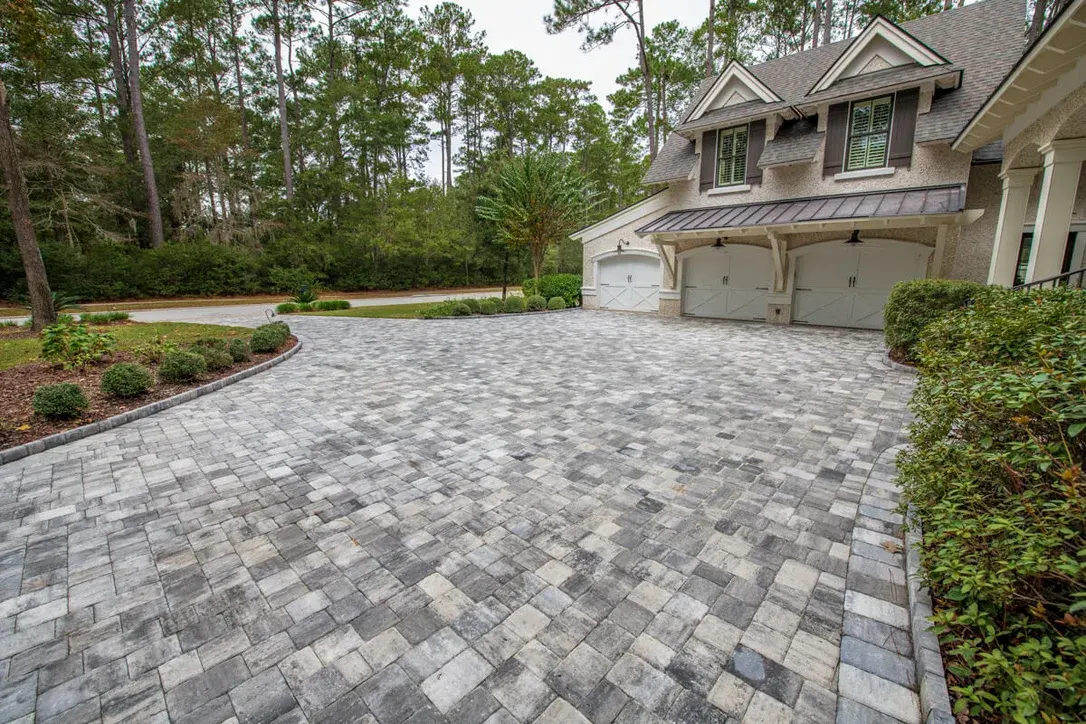
A complete drive in grey pavers, turning area included. On a lot this size the paving is the largest single surface on the property, so the base underneath it is most of the job.
 Retaining WallsView full size
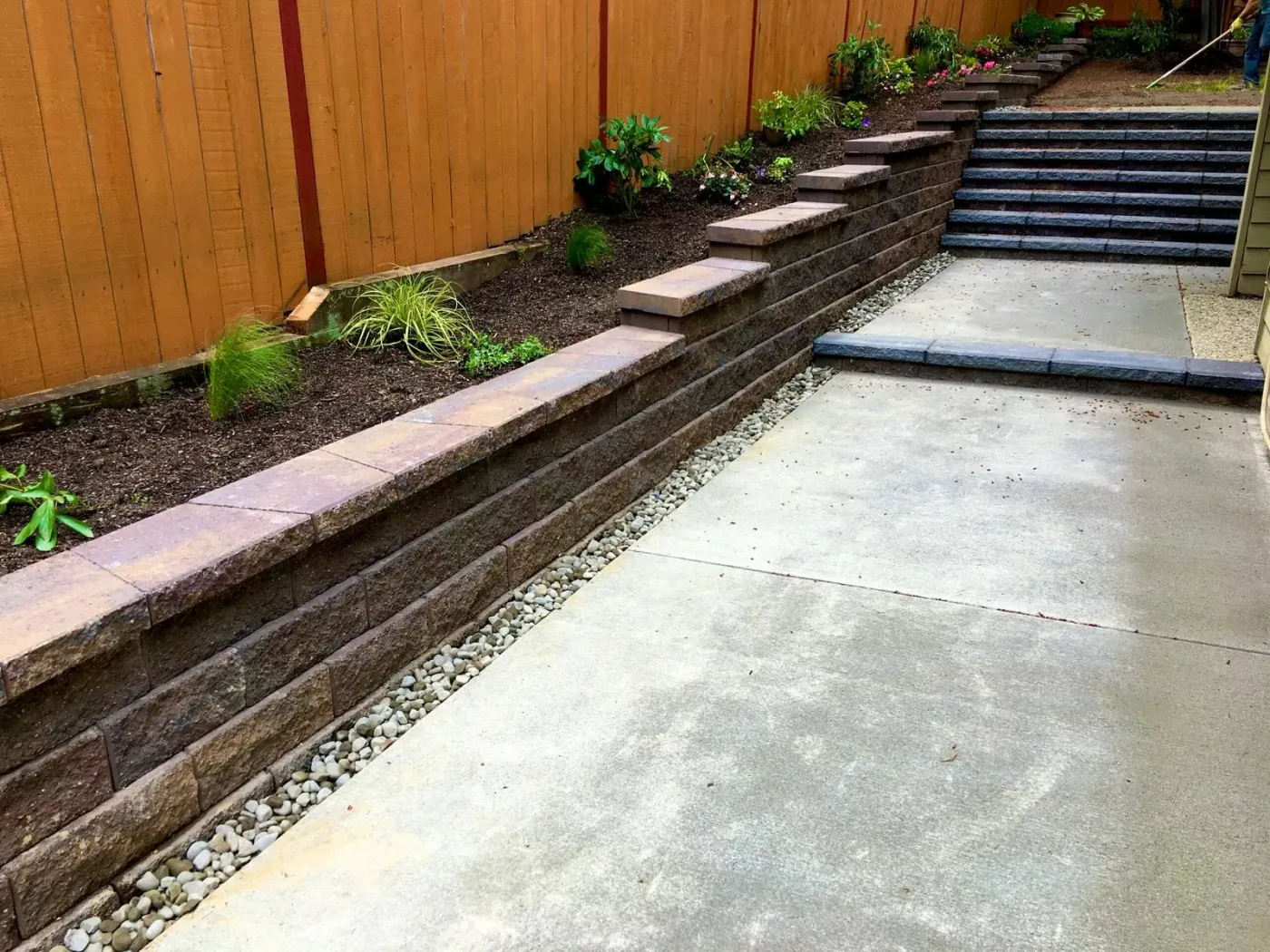
Two tiers of block wall with steps between them, turning a bank into planting beds and a level path.
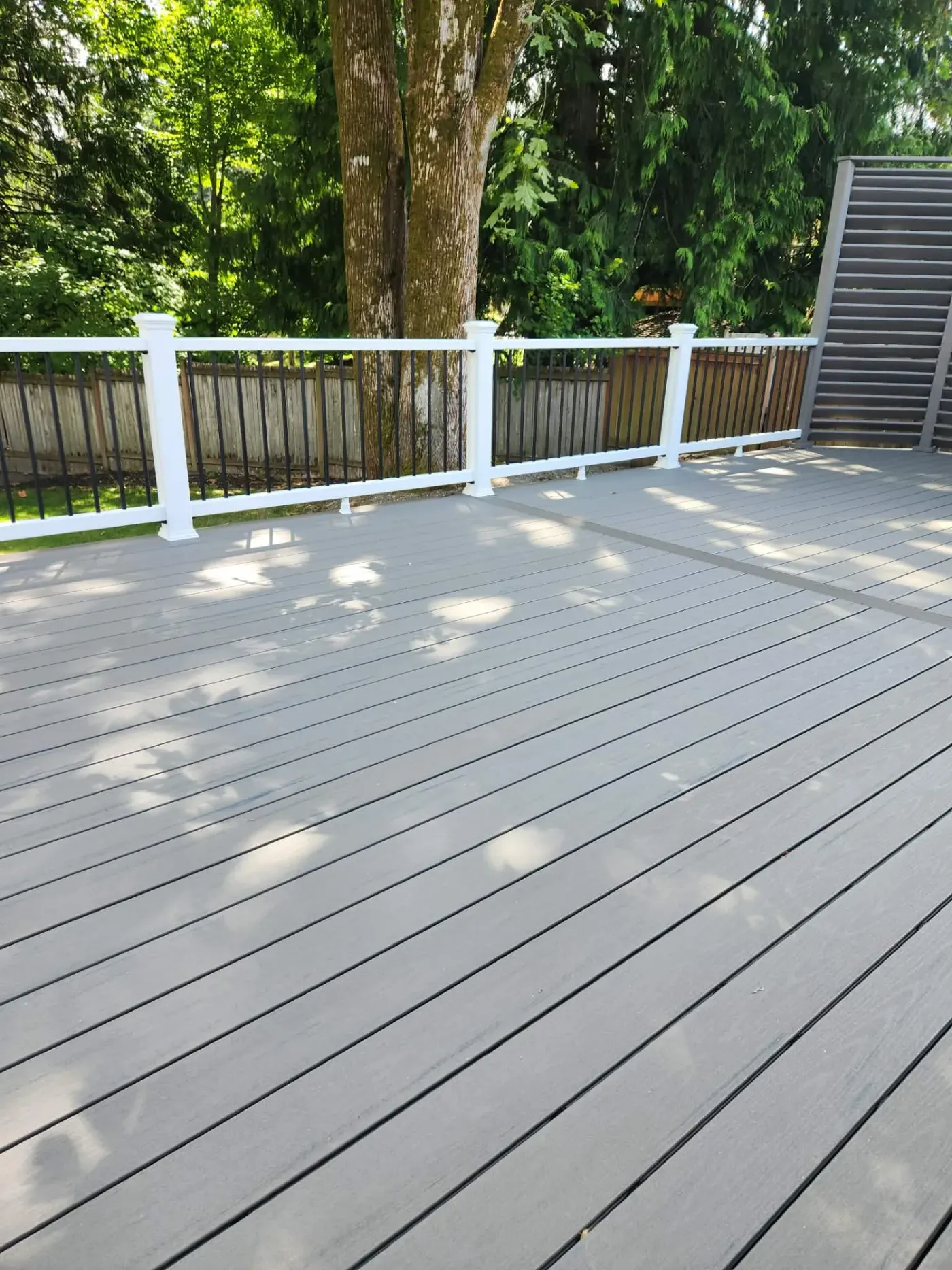 DeckingView full size
A big single-level deck sized for a table and still leaving room to walk around it, with white posts and black metal balusters picking up the trim on the house.
We come out, look at the ground, and put a fixed written price together. No deposit, and it does not change once agreed.
Free estimate
Three minutes on the form. We reply during office hours, Monday – Friday, 9:00 AM – 7:00 PM, and we come out and look at the site before quoting anything.
Or call (425) 533-9734
Thank you — we have your details. We reply during office hours, Monday – Friday, 9:00 AM – 7:00 PM. If it is urgent, call (425) 533-9734.