
 Outdoor LivingView full size
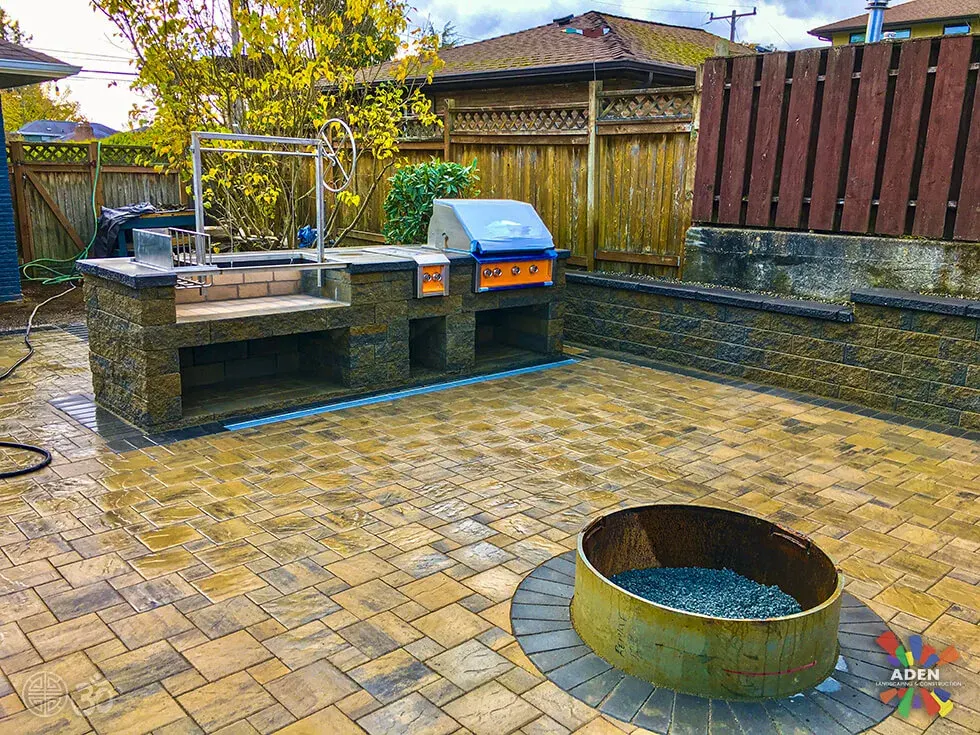
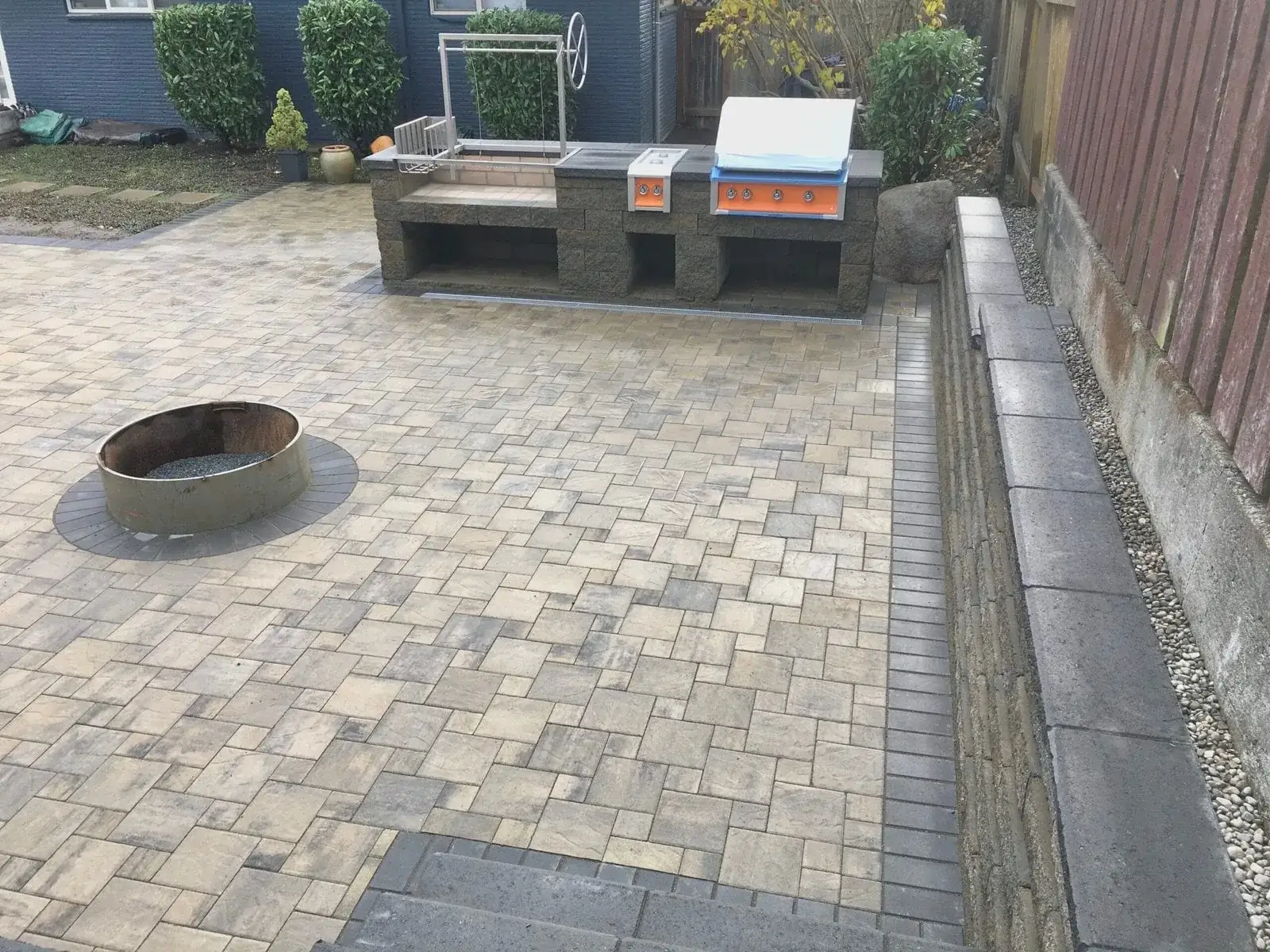
Outdoor kitchen and fire bowl
Two built-in grills, a run of stone-faced counter, and a copper fire bowl set into the paving. The gas line and the drainage went in before a single paver did — they always have to.
No down payment. You pay when the project is finished.
Monday – Friday, 9:00 AM – 7:00 PM · Capitol Hill, Seattle
Paver Installation · Woodinville
Woodinville lots tend to be larger and less formal, and the interesting problem here is rarely the paved area itself — it is what the paving meets. A surface that runs out into gravel, into a lawn, into a planting bed or into an unpaved approach has an edge doing real work, and that edge is where these projects succeed or fail. On a city lot a paved area is usually contained by walls and buildings that restrain it for free. On a two-thirds-of-an-acre Woodinville property it frequently has open sides in every direction, which means every one of them needs a restraint that was designed rather than assumed.
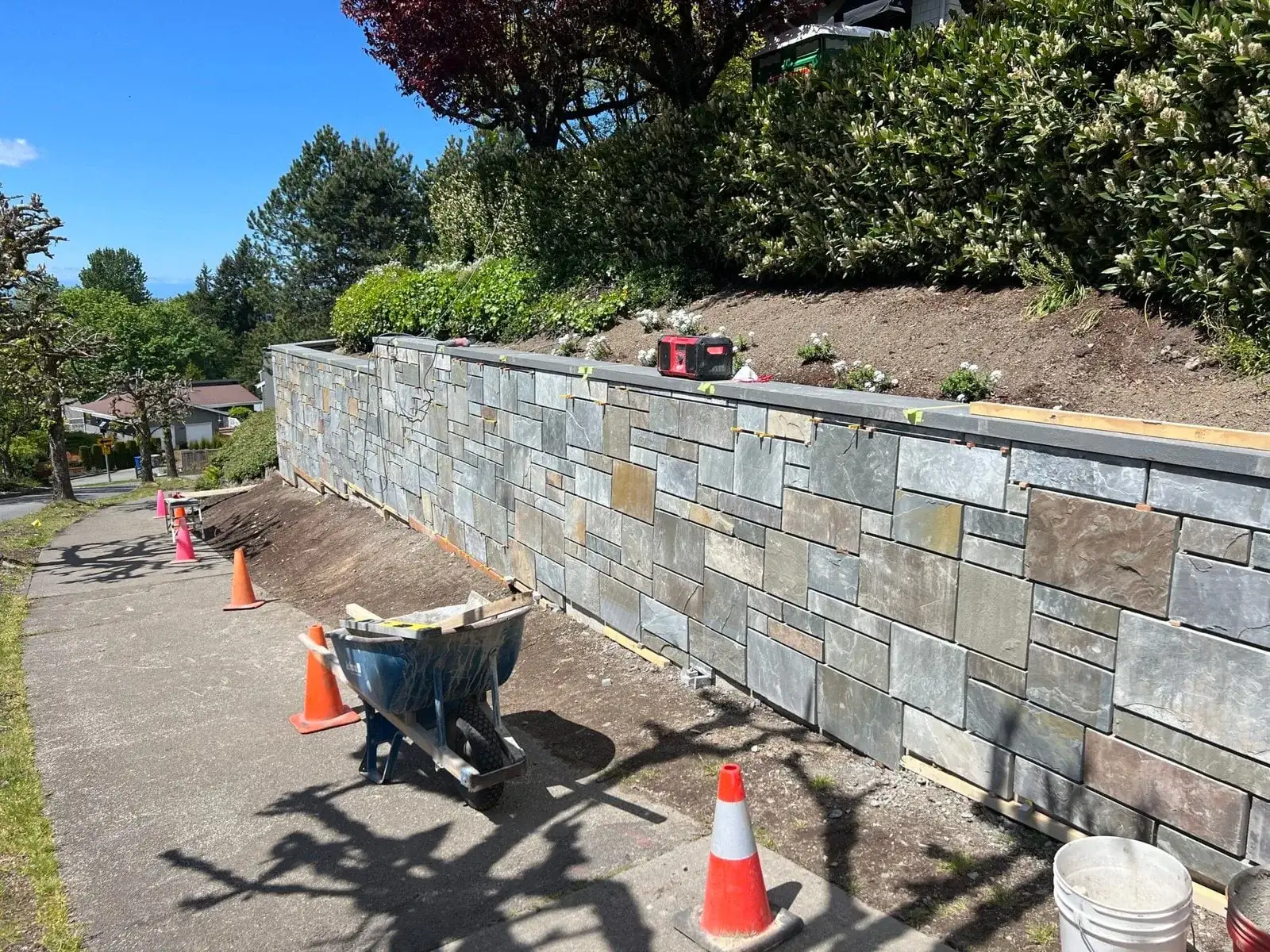
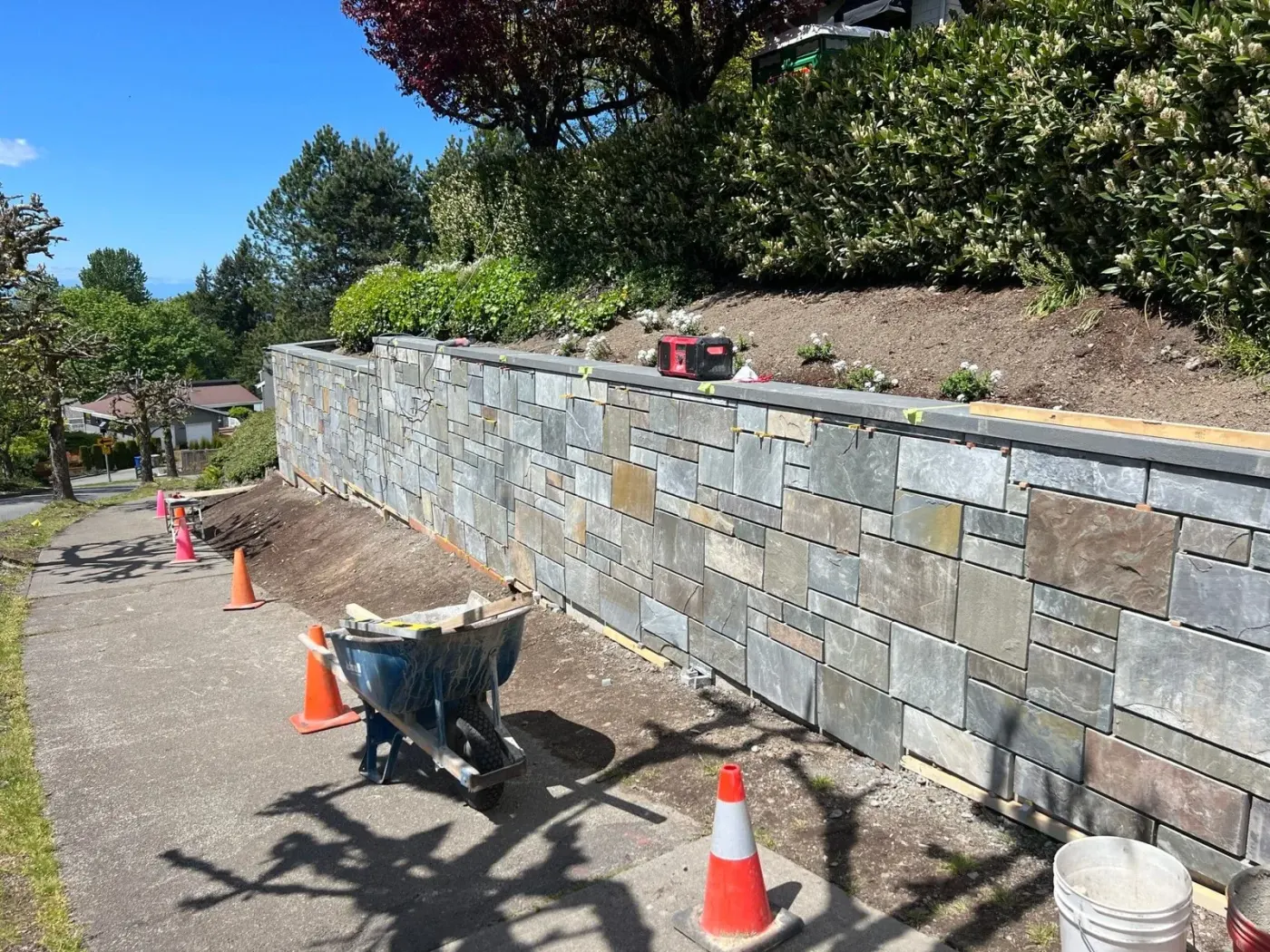
Natural stone veneer retaining wall under construction with tools and materials on a Woodinville site
What we get called about
Woodinville has the largest properties we work on, and acreage changes the nature of the job. The design problem stops being how to fit things into a small space and becomes how to give a large one structure — which usually means deciding what part of it is garden and letting the rest be landscape rather than trying to maintain all of it. Practically, several properties here are on wells and septic, which constrains irrigation design and dictates where you cannot excavate. And the valley floor is a different world from the hills: high water table, flat ground, slow drainage.
Worth knowing in Woodinville
Set any edge that meets a lawn flush with the grass rather than proud of it. A mower can run straight over a flush edge and cut cleanly to the paving; anything standing above the turf means strimming that line by hand for the rest of the surface’s life.
The method
The sequence does not change between neighbourhoods — what changes is the ground it is applied to. Full detail on the paver installation service page.
What the subgrade is, how wet it gets, and where water currently goes. On a till lot those three answers change the build more than the choice of paver does.
Every surface gets a fall, including the ones that look flat. Where water leaves is decided before a shovel moves, not adjusted at the end once the levels no longer allow it.
Down to competent ground, then compacted before any rock goes in. A good base built on an uncompacted subgrade just moves the failure one layer down.
Layer by layer to the specified depth, with a plate or roller sized for the job rather than whatever is on the van. This stage decides whether the surface is still flat in ten years.
Bedding course screeded to depth, units laid off a string line, perimeter saw-cut, and edge restraint fixed before any joint is filled.
Polymeric sand swept in, the field compacted to seat the units, then the whole area washed off — the last step is the one a rushed crew skips.
What it costs in Woodinville
Woodinville paver installation runs $18 to $40 per square foot. On larger properties the edge detail is a bigger share of the total than most people expect, because it is priced per linear foot and an open area of any size has a great deal of perimeter. A concrete haunch or laid kerb costs more than a pinned proprietary edging and is what an open, load-bearing or mower-adjacent edge actually needs.
You pay after the project is fully completed.
The estimate you sign is the price you pay.
Spread the cost with no interest.
Covers hardscape work; vegetation excluded.
Local questions
General questions about this service are on the service page. These are the ones that only come up here.
A restraint that is structurally adequate and set flush with the finished grass. Those two requirements pull in different directions, which is why it is worth deciding deliberately. Structurally, an open edge with any load on it wants a concrete haunch or a laid kerb rather than a plastic edging pinned into base rock — the pinned version holds a light pedestrian surface indefinitely and loses to anything heavier. Visually and practically, that restraint wants to sit level with the turf so a mower runs over it. Getting both means building the haunch below finished grass level, which is a detail rather than an extra.
With a physical separation that goes deeper than either material. Gravel travels — it is loose by definition, and foot and vehicle traffic move it steadily in whatever direction they go. A flush transition with nothing between the two guarantees gravel on the paving and paver edges working loose into the gravel. A kerb, a timber edge or a concrete upstand set below the surface on both sides gives each material something to bear against. The other half is the fall: gravel that sits slightly below the paved level tends to stay put, where gravel raised against a paved edge finds its way over it.
Not necessarily, though the jointing choice makes a large difference. Weeds in paving nearly always germinate from seed and organic matter that has landed on the surface and worked into the joints, rather than growing up from below — which is why they appear more in an open, planted setting than in an enclosed courtyard. Polymeric jointing sand sets firm and gives far less to root into than loose sand, and it makes what does establish easy to remove. Where paving runs alongside beds, keeping organic litter swept off the surface does more than any treatment, because it removes the growing medium rather than the plant.
By treating it as its own detail, because it takes more punishment than anything either side of it. That transition is where vehicles change from a surface that moves to one that does not, which concentrates load and shear at exactly one line — and it is the first place a long approach fails. It wants a properly restrained, well-founded edge, a base carried further back beyond the joint than looks necessary, and where possible a short run of transition material rather than a hard butt joint. Building it to the same specification as the middle of the paved area is the standard mistake.
Serving Woodinville and surrounding neighbourhoods
Downtown Woodinville · Hollywood Hill · Wellington · Cottage Lake · Sammamish Valley wine district · Bear Creek edge
98072 · 98077
Recent work
Outdoor LivingView full sizeTwo built-in grills, a run of stone-faced counter, and a copper fire bowl set into the paving. The gas line and the drainage went in before a single paver did — they always have to.
 Driveway PavingView full size
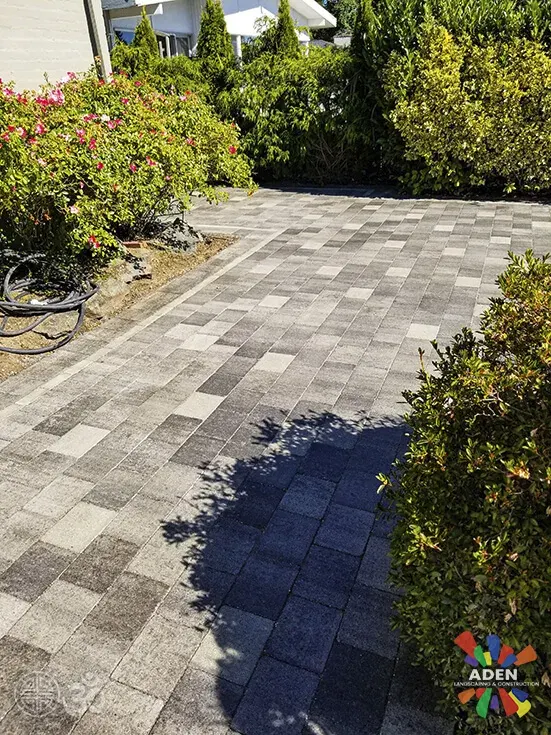
Photographed before the edge planting went back, jointing sand still on the surface. The variation across the field is deliberate — units drawn from several pallets rather than one.
 StoneworkView full size
Stone veneer going up over a structural core — the part of the job nobody photographs, done properly.
 Retaining WallsView full size
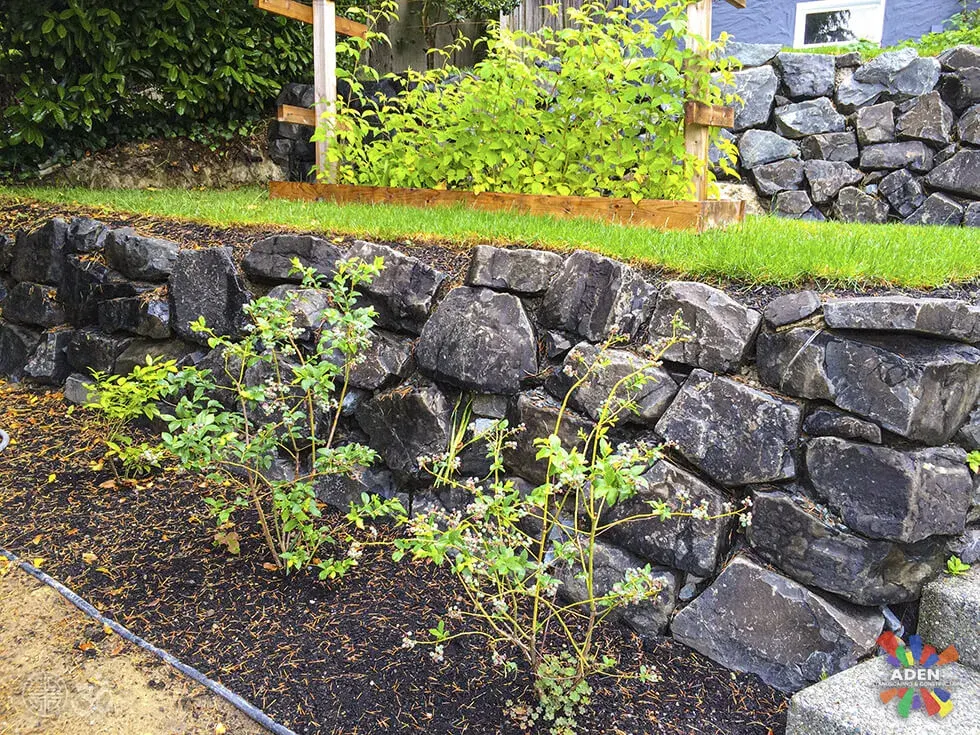
Quarried basalt set as a rockery rather than laid as block. It suits a rural lot better, and it lets the planting run into the joints instead of stopping dead at a straight line.
We come out, look at the ground, and put a fixed written price together. No deposit, and it does not change once agreed.
Free estimate
Three minutes on the form. We reply during office hours, Monday – Friday, 9:00 AM – 7:00 PM, and we come out and look at the site before quoting anything.
Or call (425) 533-9734
Thank you — we have your details. We reply during office hours, Monday – Friday, 9:00 AM – 7:00 PM. If it is urgent, call (425) 533-9734.