
 Landscape LightingView full size
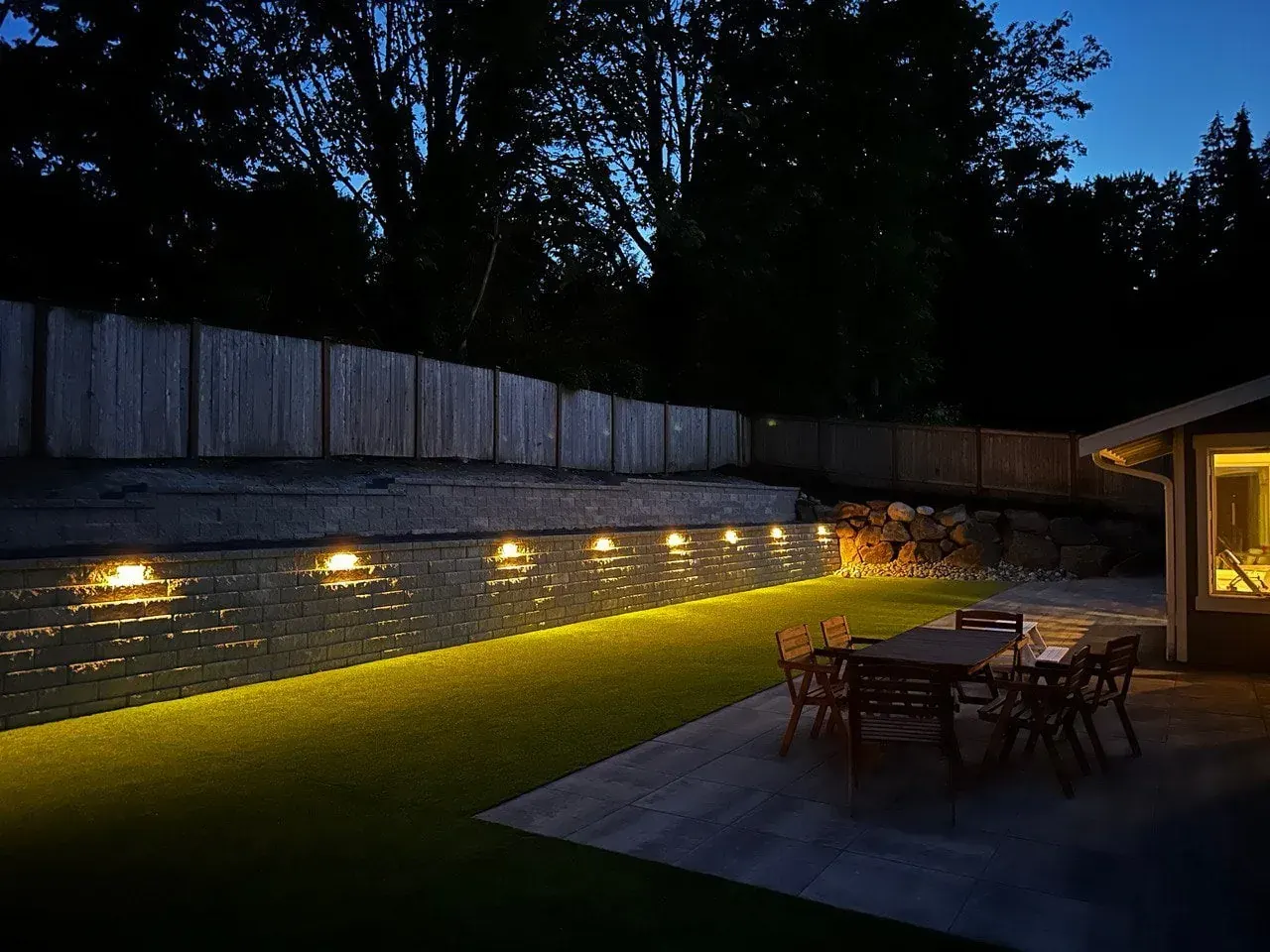
Wall lighting for a garden that gets used after dark
Low-voltage LED washing the retaining wall, with the patio lit for evening dining.
No down payment. You pay when the project is finished.
Monday – Friday, 9:00 AM – 7:00 PM · Capitol Hill, Seattle
Service area
Redmond is two different jobs depending on which side of the valley you are on. Down on the flat ground along the Sammamish River the water table is close to the surface, which limits how deep a drain can run and how much fall it has before it needs somewhere to discharge — so drainage is the first conversation, not the last. On the upland at Education Hill, Union Hill and Novelty Hill the lots are large, a machine can reach anywhere on them, and the work is genuinely design-led. Several of the newer developments also carry architectural review, which we plan around rather than into.
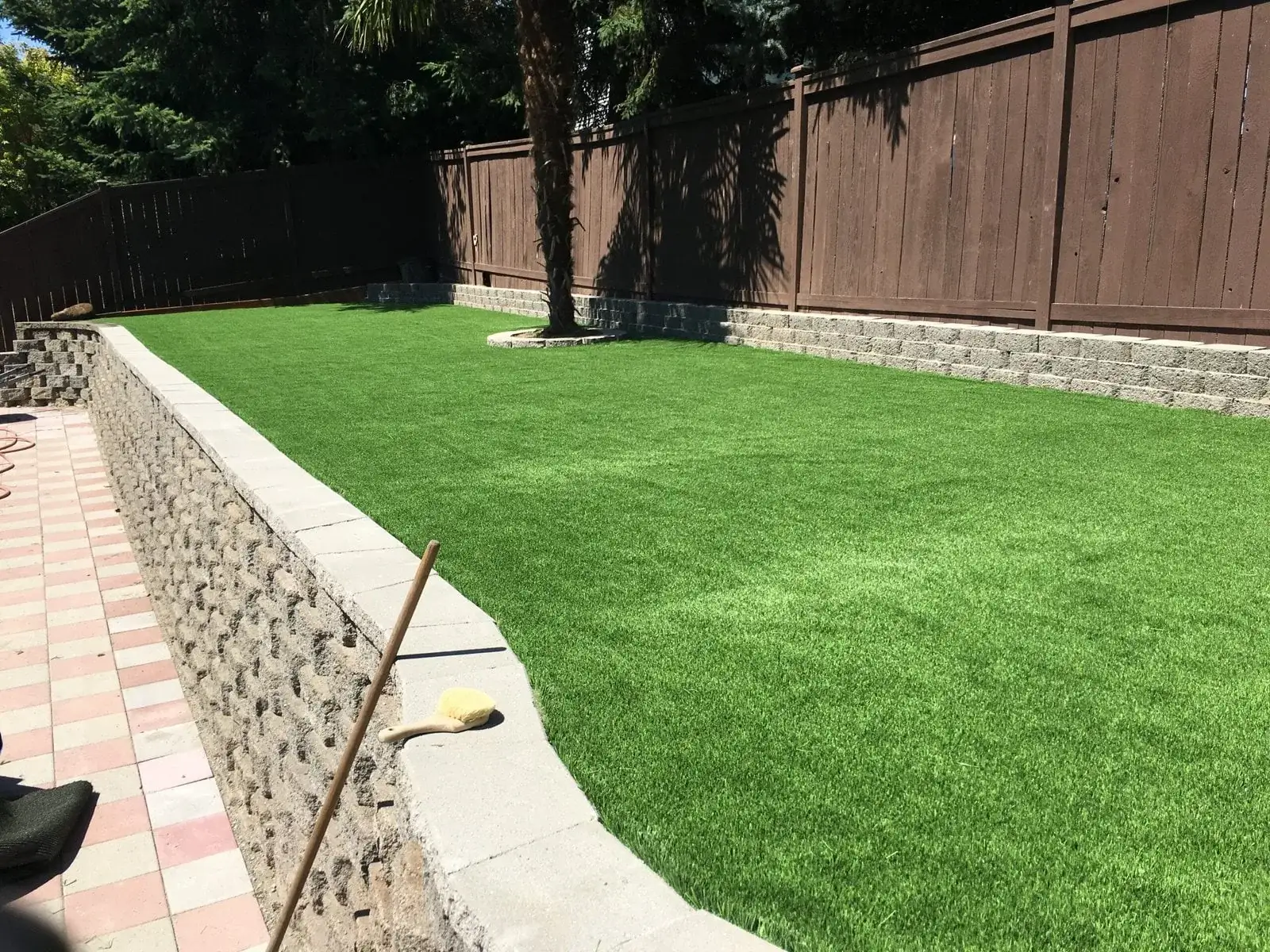
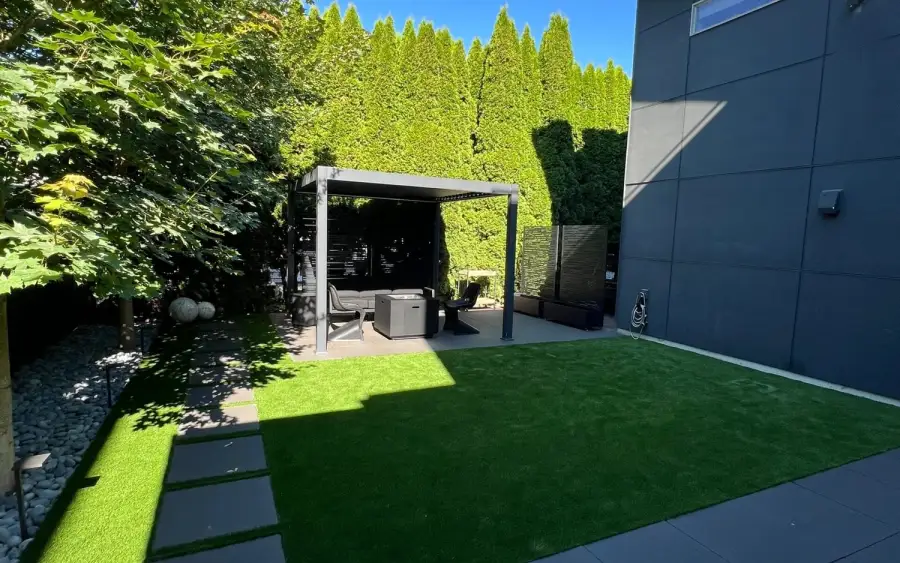
Artificial turf lawn held level by split-face block retaining walls with a paver walk alongside in Redmond
What we plan around here
Redmond splits into two landscapes with different problems. On the valley floor near the Sammamish River the ground is flat and the water table is high, so drainage design is constrained by how much fall is available and where a system can legitimately discharge. Up on Education Hill, Union Hill and Novelty Hill the lots are large, the access is excellent and the work is design-led rather than remedial. The other Redmond factor is HOA density in the newer developments, where architectural review is a real scheduling item.
What we build in Redmond
Serving Redmond and surrounding neighbourhoods
Six hundred and forty acres on the Sammamish Valley floor — flat, low and a good illustration of how that ground drains after a wet week.
The valley-floor trail linking Redmond to Woodinville, running along the corridor that defines the low ground on this side of the city.
The commercial core at the valley's edge, where the flat ground gives way to the climb up Education Hill.
Downtown Redmond · Education Hill · Grass Lawn · Overlake · Idylwood · Bear Creek · Union Hill · Novelty Hill · Sammamish Valley
98052 · 98053
Recent work
Landscape LightingView full sizeLow-voltage LED washing the retaining wall, with the patio lit for evening dining.
 Retaining WallsView full size
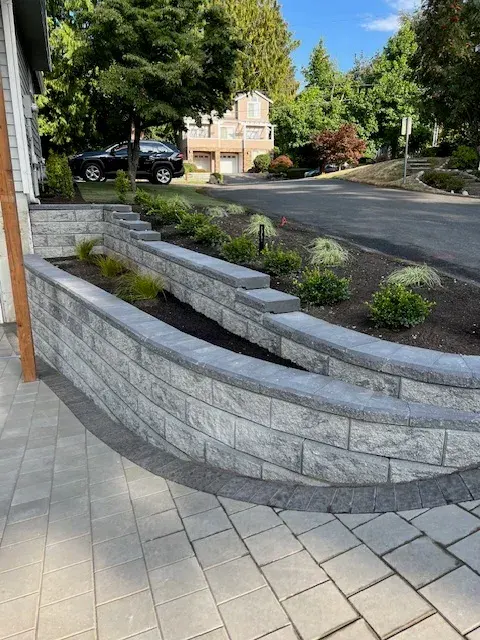
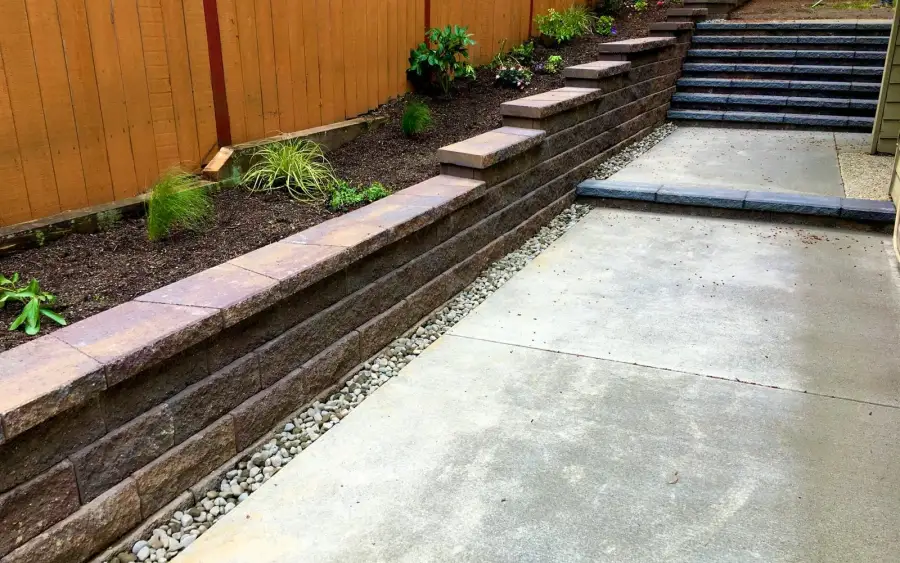
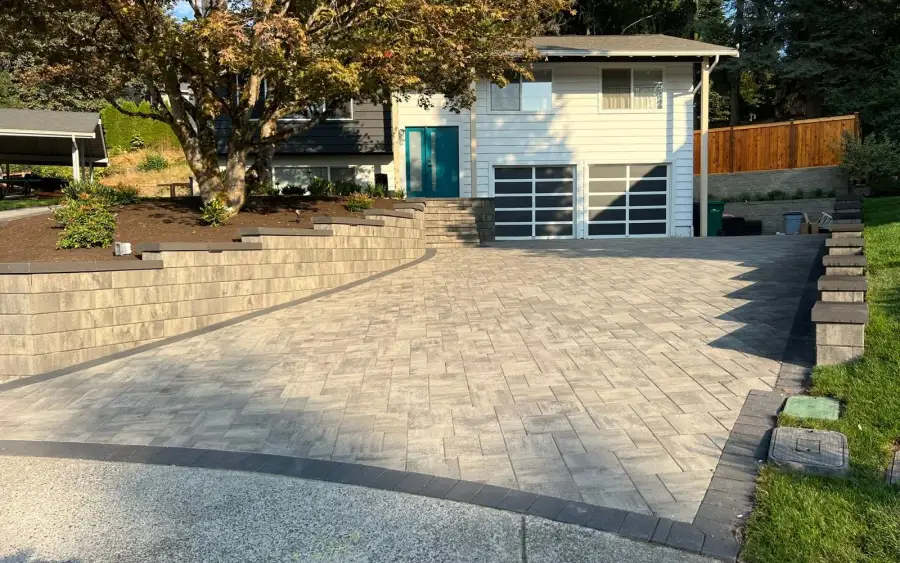
A curved wall along the front of the house holding the bank off the drive, with new planting behind it and a paved walk in front.
 HardscapingView full size
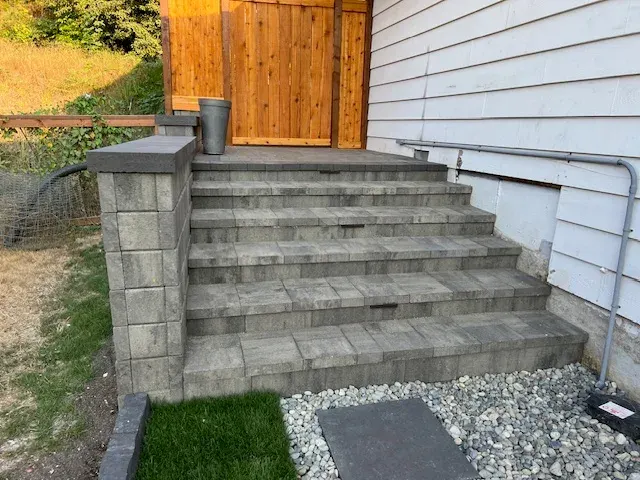
Wide block steps up the side of the house to a new gate, with a clean rock strip alongside to take the roof water away from the foundation.
 Outdoor LivingView full size
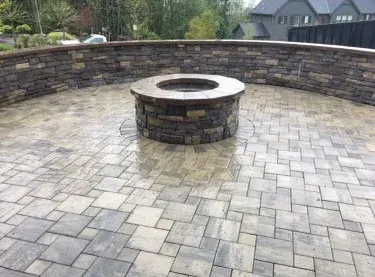
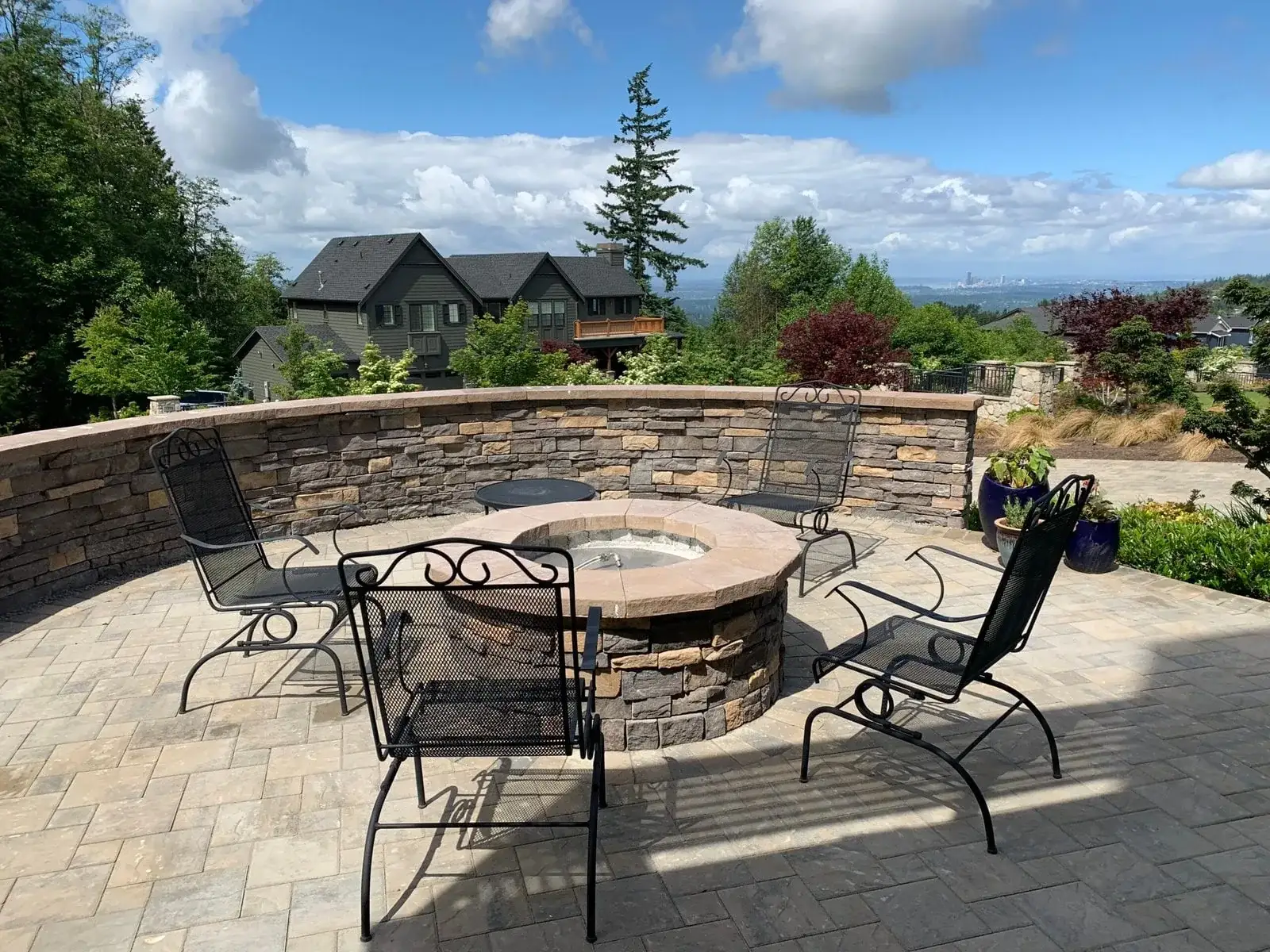
A curved seat wall wrapping a stone fire pit, set into a paver patio at the top of the garden.
 DeckingView full size
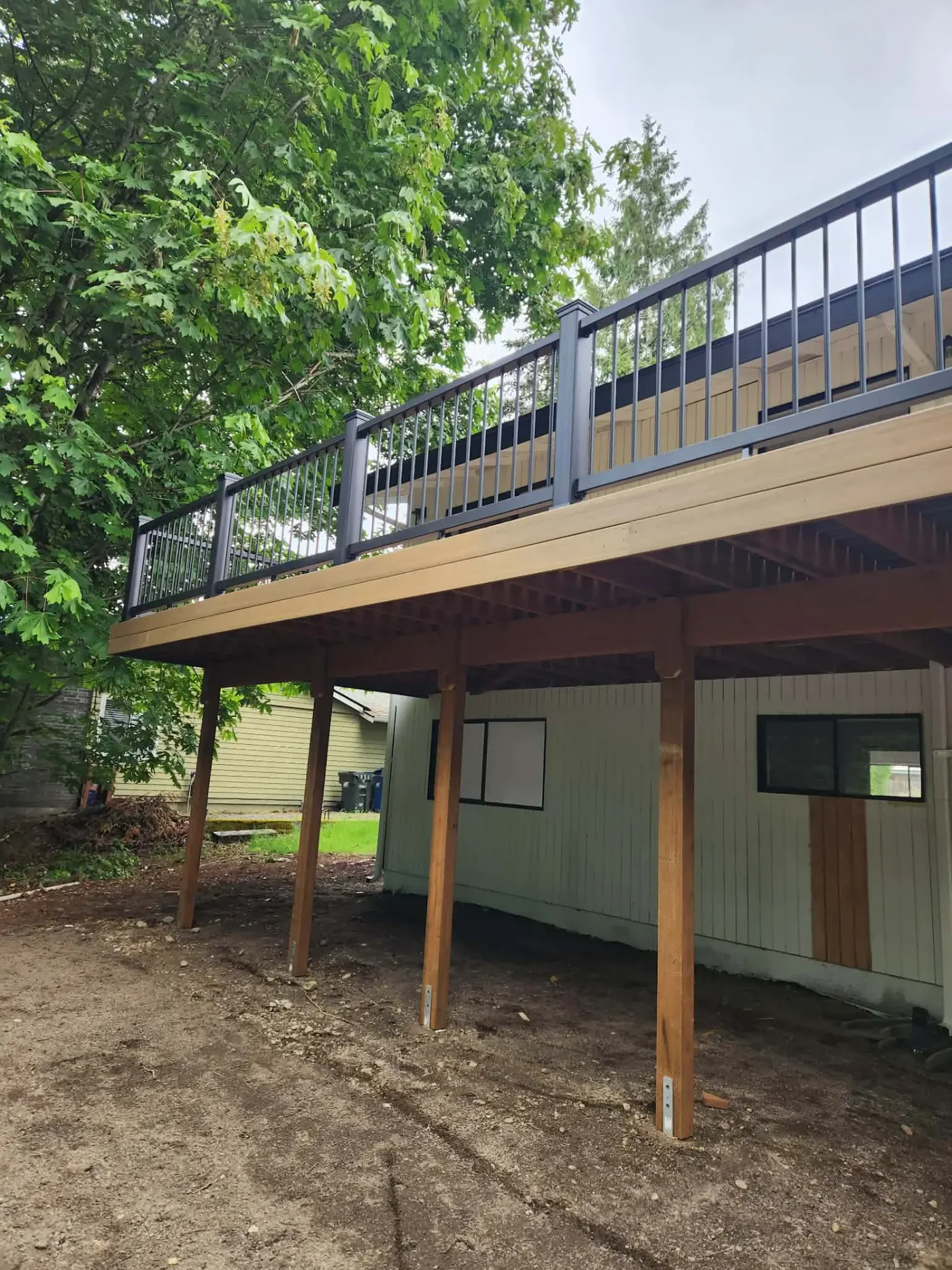
Second-storey deck on cedar posts spanning the back of the house. Framed to leave the space underneath usable and dry rather than writing off the whole footprint.
 DeckingView full size
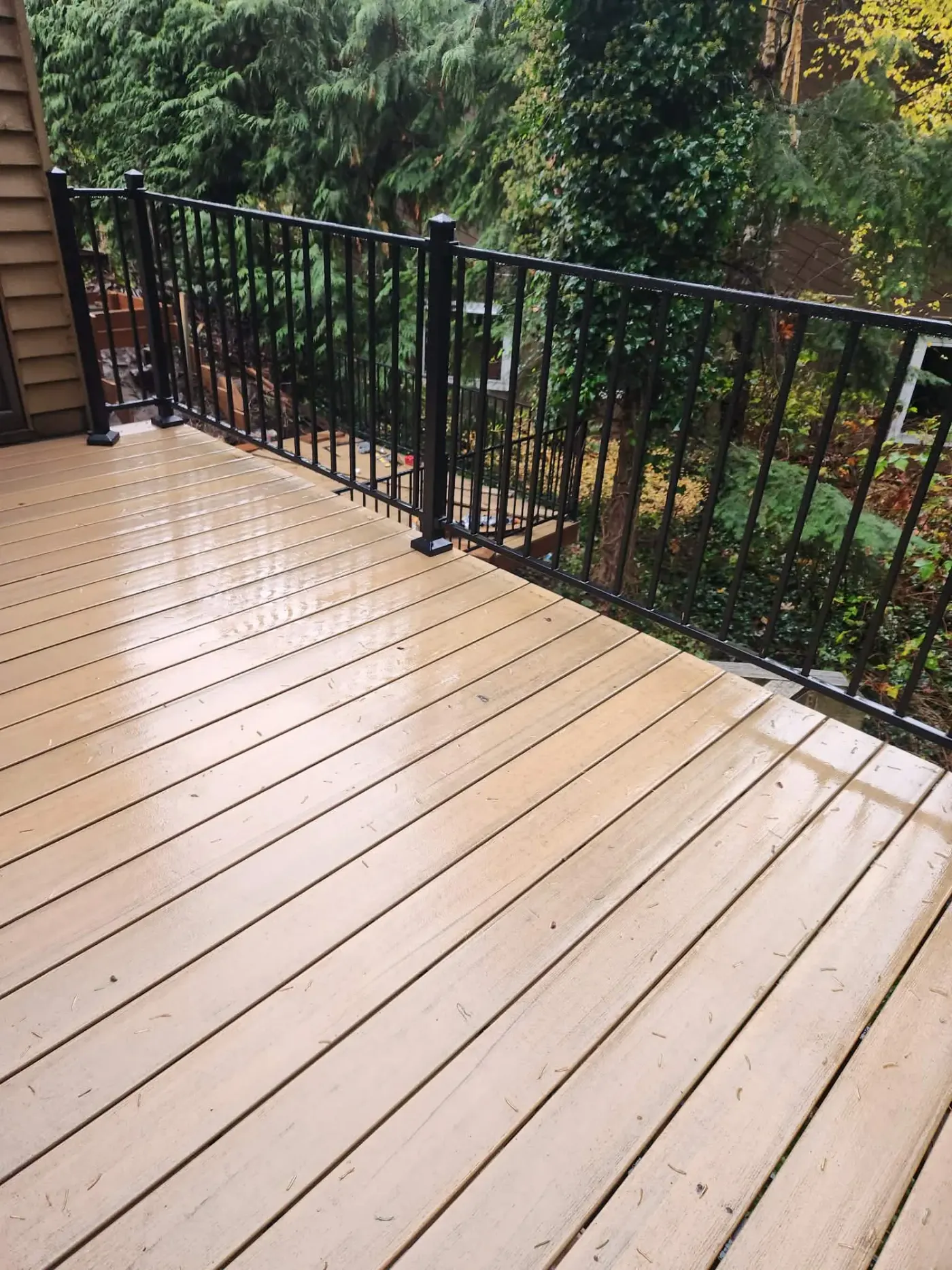
Photographed in the rain on purpose. Composite handles nine months of Puget Sound wet without the annual sand-and-seal a cedar deck in this position would need.
 Paver PatioView full size
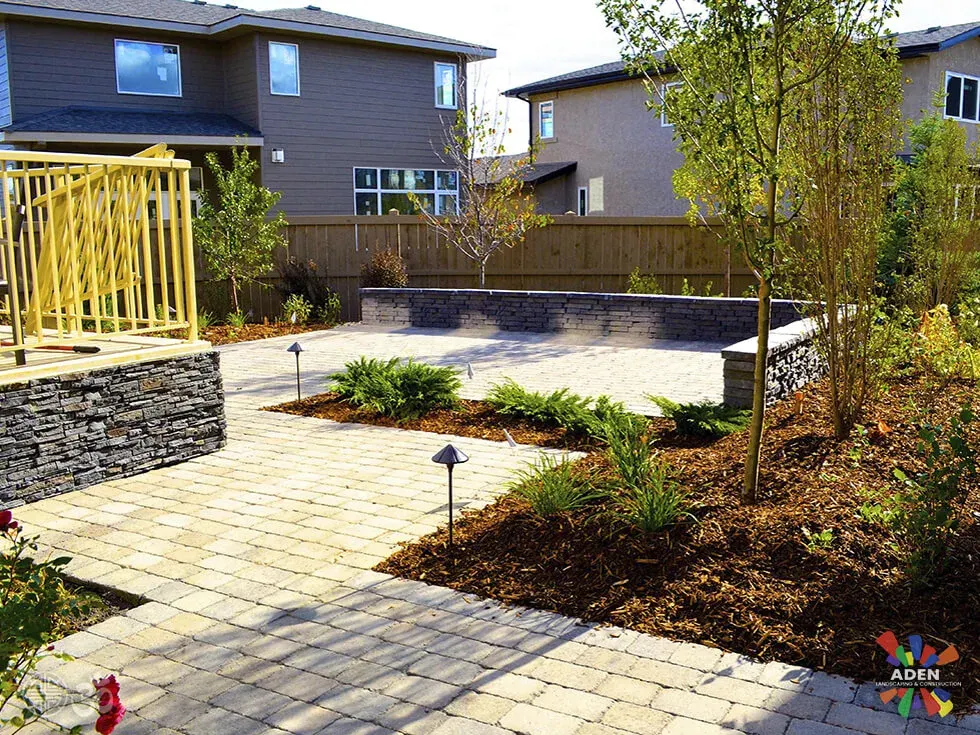
Pale paver field, stone-faced seat wall, beds planted the same week. The wall does two jobs at once: it holds the grade, and it is where people end up sitting.
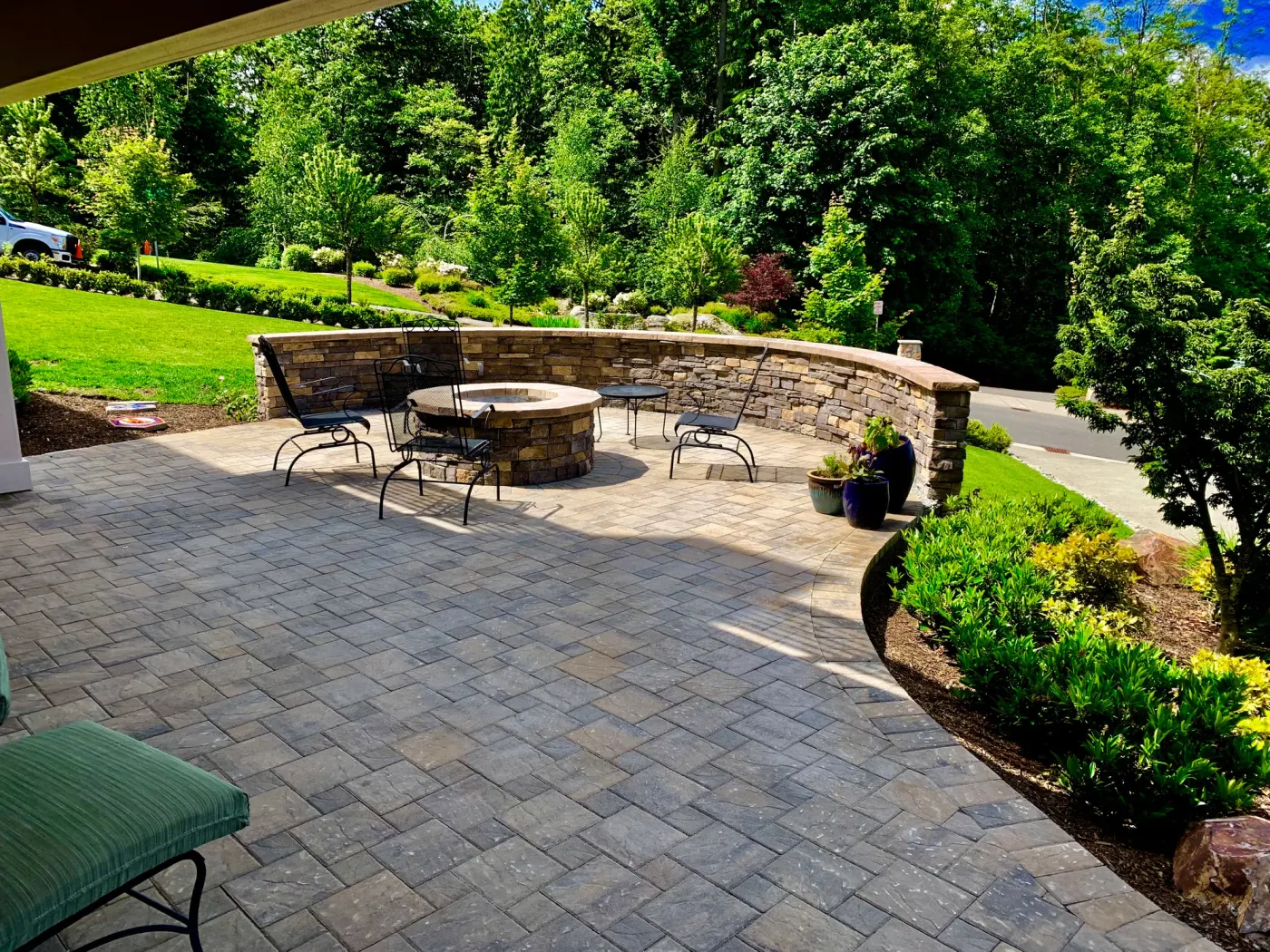 Outdoor LivingView full size
The wall follows the edge of the terrace rather than boxing it in, so the seating faces the garden instead of facing itself. Clipped hedging behind does the rest of the enclosing.
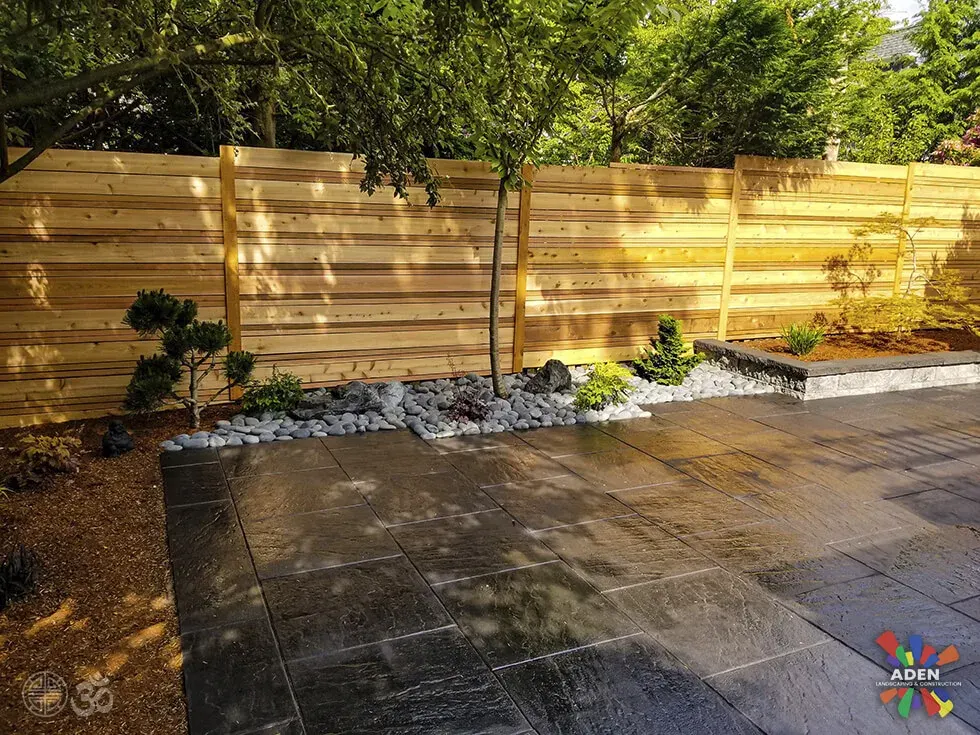 HardscapingView full size
Large-format slabs and a horizontal cedar screen, photographed the day it rained. The screen stands on its own posts so the paving could run underneath it rather than stop at it.
Local questions
Something specific to your street? Call (425) 533-9734 — we would rather look at it than guess.
Because two of the three things a drainage system needs are in short supply there. A French drain works by collecting water and carrying it, on a consistent fall, to a point where it can discharge — and valley-floor ground is flat, which limits the fall available, and it sits close to a high water table, which limits how deep you can usefully trench before you reach saturated soil. Neither makes drainage impossible, but both mean the discharge point has to be established before anything is designed. This is one of the few places in our area where we will occasionally say a drain is not the right answer and regrading is.
Real, and worth planning for rather than working around. Redmond Ridge and several of the newer developments operate associations with genuine architectural standards covering front-of-house appearance, fencing, hard surface materials and often tree removal. Submissions are usually straightforward but they take time, and the worst version of this is discovering the requirement after materials have been ordered for a spring start. We ask whether the property is in an association on the first visit, produce the specifications needed for a submission, and schedule the build behind approval. Older Education Hill and Grass Lawn streets generally have no association at all.
More structure and fewer unbounded areas than most people start with. On a lot of a third of an acre or more, the common failure is a very large lawn with a narrow planted border, which reads as empty and gets used only around the edges. What makes these gardens work is dividing the space: a paved area sized properly for how you entertain, a lawn or turf area with a defined shape and purpose, deep planting that gives the boundary presence, and a genuine route connecting them. The buried work — drainage, irrigation, lighting conduit — should be designed across the whole plan even if the build is staged over several seasons.
It affects scheduling more than it affects the finished price. Redmond is the furthest of our regular Eastside markets and crossing SR-520 adds real time to every visit, so we tend to schedule Redmond work in continuous blocks rather than in stop-start visits — which is better for the project anyway. What offsets the travel is that access here is generally excellent: material can be staged near the work and a machine can reach the back garden, which removes the largest cost variable that Seattle city lots carry. You get a fixed written price before work starts either way.
We come out, walk the property, look at the grade and the drainage, and put a written price together. No deposit, and it does not change once agreed.
Nearby
A consistent fall from the ridges down to Lake Washington. Waterfront and downtown lots are steep, Rose Hill and Finn Hill sit high, and the low ground at Juanita is flat and slow.
25–40 minutes from Capitol Hill via SR-520
A broad elevated plateau. Gently rolling across most of it rather than steep, with real fall only at the plateau edges dropping toward Lake Sammamish and Issaquah.
35–50 minutes from Capitol Hill via I-90
A flat valley floor along the Sammamish River with substantial upland either side, rising sharply to Hollywood Hill in the west and to the Cottage Lake plateau in the east.
35–50 minutes from Capitol Hill via I-405
Rolling, with real elevation on Somerset, Cougar Mountain's western flank and Newport Hills, and low, flat, slow-draining ground through the Mercer Slough basin.
20–35 minutes from Capitol Hill via I-90
The steepest of our Eastside markets. Issaquah sits in a valley ringed by the Issaquah Alps — Cougar, Squak and Tiger Mountain — so a large share of properties are built into real grade.
30–45 minutes from Capitol Hill via I-90
Free estimate
30–45 minutes from Capitol Hill via SR-520 from our Capitol Hill base. Three minutes on the form and we will come out and look at it properly.
Or call (425) 533-9734
Thank you — we have your details. We reply during office hours, Monday – Friday, 9:00 AM – 7:00 PM. If it is urgent, call (425) 533-9734.