
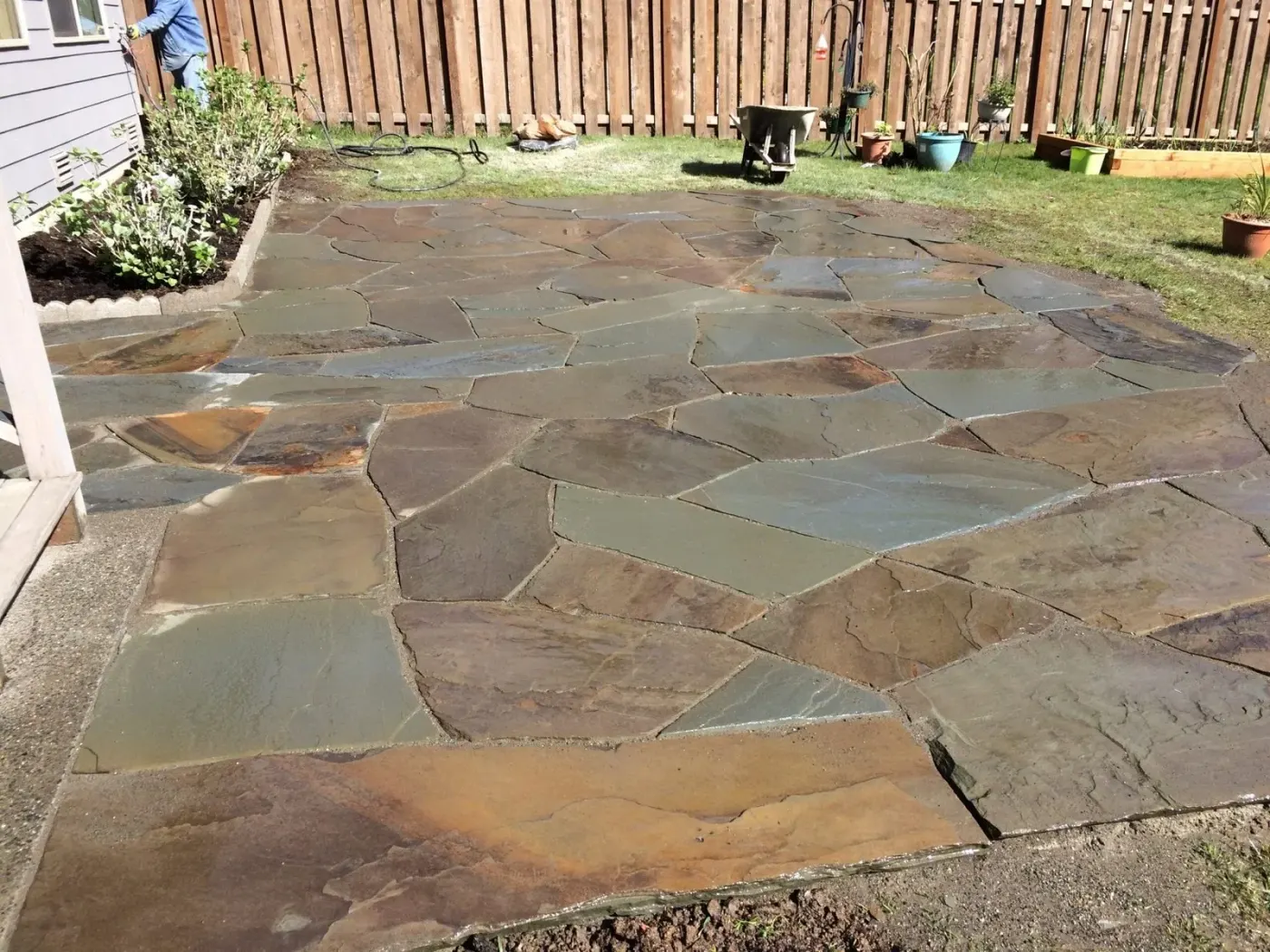
 FlagstoneView full size
Natural flagstone patio
Hand-fitted flagstone laid tight, replacing a tired lawn that never drained properly.
No down payment. You pay when the project is finished.
Monday – Friday, 9:00 AM – 7:00 PM · Capitol Hill, Seattle
Paver Patios · Mercer Island
A Mercer Island patio is usually designed around trees rather than around the house. These are the most heavily treed lots we work on, the city regulates removal on private property more protectively than most jurisdictions here, and the roots that keep a mature fir or maple alive spread well beyond its canopy in the top foot or so of soil — precisely the depth a conventional patio base occupies. Cut a standard excavation through a major root plate and the tree may take three or four years to show it, by which point nobody connects the two events. So the layout question here is not simply where the sun is; it is where you can build without severing something you cannot replace.
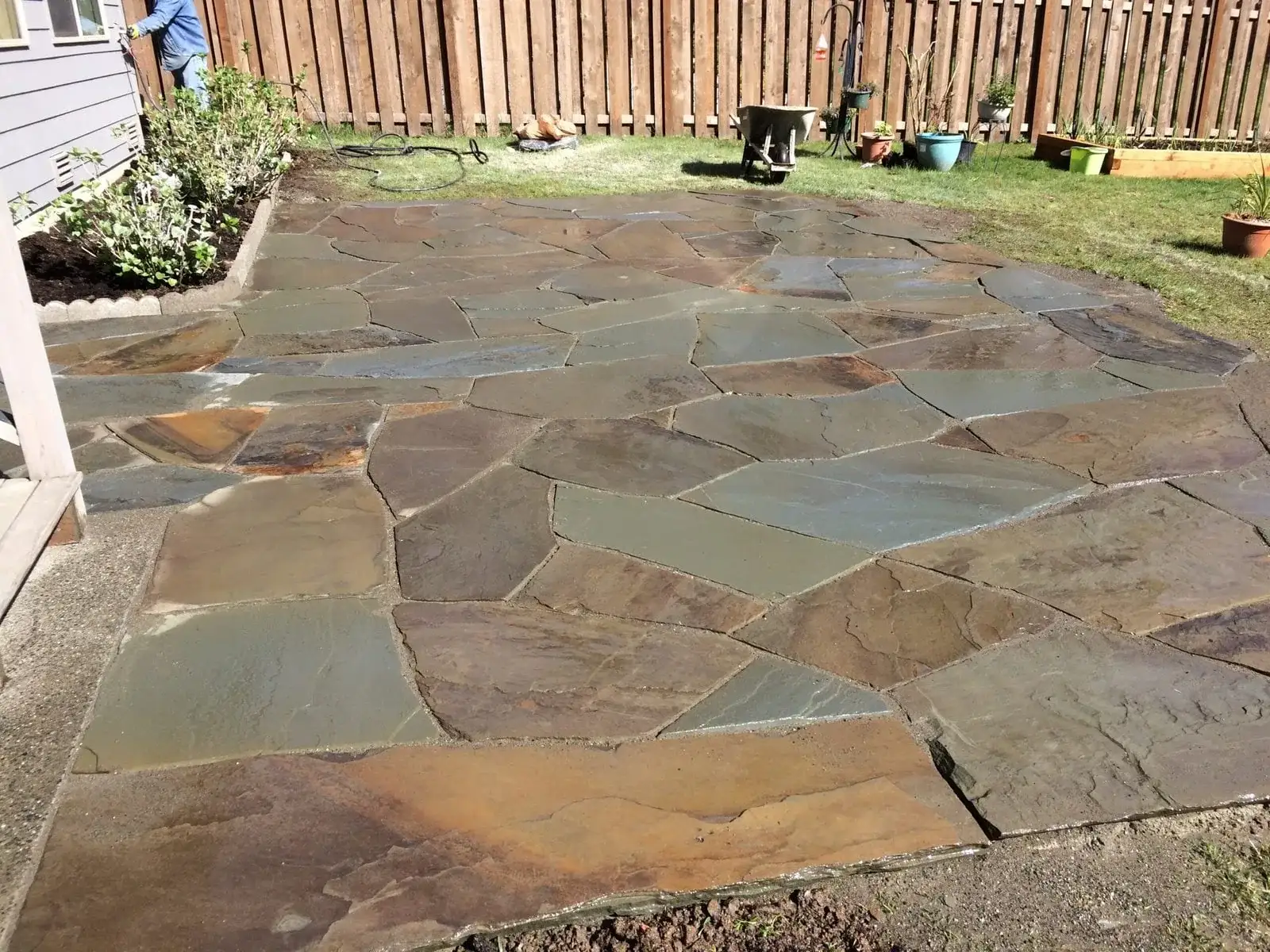
Hand-fitted natural flagstone patio in a fenced Mercer Island back garden
What we get called about
Mercer Island is large lots, mature trees and a shoreline slope on every edge, and the trees are the defining constraint. The city regulates removal on private property more tightly than most, and the canopy on these lots is dense enough that light and root plates govern where hard surfaces can realistically go. Toward the shoreline the ground steepens and slope stability becomes a design factor rather than a formality. Access is generally excellent, which is one reason island projects tend to be full renovations rather than piecemeal work.
Worth knowing on Mercer Island
The instinct on a wooded island lot is to site the patio where the canopy gives shade, which is also the worst possible place to dig a conventional base. Most of the roots sustaining a large tree sit in the top twelve to eighteen inches of soil and spread well beyond the branch spread — the same zone and the same depth a standard patio excavation removes.
There are three workable responses and they suit different situations. The first is simply moving the surface outside the critical root area, which costs nothing at the design stage and everything once the excavation is open. The second is a shallower build-up, which trades some base depth for a much smaller root impact and suits a lightly used seating area better than a main terrace. The third is a suspended or permeable system that spans the root zone rather than digging into it, which costs more and is sometimes the only option that preserves both.
What we will not do is excavate a full base through a root plate and tell you the tree will be fine. On this island that is also a regulatory question as well as an arboricultural one, since significant excavation within a root zone can fall within the city's tree provisions.
The method
The sequence does not change between neighbourhoods — what changes is the ground it is applied to. Full detail on the paver patios service page.
Before anything is dug we work out where the water is going to go. A patio should shed water away from the house at a fall you cannot feel underfoot but the rain can find.
Deeper than most people expect — the finished surface is the top of a build-up, not a layer laid on the lawn.
Crushed rock in compacted lifts. This is where the job is won or lost and it is the layer a cheap quote thins down.
A consistent bedding course over the compacted base, screeded rather than eyeballed.
Units laid to the pattern, cut cleanly at the edges, and locked in with edge restraint so the field cannot creep outward over time.
Jointing sand vibrated in so the surface acts as one interlocked field rather than a collection of loose units.
What it costs on Mercer Island
Island access is excellent and the drive from our Capitol Hill base is short, so the labour side is efficient and these sit mid-range at $20 to $50 per square foot. What adds cost is building around trees — hand excavation within root zones, adjusted layouts and shallower or suspended construction where a root plate cannot be cut are all considerably slower than a machine cutting a straight excavation.
You pay after the project is fully completed.
The estimate you sign is the price you pay.
Spread the cost with no interest.
Covers hardscape work; vegetation excluded.
Local questions
General questions about this service are on the service page. These are the ones that only come up here.
Often, but not with a conventional excavated base. The roots keeping a mature tree alive are mostly in the top twelve to eighteen inches of soil and extend well beyond the canopy, so a standard six-to-eight-inch excavation across that area severs a substantial share of them. The alternatives are relocating the surface outside the critical root area, using a shallower build-up for a lightly used seating space, or a suspended or permeable system that spans the root zone. Each has trade-offs and we will explain which applies to your specific tree rather than digging and hoping.
A textured one, and it makes a real difference to how usable the patio is in winter. Ground under a closed island canopy dries slowly, needle and leaf litter mats down and holds moisture, and a smooth sawn stone or a fine-finish concrete in that setting becomes genuinely slippery from November. A textured paver or a riven natural stone gives you grip when wet. The other practical measure is an annual clear rather than a seasonal one — needle litter left on a surface through the winter is what feeds the algae, not the rain itself.
Usually, but it changes how the patio is built and it is worth knowing that before the design is fixed. The damage from paving near an established tree is rarely the roots that get cut during excavation — it is the roots that survive and then sit under a compacted, sealed surface with no water and no air. So on the wooded Mercer Island lots the adjustments are these: keep the excavation shallow within the root zone and make up the depth with a thinner, stronger base rather than a deeper one; hand-dig around anything structural instead of running a machine through it; use an open-jointed or permeable build-up so rain still reaches the soil under the paving; and route the patio around the trunk with a generous margin rather than butting a cut edge against the bark. What we will not do is pave right up to a significant trunk and tell you it will be fine. Where the canopy is the whole reason you bought the house, the honest answer is sometimes a smaller terrace placed clear of it.
Yes. The edges of the island carry looser material than the level crown and respond more to both loading and water, so a terrace there is a structural proposition rather than a surfacing one. Adding a level platform means retaining, and retaining means drainage behind it with a properly designed outfall — not simply daylighting onto the slope, which concentrates water exactly where it does most harm. On the flat ground through Island Crest none of this applies and the work is straightforward, which is why we establish where on the island you are before anything else.
Serving Mercer Island and surrounding neighbourhoods
North End · East Seattle · First Hill · Mercerwood · Island Crest · South End
98040
Recent work
FlagstoneView full sizeHand-fitted flagstone laid tight, replacing a tired lawn that never drained properly.
 Paver PatioView full size
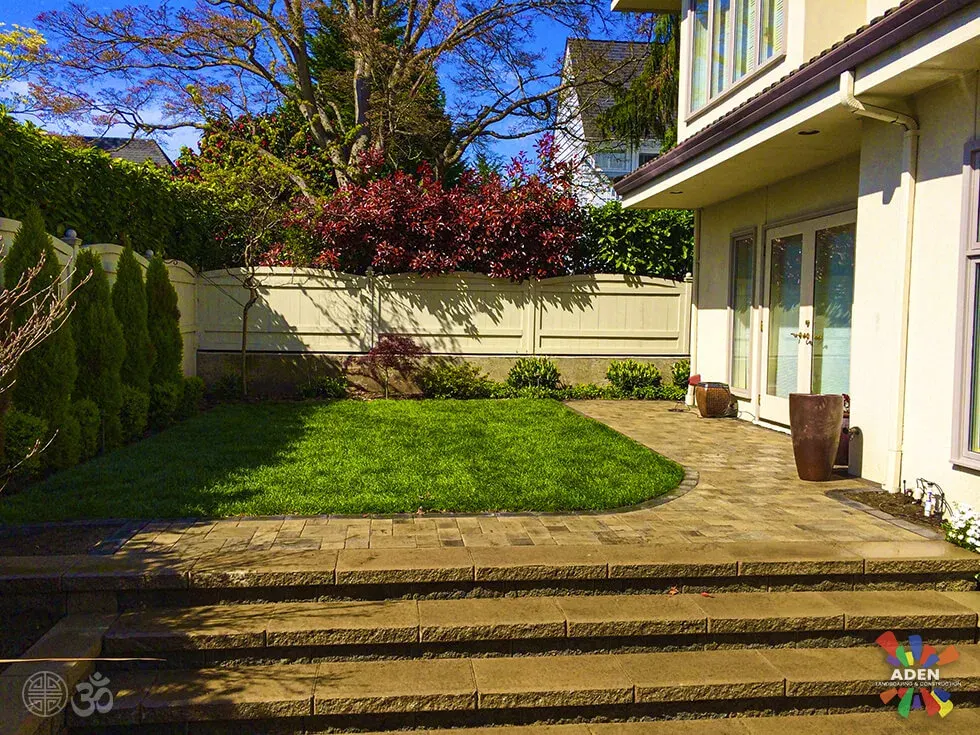
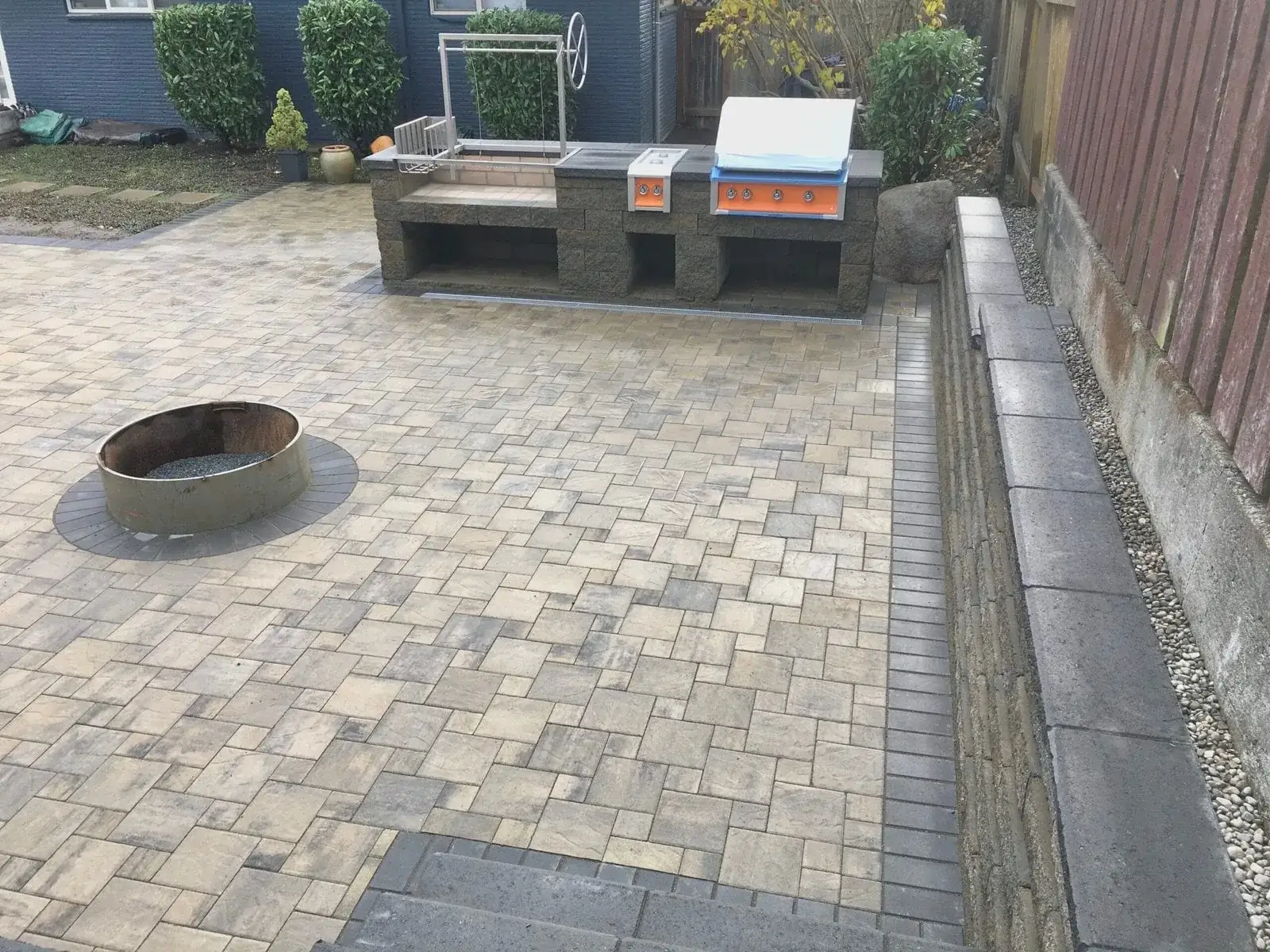
A wide run of paver steps down from the house to a terrace that stops where the lawn begins. Not every garden wants paving all the way to the fence.
 Retaining WallsView full size
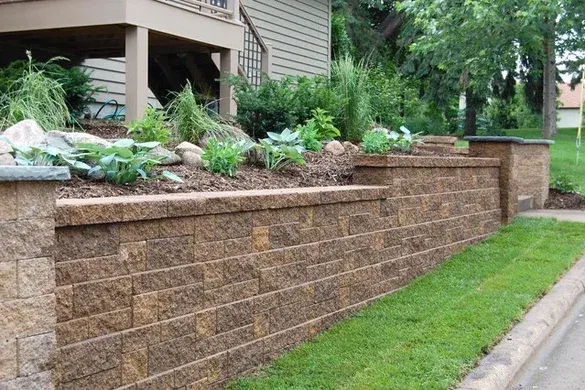
A long run of split-face block turning the fall between house and street into a raised bed at standing height, capped flat so the whole length reads as one line.
 Retaining WallsView full size
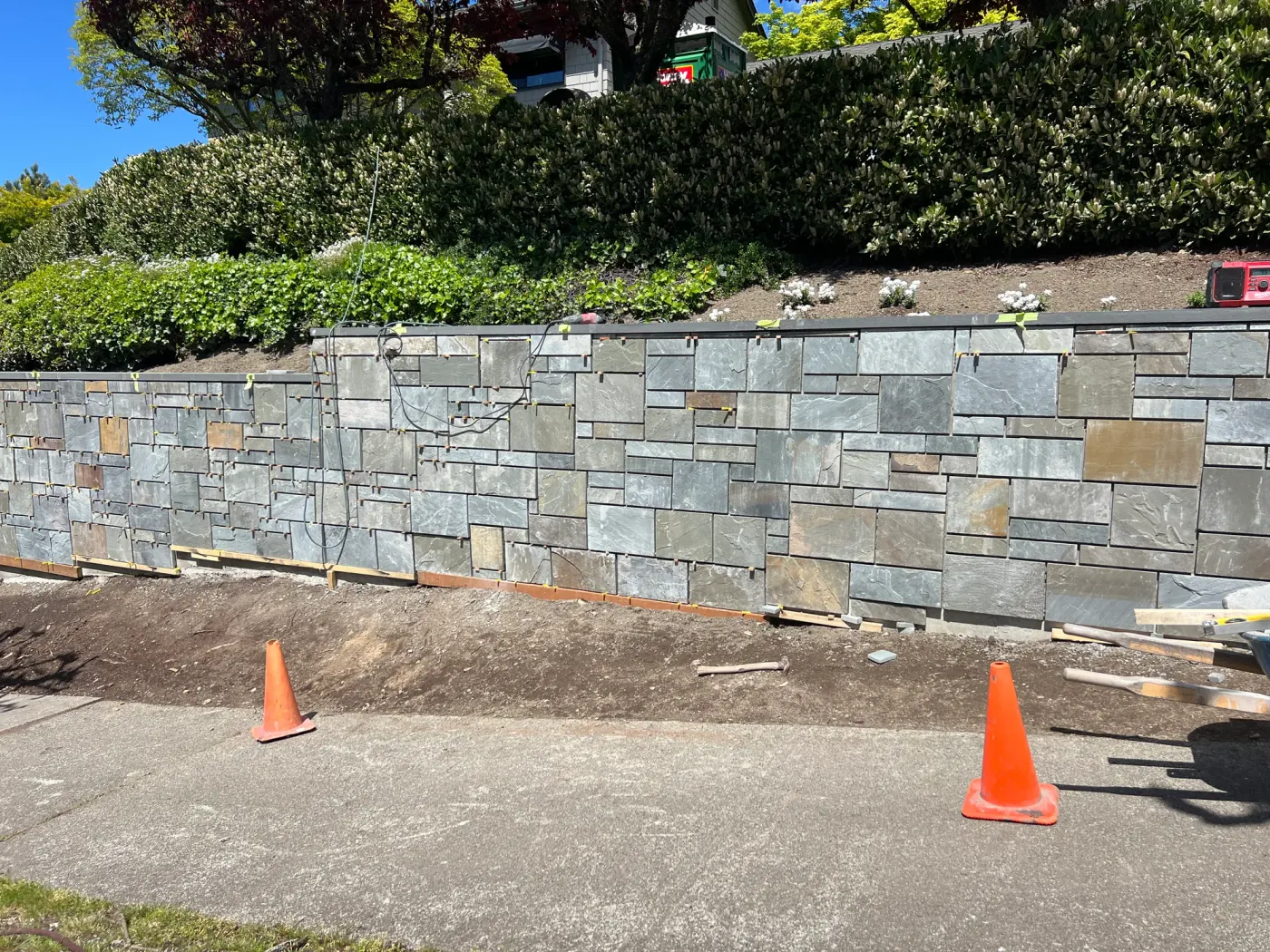
A long frontage wall going up in cut stone, cones out and the base course still showing. The bed above it was regraded to drain towards the street rather than back into the wall.
We come out, look at the ground, and put a fixed written price together. No deposit, and it does not change once agreed.
Free estimate
Three minutes on the form. We reply during office hours, Monday – Friday, 9:00 AM – 7:00 PM, and we come out and look at the site before quoting anything.
Or call (425) 533-9734
Thank you — we have your details. We reply during office hours, Monday – Friday, 9:00 AM – 7:00 PM. If it is urgent, call (425) 533-9734.