
Retaining Walls & Rockeries
Turn an unusable bank into flat, usable ground.
- Interlocking block
- Poured concrete
- Natural rock & rockeries
$5–$45 per square foot of wall face
No down payment. You pay when the project is finished.
Monday – Friday, 9:00 AM – 7:00 PM · Capitol Hill, Seattle
Service
A rockery is the most Puget Sound way to hold a slope, and on the right bank it is better than anything you could build out of block. Basalt comes from quarries within trucking distance, it weathers to grey-black and grows moss, and a well-built rockery reads as part of the hillside rather than an object placed on it. The craft is almost entirely in stone selection and setting — each piece bedded with its weight pitched back into the slope, three points of contact, no rocking, joints that look casual and are not. What a rockery cannot do is hold a tall, steep, loaded bank, because there is no way to reinforce one. Above a certain height the right answer is a reinforced wall, and we would rather tell you that than build you a handsome rockery that moves.
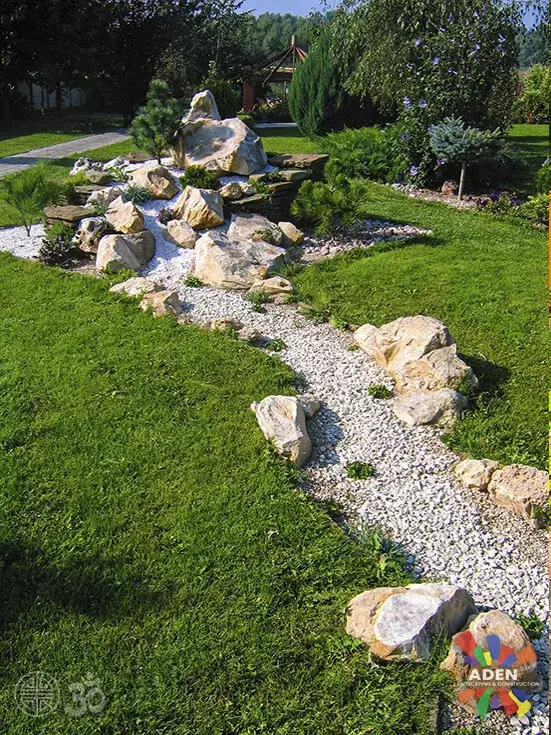
Basalt rockery and dry creek bed beside a lawn on a gently sloping Kirkland garden
What is included
A slope held by stone that looks like it grew there.
Rockery basalt comes in grades by size, and a bank needs a range rather than a uniform product — big pieces at the base doing structural work, smaller stone chinking and closing the face. Ordering one size is why some rockeries read as a pile.
Each piece sits on compacted ground with its mass leaning into the bank, on three points of contact so it cannot rock. A stone set upright or forward is a stone the slope will eventually push out, and it takes its neighbours with it.
A rockery drains through its joints, which is its advantage over a solid wall — but only if there is free-draining material behind it rather than the native soil washing through. Fines migrating out through the face is the most common slow failure.
Soil pockets set between stones as the rockery goes up rather than stuffed in afterwards. Planted with things that suit a dry, fast-draining, west-facing crevice, a rockery softens within two seasons.
Much of this work is fixing fifty-year-old rockeries where a few stones have rolled and the rest are sound. Resetting a section is a fraction of a rebuild, and knowing which it is comes from looking at what is behind the face.
Why people call us
How we build it
Seasonality. Buildable most of the year, and one of the better winter jobs because there is no curing and no compaction-sensitive backfill in the way there is on a segmental wall. The constraint is ground conditions for the machine rather than the stonework itself — a saturated lawn that a tracked excavator would destroy is a reason to wait until spring.
We look at the slope angle, the retained height, what is above it and what the soil is. This is the stage where we tell you if a rockery is the wrong product for your bank, because that conversation is cheaper now than after the stone is delivered.
The bottom course sits below finished grade on compacted ground, not on topsoil. A rockery that starts at the surface has nothing to resist the base course sliding forward.
The largest stones, bedded, pitched back, keyed into each other. Everything above depends on this course and it is the slowest part of the job — placing a two-ton stone four times until it sits right is normal.
Courses stepped back into the slope, free-draining backfill placed and compacted behind as the face rises, planting pockets formed where they are wanted.
Smaller stone closing the gaps that would otherwise let soil wash through, and a final pass adjusting individual pieces. This is the difference between a rockery that looks built and one that looks placed.
Pockets planted, and a walk-round after the first heavy rain to check nothing has moved and the drainage is behaving as intended.
What it costs
Rockery pricing is driven by access more than by anything else, because the stone is heavy and a machine either reaches the bank or it does not. Where an excavator can work off a driveway the cost sits near the bottom of that range; where stone has to be walked in or craned over a house it rises fast. Repair and resetting of an existing rockery is quoted per section rather than per square foot, since the work is concentrated.
That is a market range, not a quote. Your price is fixed in writing after we have seen the site, and it does not move once agreed.
No deposit is required to start. Payment comes after the work is finished — not before.
A fixed, accurate price is guaranteed before the job starts. We do not quote low and raise it mid-project.
A 0% interest payment plan is available for up to 6 months.
Hardscaping work carries a warranty. Vegetation is excluded.
Where we build it
We work across Seattle, the Eastside and the north end — see every area we cover.
Before you call
Something not answered here? Call (425) 331-9811 and ask — we would rather talk it through than have you guess.
It comes down to height, steepness and what is above the bank. A rockery is a gravity structure and there is no way to reinforce one, so as the retained height rises its engineering case gets weaker exactly where a segmental wall's gets stronger. On a modest bank, especially one you want to plant into, a rockery is the better product and usually cheaper. On a tall steep bank, or one holding up a driveway or a structure, a reinforced wall is the safer answer and often the only permittable one. We tell you which category your bank falls into at the estimate, and we will say so when the answer is not the thing you asked us to quote.
Most of the rockeries we are called to look at need a section reset rather than a rebuild, and the difference in cost is large. What decides it is what is behind the face: if the stones have rolled because the soil behind has washed out and left voids, resetting the stones without addressing the drainage just buys a few years. If the structure is sound and a few pieces have moved at the top, that is a day or two of work. We will look behind the face before quoting either, which usually means pulling a couple of stones.
Mostly geography and economics. Basalt is quarried close enough to Seattle that it arrives at a sane haulage cost, which is not true of limestone or granite here — and stone is heavy enough that haulage dominates the price. It also suits the region visually: it weathers dark, takes moss readily, and matches the rockeries already in older neighbourhoods, so a new one does not read as imported. We will source other stone where a design calls for it, but it is a material decision with a real cost attached rather than a free preference.
Yes, and that is one of its genuine advantages in this climate — water passes through the joints instead of building pressure behind a solid face, so there is no single drain outlet to block. The catch is that soil passes through the same joints if there is nothing stopping it. A rockery built straight against native soil will slowly lose fines through the face, which leaves voids, which is what causes stones to settle and roll years later. Free-draining material behind the face is what makes the drainage advantage real rather than theoretical.
A well-built one outlasts the people who commissioned it — there are rockeries in Seattle neighbourhoods from the fifties and sixties still doing their job, which is more than can be said for most built structures of that age. The stone itself does not degrade. What fails is the setting and the drainage: stones that were never properly pitched back, or a face that has been quietly losing soil for decades. Maintenance is genuinely minimal, mostly keeping blackberry and ivy out of the face before the roots start levering pieces apart.
We come out, look at the site properly, and put a fixed written price together. No deposit, and nothing changes once the price is agreed.
Usually done alongside
Turn an unusable bank into flat, usable ground.
$5–$45 per square foot of wall face
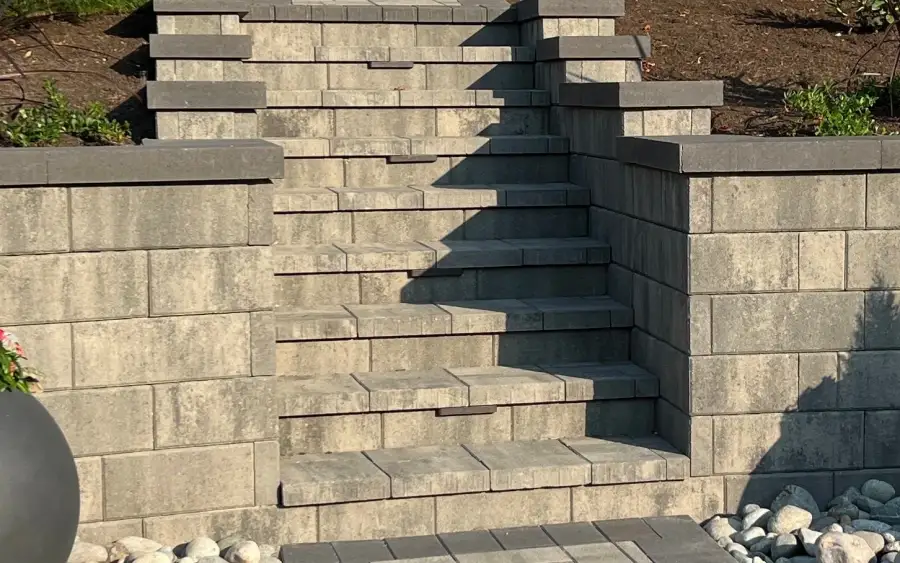
A tall wall that is actually designed for the load behind it.
$55–$125 per square foot of wall face
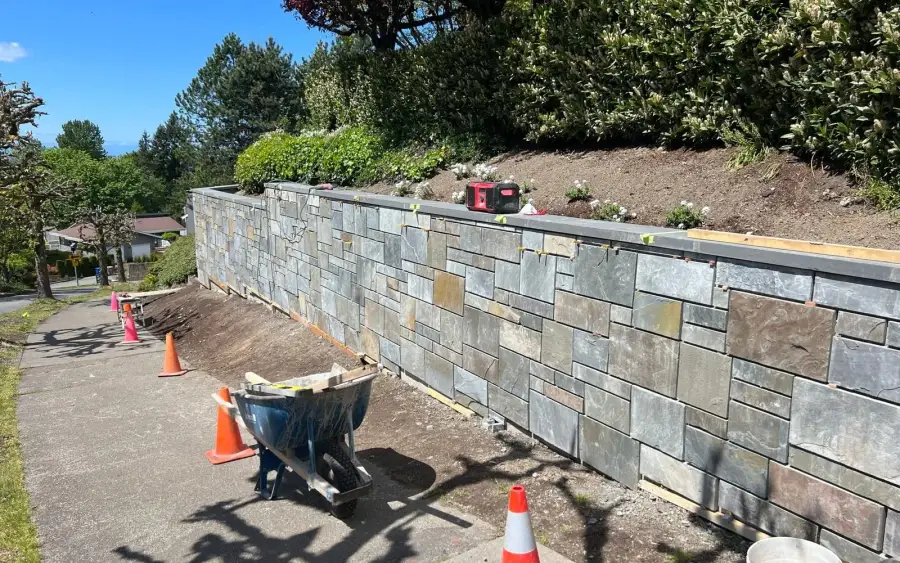
Walls, columns, steps and veneers built to last generations.
$45–$120 per square foot of finished face
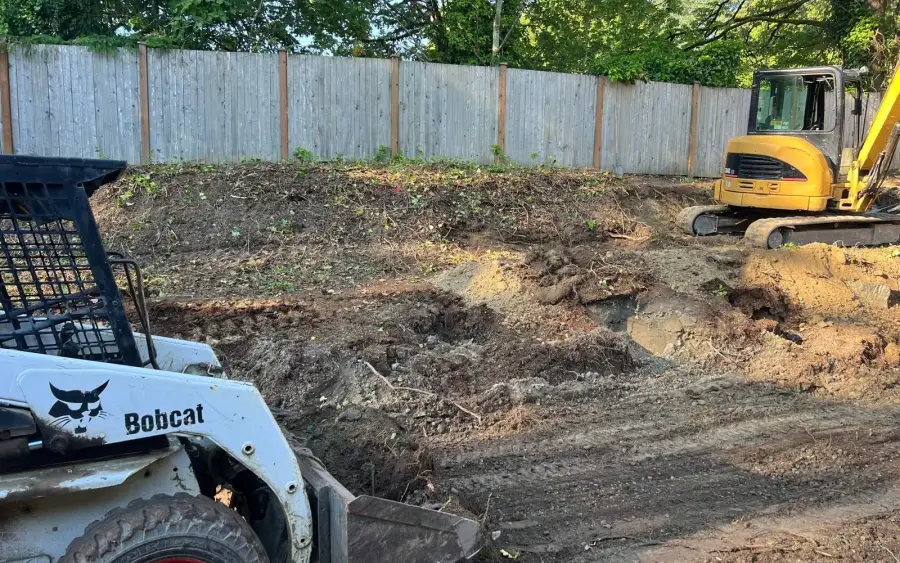
A yard that drains through a Seattle winter instead of holding it.
$10–$25 per linear foot
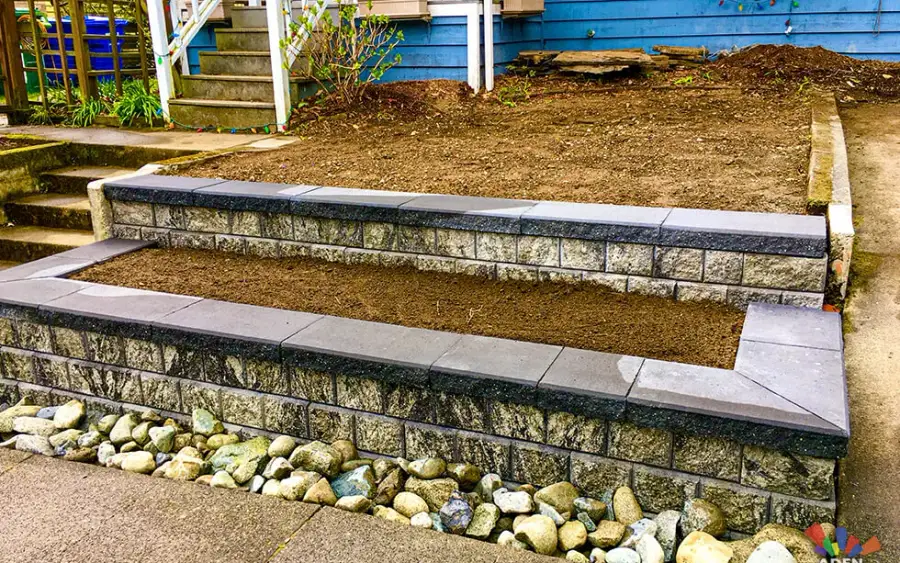
Flat, dry, usable ground that stays where you put it.
$18–$120 per square foot, depending on the element
Free estimate
Three minutes on the form. We reply during office hours — Monday – Friday, 9:00 AM – 7:00 PM.
Or call (425) 331-9811
Thank you — we have your details. We reply during office hours, Monday – Friday, 9:00 AM – 7:00 PM. If it is urgent, call (425) 331-9811.