
 Retaining WallsView full size
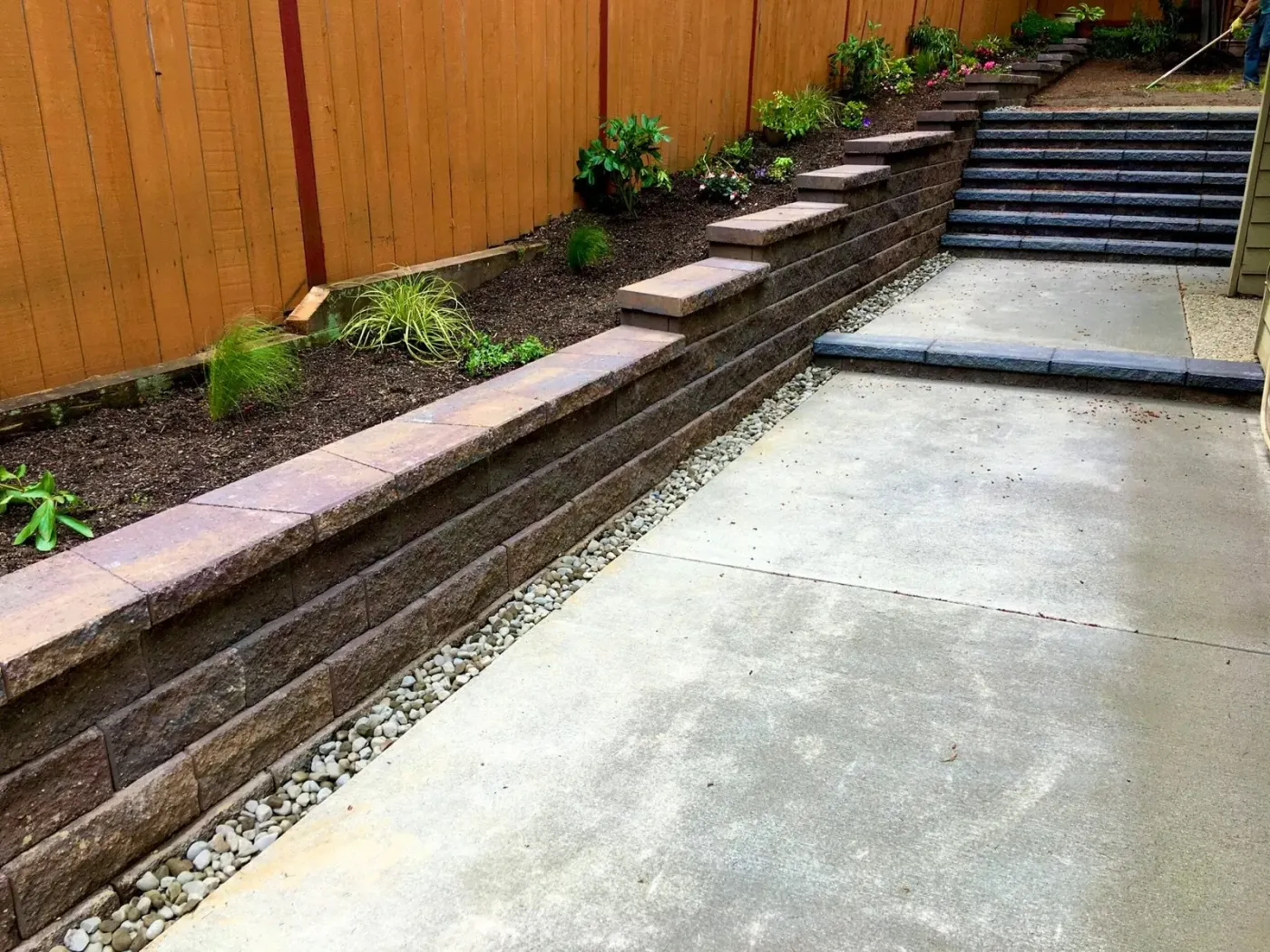
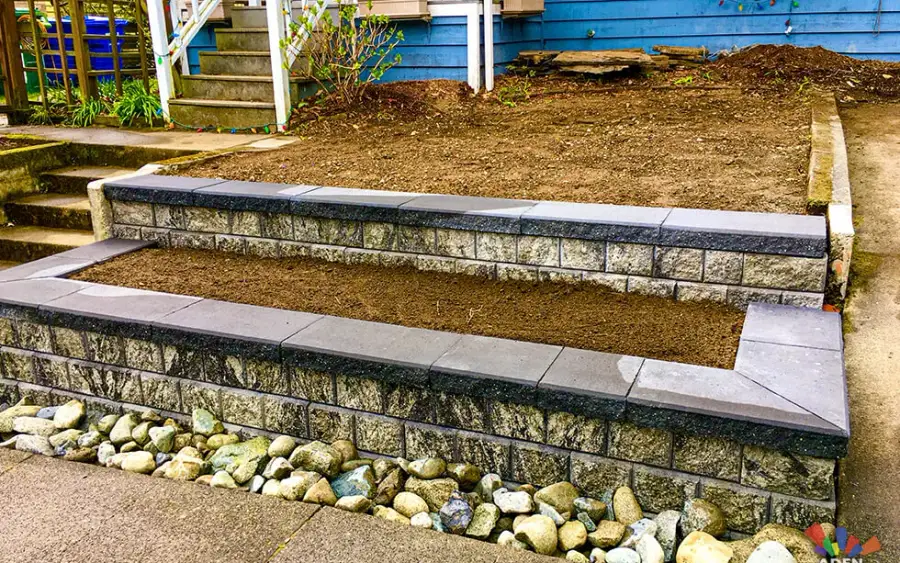
Terraced walls on a sloped lot
Two tiers of block wall with steps between them, turning a bank into planting beds and a level path.
No down payment. You pay when the project is finished.
Monday – Friday, 9:00 AM – 7:00 PM · Capitol Hill, Seattle
Service
Most retaining walls in Seattle fail the same way, and it is almost never the blocks. Soil behind the wall saturates through a winter, saturated soil weighs roughly half as much again as dry soil and pushes far harder, and a wall with nowhere to drain gives way a little each season until the movement becomes obvious. By the time a wall is visibly leaning, the drainage behind it has usually been failing for years. That matters because it decides the answer to the only question worth asking: can this be repaired, or does it need rebuilding? Resetting a bulged section of a wall whose drainage never worked buys you two or three years. We will tell you which situation you are in before quoting, and we would rather lose a repair job than sell one that fails again.
Rebuilt block retaining wall with new drainage behind it on a Bellevue slope
What is included
An honest answer on whether your wall can be saved.
The wall is rotating at the base. Usually drainage, sometimes an undersized base. Rarely repairable in place once the lean is visible from across the garden.
The face is pushing out between a sound top and a sound base. Points at a localised water path or a section where backfill was never compacted.
On poured concrete, a vertical crack with displacement is structural. A hairline map of crazing usually is not. The difference decides everything that follows.
The base has moved rather than the face. Almost always means the base trench was too shallow or was never compacted.
Staining, efflorescence or actual seepage through the wall. Water is finding a way through rather than around, which is the drainage telling you where it is.
The bottom course creeping forward. Common on older rockeries, and the hardest to arrest without taking the wall down.
Why people call us
How we build it
Seasonality. Failures reveal themselves in winter, which is when most of these calls come in, and the work is best done in the drier half of the year when the ground behind the wall can be opened up without turning to slurry. A wall that is actively moving does not wait for good weather; a wall that moved last winter and has stopped usually can.
Where the water comes from, where it currently goes, and whether there is any drainage behind the wall at all. Most answers are here rather than in the visible face.
How far out of plumb, over what length, and whether it is still moving. A wall that moved once and stopped is a different problem from one moving every winter.
What the wall sits on, and how tall it actually is measured from the footing — which decides the permit position on anything that becomes a rebuild.
The repair price and the rebuild price, with an honest view of how long the repair lasts. Sometimes that is fifteen years and sometimes it is three, and you should hear which before deciding.
A repair that does not fix the water is a repair that fails again. Perforated pipe at the footing, clean rock behind the face, geotextile, and a route out.
Backfill compacted in lifts, planting put back where it can be, and the ground made good. A rebuilt wall should not announce itself as new work for a decade.
What it costs
Resetting a bulged section and retrofitting drainage behind it typically runs $1,500 to $6,000. A full rebuild is priced like a new wall — $5 to $45 per square foot of wall face — so a four-by-fifty-foot wall lands between $8,000 and $24,000, plus the cost of taking the old one out. We quote both where both are genuinely options.
That is a market range, not a quote. Your price is fixed in writing after we have seen the site, and it does not move once agreed.
No deposit is required to start. Payment comes after the work is finished — not before.
A fixed, accurate price is guaranteed before the job starts. We do not quote low and raise it mid-project.
A 0% interest payment plan is available for up to 6 months.
Hardscaping work carries a warranty. Vegetation is excluded.
Wall Repair we have built
Retaining WallsView full sizeTwo tiers of block wall with steps between them, turning a bank into planting beds and a level path.
 StoneworkView full size
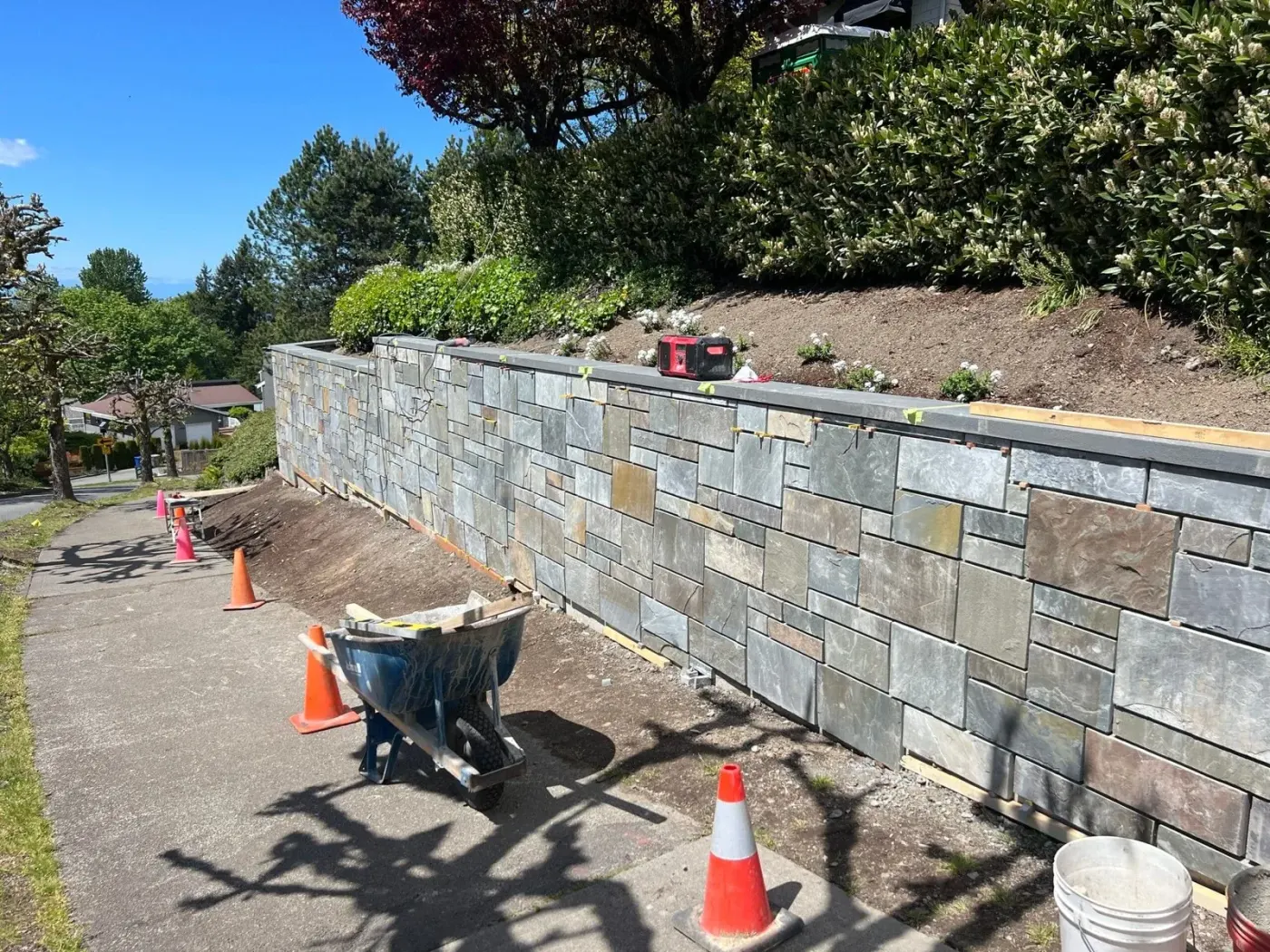
Stone veneer going up over a structural core — the part of the job nobody photographs, done properly.
 Retaining WallsView full size
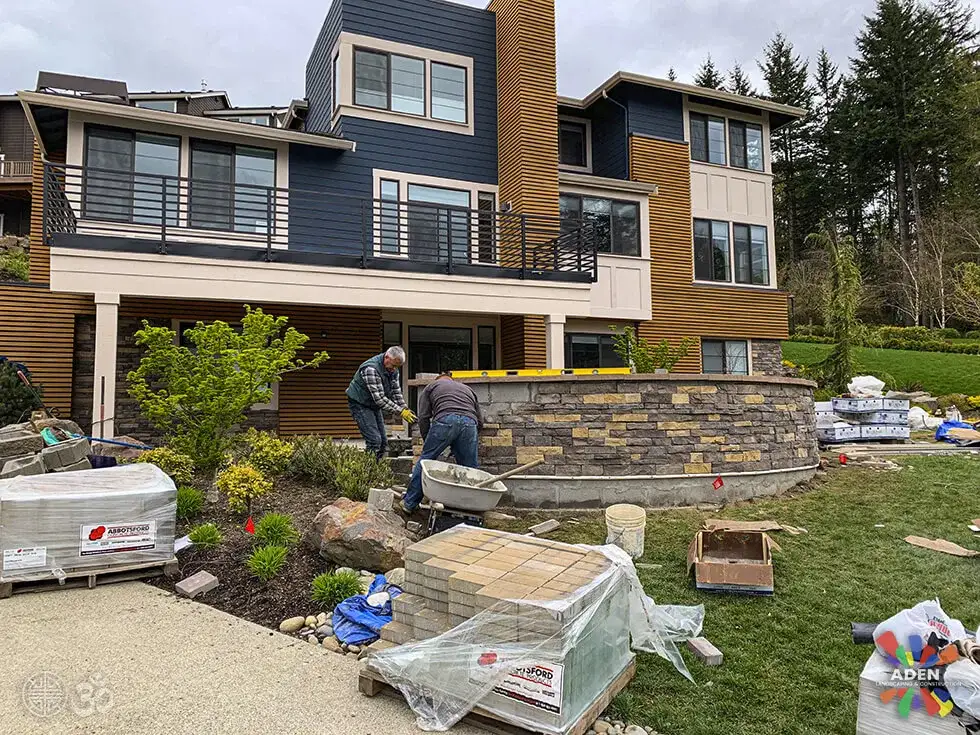
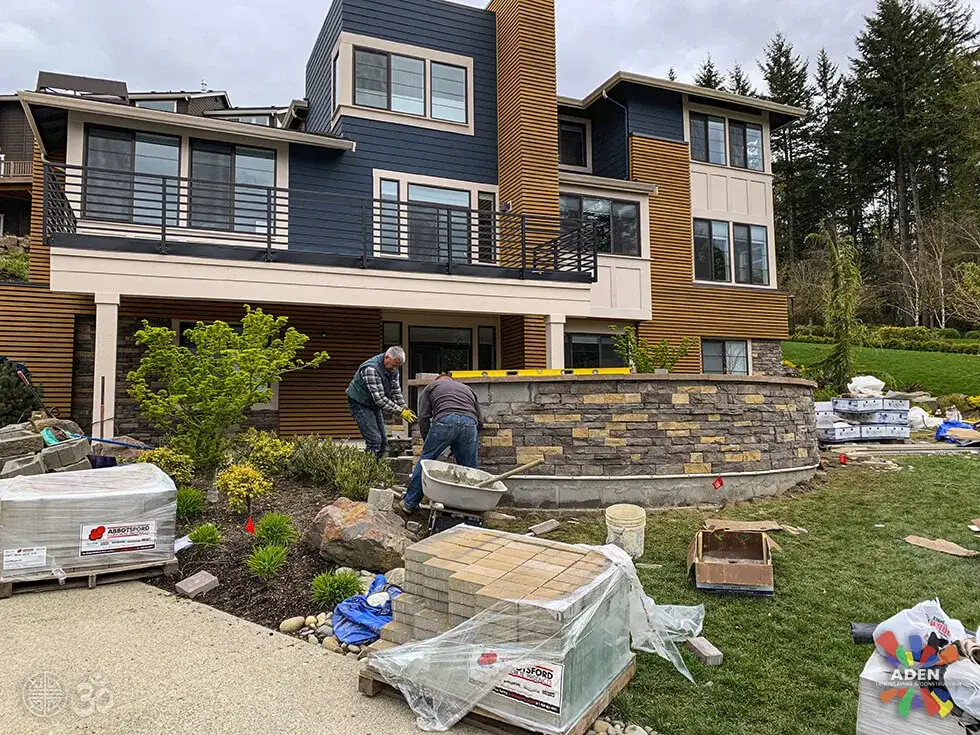
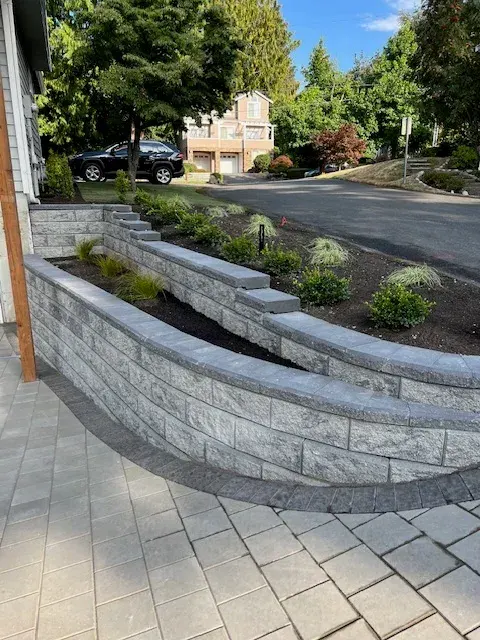
A curved wall along the front of the house holding the bank off the drive, with new planting behind it and a paved walk in front.
 Retaining WallsView full size
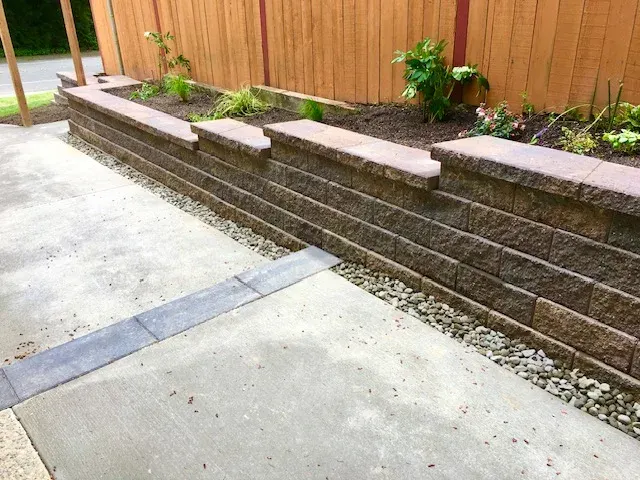
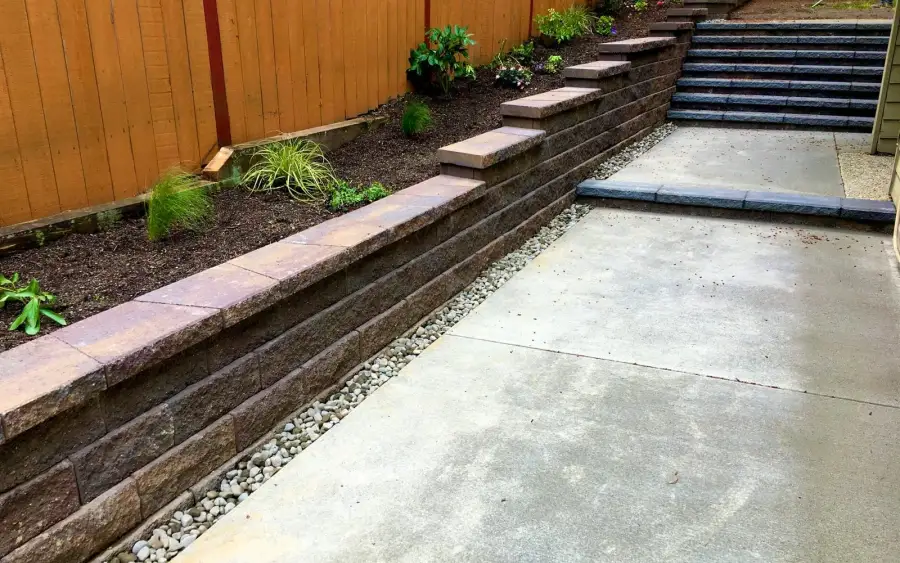
The rock strip between the wall and the slab is the part that matters: it takes the water down to daylight instead of leaving it standing behind the blocks.
 Retaining WallsView full size
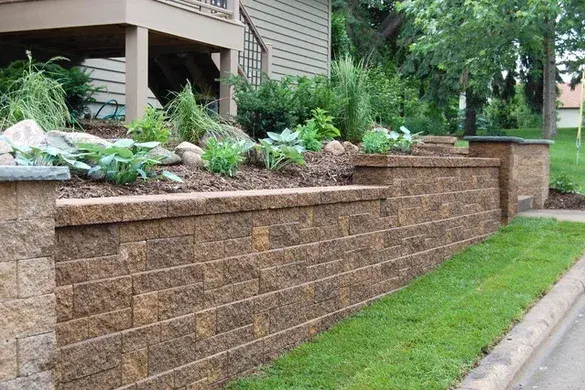
A long run of split-face block turning the fall between house and street into a raised bed at standing height, capped flat so the whole length reads as one line.
 Retaining WallsView full size
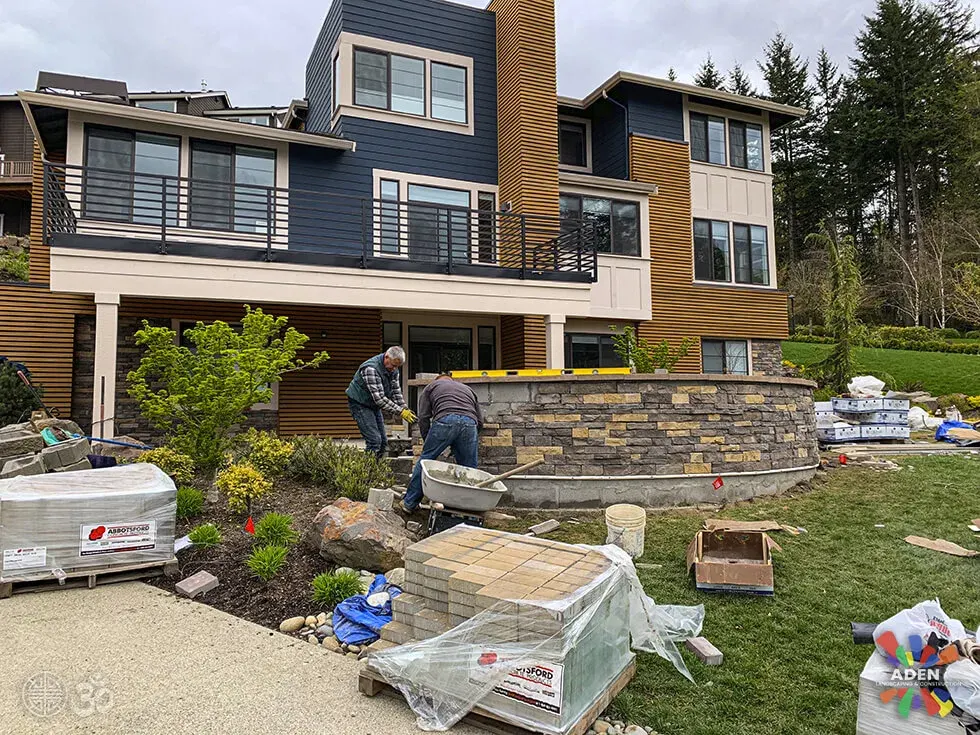
The crew setting veneer on the front terrace of a new build. The block core does the structural work and the stone is what you end up looking at — two different jobs, done in the right order.
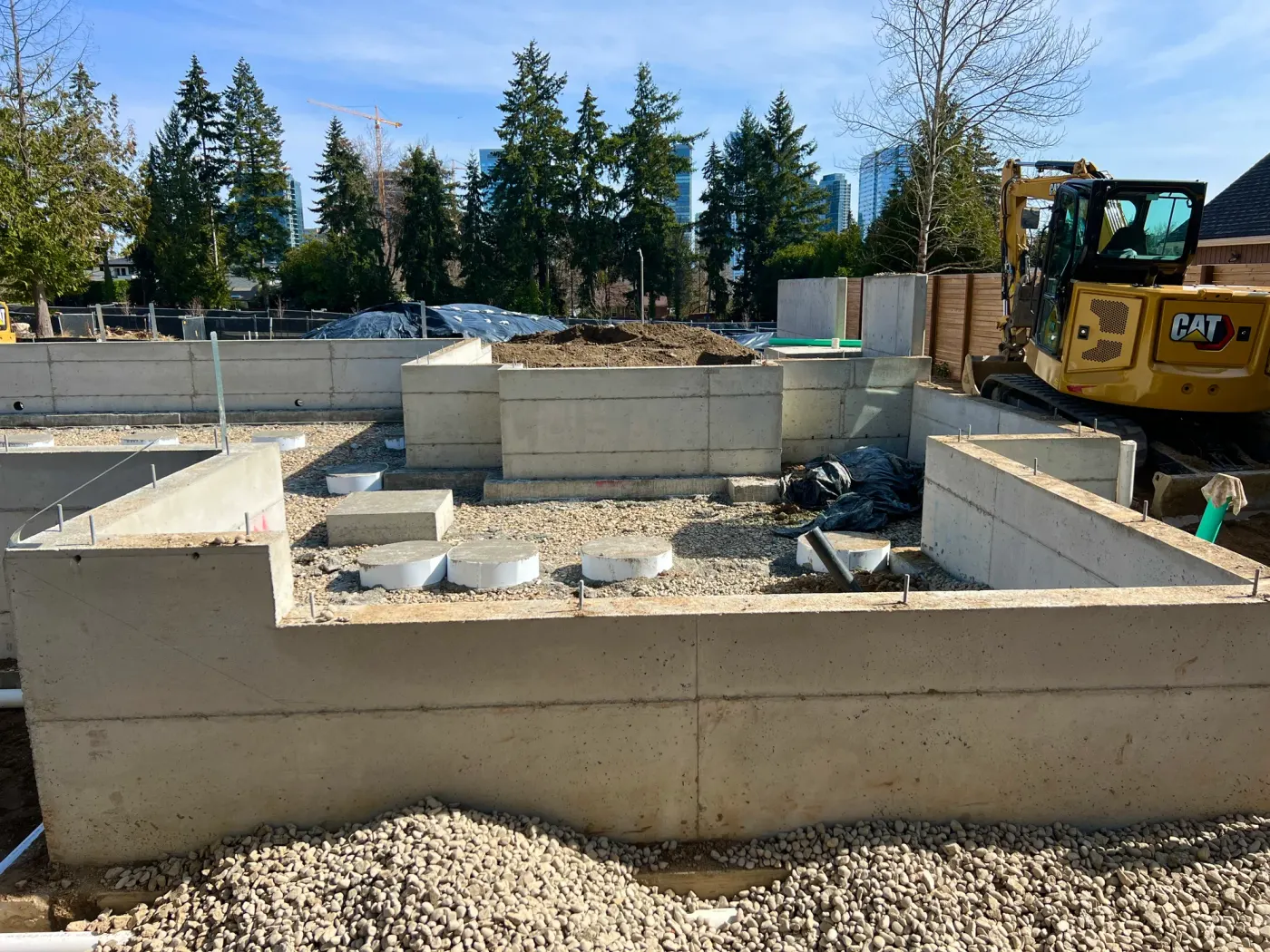 HardscapingView full size
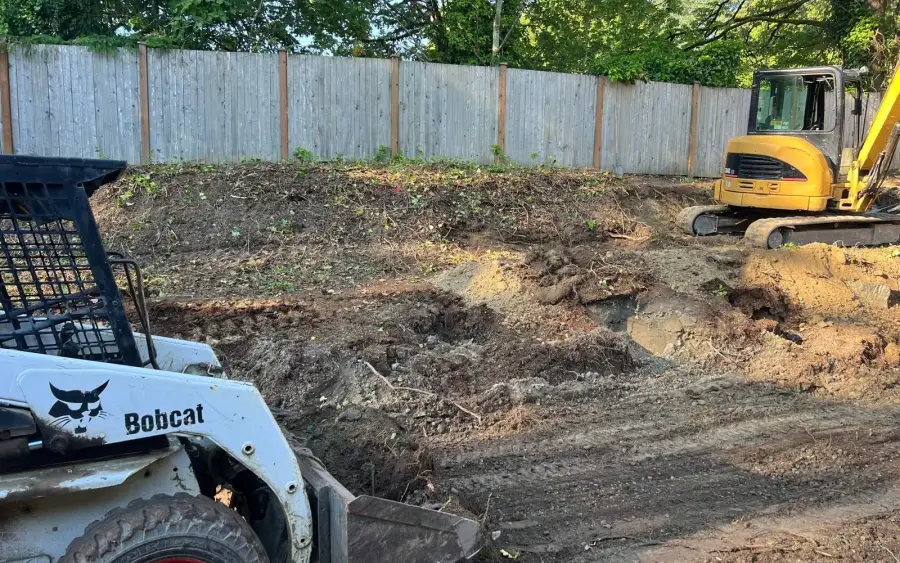
Machine work around a foundation on a tight Bellevue lot: dig to level, keep the cut clean at the footings, and get the drainage in before anything is backfilled over it.
In their words
Real Google reviews, unedited. We publish the ones that name the work rather than a generic five stars.
Aidar Bariev
April 2025
Alex is one of the best contractors I've worked with! He's very creative and really sweats the details, which shows in the final product. Our backyard turned out very functional and beautiful! Our house is built on a steep hill so it was hard for us to see how we would utilize the backyard space because we had two retaining walls that minimized the main area. Alex proposed a great solution that maximized the main area and we couldn't be happier.
Egle Garcia
April 2014
We needed a solution with the sliding soil in our backyard (Seattle location). Eric & Alex suggested building a retaining wall and we are very satisfied with the solution and the results. Thank you.
Where we build it
We work across Seattle, the Eastside and the north end — see every area we cover.
Before you call
Something not answered here? Call (425) 331-9811 and ask — we would rather talk it through than have you guess.
It depends on where the movement is and why. A wall bulging in one section between a sound top and base can often be taken down to below the bulge, drained properly and rebuilt from there — a partial rebuild at a fraction of the full cost. A wall that is rotating at the base along its whole length has lost its foundation, and resetting the face without fixing that buys a couple of years at best. The honest test is whether the drainage can be made to work without taking the whole wall down. We look at the back of the wall before giving an answer, and we quote both routes where both are real.
Water, in the overwhelming majority of cases. Soil behind a wall saturates over a Seattle winter, saturated soil is dramatically heavier and pushes dramatically harder, and a wall with no drainage has nothing to relieve that pressure. The wall moves a little each season until it is visible. Secondary causes are a base that was too shallow or never compacted, and backfill dumped in one go rather than compacted in lifts so it settled later. What it is almost never is the blocks themselves.
A partial rebuild with drainage retrofit — taking down a failing section, putting proper drainage behind it and rebuilding that section — typically runs $1,500 to $6,000 depending on length and access. A full rebuild is priced as a new wall, $5 to $45 per square foot of face, plus demolition and disposal of the old one. The reason the repair figure is a range rather than a number is that nobody can price it properly from a photograph; the cost depends on what is behind the wall.
Possibly, and it is worth checking before you start rather than after. Rebuilding is new construction, so the exemption rules apply fresh: a wall is exempt only if it is four feet or lower measured from the bottom of the footing, outside an Environmentally Critical Area, and causing no damage to adjoining property. An old wall that predates current rules does not carry its exemption over to its replacement. A repair that leaves the structure in place is a different matter and usually does not trigger a permit.
Less urgent than one that is still moving, but worth measuring rather than assuming. A wall that rotated once during an exceptional winter and then stabilised can stand for a long time. A wall that moves a little every wet season is on a trajectory, and the cost of dealing with it goes up as the movement does — partial rebuild now, full rebuild later. The thing to watch is whether the lean changes year to year. If you have a photograph from a few years ago, compare it against the same angle today.
This needs sorting out before work starts, not during. Whose wall it is determines who pays, and a wall causing damage to adjoining property loses its permit exemption regardless of height. We have done enough of these to say that the conversation with the neighbour goes better early, with a diagnosis in hand, than it does once a contractor is on site. We will put the assessment in writing so you have something to show them.
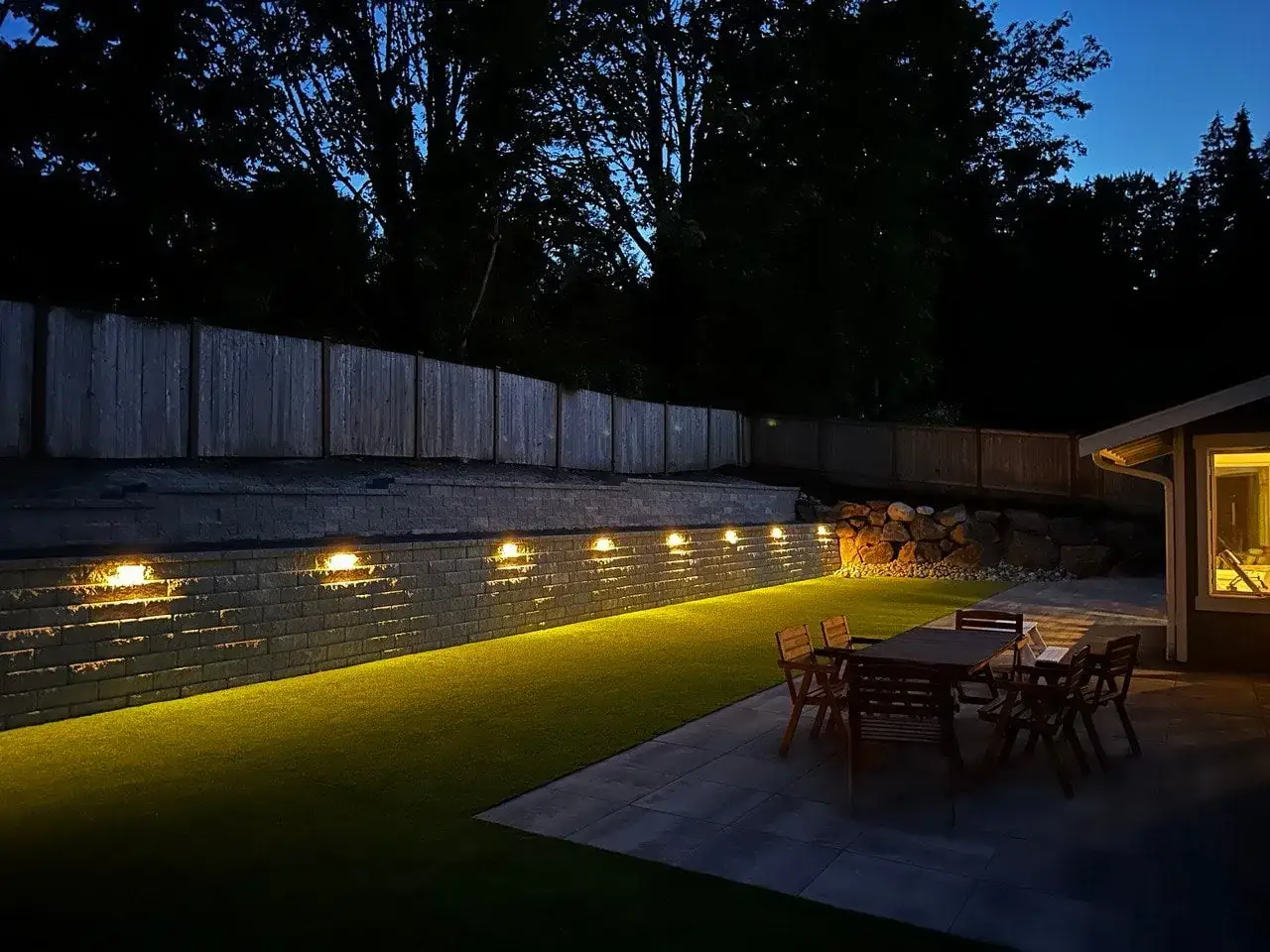
We come out, look at the site properly, and put a fixed written price together. No deposit, and nothing changes once the price is agreed.
Usually done alongside
Flat, dry, usable ground that stays where you put it.
$18–$120 per square foot, depending on the element
Turn an unusable bank into flat, usable ground.
$5–$45 per square foot of wall face
A yard that drains through a Seattle winter instead of holding it.
$10–$25 per linear foot
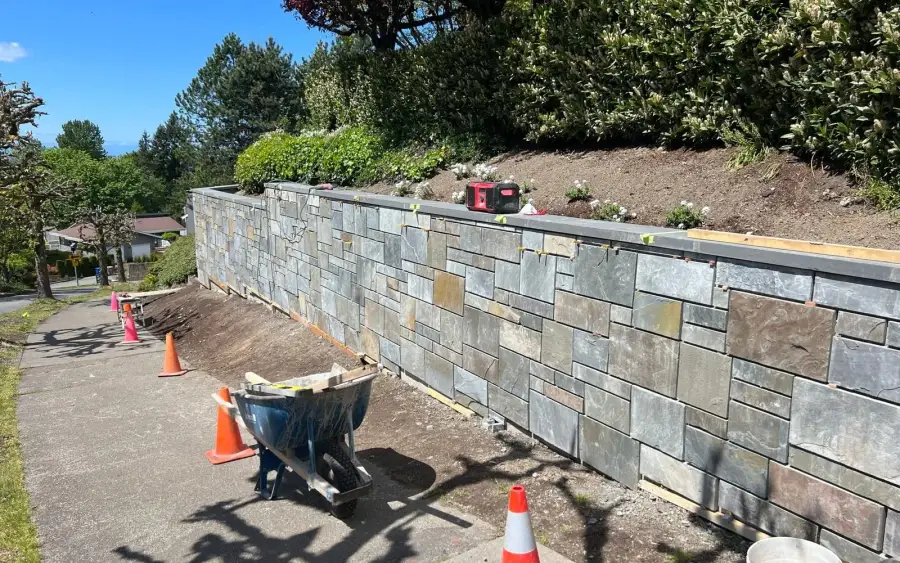
Walls, columns, steps and veneers built to last generations.
$45–$120 per square foot of finished face
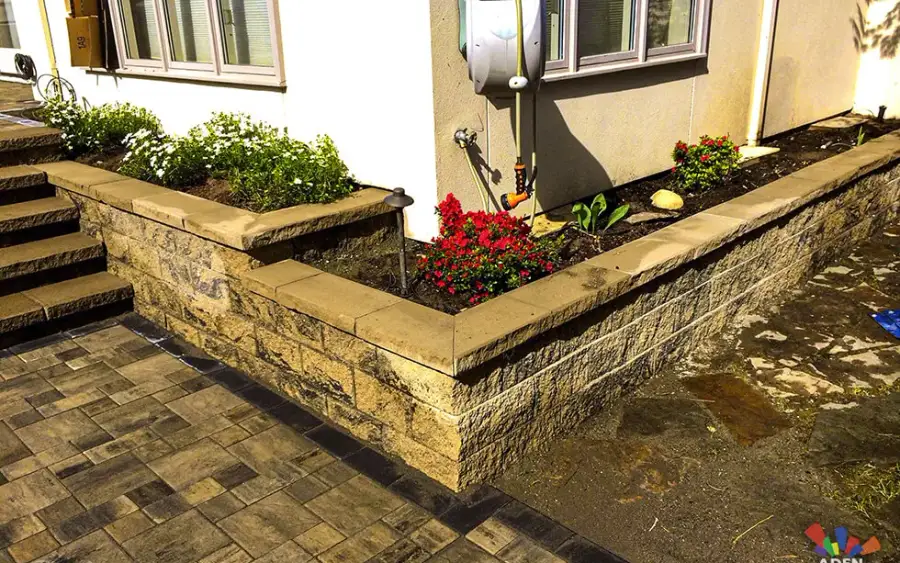
Planting at a height you can reach, in soil that stays put.
$55–$130 per linear foot
Free estimate
Three minutes on the form. We reply during office hours — Monday – Friday, 9:00 AM – 7:00 PM.
Or call (425) 331-9811
Thank you — we have your details. We reply during office hours, Monday – Friday, 9:00 AM – 7:00 PM. If it is urgent, call (425) 331-9811.