
 HardscapingView full size
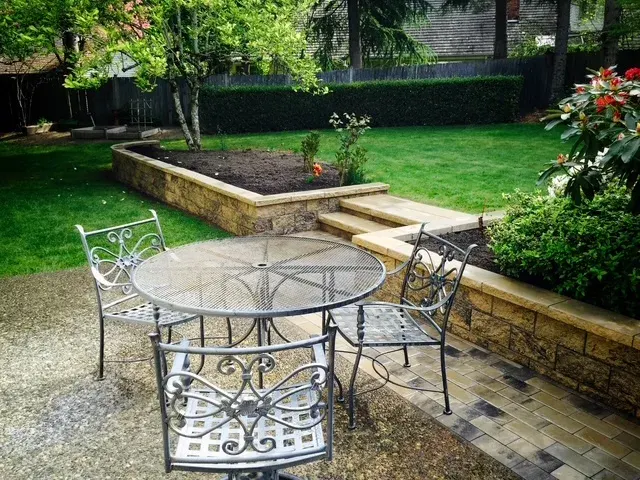
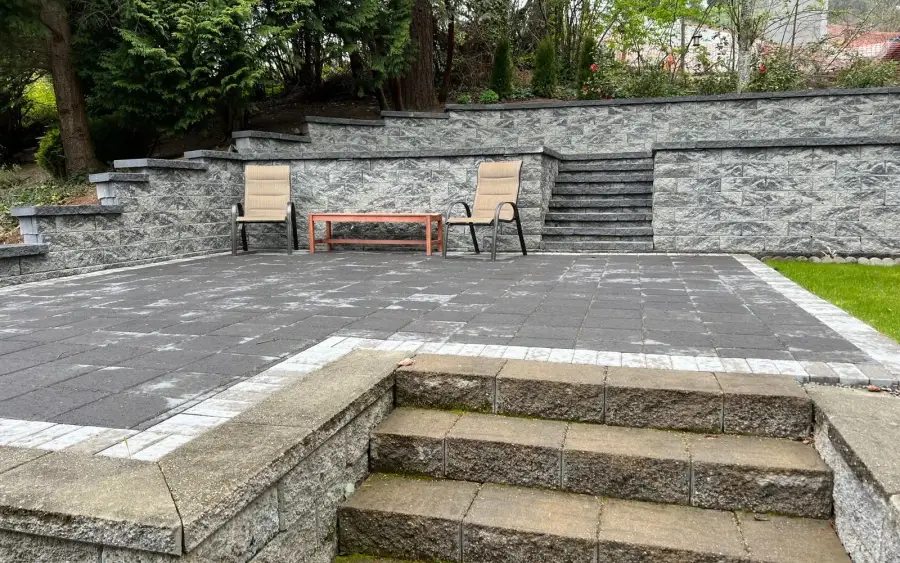
Stone seat wall and raised bed
A stone seat wall doubling as the edge of a raised bed, with steps up to the lawn and a paved terrace for the table.
No down payment. You pay when the project is finished.
Monday – Friday, 9:00 AM – 7:00 PM · Capitol Hill, Seattle
Service area
Mount Baker gardens are defined by the fall toward Lake Washington. It is the reason these lots are worth what they are, and the reason flat usable ground is in short supply on almost every one of them. Terracing is the answer, and the design question is where the levels go rather than whether to have them: a single tall wall close to the house buys level ground at the cost of the view it was built to enjoy. Several lower walls stepping down the slope give more usable space, need less engineering, and keep the sightline open. On the steeper parcels we check the Environmentally Critical Area position before quoting.
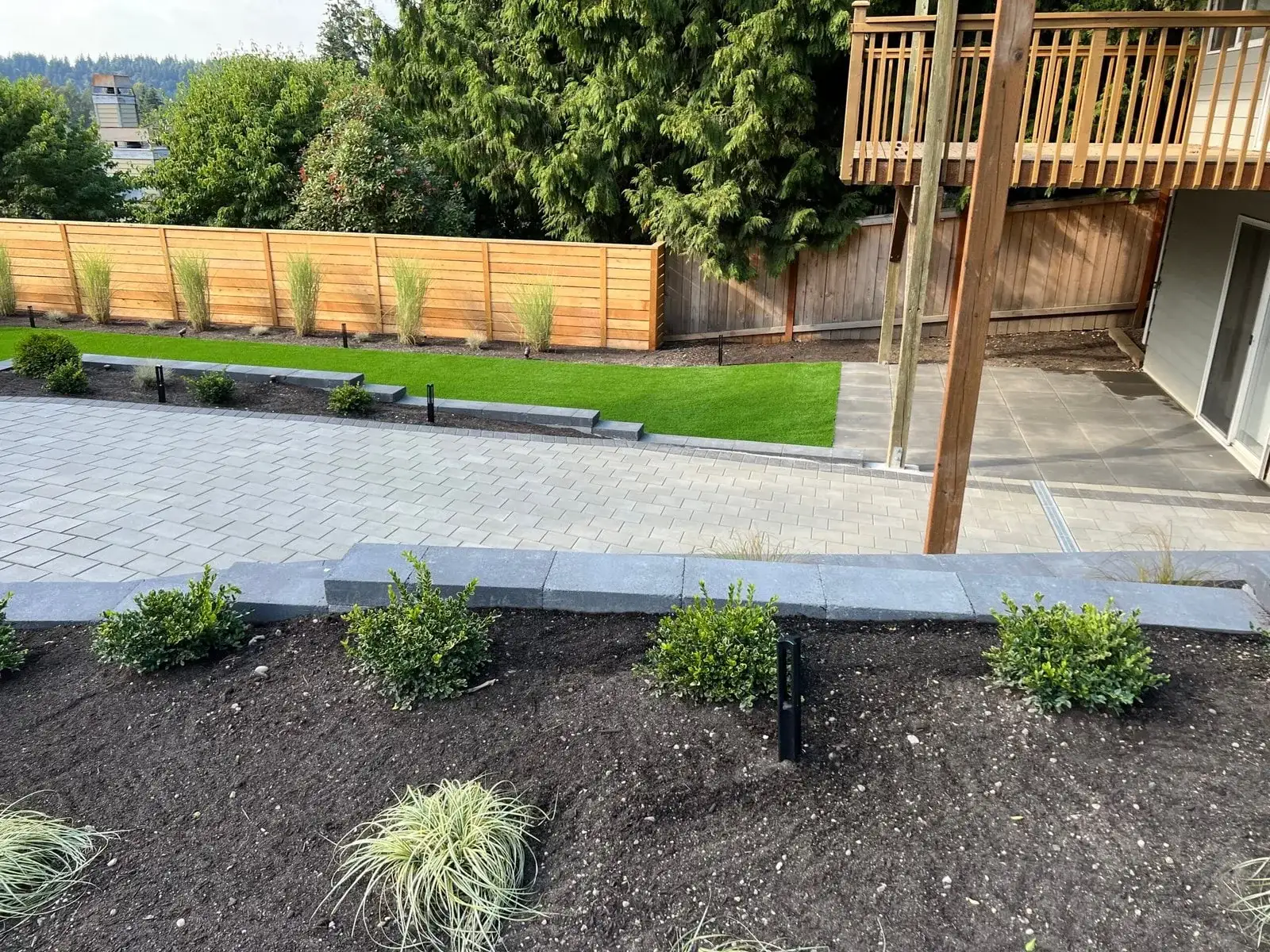
Grey paver patio with charcoal edging walls, turf lawn and new planting on a sloped Mount Baker garden
What we plan around here
Mount Baker is a view neighbourhood on a serious slope, and those two facts pull in opposite directions. The fall toward Lake Washington is what the property is worth, and it is also what makes flat ground scarce. The design problem is cutting usable level platforms out of that fall without putting a wall across the sightline — which almost always means several lower terraces stepping down rather than one tall wall near the house. On the steeper parcels the ECA question applies, so the permit position gets checked before anything is quoted.
What we build in Mount Baker
Serving Mount Baker and surrounding neighbourhoods
The Olmsted-designed park running down the ravine to the lake — the same fall that every garden on the ridge above is dealing with.
A steep, wooded park descending to Lake Washington Boulevard, and a working illustration of how this hillside sheds water.
The Olmsted parkway along the shoreline, which is why so many Mount Baker lots are oriented toward a view rather than a street.
Mount Baker · Mount Baker Ridge · North Rainier edge · Leschi edge · Colman Park
98144
Local questions
Something specific to your street? Call (425) 533-9734 — we would rather look at it than guess.
By pushing the walls away from the house and keeping each one low. A single six or eight foot wall built close to the building is the cheapest way to create a level terrace and the fastest way to put a face across the exact sightline the property was bought for. Stepping the same fall in two or three shorter walls set progressively further down the slope keeps the eye travelling out over the tops of them. It usually costs less as well, because each wall stays under the height thresholds that trigger engineering and permits. The trade-off is that it uses more of the garden's depth, which on a shallow lot is a real constraint.
A number of the steeper parcels on this hillside are, and it changes the retaining wall question completely. The normal Seattle exemption covers walls four feet or lower measured from the bottom of the footing, provided the property is not in an ECA and no adjoining property is damaged. Inside an ECA that exemption does not apply at all, so a wall of any height can require a permit and the design may need engineering input. Seattle defines a steep slope as 40% or more grade over ten feet of vertical change, with fifteen-foot buffers top and toe. We check your parcel against the city map before pricing anything.
Downhill, onto whatever is at the bottom — which is either your own house, your neighbour's garden, or the street. That makes drainage design here as much about controlling discharge as about collecting water. Every terrace, patio and wall we build on this hillside adds impermeable surface and changes where runoff concentrates, so the drainage is designed alongside the levels rather than after them. The advantage of a slope is that discharge to daylight is usually achievable, which is far more reliable than any of the options on a flat lot. The risk is that an uncontrolled discharge becomes someone else's problem and, eventually, your liability.
Yes, and on a lot this steep it is nearly always the better answer. Stairs bolted onto the side of a terrace run eat the width of each level and make the whole arrangement read as a series of separate platforms. Steps built into the wall faces themselves keep each terrace whole and let the run of walls read as one continuous piece of ground. It costs a little more in setting out and in the masonry, and it is the difference between a garden that feels designed and one that feels engineered. Consistent riser heights and a textured tread matter here more than most places, because these steps get used every day in the rain.
We come out, walk the property, look at the grade and the drainage, and put a written price together. No deposit, and it does not change once agreed.
Nearby
Two ridges with a valley between them. Beacon Hill and the Mount Baker/Seward Park side both fall hard toward the water; the Rainier Valley floor between them is flat and drains slowly.
10–20 minutes from Capitol Hill
Rolling, with a defined fall from the ridge toward Lake Washington and the peninsula. Less severe than Mount Baker to the north but rarely genuinely level.
15–25 minutes from Capitol Hill
Ridge-top flat through central Capitol Hill, then steep falls east toward Lake Washington and west toward downtown. Leschi and Madrona are steep by default.
0–10 minutes — this is where we are based
Seven hills and then some. Grade changes of 20–40% inside a single lot are ordinary in Queen Anne, Magnolia, Mount Baker and West Seattle.
Base of operations — Capitol Hill
A domed island — relatively level across the crown through Island Crest, then falling away to the shoreline on every side, steeply in places.
15–25 minutes from Capitol Hill via I-90
Free estimate
10–20 minutes from Capitol Hill from our Capitol Hill base. Three minutes on the form and we will come out and look at it properly.
Or call (425) 533-9734
Thank you — we have your details. We reply during office hours, Monday – Friday, 9:00 AM – 7:00 PM. If it is urgent, call (425) 533-9734.