
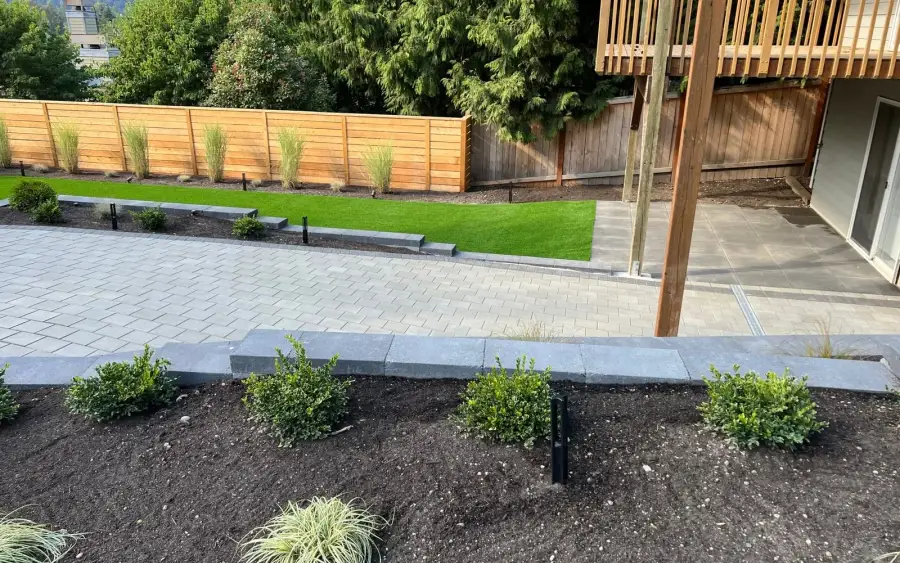
Landscape Design & Installation
A yard designed as one thing, not six jobs stitched together.
- Custom design plans
- Planting & beds
- Full yard renovation
$8,000–$70,000 for a full design and installation
No down payment. You pay when the project is finished.
Monday – Friday, 9:00 AM – 7:00 PM · Capitol Hill, Seattle
Service
Seattle's rainfall figure is one of the most misleading numbers in American gardening. We take 38 inches a year and it lands almost entirely between October and March. July and August are genuinely dry — often for weeks at a time — and they are exactly when new planting, lawns and containers are under the most stress. That mismatch is why irrigation matters here despite the reputation, and why the systems that work are zoned rather than uniform. A lawn, a bed of established shrubs and a row of containers want completely different amounts of water on completely different schedules. One controller running everything for twenty minutes waters all three badly.
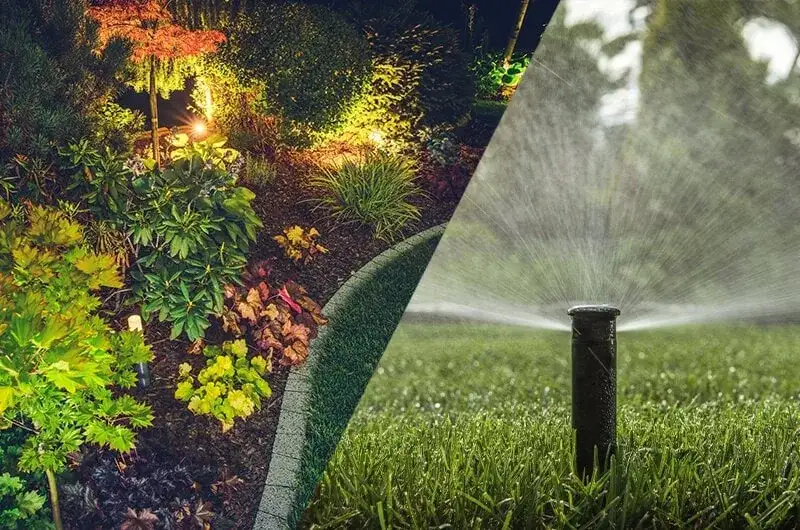
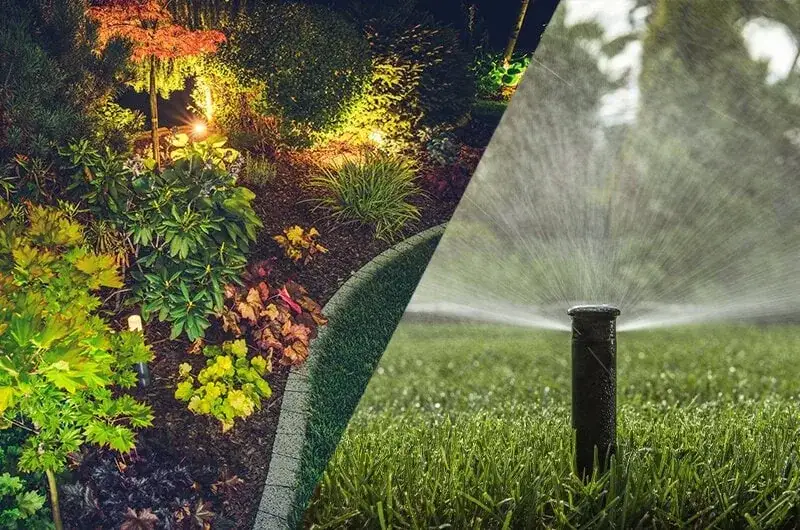
Pop-up sprinkler head watering a lawn, shown beside a landscape bed lit at night
What is included
Planting that survives August without you standing there with a hose.
Lawn and turf areas on their own zones, sized to the head spacing and the pressure available, so coverage is even rather than patchy with dry corners.
Water delivered at the root rather than thrown into the air. Less evaporation, no wet foliage, and dramatically less waste on planted areas — the change customers notice most.
Programmable control with seasonal adjustment, and weather-responsive options that skip a cycle when it has rained, which in this climate is not a gimmick.
Most of our irrigation work is fixing an existing system rather than installing a new one — usually rezoning so beds and lawn stop sharing a schedule.
Spring commissioning and autumn blow-out. A system left charged through a Seattle cold snap is a repair bill waiting for spring.
Why people call us
How we build it
Seasonality. Install in spring, ideally March to May, so the system is running before it is needed and any coverage problems show up in June rather than during a hot week in August. Winterisation belongs in October before the first hard freeze. New planting installed in autumn benefits from irrigation being in place first — it is much easier to trench before planting than around it.
Everything downstream depends on this. A design drawn without knowing what the supply actually delivers produces zones that cannot run properly, and it is the most common fault in existing systems.
Lawn, beds, containers and any shaded area separated, because they want different volumes and different frequencies. This is where most retrofits earn their money.
Sprinkler spacing calculated for head-to-head coverage; drip laid to the planting rather than in a grid that ignores where the roots are.
Lines trenched to depth and sleeved under any hard surface. Where a patio or drive is being built at the same time, the sleeves go in then — it costs almost nothing and saves a great deal later.
Zones timed, seasonal schedule set, and you shown how to adjust it. A system nobody knows how to change gets left on the install setting for a decade.
What it costs
Zone count is the driver, not lot size — each zone carries valve, wiring, piping and heads. Drip to beds is cheaper per area covered than lawn sprinklers. Retrofits and rezoning of an existing system are usually a fraction of a new install, and are the more common recommendation where the pipework in the ground is sound.
That is a market range, not a quote. Your price is fixed in writing after we have seen the site, and it does not move once agreed.
No deposit is required to start. Payment comes after the work is finished — not before.
A fixed, accurate price is guaranteed before the job starts. We do not quote low and raise it mid-project.
A 0% interest payment plan is available for up to 6 months.
Hardscaping work carries a warranty. Vegetation is excluded.
In their words
Real Google reviews, unedited. We publish the ones that name the work rather than a generic five stars.
Carly Rintisch
March 2026
We hired Aden Landscaping as part of our larger front yard remodel, and they redesigned our sprinkler system and added a drip irrigation system. It made a huge difference.
kamil Sogut
March 2025
Aden Landscaping team did a great job, they installed new Sprinkler system. Crew is professional they finished in short time.
Where we build it
Before you call
Something not answered here? Call (425) 533-9734 and ask — we would rather talk it through than have you guess.
For established, well-chosen planting, often not. For anything in its first two or three years, for lawns, and for containers, the answer is usually yes — and the reason is the shape of our rainfall rather than its total. Nearly all of the 38 inches falls between October and March, and July and August routinely go weeks without meaningful rain. That dry window lands precisely when plants are transpiring hardest and when new roots have not reached far enough to find moisture. A garden that looks effortless in May is the one that had water in August.
Both, on separate zones, in most gardens. Sprinklers are the right tool for lawns and turf, where you need even coverage across an open area, and they need head-to-head spacing to avoid the dry patches that plague badly designed systems. Drip is the right tool for everything planted, because it puts water at the root, loses almost nothing to evaporation, and keeps foliage dry — which matters more in a damp climate than a dry one, since wet leaves overnight is how a lot of fungal problems start here. The mistake we most often correct is a single system doing both jobs on one schedule.
Not usually in a normal year, but conservation is genuinely part of the picture and worth designing for. Seattle Public Utilities does not impose routine summer restrictions in a typical year, though voluntary curtailment is common in a dry August and regional conservation messaging runs through the Saving Water Partnership. Several Eastside cities — Bellevue, Redmond, Issaquah, Sammamish and Kirkland among them — buy their supply through the Cascade Water Alliance, and their conservation programmes and rate structures differ. Rather than quote a programme that may change, we design for lower consumption: correct zoning, drip on beds and weather-responsive control.
Yes, and skipping it is a gamble people lose roughly one winter in three. Our winters are mild on average, which is exactly what makes them dangerous — systems get left charged because it rarely freezes hard, and then a cold snap arrives, water expands in a backflow device or an above-ground component, and something cracks. The damage is not discovered until spring startup, by which point it may have been leaking underground for weeks. Blowing the lines out with compressed air in October is an inexpensive annual job and it is the difference between a system that lasts twenty years and one that needs repairs every other spring.
We come out, look at the site properly, and put a fixed written price together. No deposit, and nothing changes once the price is agreed.
Usually done alongside
A yard designed as one thing, not six jobs stitched together.
$8,000–$70,000 for a full design and installation
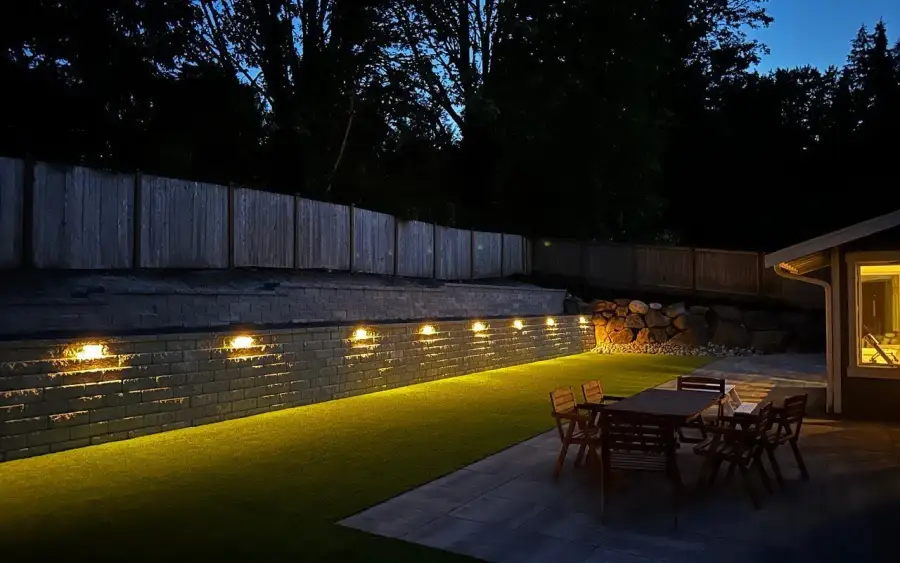
Use and see the garden through eight months of dark evenings.
$2,500–$9,000 for a typical residential system
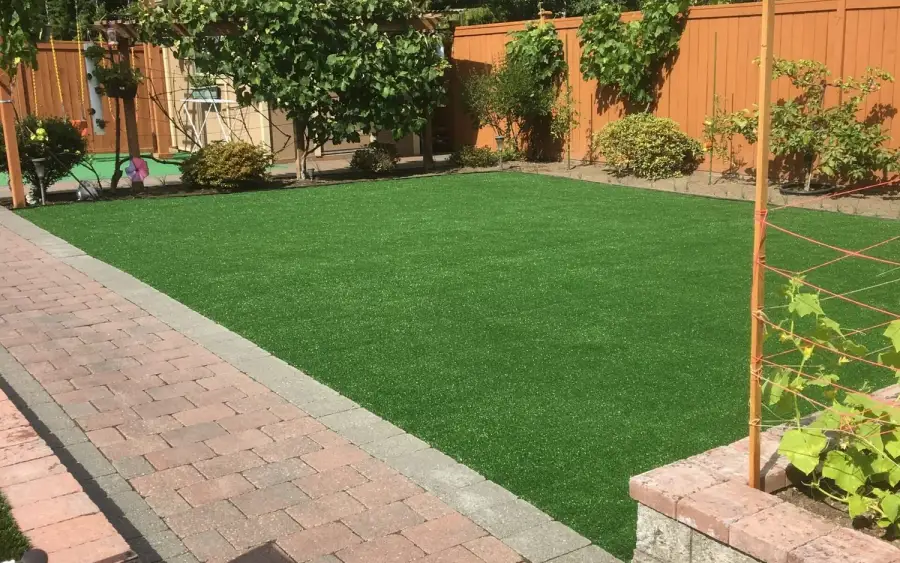
A lawn that survives a Seattle winter and a dog at the same time.
$13–$24 per square foot installed
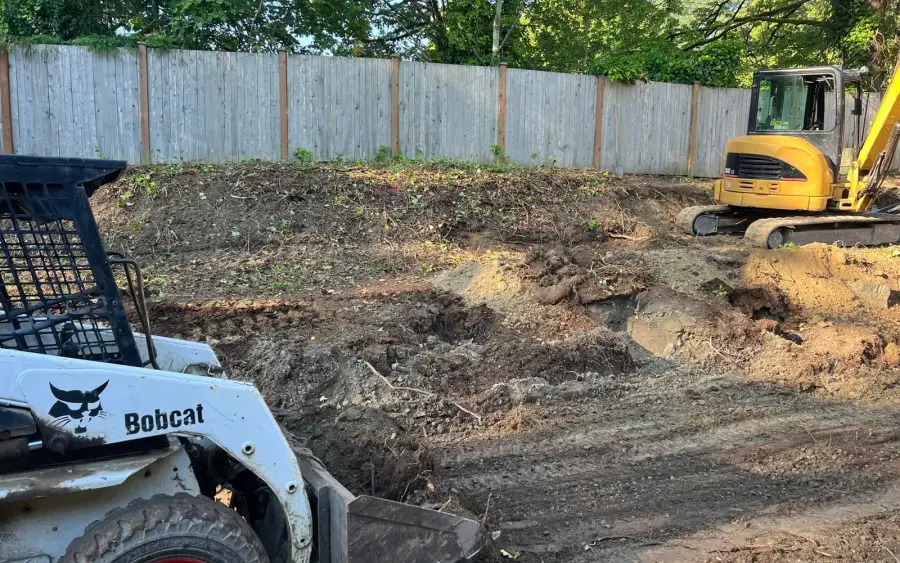
A yard that drains through a Seattle winter instead of holding it.
$10–$25 per linear foot
Free estimate
Three minutes on the form. We reply during office hours — Monday – Friday, 9:00 AM – 7:00 PM.
Or call (425) 533-9734
Thank you — we have your details. We reply during office hours, Monday – Friday, 9:00 AM – 7:00 PM. If it is urgent, call (425) 533-9734.