
 Landscape LightingView full size
Wall lighting for a garden that gets used after dark
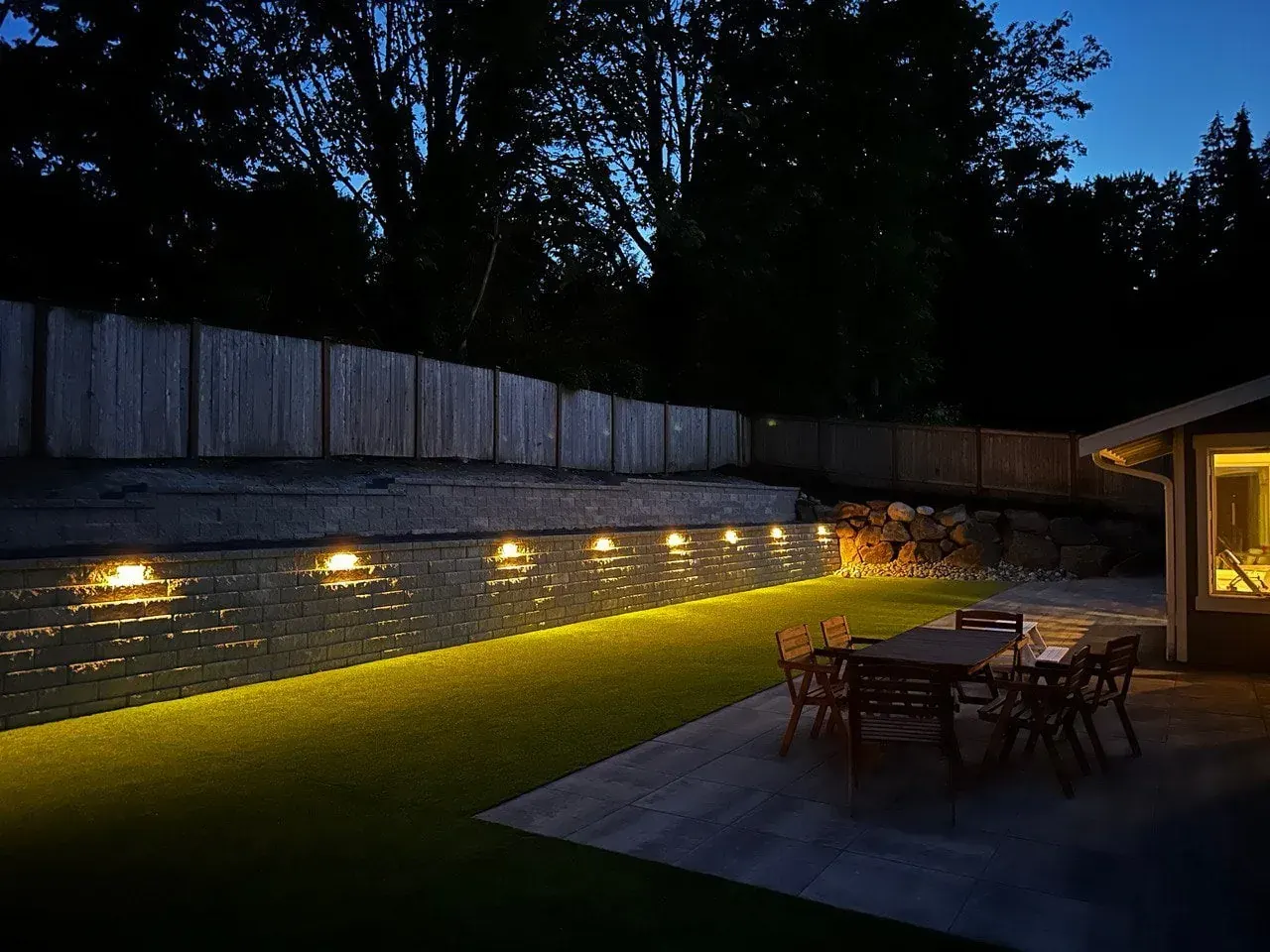
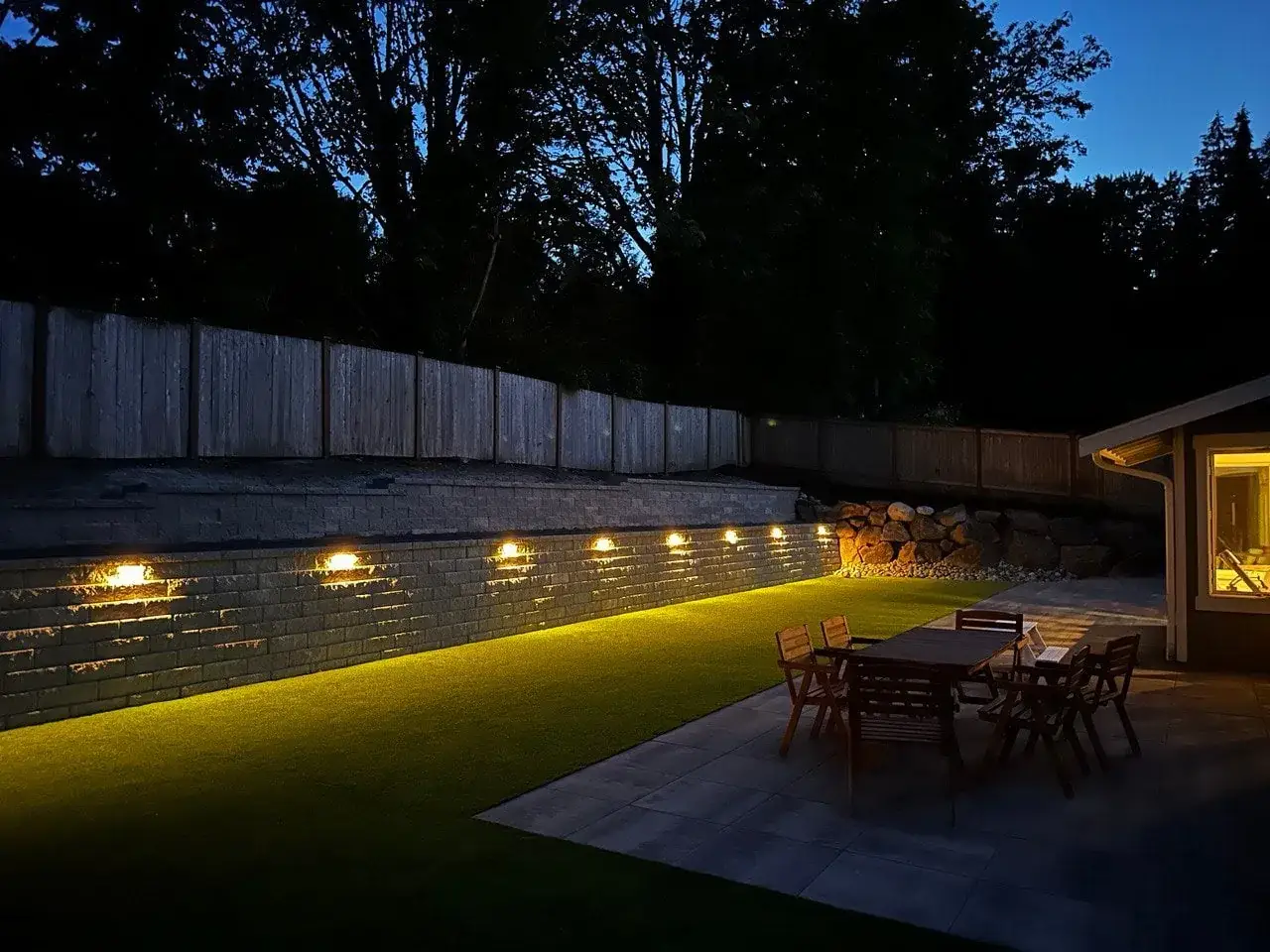
Low-voltage LED washing the retaining wall, with the patio lit for evening dining.
No down payment. You pay when the project is finished.
Monday – Friday, 9:00 AM – 7:00 PM · Capitol Hill, Seattle
Service
Lighting is the highest-return thing you can add to a Seattle garden and the most commonly skipped. The reason is arithmetic: at this latitude it is dark before five o'clock for a third of the year, so an unlit garden simply stops existing for the entire season people spend most time indoors looking at it. A lit one becomes a view from every window instead of a black rectangle. The second reason is safety — steps, level changes and a wet mossy path are the three things people actually hurt themselves on, and all three are cheap to light. Done well it is not a row of solar spikes down a path. It is a handful of deliberately placed fixtures, most of which you should never see directly.
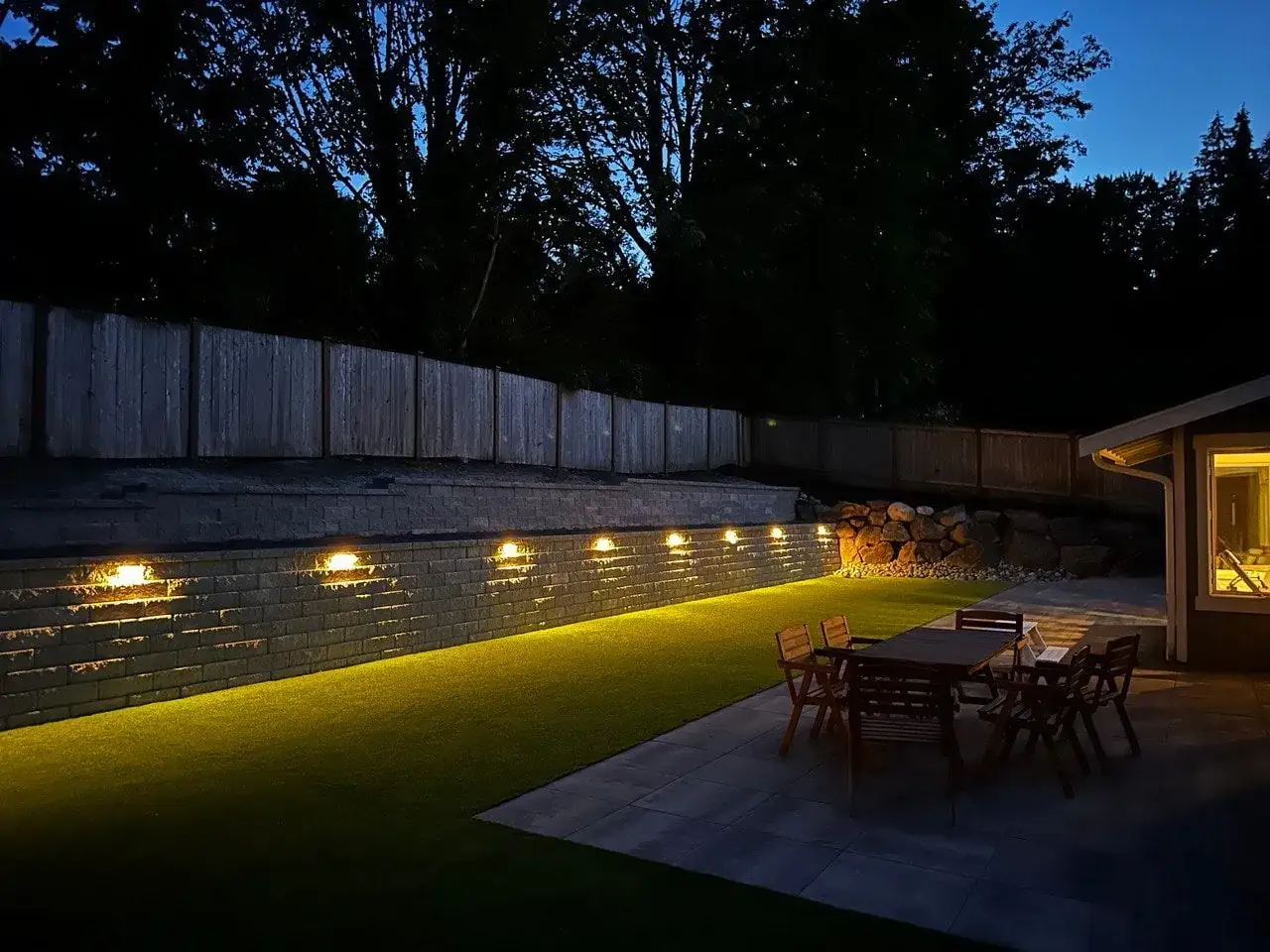
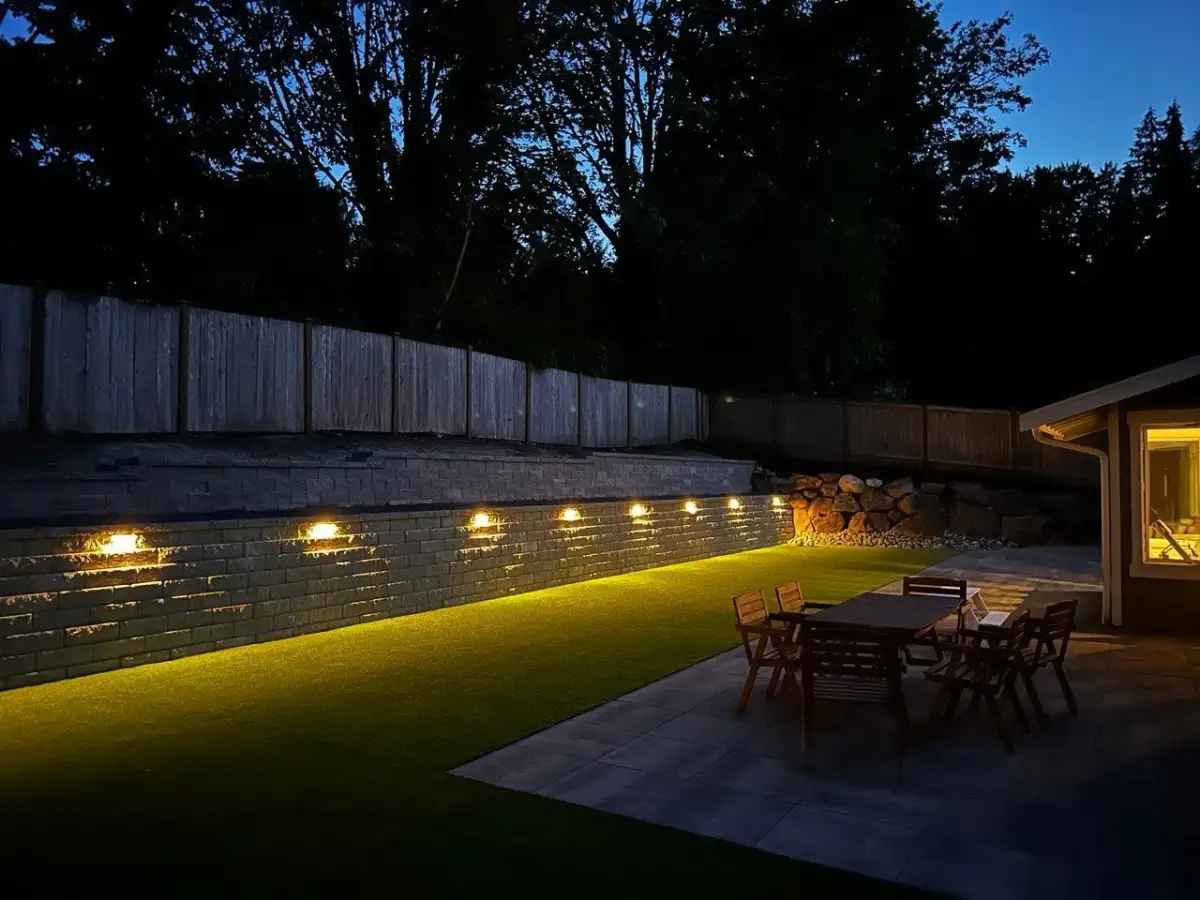
Retaining wall washed with warm landscape lighting at night above a lit patio and dining set
What is included
Use and see the garden through eight months of dark evenings.
Low fixtures that light the ground rather than your eyes, and step lights recessed into risers or walls. This is the safety layer and it comes first.
A well-placed uplight on a mature fir or a specimen maple does more for a garden after dark than a dozen path lights. Aimed to graze the trunk and canopy rather than flood it.
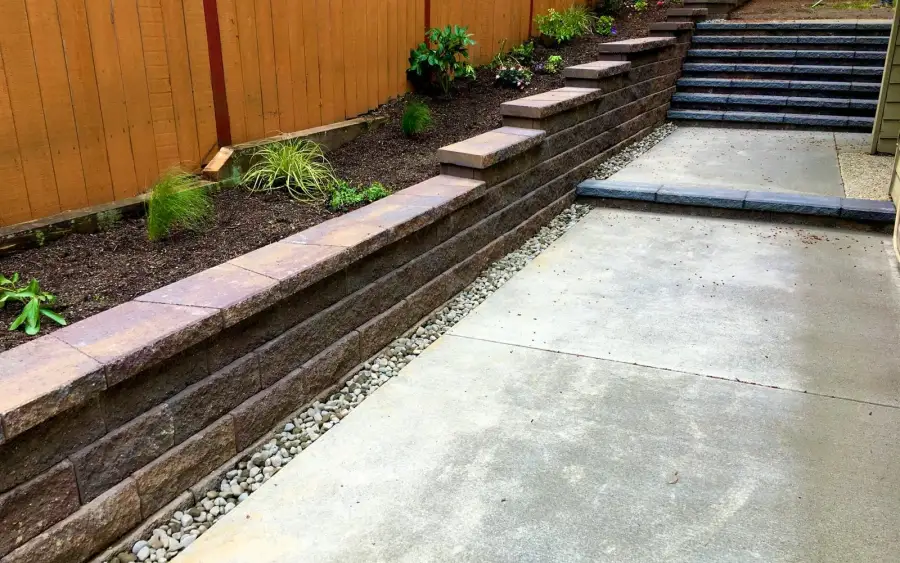
Grazing light across a stone or block retaining wall picks up the texture and turns a structural element into the backdrop of the garden.
12V LED throughout — safe to work around, cheap to run, and cable that does not need the burial depth or the electrician that line voltage does.
Fixtures and connections rated for constant moisture, because Seattle is not a climate where a marginal fitting survives its second winter.
Why people call us
How we build it
Seasonality. Best installed alongside hardscape work in the spring and summer, when cable can be sleeved under surfaces before they go down. As a standalone job it is genuinely well suited to autumn — you are buying it for the dark months, and the aiming visit works properly in October in a way it does not in June.
Where the garden is seen from inside, what is worth lighting, and where the genuine trip hazards are. A daylight-only design misses all three.
Safety first — steps and level changes. Then feature lighting on trees and walls. Then, only if it is needed, general ambient. Most gardens are over-lit and under-designed.
Voltage drop over a long cable run is what makes the far end of a system dimmer than the near end. It is arithmetic done before installation, not a fault discovered afterwards.
Cable buried on planned routes, ideally sleeved under any hard surface. Doing this during a hardscape build costs almost nothing; retrofitting it means lifting paving.
The last visit is after dark, adjusting beam angles and dimming levels with the system running. Fixtures aimed in daylight are almost always wrong.
What it costs
Systems are priced by fixture count, cable run and transformer capacity rather than by area. A focused install — steps, a path and two or three feature lights — sits at the lower end. Whole-property lighting with long runs, multiple zones and wall washing sits at the upper end. Adding sleeves and conduit during a hardscape build costs very little; retrofitting the same cable under a finished patio costs a great deal.
That is a market range, not a quote. Your price is fixed in writing after we have seen the site, and it does not move once agreed.
No deposit is required to start. Payment comes after the work is finished — not before.
A fixed, accurate price is guaranteed before the job starts. We do not quote low and raise it mid-project.
A 0% interest payment plan is available for up to 6 months.
Hardscaping work carries a warranty. Vegetation is excluded.
Lighting we have built
Landscape LightingView full sizeLow-voltage LED washing the retaining wall, with the patio lit for evening dining.
 Retaining WallsView full size
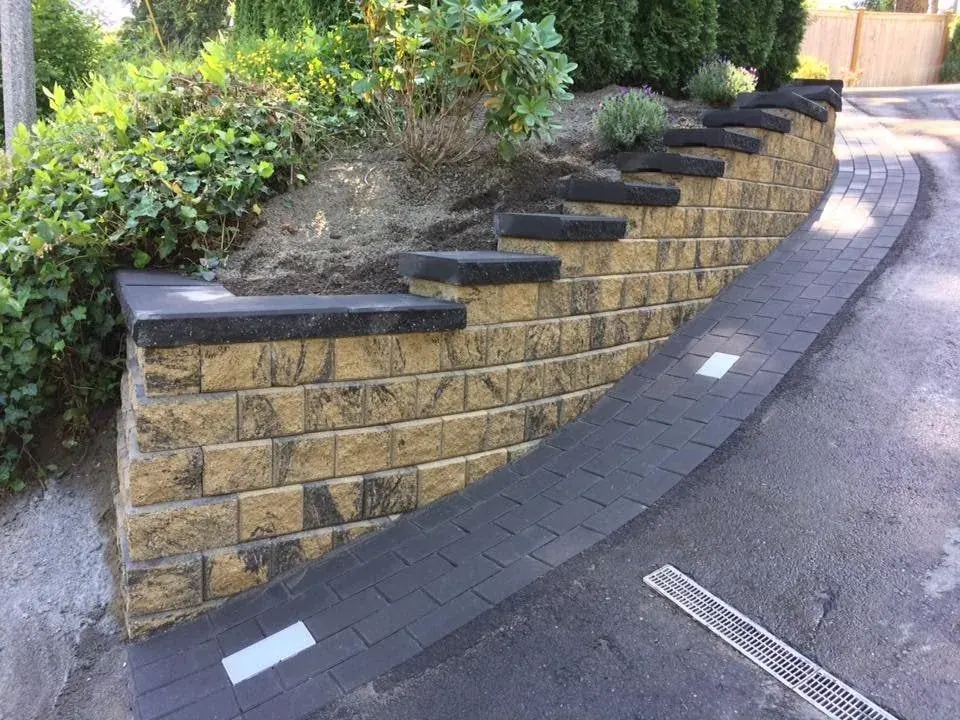
A curved wall along the street edge with lighting set into the face and new planting above.
 Design & BuildView full size
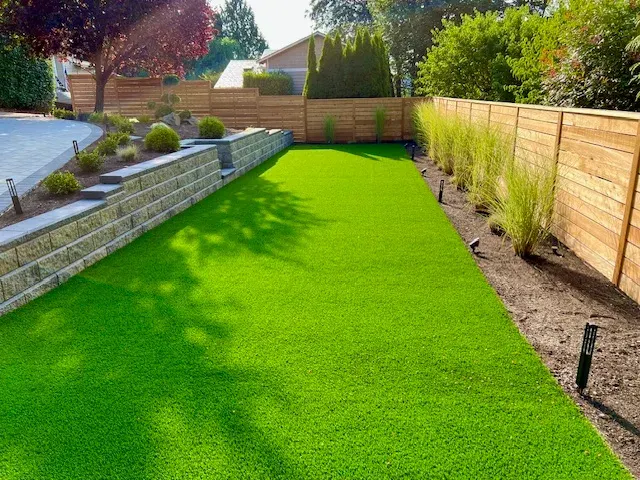
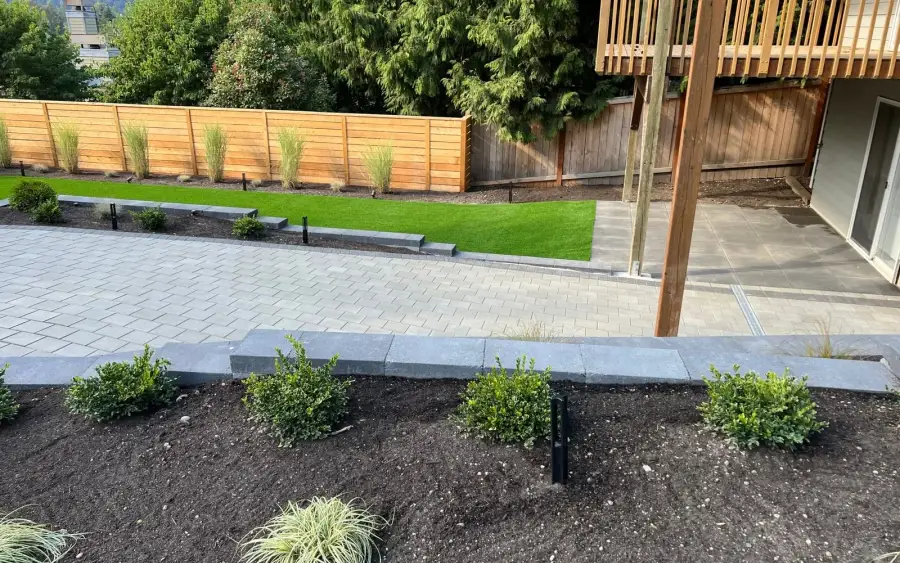
A sloping back garden cut into two usable levels — paver terrace at the top, level turf lawn below, and a block wall doing the work between them.
3 photos
 Retaining WallsView full size
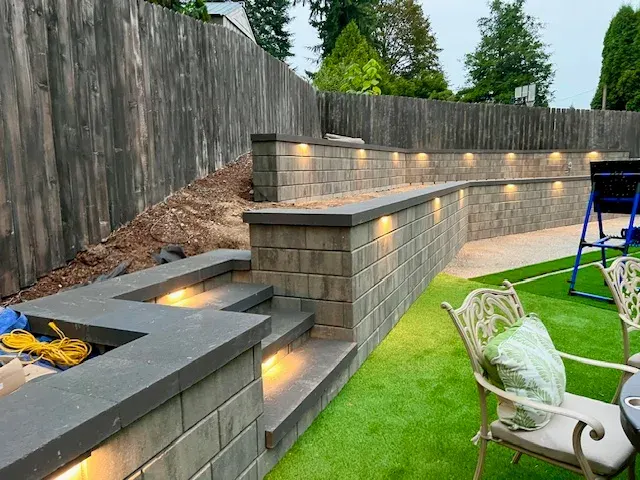
Lighting recessed into the wall face and the step risers, so the garden still works through eight months of dark Seattle evenings. Photographed the night it was commissioned.
2 photos
 Paver PatioView full size
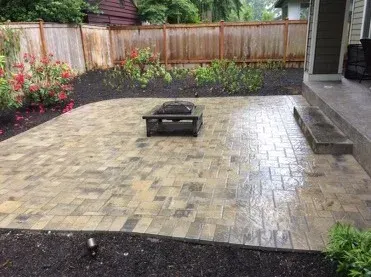
A paver patio the width of the garden, with new planting beds along the fence and lighting set into the edge.
 Outdoor LivingView full size
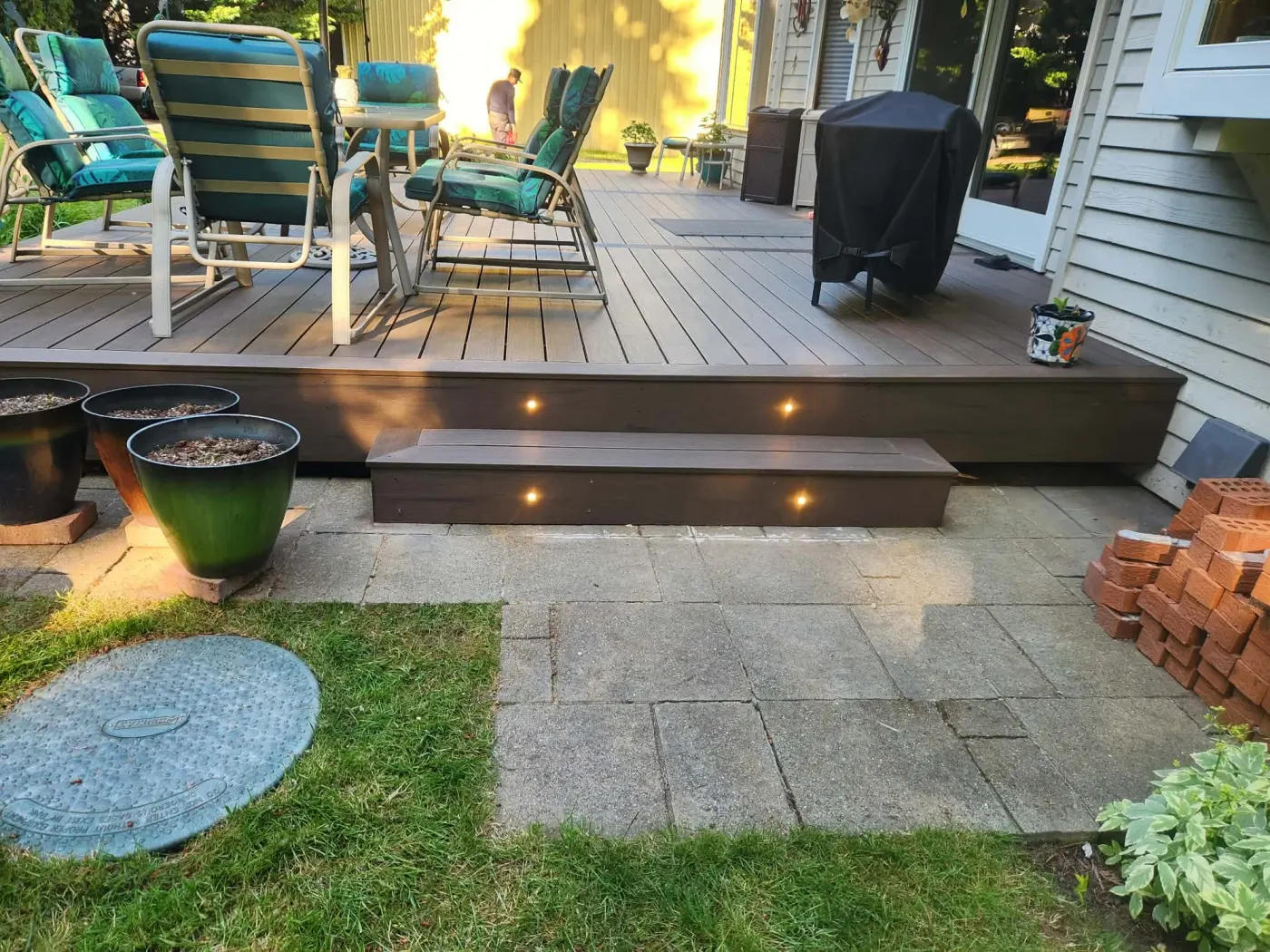
Warm lights set into the risers so the steps read after dark without a single fitting on a post. The deck runs the width of the house and lands on the existing paver patio.
2 photos
 Paver PatioView full size
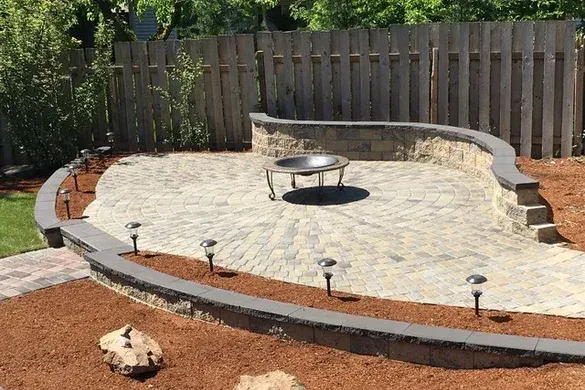
A circle is the hardest shape to lay well — every course has to be cut to the radius. Capped seat wall around the back, contrasting inner ring under the fire bowl, path lights set into the bed edge.
 Paver PatioView full size
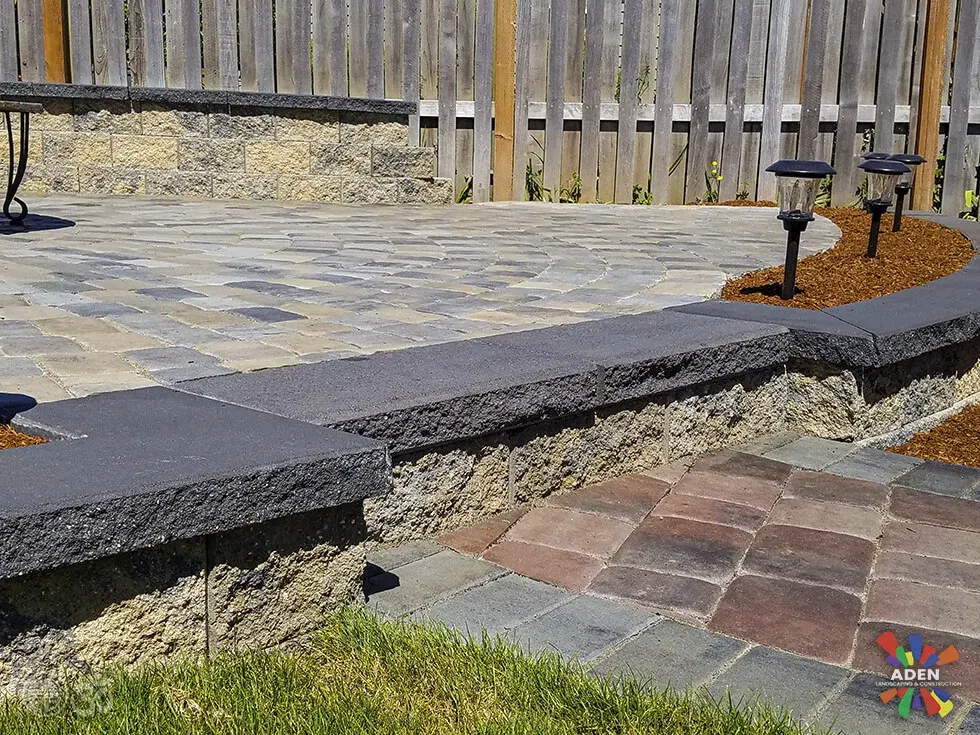
A raised paver terrace with a charcoal cap course, bollard lights along the edge and a fire bowl in the middle. The step down to the lawn is one clean uninterrupted line.
2 photos
 Outdoor LivingView full size
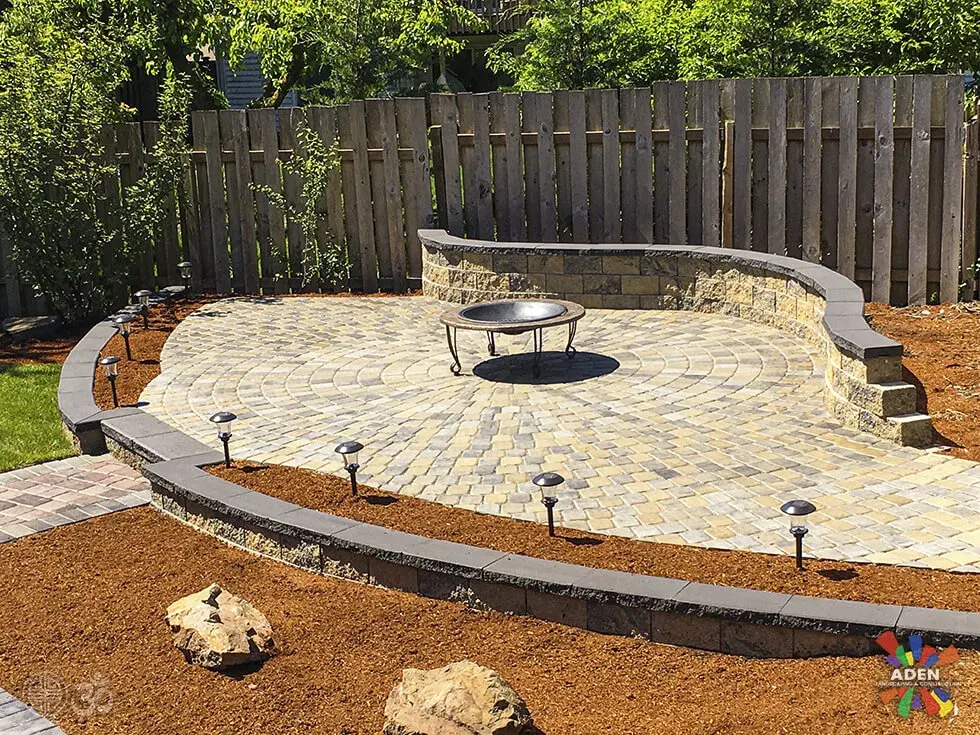
A circular paver terrace wrapped by a curved seat wall, lit at the edge and mulched beyond it. Every unit on that curve is cut on site; there is no kit for this shape.
 WalkwaysView full size
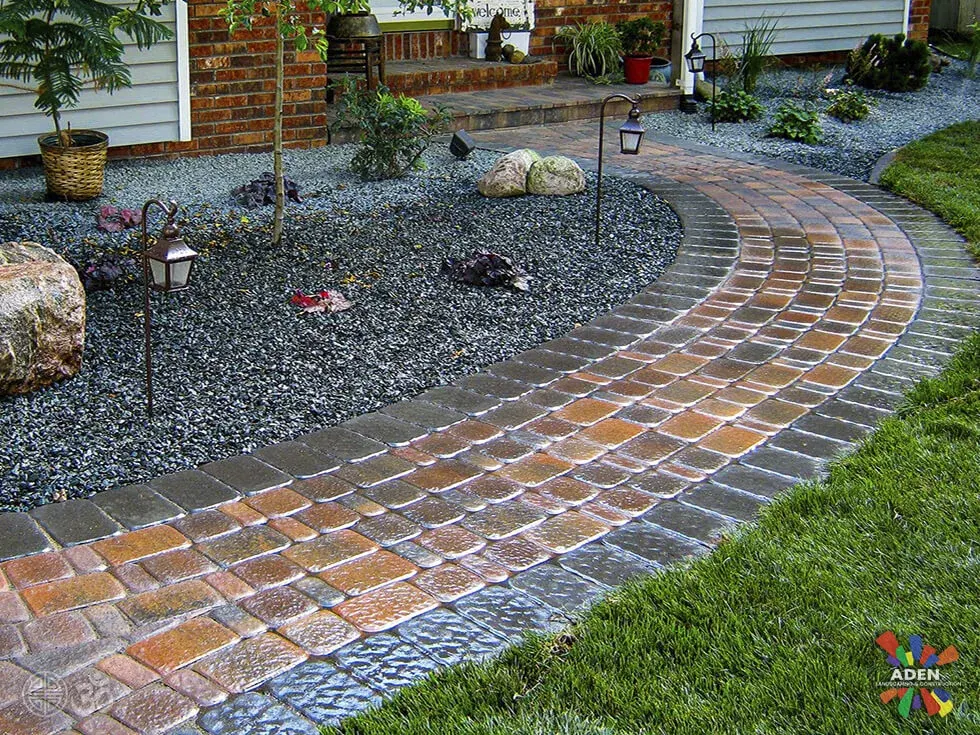
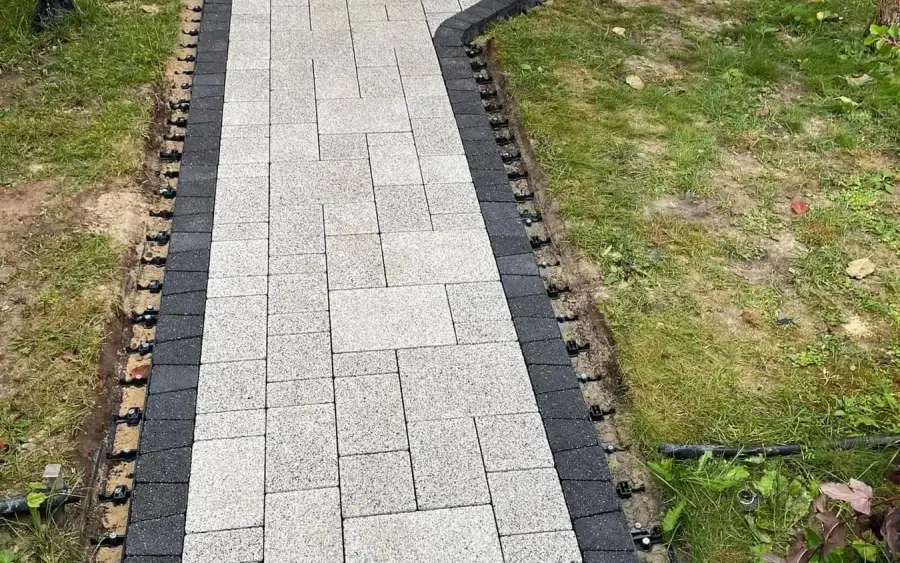
Brick pavers in a double soldier course, edged in cobble and lit low along one side. The curve is there because a straight line across this grade would have needed a step.
 Landscape LightingView full size
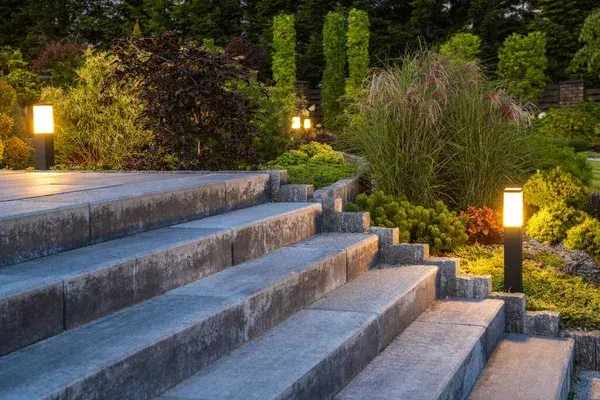
Bollards set beside the treads rather than in front of them, so the light lands on the step and not in your eyes on the way down. Aiming is most of this trade.
 Landscape LightingView full size
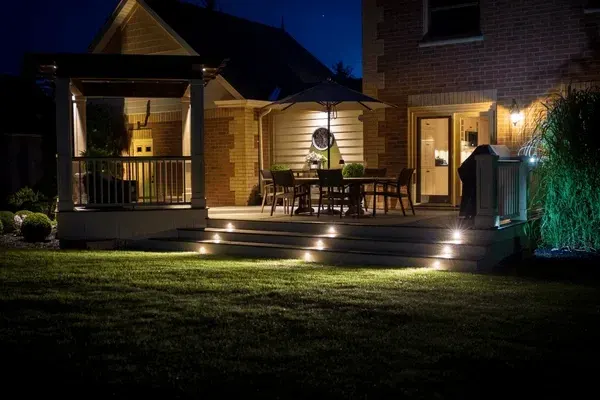
Recessed step lights, warm downlights under the roof, and nothing at all pointing at the lawn. A lit garden works because of what it leaves dark.
Where we build it
Before you call
Something not answered here? Call (425) 533-9734 and ask — we would rather talk it through than have you guess.
Comfortably, and the instinct that it will not be is the most common mistake people bring to a lighting design. Eyes adapt to darkness, so the amount of light needed to make a path safe or a tree striking after dark is far less than daytime intuition suggests. The usual failure is the opposite of dimness: too much output aimed badly, which flattens the garden, throws glare into your own windows and irritates neighbours. A good system uses modest fixtures placed precisely, with contrast doing the work. If anything, we spend more of the design conversation talking people down in brightness than up.
Properly specified ones will, and this is a climate that punishes the alternative quickly. The things that kill landscape lighting here are water tracking into a fixture body, corrosion at cable connections, and cheap gaskets that harden after two winters. We use fittings rated for continuous wet conditions and make connections with waterproof joints rather than the twist-and-tape approach that fails in year two. The other Seattle-specific factor is organic growth — leaf litter, moss and bark mulch creeping over ground-level fixtures — so we set fixtures slightly proud of the finished level and mention it as an annual five-minute job.
Very little, which surprises people who remember halogen systems. LED fixtures typically draw a few watts each, so a whole garden system running four or five hours a night on a timer costs a small fraction of what a single outdoor floodlight used to. That changes the design conversation — the constraint is not the running cost but the transformer capacity and the cable runs, both of which are set at install. It also makes zoning worth doing: separate circuits for the path lighting you want on every evening and the feature lighting you might only run when you are using the space.
Yes, and most of our lighting work is retrofit. The honest caveat is cost: the expensive part of a retrofit is not the fixtures, it is getting cable from the transformer to where the light needs to be. In planted beds that is straightforward. Under an existing patio, driveway or path it means either lifting a section or finding a longer route around, and that is where a retrofit budget goes. It is the single strongest argument for putting empty conduit in during any hardscape build even if lighting is years away — sleeves cost almost nothing while the ground is open.
We come out, look at the site properly, and put a fixed written price together. No deposit, and nothing changes once the price is agreed.
Usually done alongside
A patio you can actually use nine months of the year.
$20–$50 per square foot installed
A yard designed as one thing, not six jobs stitched together.
$8,000–$70,000 for a full design and installation
Get from the street to the door, and around the house, without mud.
$18–$45 per square foot installed
Turn an unusable bank into flat, usable ground.
$5–$45 per square foot of wall face
Free estimate
Three minutes on the form. We reply during office hours — Monday – Friday, 9:00 AM – 7:00 PM.
Or call (425) 533-9734
Thank you — we have your details. We reply during office hours, Monday – Friday, 9:00 AM – 7:00 PM. If it is urgent, call (425) 533-9734.