
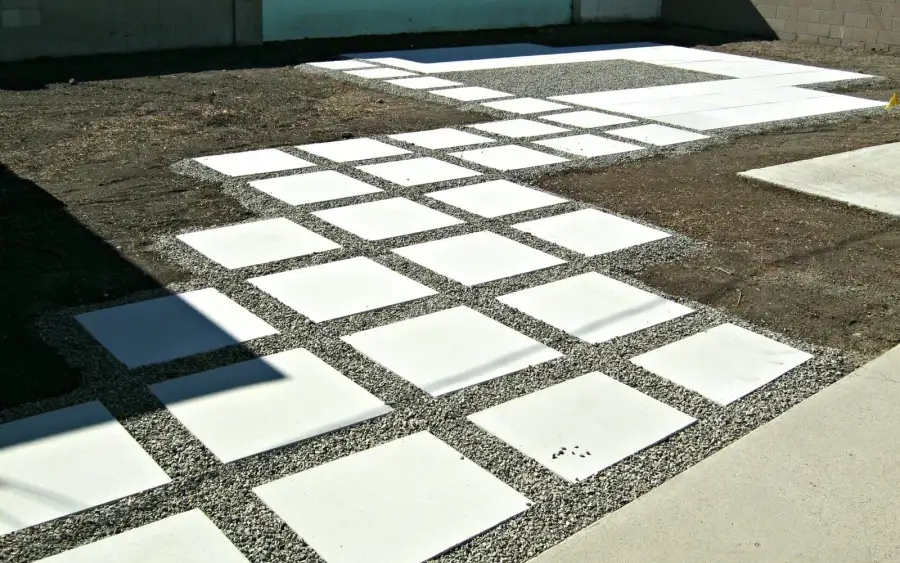
Paver Installation
Pavers set on a base built for this ground and this rainfall.
- Base excavation & compaction
- Concrete, clay & stone units
- Permeable systems
$18–$40 per square foot installed
No down payment. You pay when the project is finished.
Monday – Friday, 9:00 AM – 7:00 PM · Capitol Hill, Seattle
Service
Most paver surfaces that look finished are not. The units are concrete or stone and effectively permanent — what has gone wrong is almost always the sand in the joints, a settled area over a soft spot, or an edge restraint that has let the field creep outward. All three are repairable at a fraction of replacement, and all three get worse if left, because open joints let water into the bedding and a moving edge accelerates everything behind it. Sealing is the part customers ask about most and the part that matters least. It deepens colour, makes some stains easier to lift, and helps hold stabilised joint sand in place. It does not stop settlement, it does not fix drainage, and applied to a damp surface in this climate it traps moisture and goes cloudy. We will tell you which of these your patio actually needs.
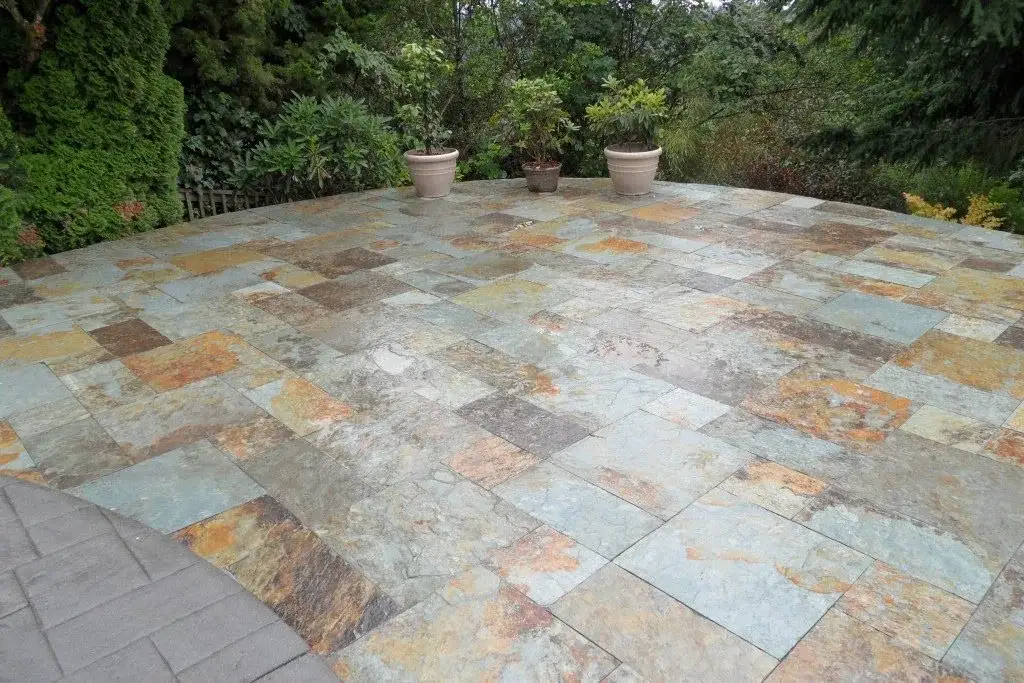
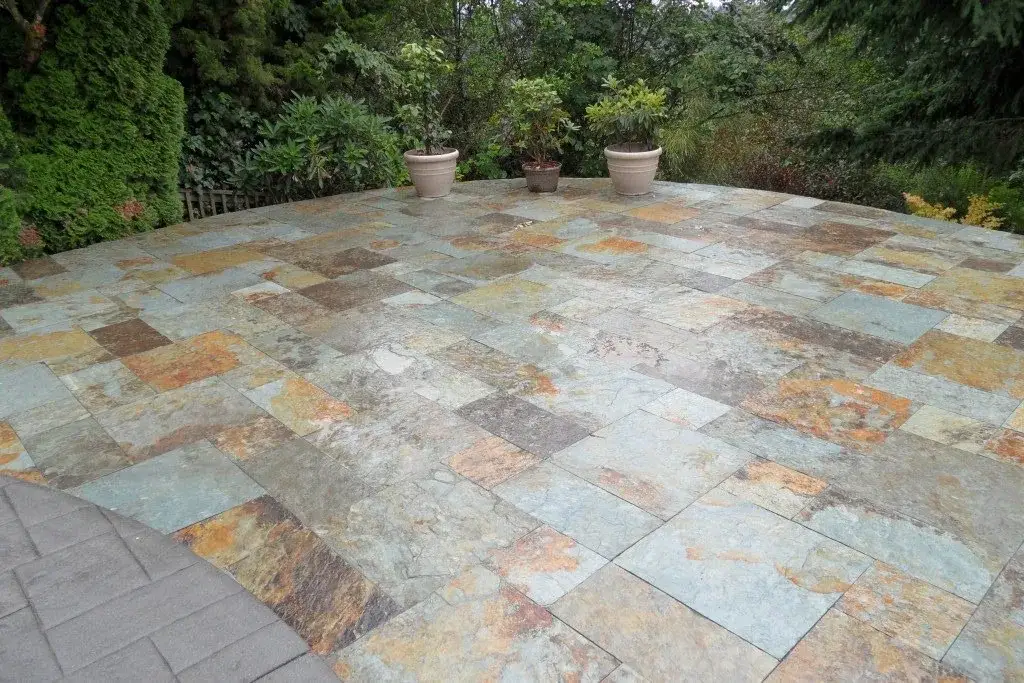
Large-format slate paver terrace with clean tight joints on a Magnolia garden
What is included
Your existing paving brought back without replacing it.
Units lifted, the bedding corrected or the base repaired underneath, and the same units reset to the surrounding level. This is the repair that makes the biggest visible difference and the one most often quoted as a full replacement by someone else.
Old depleted sand removed from the joints and replaced, either with standard jointing sand or a polymeric sand that sets firm. Open joints are the root cause of most paver problems, not a cosmetic issue.
Pressure washing at a pressure that cleans without stripping the paver face, plus targeted treatment for organic growth, oil and rust. Most surfaces look dramatically better after cleaning alone, which is worth knowing before committing to a seal.
The perimeter restraint is what stops the whole field spreading. Where it has failed or was never installed, replacing it is the difference between a repair that holds and one that reopens next year.
Penetrating or film-forming sealer applied to a genuinely dry surface in a suitable weather window. If those conditions do not exist we will reschedule, and if sealing is the wrong product for your paver we will say so.
Why people call us
How we build it
Seasonality. Repair work runs most of the year. Sealing is genuinely seasonal here and we will not pretend otherwise — it needs a dry surface and a dry window after application, which in practice means late spring through early autumn. A paver sealed in a damp week traps moisture under the film and goes cloudy white, and that is a far worse outcome than an unsealed patio. We would rather book you for June than take the work in November.
A settled patch is a symptom. We establish whether the cause is a soft spot in the base, water running where it should not, or a tree root, because resetting the units without fixing the cause buys two years.
Nothing can be properly assessed through moss and dirt, and cleaning is also what reveals the actual condition of the paver face and the joints. Some jobs stop here because cleaning turned out to be all that was needed.
Affected units lifted and kept, base or bedding corrected, units reset to level. Reusing the original pavers matters — a replacement unit never quite matches a surface that has weathered for ten years.
Edge restraint repaired or installed where the field has been free to spread. Done before re-sanding, because resetting an edge reopens joints.
Joints filled, compacted and topped up, then the surface swept clean. Polymeric sand is activated with water and needs its own dry window afterwards.
A dry surface, a dry forecast, and a paver that suits sealing. We would rather come back in a better week than apply a sealer that blushes, because the fix for a blushed seal is stripping it.
What it costs
The range is wide because the work varies enormously. A clean and re-sand on a sound patio sits at the bottom; lifting and re-levelling settled areas, repairing base and replacing edge restraint sits at the top. Sealing is typically quoted as a separate line so you can decline it without renegotiating the repair. Stripping a previous failed seal is additional and we price it only after testing a small area, because how hard it comes off varies by product.
That is a market range, not a quote. Your price is fixed in writing after we have seen the site, and it does not move once agreed.
No deposit is required to start. Payment comes after the work is finished — not before.
A fixed, accurate price is guaranteed before the job starts. We do not quote low and raise it mid-project.
A 0% interest payment plan is available for up to 6 months.
Hardscaping work carries a warranty. Vegetation is excluded.
Where we build it
We work across Seattle, the Eastside and the north end — see every area we cover.
Before you call
Something not answered here? Call (425) 331-9811 and ask — we would rather talk it through than have you guess.
Usually not, and anyone telling you it is essential is selling. Concrete and stone pavers are durable unsealed — plenty of twenty-year-old surfaces in this city have never seen a sealer and are fine. What sealing genuinely does is deepen the colour, make some stains easier to lift before they soak in, and help hold stabilised joint sand. What it does not do is prevent settlement, fix drainage, stop weeds in an unsanded joint, or extend the life of the paver itself. If your patio has a problem, sealing is not the fix for it. If your patio is sound and you want it to look richer, sealing is a reasonable cosmetic choice.
Moisture trapped under the sealer, nearly always. A film-forming sealer applied to a surface that was not fully dry, or applied before a wet spell, seals water into the paver and the bedding below. The water cannot escape through the film, and the result is the white blush you are looking at. It is the single most common sealing failure in this climate and it is the reason we will reschedule rather than seal in a marginal week. The remedy is stripping the sealer and starting again once the surface is genuinely dry, which is more work than the original application.
Yes, and this is most of what we do on existing surfaces. The units lift out, we correct whatever is underneath — bedding, base, or a drainage problem causing it — and the same pavers go back to the surrounding level. Reusing the original units is the point, because a new paver next to ten-year-old ones never matches however good the colour reference is. The one thing worth checking first is why it settled: if water is running under the patio from a downspout or a failed drain, the repair needs to include that or the dip comes back.
Jointing sand with a binder in it that sets firm when wetted, rather than staying loose. The advantages are real — it resists washing out in heavy rain, suppresses weed germination in the joint, and holds better on any slope. The trade-offs are that it needs careful installation and its own dry window to cure, it is harder to lift units out of later, and if it is installed badly or activated wrong you get a haze on the paver face that is tedious to remove. On a sloped surface or one that washes out repeatedly we recommend it. On a flat sheltered patio, standard sand topped up occasionally is perfectly adequate.
Probably not — it is most likely efflorescence, which is a normal property of concrete pavers and not a defect. Salts within the paver migrate to the surface as moisture moves through and leave a mineral deposit behind. It is most visible on new paving, it is more pronounced in a wet climate, and it typically weathers off over the first year or two without intervention. Sealing over active efflorescence locks it in, which is why we check for it before quoting a seal. There is a specific efflorescence cleaner if you do not want to wait, but the patient answer costs nothing.
We come out, look at the site properly, and put a fixed written price together. No deposit, and nothing changes once the price is agreed.
Usually done alongside
Pavers set on a base built for this ground and this rainfall.
$18–$40 per square foot installed
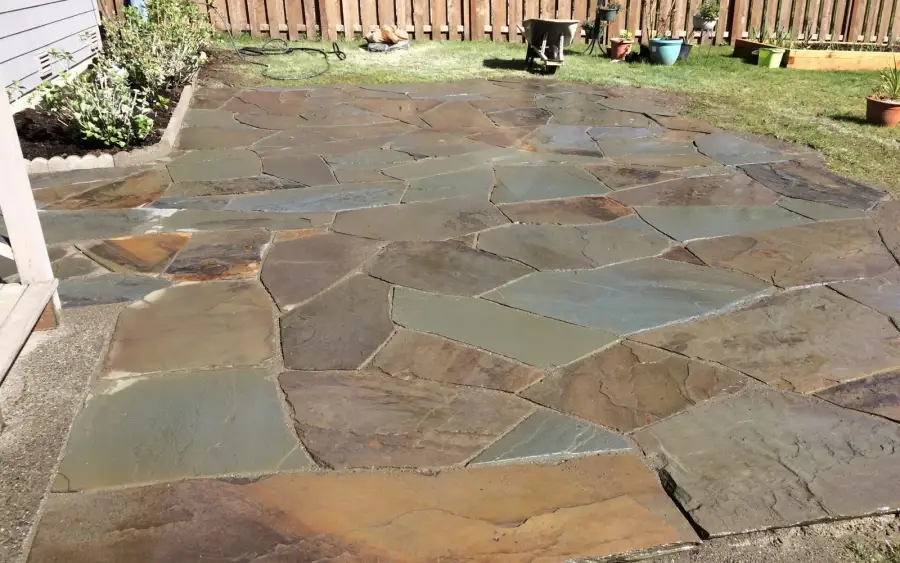
A patio you can actually use nine months of the year.
$20–$50 per square foot installed
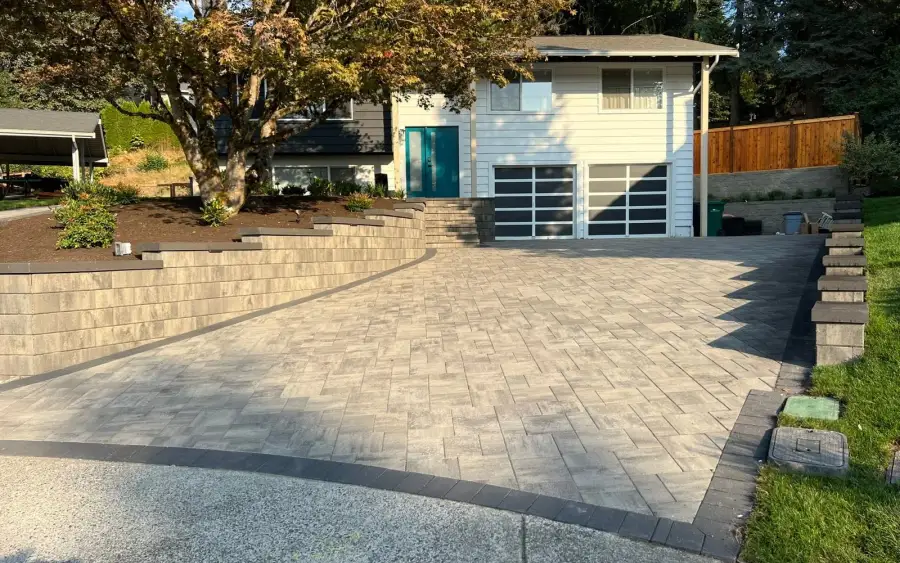
A driveway that carries the weight and sheds the water.
$12–$32 per square foot installed
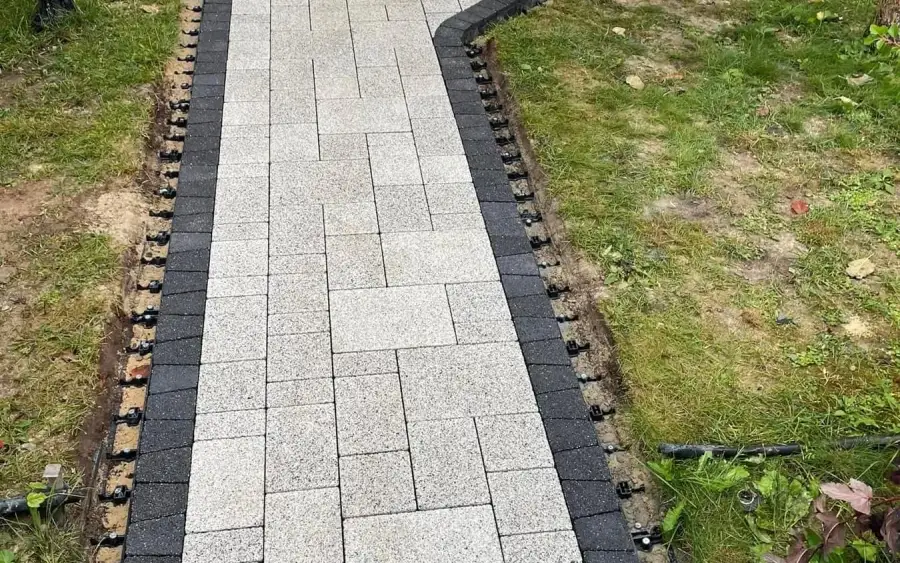
Get from the street to the door, and around the house, without mud.
$18–$45 per square foot installed
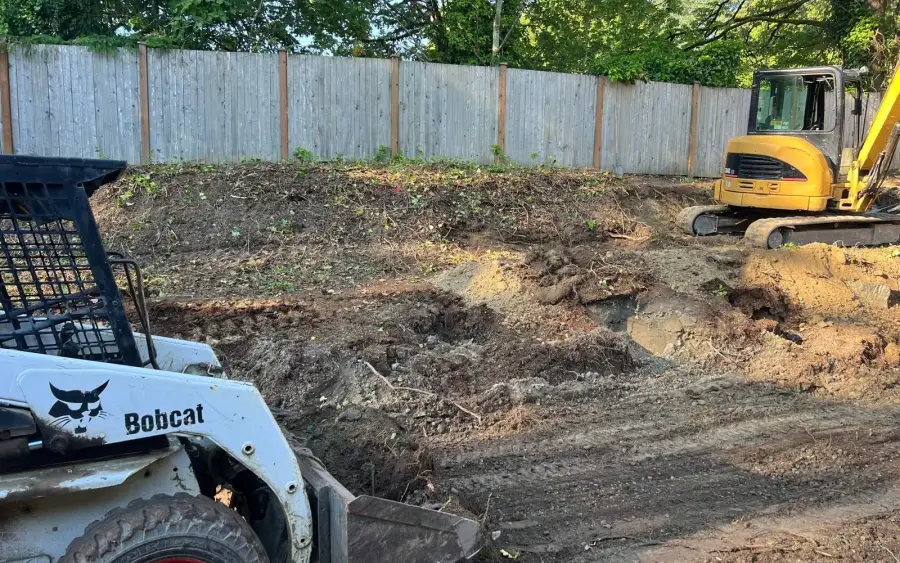
A yard that drains through a Seattle winter instead of holding it.
$10–$25 per linear foot
Free estimate
Three minutes on the form. We reply during office hours — Monday – Friday, 9:00 AM – 7:00 PM.
Or call (425) 331-9811
Thank you — we have your details. We reply during office hours, Monday – Friday, 9:00 AM – 7:00 PM. If it is urgent, call (425) 331-9811.