
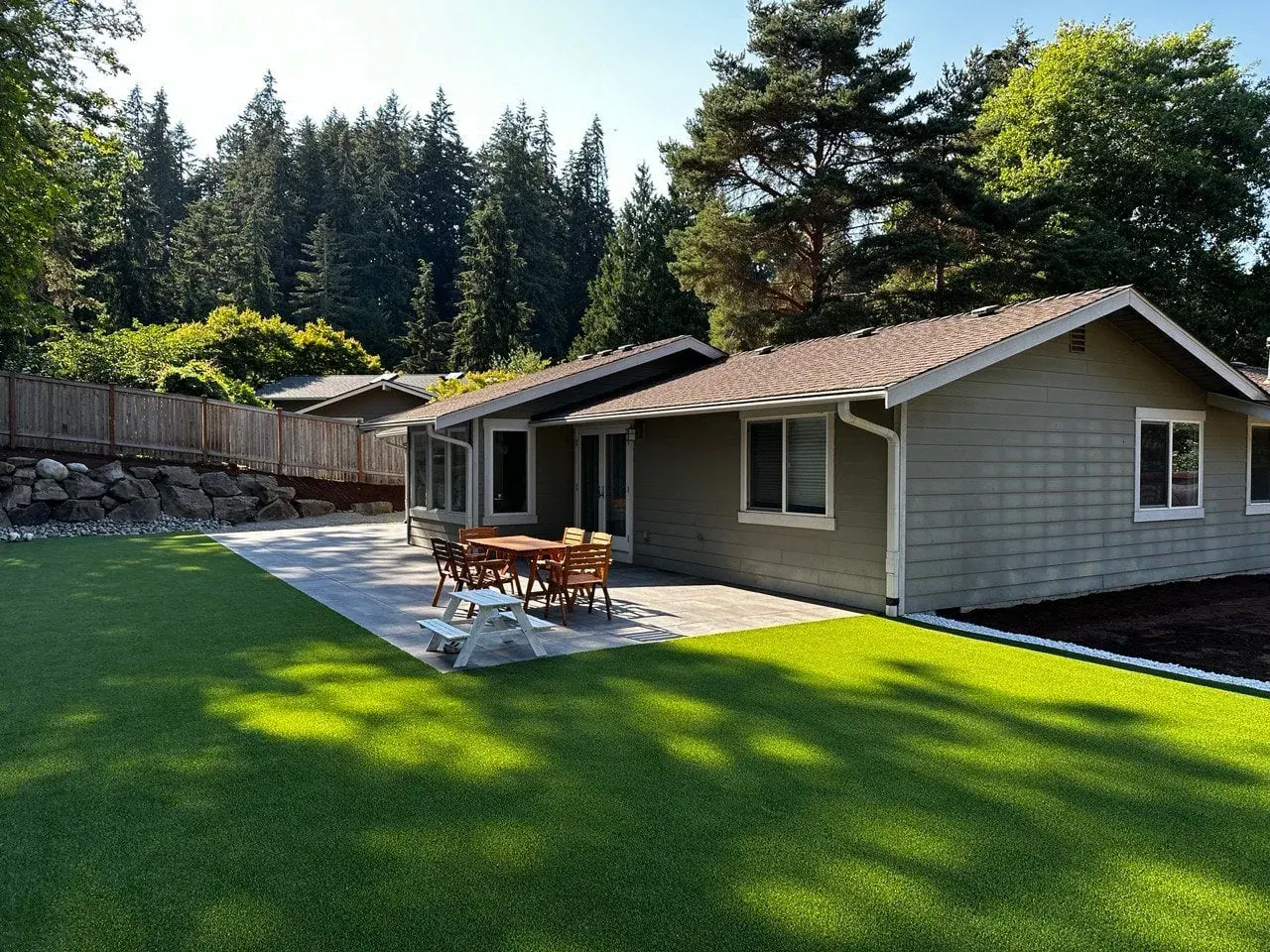
 Artificial TurfView full size
Whole-backyard turf and patio
The back of the house opened onto mud. Now it opens onto a patio and a lawn that drains.
No down payment. You pay when the project is finished.
Monday – Friday, 9:00 AM – 7:00 PM · Capitol Hill, Seattle
Service
Standing water in a Seattle garden is almost never a mystery. The city sits on glacial till — a dense hardpan under a foot or two of topsoil — and takes 38 inches of rain a year with most of it arriving between October and March. Water goes down until it hits the till, then stops. Once the topsoil above is saturated, there is nowhere left for the next inch of rain to go, so it sits on the surface. Nothing about that gets better with reseeding, aeration or topsoil. It gets better when the water is given a route out, which is what a properly cut and routed French drain does.
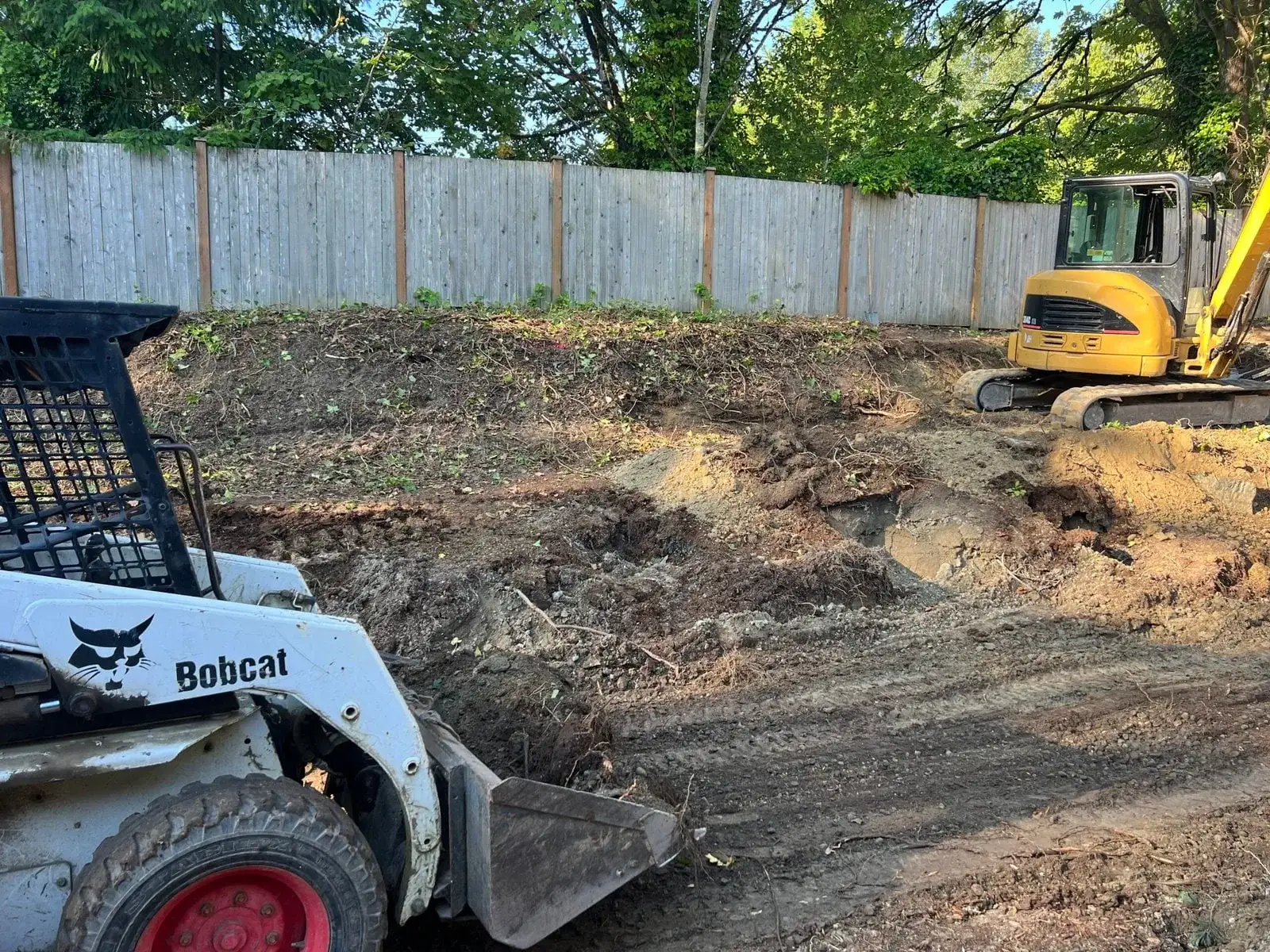
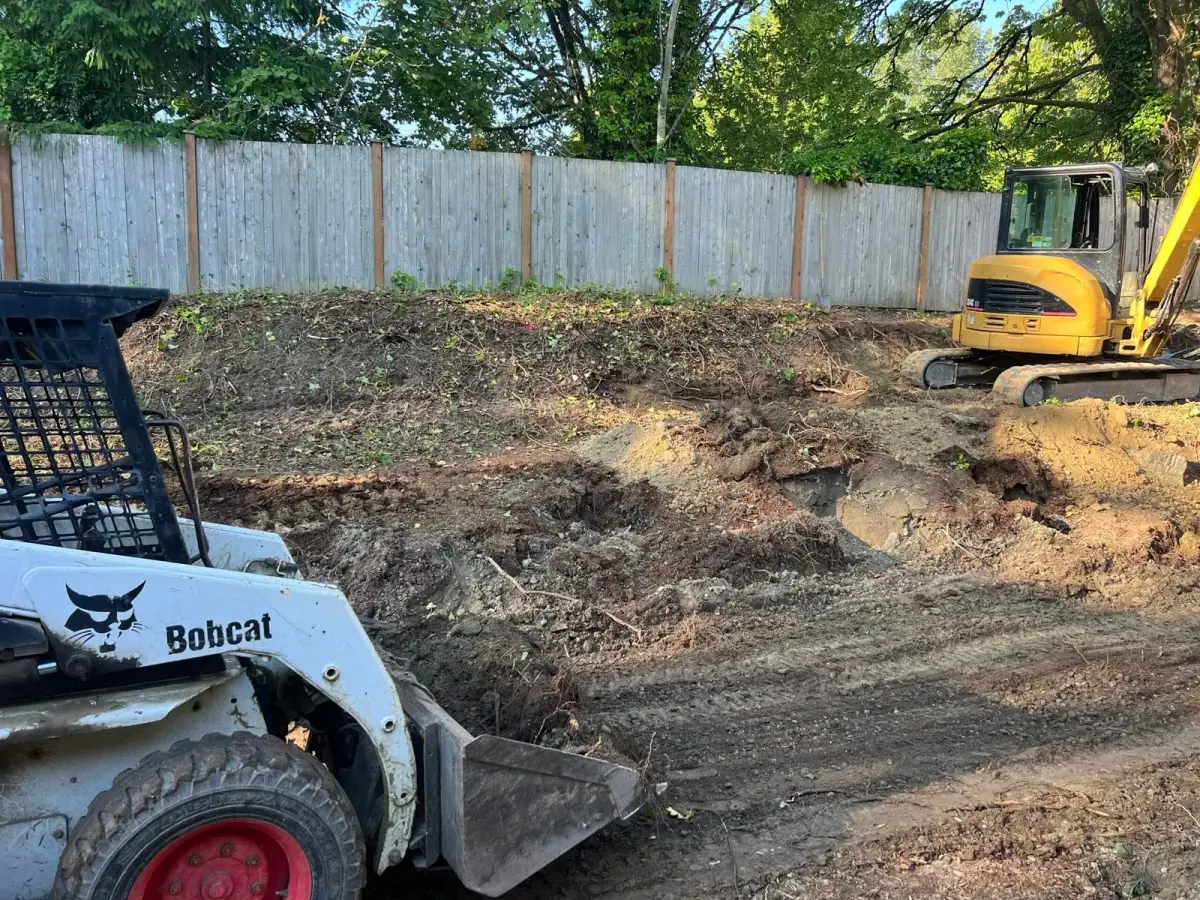
Excavator regrading a yard for drainage before landscape construction
What is included
A yard that drains through a Seattle winter instead of holding it.
A trench, perforated pipe, clean free-draining rock and a geotextile wrap, cut to a consistent fall and routed somewhere the water can actually go.
For the low point that collects everything. Sized and sited so they capture surface water before it reaches the house rather than after.
Sometimes the answer is not a pipe. Reshaping the ground so it falls away from the building solves a surprising number of problems more cheaply than a drain would.
Roof water discharged into the garden is a huge volume arriving in one spot. Tying downspouts into a proper run gets it away instead of letting it undermine a wall or a patio.
The drainage behind a wall is the wall. Where an existing wall has none, retrofitting it is often what stops it moving.
Why people call us
How we build it
Seasonality. Genuinely better in the wet months. Between October and March we can see exactly where water collects and which way it runs, which is information a dry August site visit simply does not give you.
Roof, surface runoff, a neighbouring property's grade, or groundwater sitting on the till. These need different answers and guessing wastes the whole job.
A drain needs somewhere legal and physical to go — daylight at a lower point, or an approved connection. A drain that terminates in a hole is a soakaway on ground that does not soak.
Continuous fall along the whole run. A trench that dips holds water and silts up, which is the most common reason a retrofit drain stops working.
Perforated pipe bedded in clean washed rock, wrapped in geotextile so the surrounding soil cannot migrate in and clog the void.
Turf, planting or hard surface put back so the finished job does not read as a scar across the garden.
What it costs
Most residential drainage projects land between $1,000 and $4,000. The same hundred-foot job gets quoted anywhere from $5,000 to $14,000 across this market, which is why we itemise what is actually being installed rather than giving you a number.
That is a market range, not a quote. Your price is fixed in writing after we have seen the site, and it does not move once agreed.
No deposit is required to start. Payment comes after the work is finished — not before.
A fixed, accurate price is guaranteed before the job starts. We do not quote low and raise it mid-project.
A 0% interest payment plan is available for up to 6 months.
Hardscaping work carries a warranty. Vegetation is excluded.
Drainage we have built
Artificial TurfView full sizeThe back of the house opened onto mud. Now it opens onto a patio and a lawn that drains.
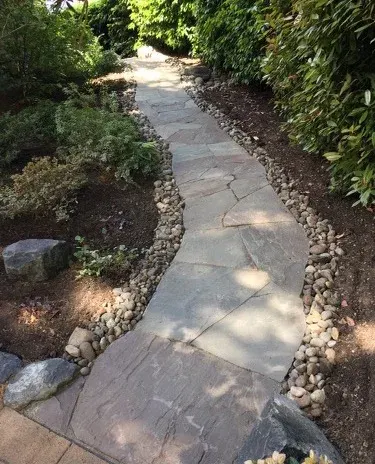 WalkwaysView full size
A shaded side route in flagstone, edged both sides in river rock so the winter runoff has somewhere to go instead of across the path.
 Driveway PavingView full size
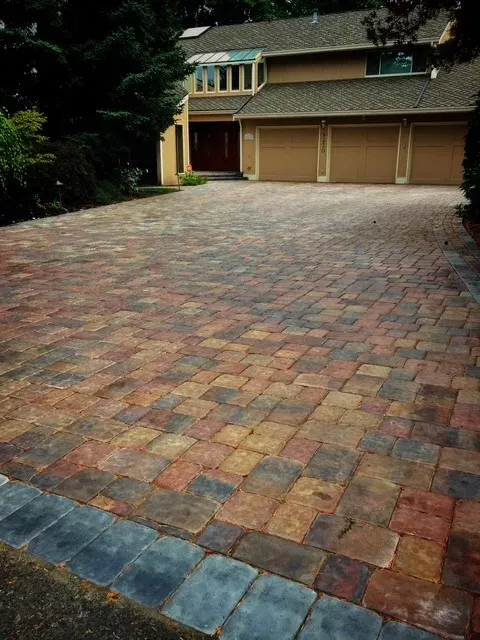
A full-width driveway in tumbled pavers, graded so the water runs off it rather than down to the garage door.
 HardscapingView full size
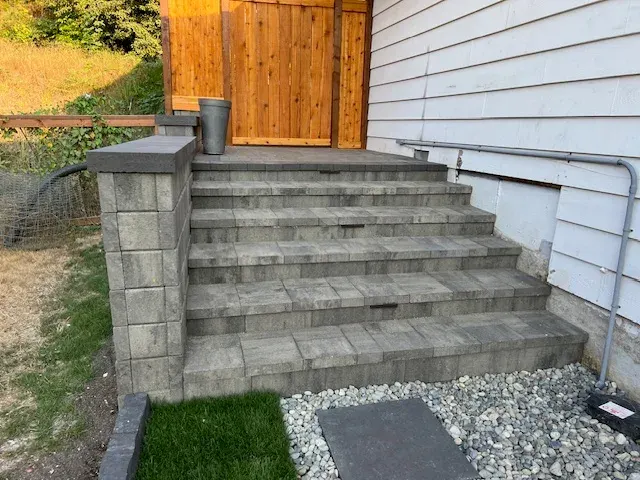
Wide block steps up the side of the house to a new gate, with a clean rock strip alongside to take the roof water away from the foundation.
 Retaining WallsView full size
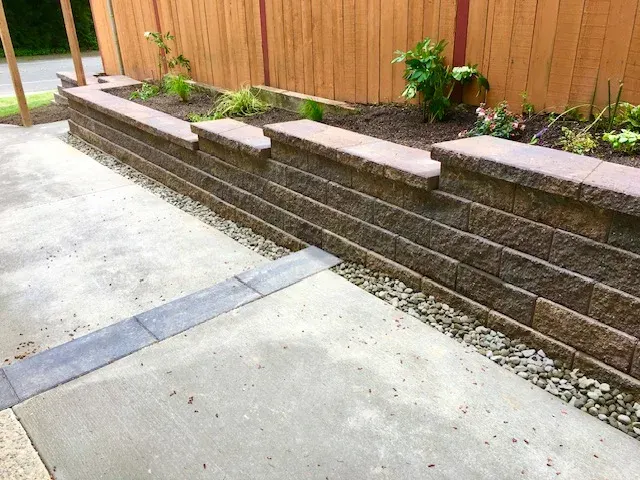
The rock strip between the wall and the slab is the part that matters: it takes the water down to daylight instead of leaving it standing behind the blocks.
 Retaining WallsView full size
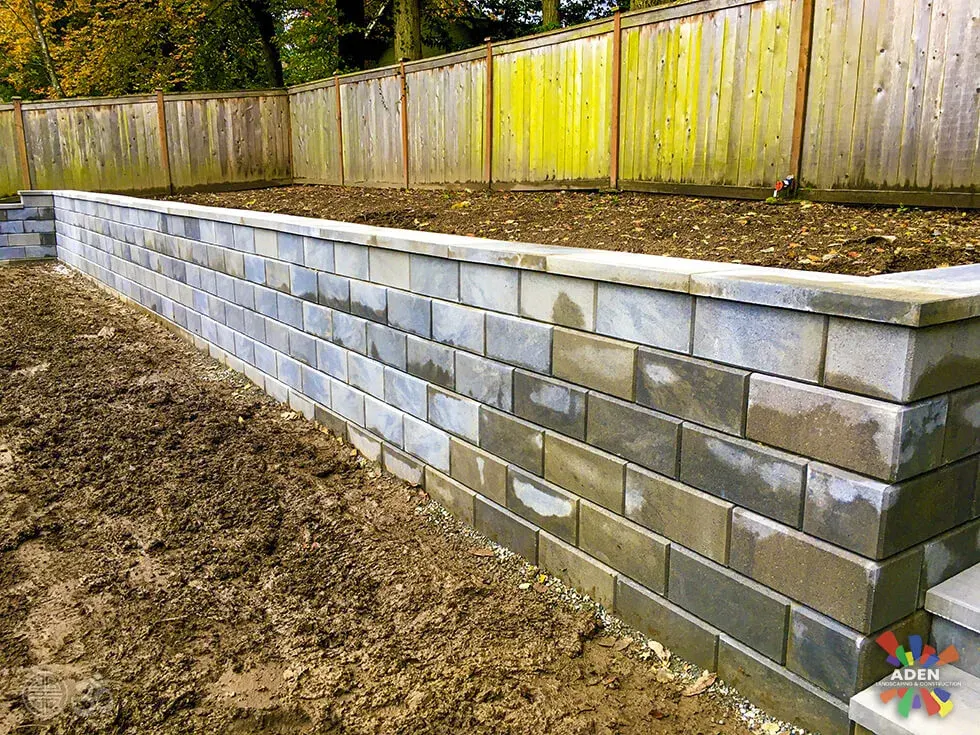
A wall run the whole length of a fence line to win back a flat strip of garden. Ballard lots are narrow, so the width this recovers is width the garden genuinely did not have.
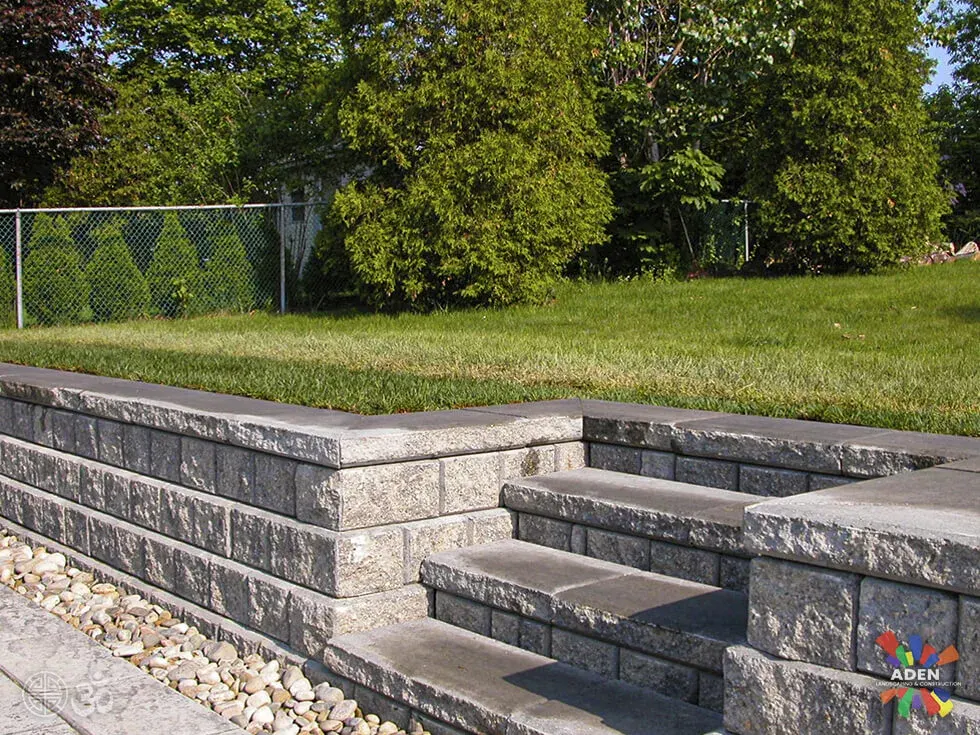 Retaining WallsView full size
The white rock along the toe is the part that decides whether this wall is still straight in ten years. Water gets a route out rather than somewhere to push.
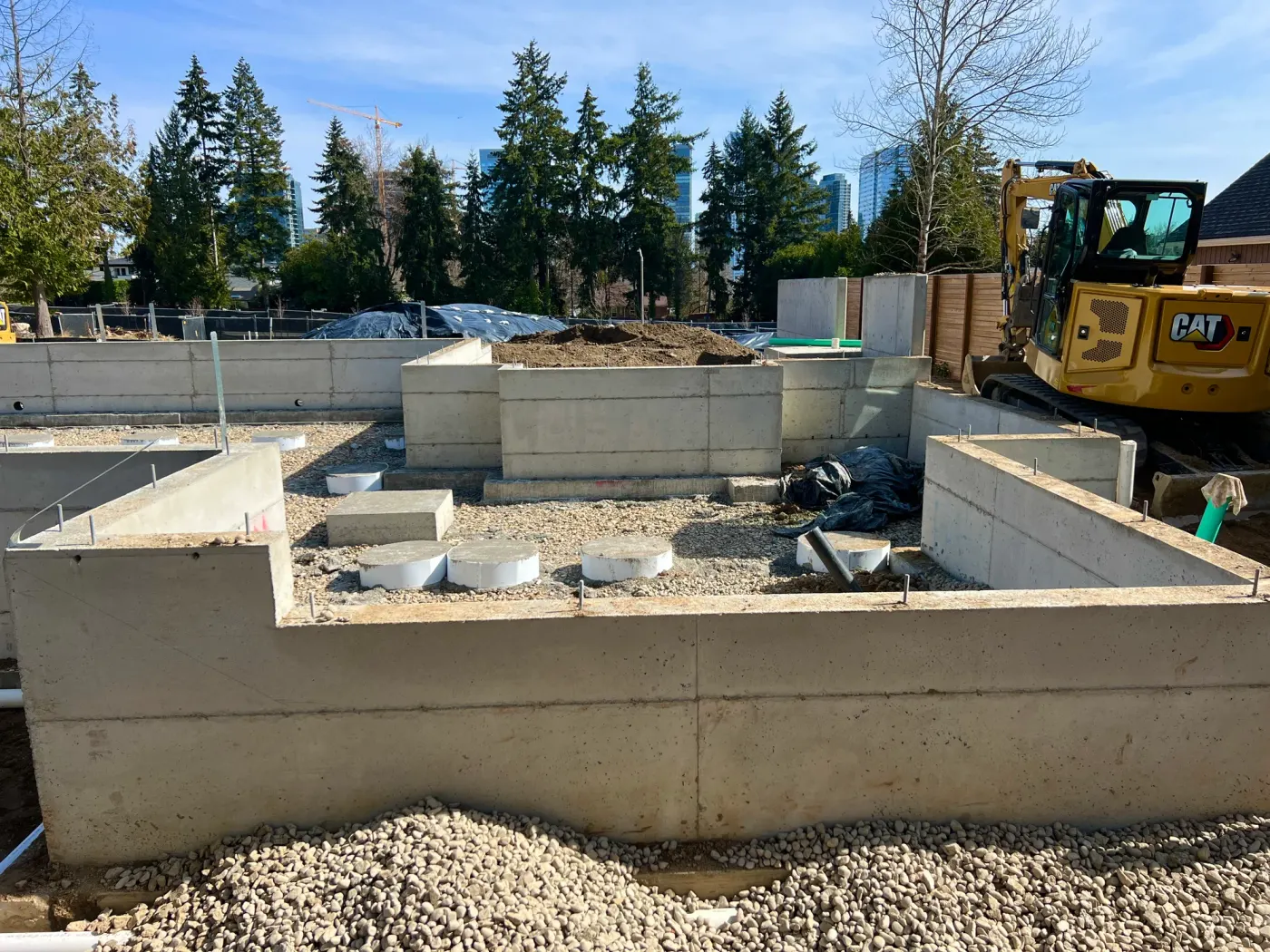 HardscapingView full size
Machine work around a foundation on a tight Bellevue lot: dig to level, keep the cut clean at the footings, and get the drainage in before anything is backfilled over it.
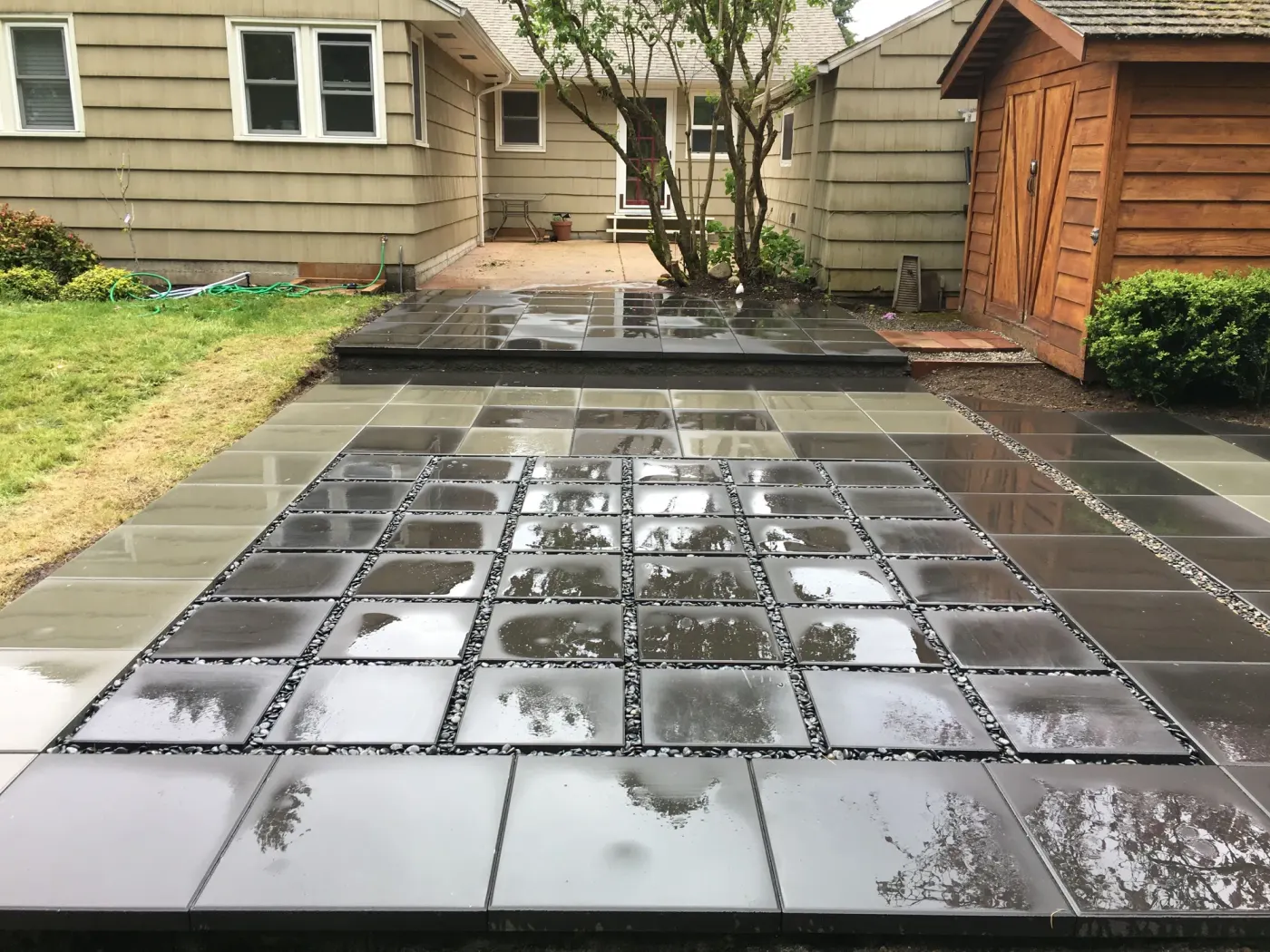 Paver PatioView full size
Large charcoal units set with open joints for grass, so the surface drains through itself rather than off itself. It photographs best wet, which in Seattle is most of the year.
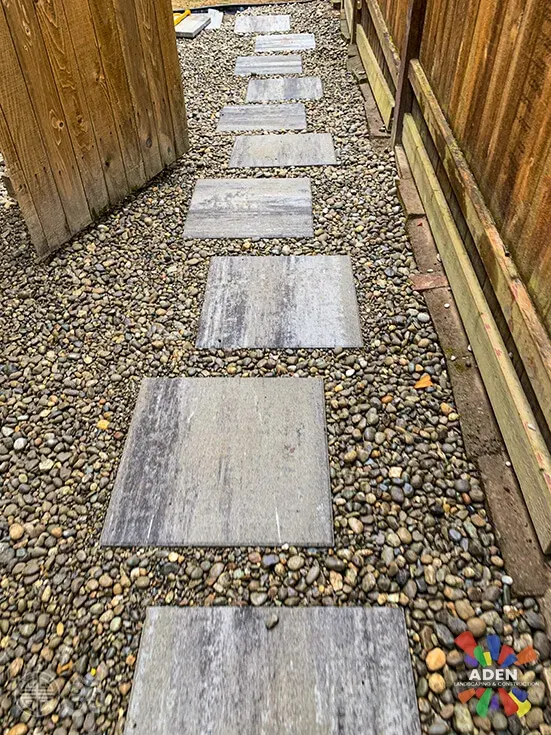 WalkwaysView full size
A side return too narrow for a full path. Large slabs floated in washed rock give a route through and let the ground either side carry on taking water.
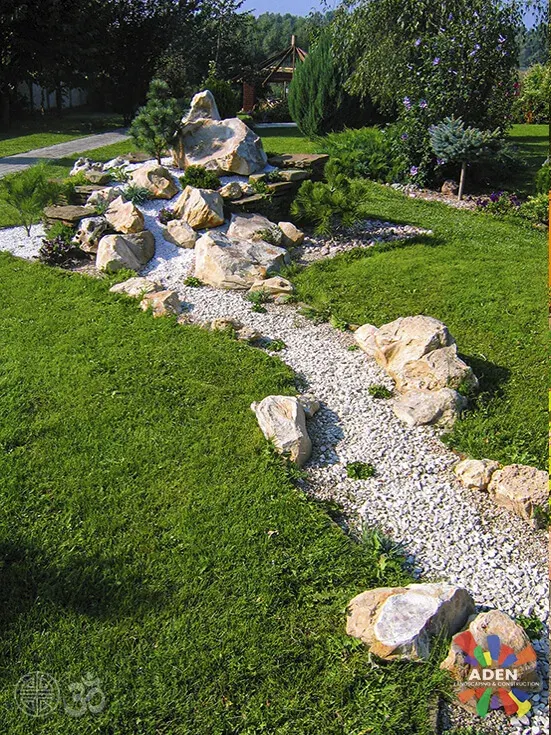 StoneworkView full size
A dry creek that is a drainage run first and a feature second. It moves roof and slope water across the garden without a pipe and without leaving a wet patch behind.
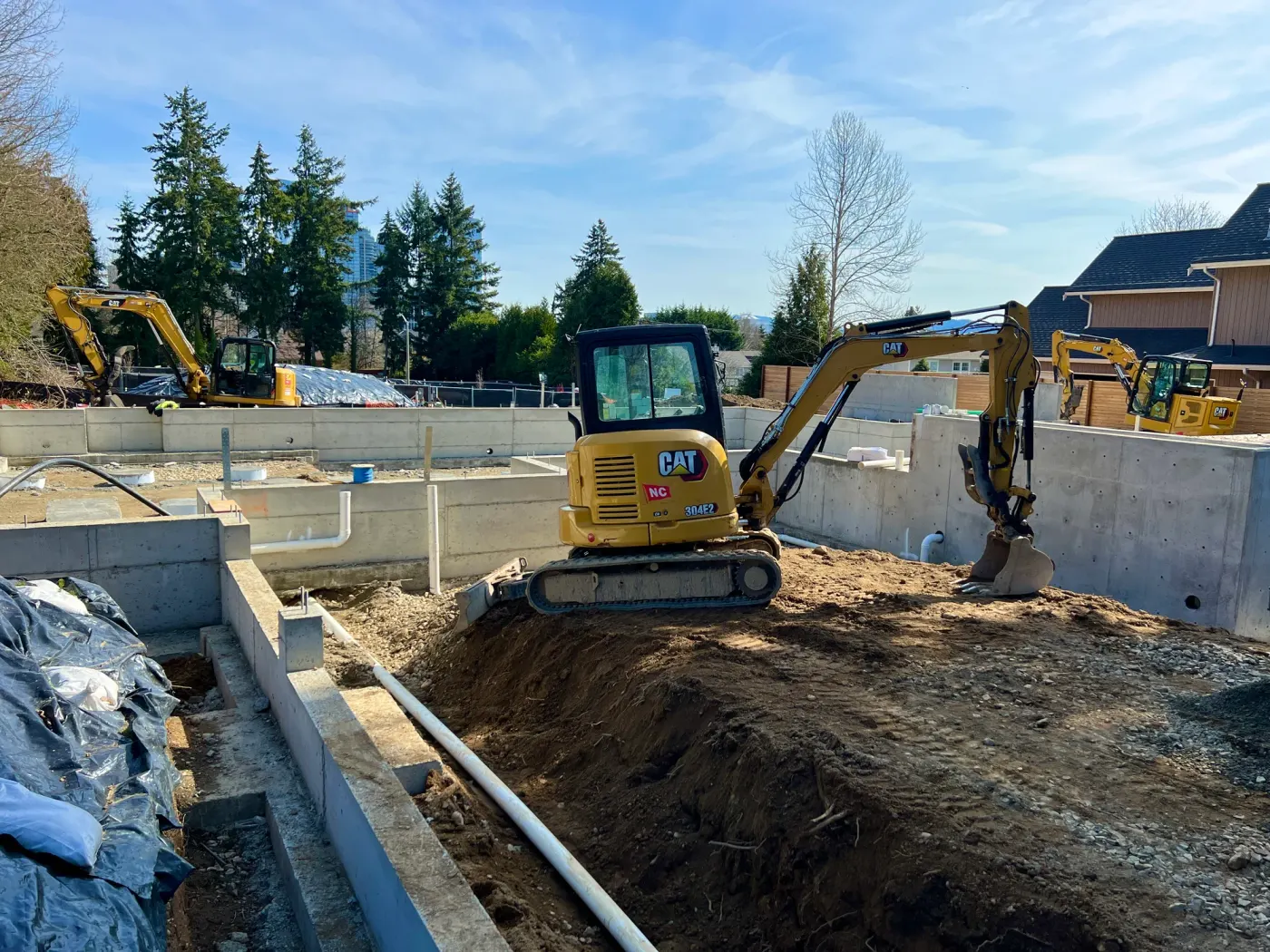 HardscapingView full size
The part of a hardscape budget that buys nothing you will ever see: excavation, levels, trenching and drainage. Every machine in this photograph is ours; the foundation they are working around is not.
In their words
Real Google reviews, unedited. We publish the ones that name the work rather than a generic five stars.
Egle Garcia
April 2014
We needed a solution with the sliding soil in our backyard (Seattle location). Eric & Alex suggested building a retaining wall and we are very satisfied with the solution and the results.
Where we build it
Before you call
Something not answered here? Call (425) 533-9734 and ask — we would rather talk it through than have you guess.
A French drain is a trench cut to a consistent fall, containing a perforated pipe surrounded by clean free-draining rock and wrapped in geotextile, which collects water from the surrounding soil and carries it somewhere else. You need one when water has no route out — standing water that persists for days after rain, a lawn that stays spongy all winter, or water collecting against the house. You do not need one if the problem is a single low spot that regrading would fix, or if the issue is roof water that a downspout tie-in would solve for a fraction of the cost. We will tell you when the cheaper answer is the right one.
This is the question that separates a drain that works from one that fails in two years, and it is the first thing we establish. The good outcome is daylight — a discharge point lower than the drain where water can run out freely, which on a sloped Seattle lot is often achievable. Otherwise it is a connection to an approved drainage system. What does not work here is a soakaway pit: the whole reason the garden floods is that the ground will not absorb water, so digging a hole and filling it with rock just relocates the puddle underground. Anyone proposing one on till has not thought it through.
Often it is a large part of the answer, but it depends where the water is entering. Exterior drainage that intercepts surface and shallow groundwater before it reaches the foundation, combined with regrading so the ground falls away from the building and downspouts discharging well clear of it, resolves a lot of crawlspace water. What exterior work will not fix is water coming through a failed foundation or a hydrostatic problem below the drain line — that is a different trade and we will say so rather than sell you a drain that does not address it.
A properly built one — clean rock, geotextile wrap, consistent fall, real discharge point — should run for decades with essentially no attention. The failures we get called to fix are nearly all construction faults rather than age: no geotextile, so soil migrated into the rock and silted the void; an inconsistent fall with dips that hold water; or pipe surrounded by fine material instead of washed rock. If there are catch basins in the system they want clearing of leaf litter once a year, which takes minutes.
It should be, and it is cheaper that way. The machine is already on site, the ground is already open, and the drainage can be designed into the levels rather than retrofitted around them. Doing it later means excavating through work that was just finished. On most of our hardscape projects the drainage is not a separate line item people opt into — it is part of building something that will still be flat and standing in ten years.
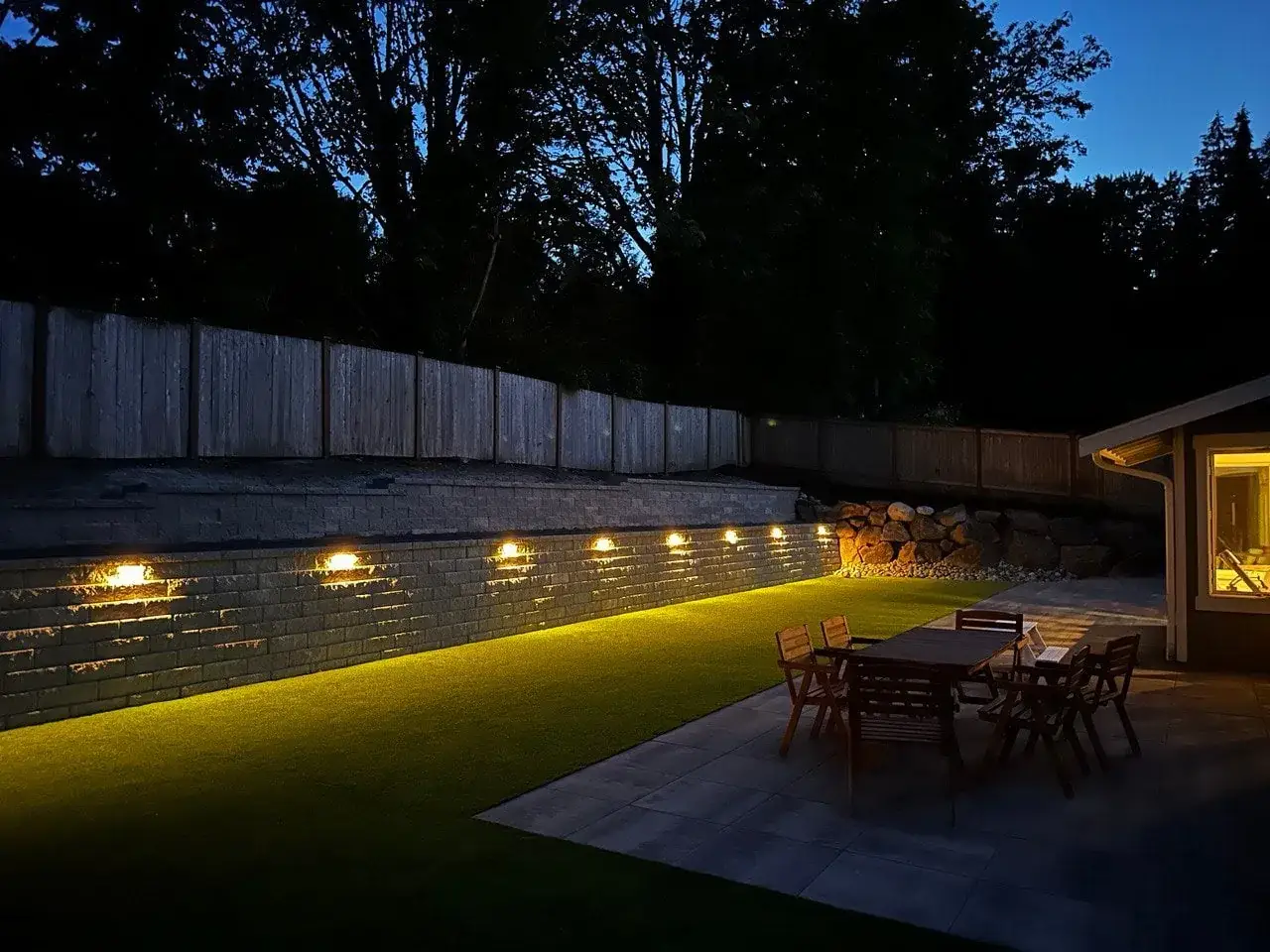
We come out, look at the site properly, and put a fixed written price together. No deposit, and nothing changes once the price is agreed.
Usually done alongside
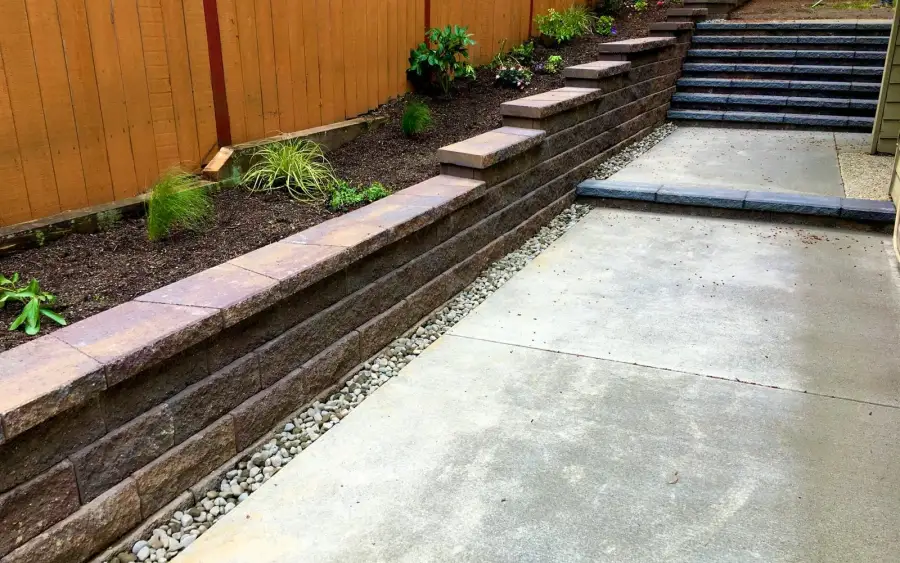
Turn an unusable bank into flat, usable ground.
$5–$45 per square foot of wall face
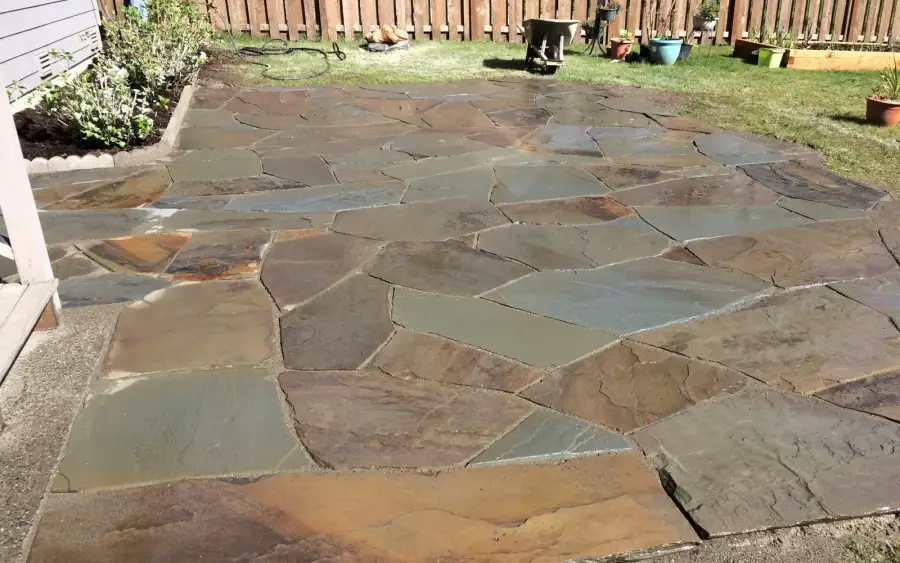
A patio you can actually use nine months of the year.
$20–$50 per square foot installed
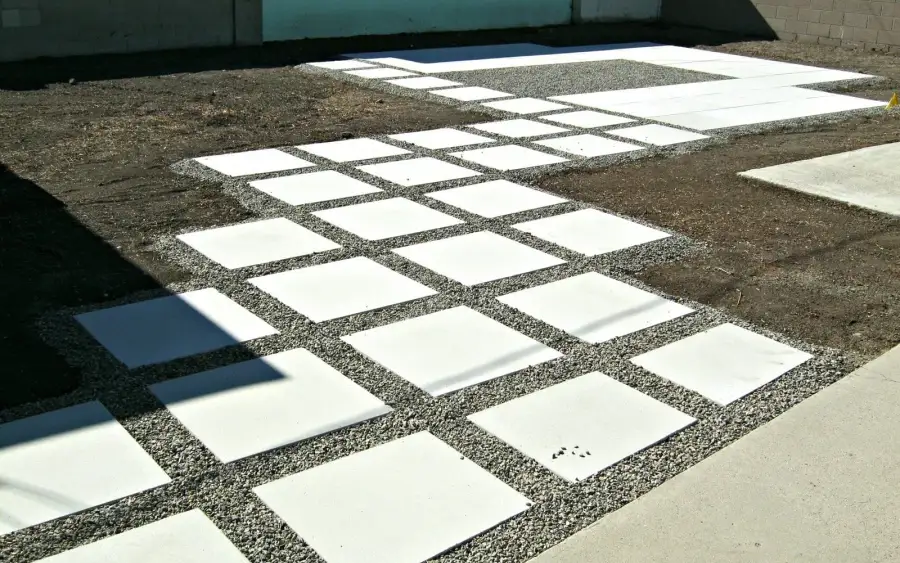
Pavers set on a base built for this ground and this rainfall.
$18–$40 per square foot installed
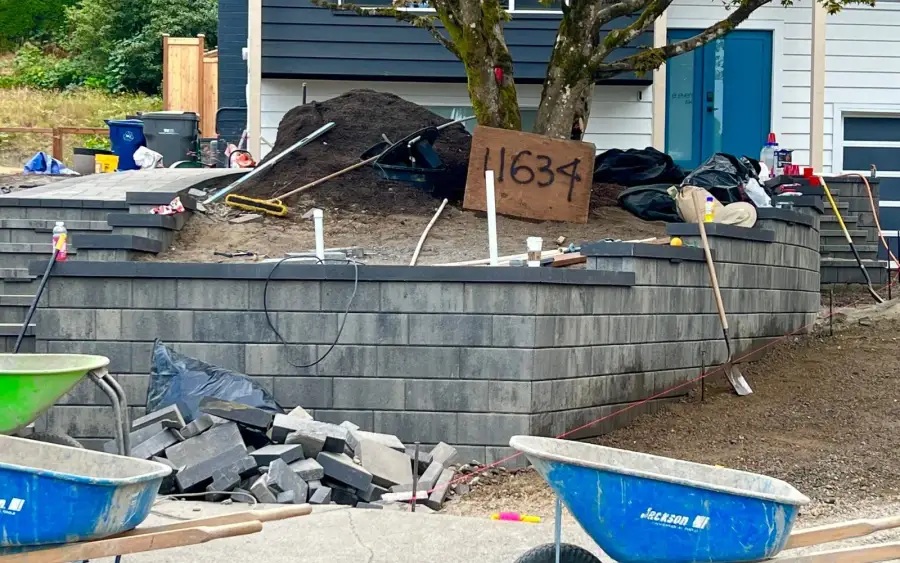
Ground that is ready to build on, properly.
$1,800–$15,000 depending on volume and access
Free estimate
Three minutes on the form. We reply during office hours — Monday – Friday, 9:00 AM – 7:00 PM.
Or call (425) 533-9734
Thank you — we have your details. We reply during office hours, Monday – Friday, 9:00 AM – 7:00 PM. If it is urgent, call (425) 533-9734.