
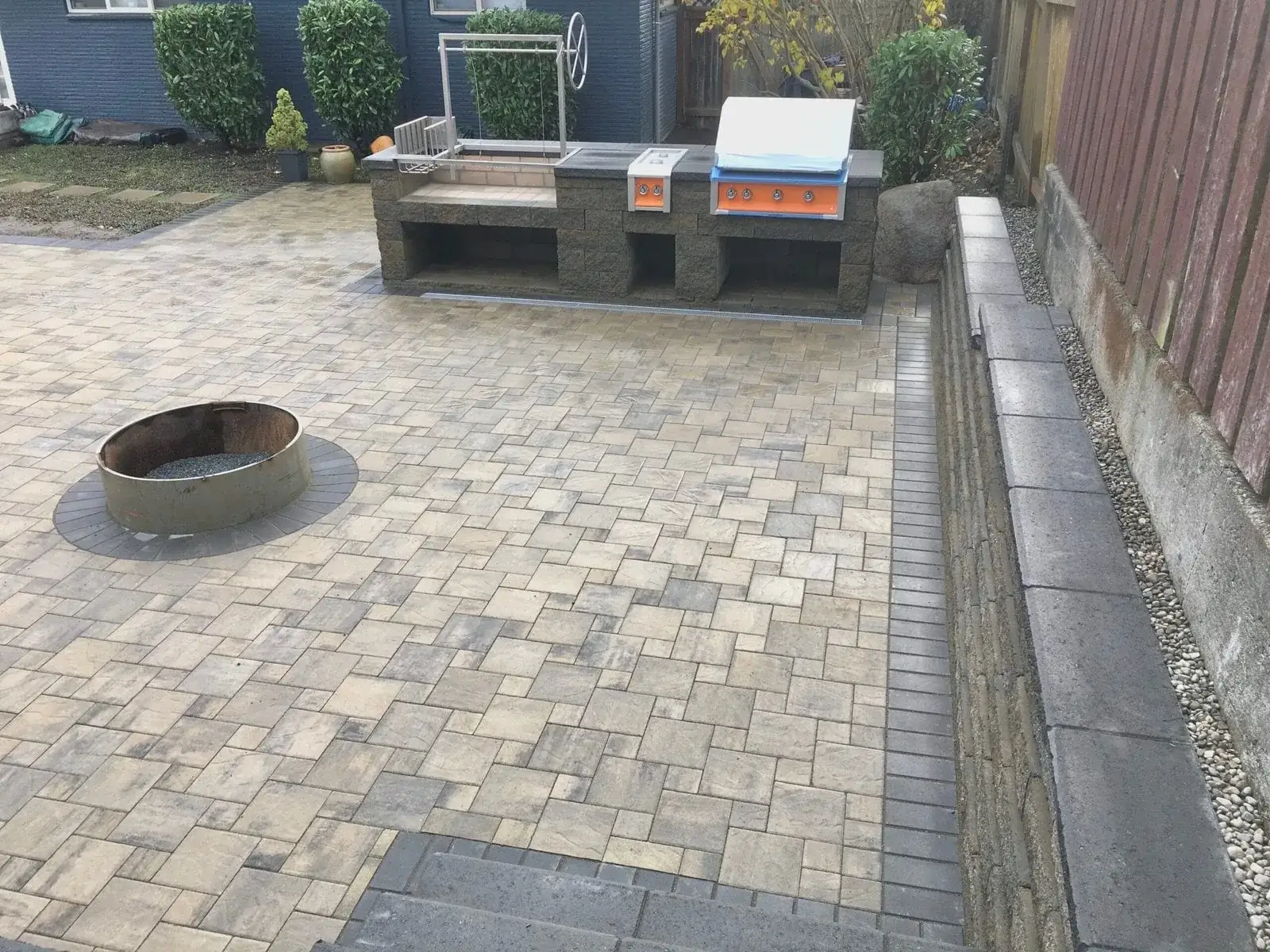
 Paver PatioView full size
Blended tan and grey field
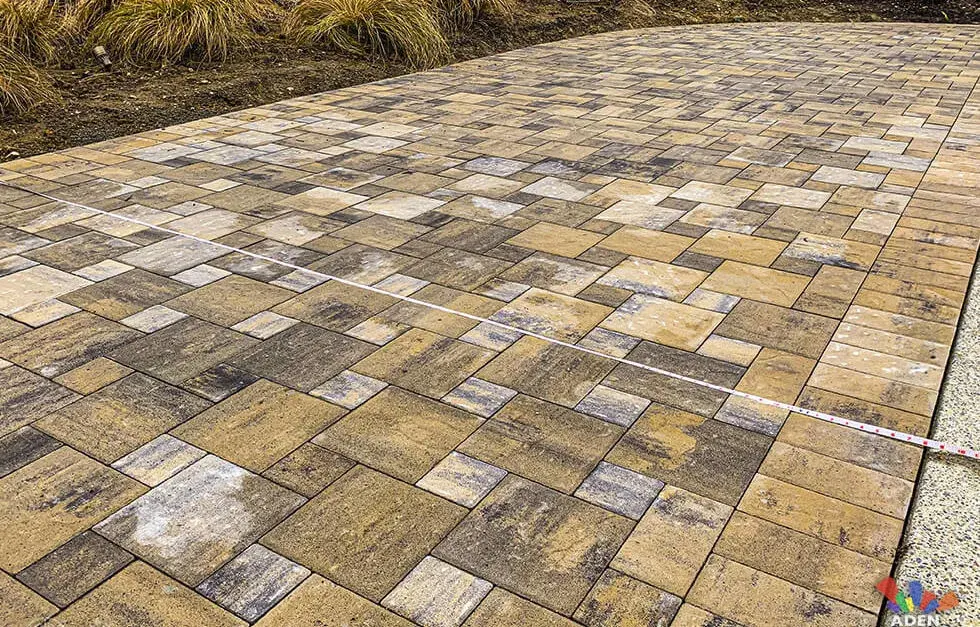
Three sizes and two colours laid in a random ashlar pattern. Blending from several pallets as you work is what stops a batch difference turning up later as a stripe across the patio.
No down payment. You pay when the project is finished.
Monday – Friday, 9:00 AM – 7:00 PM · Capitol Hill, Seattle
Paver Installation · Issaquah
Issaquah properties tend to come with mature trees, and paving near a big conifer is a job with two ways to fail. Cut through the root plate to make room for a proper base and you damage a tree that took sixty years to grow; lay a shallow base to avoid the roots and you get a surface that lifts within a few seasons as those roots thicken. Neither compromise is necessary if the constraint is identified before the design is fixed, because the answers — routing the surface around the critical zone, building up rather than digging down, choosing a system that tolerates movement — are all design decisions rather than construction ones. They are also nearly impossible to introduce once a layout has been agreed and priced.
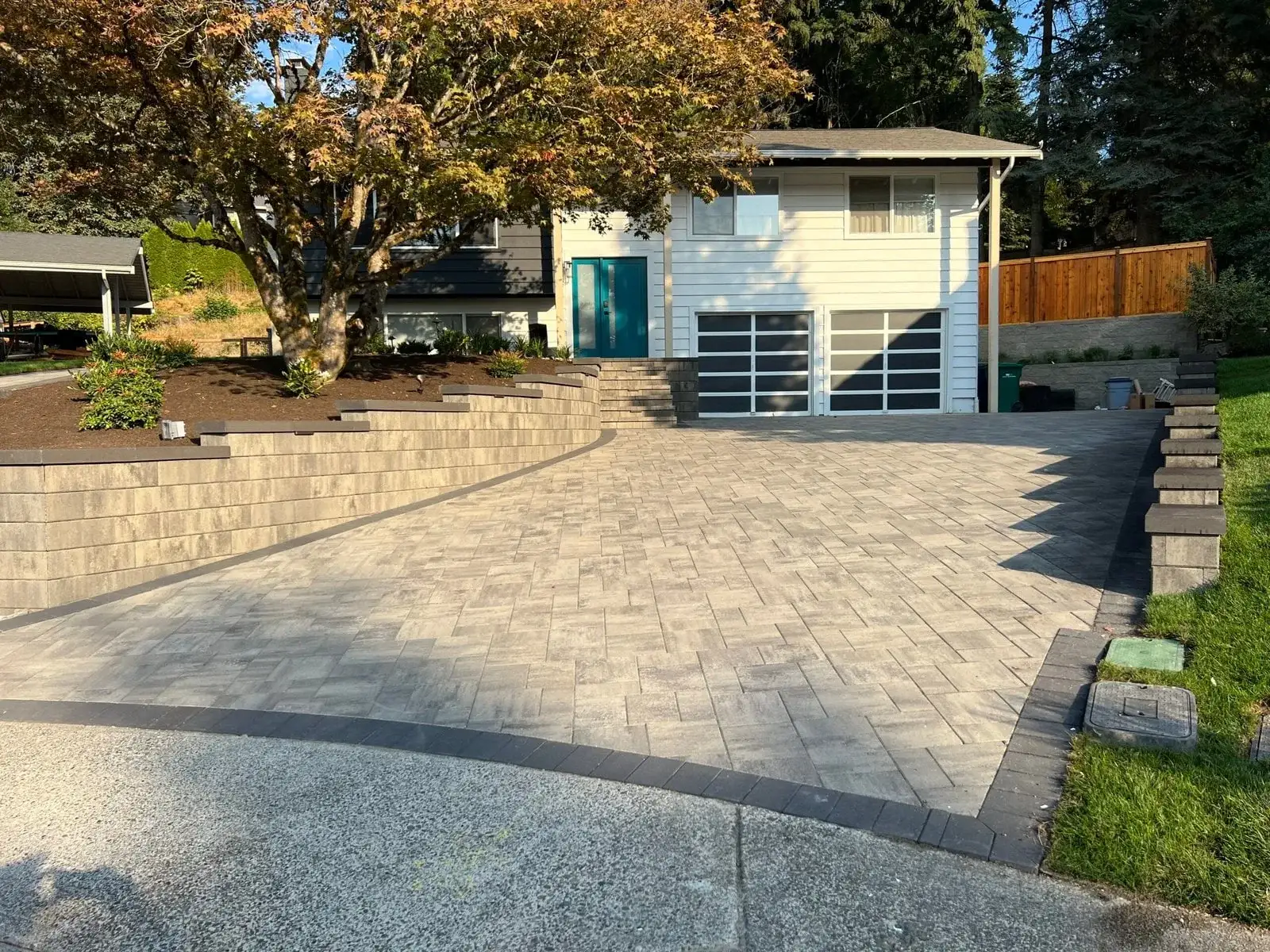
Wide paver driveway and turning apron in front of a garage on a sloped Issaquah lot
What we get called about
Issaquah is the retaining wall market on this side of the water. The city sits in a valley surrounded by mountains, and properties built into those slopes need grade held before anything else can happen. The second local factor is water arriving from above: on a hillside lot, a significant share of what you are managing did not fall on your property at all, it came down off the mountain, and drainage has to be sized for that rather than for your roof area. Third, HOA coverage here is among the densest in the region.
Worth knowing in Issaquah
Before you settle a layout, mark the trunk and pace out a rough circle from it. Most of the roots that matter are shallow and spread far wider than the canopy suggests. Knowing where that zone falls lets you shape the paving around it, which is free at design stage and impossible later.
The roots that keep a large conifer alive are not the deep ones people picture. The majority sit within the top couple of feet of soil and extend well beyond the spread of the branches, which means a patio that looks a comfortable distance from the trunk can be sitting directly on the root system.
Excavating a conventional base through that zone severs roots and compacts what remains, and the tree responds slowly enough that the connection is easy to miss — decline shows up seasons later, by which point the patio is the last thing anyone blames. Compaction is as damaging as cutting, because roots need air as well as water and compacted ground offers neither.
The workable approaches all avoid digging. Building the surface up over the root zone on a shallower profile, using a system that flexes rather than one that has to stay rigid, or simply shaping the layout so the paving passes around the critical area instead of through it. Which one applies depends on the tree, the species and how much level you have to play with — and all three are decided at layout stage, not on site.
The method
The sequence does not change between neighbourhoods — what changes is the ground it is applied to. Full detail on the paver installation service page.
What the subgrade is, how wet it gets, and where water currently goes. On a till lot those three answers change the build more than the choice of paver does.
Every surface gets a fall, including the ones that look flat. Where water leaves is decided before a shovel moves, not adjusted at the end once the levels no longer allow it.
Down to competent ground, then compacted before any rock goes in. A good base built on an uncompacted subgrade just moves the failure one layer down.
Layer by layer to the specified depth, with a plate or roller sized for the job rather than whatever is on the van. This stage decides whether the surface is still flat in ten years.
Bedding course screeded to depth, units laid off a string line, perimeter saw-cut, and edge restraint fixed before any joint is filled.
Polymeric sand swept in, the field compacted to seat the units, then the whole area washed off — the last step is the one a rushed crew skips.
What it costs in Issaquah
Issaquah paver installation runs $18 to $40 per square foot. Working around trees adds hand-excavation where a machine would otherwise be used, which is the main cost driver rather than any material. Where a surface has to be built up over roots instead of cut into the ground, there is additional fill and frequently a low edge or step to resolve the level change — both priced as their own items rather than absorbed into a square-foot rate.
You pay after the project is fully completed.
The estimate you sign is the price you pay.
Spread the cost with no interest.
Covers hardscape work; vegetation excluded.
Local questions
General questions about this service are on the service page. These are the ones that only come up here.
Sometimes, and it depends more on how than on whether. What harms a large conifer is excavation through its shallow root plate and compaction of the ground it depends on for air and water — so a conventional dig-and-compact base directly beneath one is genuinely risky for the tree. Building up over the area on a shallower profile, using a permeable system that lets water and air through rather than sealing the ground, and keeping machinery off the root zone all reduce that risk substantially. What we would not do is quote a standard build under a significant tree and hope; the honest conversation is about what can be built there without trading a sixty-year tree for a patio.
It can be improved reliably and made permanent only by addressing the root, which is usually the wrong trade. A root that has lifted a surface will keep thickening, so relaying the units at the correct level buys a number of years rather than solving it forever — though on a slow-growing root that can be a long time. Cutting the root fixes the paving and may destabilise or damage the tree, particularly on a conifer where a single major root can matter structurally. The realistic options are relaying periodically, rerouting the surface around that area, or replacing that section with something that tolerates movement, and an arborist’s view is worth having before choosing.
Mostly resin and tannin from needles and cones sitting on the surface, plus the organic film that builds up anywhere that stays damp under canopy. It is a surface deposit rather than damage, and it shows far more on pale units than on mid-tone or textured ones — which is the practical lesson if the paving is going under a tree that drops heavily. Sweeping matters more than washing, because the staining comes from material left in contact with the surface rather than from the air. A sealer can help on a light surface, though it needs redoing and it changes the appearance, so it is worth seeing a sample sealed before committing.
It changes the finish more than the construction. A surface under heavy canopy gets very little drying time in a climate that is already wet nine months of the year, so algae and moss establish more readily and stay longer. Textured units hold that film more than smooth ones and pale colours show it more than mid-tones, so a smooth mid-tone paver in permanent shade will look presentable with far less intervention than a light textured one. Getting the falls right matters more here than in an open garden, because standing water on a shaded surface simply does not evaporate.
Serving Issaquah and surrounding neighbourhoods
Olde Town Issaquah · Issaquah Highlands · Talus · Squak Mountain · Cougar Mountain · Providence Point · Klahanie · Sammamish Plateau edge
98027 · 98029
Recent work
Paver PatioView full sizeThree sizes and two colours laid in a random ashlar pattern. Blending from several pallets as you work is what stops a batch difference turning up later as a stripe across the patio.
 Driveway PavingView full size
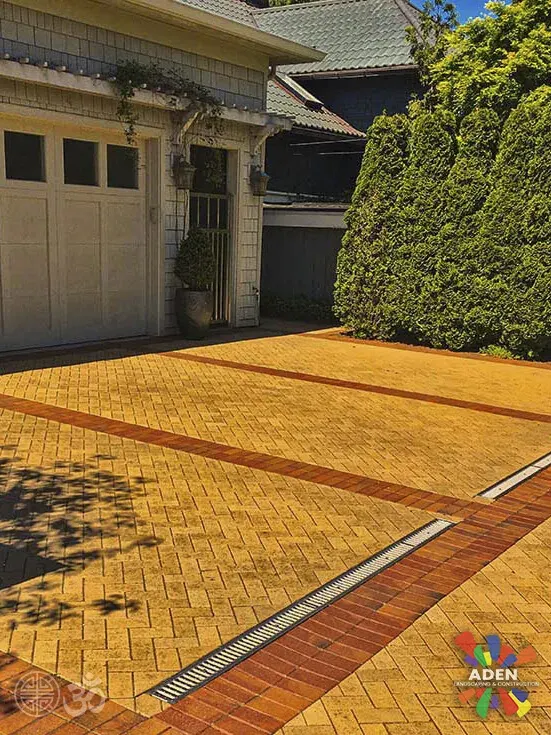
The apron takes the worst of the turning load, which is why it is where a driveway fails first. Laid on a full vehicle-rated base with a banded border holding the edge.
 Retaining WallsView full size
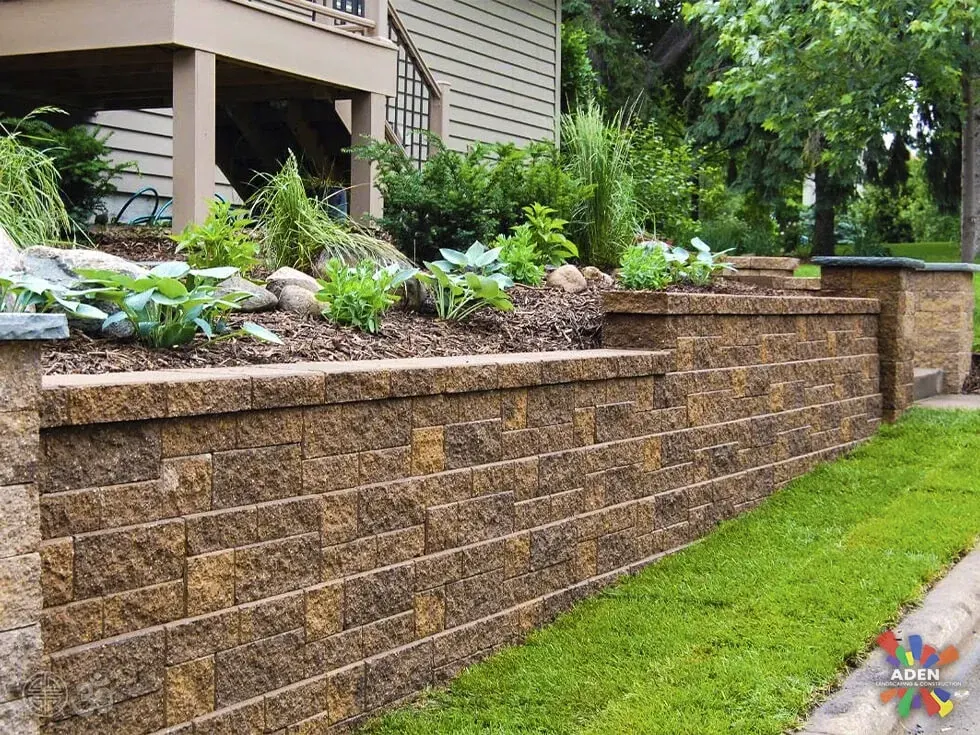
One course of tan split-face block turns a soft slope into a level bed and a level lawn. The planting sits above the wall instead of sliding down it, which is the entire reason the wall is there.
We come out, look at the ground, and put a fixed written price together. No deposit, and it does not change once agreed.
Free estimate
Three minutes on the form. We reply during office hours, Monday – Friday, 9:00 AM – 7:00 PM, and we come out and look at the site before quoting anything.
Or call (425) 533-9734
Thank you — we have your details. We reply during office hours, Monday – Friday, 9:00 AM – 7:00 PM. If it is urgent, call (425) 533-9734.