
 Artificial TurfView full size
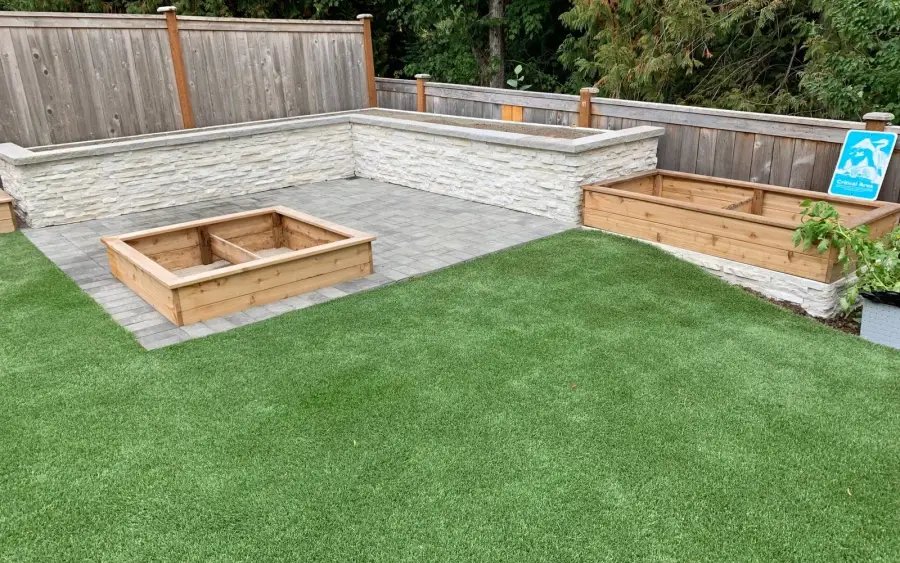
Whole-backyard turf and patio
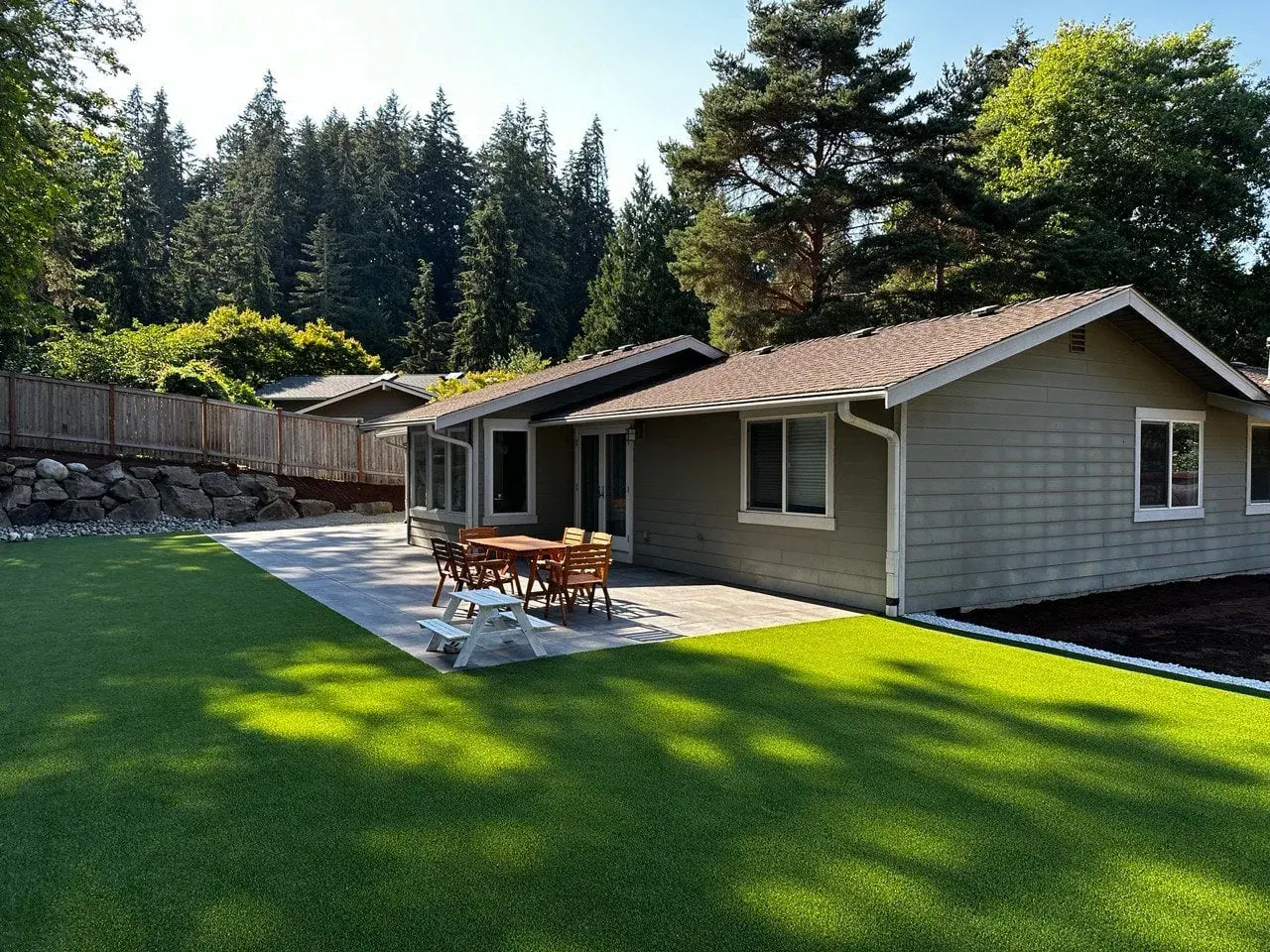
The back of the house opened onto mud. Now it opens onto a patio and a lawn that drains.
No down payment. You pay when the project is finished.
Monday – Friday, 9:00 AM – 7:00 PM · Capitol Hill, Seattle
Service area
Magnolia work divides cleanly into two kinds. On the crown of the hill, around the Village and Lawton Park, it is ordinary Seattle landscaping on ordinary Seattle ground. On the bluff — the western and southern edges, Perkins Lane and everything looking out over the Sound — it is a different discipline, because a large share of those parcels sit inside Environmentally Critical Areas where the standard retaining wall exemption does not apply and the ground has a real history of moving. We check the parcel against the city map before quoting either kind, because from the street it is not always obvious which one you own.
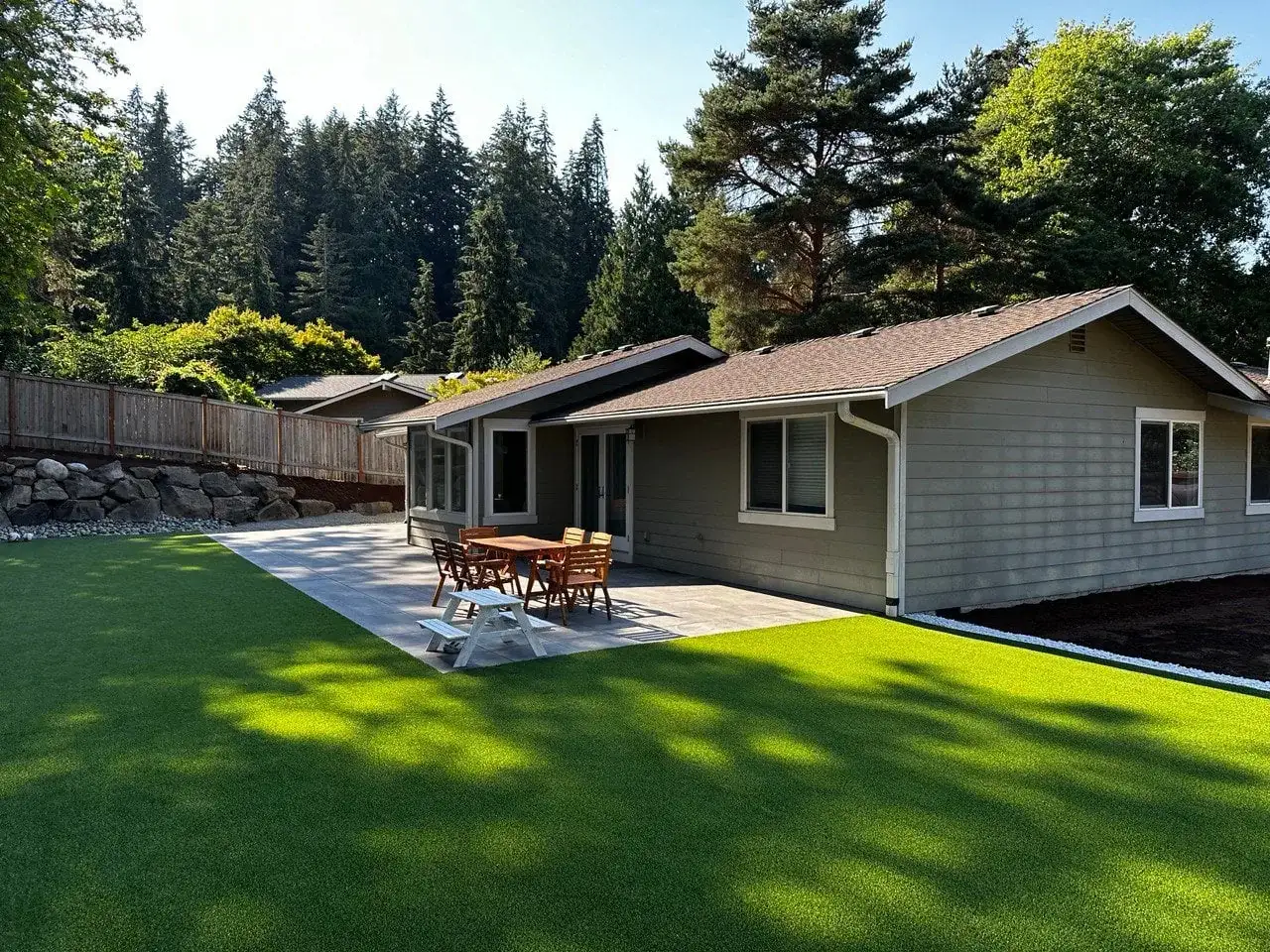
Artificial turf lawn and paved patio running the full width of a single-storey Magnolia house
What we plan around here
Magnolia is the neighbourhood where the permit question comes up first and most often. Large parts of the bluff carry steep slope and landslide-prone designations, and Perkins Lane has a well-documented history of ground movement. Inside an Environmentally Critical Area the usual four-foot retaining wall exemption does not apply at all, so a wall of any height may need a permit. The second Magnolia constant is the view: on a bluff lot, the value of the property is the sightline, and a wall or a structure in the wrong place takes it away permanently.
On a Magnolia bluff lot the value of the property is the sightline, and the fastest way to lose it is the most obvious way to win level ground: one tall retaining wall built close to the house. It is the cheapest thing to draw, it creates the largest single terrace, and it puts a face across exactly what you paid for.
Stepping the same fall in two or three lower walls set progressively further out keeps the eye travelling down and over rather than stopping at a barrier. It usually costs less as well, because shorter walls avoid the height thresholds that trigger engineering and additional permitting. What it uses instead is horizontal depth, which on a shallow lot is the real constraint.
On a Magnolia view lot we would rather spend the first half of the site visit standing at the window than at the property line — because where the walls go is a question about what you look at, not about where the slope happens to start.
What we build in Magnolia
Serving Magnolia and surrounding neighbourhoods
Seattle's largest park, and a 534-acre demonstration of exactly what bluff, forest and beach do at the edge of this peninsula.
The bluff-edge drive most Magnolia view lots sit above or below — and the reason sightlines drive so many design decisions here.
The neighbourhood centre on the flat crown of the hill, where lots are conventional and the bluff conditions do not apply.
Magnolia Village · Magnolia Bluff · Perkins Lane · Lawton Park · Briarcliff · Interbay edge
98199
Recent work
Artificial TurfView full sizeThe back of the house opened onto mud. Now it opens onto a patio and a lawn that drains.
 Design & BuildView full size
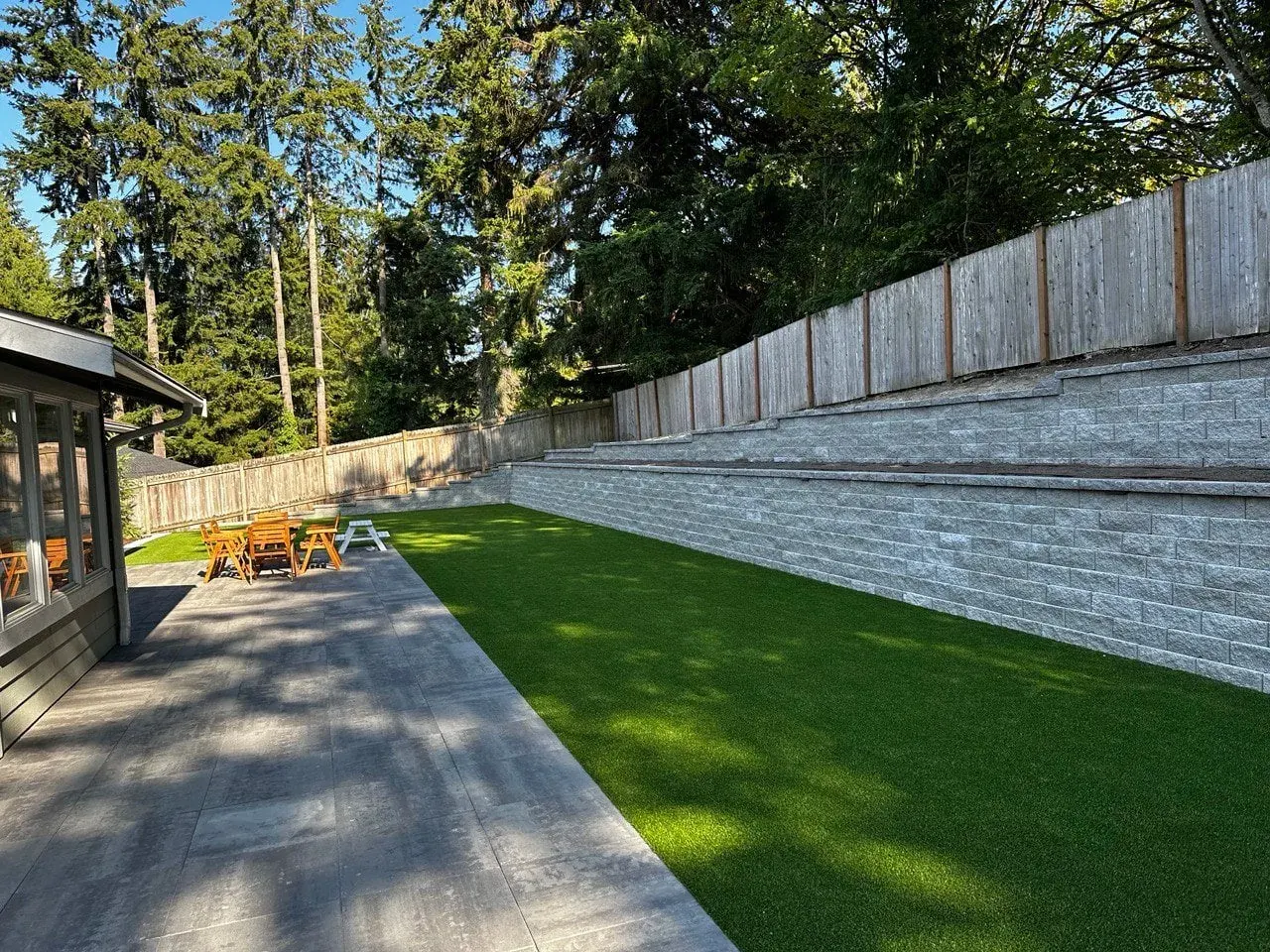
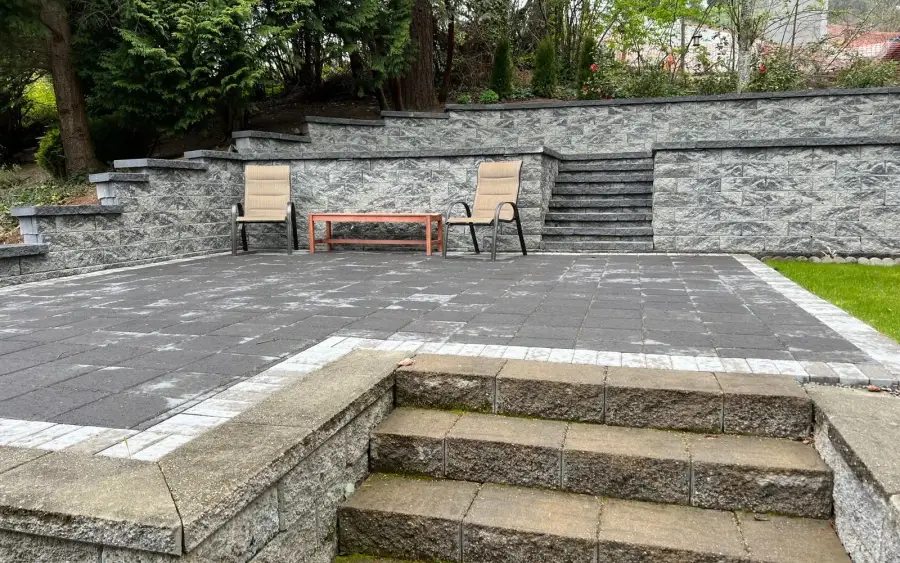
A run of large-format slabs along the wall line ties the upper slope to the lower lawn — the usual Magnolia problem of a garden split across two levels by the grade.
 StoneworkView full size
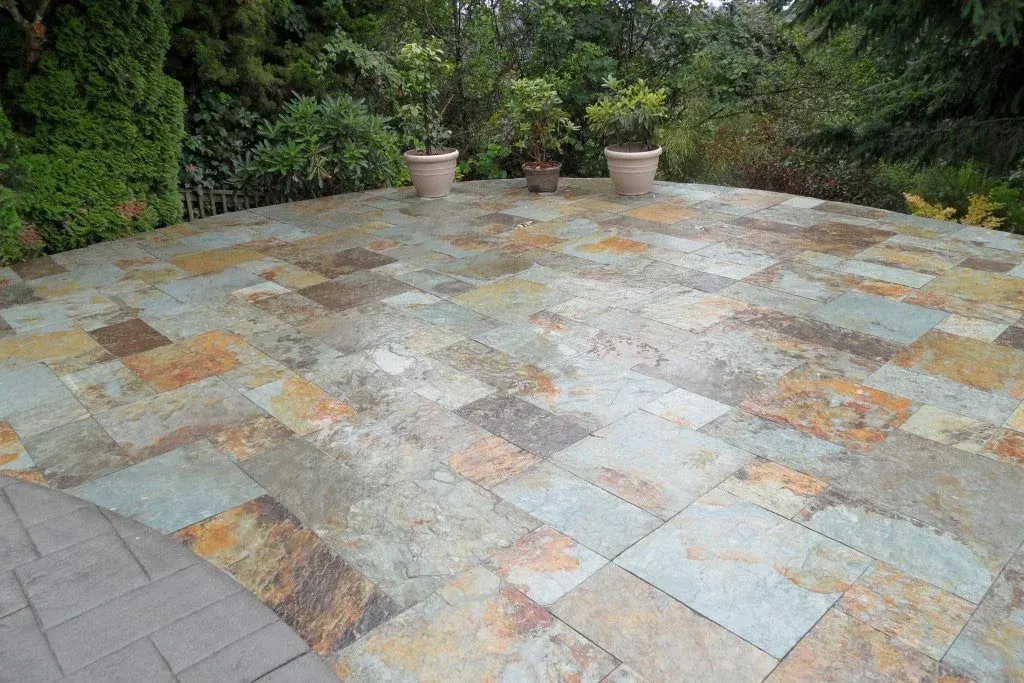
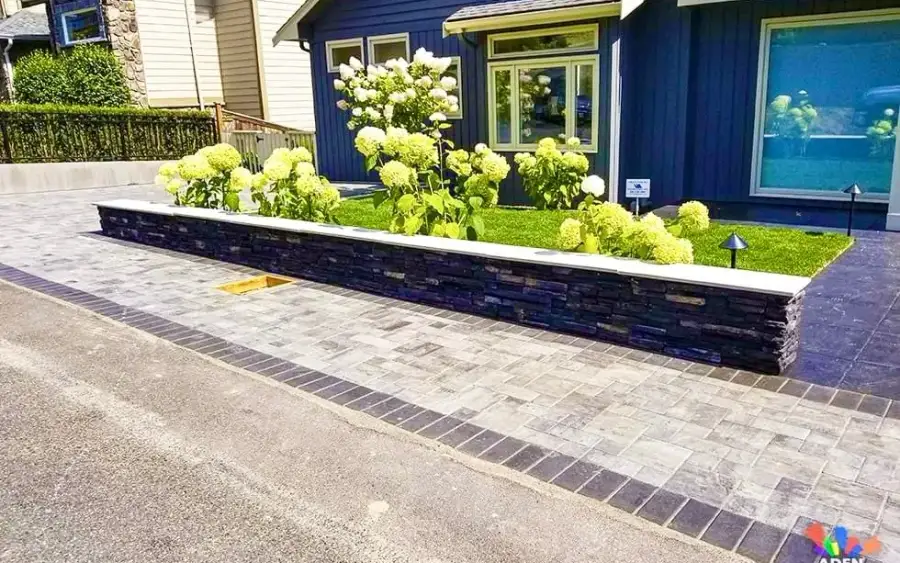
Multi-tone slate laid in a random pattern, running out to a clipped hedge at the edge of the property.
 Driveway PavingView full size
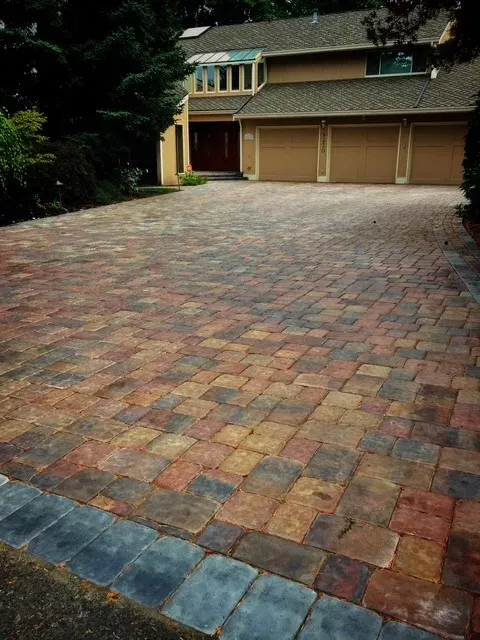
A full-width driveway in tumbled pavers, graded so the water runs off it rather than down to the garage door.
 Outdoor LivingView full size
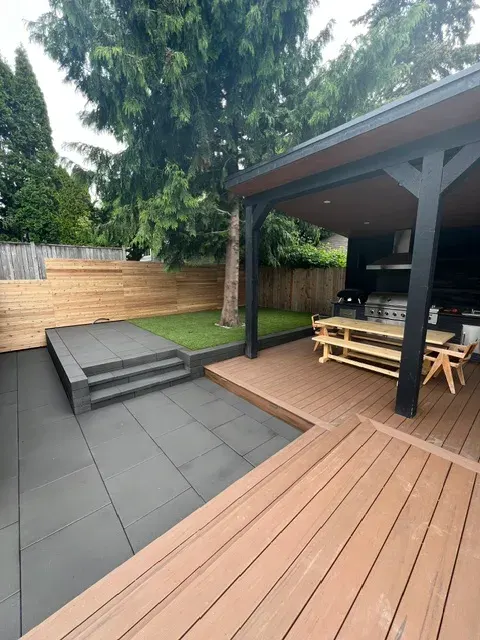
A back garden built as three connected rooms: a covered kitchen with the grill plumbed in, a warm-toned deck for the table, and a slab terrace stepping up to turf around the fir that was there first.
2 photos
 Design & BuildView full size
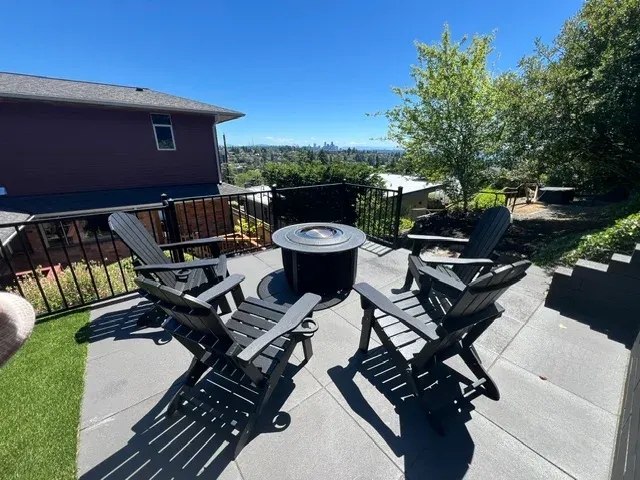
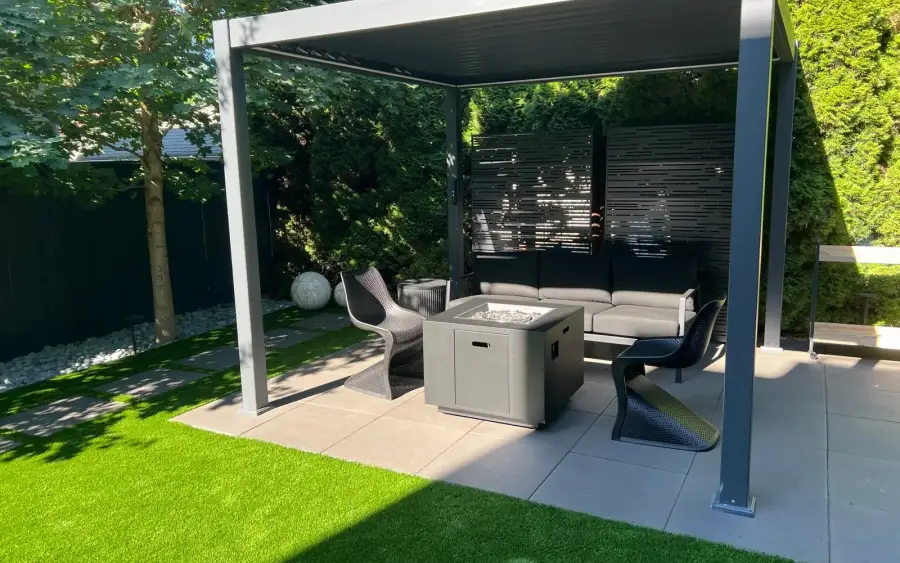
Magnolia gives up a downtown view if the garden is cut to face it. Slab terrace at the top of the slope for the fire table, charcoal block wall holding the bank behind, turf on the level below.
2 photos
Local questions
Something specific to your street? Call (425) 533-9734 — we would rather look at it than guess.
A significant number are, particularly along the western and southern bluff and the slopes running down to Interbay, and it is genuinely not something you can judge by looking. Seattle defines a steep slope as 40% or more grade over ten feet of vertical change and applies fifteen-foot buffers at both top and toe, with separate designations for landslide-prone and potential slide areas. Inside any of them the four-foot wall exemption stops applying entirely. We look your specific parcel up on the city map before quoting, so the permit position is a known cost at the start rather than a discovery halfway through.
Usually, but it takes deliberate design rather than defaulting to the obvious solution. One tall wall built close to the house is the cheapest thing to draw and the fastest way to put a barrier across the sightline you paid for. The alternative is stepping the fall in two or three lower terraces set further out, which keeps the eye travelling down and over rather than stopping at a face. It also usually costs less, because shorter walls avoid the engineering and permit thresholds a single tall one triggers. On a Magnolia view lot we would rather spend the first site visit standing at the window than at the property line.
Because on unstable ground, water is not just a nuisance — it is the mechanism. Saturated soil is heavier, has less internal strength, and is what turns a slope that has stood for decades into one that moves. On the bluff that makes uncontrolled surface water, a downspout discharging over the edge, or an old drain that has silted up into genuine risk factors rather than maintenance items. Any hardscape we build here is designed around where the water leaves the property first, and on several Magnolia projects the drainage has been the whole job with the landscaping as the visible byproduct.
Noticeably more than a sheltered garden a mile inland, and it catches people out in a city with Seattle's reputation. Almost all of our 38 inches of rain falls between October and March, and July and August are genuinely dry. A west-facing Magnolia garden takes the strongest afternoon sun and the most wind of almost anywhere in the city, so it loses moisture much faster through those two months. Planting that thrives in a shaded Wallingford back garden will struggle here. We tend to specify tougher, more exposure-tolerant planting on the bluff side and zone irrigation separately for the exposed beds.
We come out, walk the property, look at the grade and the drainage, and put a written price together. No deposit, and it does not change once agreed.
Nearby
Ridge-top flat through central Capitol Hill, then steep falls east toward Lake Washington and west toward downtown. Leschi and Madrona are steep by default.
0–10 minutes — this is where we are based
One of the steepest neighbourhoods in a steep city. Flat on the crown, then severe falls on all four sides, with grades on the south face among the sharpest residential streets in Seattle.
10–20 minutes from Capitol Hill
Mostly flat, which makes it unusual for Seattle. Real grade appears only on Sunset Hill and the drop toward Golden Gardens and the ship canal.
15–25 minutes from Capitol Hill
Seven hills and then some. Grade changes of 20–40% inside a single lot are ordinary in Queen Anne, Magnolia, Mount Baker and West Seattle.
Base of operations — Capitol Hill
A plateau with steep edges. Flat through the Junction and Westwood, then severe falls toward Alki, Fauntleroy and down the Delridge side.
20–30 minutes from Capitol Hill
Free estimate
15–25 minutes from Capitol Hill from our Capitol Hill base. Three minutes on the form and we will come out and look at it properly.
Or call (425) 533-9734
Thank you — we have your details. We reply during office hours, Monday – Friday, 9:00 AM – 7:00 PM. If it is urgent, call (425) 533-9734.