
 Outdoor LivingView full size
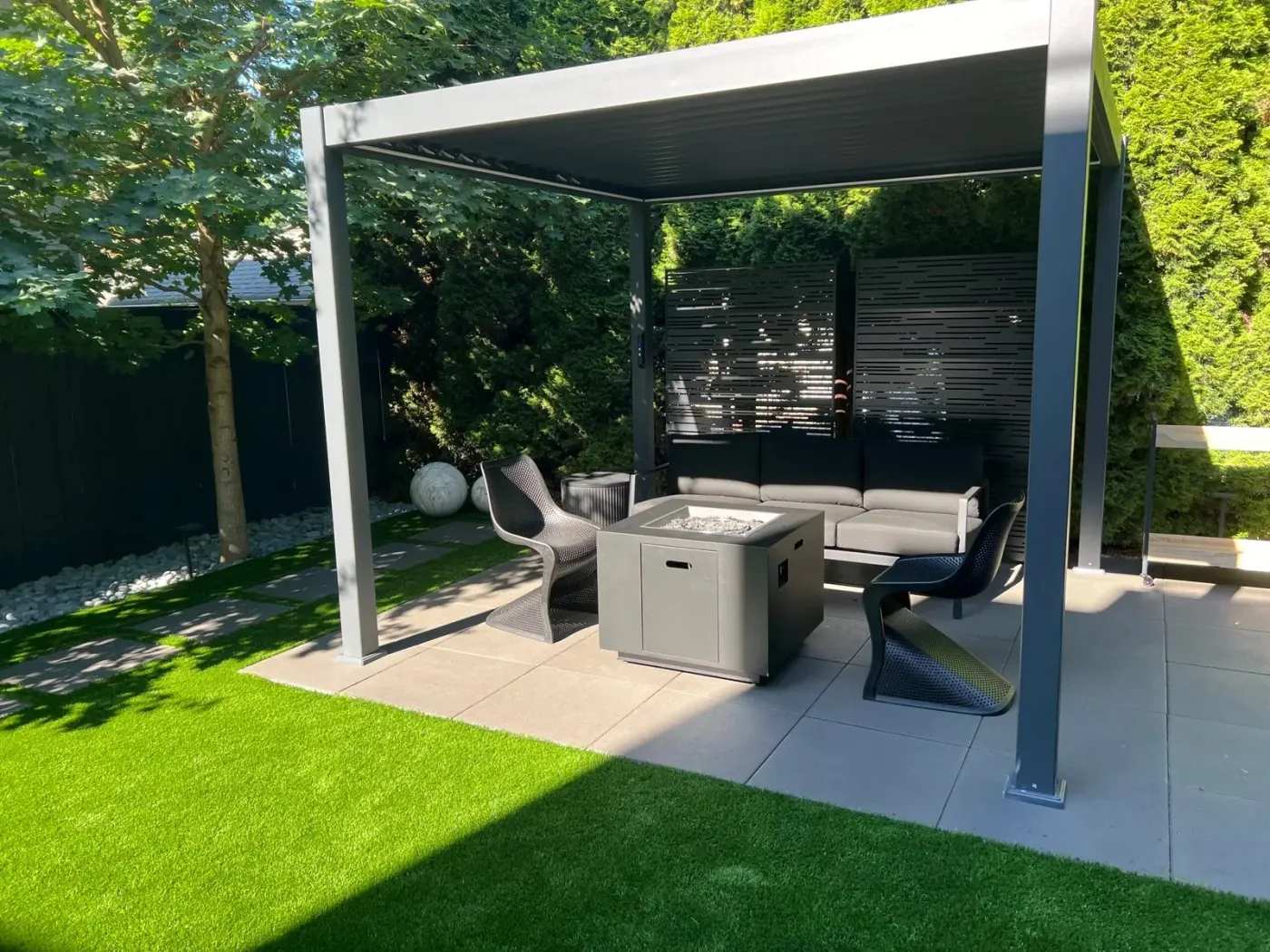
Covered lounge, fire table & turf lawn
A modern pergola over a paved lounge, edged straight into a turf lawn that stays green all winter, with a plank path running the length of the lot.
2 photos
No down payment. You pay when the project is finished.
Monday – Friday, 9:00 AM – 7:00 PM · Capitol Hill, Seattle
Service area
We work out of Capitol Hill, which means most Seattle jobs are a short drive rather than a scheduling problem. Fifteen years of building here has taught us the same lesson the city teaches everyone: the finish is the easy part. What decides whether a patio is still flat in five years is what went under it, and what decides whether a wall is still standing is whether anyone thought about where the water goes. Seattle sits on glacial till — a compacted hardpan that holds water instead of letting it through — under 38 inches of annual rain that arrives almost entirely between October and March. Build without accounting for that and the yard tells you within one winter.
Covered outdoor lounge with a fire table beside an artificial turf lawn on a Seattle property
What we plan around here
Seattle takes 38+ inches of rain a year and almost all of it arrives October to March. That single fact decides more landscaping outcomes here than plant choice ever does — a patio without a drainage plan is a patio that heaves, and a lawn on undisturbed till is a lawn that sits under water all winter.
More Seattle parcels than people expect carry an Environmentally Critical Area designation, and it is the single fact that most often changes a landscaping project from routine to complicated. The categories that matter for garden work are steep slope, landslide-prone and potential slide area, and they cover a great deal of the West Seattle bluff, Magnolia, Leschi, Madrona and the Mount Baker hillside — none of which is obvious from the street.
What the designation does is remove an exemption. Normally a retaining wall is exempt from a construction permit if it is four feet or lower measured from the bottom of the footing, is not in an ECA, and causes no damage to adjoining property. Inside an ECA that four-foot allowance does not apply at all: a wall of any height can require a permit, and depending on the situation the design may need engineering input.
The city publishes a map, and checking a parcel against it costs nothing at the quoting stage. Discovering it after the excavation is open costs a great deal, which is why we look before we price rather than after. It is also why two quotes for the same wall on the same street can differ substantially — one of them may have checked.
What we build in Seattle
Serving Seattle and surrounding neighbourhoods
230 acres of collections that set the planting vocabulary a lot of Seattle gardens borrow from.
A Japanese garden built on a South Seattle swamp — the city's best argument that drainage design is what makes a landscape last.
Bluff, forest and beach in one park, and a fair summary of the terrain range across the city.
Capitol Hill · Ballard · Queen Anne · Magnolia · West Seattle · Green Lake · Wedgwood · Madison Park · Laurelhurst · Mount Baker · Seward Park · Fremont · Wallingford · Columbia City
98101 · 98102 · 98103 · 98104 · 98105 · 98106 · 98107 · 98108 · 98109 · 98112 · 98115 · 98116 · 98117 · 98118 · 98119 · 98121 · 98122 · 98125 · 98126 · 98133 · 98134 · 98136 · 98144 · 98146 · 98177 · 98199
Recent work
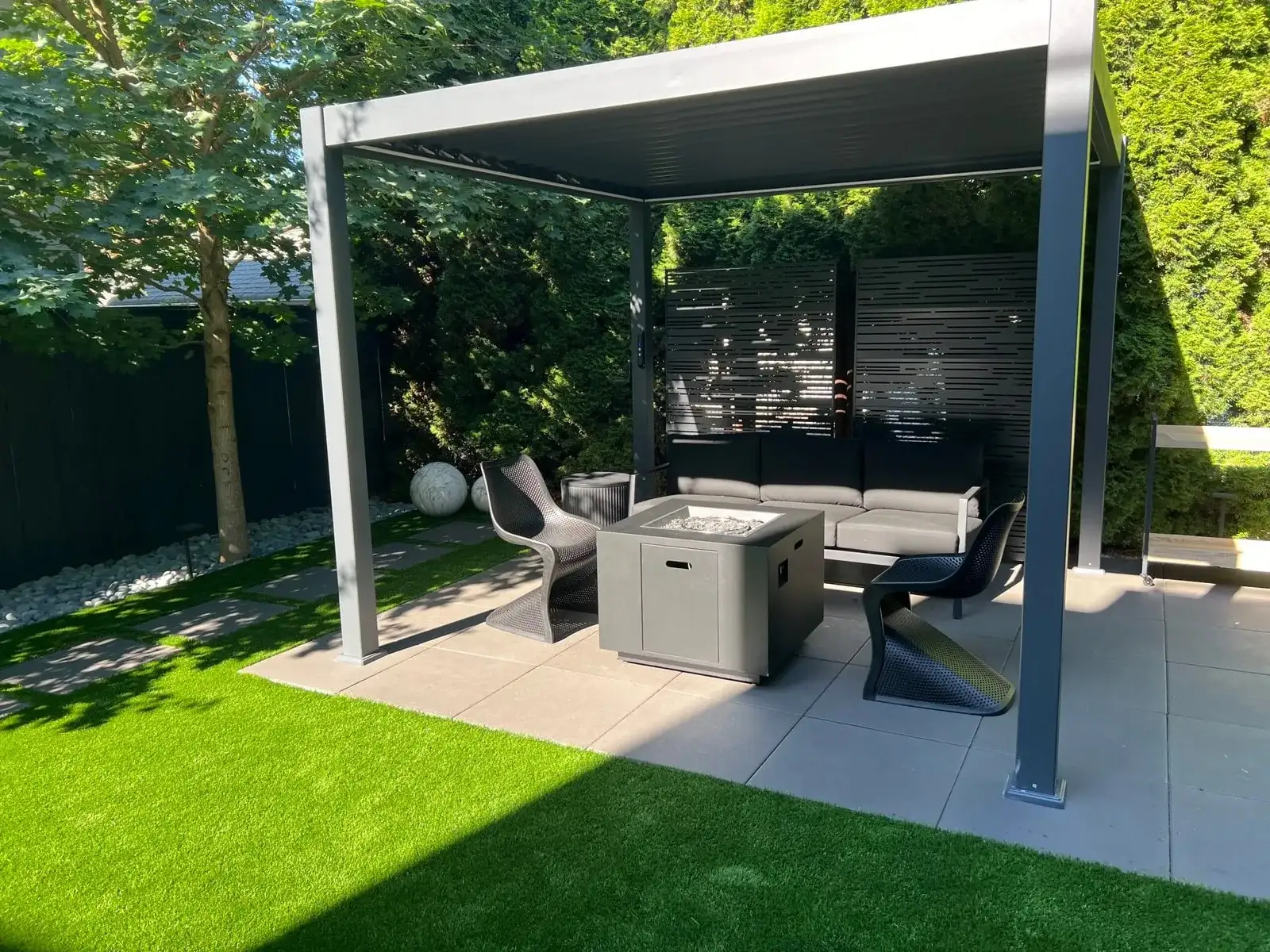
Outdoor LivingView full sizeA modern pergola over a paved lounge, edged straight into a turf lawn that stays green all winter, with a plank path running the length of the lot.
2 photos
 Retaining WallsView full size
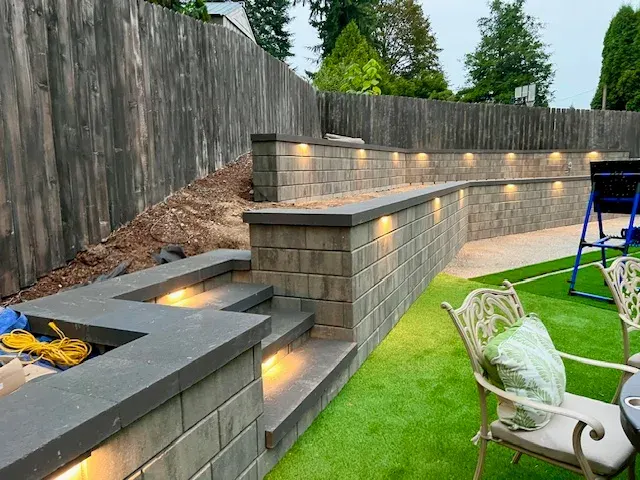
Lighting recessed into the wall face and the step risers, so the garden still works through eight months of dark Seattle evenings. Photographed the night it was commissioned.
2 photos
 FlagstoneView full size
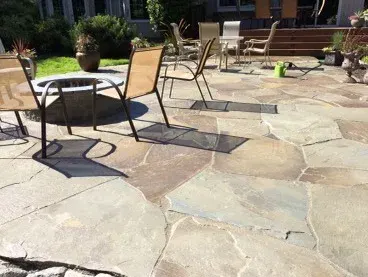
Hand-fitted flagstone laid tight, with a fire bowl and seating where the lawn used to sit wet.
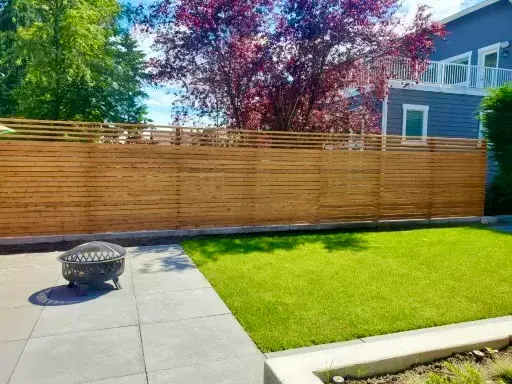 Design & BuildView full size
A small city garden done as one job — horizontal cedar screen for privacy from the neighbours, a concrete patio, and turf that stays green through the winter.
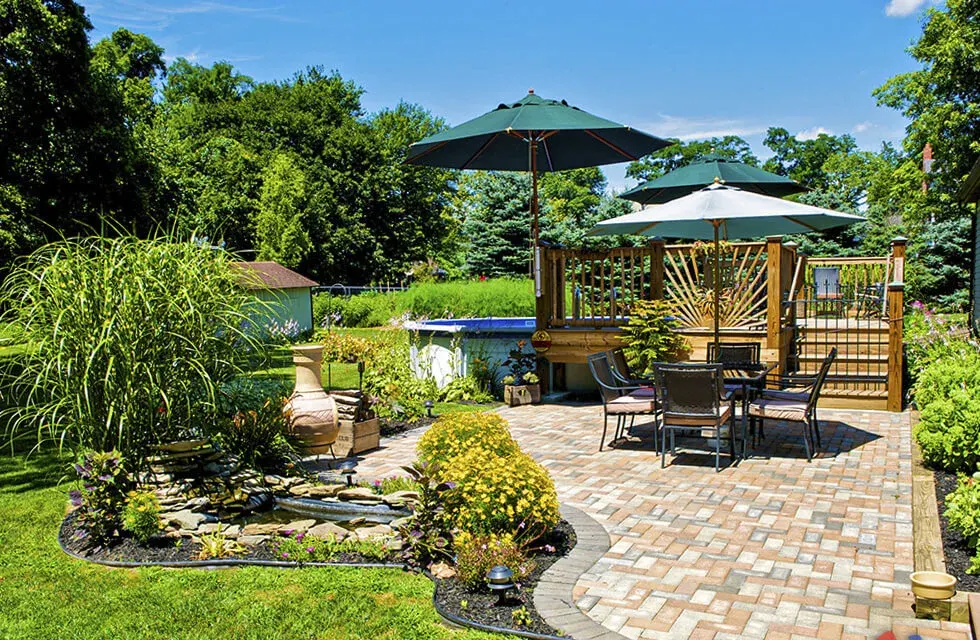 Paver PatioView full size
The dining patio, the water and the raised deck are one continuous route rather than three features dropped on a lawn — the curve of the patio edge sets up the planted bed and the pond sits inside it.
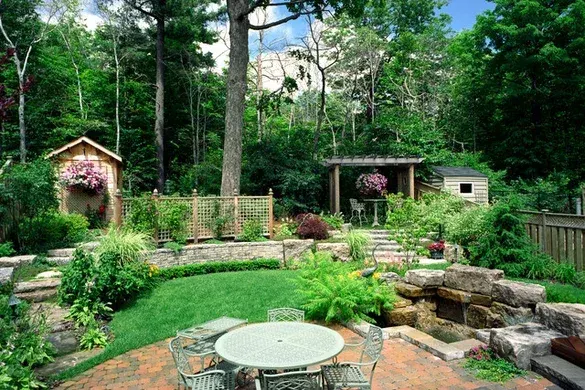 Design & BuildView full size
A whole garden built in one go on a wooded lot: brick terrace at the bottom, stone rockery holding the bank, a waterfall running through it, and a pergola marking the top level.
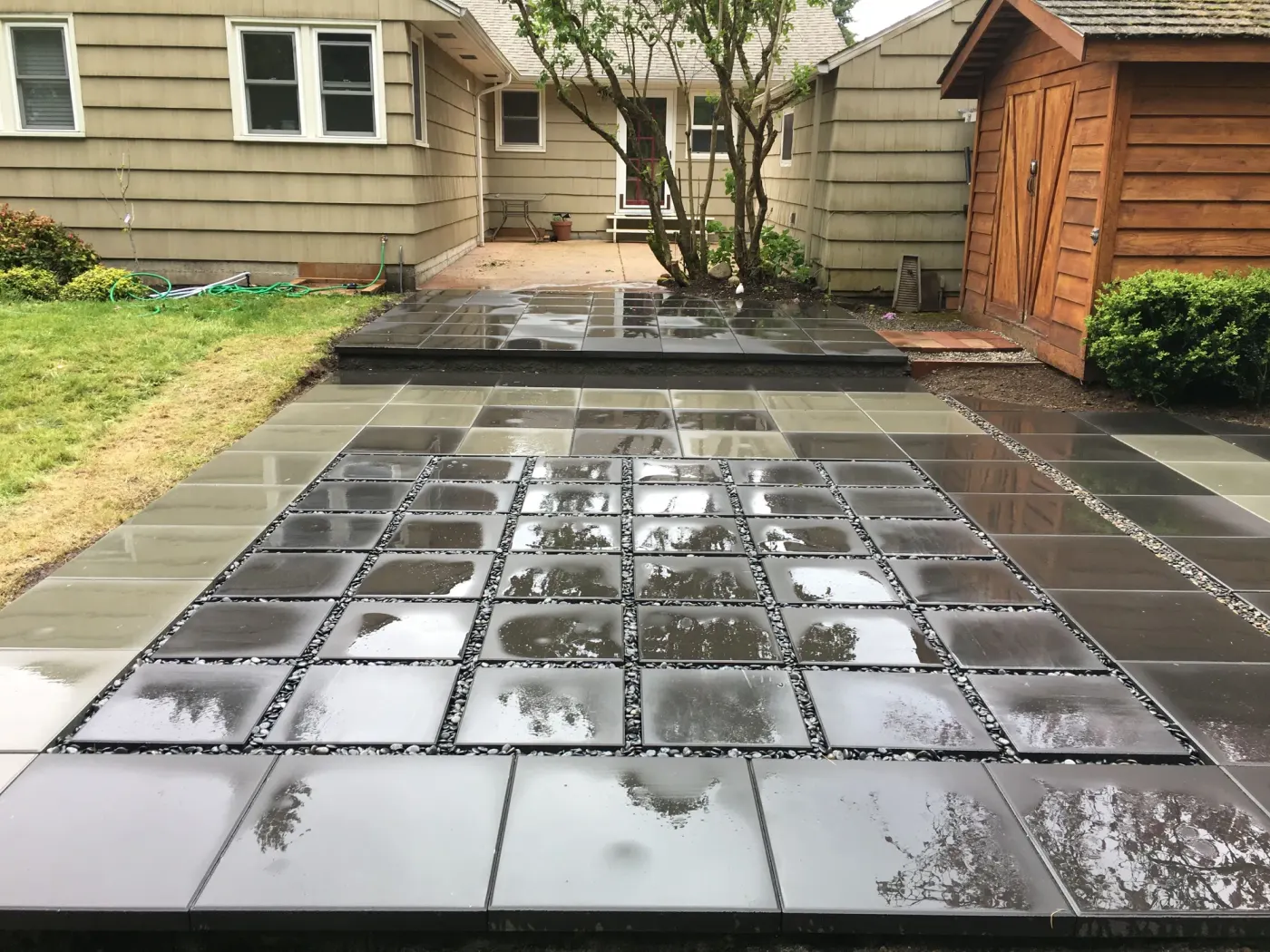 Paver PatioView full size
Large charcoal units set with open joints for grass, so the surface drains through itself rather than off itself. It photographs best wet, which in Seattle is most of the year.
 Paver PatioView full size
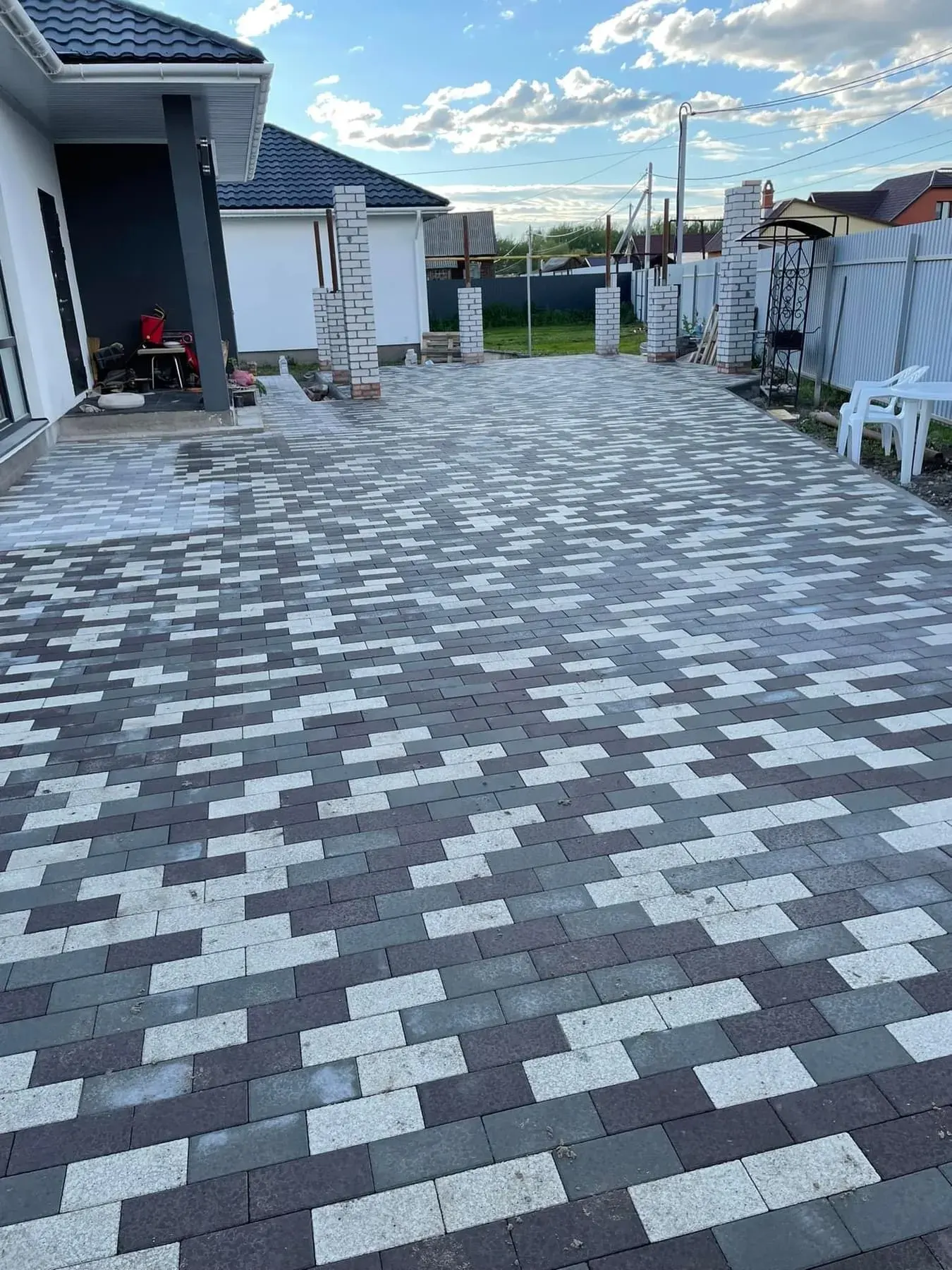
Long plank units in two greys laid in a running bond under a covered walk. From the house it reads as one surface; up close it reads as two tones. Both were the point.
 FlagstoneView full size
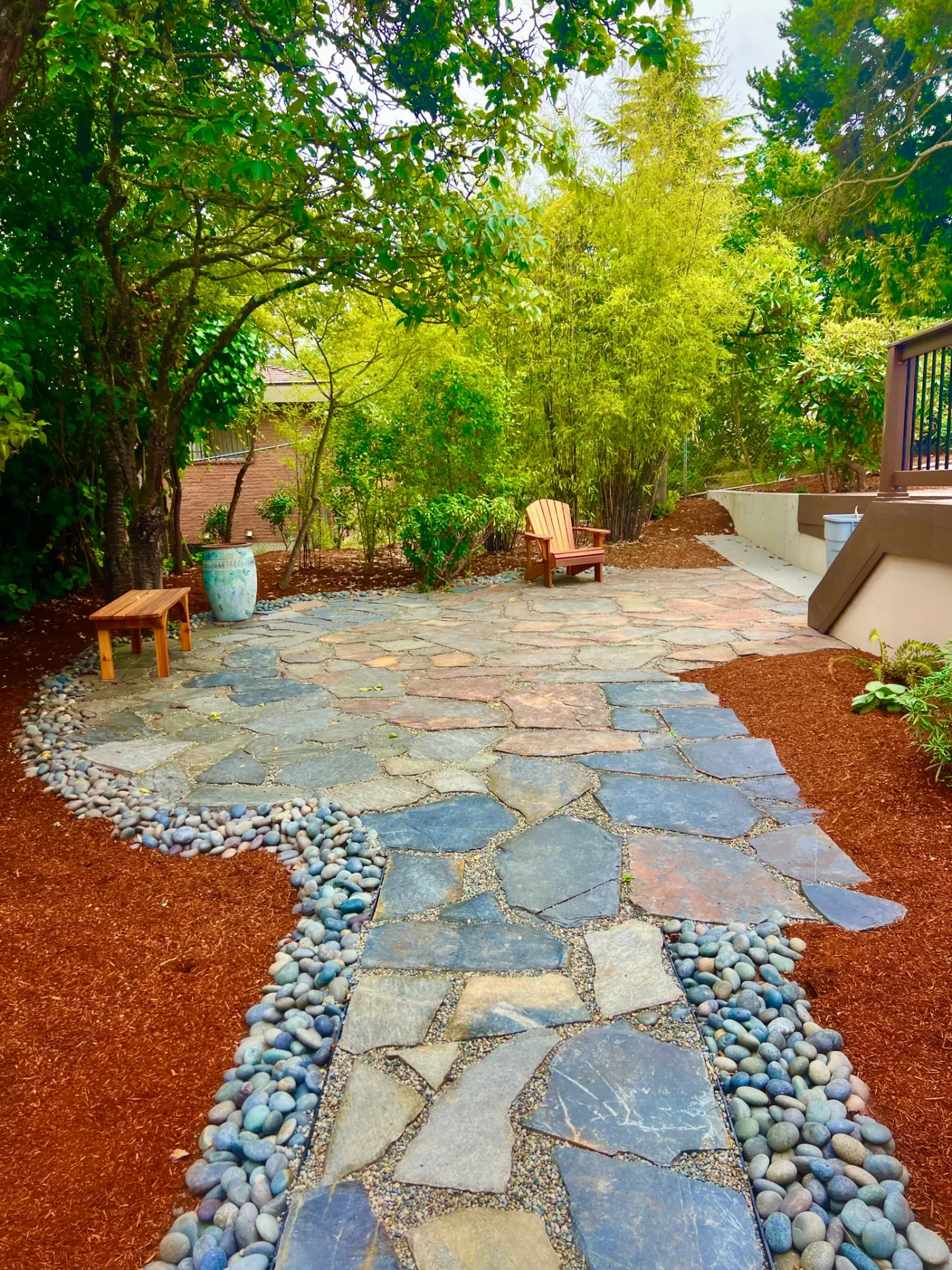
Irregular flagstone fitted tight, with a washed rock margin doing the drainage where the ground falls away. Every stone is cut to the ones it touches.
In their words
We only put a review on an area page when the customer named the place themselves. Most of our area pages have none, which is the honest outcome.
Egle Garcia
April 2014
We needed a solution with the sliding soil in our backyard (Seattle location). Eric & Alex suggested building a retaining wall and we are very satisfied with the solution and the results.
Local questions
Something specific to your street? Call (425) 533-9734 — we would rather look at it than guess.
Only if you fail any part of a three-part test. A wall is exempt from a construction permit when it is four feet or lower measured from the bottom of the footing to the top, it is not in an Environmentally Critical Area, and it causes no damage to adjoining property. All three must be true. Inside an ECA — which covers steep slopes, landslide-prone ground, liquefaction zones and peat settlement areas — the four-foot exemption does not apply at all, and a wall of any height may need a permit. We check the parcel against the city ECA map before quoting so the permit position is known up front rather than discovered mid-build.
Almost always because it sits on glacial till. Most of Seattle has 12 to 24 inches of topsoil over a dense hardpan layer that water will not pass through at any useful rate. Through the dry months you never notice. From October the rain arrives faster than the soil can move it sideways, the topsoil saturates, and the water has nowhere left to go. Reseeding does nothing about this. The fix is drainage — a French drain routed to daylight, regrading to move water away from the house, or in bad cases both — and it is the reason we look at grade before we look at planting.
The build window here is genuinely compressed compared with most of the country. Hardscape work — walls, patios, driveways, paving — runs best March through September when the ground is workable and base material compacts properly. Drainage, tree work and clearing are all fine in the wet months and are often better then, because you can see exactly where the water goes. The practical advice is to book design and estimating in January and February. By April the good crews in this city are already committed for the season.
Real ranges rather than a single number, because scope drives it. Paver patios run roughly $20 to $50 per square foot installed including base preparation and drainage, with complex layouts above that. Retaining walls run $5 to $45 per square foot depending on material and height — a four-foot by fifty-foot wall with proper drainage and access work typically lands between $8,000 and $24,000. French drains are $10 to $25 per linear foot. Artificial turf is $13 to $20 per square foot, and it genuinely varies by neighbourhood. You get a fixed written price before anything starts, and it does not move once agreed.
All of it. We have dedicated pages for Ballard, Queen Anne, Magnolia, Green Lake, Wedgwood, Madison Park, Laurelhurst, Mount Baker, Seward Park and West Seattle, plus North, Central and South Seattle as districts, because the ground genuinely differs between them — a bluff lot in Magnolia and a flat lot in Wedgwood are not the same job. If your neighbourhood is not listed, it is still almost certainly covered; call and ask.
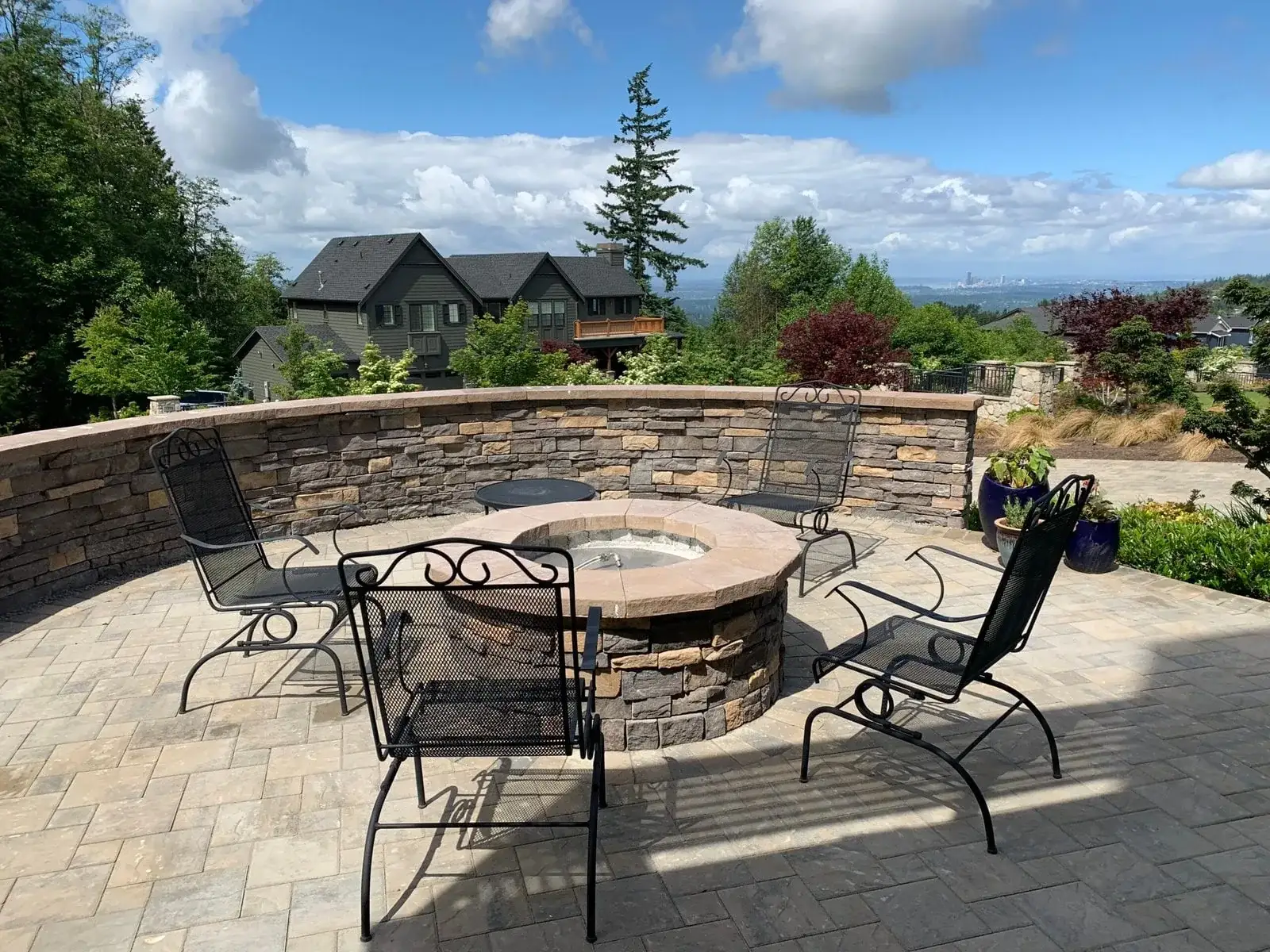
We come out, walk the property, look at the grade and the drainage, and put a written price together. No deposit, and it does not change once agreed.
Nearby
Gentler than the rest of Seattle. Broad flat platforms around Green Lake, Wedgwood and Maple Leaf, with real grade at the ravine edges and toward the Sound.
15–25 minutes from Capitol Hill
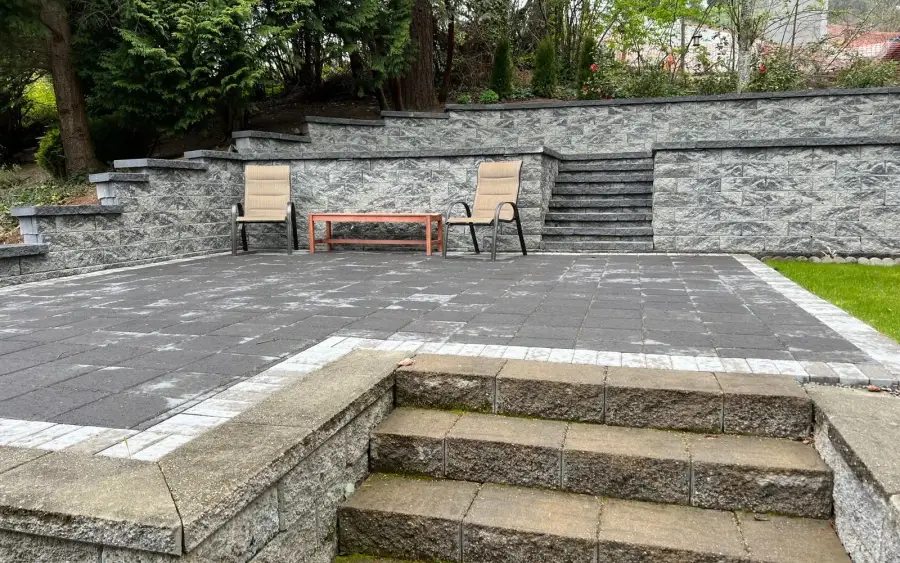
Ridge-top flat through central Capitol Hill, then steep falls east toward Lake Washington and west toward downtown. Leschi and Madrona are steep by default.
0–10 minutes — this is where we are based
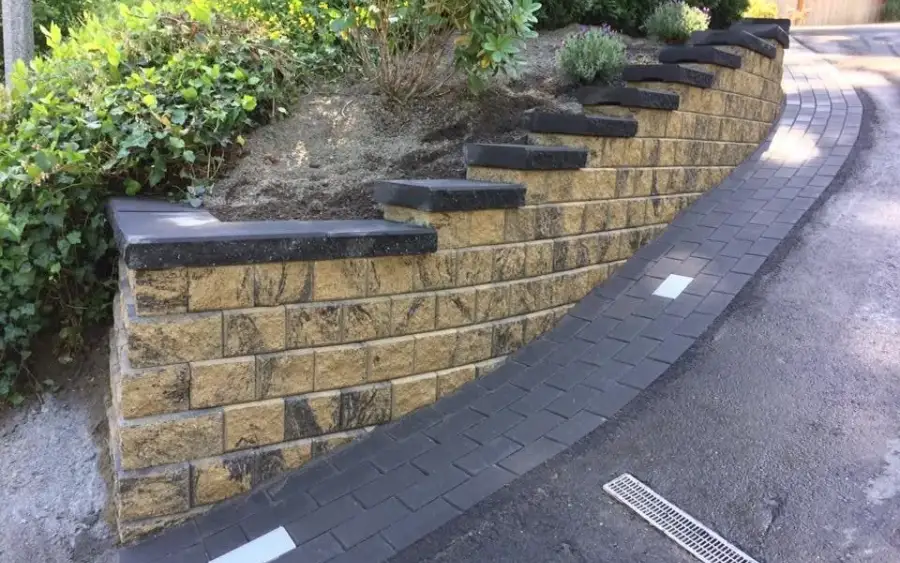
Two ridges with a valley between them. Beacon Hill and the Mount Baker/Seward Park side both fall hard toward the water; the Rainier Valley floor between them is flat and drains slowly.
10–20 minutes from Capitol Hill
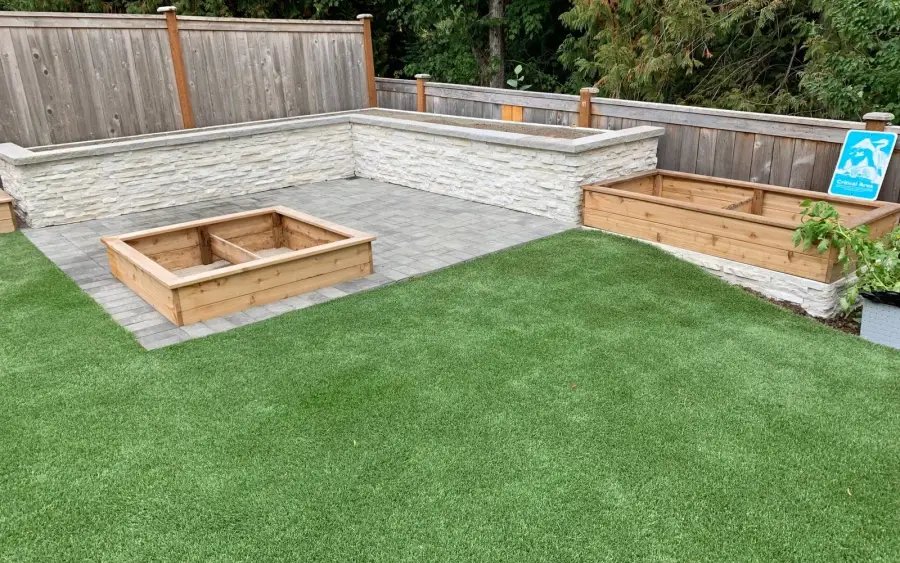
A plateau with steep edges. Flat through the Junction and Westwood, then severe falls toward Alki, Fauntleroy and down the Delridge side.
20–30 minutes from Capitol Hill
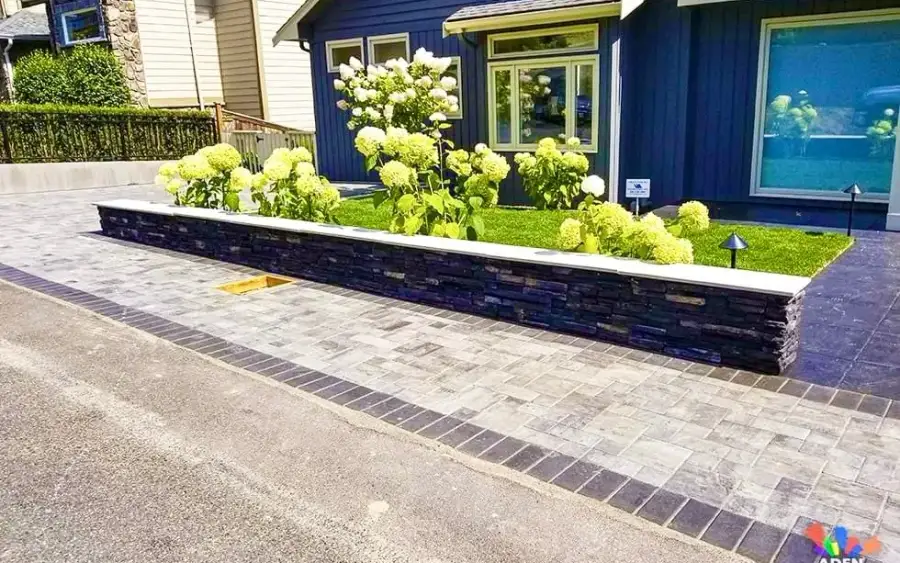
Mostly flat, which makes it unusual for Seattle. Real grade appears only on Sunset Hill and the drop toward Golden Gardens and the ship canal.
15–25 minutes from Capitol Hill
Free estimate
Base of operations — Capitol Hill from our Capitol Hill base. Three minutes on the form and we will come out and look at it properly.
Or call (425) 533-9734
Thank you — we have your details. We reply during office hours, Monday – Friday, 9:00 AM – 7:00 PM. If it is urgent, call (425) 533-9734.