
 DeckingView full size
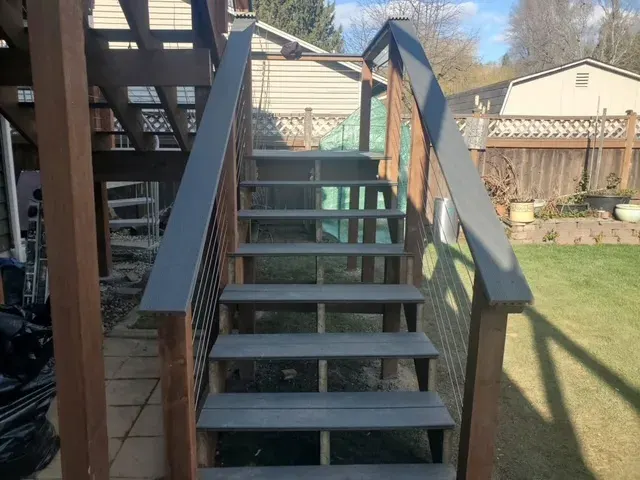
Cable-rail stairs down to the lawn
The missing link on a raised deck that had no proper way down. Cedar posts, stainless cable and a wide tread depth, so it is a route rather than a ladder.
No down payment. You pay when the project is finished.
Monday – Friday, 9:00 AM – 7:00 PM · Capitol Hill, Seattle
Decks & Structures · Shoreline
Shoreline is mostly mid-century housing, which means most deck enquiries here are about a deck that already exists. That makes the first question different from anywhere else: what is the existing structure actually worth. Re-decking a sound frame is a genuine saving and gives you a surface with decades in it; re-decking a frame that has five years left is money spent twice. The two are not distinguishable from above, which is why an honest answer requires opening the structure up and looking at the posts and the ledger rather than walking across it and forming an impression. Plenty of frames from this era are perfectly serviceable. Plenty are not.
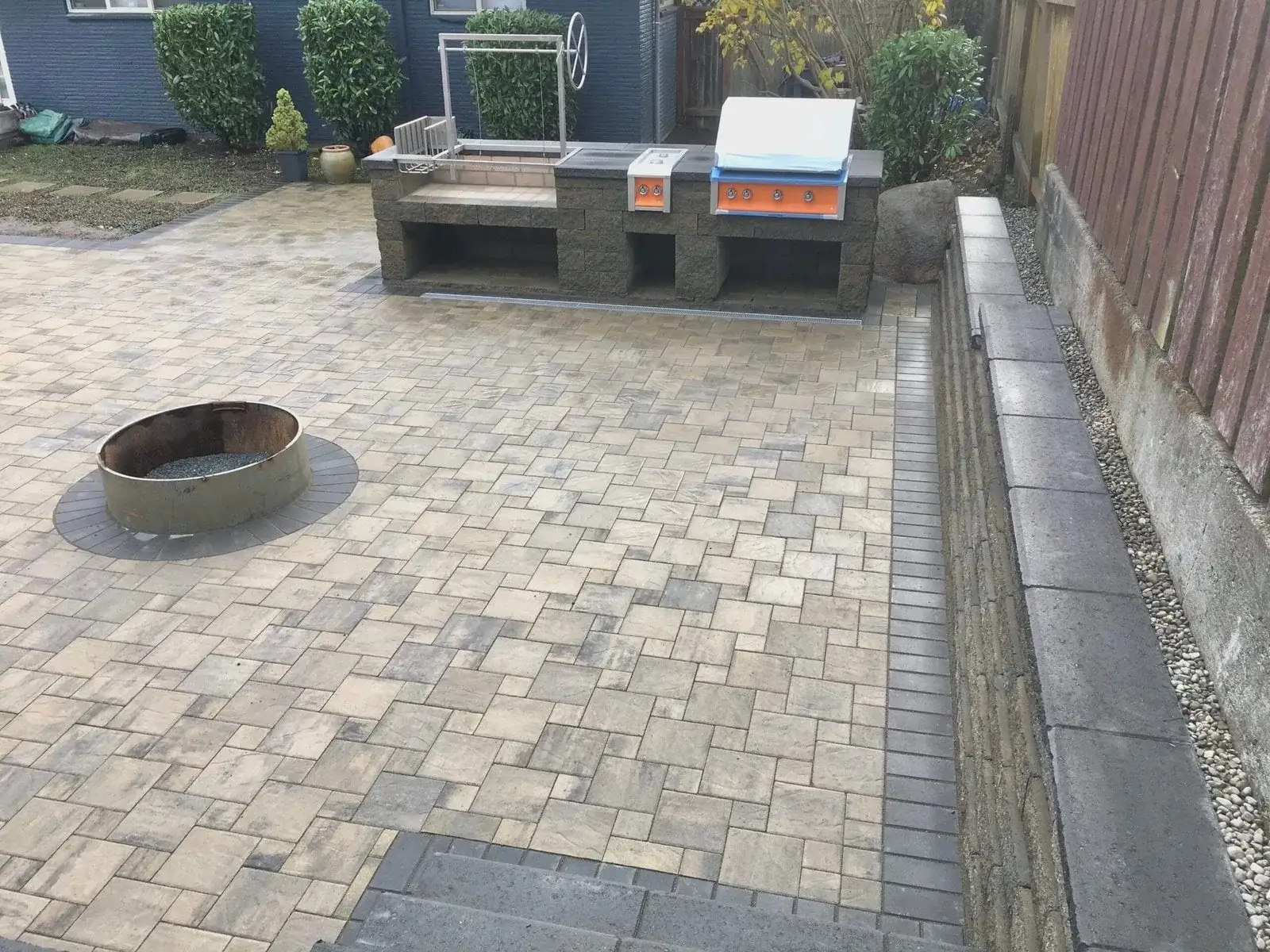
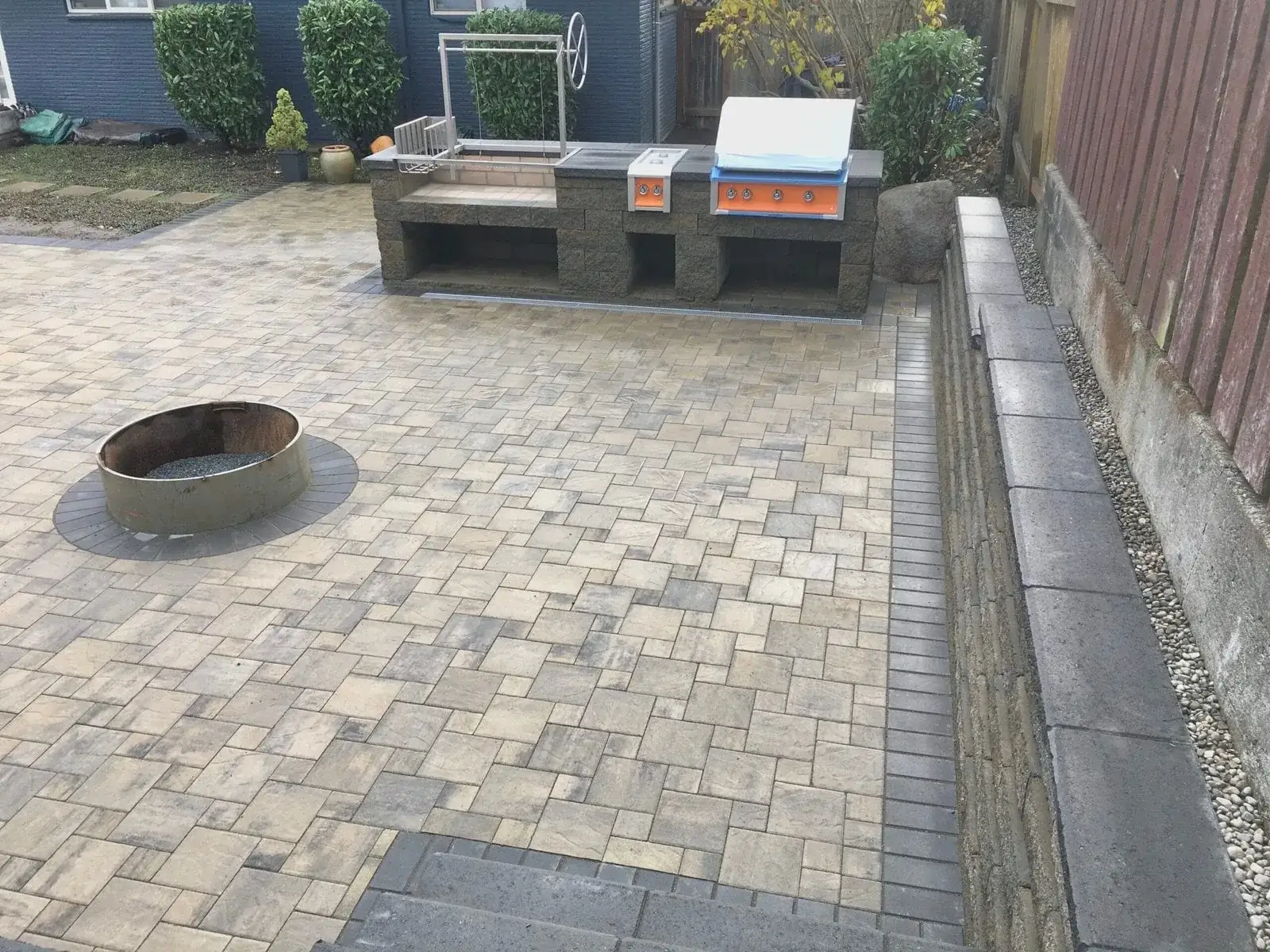
Built-in outdoor kitchen island and fire pit on a paver patio with a low seat wall in Shoreline
What we get called about
Shoreline is what north Seattle would be with bigger lots — the same glacial till, the same flat platforms, the same drainage consequences, but with real space to work in and generally straightforward access. Two local specifics are worth knowing. Innis Arden has covenants including view protection, which constrains planting height and tree work in a way the rest of the city does not. And the western edge above Richmond Beach is bluff ground, where slope stability and drainage are design factors rather than formalities.
Worth knowing in Shoreline
Before spending anything, get someone to pull a board near the house wall and look at the ledger. That one joint tells you more about whether a deck has a future than the whole surface does, and it takes ten minutes.
The ledger first, because it is where most failures start and it is invisible from above. Water getting behind the board that fastens the frame to the house has nowhere to dry, and on a deck built before current flashing practice that joint is frequently the oldest problem on the structure. If the ledger has gone, nothing above it is worth keeping.
Then the posts, at the point where they meet the ground. That zone is permanently damp and has oxygen, which is the condition decay wants, so posts fail there long before they fail anywhere else. A post that is sound at eye level tells you nothing about the six inches that matter.
Then joist spacing, which is not a condition question but decides the cost. Composite boards generally need closer support than older cedar framing was built to, so a frame in good order may still need additional joists sistered in before it will take a composite surface. That is real work — considerably less than a rebuild, and enough to change which option is actually cheaper.
The method
The sequence does not change between neighbourhoods — what changes is the ground it is applied to. Full detail on the decks & structures service page.
A dining deck, a route between levels and a sun trap are different structures at different heights. Deciding that first is what stops a deck being the wrong size in the right place.
Footing depth, how posts meet the ground, and how the frame ties into the building. That connection is the most common failure point on decks we are called out to replace.
Structure first, then the details that let it dry: spacing, flashing where the frame meets the house, and drainage below where the deck is over usable space.
Boards run to suit the sightline rather than the shortest cut list, with border and inlay detail where a large deck needs the joint hidden.
Riser lights and rail detail go in once the levels are final, because both are fixed to the finished structure rather than the frame.
What it costs in Shoreline
Shoreline decks run $35 to $90 per square foot for new build. Re-decking a sound frame is substantially less because the structure, the footings and the railing posts stay — but the saving disappears if additional joists are needed for composite spacing, so that assessment has to happen before a number is meaningful. We quote the inspection outcome rather than an optimistic assumption.
You pay after the project is fully completed.
The estimate you sign is the price you pay.
Spread the cost with no interest.
Covers hardscape work; vegetation excluded.
Local questions
General questions about this service are on the service page. These are the ones that only come up here.
By opening it up in two places rather than by looking at it. The surface tells you almost nothing, because boards are exposed and dry normally while the structure beneath them may not. The two things that decide it are the ledger, where the frame meets the house, and the posts at ground level — those are where the decay is and where a failure would matter. Pulling a board at the wall and probing the base of two or three posts gives an honest answer in under an hour. We do that before quoting rather than pricing a rebuild and a re-deck as though the choice were a coin toss.
Usually, sometimes not, and joist spacing is what decides it. Keeping a sound frame saves the structure, the footings and the railing posts, which is a substantial share of the cost of a new deck. What eats the saving is composite board spacing: if the existing joists are further apart than the boards need, additional joists have to be sistered in throughout, and by the time that is done on a large deck the difference from a rebuild has narrowed considerably. Sticking with timber decking avoids that entirely, which is one of the few remaining strong arguments for cedar.
Frequently not, and it is worth establishing early because it affects the budget rather than just the design. Railing height and infill spacing requirements have changed over the decades, and a railing that was compliant when a mid-century deck was built may well not be now. Where a deck is being substantially rebuilt, current requirements generally apply to the new work — so a re-deck that keeps the frame may still need a new railing run, and railing is priced per linear foot rather than by area. On a long deck that can be a bigger line than the boards.
Then partial replacement is often the sensible answer, and it is common on decks of this age. Decay is rarely uniform — it concentrates at the ledger, at ground-level posts, and wherever water has been repeatedly channelled onto one area — so a frame can be genuinely sound across most of its span with two or three components that need replacing. Cutting out and replacing those, rather than the whole structure, is legitimate work and not a compromise. What we would not do is leave a suspect component in place because it is awkward to reach and put a new surface over it.
Serving Shoreline and surrounding neighbourhoods
Richmond Beach · Innis Arden · Echo Lake · Ridgecrest · Briarcrest · Ballinger · North City · Highland Terrace · Parkwood
98133 · 98155 · 98177
Recent work
DeckingView full sizeThe missing link on a raised deck that had no proper way down. Cedar posts, stainless cable and a wide tread depth, so it is a route rather than a ladder.
 Outdoor LivingView full size
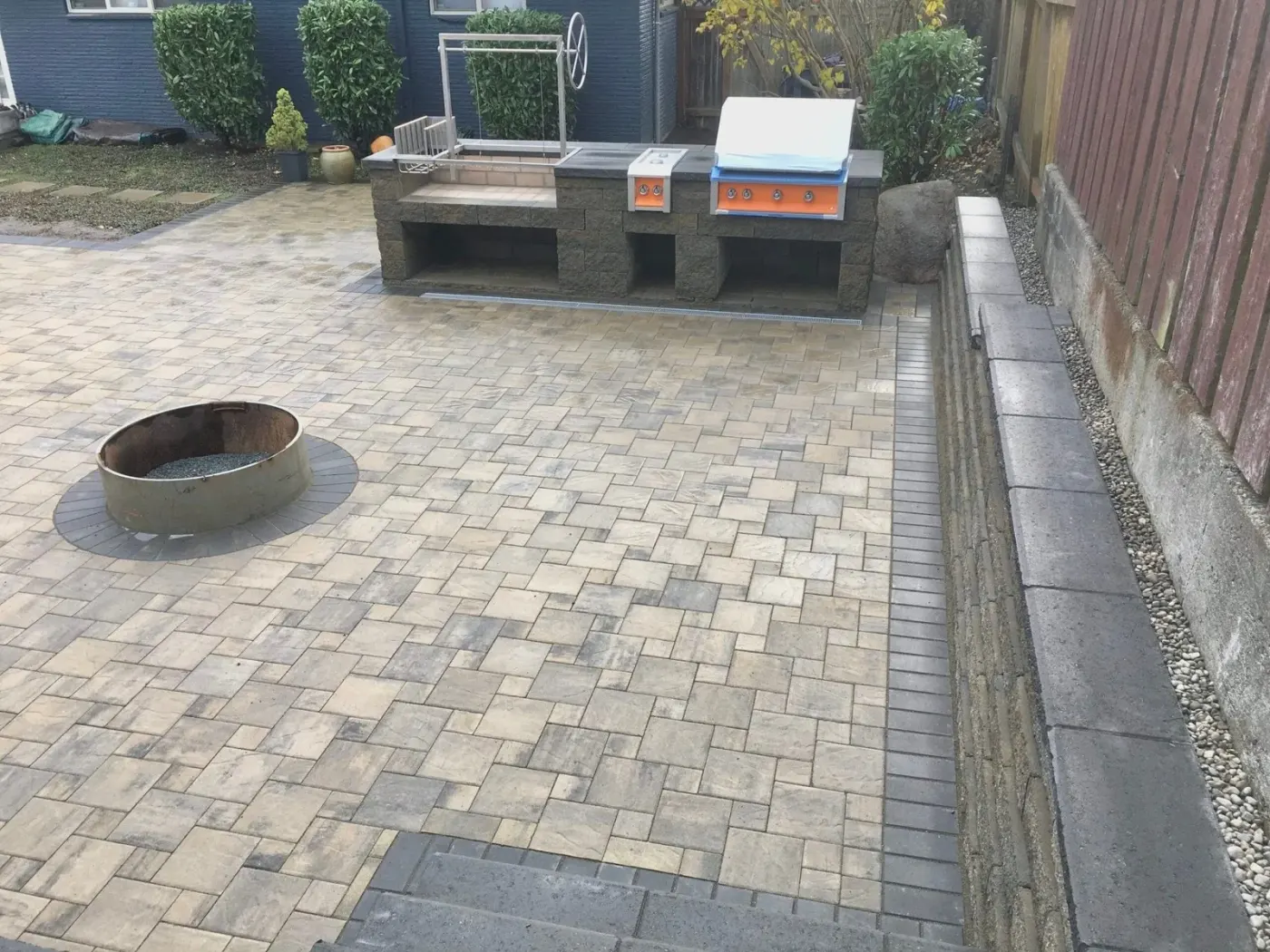
Built-in grill island and fire pit set into a paver patio with a matching seat wall.
 Retaining WallsView full size
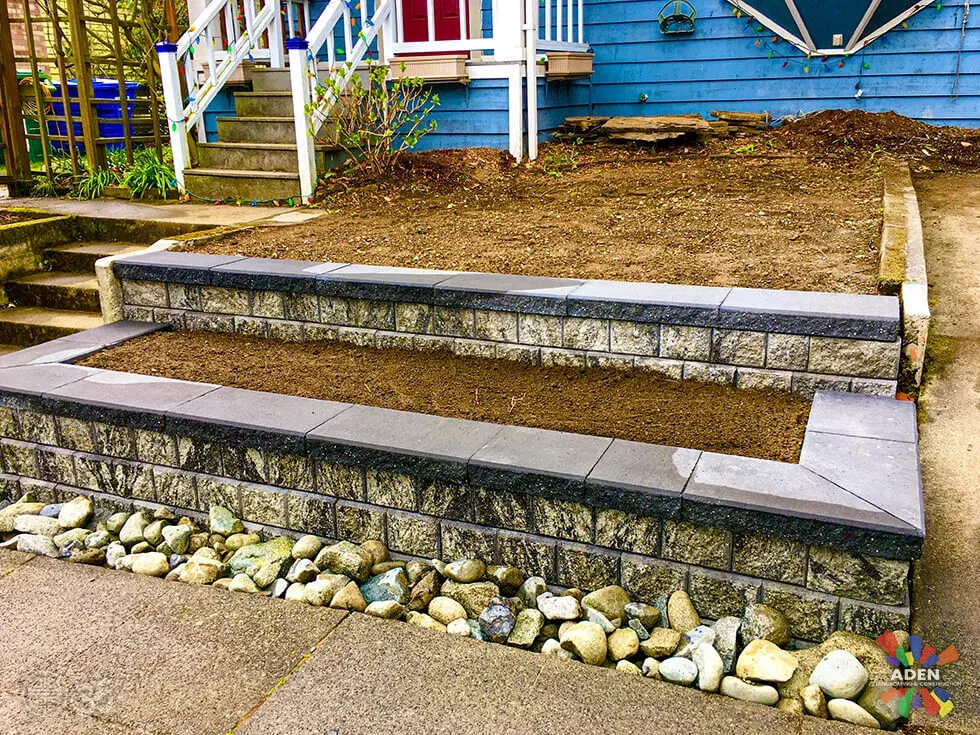
Splitting one tall wall into two shorter ones takes the load off both and leaves a planting shelf in between. The cobble along the base is drainage, not decoration.
 Paver PatioView full size
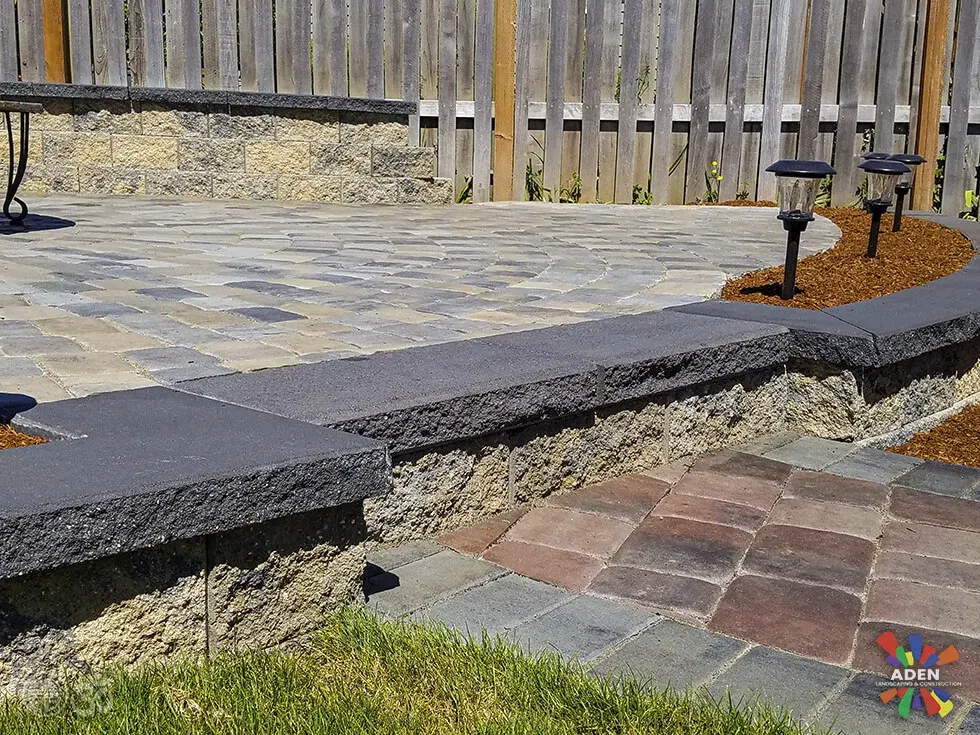
A raised paver terrace with a charcoal cap course, bollard lights along the edge and a fire bowl in the middle. The step down to the lawn is one clean uninterrupted line.
2 photos
We come out, look at the ground, and put a fixed written price together. No deposit, and it does not change once agreed.
Free estimate
Three minutes on the form. We reply during office hours, Monday – Friday, 9:00 AM – 7:00 PM, and we come out and look at the site before quoting anything.
Or call (425) 533-9734
Thank you — we have your details. We reply during office hours, Monday – Friday, 9:00 AM – 7:00 PM. If it is urgent, call (425) 533-9734.