
 Outdoor LivingView full size
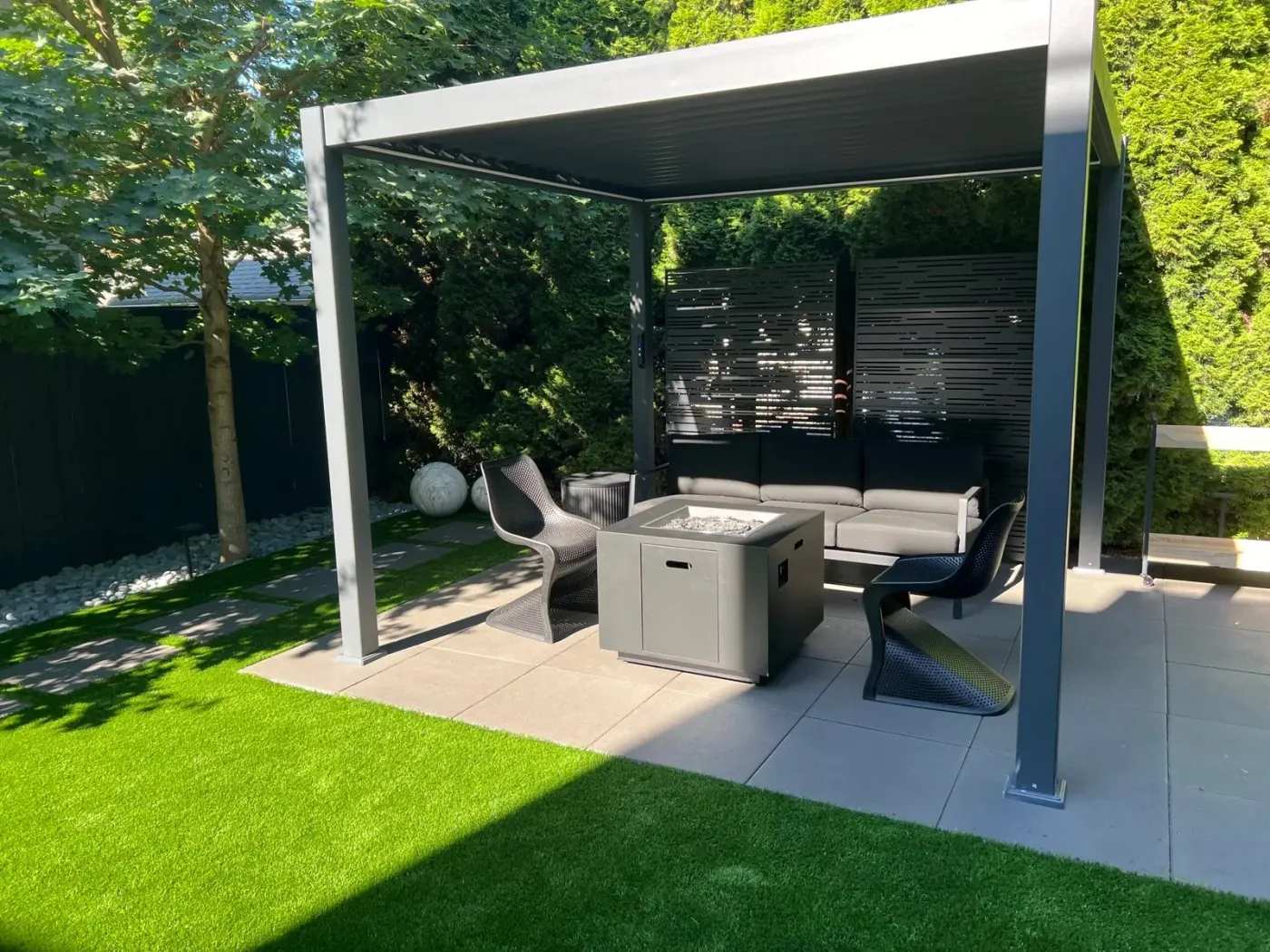
Covered lounge, fire table & turf lawn
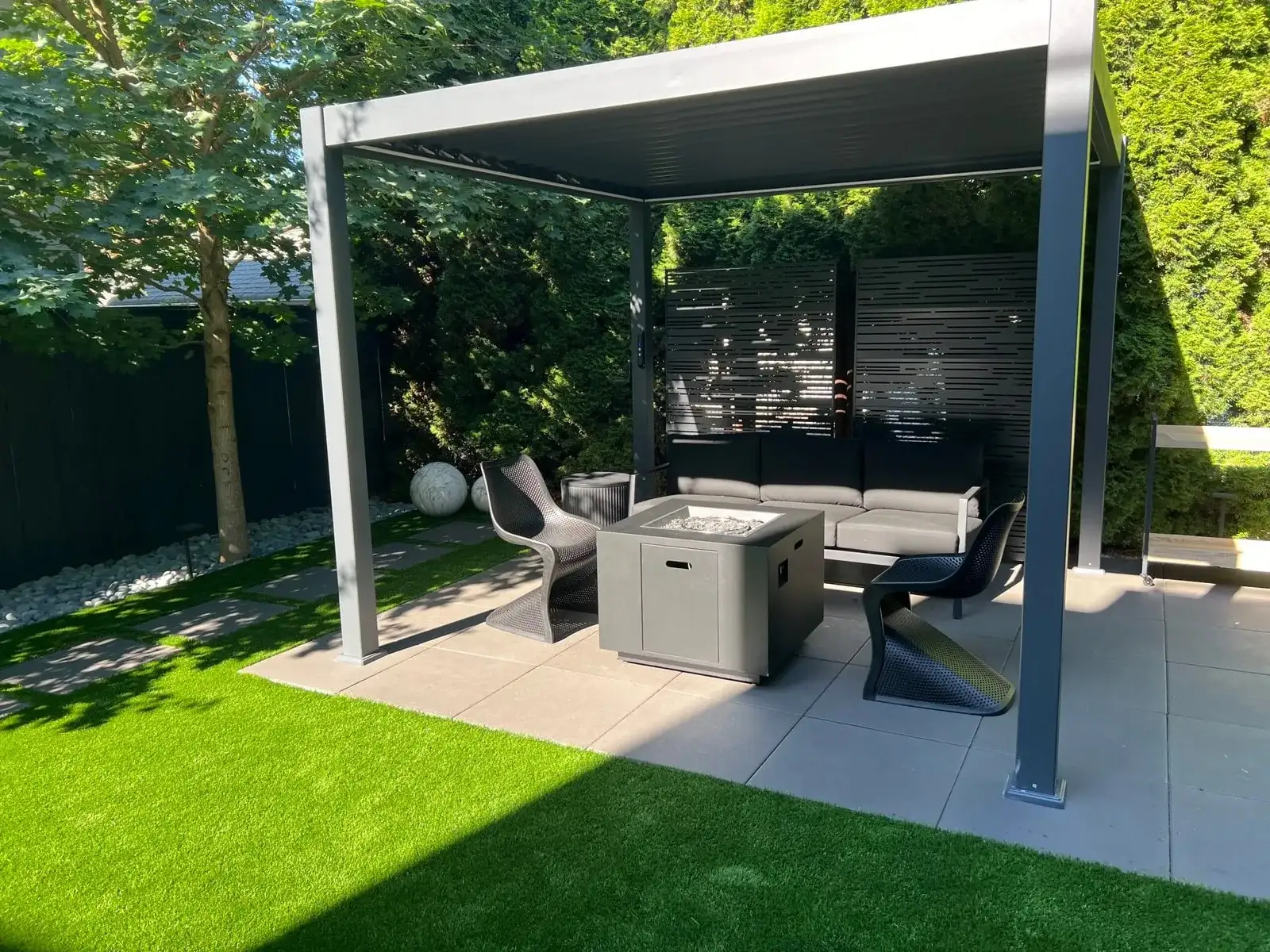
A modern pergola over a paved lounge, edged straight into a turf lawn that stays green all winter, with a plank path running the length of the lot.
2 photos
No down payment. You pay when the project is finished.
Monday – Friday, 9:00 AM – 7:00 PM · Capitol Hill, Seattle
Decks & Structures · Seattle
On a Seattle lot the most valuable thing a deck does is often not the deck. City gardens are small, frequently sloped, and the useful flat ground is already taken by the house — which means the space a raised deck creates underneath it can be worth as much as the surface on top. Whether that space ends up dry and usable or a permanently wet no-go area is decided when the deck is framed, not afterwards. The other Seattle constant is the connection to the house. A great deal of this housing stock predates current detailing, and the ledger where a deck meets an older wall is the single most common thing we find failing on decks brought to us for replacement.
Covered outdoor lounge with a fire table beside an artificial turf lawn on a Seattle property
What we get called about
Seattle takes 38+ inches of rain a year and almost all of it arrives October to March. That single fact decides more landscaping outcomes here than plant choice ever does — a patio without a drainage plan is a patio that heaves, and a lawn on undisturbed till is a lawn that sits under water all winter.
Worth knowing in Seattle
If your deck will be more than a step or two off the ground, decide about the space underneath before it is framed. Under-deck drainage built in at the start costs a fraction of retrofitting it, and on a small city lot it is frequently the cheapest square footage you will ever add.
Decking boards are laid with gaps. That is deliberate — it is how the surface drains and how the frame gets air — and it means everything that lands on the deck arrives underneath it, spread out and dripping, for nine months of the year.
Left that way, the ground below a raised deck is wet whenever it has rained recently, which on this coast is most of the time. It becomes storage for things that do not mind, and nothing else. On a Seattle lot where the whole garden might be a few hundred square feet, writing off that area is a real loss.
An under-deck drainage system catches the water above or below the joists and takes it to a downpipe, leaving a dry ceiling and a usable room beneath. It has to be planned with the framing, because the fall and the collection route depend on how the joists run. Fitted at build it is a modest addition; fitted afterwards it means working overhead in a space that is already finished, and the price reflects that.
The method
The sequence does not change between neighbourhoods — what changes is the ground it is applied to. Full detail on the decks & structures service page.
A dining deck, a route between levels and a sun trap are different structures at different heights. Deciding that first is what stops a deck being the wrong size in the right place.
Footing depth, how posts meet the ground, and how the frame ties into the building. That connection is the most common failure point on decks we are called out to replace.
Structure first, then the details that let it dry: spacing, flashing where the frame meets the house, and drainage below where the deck is over usable space.
Boards run to suit the sightline rather than the shortest cut list, with border and inlay detail where a large deck needs the joint hidden.
Riser lights and rail detail go in once the levels are final, because both are fixed to the finished structure rather than the frame.
What it costs in Seattle
Seattle decks run $35 to $90 per square foot, and height moves the number far more than area does. A ground-level deck is a surface; an elevated one is a structure with footings, posts, beams and a full railing run, and the two are not comparable at the same square footage. On a tight lot, add the material handling — framing timber and decking arrive at the kerb and go through a side gate, which is labour rather than material.
You pay after the project is fully completed.
The estimate you sign is the price you pay.
Spread the cost with no interest.
Covers hardscape work; vegetation excluded.
Local questions
General questions about this service are on the service page. These are the ones that only come up here.
It depends on height, area and where on the lot it sits, and it is worth resolving before design rather than after. Low decks near ground level are frequently exempt; raised decks, anything attached to the house, and anything on a lot carrying an Environmentally Critical Area designation are a different conversation — an ECA changes what is exempt regardless of the deck itself, and a good number of Seattle lots on slopes or near water carry one. Because that determination is address-specific rather than general, we confirm it for your property and put the answer in the written estimate instead of quoting a rule of thumb.
The ledger is the board that fastens the deck frame to the house, and it is where a large share of deck failures start. Water running down the wall gets behind it, sits between timber and building, and has nowhere to dry — so the ledger rots, the fixings lose their hold, and the failure is invisible from above until the deck starts to feel wrong underfoot. On older Seattle houses this is common because the detailing that keeps water out of that joint was not standard when much of this stock was built. Correct flashing and a drainage gap solve it; on a replacement we always open that junction up and look rather than building onto whatever is there.
Accept that some film is normal here and design to reduce it rather than expecting to eliminate it. A north-facing deck in a city garden may get no direct sun for months, and algae only needs damp and shade. Composite surfaces hold it less than cedar and clean off far more easily, which on a permanently shaded deck is a stronger argument for composite than the maintenance saving is. Beyond material, the improvements are drying time and airflow: opening up overhanging planting where you can, keeping the gaps between boards clear so water leaves rather than sitting, and making sure the frame beneath is not enclosed so tightly that it never dries.
Often it is the only thing that does. Where a garden falls away sharply, terracing it into level ground means retaining walls, excavation and spoil removal on a lot with nowhere to put spoil — which gets expensive quickly. A deck spans the slope instead of reshaping it: posts to footings, a level surface at the height you actually want it, and the ground below left alone. Where the fall is significant, the practical answer is usually a deck at house level and steps down to whatever ground is worth reaching, rather than one enormous structure trying to cover everything.
Serving Seattle and surrounding neighbourhoods
Capitol Hill · Ballard · Queen Anne · Magnolia · West Seattle · Green Lake · Wedgwood · Madison Park · Laurelhurst · Mount Baker · Seward Park · Fremont · Wallingford · Columbia City
98101 · 98102 · 98103 · 98104 · 98105 · 98106 · 98107 · 98108 · 98109 · 98112 · 98115 · 98116 · 98117 · 98118 · 98119 · 98121 · 98122 · 98125 · 98126 · 98133 · 98134 · 98136 · 98144 · 98146 · 98177 · 98199
Recent work
Outdoor LivingView full sizeA modern pergola over a paved lounge, edged straight into a turf lawn that stays green all winter, with a plank path running the length of the lot.
2 photos
 Retaining WallsView full size
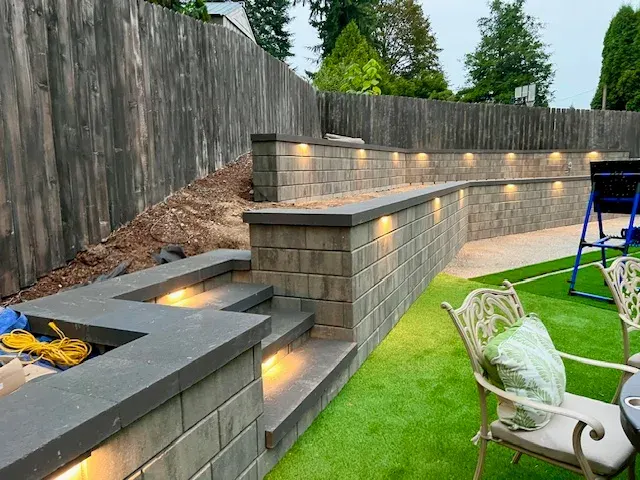
Lighting recessed into the wall face and the step risers, so the garden still works through eight months of dark Seattle evenings. Photographed the night it was commissioned.
2 photos
 FlagstoneView full size
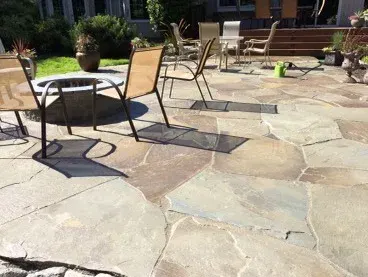
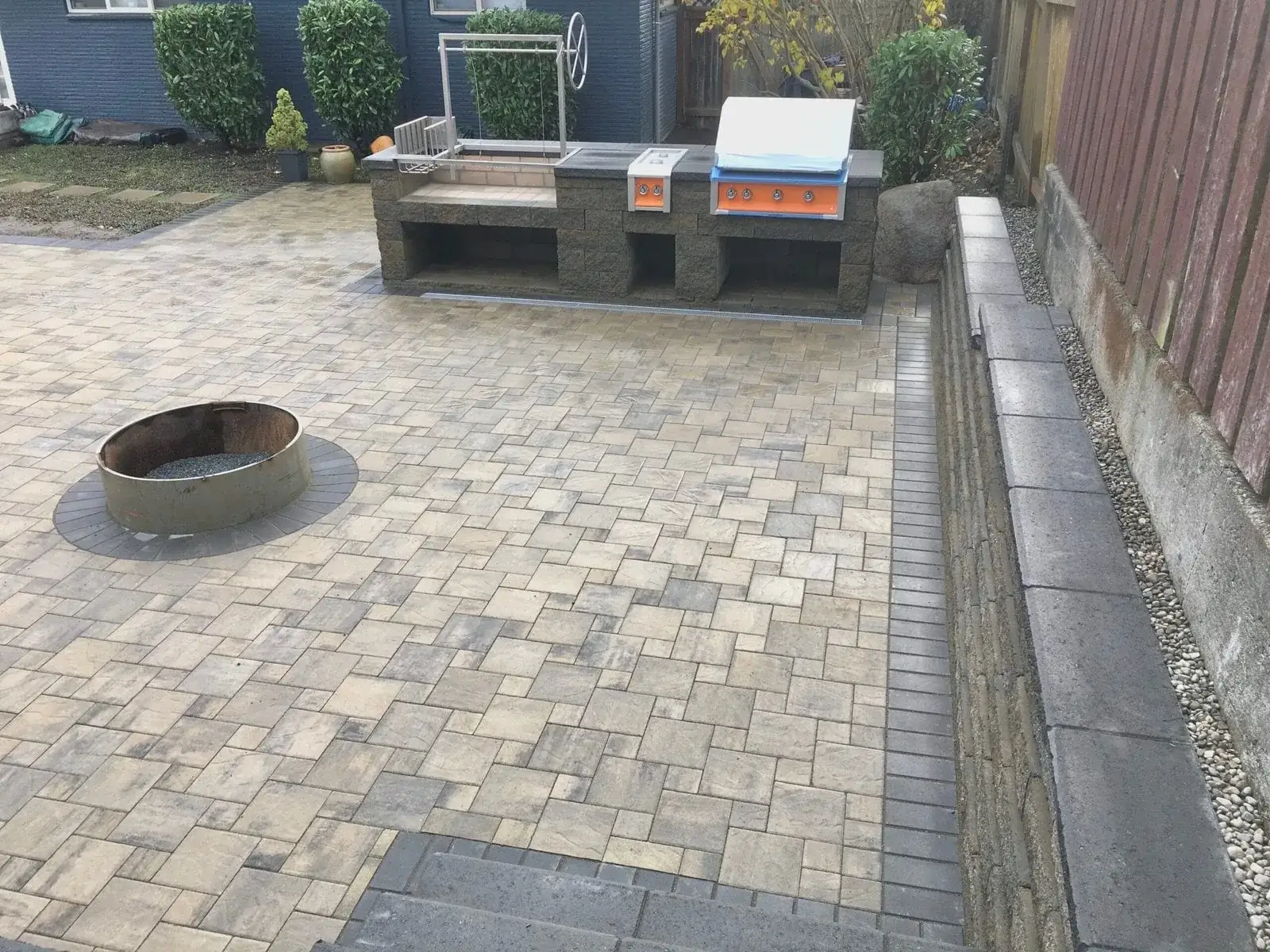
Hand-fitted flagstone laid tight, with a fire bowl and seating where the lawn used to sit wet.
 Design & BuildView full size
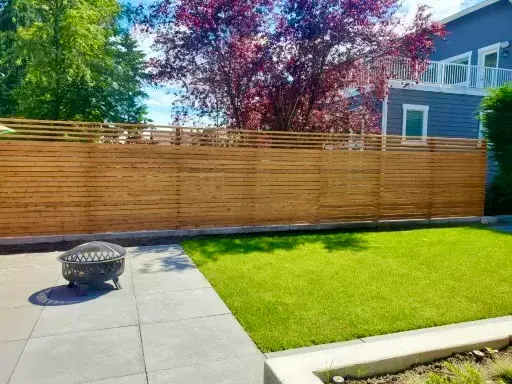
A small city garden done as one job — horizontal cedar screen for privacy from the neighbours, a concrete patio, and turf that stays green through the winter.
We come out, look at the ground, and put a fixed written price together. No deposit, and it does not change once agreed.
Free estimate
Three minutes on the form. We reply during office hours, Monday – Friday, 9:00 AM – 7:00 PM, and we come out and look at the site before quoting anything.
Or call (425) 533-9734
Thank you — we have your details. We reply during office hours, Monday – Friday, 9:00 AM – 7:00 PM. If it is urgent, call (425) 533-9734.