
 Outdoor LivingView full size
Outdoor kitchen and fire pit
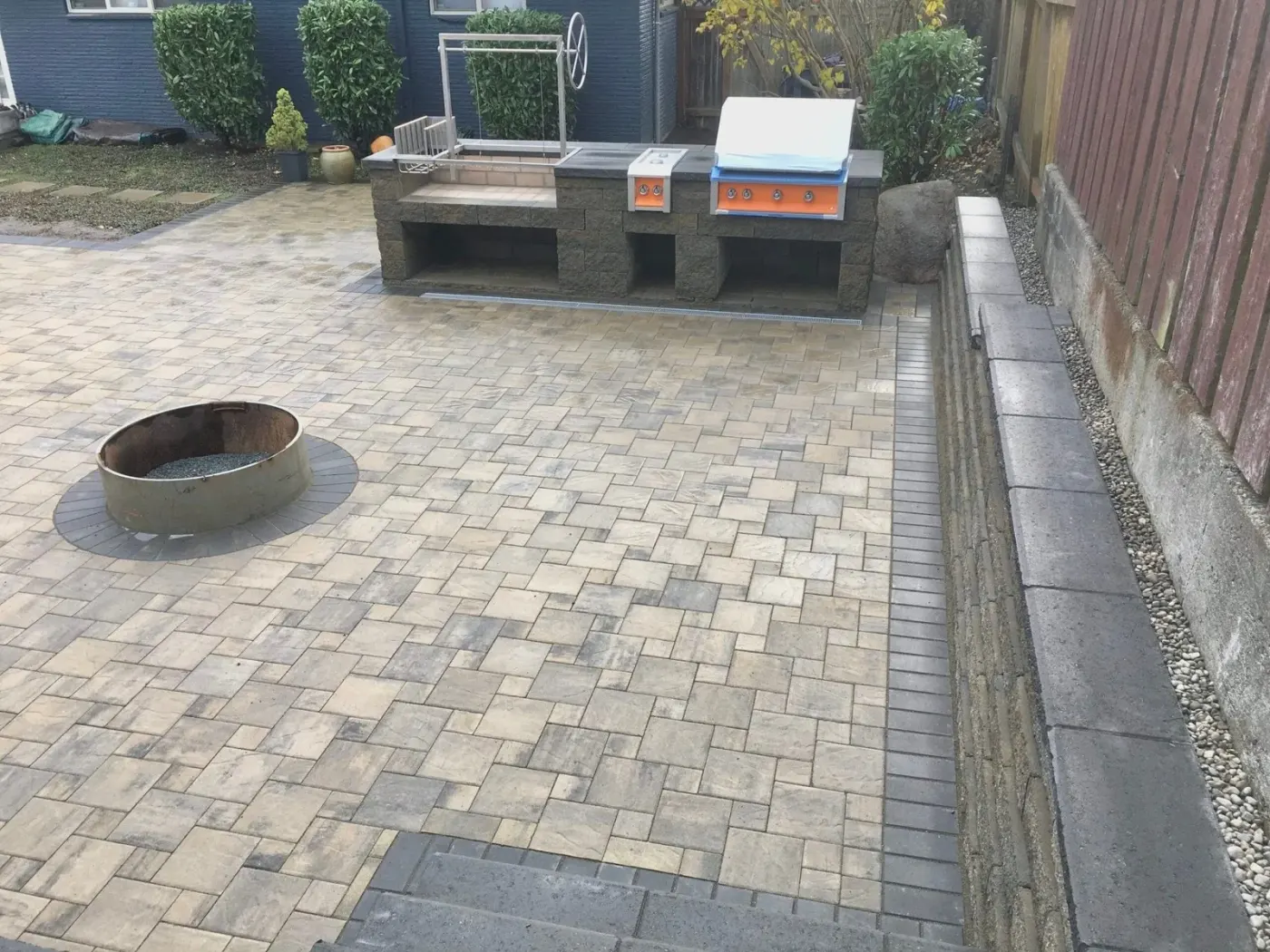
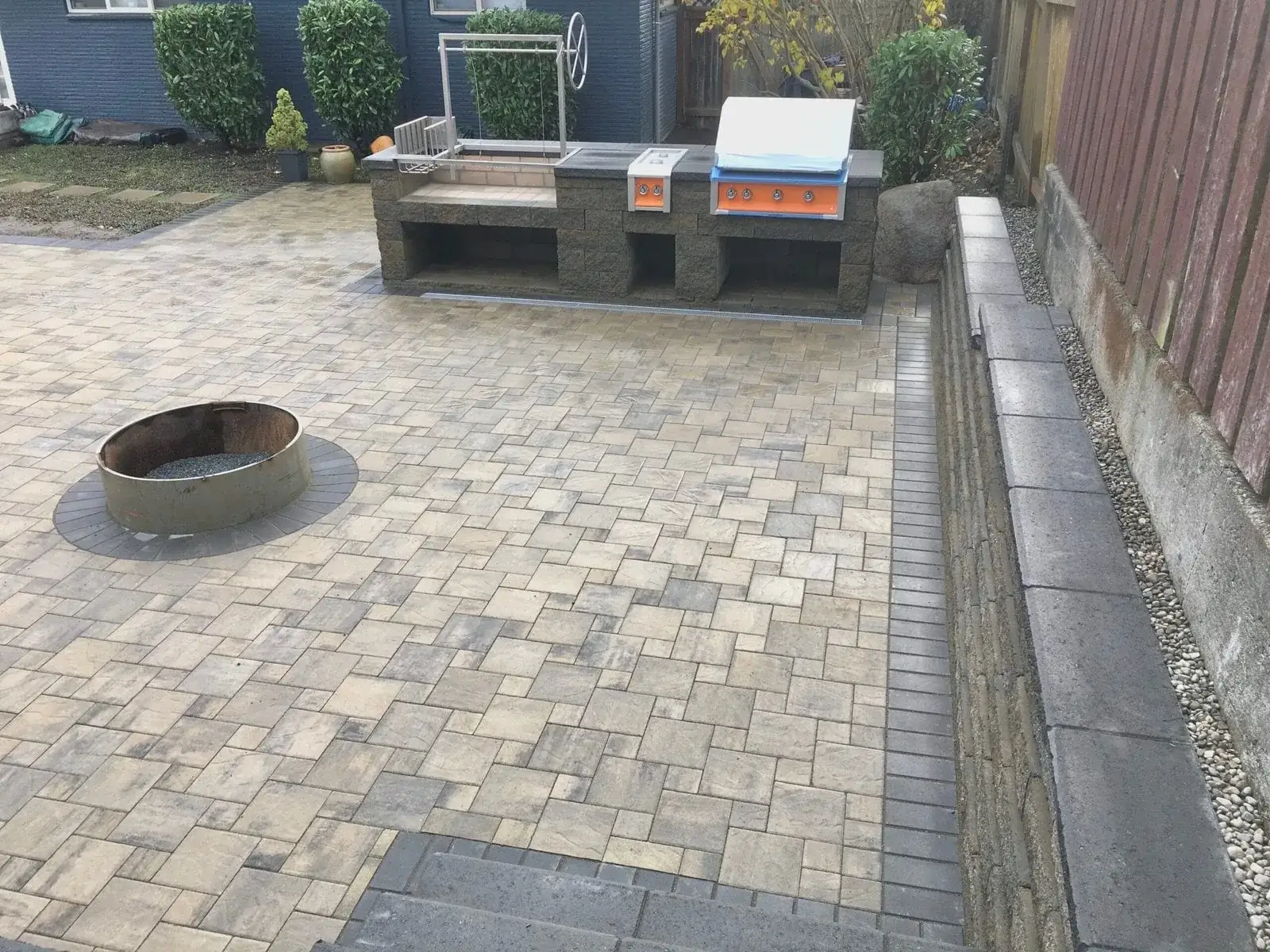
Built-in grill island and fire pit set into a paver patio with a matching seat wall.
No down payment. You pay when the project is finished.
Monday – Friday, 9:00 AM – 7:00 PM · Capitol Hill, Seattle
Drainage · Shoreline
Shoreline drains the way north Seattle drains, with the same glacial till producing the same result — water reaches the hardpan, stops, saturates the topsoil above it and then sits. What differs here is scale and exception. The lots are larger, so a system serves a bigger catchment than its Seattle equivalent, and access is generally good enough to run a machine to the trench. The exceptions are the Boeing Creek and Ballinger ravine corridors, which cut real grade through the middle of the city and change the discharge picture entirely, and the bluff above Richmond Beach, where where water goes stops being a garden question and becomes a stability one.
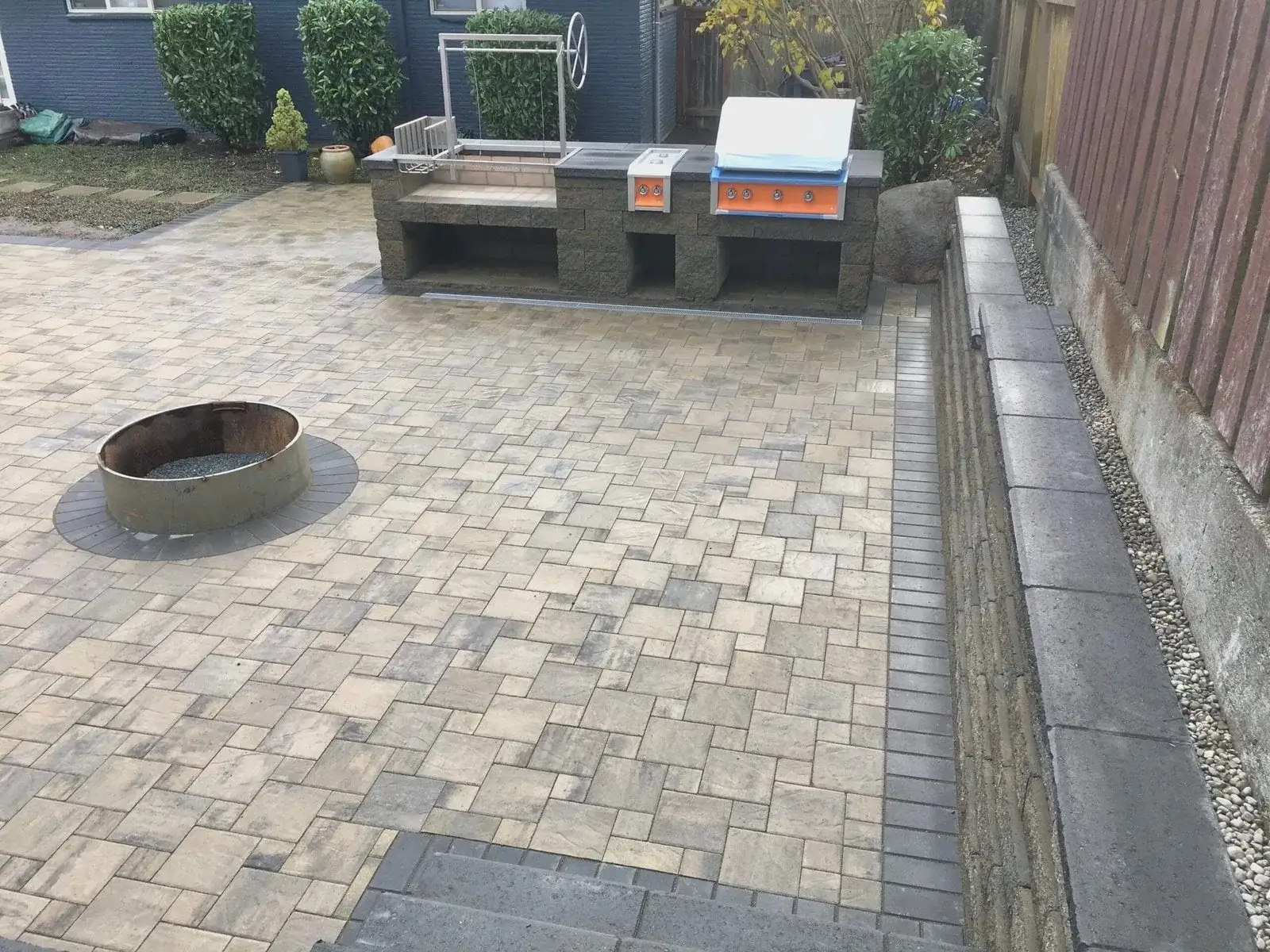
Built-in outdoor kitchen island and fire pit on a paver patio with a low seat wall in Shoreline
What we get called about
Shoreline is what north Seattle would be with bigger lots — the same glacial till, the same flat platforms, the same drainage consequences, but with real space to work in and generally straightforward access. Two local specifics are worth knowing. Innis Arden has covenants including view protection, which constrains planting height and tree work in a way the rest of the city does not. And the western edge above Richmond Beach is bluff ground, where slope stability and drainage are design factors rather than formalities.
Worth knowing in Shoreline
If your property is anywhere near a ravine edge or the Richmond Beach bluff, deal with the discharge properly rather than letting a drain daylight over the lip. Concentrated water discharged onto a slope is the fastest way to turn a drainage improvement into a stability problem.
The method
The sequence does not change between neighbourhoods — what changes is the ground it is applied to. Full detail on the drainage service page.
Roof, surface runoff, a neighbouring property's grade, or groundwater sitting on the till. These need different answers and guessing wastes the whole job.
A drain needs somewhere legal and physical to go — daylight at a lower point, or an approved connection. A drain that terminates in a hole is a soakaway on ground that does not soak.
Continuous fall along the whole run. A trench that dips holds water and silts up, which is the most common reason a retrofit drain stops working.
Perforated pipe bedded in clean washed rock, wrapped in geotextile so the surrounding soil cannot migrate in and clog the void.
Turf, planting or hard surface put back so the finished job does not read as a scar across the garden.
What it costs in Shoreline
Shoreline is good value for drainage work, and the reason is space rather than any discount. Room to bring a machine to the trench line removes the hand-digging premium that a comparable Seattle city lot carries, so the same run costs less to install even though it is often longer. Bluff-edge and ravine-adjacent work is priced separately, because the discharge design there carries more consideration than a plateau lot does.
You pay after the project is fully completed.
The estimate you sign is the price you pay.
Spread the cost with no interest.
Covers hardscape work; vegetation excluded.
Local questions
General questions about this service are on the service page. These are the ones that only come up here.
For most of the city, yes, and the practical consequences are identical. The same glacial till underlies both, so flat Shoreline lots hold water for exactly the reason flat Wedgwood and Maple Leaf lots do — water reaches the hardpan, stops, saturates the shallow topsoil above and has nowhere to run. The differences are scale and exception. Lots here are larger, so systems are sized for a bigger catchment. And the ravine corridors and the western bluff behave nothing like the plateau in between, which is where the design conversation actually changes.
Not as a design we would offer. Bluff ground along the Sound carries looser material than the plateau behind it and is sensitive both to loading and to water, and taking every drop your garden collects and delivering it in a concentrated stream over the lip is precisely the mechanism that destabilises a slope over successive wet seasons. It converts a drainage improvement into a stability liability. On these lots the discharge has to be designed properly — routed to an appropriate point, with attenuation where it is warranted — and the parcel checked for critical area designations first.
The ravine is genuinely useful topographically and genuinely constrained environmentally, so both sides need addressing. On the useful side, real grade means discharge to daylight is achievable in a way it is not on the flat plateau. On the constrained side, creek corridors carry critical area rules and buffers, and a drain that discharges into or near one is a different proposition from one that daylights on your own ground. We establish what applies to your parcel before designing an outfall rather than assuming the fall is available to use.
Longer ones, and sized for the catchment rather than for the visible symptom — which is the mistake we most often correct on these properties. A wet corner on a twelve-thousand-square-foot lot is collecting surface and shallow subsurface water from everything above it on the property, not from the few square yards around it. A system sized for the puddle gets overwhelmed during the first sustained wet week and shows it by water travelling around the end of the run. We work out where water enters, where it concentrates, and how much ground feeds each point before specifying anything.
Serving Shoreline and surrounding neighbourhoods
Richmond Beach · Innis Arden · Echo Lake · Ridgecrest · Briarcrest · Ballinger · North City · Highland Terrace · Parkwood
98133 · 98155 · 98177
Recent work
Outdoor LivingView full sizeBuilt-in grill island and fire pit set into a paver patio with a matching seat wall.
 DeckingView full size
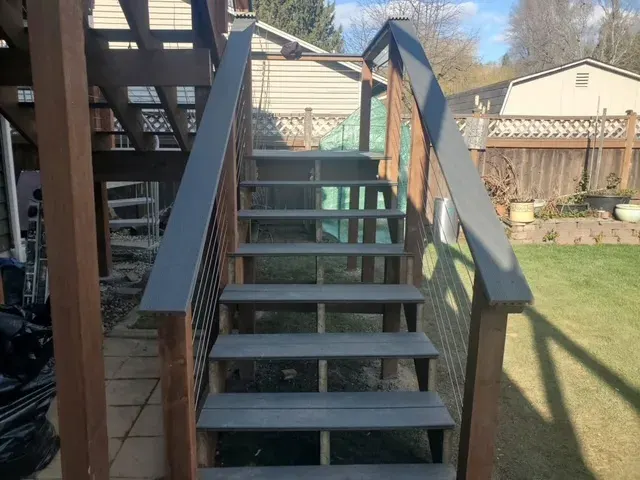
The missing link on a raised deck that had no proper way down. Cedar posts, stainless cable and a wide tread depth, so it is a route rather than a ladder.
 Retaining WallsView full size
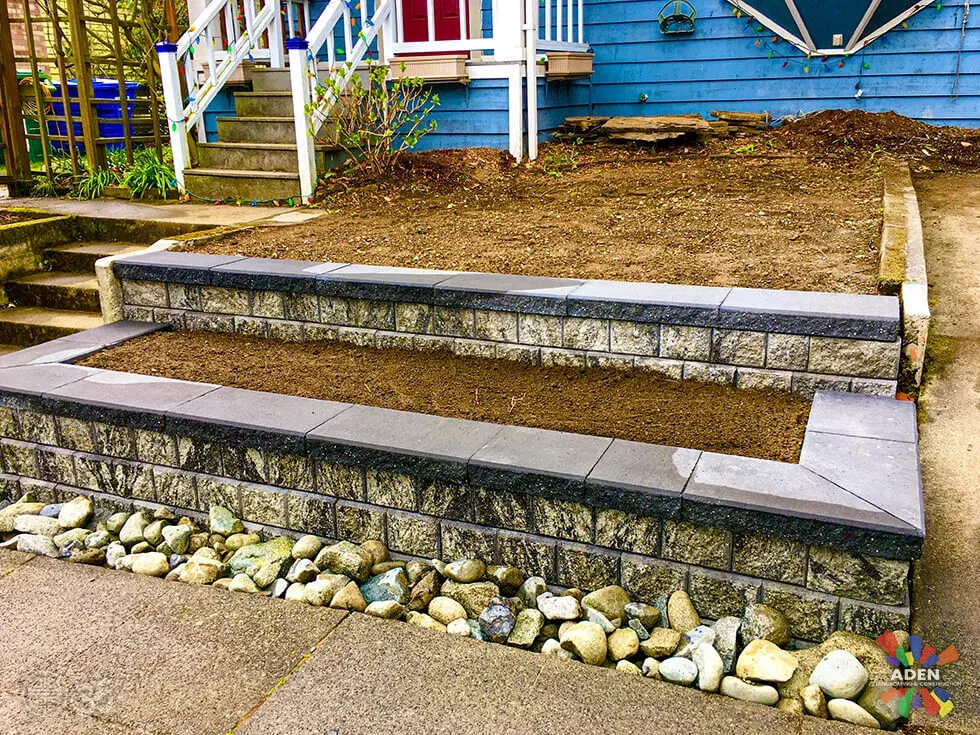
Splitting one tall wall into two shorter ones takes the load off both and leaves a planting shelf in between. The cobble along the base is drainage, not decoration.
 Paver PatioView full size
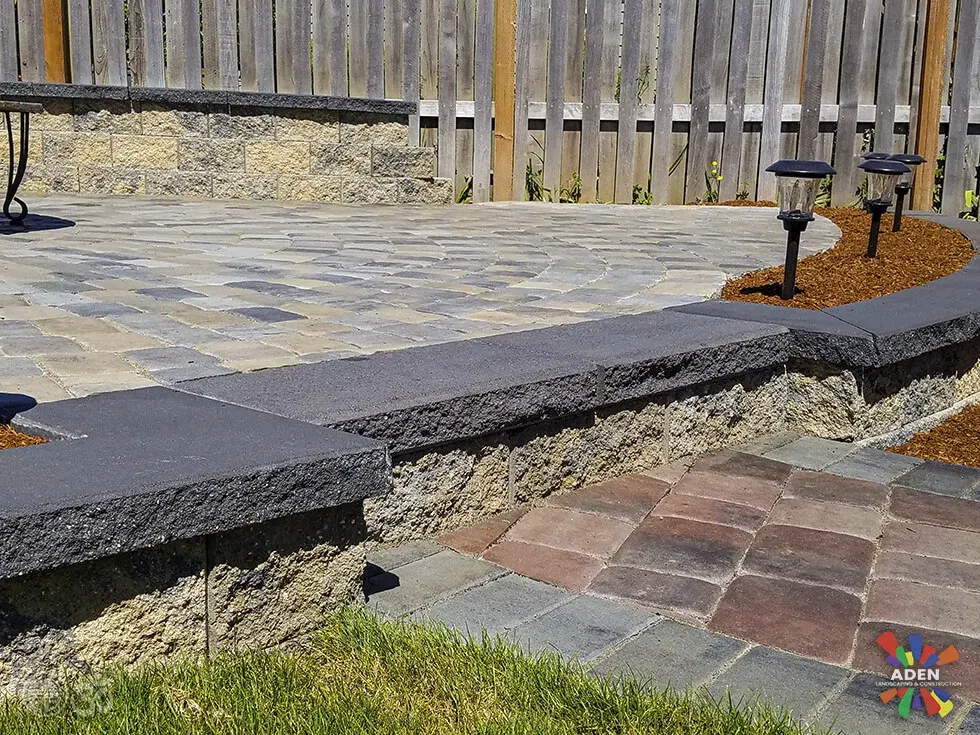
A raised paver terrace with a charcoal cap course, bollard lights along the edge and a fire bowl in the middle. The step down to the lawn is one clean uninterrupted line.
2 photos
We come out, look at the ground, and put a fixed written price together. No deposit, and it does not change once agreed.
Free estimate
Three minutes on the form. We reply during office hours, Monday – Friday, 9:00 AM – 7:00 PM, and we come out and look at the site before quoting anything.
Or call (425) 533-9734
Thank you — we have your details. We reply during office hours, Monday – Friday, 9:00 AM – 7:00 PM. If it is urgent, call (425) 533-9734.