
 DeckingView full size
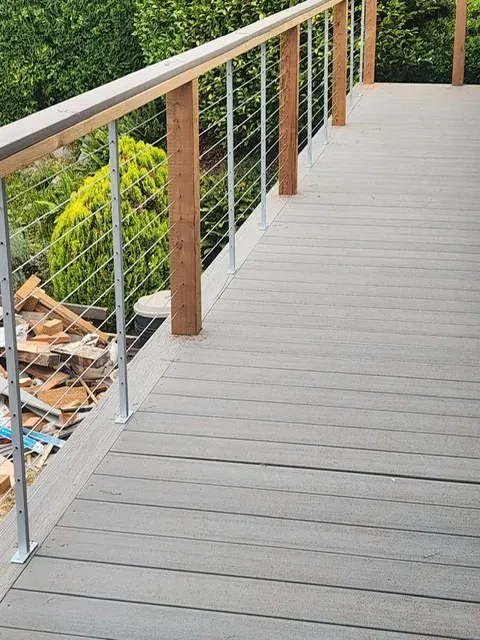
Cable-rail walkway along the hedge
A raised walk connecting two levels of a narrow side garden. Cedar posts with stainless cable infill keep the hedge visible instead of walling it off behind balusters.
No down payment. You pay when the project is finished.
Monday – Friday, 9:00 AM – 7:00 PM · Capitol Hill, Seattle
Decks & Structures · Kirkland
A Kirkland deck is frequently built for a view, and that makes the railing the most consequential decision on the project rather than the last one. Railing is a code requirement above a certain height and there is no negotiating it away — so the question is not whether there is a barrier but how much of the outlook it takes. A traditional picket run at seated eye level will remove a meaningful part of what the deck was built for. Stainless cable, slim metal picket and glass all solve the same problem while leaving more of the view, and they differ in cost, in maintenance and in how they weather within sight of the water.
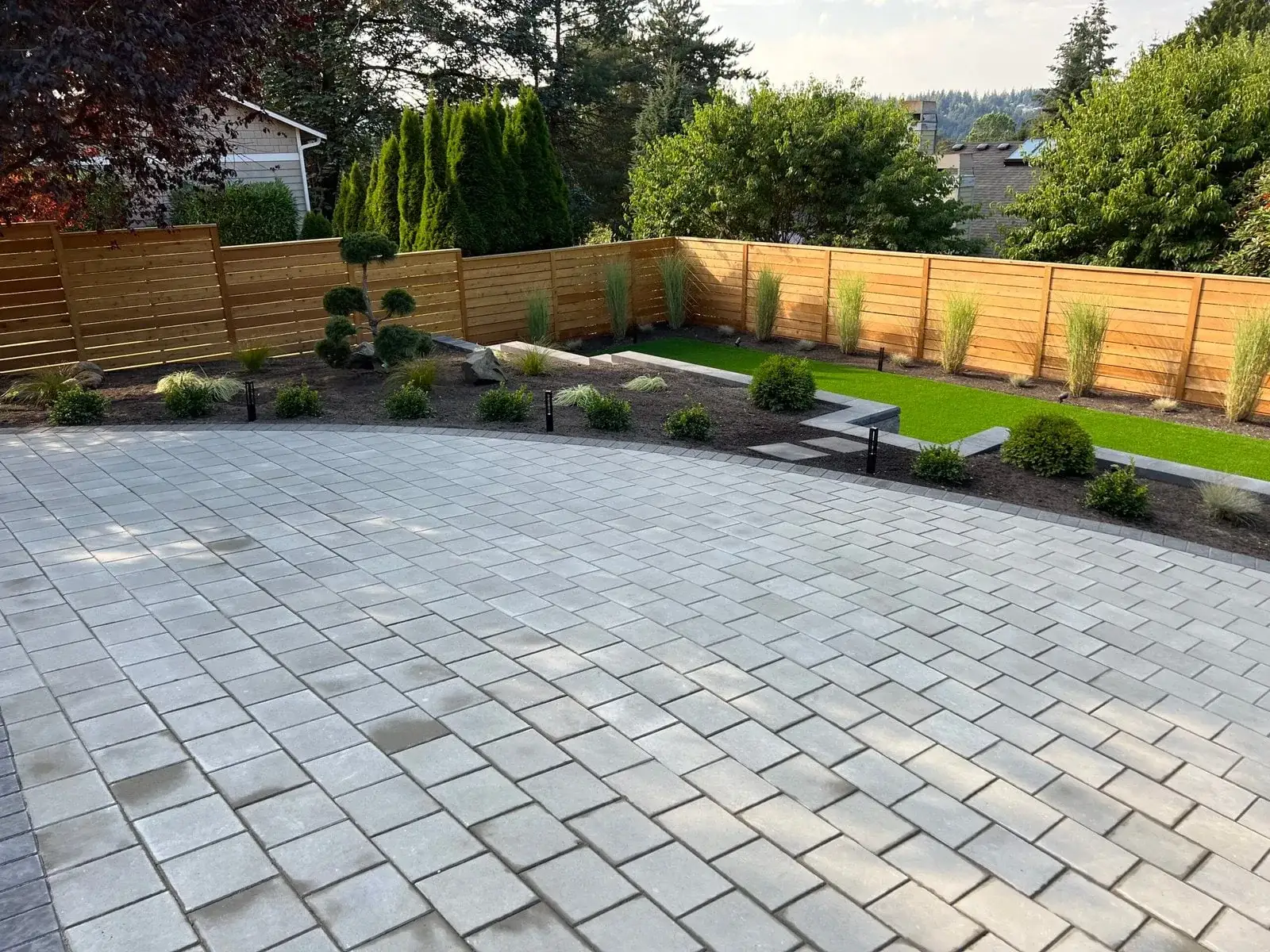
Large paver patio with artificial turf lawn, new planting beds and horizontal cedar fencing in Kirkland
What we get called about
Kirkland is a lake city built on a slope, and the closer to the water a property sits the more the fall dictates the work. Downtown and Houghton lots frequently need terracing and stairs to produce anything level, and on the tighter waterfront streets the access constraints look more like Seattle than like the rest of the Eastside. Up on Rose Hill and Finn Hill the lots open out, access improves and the work becomes about making a large space do something. The low ground around Juanita Bay is the drainage exception and needs checking.
Worth knowing in Kirkland
Sit down at the deck height before choosing a railing. The view that matters is the one from a chair, not from standing — and the difference between those two eye levels is exactly the band a railing occupies. Ten minutes with a chair on the existing ground answers it better than any drawing.
All three meet the same requirement and they trade differently. A slim metal picket run is the least expensive, is essentially maintenance-free, and interrupts the view with a series of narrow verticals your eye learns to ignore surprisingly quickly.
Stainless cable gives the most open outlook for the money and suits a modern build. The trade is tension: cables need re-tensioning after the first season and periodically afterwards, and a run that has gone slack looks worse than a picket rail ever does. Posts also need to be substantial enough to take the tension without deflecting, which is a framing consideration rather than a railing one.
Glass gives the least obstructed view and the most maintenance. Within sight of water, panels show salt film, rain spotting and every fingerprint, and keeping them clear is a genuine ongoing task rather than an occasional one. It is the right answer where the view is the entire point and somebody is prepared to clean it; it is the wrong one where it will be washed twice and then resented.
The method
The sequence does not change between neighbourhoods — what changes is the ground it is applied to. Full detail on the decks & structures service page.
A dining deck, a route between levels and a sun trap are different structures at different heights. Deciding that first is what stops a deck being the wrong size in the right place.
Footing depth, how posts meet the ground, and how the frame ties into the building. That connection is the most common failure point on decks we are called out to replace.
Structure first, then the details that let it dry: spacing, flashing where the frame meets the house, and drainage below where the deck is over usable space.
Boards run to suit the sightline rather than the shortest cut list, with border and inlay detail where a large deck needs the joint hidden.
Riser lights and rail detail go in once the levels are final, because both are fixed to the finished structure rather than the frame.
What it costs in Kirkland
Kirkland decks run $35 to $90 per square foot, with the railing frequently the line that surprises people. Cable and glass systems cost substantially more per linear foot than a standard picket run, and on a view deck the run is usually along the longest side. Elevated framing on a sloped lot adds footing depth and post height, both of which are priced before a single board goes down.
You pay after the project is fully completed.
The estimate you sign is the price you pay.
Spread the cost with no interest.
Covers hardscape work; vegetation excluded.
Local questions
General questions about this service are on the service page. These are the ones that only come up here.
Stainless cable, for most Kirkland view decks, provided the framing is right. Horizontal cable runs read as almost nothing from a seated position while still being obviously substantial up close, which is the combination people are usually after. The thing that makes cable look flimsy is not the cable but the posts — they carry real tension, and a post that is undersized will deflect visibly and let the cables go slack. Getting that right is a framing decision made before the railing is chosen. Where a more traditional look is wanted, a slim metal picket at a wider spacing gives up less view than most people expect.
It is set by code rather than by preference, and it is determined by the height of the deck above the ground below rather than by the deck itself. That means the honest way to protect a view is not to argue about the barrier height but to work with the deck height — a deck a step lower can fall below the threshold that triggers a railing at all, and where it cannot, choosing an open infill matters more than any other decision. Requirements also differ between jurisdictions on the Eastside, so we confirm what applies to your address and design to it rather than to a general figure.
It affects how usable the deck is far more than how it is built, and that is worth designing for. An open deck with an exposed aspect over water can be genuinely uncomfortable on days when a sheltered one two streets back is fine, which quietly reduces how often it gets used. The answers are partial rather than total: a glass or solid screen on the prevailing side, a covered section at one end, or planting positioned to break the flow without blocking the outlook. Building the whole thing open and adding shelter later is possible but almost always looks like an addition, because it is.
On posts to footings taken down to competent ground, and on a slope the depth of those footings is a site-specific answer rather than a standard one. The load path runs from the boards, through the joists and beams, into the posts and out into the ground — so on a grade the question is what that ground is and how far down it becomes reliable. Fill, disturbed material from earlier grading, or a slope with movement history all change the answer. Where the slope is significant there may also be a designation on the lot that governs what can be built and how, which we confirm for your address before design rather than during it.
Serving Kirkland and surrounding neighbourhoods
Downtown Kirkland · Juanita · Rose Hill · Houghton · Bridle Trails · Totem Lake · Finn Hill · Kingsgate · Norkirk · Market · Highlands
98033 · 98034
Recent work
DeckingView full sizeA raised walk connecting two levels of a narrow side garden. Cedar posts with stainless cable infill keep the hedge visible instead of walling it off behind balusters.
 DeckingView full size
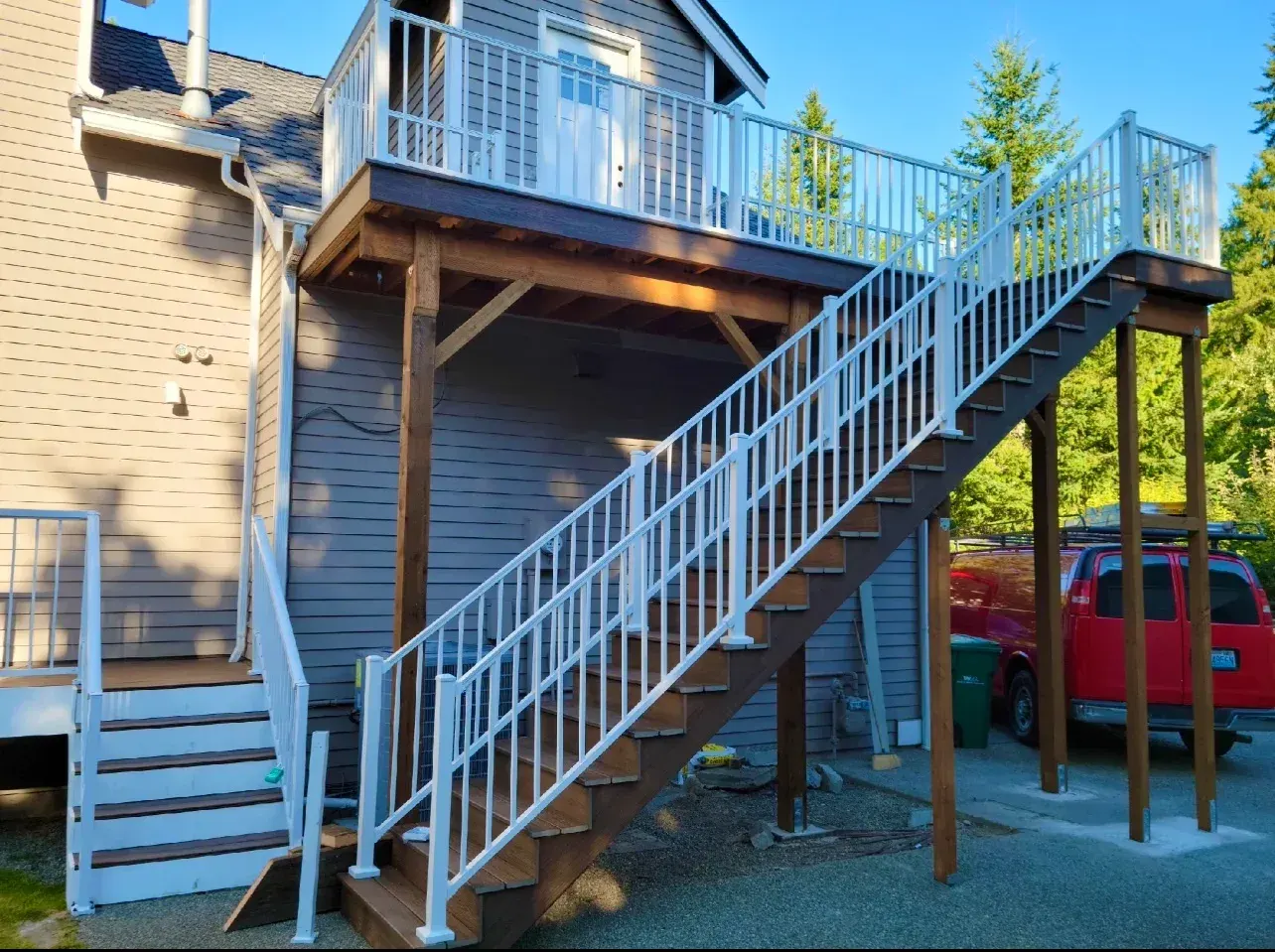
A full-height deck off the first floor with a long stair run down to the garden. The posts carry the whole thing, so the footings under them were the first thing poured.
 Paver PatioView full size
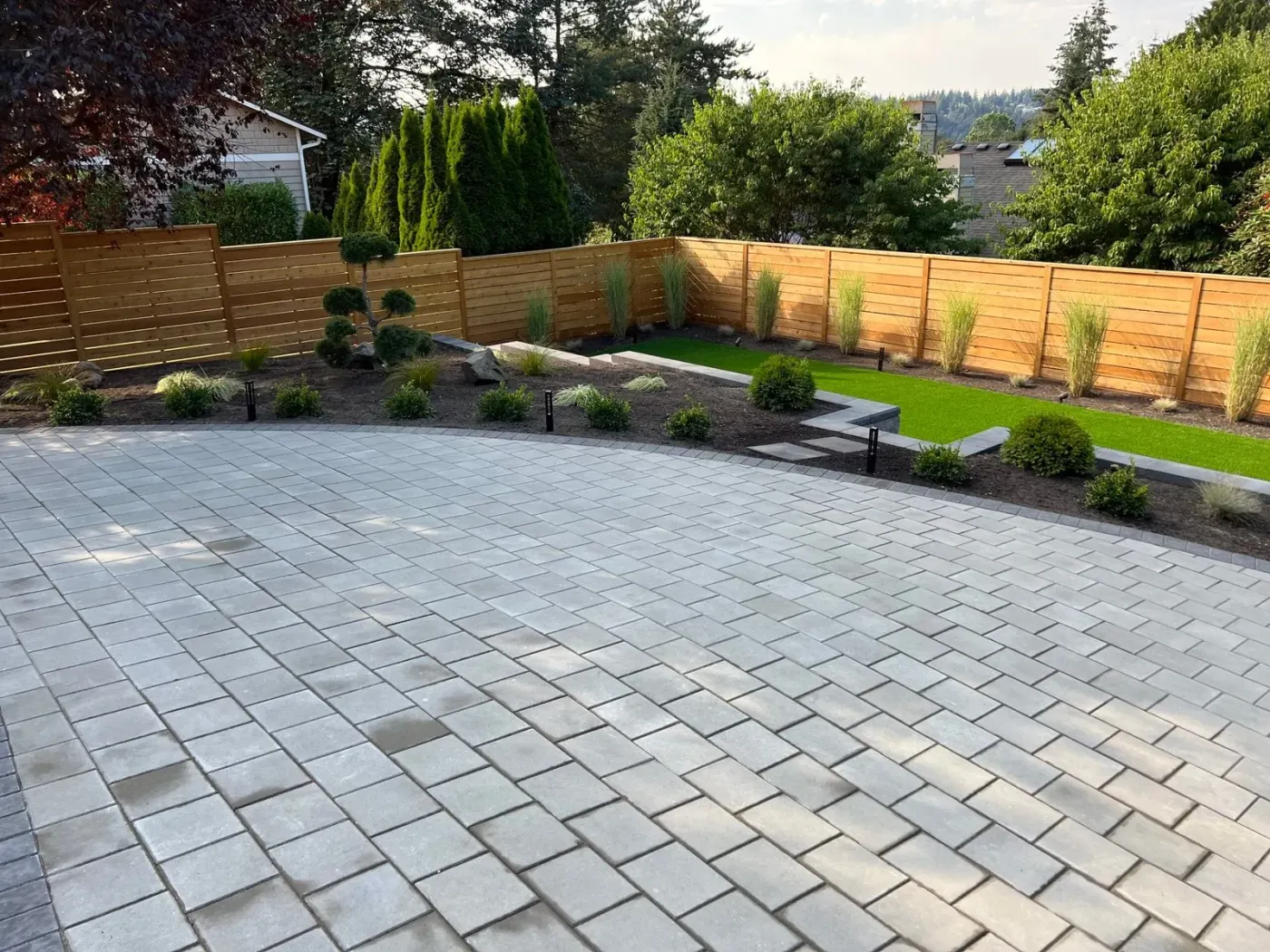
Patio, turf lawn, planting beds and a new cedar fence — the whole yard rebuilt as one project.
 HardscapingView full size
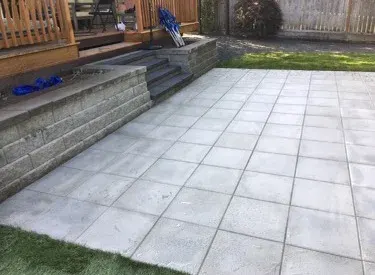
Large-format slabs filling the dead ground under the deck, with a low wall holding the bank behind them.
We come out, look at the ground, and put a fixed written price together. No deposit, and it does not change once agreed.
Free estimate
Three minutes on the form. We reply during office hours, Monday – Friday, 9:00 AM – 7:00 PM, and we come out and look at the site before quoting anything.
Or call (425) 533-9734
Thank you — we have your details. We reply during office hours, Monday – Friday, 9:00 AM – 7:00 PM. If it is urgent, call (425) 533-9734.