
 FlagstoneView full size
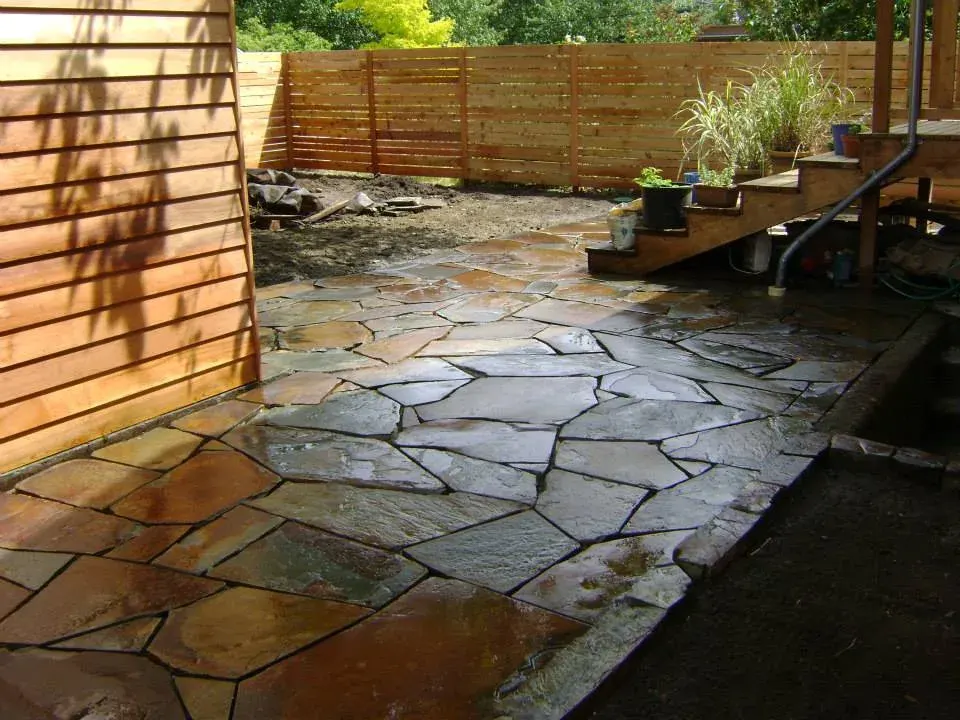
Flagstone under a cedar fence
A small back garden given over almost entirely to stone, closed in with a horizontal cedar fence. Wet, because it had just been jointed when this was taken.
No down payment. You pay when the project is finished.
Monday – Friday, 9:00 AM – 7:00 PM · Capitol Hill, Seattle
Decks & Structures · Ballard
On a Ballard lot the garden is small enough that a deck can easily consume it rather than improve it. The instinct is to build the largest deck the space allows; the result is a wooden yard with a fence round it and nowhere that feels like anywhere. The decks that work on lots this size do one of two things — they take the space up, to a level where you see over the fence rather than at it, or they take a defined part of the garden and leave the rest as garden. Both add usable space. Covering the whole footprint in boards adds surface without adding anywhere to be, and it is close to impossible to undo once it is built.
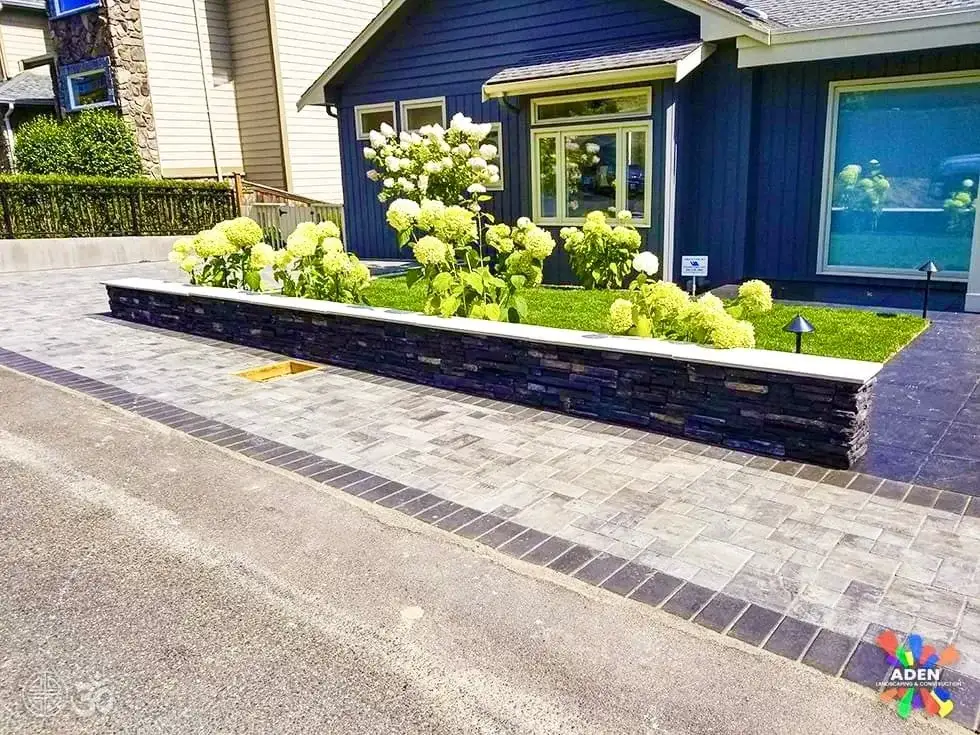
Paver apron and planted strip across the front of a house on an older residential street
What we get called about
Ballard is small lots and good drainage, which is close to the opposite of the rest of Seattle. The typical job here is not holding a slope or fixing a bog — it is making a compact rectangle behind a hundred-year-old house genuinely usable. That means more paved surface than people expect, a turf or lawn area smaller than instinct suggests, and enough planting depth at the boundary to make the space feel enclosed rather than merely small. The one real constraint is access: the older streets have narrow side returns and no off-street parking, so material handling shapes the schedule.
Worth knowing in Ballard
Do not build to the fence line by default. A deck occupying part of the garden with planting or gravel beyond it makes both parts feel bigger, where a deck covering everything makes the whole lot read as one small wooden room.
The method
The sequence does not change between neighbourhoods — what changes is the ground it is applied to. Full detail on the decks & structures service page.
A dining deck, a route between levels and a sun trap are different structures at different heights. Deciding that first is what stops a deck being the wrong size in the right place.
Footing depth, how posts meet the ground, and how the frame ties into the building. That connection is the most common failure point on decks we are called out to replace.
Structure first, then the details that let it dry: spacing, flashing where the frame meets the house, and drainage below where the deck is over usable space.
Boards run to suit the sightline rather than the shortest cut list, with border and inlay detail where a large deck needs the joint hidden.
Riser lights and rail detail go in once the levels are final, because both are fixed to the finished structure rather than the frame.
What it costs in Ballard
Ballard decks run $35 to $90 per square foot, and small areas carry their fixed costs badly — mobilising, setting out and delivery are much the same whatever the size, so the rate looks high while the total stays modest. Access is the real driver: where framing timber and decking come through a side gate by hand, the material handling is a bigger line than on a job several times the area with a driveway.
You pay after the project is fully completed.
The estimate you sign is the price you pay.
Spread the cost with no interest.
Covers hardscape work; vegetation excluded.
Local questions
General questions about this service are on the service page. These are the ones that only come up here.
Usually not, and it is the decision that most affects whether a small garden works. A deck covering the entire footprint gives you the most boards and the least sense of space, because there is no contrast — nothing to look at from the deck, and no suggestion that the garden extends beyond where you are standing. Taking a defined area and leaving the rest as planting, gravel or lawn makes both halves read as larger. On a genuinely tiny lot the alternative that does work is going up rather than out: a raised platform that changes your eye level does more for the space than covering another eight feet of ground.
Lower than you would like, and it works in both directions, which is the part worth thinking about. Raising a deck to see over the fence means being seen over it too, and on Ballard lot spacing that frequently puts you in direct view of a neighbouring window a short distance away. There may also be a regulatory limit depending on height and position. The practical approach is to stand on a ladder at the proposed height before committing and look in every direction — it answers the question honestly in five minutes and often changes the design. Where a raised deck is right, screening on one side only is usually all that is needed.
Yes, and material choice does most of the work. A north-facing deck in the gap between two Ballard houses may get no direct sun for months, which means the algae film that shade produces here establishes readily and stays. Composite holds it far less than cedar and cleans off with much less effort, so on a permanently shaded deck that is the stronger argument for composite rather than the maintenance saving. Beyond material, keeping the gaps between boards clear so water leaves, and not enclosing the frame so tightly it never dries, are what stop the structure suffering rather than just the surface.
Through the side by hand, and it shapes the schedule as much as the price. Framing timber, joists, decking and railing all arrive at the kerb and go through a gate or the house side, which means deliveries are sized to what can be cleared in a day — a pallet cannot be left on a Ballard street overnight. Long lengths are the constraint rather than weight: a joist that cannot turn the corner into a narrow return has to be cut and joined, which is a design consideration rather than an inconvenience. We establish the route before quoting so that the framing is designed around what can actually reach the site.
Serving Ballard and surrounding neighbourhoods
Ballard Avenue · Sunset Hill · Loyal Heights · Whittier Heights · West Woodland · Adams · Crown Hill edge
98107 · 98117
Recent work
FlagstoneView full sizeA small back garden given over almost entirely to stone, closed in with a horizontal cedar fence. Wet, because it had just been jointed when this was taken.
 HardscapingView full size
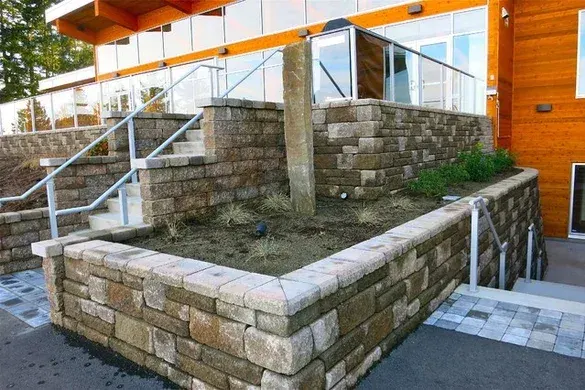
Segmental block walls terracing the grade at the front of a modern building, with a stone column, handrails to code and a paved approach — commercial hardscaping, where the walls have to take footfall as well as soil.
 Retaining WallsView full size
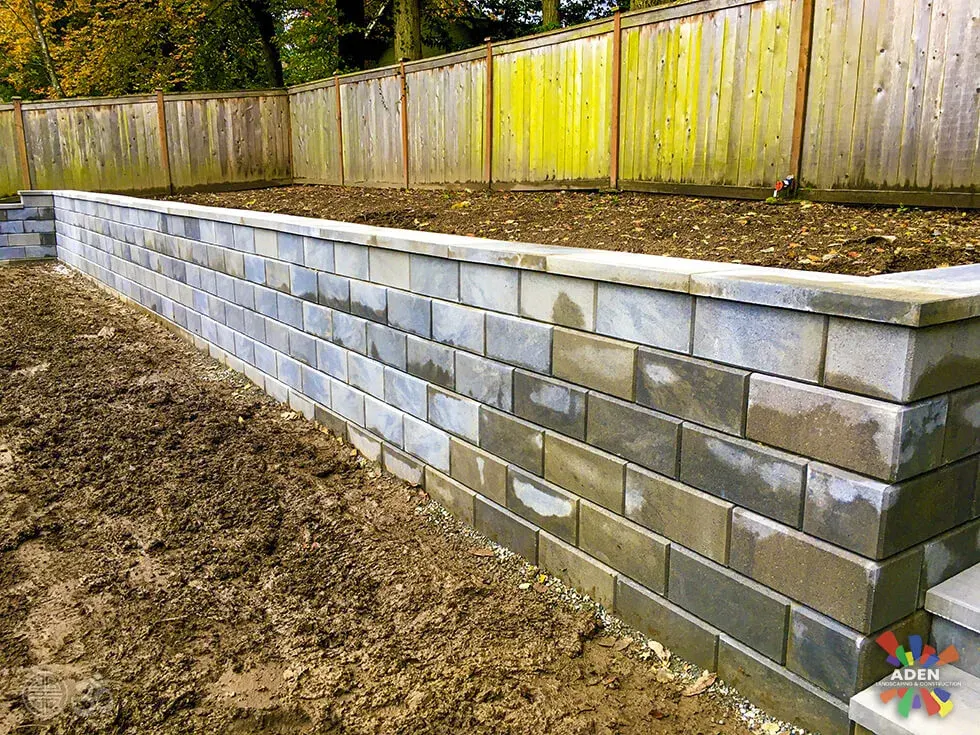
A wall run the whole length of a fence line to win back a flat strip of garden. Ballard lots are narrow, so the width this recovers is width the garden genuinely did not have.
 WalkwaysView full size
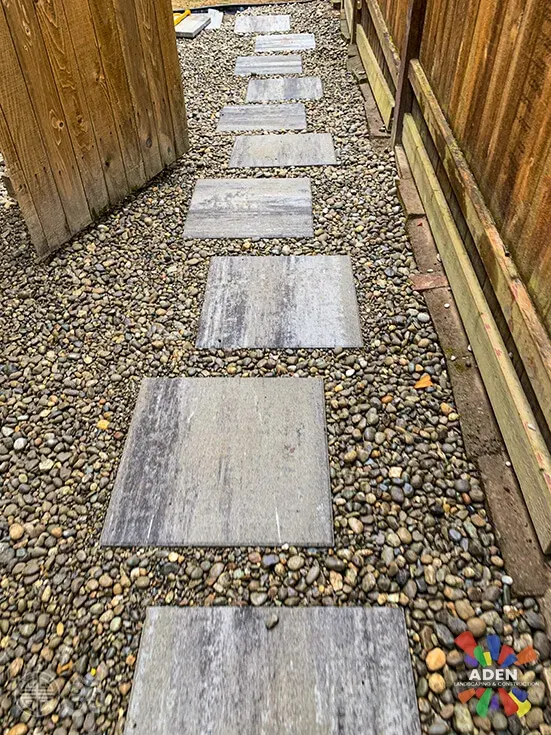
A side return too narrow for a full path. Large slabs floated in washed rock give a route through and let the ground either side carry on taking water.
We come out, look at the ground, and put a fixed written price together. No deposit, and it does not change once agreed.
Free estimate
Three minutes on the form. We reply during office hours, Monday – Friday, 9:00 AM – 7:00 PM, and we come out and look at the site before quoting anything.
Or call (425) 533-9734
Thank you — we have your details. We reply during office hours, Monday – Friday, 9:00 AM – 7:00 PM. If it is urgent, call (425) 533-9734.