
 Retaining WallsView full size
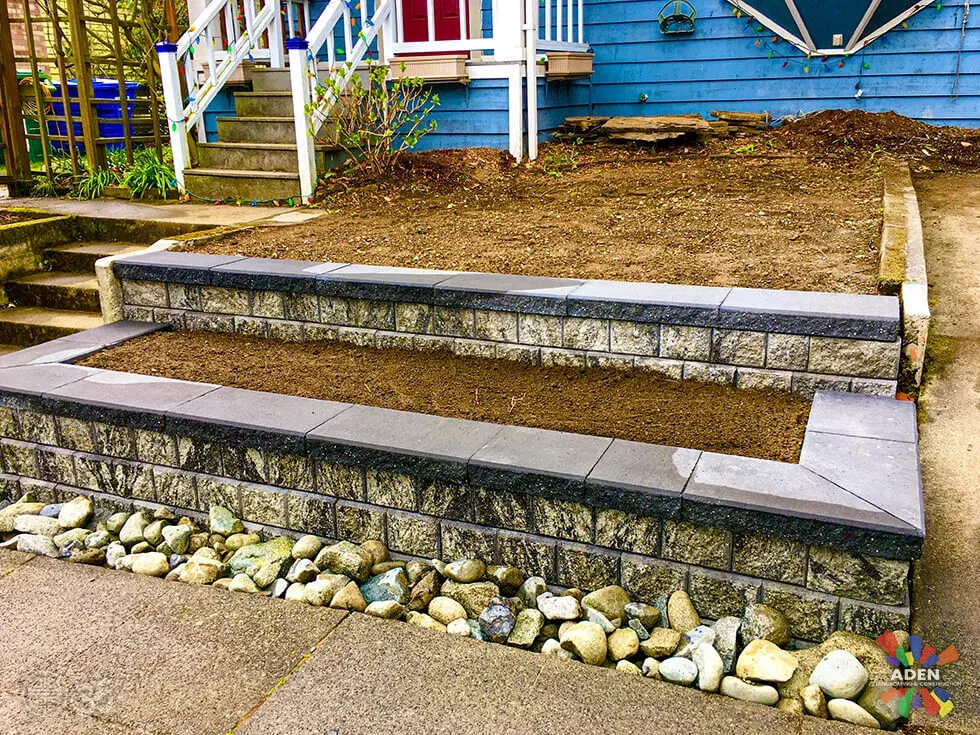
Two tiers and a set of steps
Splitting one tall wall into two shorter ones takes the load off both and leaves a planting shelf in between. The cobble along the base is drainage, not decoration.
No down payment. You pay when the project is finished.
Monday – Friday, 9:00 AM – 7:00 PM · Capitol Hill, Seattle
Retaining Walls · Shoreline
Most of Shoreline is a gentle plateau, so wall work here is less about rescuing a slope than about the two places where the ground stops being gentle. The Boeing Creek and Ballinger ravine corridors cut real grade through the middle of the city, and the western edge above Richmond Beach drops to Puget Sound on bluff ground that behaves like the Seattle bluffs rather than like the plateau behind it. Everywhere else, the typical Shoreline wall is a garden-scale structure on a generous post-war lot — terracing a modest fall, rebuilding a tired mid-century rockery, or giving a large flat garden some level change. Bigger lots and easy access make those genuinely good value here.
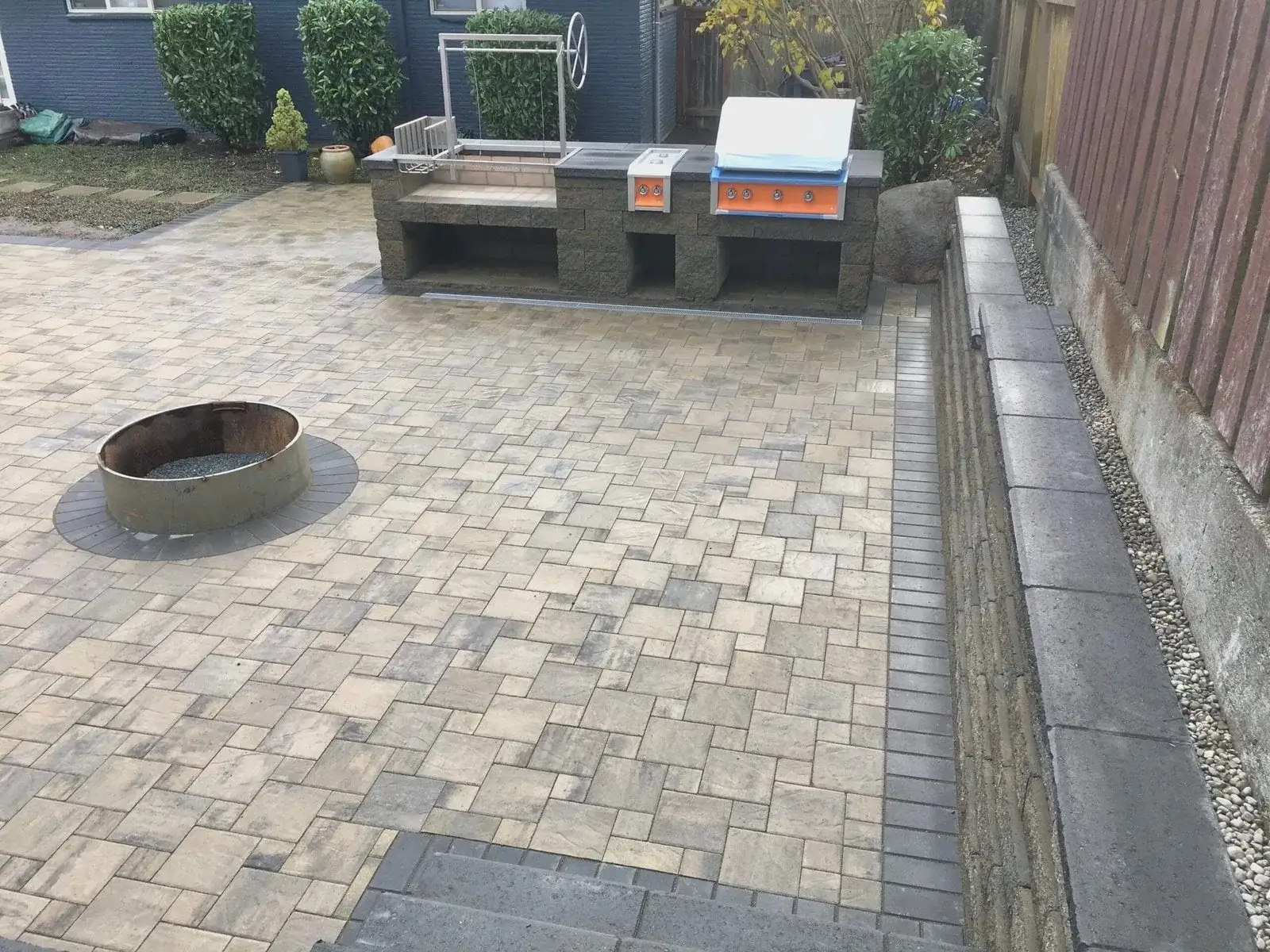
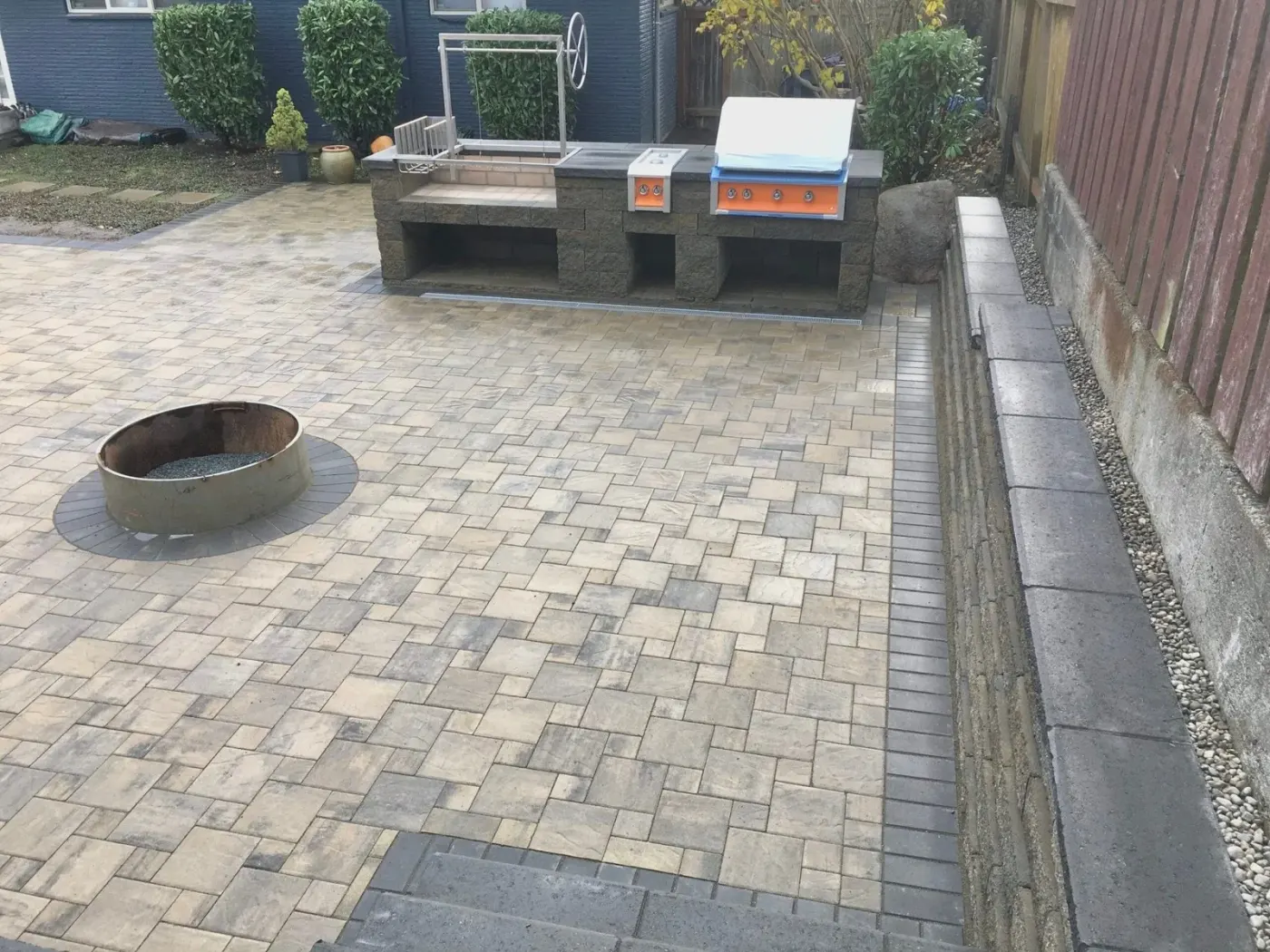
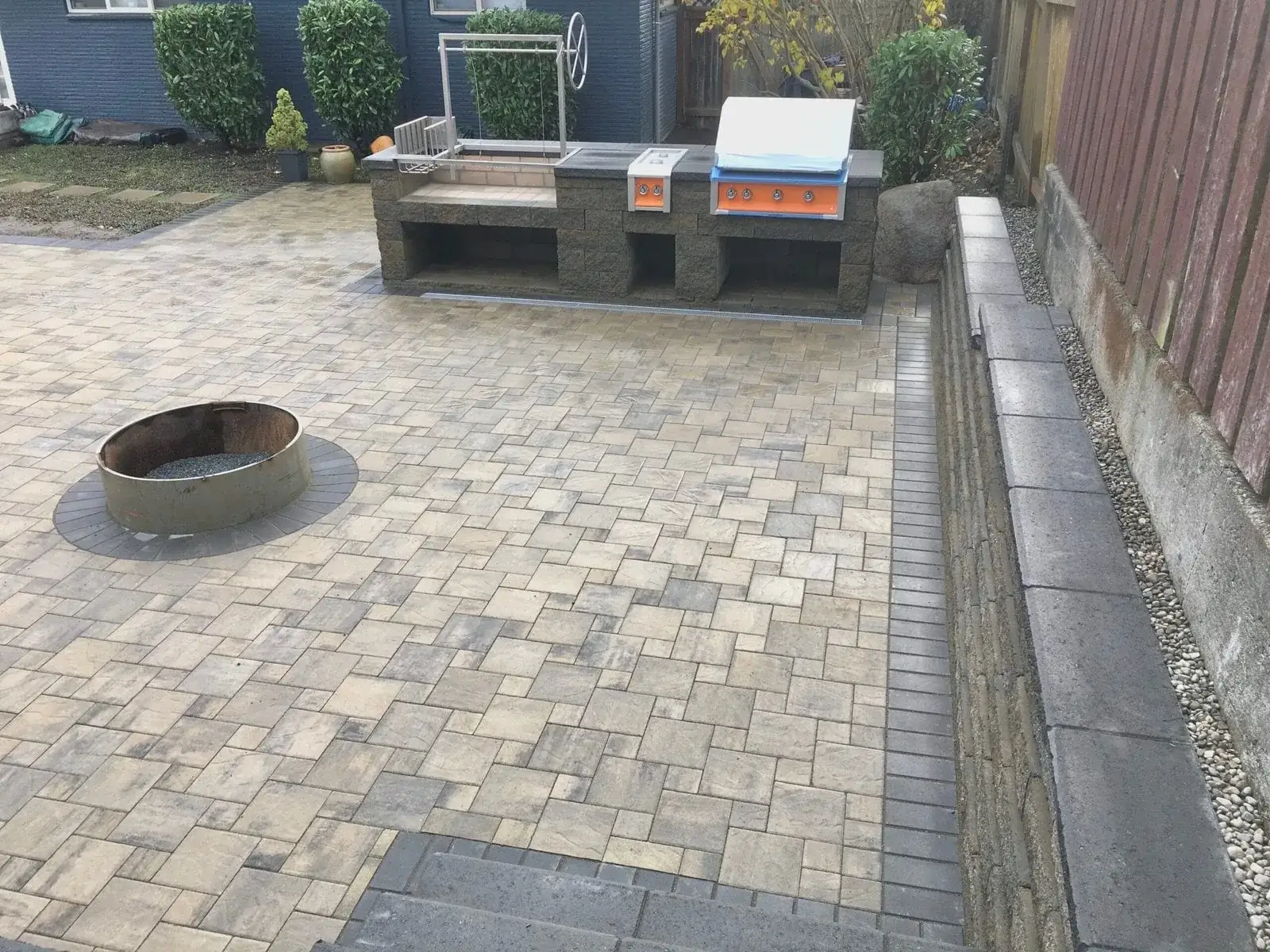
Built-in outdoor kitchen island and fire pit on a paver patio with a low seat wall in Shoreline
What we get called about
Shoreline is what north Seattle would be with bigger lots — the same glacial till, the same flat platforms, the same drainage consequences, but with real space to work in and generally straightforward access. Two local specifics are worth knowing. Innis Arden has covenants including view protection, which constrains planting height and tree work in a way the rest of the city does not. And the western edge above Richmond Beach is bluff ground, where slope stability and drainage are design factors rather than formalities.
Worth knowing in Shoreline
If you are in Innis Arden, check the covenants before you decide on wall height — the community's view protection can interact with structures as well as planting, and it is far easier to resolve on paper than after a run of block is standing.
The method
The sequence does not change between neighbourhoods — what changes is the ground it is applied to. Full detail on the retaining walls service page.
We look up whether the property sits in an Environmentally Critical Area and what the grade actually is, because that decides the permit position before it decides anything else.
A level, compacted base trench below finished grade. This is the step that gets rushed on a cheap job and it is the step that determines whether the wall stays straight.
Levelled unit by unit. Every course above copies the first one, so an error here multiplies all the way up.
Perforated pipe at the footing, clean rock backfill placed course by course rather than dumped at the end, and geotextile separating rock from soil so it does not silt up.
Compacted in layers, not filled in one go. Settled backfill is what pulls a wall out of line a year later.
Capping units, any planting above, and the ground reinstated so the wall reads as part of the garden rather than an intervention.
What it costs in Shoreline
Shoreline is one of the better-value places on this list for wall work, and the reason is lot size and access rather than any discount. Room to bring an excavator to the wall line and stage block and drainage rock beside it removes the labour multiplier that dominates a comparable Seattle quote, so the same wall lands lower in the $5 to $45 per square foot range. Bluff-edge and ravine work is the exception and is priced on its own terms.
You pay after the project is fully completed.
The estimate you sign is the price you pay.
Spread the cost with no interest.
Covers hardscape work; vegetation excluded.
Local questions
General questions about this service are on the service page. These are the ones that only come up here.
Frequently yes, and on these streets it usually looks better than replacing it with block. Rockeries fail progressively rather than suddenly — stones work loose, the face bulges where soil has washed out through the gaps, and the toe spreads — which means a single failing section can often be reset without disturbing the rest of the run. The limit is a rockery that has moved along its whole length, where the interlock that held it has gone and patching buys a couple of years at best. We look at the whole run before quoting a section of it.
The slope is sensitive both to what you put on it and to where water goes, so a wall there is a structural question rather than a landscaping one. Bluff-edge ground along the Sound carries looser material than the plateau behind it, and adding load above a slope or routing surface water over its edge is exactly the mechanism that turns stable ground into moving ground across several wet seasons. On these lots we look at where water leaves the property before looking at what goes on it, and we would rather say a wall belongs somewhere else than build it in the wrong place.
The community's long-standing covenants address preservation of views between properties, which means height on this street is not purely your own decision in the way it is elsewhere in Shoreline. In practice that is worth establishing before design rather than after — a terracing scheme that solves your level problem and creates a covenant problem for a neighbour helps nobody. It cuts both ways, too: the same rules that constrain what you build protect your outlook from what somebody above you might. We check what applies to your property at the outset.
Because the ground here is the same glacial till that underlies north Seattle, and flat ground on till drains worse than sloped ground rather than better. Water reaching the hardpan stops, saturates the topsoil above it, and then has nowhere to run — so soil packed straight against the back of a wall on a level lot is saturated soil for a good part of the year, and saturated soil pushes. Perforated pipe at the footing, free-draining rock against the face and a real discharge point are not a hillside luxury here; they are what stops a low garden wall tipping.
Serving Shoreline and surrounding neighbourhoods
Richmond Beach · Innis Arden · Echo Lake · Ridgecrest · Briarcrest · Ballinger · North City · Highland Terrace · Parkwood
98133 · 98155 · 98177
Recent work
Retaining WallsView full sizeSplitting one tall wall into two shorter ones takes the load off both and leaves a planting shelf in between. The cobble along the base is drainage, not decoration.
 Artificial TurfView full size
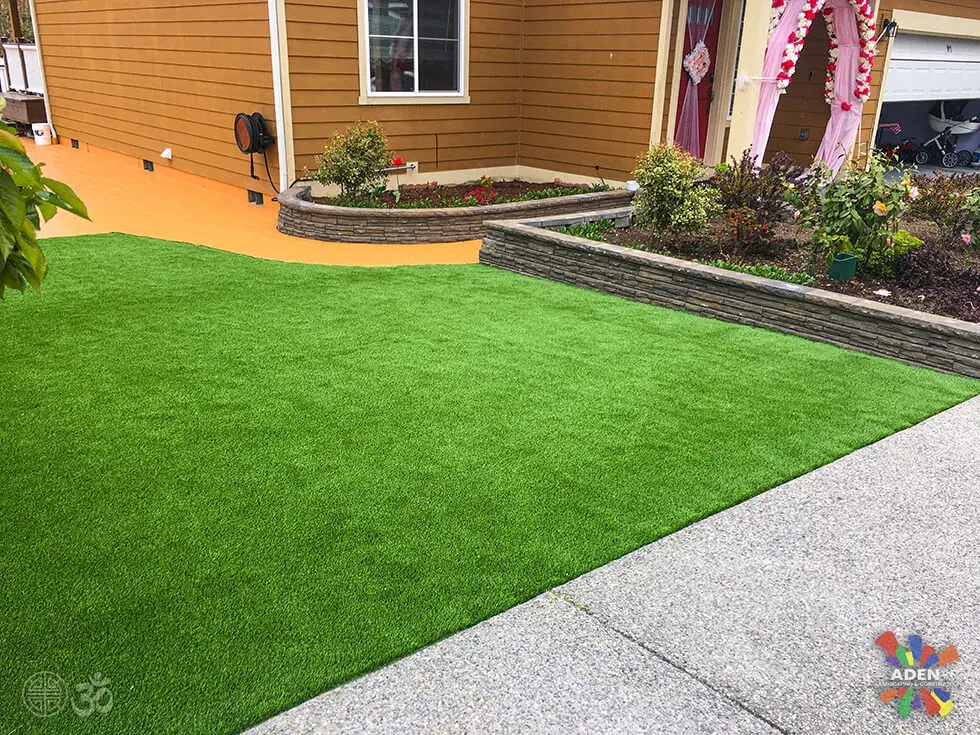
A front garden in full sun with no irrigation to it. Turf laid to a curved block edge, with the seams run away from the sightline you get walking up from the pavement.
 HardscapingView full size
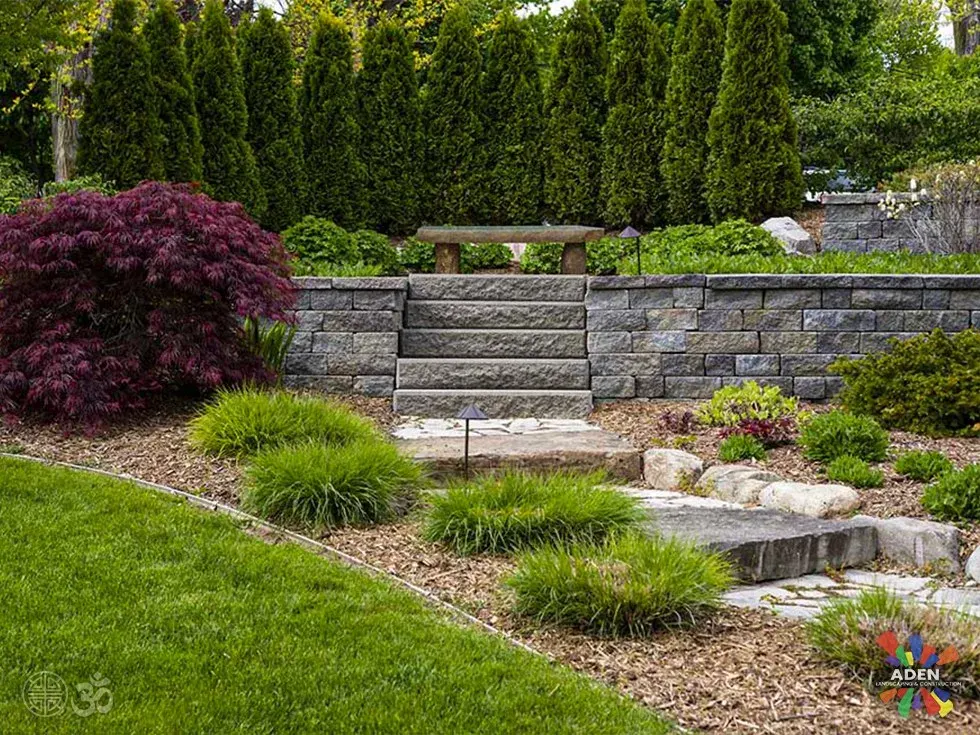
Some seasons on from handover. Block wall, stone steps and mulched beds that have grown into one another, which is the only fair moment to judge a planting plan.
 Outdoor LivingView full size
Built-in grill island and fire pit set into a paver patio with a matching seat wall.
We come out, look at the ground, and put a fixed written price together. No deposit, and it does not change once agreed.
Free estimate
Three minutes on the form. We reply during office hours, Monday – Friday, 9:00 AM – 7:00 PM, and we come out and look at the site before quoting anything.
Or call (425) 533-9734
Thank you — we have your details. We reply during office hours, Monday – Friday, 9:00 AM – 7:00 PM. If it is urgent, call (425) 533-9734.