
 Artificial TurfView full size
A front lawn that stays green
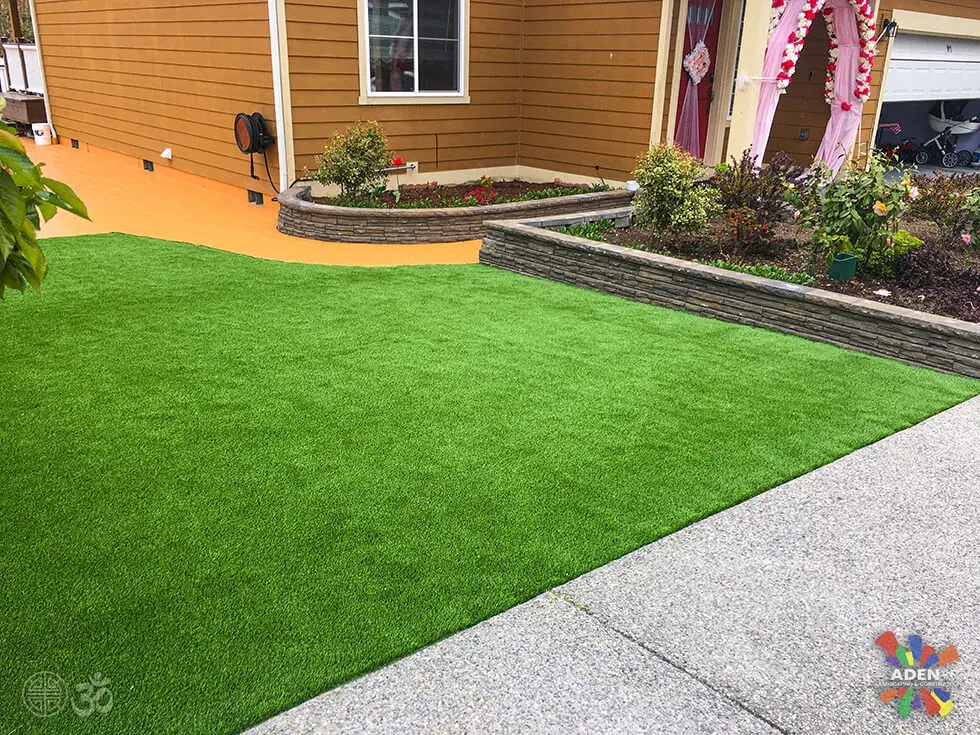
A front garden in full sun with no irrigation to it. Turf laid to a curved block edge, with the seams run away from the sightline you get walking up from the pavement.
No down payment. You pay when the project is finished.
Monday – Friday, 9:00 AM – 7:00 PM · Capitol Hill, Seattle
Artificial Turf · Shoreline
Shoreline is good value for turf and the reason is space rather than any discount. These post-war lots are generous, access is nearly always good enough to bring a machine to the work and stage material beside it, and the ground is the same glacial till as north Seattle so the specification is well understood. That combination means the labour component is lower than a comparable Seattle city install and more of the budget reaches the base and the product. The condition to plan around is the one that catches every flat north-end lot: level ground over till drains worse than sloped ground, not better, so the base has to be built as a drainage layer.
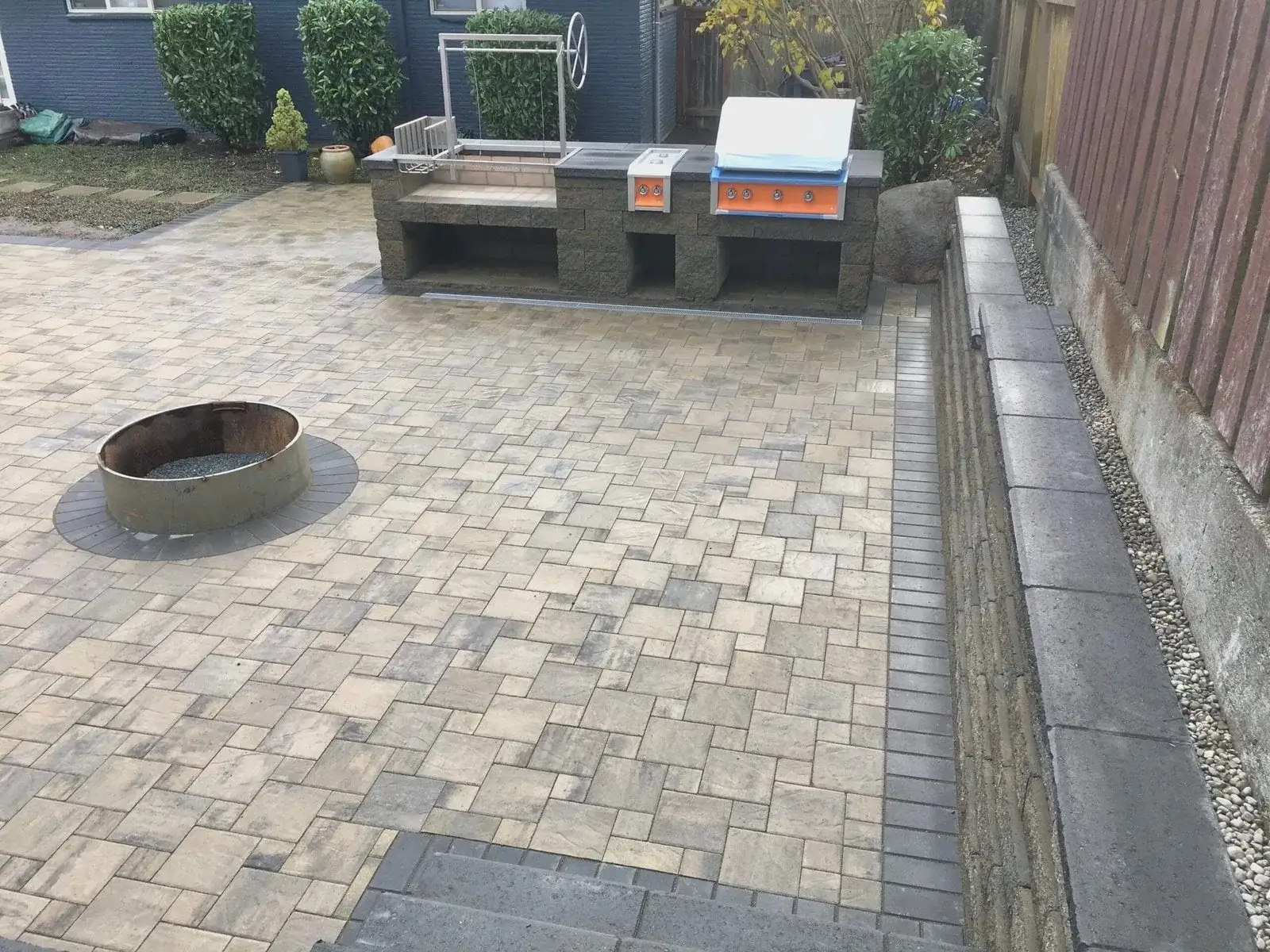
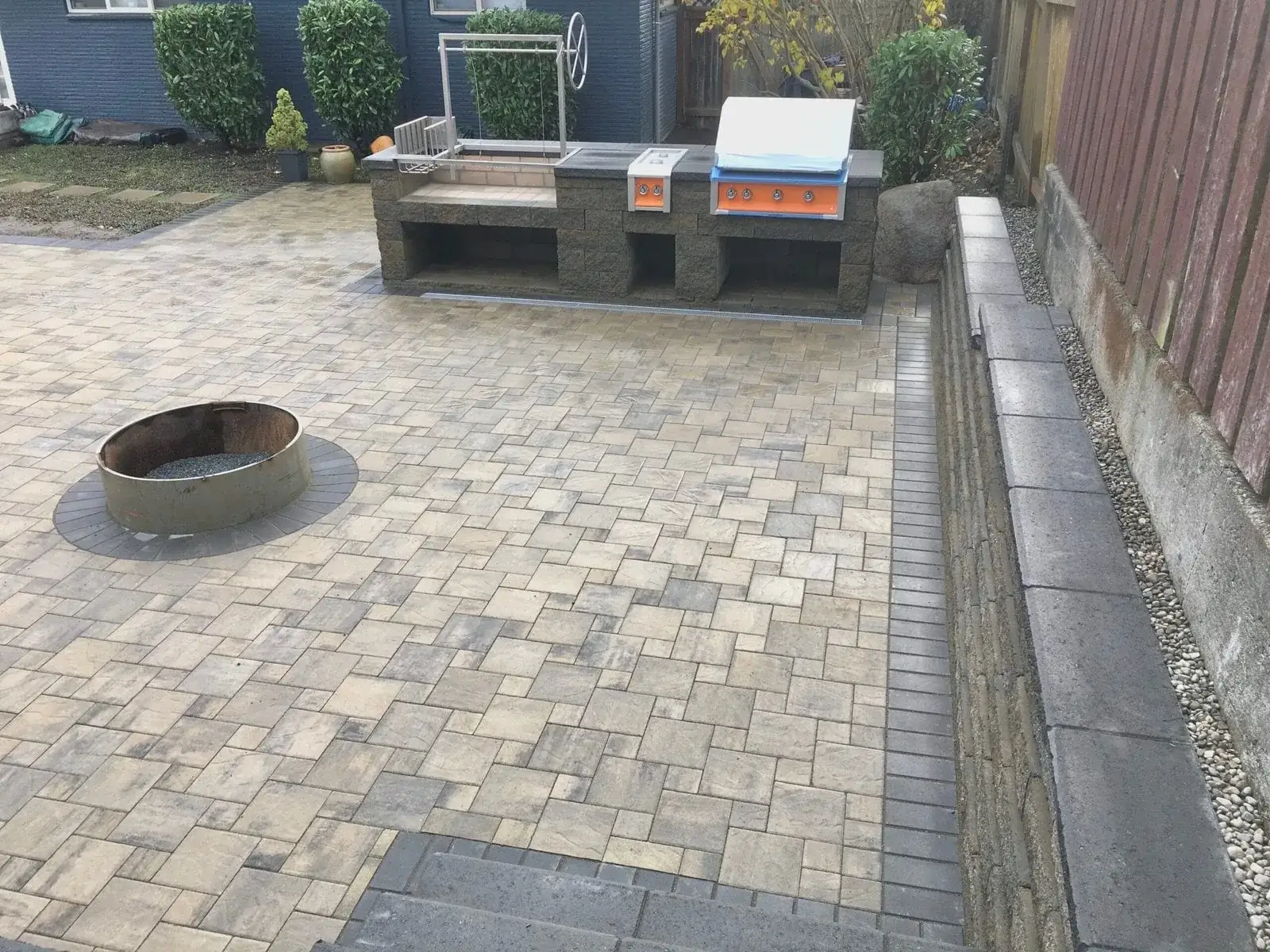
Built-in outdoor kitchen island and fire pit on a paver patio with a low seat wall in Shoreline
What we get called about
Shoreline is what north Seattle would be with bigger lots — the same glacial till, the same flat platforms, the same drainage consequences, but with real space to work in and generally straightforward access. Two local specifics are worth knowing. Innis Arden has covenants including view protection, which constrains planting height and tree work in a way the rest of the city does not. And the western edge above Richmond Beach is bluff ground, where slope stability and drainage are design factors rather than formalities.
Worth knowing in Shoreline
Use some of the access saving on base depth rather than on area. A smaller turf area on a properly drained base outlasts a bigger one on a thin base, and on flat till ground the base is genuinely what you are buying.
The method
The sequence does not change between neighbourhoods — what changes is the ground it is applied to. Full detail on the artificial turf service page.
Light, drainage, use and how much of the garden it should cover. A shaded 200-square-foot back garden and a sunny 1,200-square-foot play lawn are different recommendations.
Existing lawn and topsoil out, down to a depth that leaves room for a real base rather than a skim.
Crushed rock in compacted lifts, graded to a fall. On lots where water arrives from uphill this stage sometimes gains a drain before the turf goes anywhere near it.
Turf rolled out to relax, cut to the shapes, seamed, and fixed at every edge so nothing can lift.
Infill spread and brushed in to hold the pile up. This is what stops turf looking flattened after a year — it is not optional.
What it costs in Shoreline
Shoreline installs sit at the efficient end of $13 to $24 per square foot for the labour component, because a machine can reach the work and material stages beside it. Total cost is often higher than a Seattle equivalent simply because the areas are larger — but the money goes further per square foot, which is the opposite of how it works ten minutes south.
You pay after the project is fully completed.
The estimate you sign is the price you pay.
Spread the cost with no interest.
Covers hardscape work; vegetation excluded.
Local questions
General questions about this service are on the service page. These are the ones that only come up here.
Access, almost entirely. The largest variable cost is not the turf but the labour of excavating and moving several tons of base material. On a Seattle city lot where that goes through a three-foot gate by barrow, it can exceed the cost of the product itself. On a Shoreline lot with room to bring a machine to the work and drop material beside it, the same install takes substantially fewer crew hours. Same specification, same product, genuinely different labour — which is why a per-square-foot figure from one area does not transfer to the other.
More, and this is the counter-intuitive part. Sloped ground gives surface water somewhere to run; flat ground on glacial till gives it nowhere at all. Water passes through the turf backing, travels down through the base, reaches the hardpan and stops — and on a level lot there is no gradient to carry it sideways. So a flat Shoreline lawn needs the base built as a genuine drainage layer graded to a fall, with a route out, rather than simply a levelling course. That is the single most important line in the specification here.
Absolutely, and on a lot this size it is what makes the garden work. Turf handles the part of a garden that takes wear and needs to be usable in February; planting handles everything else, and it is where the interest actually comes from. The common mistake on a big lot is turfing a very large area and leaving a thin border round the edge, which reads as flat and featureless. A defined turf area with genuinely deep planted boundaries costs less overall and looks considerably better from the house.
The base becomes the question rather than the turf. A conventional excavation for a turf base is six inches or more of material removed, and under an established north-end maple or fir that means cutting through the root plate — most of which sits in the top foot of soil and spreads well beyond the canopy. Options are shifting the turf area outside the critical root zone, using a shallower build-up close to the tree, or leaving a planted or mulched area under the canopy where turf would struggle with needle drop anyway. The last of those is usually the better garden as well.
Serving Shoreline and surrounding neighbourhoods
Richmond Beach · Innis Arden · Echo Lake · Ridgecrest · Briarcrest · Ballinger · North City · Highland Terrace · Parkwood
98133 · 98155 · 98177
Recent work
Artificial TurfView full sizeA front garden in full sun with no irrigation to it. Turf laid to a curved block edge, with the seams run away from the sightline you get walking up from the pavement.
 Outdoor LivingView full size
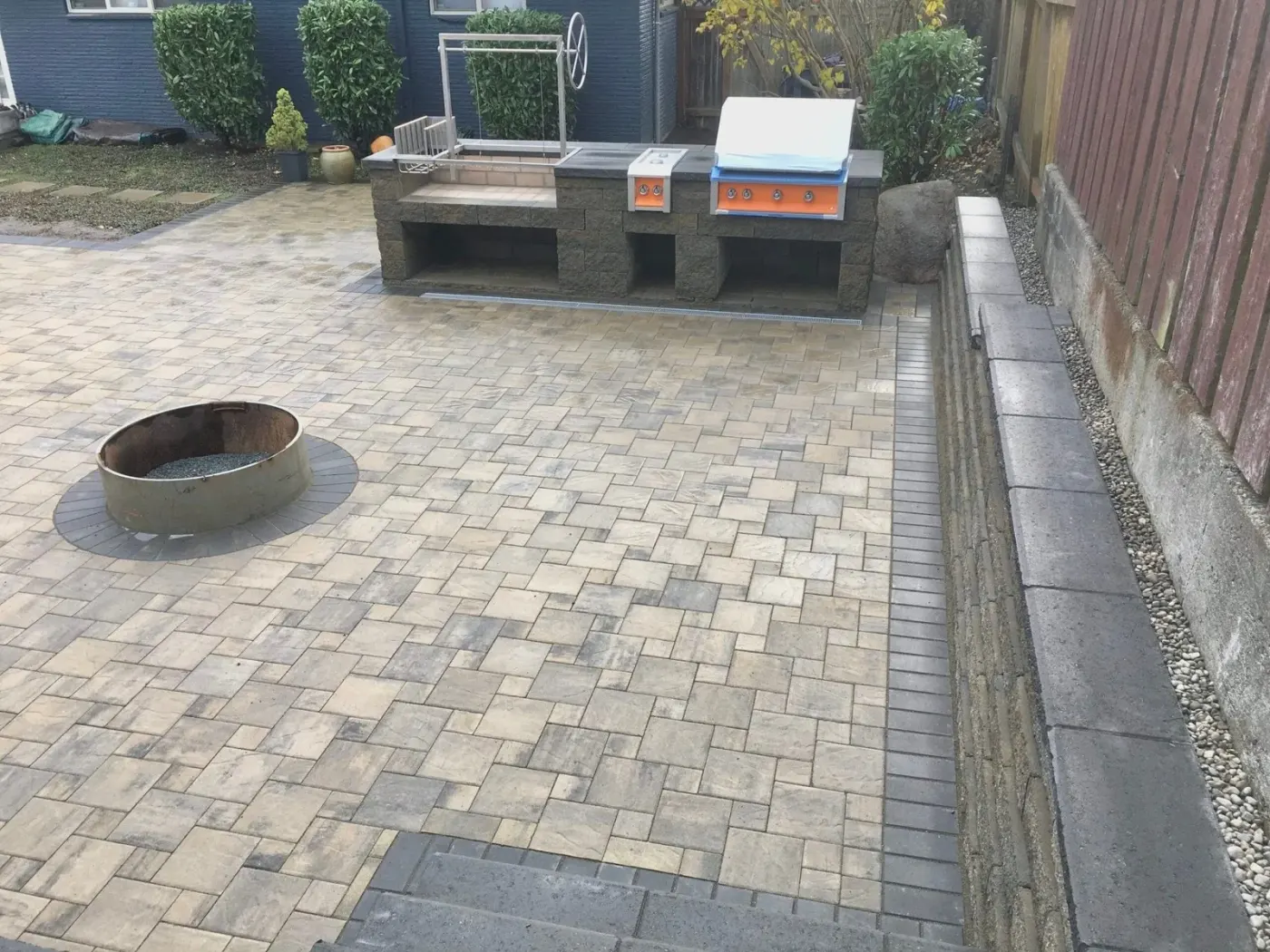
Built-in grill island and fire pit set into a paver patio with a matching seat wall.
 DeckingView full size
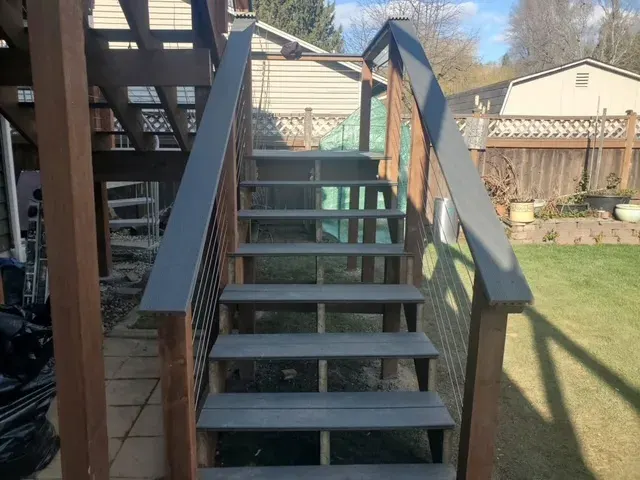
The missing link on a raised deck that had no proper way down. Cedar posts, stainless cable and a wide tread depth, so it is a route rather than a ladder.
 Retaining WallsView full size
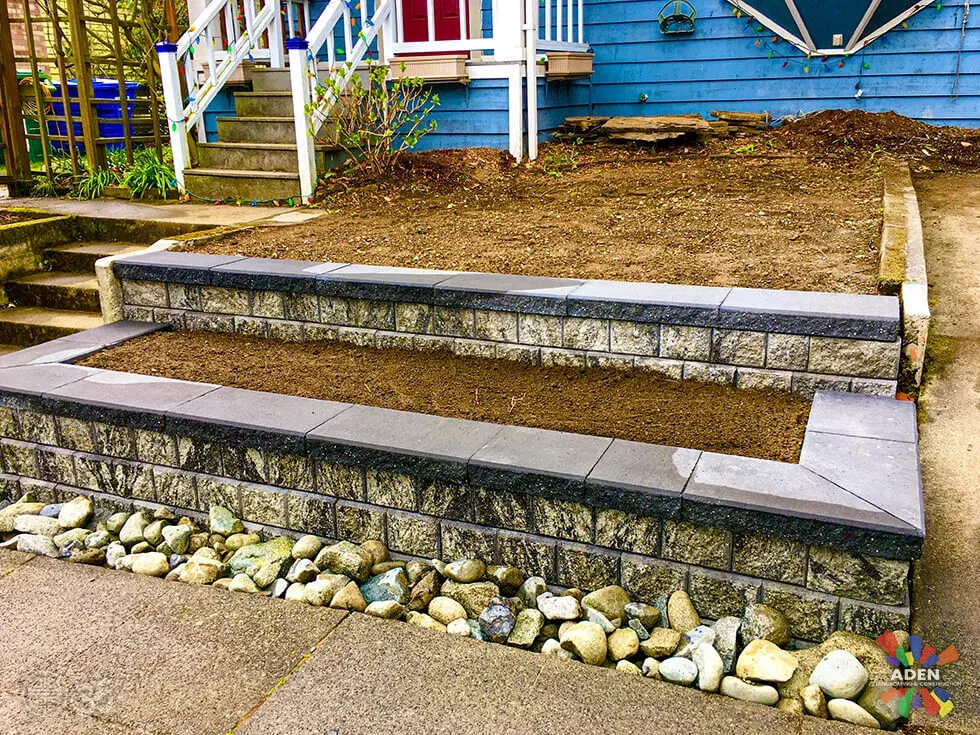
Splitting one tall wall into two shorter ones takes the load off both and leaves a planting shelf in between. The cobble along the base is drainage, not decoration.
We come out, look at the ground, and put a fixed written price together. No deposit, and it does not change once agreed.
Free estimate
Three minutes on the form. We reply during office hours, Monday – Friday, 9:00 AM – 7:00 PM, and we come out and look at the site before quoting anything.
Or call (425) 533-9734
Thank you — we have your details. We reply during office hours, Monday – Friday, 9:00 AM – 7:00 PM. If it is urgent, call (425) 533-9734.