
 Artificial TurfView full size
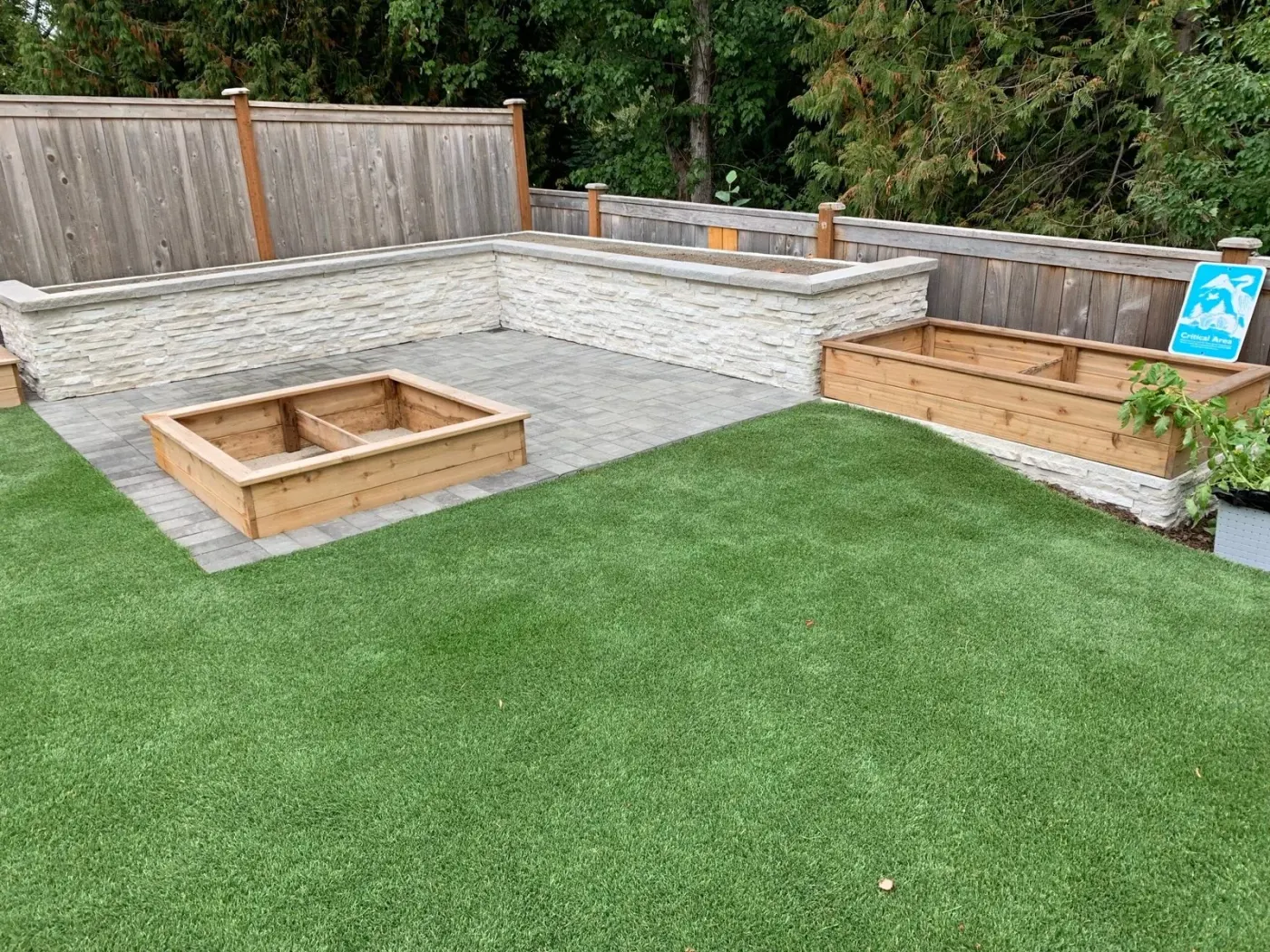
Turf lawn with cedar raised beds
A no-mow lawn for a small city yard, with cedar planters and a paved seating edge.
No down payment. You pay when the project is finished.
Monday – Friday, 9:00 AM – 7:00 PM · Capitol Hill, Seattle
Paver Installation · West Seattle
Which part of West Seattle you live on decides what kind of paving project this is. On the plateau through the Junction, Westwood and Arbor Heights it is ordinary Seattle work — glacial till, a properly excavated free-draining base, falls that shed water away from the house. On the bluff toward Alki, Fauntleroy and down the Delridge side it is a different proposition entirely. That ground carries looser material than the plateau behind it, has documented movement in living memory, and a large share of those parcels sit inside steep slope or landslide-prone designations. Adding load above a slope and changing where surface water goes are the two mechanisms that turn stable ground into moving ground — and a paved surface does both.
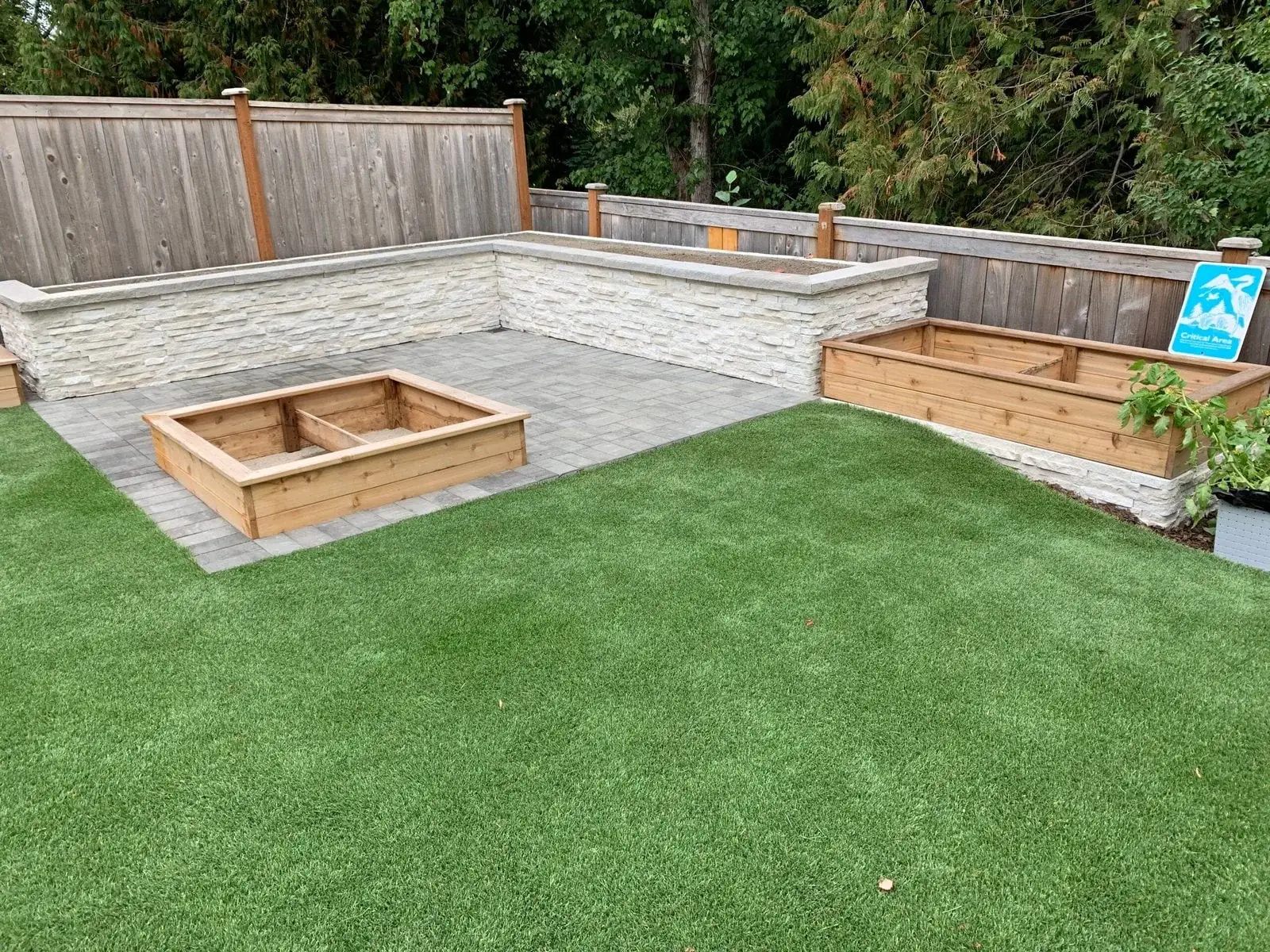
Artificial turf lawn framed by cedar raised planter beds and a paved seating area in West Seattle
What we get called about
West Seattle is a plateau with cliffs around it, and which of those two you are on decides the whole job. Plateau lots in the Junction and Westwood are straightforward, level and fast to build on. Bluff lots toward Alki, Fauntleroy and Delridge sit on ground with real landslide history, and a lot of them fall inside Environmentally Critical Area designations where the usual four-foot wall exemption does not apply. The view lots are the ones that need engineering, not just building.
Worth knowing in West Seattle
Find out whether your parcel carries a critical-area designation before you plan anything. It is public information, it takes minutes, and it changes what can be built and how far more than any decision you will make about materials.
A paved area does two things to a slope, and neither is visible. It adds weight above it, and it converts ground that absorbed rainfall into a surface that sheds nearly all of it — so the same storm now delivers considerably more water, faster, to whatever is downhill.
On flat ground both effects are trivial. On a bluff they are the two recognised mechanisms behind slope failure, which is why this is a genuinely different conversation on that side of the peninsula rather than a more cautious version of the same one.
What that means in practice is that the discharge design comes before the surface design. Runoff has to be collected and taken to a legitimate outfall rather than released to run over a bank, and on some parcels the honest recommendation is a smaller paved area, a permeable build, or keeping the hard surface further back from the crest. Where a critical-area designation applies, that assessment is not optional and we will not quote around it — the exposure runs with the property long after the patio is finished.
The method
The sequence does not change between neighbourhoods — what changes is the ground it is applied to. Full detail on the paver installation service page.
What the subgrade is, how wet it gets, and where water currently goes. On a till lot those three answers change the build more than the choice of paver does.
Every surface gets a fall, including the ones that look flat. Where water leaves is decided before a shovel moves, not adjusted at the end once the levels no longer allow it.
Down to competent ground, then compacted before any rock goes in. A good base built on an uncompacted subgrade just moves the failure one layer down.
Layer by layer to the specified depth, with a plate or roller sized for the job rather than whatever is on the van. This stage decides whether the surface is still flat in ten years.
Bedding course screeded to depth, units laid off a string line, perimeter saw-cut, and edge restraint fixed before any joint is filled.
Polymeric sand swept in, the field compacted to seat the units, then the whole area washed off — the last step is the one a rushed crew skips.
What it costs in West Seattle
West Seattle paver installation runs $18 to $40 per square foot on the plateau. On the bluff the paving itself is not what moves the number — it is what has to be established before anyone can responsibly build. Where a designation applies, expect the project to need professional assessment and a properly engineered answer for both load and discharge, and expect that to be a separate cost from the surface.
You pay after the project is fully completed.
The estimate you sign is the price you pay.
Spread the cost with no interest.
Covers hardscape work; vegetation excluded.
Local questions
General questions about this service are on the service page. These are the ones that only come up here.
It is mapped and publicly available, and checking it is the first thing worth doing on any West Seattle project involving a slope. Designations cover steep slopes, landslide-prone ground and several other conditions, and they are recorded against the parcel rather than being a judgement anyone makes on site. The reason to check first rather than later is that a designation changes what is exempt from permitting, what assessment is required, and sometimes what can be built at all — and finding that out after a design has been agreed and priced wastes both. We check as a matter of course before quoting anything on that side of the peninsula.
In most cases yes, with the runoff handled properly and the size and position considered rather than assumed. What changes is the order of the conversation: where the water goes is settled before how big the patio is, because the discharge route frequently determines the practical size. A permeable build is often the better answer on these lots precisely because it produces little runoff to route anywhere. What we would not do is design the surface first and treat the drainage as a detail to resolve afterwards, which on stable ground is merely poor practice and on a bluff is genuinely irresponsible.
Generally yes, on both counts that matter. A deck is lighter, and the load it does add goes through posts into footings at specific points rather than being spread as a continuous mass across the ground. It also lets rain through to the soil beneath, so it does not convert absorbing ground into runoff-producing surface. That makes a deck the lower-impact way to get usable outdoor space above a slope, and on genuinely sensitive parcels it is frequently what we end up recommending. It is not automatic — footings still need to reach competent ground, and on some slopes that is its own question — but as a starting point the deck is the gentler option.
Somewhere it is entitled to go, which on these lots is rarely the obvious downhill direction. Releasing collected water over a bank concentrates flow at one point and is exactly what erodes and destabilises ground; discharging it onto a neighbouring property creates a liability that does not go away. The workable answers are a piped run to a legitimate discharge point, connection to an existing system with capacity, or a design that produces very little runoff in the first place. Which is available depends on the specific property, and on bluff parcels it is the question that shapes the whole project rather than a detail at the end of it.
Serving West Seattle and surrounding neighbourhoods
Alki · Admiral District · The Junction · North Admiral · Fauntleroy · Gatewood · Morgan Junction · Delridge · Highland Park · Arbor Heights · Roxhill · Westwood
98106 · 98116 · 98126 · 98136 · 98146
Recent work
Artificial TurfView full sizeA no-mow lawn for a small city yard, with cedar planters and a paved seating edge.
 HardscapingView full size
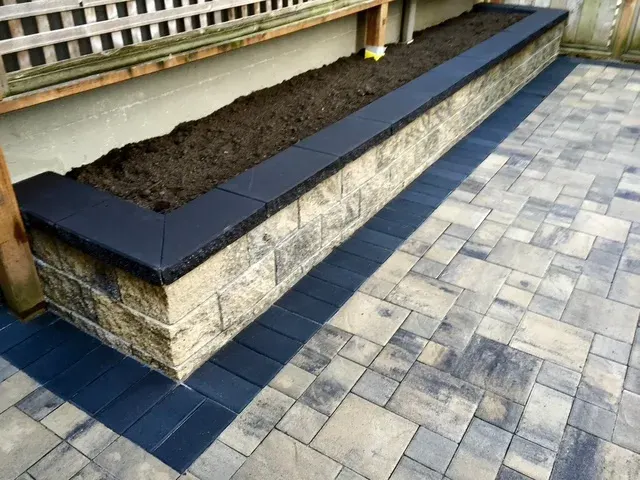
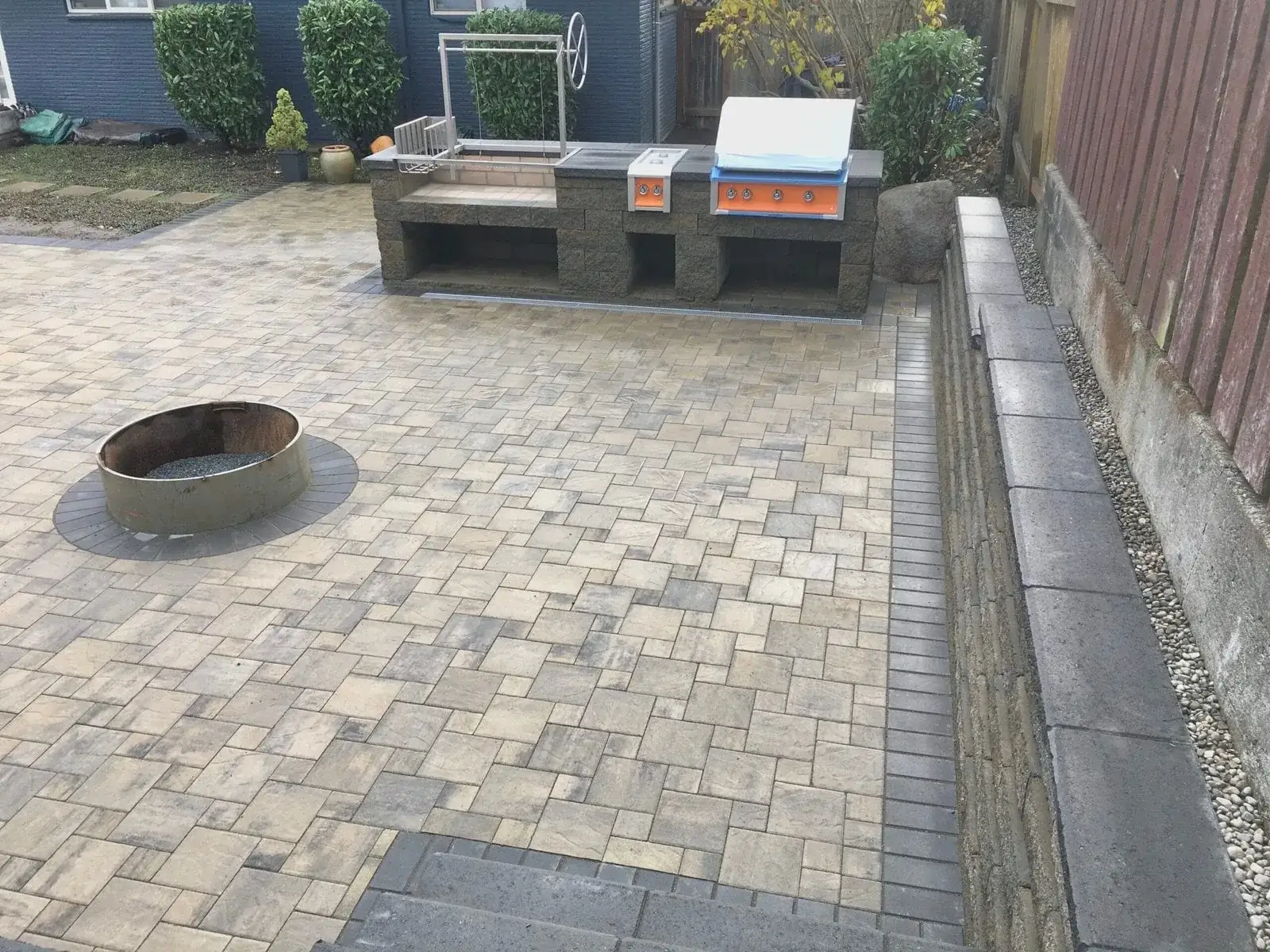
A raised planter running the length of the terrace, capped in charcoal to pick up the darker banding in the paving.
 DeckingView full size
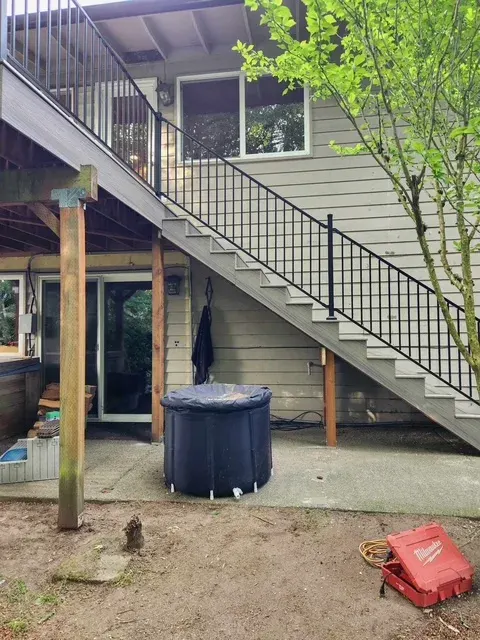
A West Seattle split-level where the only way to the bottom of the garden was through the house. A full-height run of stairs off the deck fixed that.
 Retaining WallsView full size
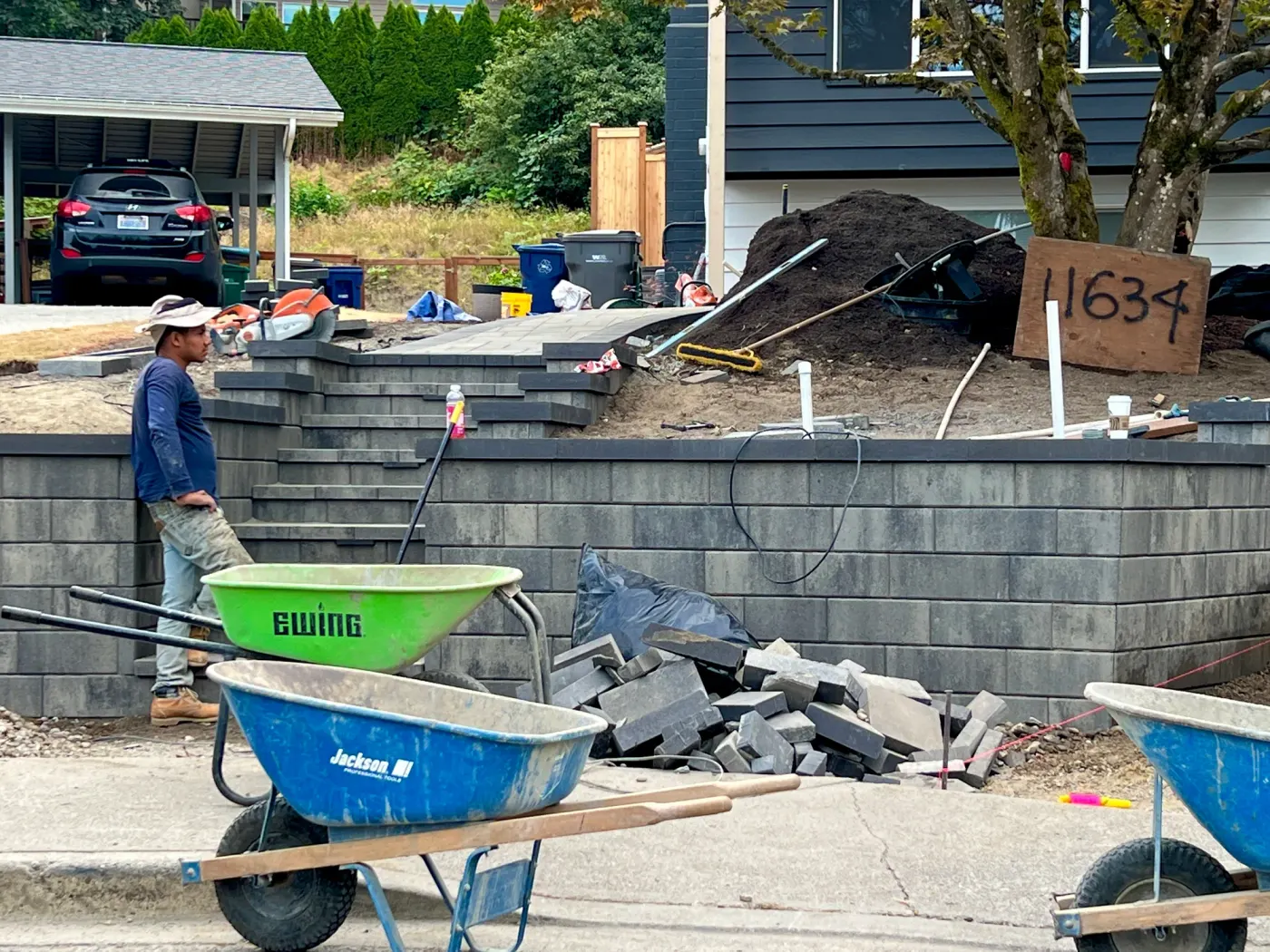
Mid-build on a West Seattle slope: block stacked, barrows running, the old surface still down. One crew on one site until it is finished, which is the only way the levels stay honest.
We come out, look at the ground, and put a fixed written price together. No deposit, and it does not change once agreed.
Free estimate
Three minutes on the form. We reply during office hours, Monday – Friday, 9:00 AM – 7:00 PM, and we come out and look at the site before quoting anything.
Or call (425) 533-9734
Thank you — we have your details. We reply during office hours, Monday – Friday, 9:00 AM – 7:00 PM. If it is urgent, call (425) 533-9734.