
 Artificial TurfView full size
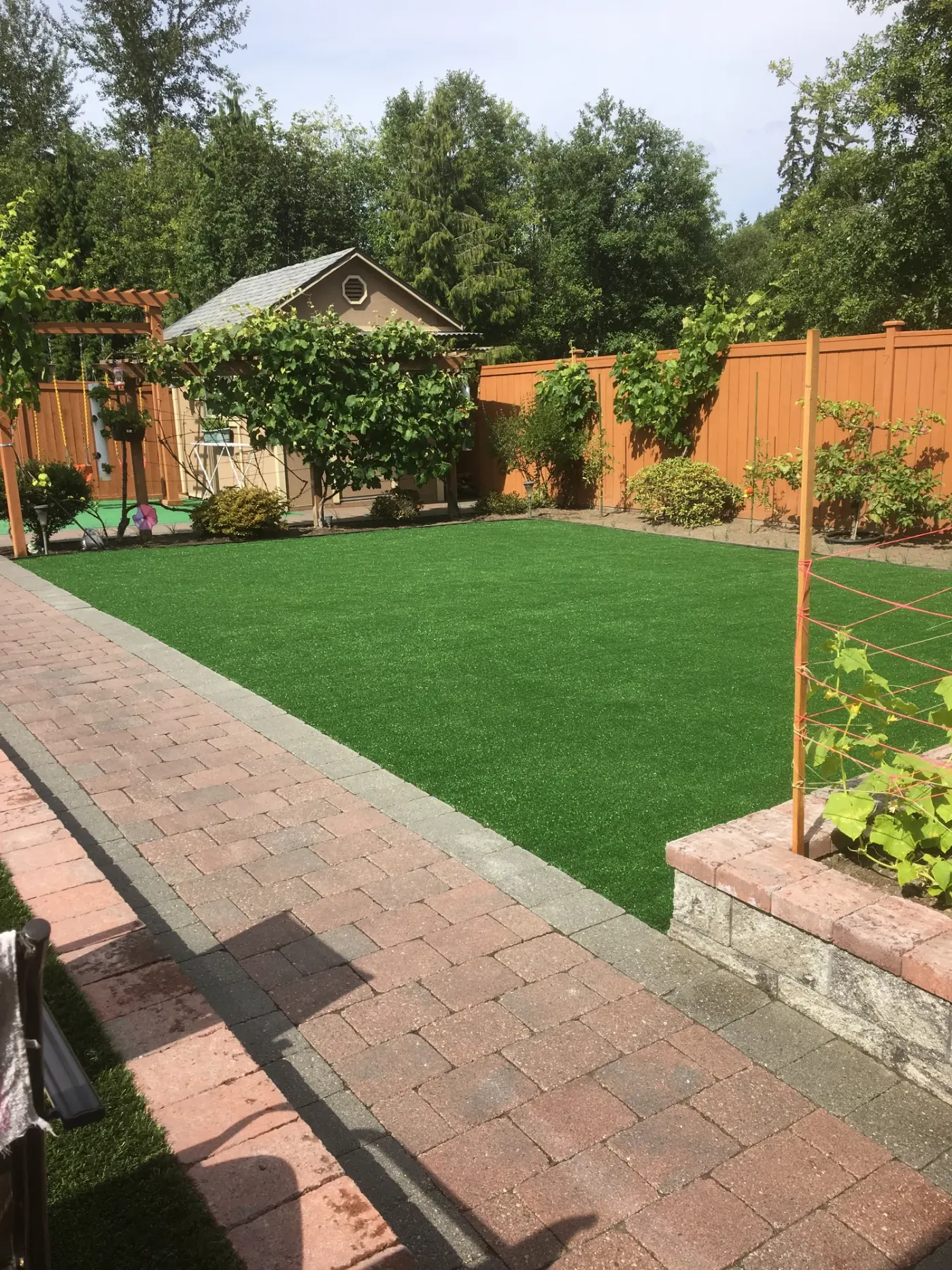
Turf lawn inside a brick border
Artificial turf pinned into a brick paver border so the edge cannot lift or curl. The grape trellis and the raised planter were part of the same job.
No down payment. You pay when the project is finished.
Monday – Friday, 9:00 AM – 7:00 PM · Capitol Hill, Seattle
Paver Installation · Ballard
Ballard gardens are small, and the mistake that spoils more of them than any construction fault is scale. A paving unit that looks generous on a supplier’s display board is being judged against an open forecourt; the same unit in a courtyard fifteen feet across reads as a handful of enormous slabs with almost no field between them, and the space looks smaller than it is. The relationship that matters is between the unit and the area, not between the unit and your taste — and it works in both directions, because a small unit across a small space produces a busy grid of joints that is equally unrestful. Getting that proportion right costs nothing and is close to impossible to change afterwards.
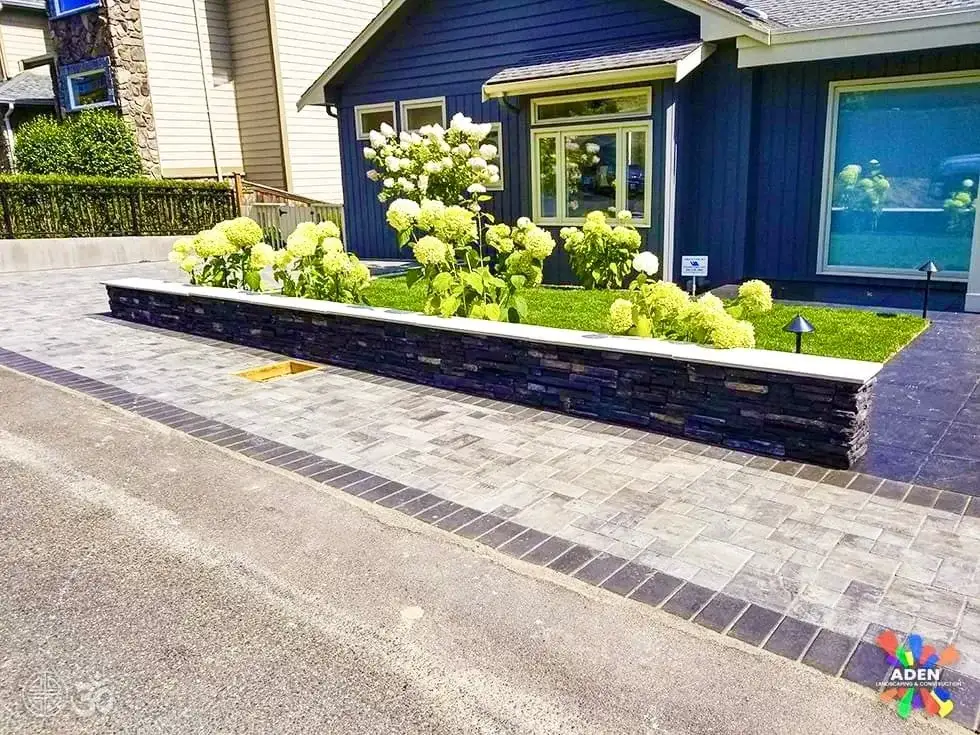
Paver apron and planted strip across the front of a house on an older residential street
What we get called about
Ballard is small lots and good drainage, which is close to the opposite of the rest of Seattle. The typical job here is not holding a slope or fixing a bog — it is making a compact rectangle behind a hundred-year-old house genuinely usable. That means more paved surface than people expect, a turf or lawn area smaller than instinct suggests, and enough planting depth at the boundary to make the space feel enclosed rather than merely small. The one real constraint is access: the older streets have narrow side returns and no off-street parking, so material handling shapes the schedule.
Worth knowing in Ballard
Lay a sheet of card cut to the unit size on the ground before ordering. Ten minutes with the actual footprint in the actual space tells you more about whether the scale works than any showroom display, and it is the one decision on a small courtyard you cannot revise.
The method
The sequence does not change between neighbourhoods — what changes is the ground it is applied to. Full detail on the paver installation service page.
What the subgrade is, how wet it gets, and where water currently goes. On a till lot those three answers change the build more than the choice of paver does.
Every surface gets a fall, including the ones that look flat. Where water leaves is decided before a shovel moves, not adjusted at the end once the levels no longer allow it.
Down to competent ground, then compacted before any rock goes in. A good base built on an uncompacted subgrade just moves the failure one layer down.
Layer by layer to the specified depth, with a plate or roller sized for the job rather than whatever is on the van. This stage decides whether the surface is still flat in ten years.
Bedding course screeded to depth, units laid off a string line, perimeter saw-cut, and edge restraint fixed before any joint is filled.
Polymeric sand swept in, the field compacted to seat the units, then the whole area washed off — the last step is the one a rushed crew skips.
What it costs in Ballard
Ballard paver installation runs $18 to $40 per square foot, and on small areas the square-foot figure is misleading in both directions. Fixed costs — mobilising, setting out, delivery, disposal — are spread across very little area, so the rate looks high; but the totals stay modest because the areas are genuinely small. Access dominates the labour: where every yard of base rock is barrowed through a side gate, moving material can exceed the cost of the material itself.
You pay after the project is fully completed.
The estimate you sign is the price you pay.
Spread the cost with no interest.
Covers hardscape work; vegetation excluded.
Local questions
General questions about this service are on the service page. These are the ones that only come up here.
Something in the middle, and the way to decide is by counting rather than by eye. Roughly speaking you want enough units across the width to read as a surface rather than as individual pieces, without so many that the joints dominate. Very large formats in a small space produce a few slabs and a lot of visible edge, which fragments the area and makes it feel smaller. Very small units produce a dense grid that reads as busy. The reliable test is to mark out the actual unit footprint on the ground in the actual space and look at it from the door you will come out of.
Across the width rather than along the length, in most cases. Running the units along a long narrow space emphasises the length and makes the return read as a corridor; running them across breaks that up and makes it feel wider than it is. There is a practical argument in the same direction, since cuts then land at the two long edges where they are least conspicuous rather than at the ends where you look. The exception is where the return is a route to somewhere rather than a place in itself, in which case running with the direction of travel is the honest expression of what it is.
Mid-tone, usually, for reasons that are practical as much as visual. A very light surface in a shaded Seattle courtyard shows every bit of the algae film that a north-facing space grows for most of the year, so it needs constant attention to look the way it did when it was laid. A very dark one absorbs what little light reaches a small enclosed garden and can make the space feel closed in. A mid-tone with some texture hides seasonal film, reflects enough light to keep the space open, and looks broadly the same in February as in July, which in this climate is the more useful property.
By hand through whatever route exists, and it is the biggest labour line on a small Ballard job. Base rock, bedding sand and pavers arrive by the pallet at the kerb and go through a side gate or the house side by barrow, which means the volume of material is a schedule question as much as a cost one. Deliveries are sized to what can be cleared the same day, because a pallet cannot be left on the street overnight, and we arrange any street occupation permission needed. Where a gate is genuinely too narrow, the options are removing a fence panel temporarily, a conveyor, or in rare cases lifting over — and we establish which applies before quoting rather than on the first morning.
Serving Ballard and surrounding neighbourhoods
Ballard Avenue · Sunset Hill · Loyal Heights · Whittier Heights · West Woodland · Adams · Crown Hill edge
98107 · 98117
Recent work
Artificial TurfView full sizeArtificial turf pinned into a brick paver border so the edge cannot lift or curl. The grape trellis and the raised planter were part of the same job.
 HardscapingView full size
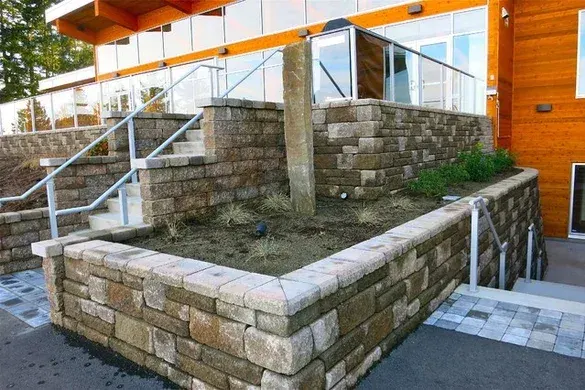
Segmental block walls terracing the grade at the front of a modern building, with a stone column, handrails to code and a paved approach — commercial hardscaping, where the walls have to take footfall as well as soil.
 Retaining WallsView full size
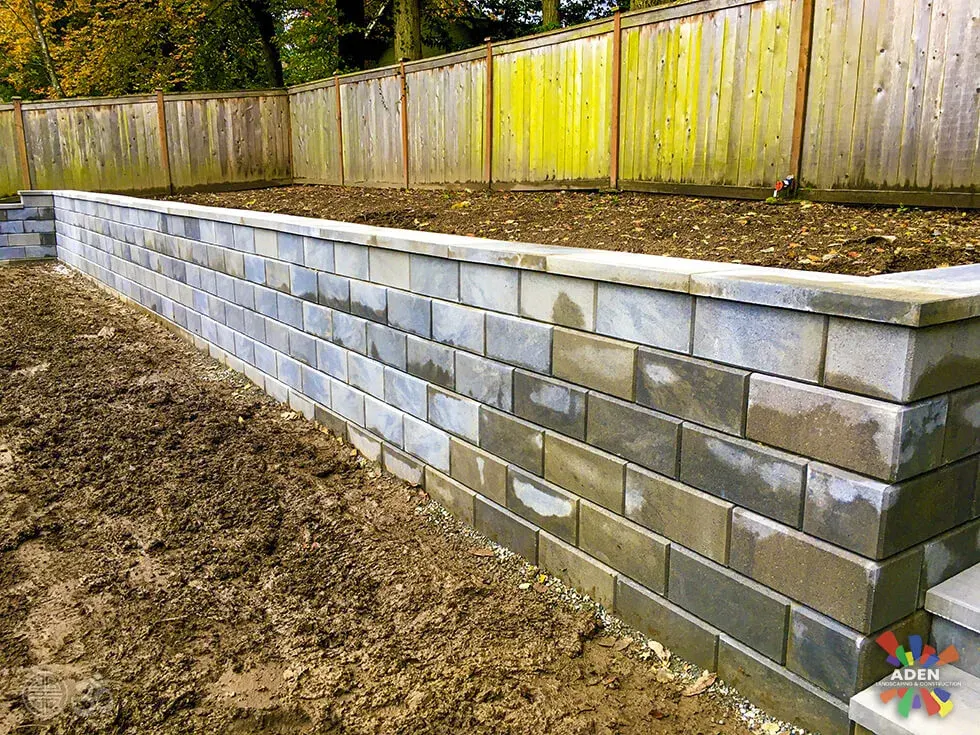
A wall run the whole length of a fence line to win back a flat strip of garden. Ballard lots are narrow, so the width this recovers is width the garden genuinely did not have.
 WalkwaysView full size
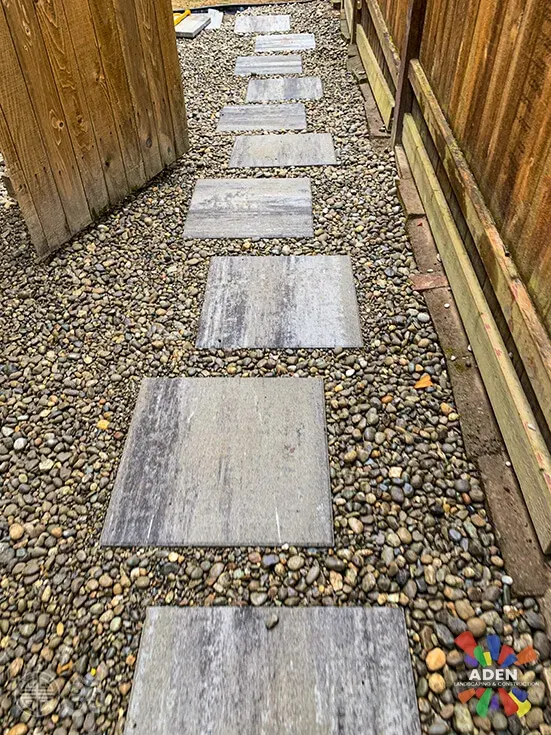
A side return too narrow for a full path. Large slabs floated in washed rock give a route through and let the ground either side carry on taking water.
We come out, look at the ground, and put a fixed written price together. No deposit, and it does not change once agreed.
Free estimate
Three minutes on the form. We reply during office hours, Monday – Friday, 9:00 AM – 7:00 PM, and we come out and look at the site before quoting anything.
Or call (425) 533-9734
Thank you — we have your details. We reply during office hours, Monday – Friday, 9:00 AM – 7:00 PM. If it is urgent, call (425) 533-9734.