
 Retaining WallsView full size
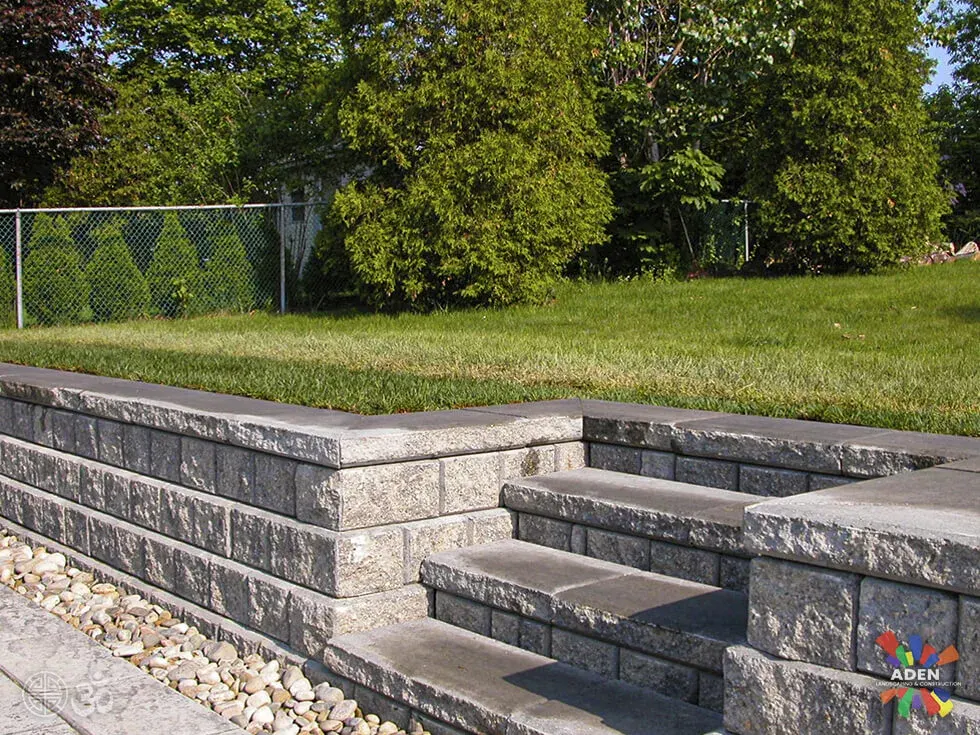
Wall, steps and a drainage course
The white rock along the toe is the part that decides whether this wall is still straight in ten years. Water gets a route out rather than somewhere to push.
No down payment. You pay when the project is finished.
Monday – Friday, 9:00 AM – 7:00 PM · Capitol Hill, Seattle
Drainage · Sammamish
Sammamish has the drainage problem that catches people out, because nothing about the ground looks difficult. There is no dramatic slope, the lots are large and level, and in July a plateau garden here looks like the easiest site imaginable. What a plateau does not do is shed water. Rain arriving on level ground over glacial till has nowhere to run and passes downward extremely slowly, so it stays where it lands — and between October and March it does not evaporate either. Add the genuine wetland and seasonally saturated pockets scattered across this landscape, several of which look entirely ordinary in summer, and drainage becomes the opening question on a surprising number of Sammamish projects.
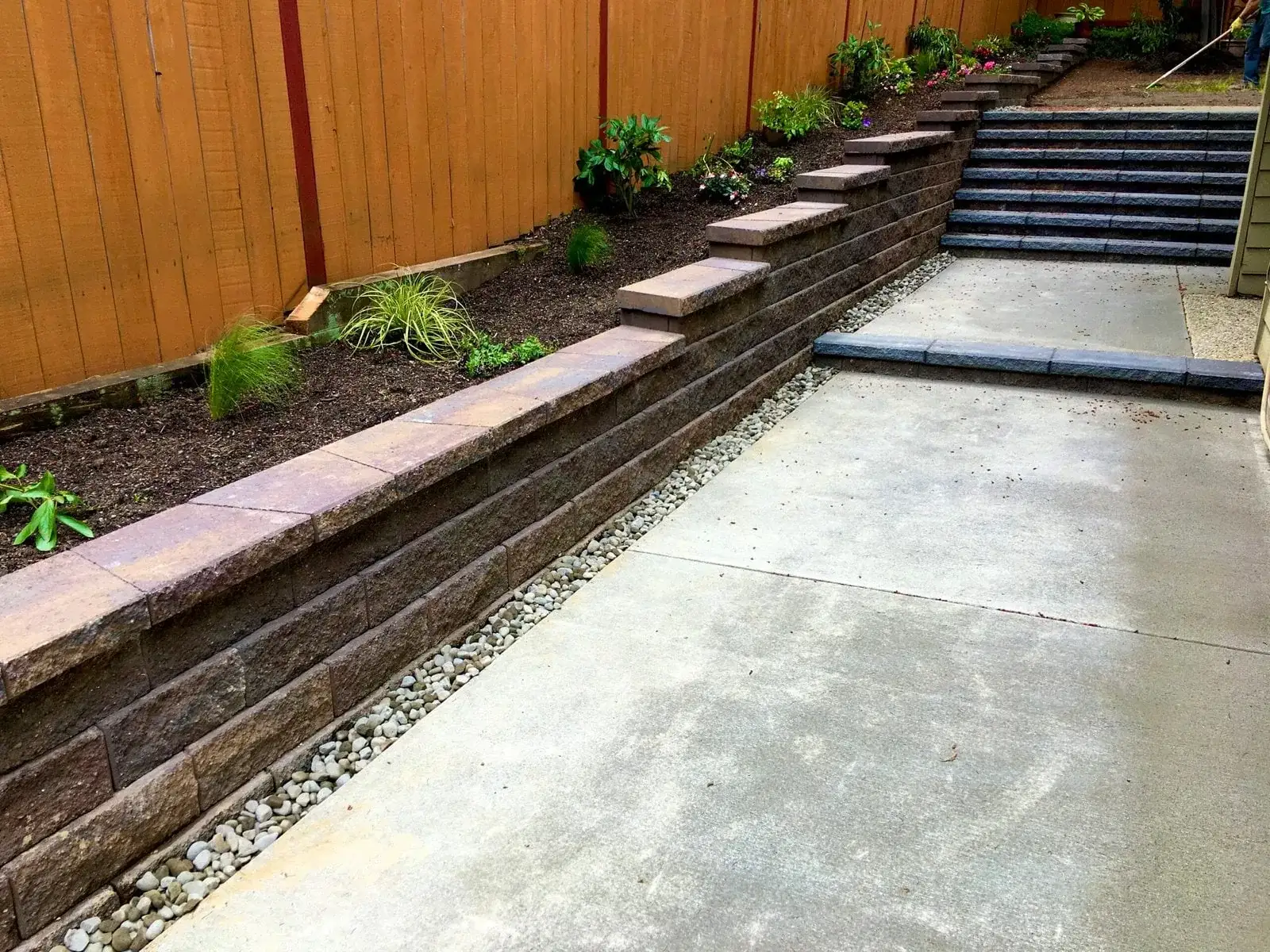
Two-tier block retaining wall with stone steps and new planting on a sloped Sammamish side yard
What we get called about
Sammamish has the big flat-ish lots that most of this market does not, and the catch that comes with them: a plateau holds water rather than shedding it, and seasonally saturated pockets turn up in places that look perfectly ordinary in July. That makes drainage the first question on a surprising number of these properties. The second Sammamish fact is HOA density — Klahanie, Trossachs, Sahalee and most newer developments have architectural standards that apply to fencing, materials and front-of-house work, so approval is a scheduling item on nearly every project.
Worth knowing in Sammamish
On a plateau lot, the first question is not where the water is — it is where the water can go. Walk your boundary and find the lowest point that leaves the property. If there is not one, the design changes completely, and it is far better to know that before anyone quotes a trench.
The method
The sequence does not change between neighbourhoods — what changes is the ground it is applied to. Full detail on the drainage service page.
Roof, surface runoff, a neighbouring property's grade, or groundwater sitting on the till. These need different answers and guessing wastes the whole job.
A drain needs somewhere legal and physical to go — daylight at a lower point, or an approved connection. A drain that terminates in a hole is a soakaway on ground that does not soak.
Continuous fall along the whole run. A trench that dips holds water and silts up, which is the most common reason a retrofit drain stops working.
Perforated pipe bedded in clean washed rock, wrapped in geotextile so the surrounding soil cannot migrate in and clog the void.
Turf, planting or hard surface put back so the finished job does not read as a scar across the garden.
What it costs in Sammamish
Plateau drainage costs more per problem solved than sloped drainage, and it is worth understanding why before comparing quotes. On flat ground there is no free fall to work with, so runs are longer and have to be cut to a carefully maintained gradient, and the discharge frequently has to be constructed rather than found. Within the $10 to $25 per linear foot range, Sammamish tends to need more feet.
You pay after the project is fully completed.
The estimate you sign is the price you pay.
Spread the cost with no interest.
Covers hardscape work; vegetation excluded.
Local questions
General questions about this service are on the service page. These are the ones that only come up here.
Because the absence of slope is the problem rather than the protection. Water arriving on sloped ground at least runs across the surface and away; water arriving on a level plateau simply stays where it lands. Underneath is glacial till, which passes water downward very slowly, so once the topsoil is saturated there is nowhere left for the next rainfall to go. Between October and March, when nearly all of our 38 inches arrives, the ground never gets a dry spell long enough to recover. It is not a fault in your garden — it is what a plateau does.
The Sammamish plateau carries genuine wetland and seasonally saturated ground scattered through it, some of it regulated as a critical area with its own rules on what can be built and how close. The difficulty is that several of these look entirely unremarkable in summer — ordinary lawn, ordinary planting, nothing visibly boggy. They reveal themselves between November and March. If part of your garden behaves differently from the rest through the winter, that is worth establishing properly rather than draining, because if it is regulated the approach is different.
Only if the drainage is fixed first, and this is the most common turf mistake we are called to correct on the plateau. Turf backing is permeable and passes water freely, so on ground that already fails to drain, water goes straight through the turf and then sits on the same hardpan it always did — except now it is trapped under a surface you cannot aerate or reseed. The result performs worse than the lawn it replaced. Built the right way round, with a proper drainage base and a real outfall underneath it, turf on a plateau lot is excellent, and it removes the winter mud problem outright.
The buried portion, generally not — once the surface is reinstated there is nothing to see. Where it can come up is anything visible: a catch basin grate in a front garden, a channel drain across a driveway, or a constructed outfall near a boundary. Klahanie, Trossachs, Sahalee and most of the newer plateau developments operate architectural standards that can reach those. We ask at the first visit and produce the layout in a form suitable for a submission where review applies, which in practice is usually a formality.
Serving Sammamish and surrounding neighbourhoods
Pine Lake · Beaver Lake · Klahanie · Trossachs · Inglewood Hill · Sahalee
98074 · 98075
Recent work
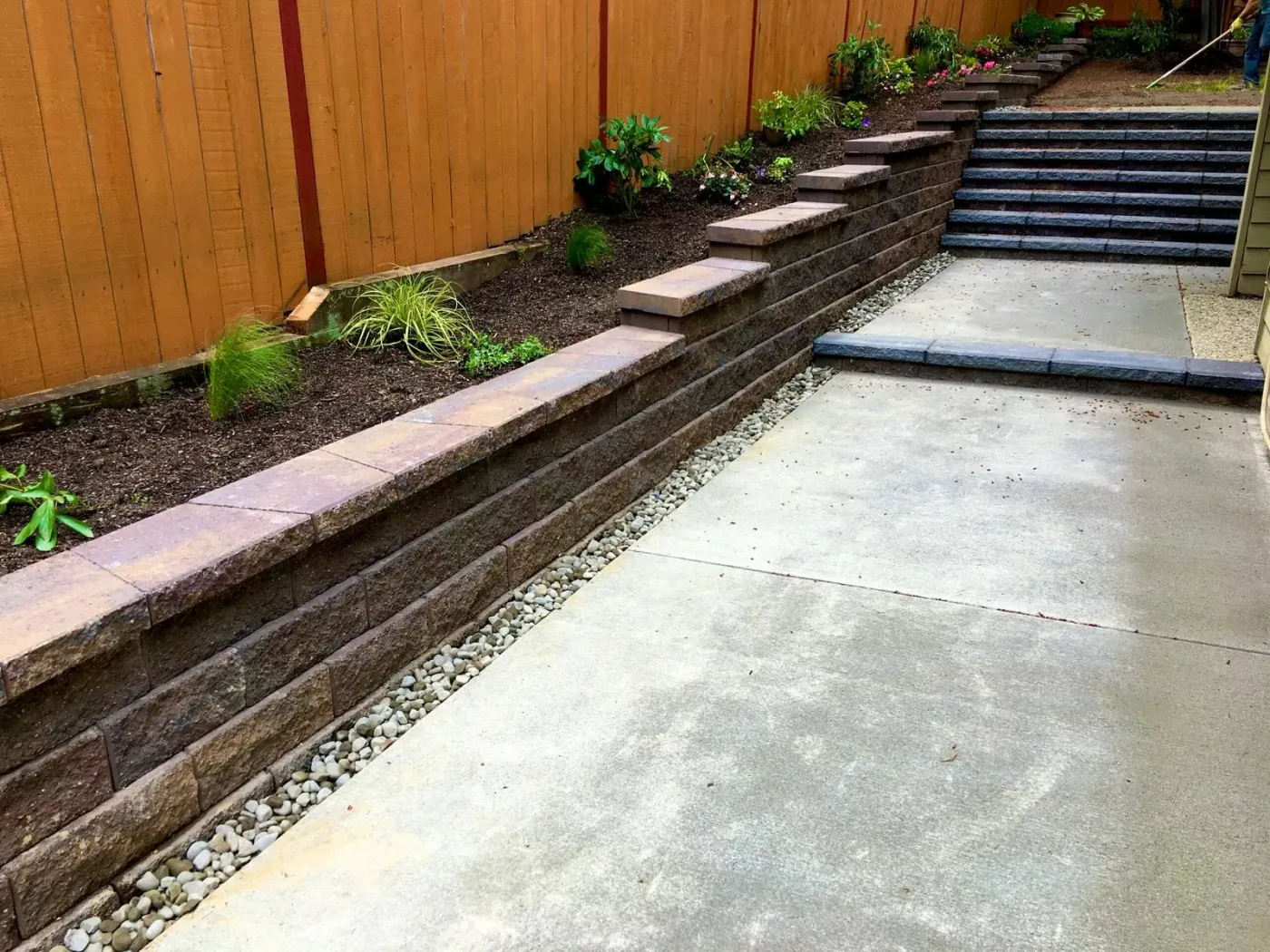
Retaining WallsView full sizeThe white rock along the toe is the part that decides whether this wall is still straight in ten years. Water gets a route out rather than somewhere to push.
 Retaining WallsView full size
Two tiers of block wall with steps between them, turning a bank into planting beds and a level path.
 DeckingView full size
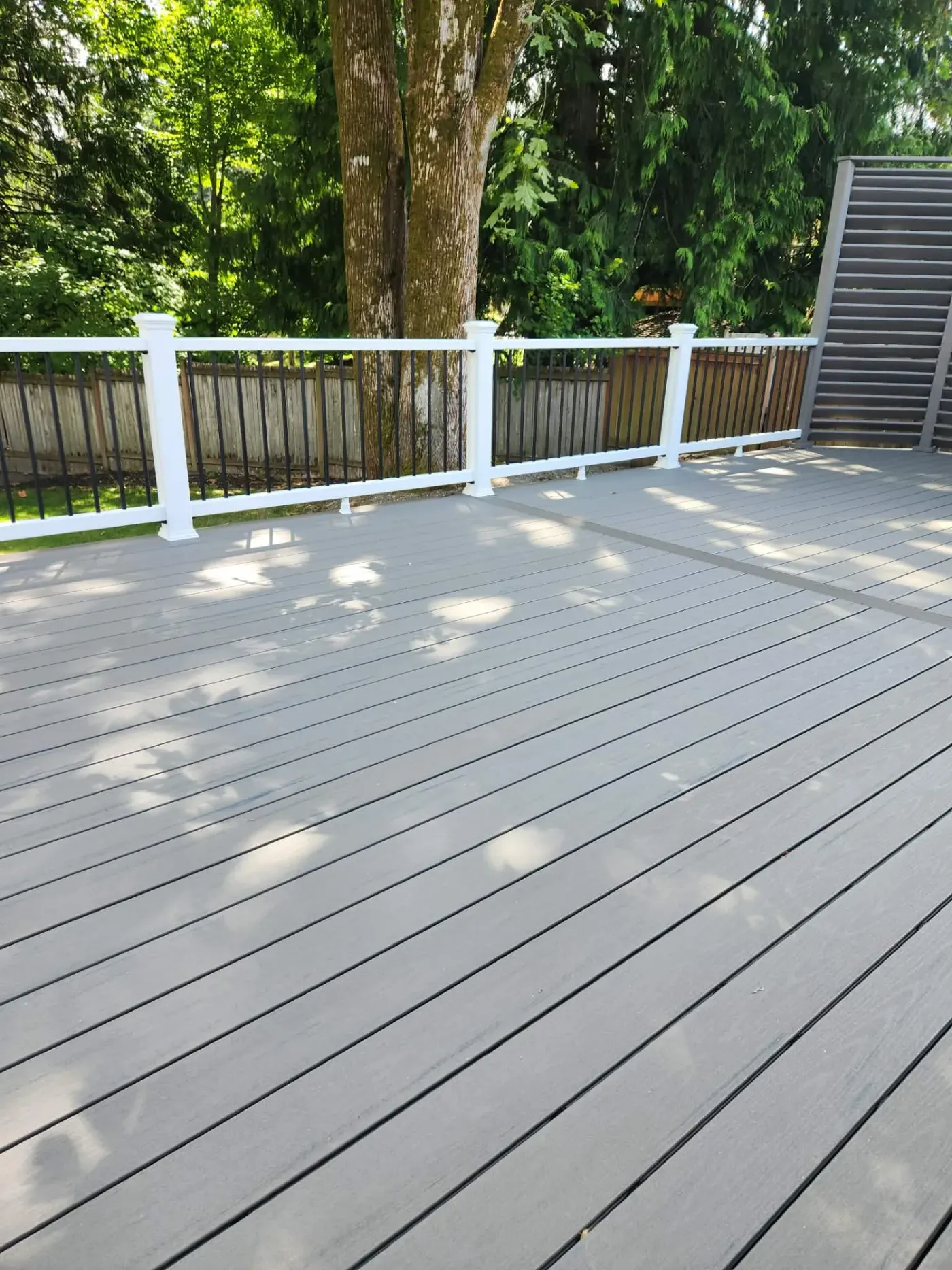
A big single-level deck sized for a table and still leaving room to walk around it, with white posts and black metal balusters picking up the trim on the house.
 Outdoor LivingView full size
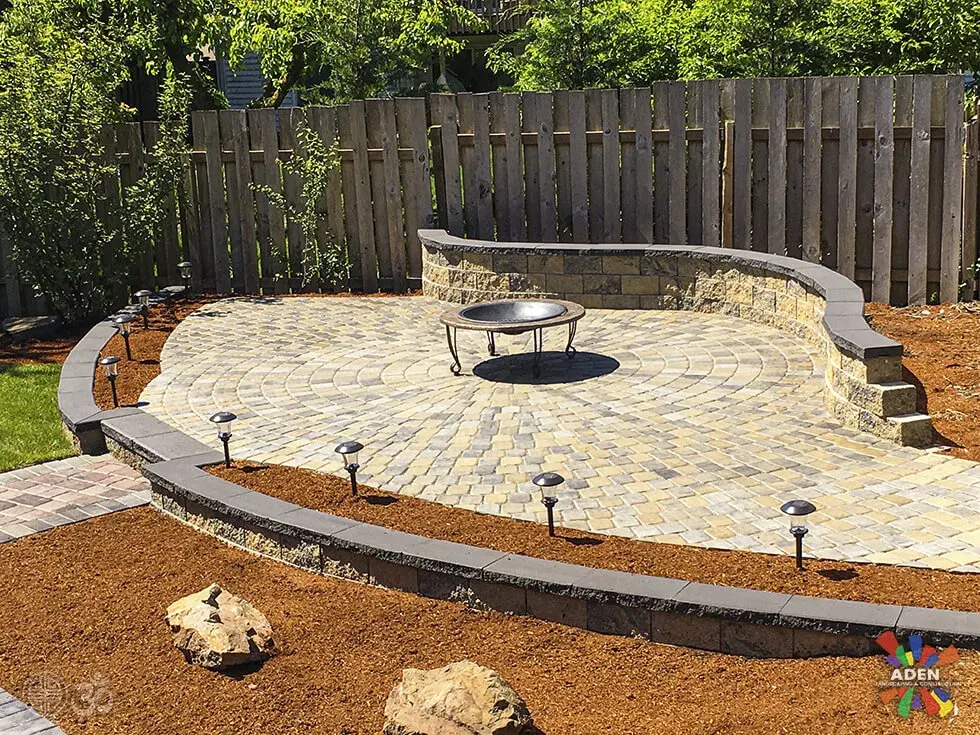
A circular paver terrace wrapped by a curved seat wall, lit at the edge and mulched beyond it. Every unit on that curve is cut on site; there is no kit for this shape.
We come out, look at the ground, and put a fixed written price together. No deposit, and it does not change once agreed.
Free estimate
Three minutes on the form. We reply during office hours, Monday – Friday, 9:00 AM – 7:00 PM, and we come out and look at the site before quoting anything.
Or call (425) 533-9734
Thank you — we have your details. We reply during office hours, Monday – Friday, 9:00 AM – 7:00 PM. If it is urgent, call (425) 533-9734.