
 Landscape LightingView full size
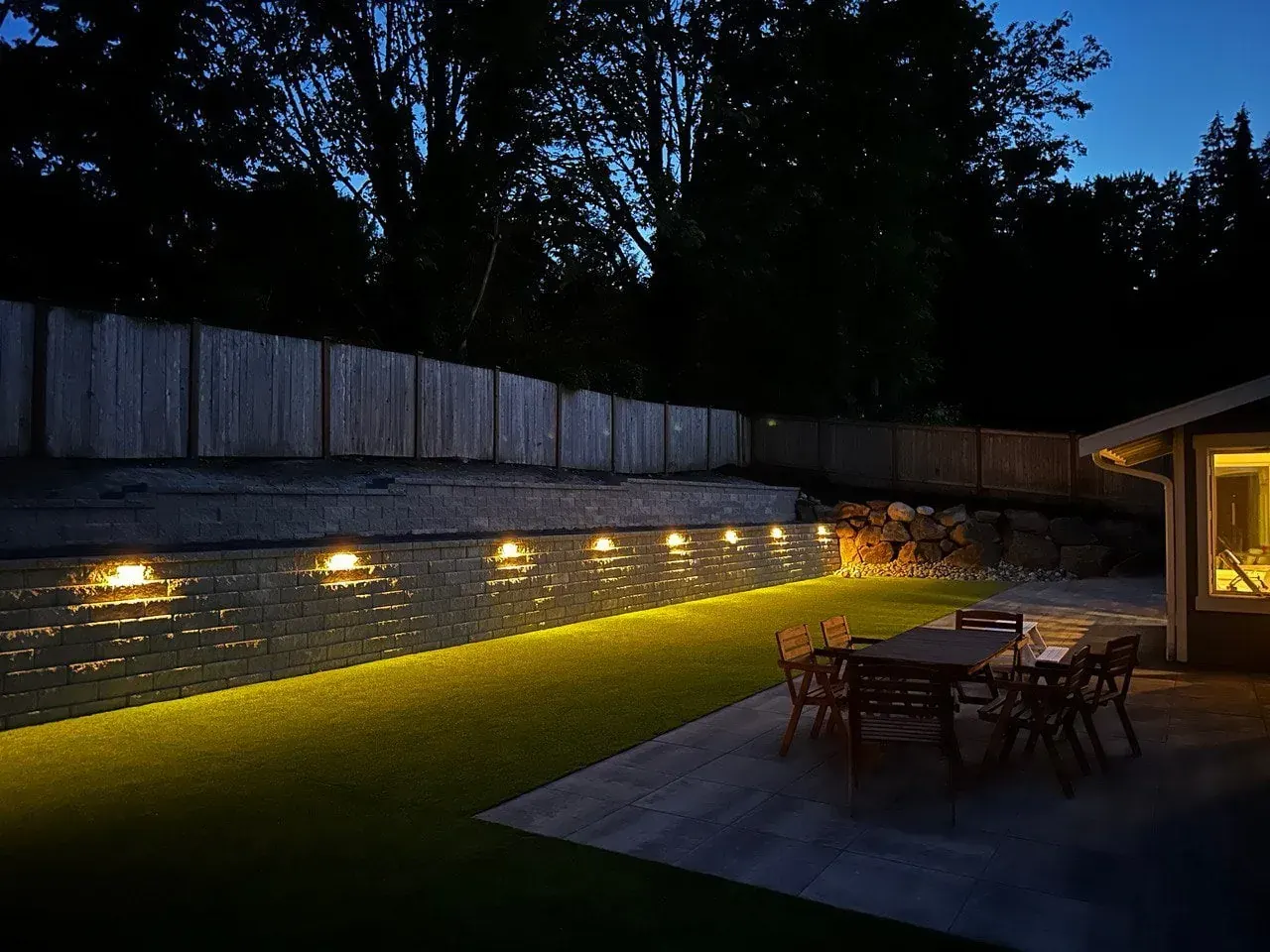
Wall lighting for a garden that gets used after dark
Low-voltage LED washing the retaining wall, with the patio lit for evening dining.
No down payment. You pay when the project is finished.
Monday – Friday, 9:00 AM – 7:00 PM · Capitol Hill, Seattle
Irrigation · Redmond
Redmond has the large family lawns that make irrigation genuinely worth installing, and the upland lots at Education Hill, Union Hill and Novelty Hill are big enough that hand watering stops being realistic well before August. What we most often find on these properties is not an absent system but an inadequate one: three zones installed with the house, covering a garden that has since gained beds, containers and a different layout, all still running on a schedule set a decade ago. Redmond is a Cascade Water Alliance member city, and on the valley floor there is a second factor — a high water table means the ground there needs considerably less applied water than the upland does.
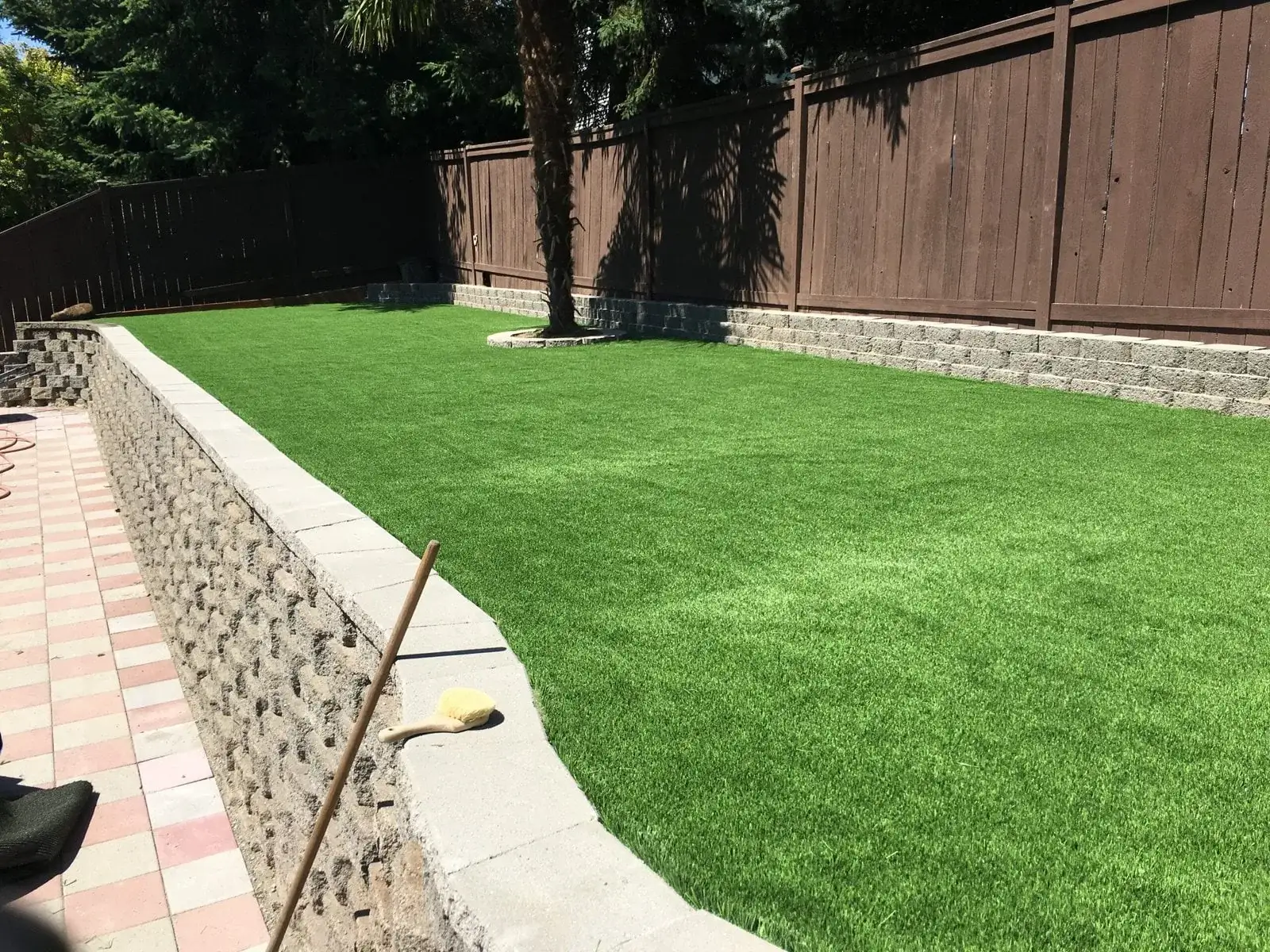
Artificial turf lawn held level by split-face block retaining walls with a paver walk alongside in Redmond
What we get called about
Redmond splits into two landscapes with different problems. On the valley floor near the Sammamish River the ground is flat and the water table is high, so drainage design is constrained by how much fall is available and where a system can legitimately discharge. Up on Education Hill, Union Hill and Novelty Hill the lots are large, the access is excellent and the work is design-led rather than remedial. The other Redmond factor is HOA density in the newer developments, where architectural review is a real scheduling item.
Worth knowing in Redmond
Split the containers onto their own zone. Pots dry out several times faster than anything in the ground, and putting them on the bed schedule means either dead containers or permanently over-watered beds — it is the most common single fault we find on Redmond systems.
The method
The sequence does not change between neighbourhoods — what changes is the ground it is applied to. Full detail on the irrigation service page.
Everything downstream depends on this. A design drawn without knowing what the supply actually delivers produces zones that cannot run properly, and it is the most common fault in existing systems.
Lawn, beds, containers and any shaded area separated, because they want different volumes and different frequencies. This is where most retrofits earn their money.
Sprinkler spacing calculated for head-to-head coverage; drip laid to the planting rather than in a grid that ignores where the roots are.
Lines trenched to depth and sleeved under any hard surface. Where a patio or drive is being built at the same time, the sleeves go in then — it costs almost nothing and saves a great deal later.
Zones timed, seasonal schedule set, and you shown how to adjust it. A system nobody knows how to change gets left on the install setting for a decade.
What it costs in Redmond
A Redmond system runs $3,000 to $9,000, with zone count the driver rather than area — and the large upland lots need more zones than a builder system provided. Access here is good, so trenching is efficient. Where the existing pipework is sound, rezoning and re-heading an old system typically costs far less than replacement and is what we usually recommend.
You pay after the project is fully completed.
The estimate you sign is the price you pay.
Spread the cost with no interest.
Covers hardscape work; vegetation excluded.
Local questions
General questions about this service are on the service page. These are the ones that only come up here.
Because it was designed for the garden the builder handed over, not the one you have now. A typical new-build system has three or four zones covering an open lawn and a token border, and it is laid out before any of the planting, patios or beds that follow. Once a garden gains structure, those original zones are watering across areas that need completely different treatment. The fix is usually rezoning rather than replacement — the buried pipework is often fine, and what needs changing is which heads belong to which circuit and how each one is scheduled.
Generally yes, and treating them the same is a common waste. Valley-floor ground near the Sammamish River sits close to a high water table, so plants there have access to moisture the upland does not — while Education Hill and Novelty Hill are on glacial till with normal summer drying. A property spanning both, or a garden designed with a valley-floor palette on upland soil, will have one area over-watered and the other stressed on a single schedule. Where a lot genuinely spans the transition, it is worth zoning across it.
Head-to-head spacing and a matched precipitation rate across the zone, both of which are design decisions rather than adjustments. Head-to-head means the throw from each sprinkler reaches the next, so the ground between them receives water from two directions — spacing them further apart to save on heads is the reason most large lawns have persistent dry patches. Matched precipitation means all heads on a zone apply water at the same rate, so mixing head types on one circuit produces over-watering at one end and under-watering at the other regardless of run time.
In this climate, genuinely yes, and more than in a dry one. Seattle-area summers are punctuated by rain in a way that a fixed schedule cannot account for, so a conventional timer keeps running through a wet week and then applies exactly the same volume during a dry one. A controller that skips or reduces a cycle based on actual conditions cuts consumption noticeably without any loss to the planting. It also removes the main practical failure of irrigation systems, which is that nobody adjusts the schedule between April and October.
Serving Redmond and surrounding neighbourhoods
Downtown Redmond · Education Hill · Grass Lawn · Overlake · Idylwood · Bear Creek · Union Hill · Novelty Hill · Sammamish Valley
98052 · 98053
Recent work
Landscape LightingView full sizeLow-voltage LED washing the retaining wall, with the patio lit for evening dining.
 Retaining WallsView full size
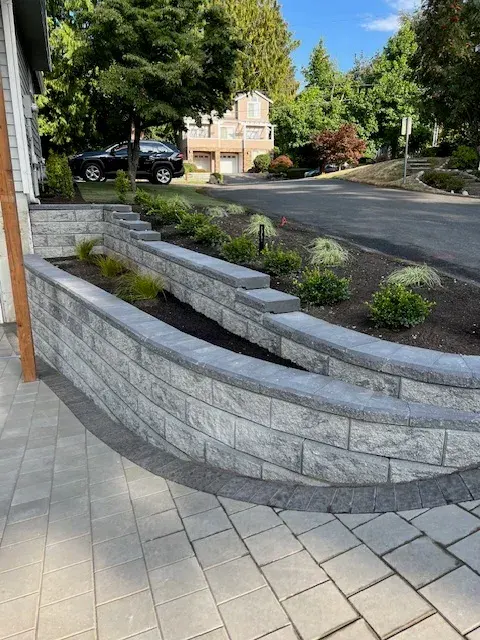
A curved wall along the front of the house holding the bank off the drive, with new planting behind it and a paved walk in front.
 HardscapingView full size
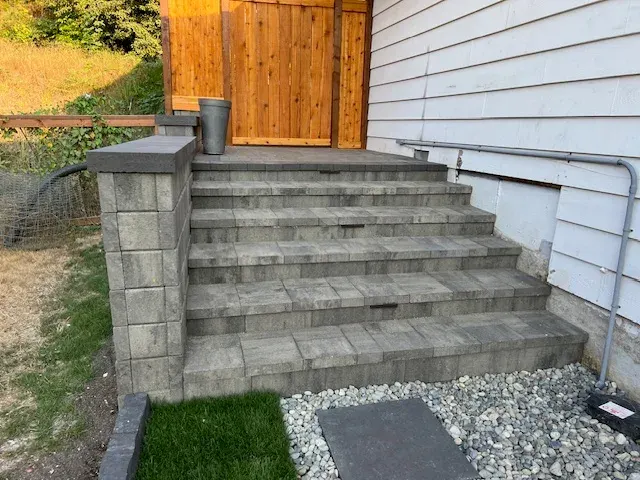
Wide block steps up the side of the house to a new gate, with a clean rock strip alongside to take the roof water away from the foundation.
 Outdoor LivingView full size
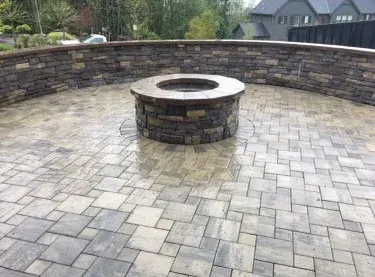
A curved seat wall wrapping a stone fire pit, set into a paver patio at the top of the garden.
We come out, look at the ground, and put a fixed written price together. No deposit, and it does not change once agreed.
Free estimate
Three minutes on the form. We reply during office hours, Monday – Friday, 9:00 AM – 7:00 PM, and we come out and look at the site before quoting anything.
Or call (425) 533-9734
Thank you — we have your details. We reply during office hours, Monday – Friday, 9:00 AM – 7:00 PM. If it is urgent, call (425) 533-9734.