Skip to content

Irrigation · Issaquah

Irrigation & Sprinkler Systems in Issaquah, WA

Irrigation on an Issaquah hillside is a study in how differently two parts of the same garden can behave. An upper terrace on a west-facing slope dries out fast, sheds applied water before it soaks in, and bakes in August. The ground at the toe of the same slope receives everything moving downhill and can stay damp well into summer. Running both on one zone guarantees that one of them is wrong all season. Add deep conifer shade on many of these lots — where soil is dry because the tree is taking the water, not because the sun is — and Issaquah needs more zoning thought than almost anywhere on this list.

Typical range
$3,000–$9,000 for a typical residential system
From our base
30–45 minutes from Capitol Hill via I-90
Ground here
Variable and steeper than most of this market — glacial till and weathered mountain soils on the slopes, with alluvial ground and a high water table on the Issaquah Creek valley floor.

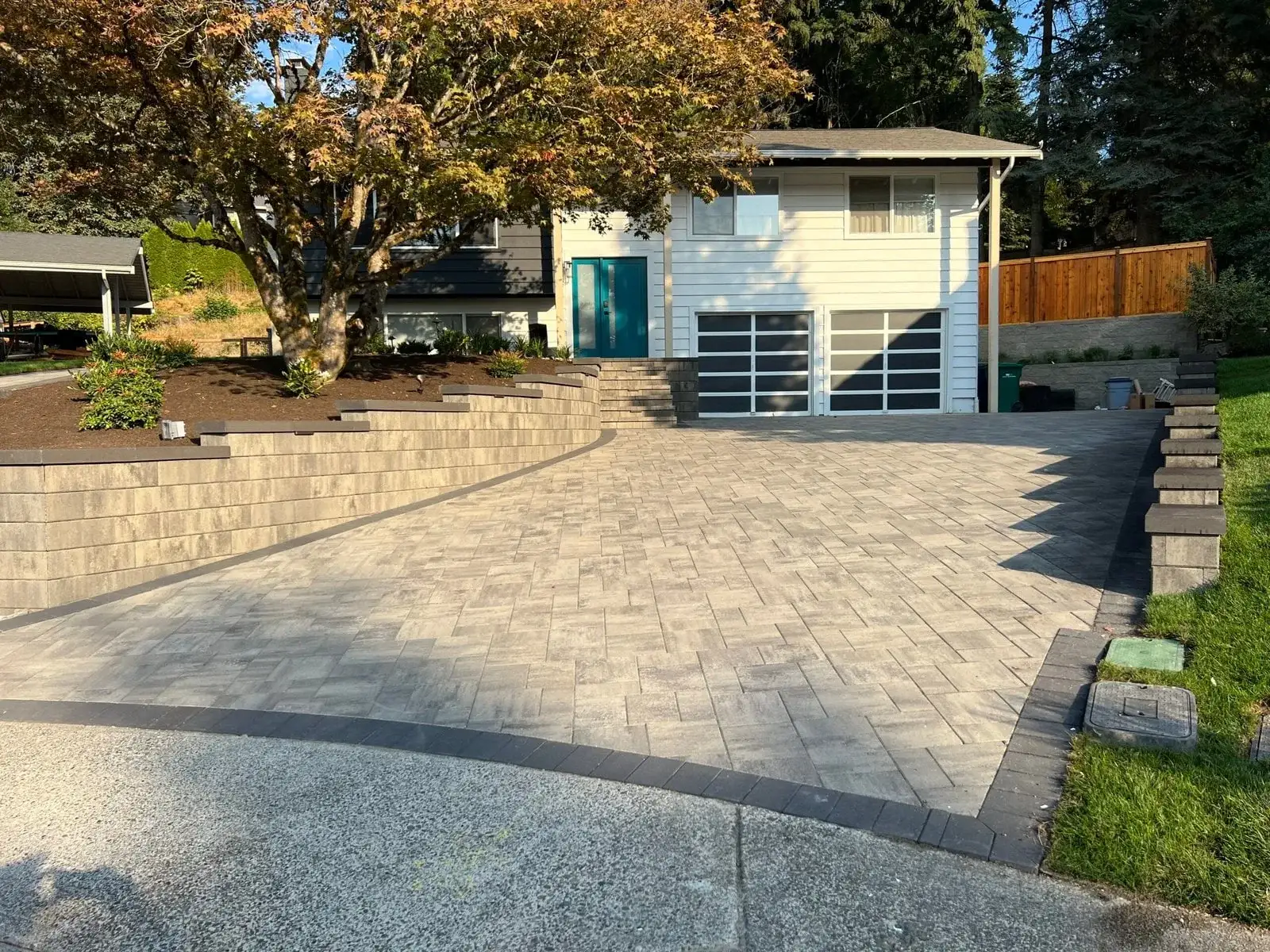
Wide paver driveway and turning apron in front of a garage on a sloped Issaquah lot

What we get called about

Irrigation problems specific to Issaquah.

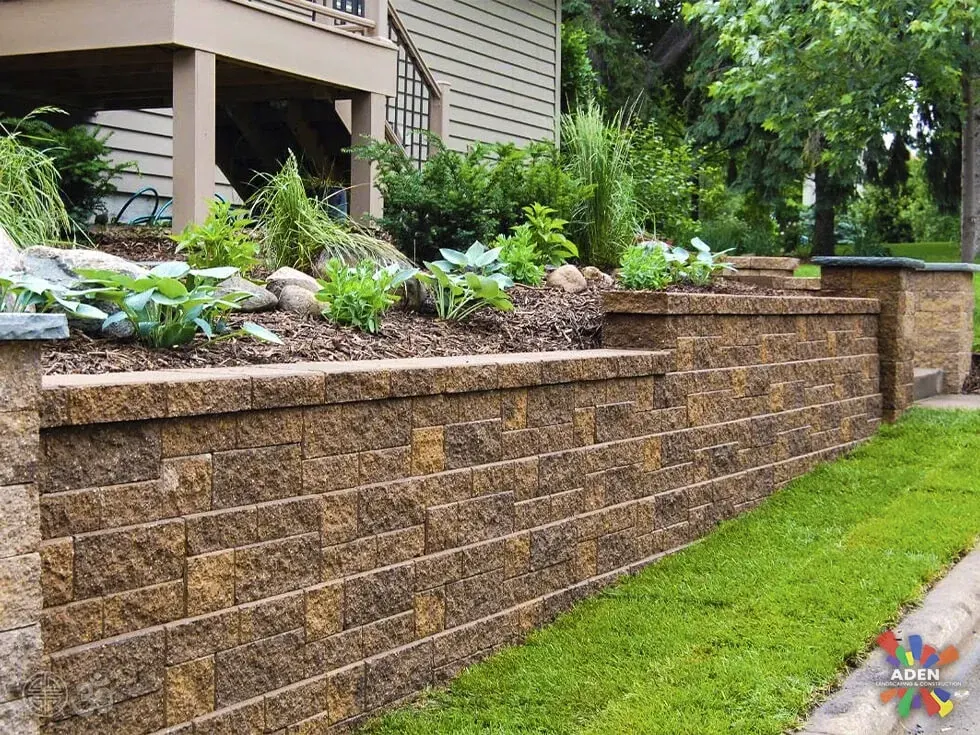
Issaquah is the retaining wall market on this side of the water. The city sits in a valley surrounded by mountains, and properties built into those slopes need grade held before anything else can happen. The second local factor is water arriving from above: on a hillside lot, a significant share of what you are managing did not fall on your property at all, it came down off the mountain, and drainage has to be sized for that rather than for your roof area. Third, HOA coverage here is among the densest in the region.

  • Upper and lower terraces on one zone drying at completely different rates
  • Water running off a slope before it has soaked in
  • Dry soil under established conifers that looks like a watering problem
  • A west-facing hillside garden scorched in August despite a running system
  • A system installed on a slope with no pressure regulation between elevations

Worth knowing in Issaquah

Water in short repeated cycles on any real slope. One long run mostly runs off; two or three short applications with a gap between deliver the same volume where it is actually needed, and it costs nothing but a controller setting.

The method

How we build irrigation, wherever the job is.

The sequence does not change between neighbourhoods — what changes is the ground it is applied to. Full detail on the irrigation service page.

  1. 01

    Measure pressure and flow

    Everything downstream depends on this. A design drawn without knowing what the supply actually delivers produces zones that cannot run properly, and it is the most common fault in existing systems.

  2. 02

    Zone by need, not by geography

    Lawn, beds, containers and any shaded area separated, because they want different volumes and different frequencies. This is where most retrofits earn their money.

  3. 03

    Set heads and drip lines out

    Sprinkler spacing calculated for head-to-head coverage; drip laid to the planting rather than in a grid that ignores where the roots are.

  4. 04

    Trench, sleeve and connect

    Lines trenched to depth and sleeved under any hard surface. Where a patio or drive is being built at the same time, the sleeves go in then — it costs almost nothing and saves a great deal later.

  5. 05

    Programme and hand over

    Zones timed, seasonal schedule set, and you shown how to adjust it. A system nobody knows how to change gets left on the install setting for a decade.

What it costs in Issaquah

$3,000–$9,000 for a typical residential system

Issaquah systems run $3,000 to $9,000 and need more zones than a flat-lot equivalent, which is the main cost driver — elevation, aspect and canopy all argue for separating areas that a suburban garden could combine. Issaquah is a Cascade Water Alliance member city, so the supply arrangement differs from the Seattle side.

  • No down payment

    You pay after the project is fully completed.

  • Fixed price, agreed up front

    The estimate you sign is the price you pay.

  • 0% interest for up to 6 months

    Spread the cost with no interest.

  • Warranty on hardscaping

    Covers hardscape work; vegetation excluded.

Local questions

Irrigation in Issaquah, answered.

General questions about this service are on the service page. These are the ones that only come up here.

Why does my hillside garden dry out at the top and stay wet at the bottom?

Because gravity is doing most of the watering and the controller cannot see it. Water applied to a slope faster than the soil absorbs it runs downhill, so the upper ground receives a fraction of what was applied and the toe receives its own share plus everything from above. On top of that, an upper terrace is usually more exposed and dries faster anyway. The answer is separate zones by elevation, shorter and more frequent cycles so each application soaks in, and drip rather than spray on any planted area on a real gradient.

Do plants under conifers need more water or less?

Usually more than people expect, and it is one of the least obvious things about a wooded Issaquah lot. Ground under an established fir or cedar is dry in summer not because of sun but because the tree is drawing an enormous volume of water out of it — a mature conifer transpires far more than any planting beneath it. So a shaded bed under a canopy can be considerably drier in August than a sunny open border. Anything planted there needs either its own zone or a species list that tolerates dry shade, which is the approach we usually prefer.

Does elevation change affect water pressure across a system?

Yes, and on a genuinely steep lot it is worth designing for rather than discovering. Pressure drops as elevation rises, so heads at the top of a hillside garden may receive noticeably less than those at the bottom of the same zone — which produces uneven coverage that no run-time adjustment corrects. On a lot with substantial vertical change the solutions are splitting zones by elevation, using pressure-regulated heads so each delivers a consistent output regardless of supply variation, and sizing the pipework for the head rather than for the average.

Is irrigation worth installing on a hillside with mountain runoff?

The two are less related than they appear, and it is a fair question. Hillside lots here take a great deal of water between October and March, which is a drainage problem — and the same lots are frequently dry and exposed through July and August, which is an irrigation problem. Solving one does not address the other. What matters is that they are designed together: a drainage run and an irrigation line trenched in the same excavation is far cheaper than two separate projects, and they can genuinely conflict if neither knows about the other.

Serving Issaquah and surrounding neighbourhoods

30–45 minutes from Capitol Hill via I-90.

Olde Town Issaquah · Issaquah Highlands · Talus · Squak Mountain · Cougar Mountain · Providence Point · Klahanie · Sammamish Plateau edge

98027 · 98029

Everything we do in Issaquah →

Recent work

Built in Issaquah.

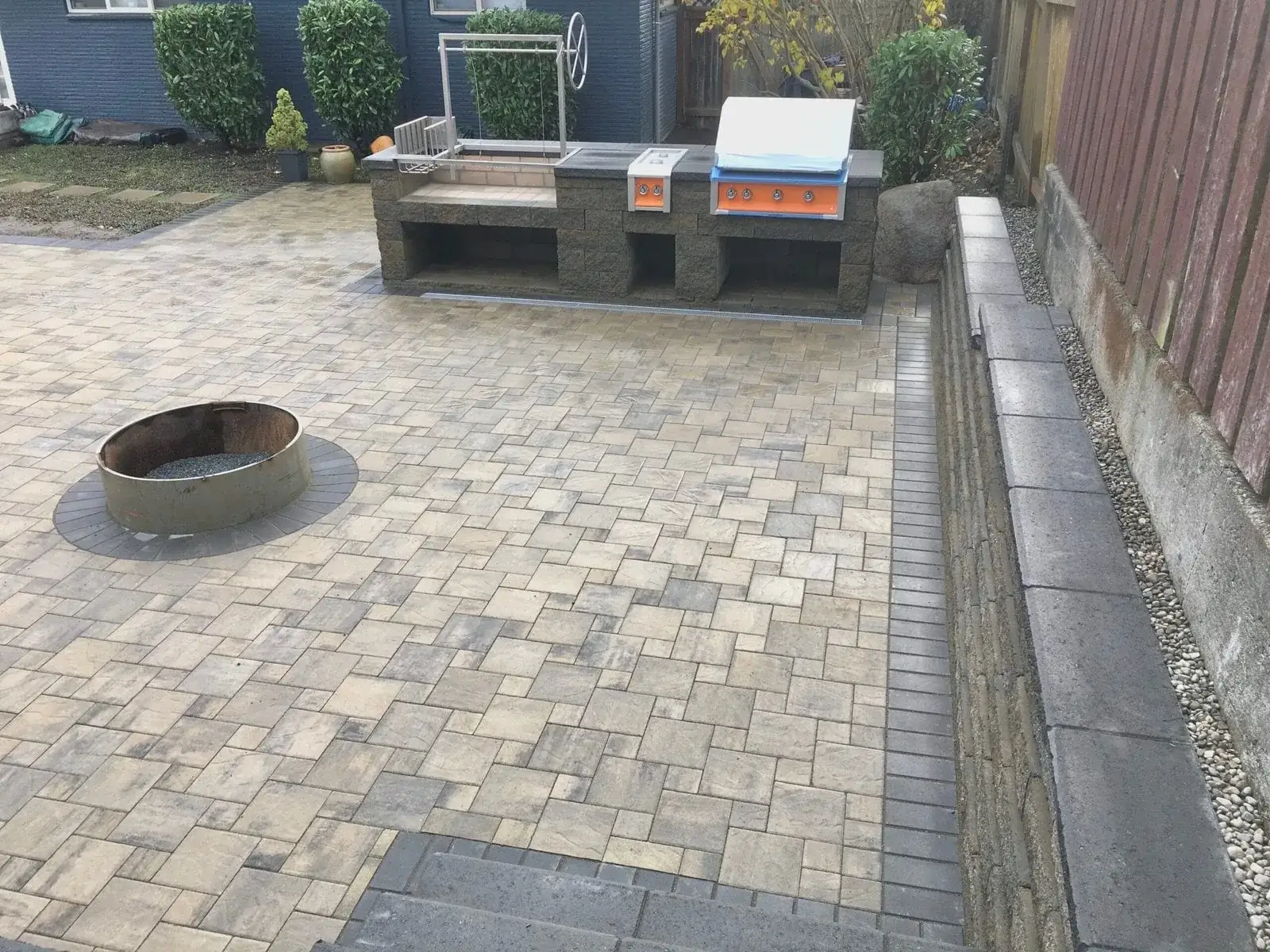
Built-in outdoor kitchen island and fire pit on a paver patio with a low seat wall

Get an irrigation quote in Issaquah.

We come out, look at the ground, and put a fixed written price together. No deposit, and it does not change once agreed.

Free estimate

Irrigation in Issaquah — get a price.

Three minutes on the form. We reply during office hours, Monday – Friday, 9:00 AM – 7:00 PM, and we come out and look at the site before quoting anything.

Or call (425) 533-9734

Takes under a minute. No deposit is required to book work — you pay when the project is finished. Prefer to talk? Call (425) 533-9734

Call NowFree Estimate