
 StoneworkView full size
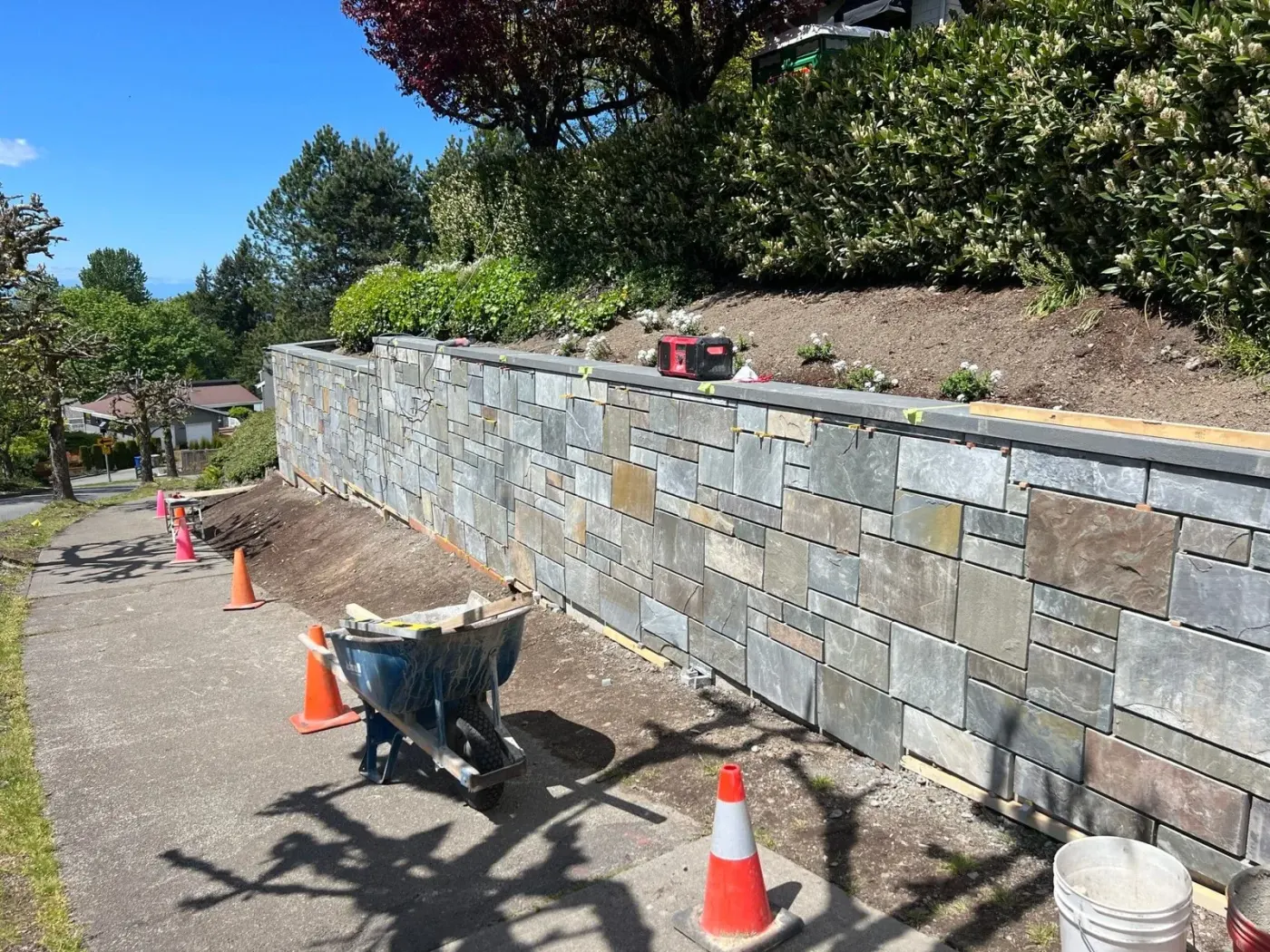
Natural stone wall, mid-build
Stone veneer going up over a structural core — the part of the job nobody photographs, done properly.
No down payment. You pay when the project is finished.
Monday – Friday, 9:00 AM – 7:00 PM · Capitol Hill, Seattle
Irrigation · Woodinville
Irrigation on a Woodinville property runs into a constraint that barely exists elsewhere on this list: the supply itself may be limited. A meaningful share of these properties, particularly toward Cottage Lake, Bear Creek and the county pockets, run on private wells rather than mains — and a well delivers what it delivers. Designing a system for municipal pressure and volume on a property that has neither produces zones that cannot run properly and, worse, a well that struggles to recover. The second Woodinville factor is scale: on acreage the honest answer is usually to irrigate a defined area properly rather than to attempt the whole property.
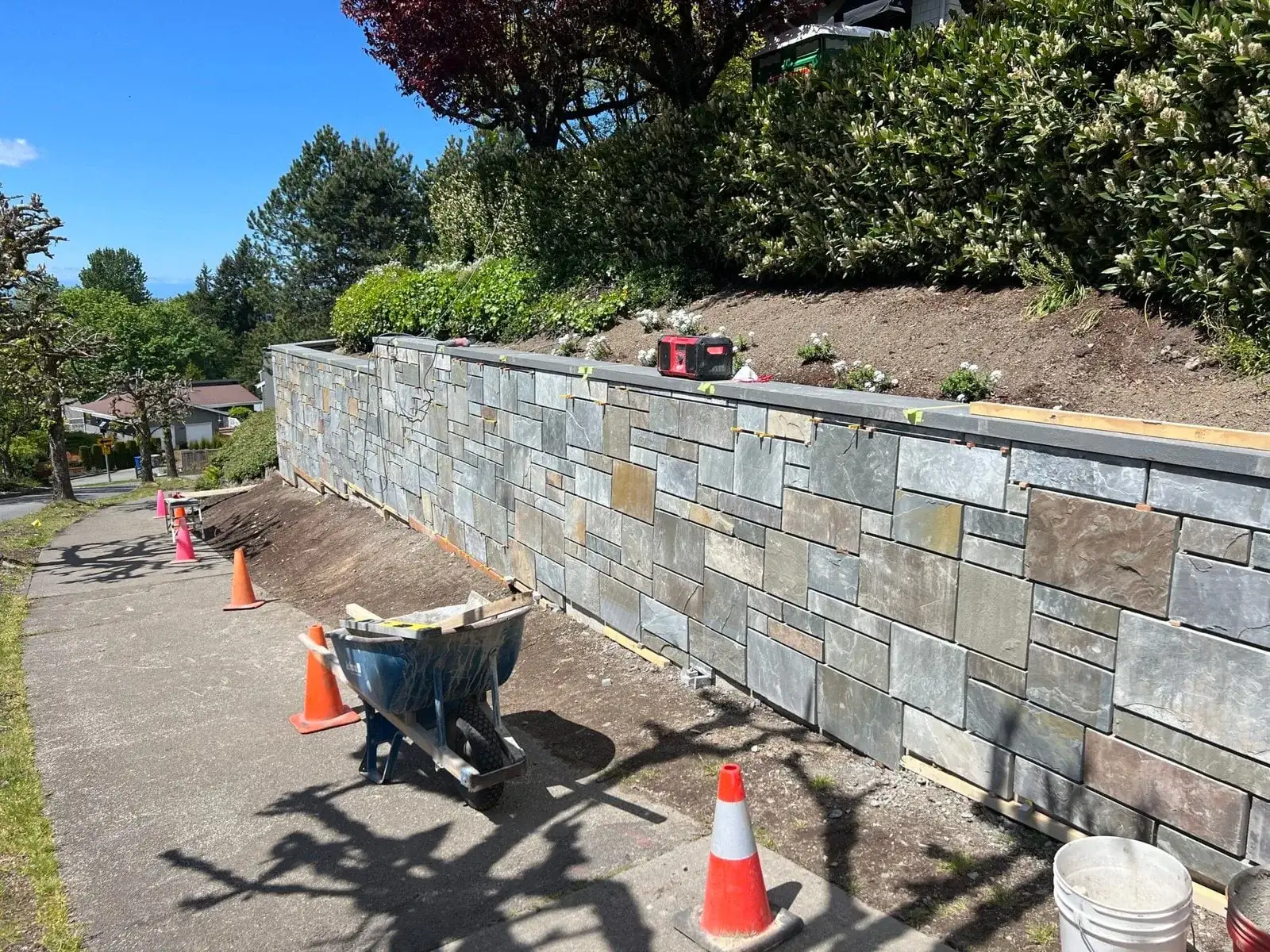
Natural stone veneer retaining wall under construction with tools and materials on a Woodinville site
What we get called about
Woodinville has the largest properties we work on, and acreage changes the nature of the job. The design problem stops being how to fit things into a small space and becomes how to give a large one structure — which usually means deciding what part of it is garden and letting the rest be landscape rather than trying to maintain all of it. Practically, several properties here are on wells and septic, which constrains irrigation design and dictates where you cannot excavate. And the valley floor is a different world from the hills: high water table, flat ground, slow drainage.
Worth knowing in Woodinville
Get the well's flow and recovery rate before designing anything. Zone sizes, run times and how many circuits can operate in a day all follow from that number, and a system designed without it will either underperform or draw the well down.
A mains supply is effectively unlimited for garden purposes — you size zones to the pressure and flow available and that is the end of it. A private well is a different engineering problem, because it has both a delivery rate and a recovery rate, and exceeding either has consequences beyond a poorly watered garden.
The first number is flow: how much the well can deliver at once, which sets the maximum size of any single zone. Design a zone larger than the well can supply and the heads at the far end never reach proper pressure, so the coverage is uneven no matter how long it runs.
The second is recovery: how quickly the well replenishes. That sets how many zones can run in a day and how much rest is needed between them. A system that runs continuously through a summer evening on a modest well can draw it down faster than it refills, which is a household water problem rather than a landscaping one.
The practical consequences are a design with more, smaller zones running over a longer window — frequently overnight — with deliberate gaps built into the schedule. Drip on planted areas rather than spray helps considerably here, because it delivers the same benefit at a fraction of the flow rate. And it is another argument for irrigating a defined garden area properly rather than attempting the whole property.
The method
The sequence does not change between neighbourhoods — what changes is the ground it is applied to. Full detail on the irrigation service page.
Everything downstream depends on this. A design drawn without knowing what the supply actually delivers produces zones that cannot run properly, and it is the most common fault in existing systems.
Lawn, beds, containers and any shaded area separated, because they want different volumes and different frequencies. This is where most retrofits earn their money.
Sprinkler spacing calculated for head-to-head coverage; drip laid to the planting rather than in a grid that ignores where the roots are.
Lines trenched to depth and sleeved under any hard surface. Where a patio or drive is being built at the same time, the sleeves go in then — it costs almost nothing and saves a great deal later.
Zones timed, seasonal schedule set, and you shown how to adjust it. A system nobody knows how to change gets left on the install setting for a decade.
What it costs in Woodinville
Woodinville systems run $3,000 to $9,000 for a defined garden area, and the number climbs steeply if a whole acreage property is attempted — which is usually the wrong approach regardless of budget. Where a property is on a well, the design has to be sized to the supply, and that constraint frequently makes a smaller, better system the only workable one.
You pay after the project is fully completed.
The estimate you sign is the price you pay.
Spread the cost with no interest.
Covers hardscape work; vegetation excluded.
Local questions
General questions about this service are on the service page. These are the ones that only come up here.
Yes, designed to what the well can actually deliver rather than to municipal assumptions. That means establishing two numbers first: flow, which sets the maximum size of any single zone, and recovery rate, which sets how many zones can run in a day and how much rest is needed between them. The resulting design typically has more, smaller zones running over a longer window, often overnight, with gaps built into the schedule. Drip on planted areas helps significantly, delivering the same result at a fraction of the flow.
Almost never, and on a well it is frequently not even possible. On acreage the productive approach is a defined garden area near the house irrigated properly, with the wider property managed as meadow, woodland or paddock that needs no watering at all. That matches how the land is actually used, keeps the system within what the supply can sustain, and costs a fraction of attempting the whole thing. It also produces a better-looking property, because a well-watered garden with managed land beyond it reads as deliberate.
Across a septic drainfield, which is the constraint that shapes most Woodinville layouts. A drainfield needs the ground above and around it undisturbed and uncompacted, so trenching through it is not an option, and adding irrigation water to that area is actively harmful — a drainfield in saturated ground stops dispersing properly. On a large lot the field is frequently in the flattest, most convenient place to run a line. Locating the tank and field from records, or by survey where records are poor, comes before the design rather than during the trenching.
Considerably, and a property spanning both should be zoned across the difference. The Sammamish Valley floor is alluvial with a water table close to the surface, so planting there reaches moisture that ground on Hollywood Hill simply cannot. Running both on one schedule means over-watering below and stressing above. Where a whole garden sits on the valley floor, the system needed is usually smaller and cheaper than the same garden would require on the hill — which is a rare case of the difficult ground being the cheaper one.
Serving Woodinville and surrounding neighbourhoods
Downtown Woodinville · Hollywood Hill · Wellington · Cottage Lake · Sammamish Valley wine district · Bear Creek edge
98072 · 98077
Recent work
StoneworkView full sizeStone veneer going up over a structural core — the part of the job nobody photographs, done properly.
 Retaining WallsView full size
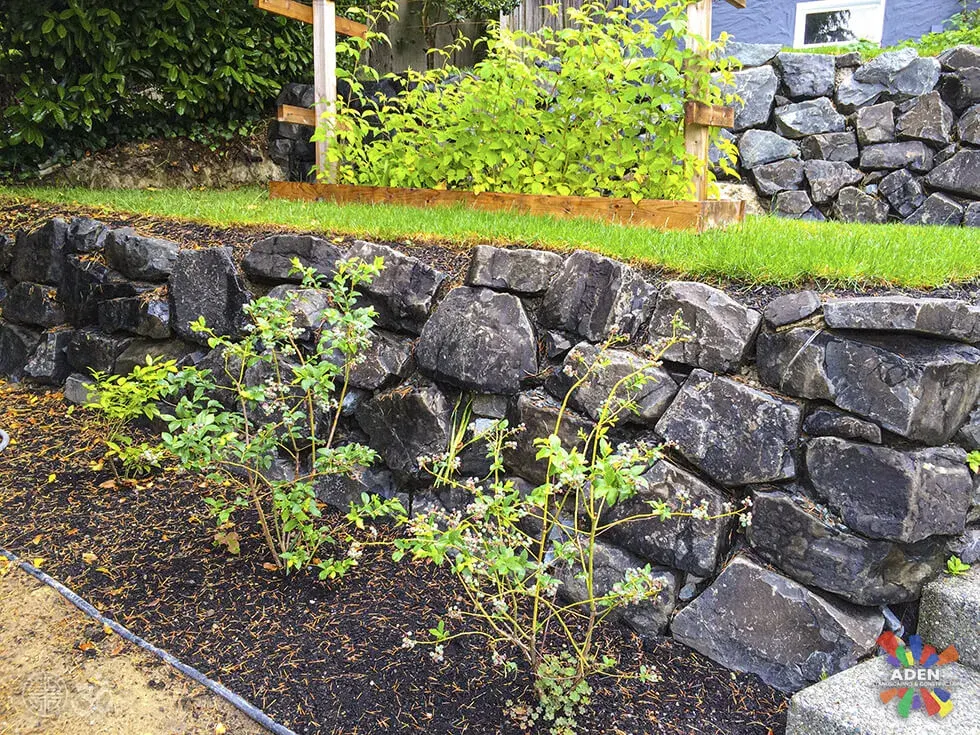
Quarried basalt set as a rockery rather than laid as block. It suits a rural lot better, and it lets the planting run into the joints instead of stopping dead at a straight line.
 Outdoor LivingView full size
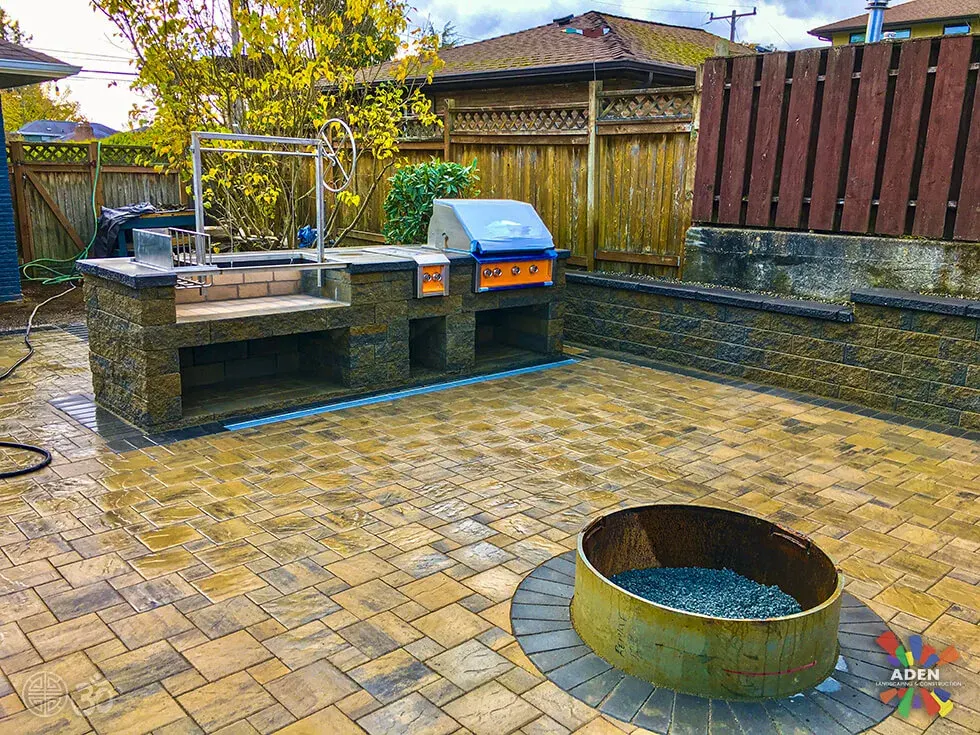
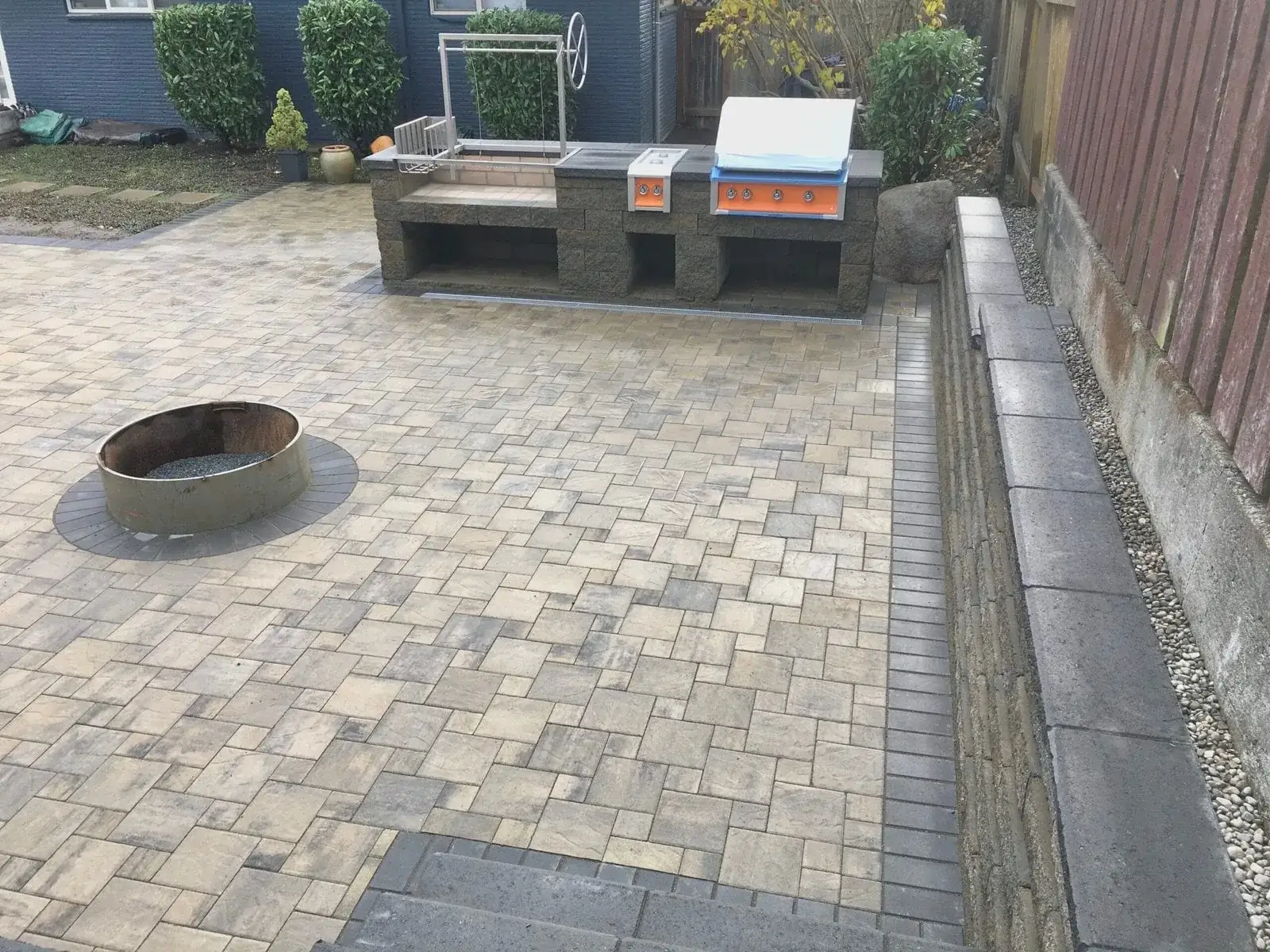
Two built-in grills, a run of stone-faced counter, and a copper fire bowl set into the paving. The gas line and the drainage went in before a single paver did — they always have to.
 Driveway PavingView full size
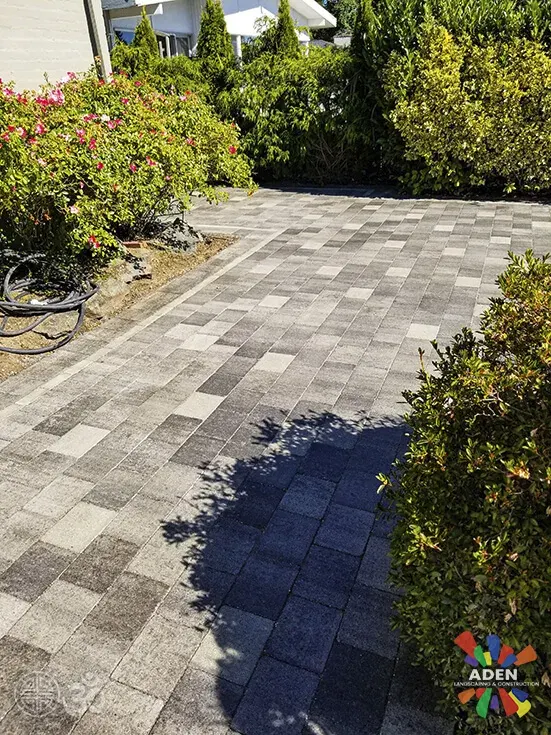
Photographed before the edge planting went back, jointing sand still on the surface. The variation across the field is deliberate — units drawn from several pallets rather than one.
We come out, look at the ground, and put a fixed written price together. No deposit, and it does not change once agreed.
Free estimate
Three minutes on the form. We reply during office hours, Monday – Friday, 9:00 AM – 7:00 PM, and we come out and look at the site before quoting anything.
Or call (425) 533-9734
Thank you — we have your details. We reply during office hours, Monday – Friday, 9:00 AM – 7:00 PM. If it is urgent, call (425) 533-9734.