Skip to content

Drainage · Issaquah

Yard Drainage & Hillside Drainage in Issaquah, WA

Issaquah drainage is a different discipline from suburban drainage, and the reason is that most of the water is not yours. A property built into the flank of Cougar, Squak or Tiger sits on the route of everything moving downhill off the mountain through six months of wet weather. It arrives across a wide front rather than at a downspout, the volume is far larger than the lot generates itself, and it does not stop when the rain does. A system designed to collect water after it has reached the house is fighting something it was never sized for, which is why so many retrofit drains on these slopes are overwhelmed within a couple of seasons.

Typical range
$10–$25 per linear foot
From our base
30–45 minutes from Capitol Hill via I-90
Ground here
Variable and steeper than most of this market — glacial till and weathered mountain soils on the slopes, with alluvial ground and a high water table on the Issaquah Creek valley floor.

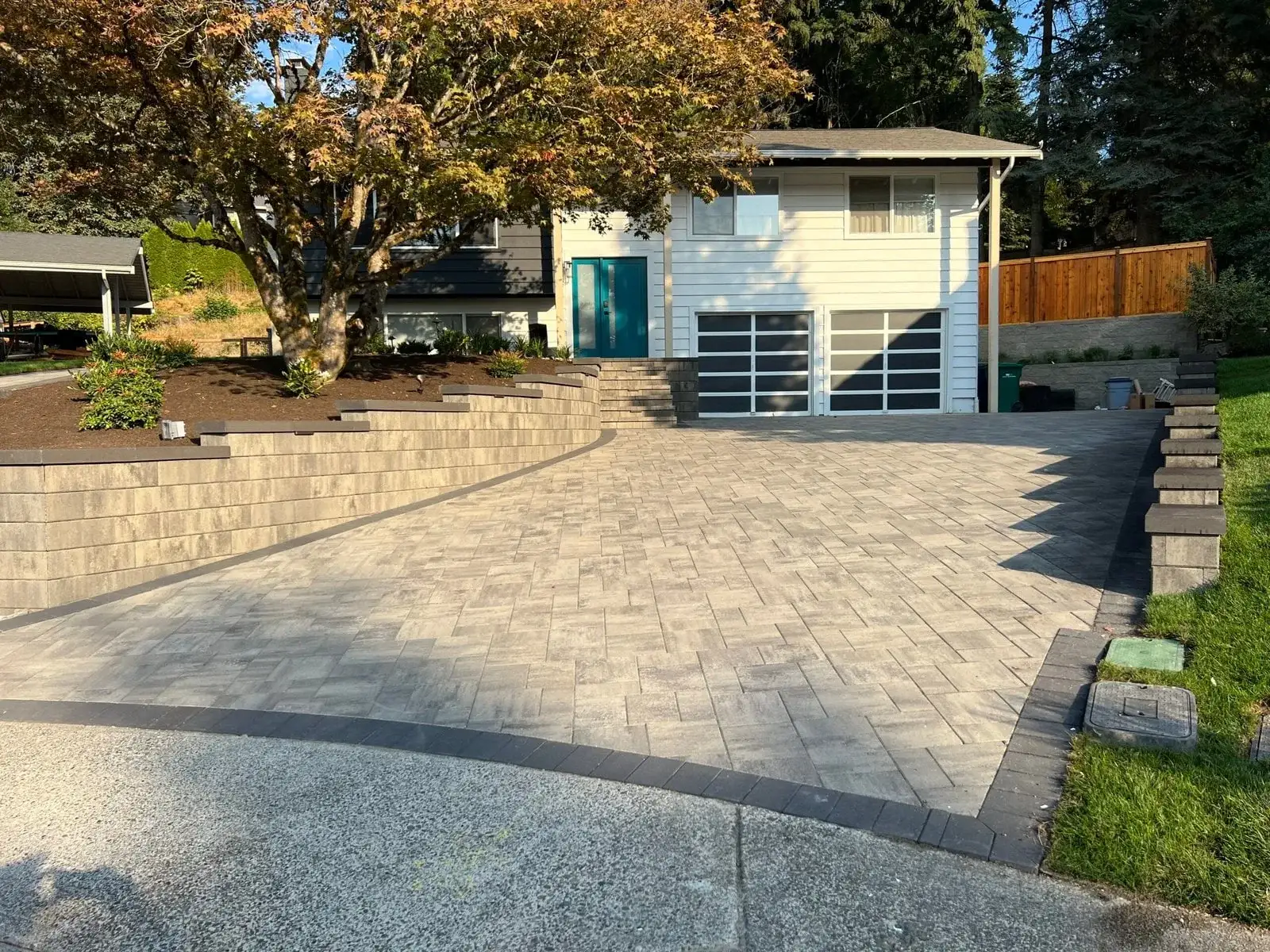
Wide paver driveway and turning apron in front of a garage on a sloped Issaquah lot

What we get called about

Drainage problems specific to Issaquah.

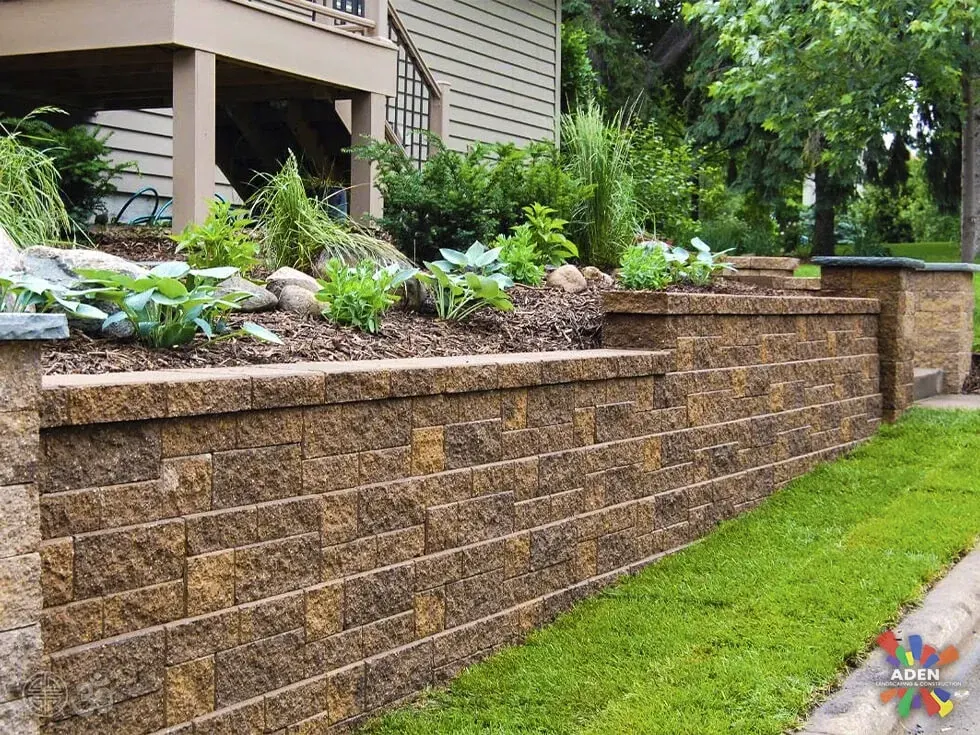
Issaquah is the retaining wall market on this side of the water. The city sits in a valley surrounded by mountains, and properties built into those slopes need grade held before anything else can happen. The second local factor is water arriving from above: on a hillside lot, a significant share of what you are managing did not fall on your property at all, it came down off the mountain, and drainage has to be sized for that rather than for your roof area. Third, HOA coverage here is among the densest in the region.

  • Hillside runoff arriving across a wide front rather than at a single point
  • A retrofit drain sized for a suburban lot on ground receiving mountain flow
  • Water crossing a sloped driveway and standing at the garage
  • Saturated ground behind a retaining wall that has begun to move
  • Valley-floor property near Issaquah Creek where the water table limits trench depth

Worth knowing in Issaquah

Interception versus collection

The distinction between these two approaches is the whole of hillside drainage, and getting it wrong is why so much money is wasted on this side of the water.

Collection means putting a drain where the problem shows — the wet corner, the puddle by the patio, the damp against the foundation — and taking the water away from there. On a flat suburban lot managing its own rainfall, that is correct and sufficient. On a mountain flank it means your system is receiving everything the hillside sends, at whatever rate the weather chooses, after it has already spread across the ground you were trying to protect.

Interception means cutting the flow off upslope of the area you care about and routing it around, so the water never arrives. The drain sits where the topography says rather than where the symptom is, which sometimes puts it in an unintuitive place — well above the house, or along a boundary nowhere near the standing water. It is usually a shorter run, a smaller system and a considerably more reliable outcome.

The method

How we build drainage, wherever the job is.

The sequence does not change between neighbourhoods — what changes is the ground it is applied to. Full detail on the drainage service page.

  1. 01

    Find out where the water actually comes from

    Roof, surface runoff, a neighbouring property's grade, or groundwater sitting on the till. These need different answers and guessing wastes the whole job.

  2. 02

    Establish where it can discharge to

    A drain needs somewhere legal and physical to go — daylight at a lower point, or an approved connection. A drain that terminates in a hole is a soakaway on ground that does not soak.

  3. 03

    Cut the trench to a consistent fall

    Continuous fall along the whole run. A trench that dips holds water and silts up, which is the most common reason a retrofit drain stops working.

  4. 04

    Lay pipe, rock and geotextile

    Perforated pipe bedded in clean washed rock, wrapped in geotextile so the surrounding soil cannot migrate in and clog the void.

  5. 05

    Reinstate the surface

    Turf, planting or hard surface put back so the finished job does not read as a scar across the garden.

What it costs in Issaquah

$10–$25 per linear foot

Issaquah runs at the upper end of $10 to $25 per linear foot more often than the rest of this list, because the systems are larger. Interception drains have to be sized for mountain flow rather than roof area, which means bigger pipe, more rock and an outfall with real capacity. Set against that, a properly sized interception drain is usually cheaper than the alternative, which is repeatedly repairing whatever the water damages downhill.

  • No down payment

    You pay after the project is fully completed.

  • Fixed price, agreed up front

    The estimate you sign is the price you pay.

  • 0% interest for up to 6 months

    Spread the cost with no interest.

  • Warranty on hardscaping

    Covers hardscape work; vegetation excluded.

Local questions

Drainage in Issaquah, answered.

General questions about this service are on the service page. These are the ones that only come up here.

Where does an interception drain actually go on a hillside lot?

Upslope of whatever you are protecting, on the line the topography dictates rather than where the water is currently visible. That is frequently counter-intuitive — the drain may end up well above the house, along an upper boundary, nowhere near the wet patch you called about. The logic is that you are cutting a flow path rather than emptying a puddle. We walk the lot in the wet if we possibly can, because the route water takes across a hillside is obvious in January and largely invisible in July, and getting the alignment right is most of what makes these systems work.

Can drainage fix a retaining wall that has started to move?

Frequently, and it is worth trying before assuming the wall has to come down. Most wall movement on an Issaquah slope is caused by water pressure behind the structure rather than by the wall being undersized for the soil — saturated ground is heavier and pushes considerably harder than drained ground. Retrofitting drainage behind an existing wall, or intercepting flow above it so the ground behind it stops saturating, removes the load that is causing the movement. Whether that is enough depends on how far the wall has already gone. We will tell you honestly when it is past the point where drainage alone will save it.

Does the ground near Issaquah Creek drain differently?

Yes, and it is close to the opposite problem from the hillsides above it. The valley floor around the creek is flat, alluvial and close to a high water table, so a trench there runs out of useful depth quickly and has very little fall to work with. Where the hillside problem is too much water arriving too fast, the valley problem is water that has nowhere to go once collected. Proximity to a creek corridor may also bring critical area rules into play, so on those lots we establish what applies to the parcel before designing a discharge.

Is there anything I can do myself before calling?

Two things, and both genuinely help. First, look at where your downspouts discharge — roof water arriving in a single spot on a slope is a large concentrated volume, and extending a discharge well clear of the building sometimes fixes what looked like a bigger problem. Second, if you can, take photographs during a sustained wet spell showing where water runs and where it stands. That is the single most useful thing a homeowner can hand us, because it captures the flow paths that a dry-weather site visit simply cannot show.

Serving Issaquah and surrounding neighbourhoods

30–45 minutes from Capitol Hill via I-90.

Olde Town Issaquah · Issaquah Highlands · Talus · Squak Mountain · Cougar Mountain · Providence Point · Klahanie · Sammamish Plateau edge

98027 · 98029

Everything we do in Issaquah →

Recent work

Built in Issaquah.

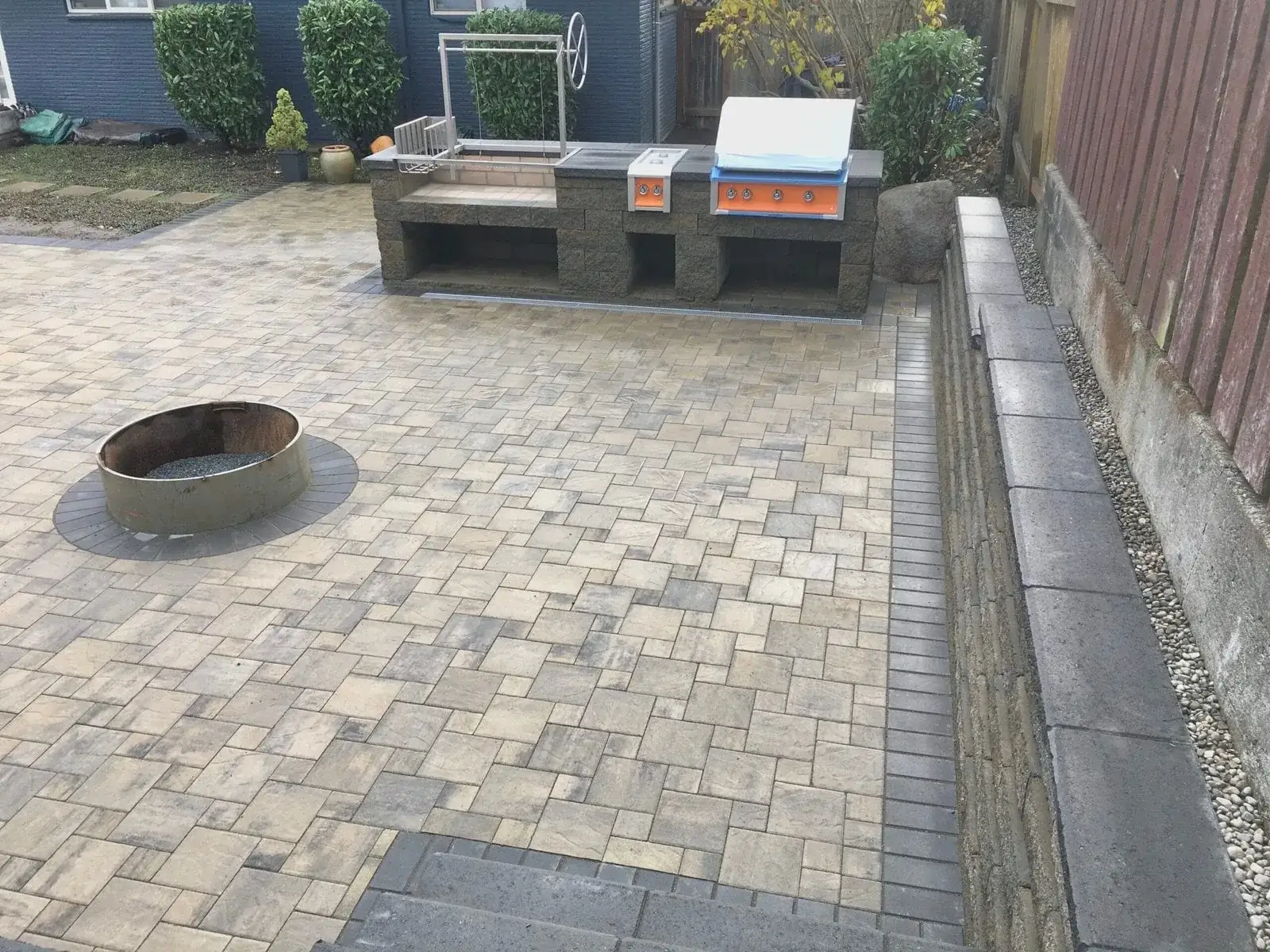
Built-in outdoor kitchen island and fire pit on a paver patio with a low seat wall

Book a free drainage assessment in Issaquah.

We come out, look at the ground, and put a fixed written price together. No deposit, and it does not change once agreed.

Free estimate

Drainage in Issaquah — get a price.

Three minutes on the form. We reply during office hours, Monday – Friday, 9:00 AM – 7:00 PM, and we come out and look at the site before quoting anything.

Or call (425) 533-9734

Takes under a minute. No deposit is required to book work — you pay when the project is finished. Prefer to talk? Call (425) 533-9734

Call NowFree Estimate