
 Retaining Walls
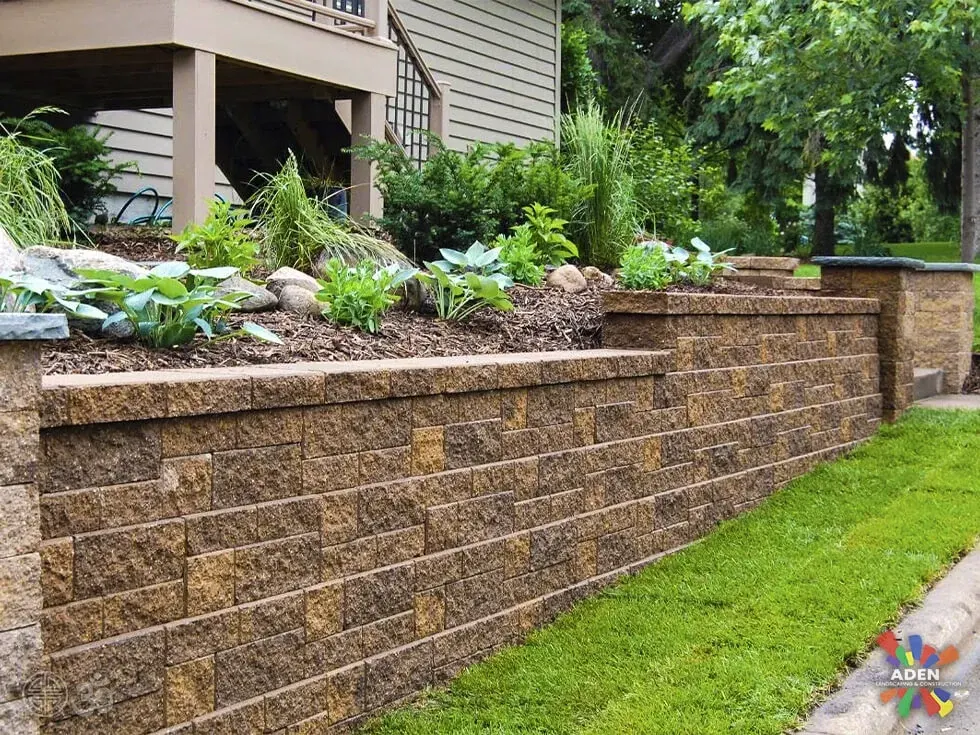
Block wall holding a planted bed
One course of tan split-face block turns a soft slope into a level bed and a level lawn. The planting sits above the wall instead of sliding down it, which is the entire reason the wall is there.
No down payment. You pay when the project is finished.
Monday – Friday, 9:00 AM – 7:00 PM · Capitol Hill, Seattle
Retaining Walls · Issaquah
Issaquah is the strongest retaining wall market on this side of the water, and the reason is topographical rather than commercial. The city sits in a valley ringed by the Issaquah Alps — Cougar, Squak and Tiger — so properties built into those flanks need grade held before there is a garden to design at all. Walls here also tend to be taller than elsewhere on this list, which raises two questions at once: engineering, and water. A hillside wall in Issaquah is not only holding soil, it is standing in the path of everything moving downhill off the mountain through six months of wet weather. Sizing the wall correctly and giving that water somewhere to go before it reaches the wall are the same job.
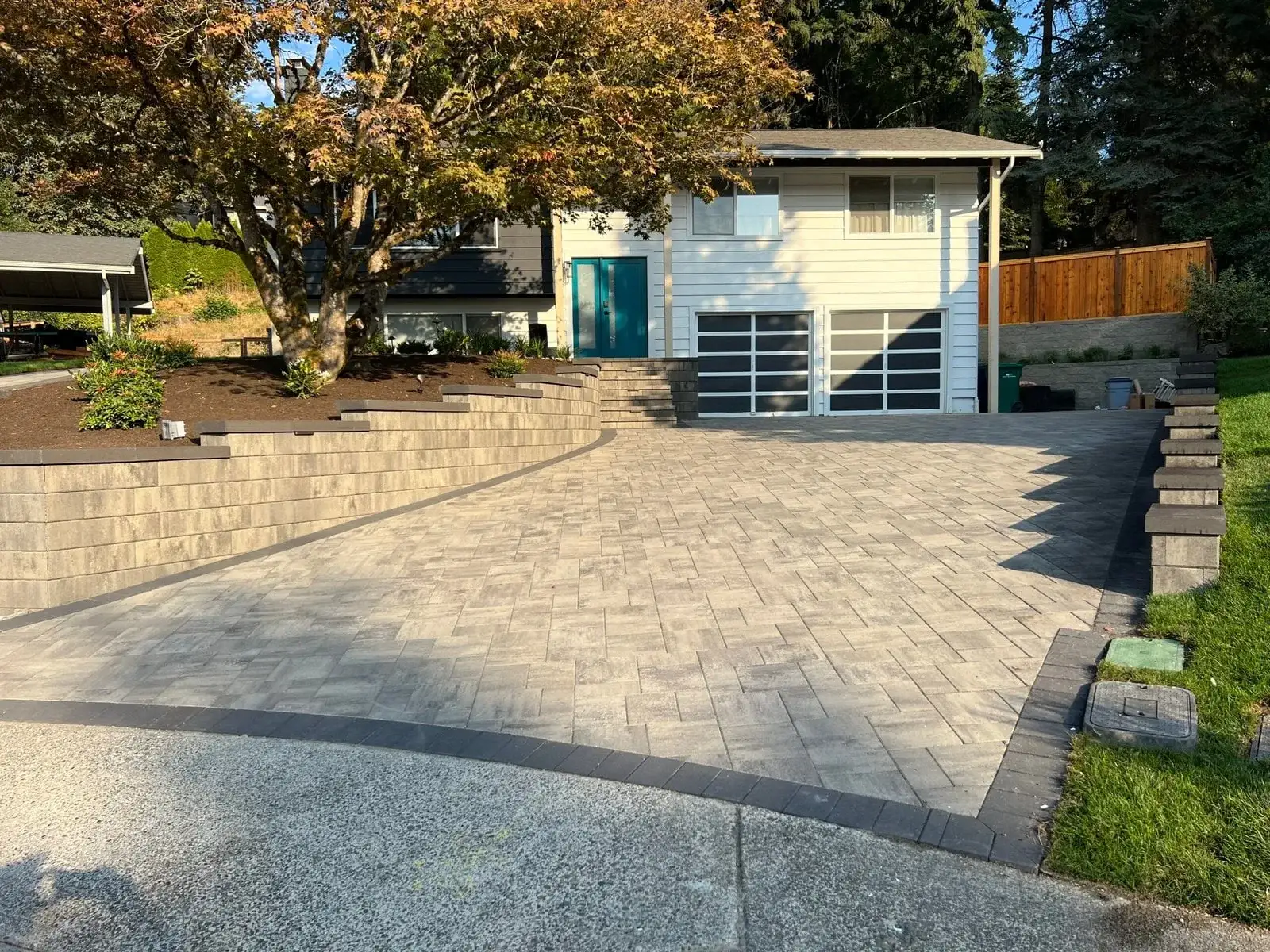
Wide paver driveway and turning apron in front of a garage on a sloped Issaquah lot
What we get called about
Issaquah is the retaining wall market on this side of the water. The city sits in a valley surrounded by mountains, and properties built into those slopes need grade held before anything else can happen. The second local factor is water arriving from above: on a hillside lot, a significant share of what you are managing did not fall on your property at all, it came down off the mountain, and drainage has to be sized for that rather than for your roof area. Third, HOA coverage here is among the densest in the region.
Worth knowing in Issaquah
On a hillside lot, spend the money above the wall rather than only on the wall. Intercepting water upslope and routing it around the area you are protecting costs a fraction of what it costs to build a wall strong enough to stand in front of it — and the wall lasts longer for it.
Issaquah produces more genuinely engineered walls than anywhere else we work, and the transition happens at a height that surprises homeowners. A four-foot garden wall is a landscaping structure. A nine-foot wall holding a hillside above a house is a piece of civil engineering that happens to be made of the same units, and the difference is not linear — loads rise sharply with height, and a hillside site frequently adds water pressure on top of soil pressure.
The threshold at which engineering becomes a requirement is set by the local jurisdiction rather than regionally, and a property inside the Issaquah city limits is governed differently from one in unincorporated King County. That is the first thing we establish, because it changes the design, the programme and the price.
Where a wall needs engineering input we say so at quote stage and build the time and the cost into the schedule. What we will not do is design to the limit of what can be built without a stamp and hope the ground agrees.
The method
The sequence does not change between neighbourhoods — what changes is the ground it is applied to. Full detail on the retaining walls service page.
We look up whether the property sits in an Environmentally Critical Area and what the grade actually is, because that decides the permit position before it decides anything else.
A level, compacted base trench below finished grade. This is the step that gets rushed on a cheap job and it is the step that determines whether the wall stays straight.
Levelled unit by unit. Every course above copies the first one, so an error here multiplies all the way up.
Perforated pipe at the footing, clean rock backfill placed course by course rather than dumped at the end, and geotextile separating rock from soil so it does not silt up.
Compacted in layers, not filled in one go. Settled backfill is what pulls a wall out of line a year later.
Capping units, any planting above, and the ground reinstated so the wall reads as part of the garden rather than an intervention.
What it costs in Issaquah
Issaquah walls sit at the upper end of the $5 to $45 per square foot range more often than anywhere else here, and height is the reason. Taller walls need deeper footings, more substantial drainage and frequently engineering input, and each of those scales faster than the visible face does. Set against that, access on most Highlands and Talus lots is good and material can be staged near the work, so the labour multiplier that dominates a Seattle quote does not apply.
You pay after the project is fully completed.
The estimate you sign is the price you pay.
Spread the cost with no interest.
Covers hardscape work; vegetation excluded.
Local questions
General questions about this service are on the service page. These are the ones that only come up here.
It depends on the height and on which jurisdiction governs your parcel, and both need establishing before design rather than after. A property inside the Issaquah city limits and one in unincorporated King County are regulated differently, and the thresholds at which engineering becomes a requirement are set locally rather than regionally. What holds regardless is that taller walls carry substantially greater loads, and hillside sites frequently add water pressure to soil pressure. Where a design needs engineering input we say so at quote stage and build the time and cost into the programme.
By dealing with it before it arrives. On a Cougar, Squak or Tiger flank lot a large share of the water you are managing never landed on your property — it is moving downhill across a wide front and your wall is simply somewhere on its route. A drain designed to collect water after it has reached the wall is fighting a volume it was never sized for. Interception is the answer: a cut-off drain positioned upslope of the area you are protecting, routed around it to a discharge point, so the wall is only handling what falls behind it.
Almost always. HOA coverage in Issaquah is among the densest in the region — the Highlands, Talus, Klahanie and Providence Point all operate associations, several with detailed architectural standards — and on a hillside lot the retaining wall is frequently the most visible structure on the property. That makes it exactly what a board wants specified. Approval is generally achievable but it has a lead time, so a spring build should be submitted over the winter. We produce the specification and drawings in a form suitable for submission as part of the quote.
Look for movement rather than for cracks. The early signs are a face that has begun to lean outward from vertical, joints that have opened wider at the top of the wall than the bottom, a toe that has crept forward, and ground behind the wall that has settled into a dip. Water is the other tell — seepage staining on the face in summer, or ground behind the wall that stays saturated well after rain has stopped, both say the drainage is not working. On a hillside lot these are worth acting on early, because the load only increases as the wet season goes on.
Serving Issaquah and surrounding neighbourhoods
Olde Town Issaquah · Issaquah Highlands · Talus · Squak Mountain · Cougar Mountain · Providence Point · Klahanie · Sammamish Plateau edge
98027 · 98029
Recent work
Retaining WallsOne course of tan split-face block turns a soft slope into a level bed and a level lawn. The planting sits above the wall instead of sliding down it, which is the entire reason the wall is there.
 Paver Patio
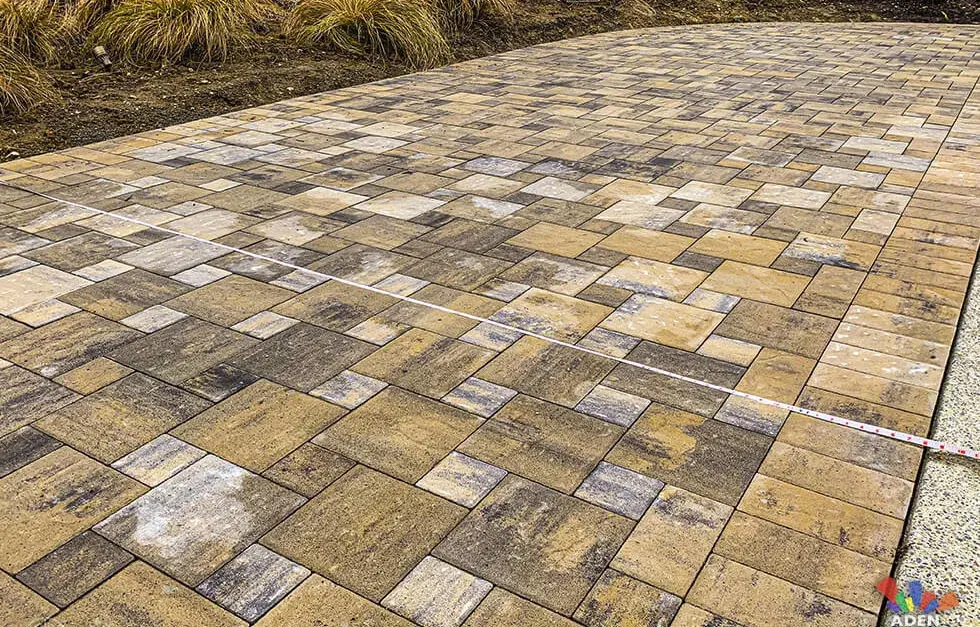
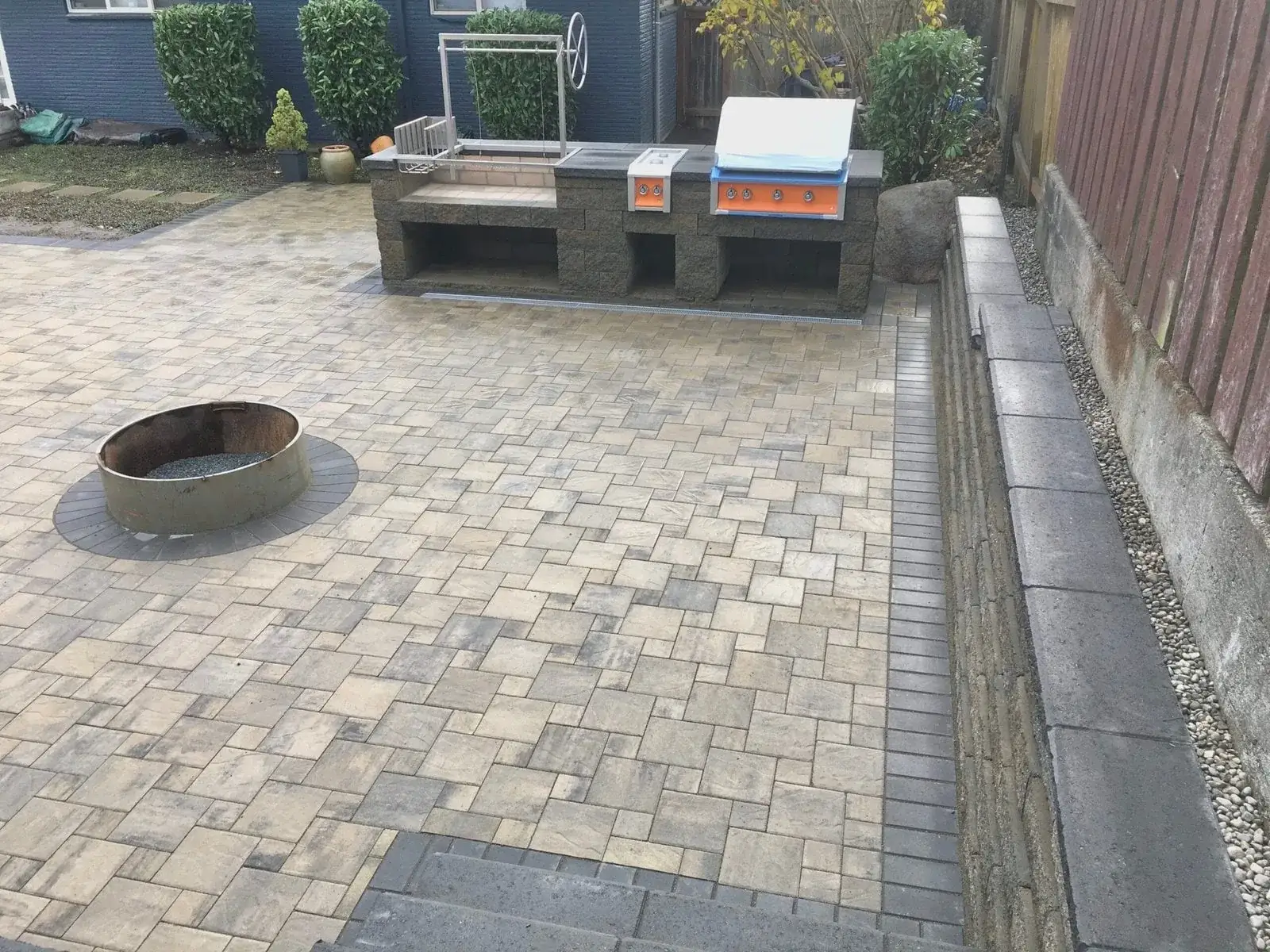
Three sizes and two colours laid in a random ashlar pattern. Blending from several pallets as you work is what stops a batch difference turning up later as a stripe across the patio.
 Driveway Paving
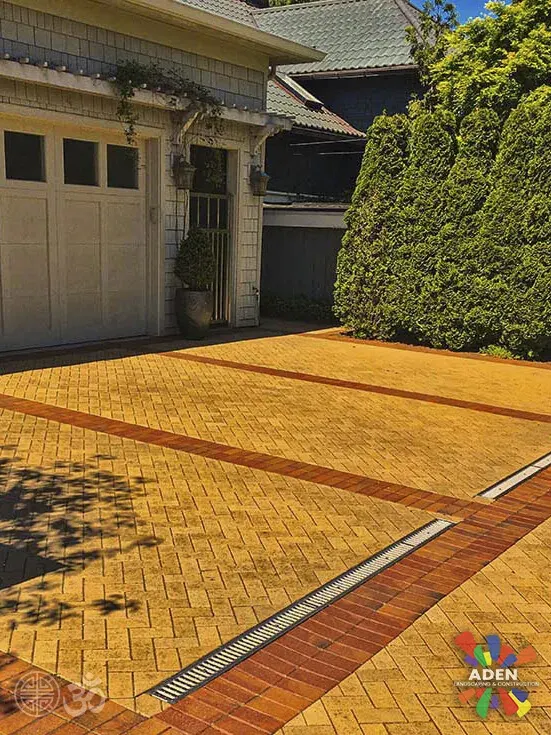
The apron takes the worst of the turning load, which is why it is where a driveway fails first. Laid on a full vehicle-rated base with a banded border holding the edge.
We come out, look at the ground, and put a fixed written price together. No deposit, and it does not change once agreed.
Free estimate
Three minutes on the form. We reply during office hours, Monday – Friday, 9:00 AM – 7:00 PM, and we come out and look at the site before quoting anything.
Or call (425) 331-9811
Thank you — we have your details. We reply during office hours, Monday – Friday, 9:00 AM – 7:00 PM. If it is urgent, call (425) 331-9811.