
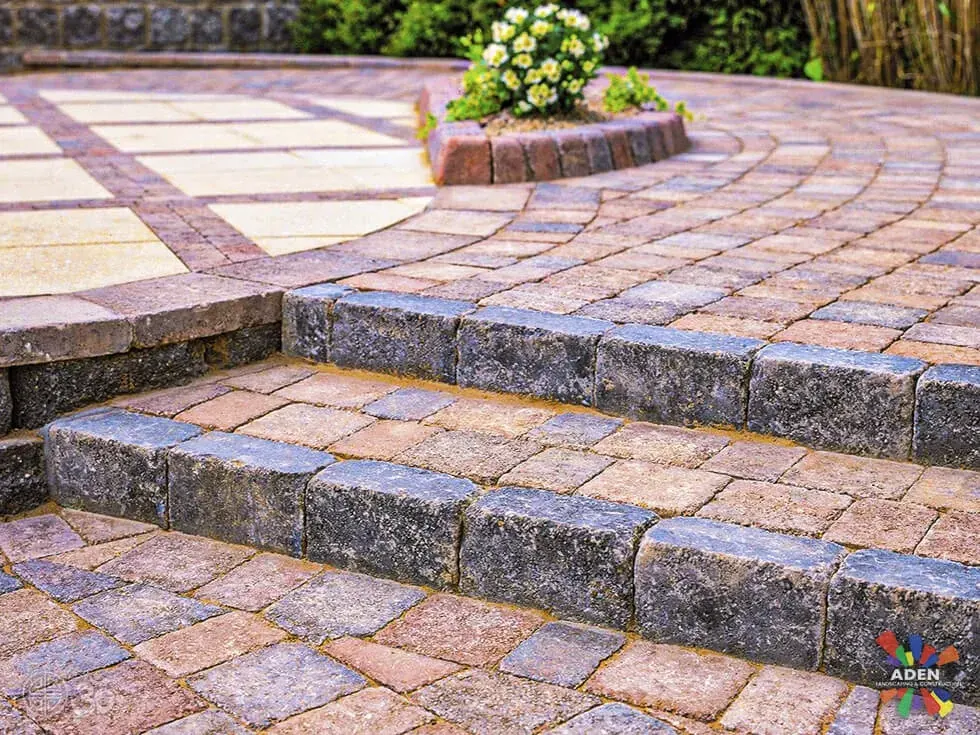
 Paver PatioView full size
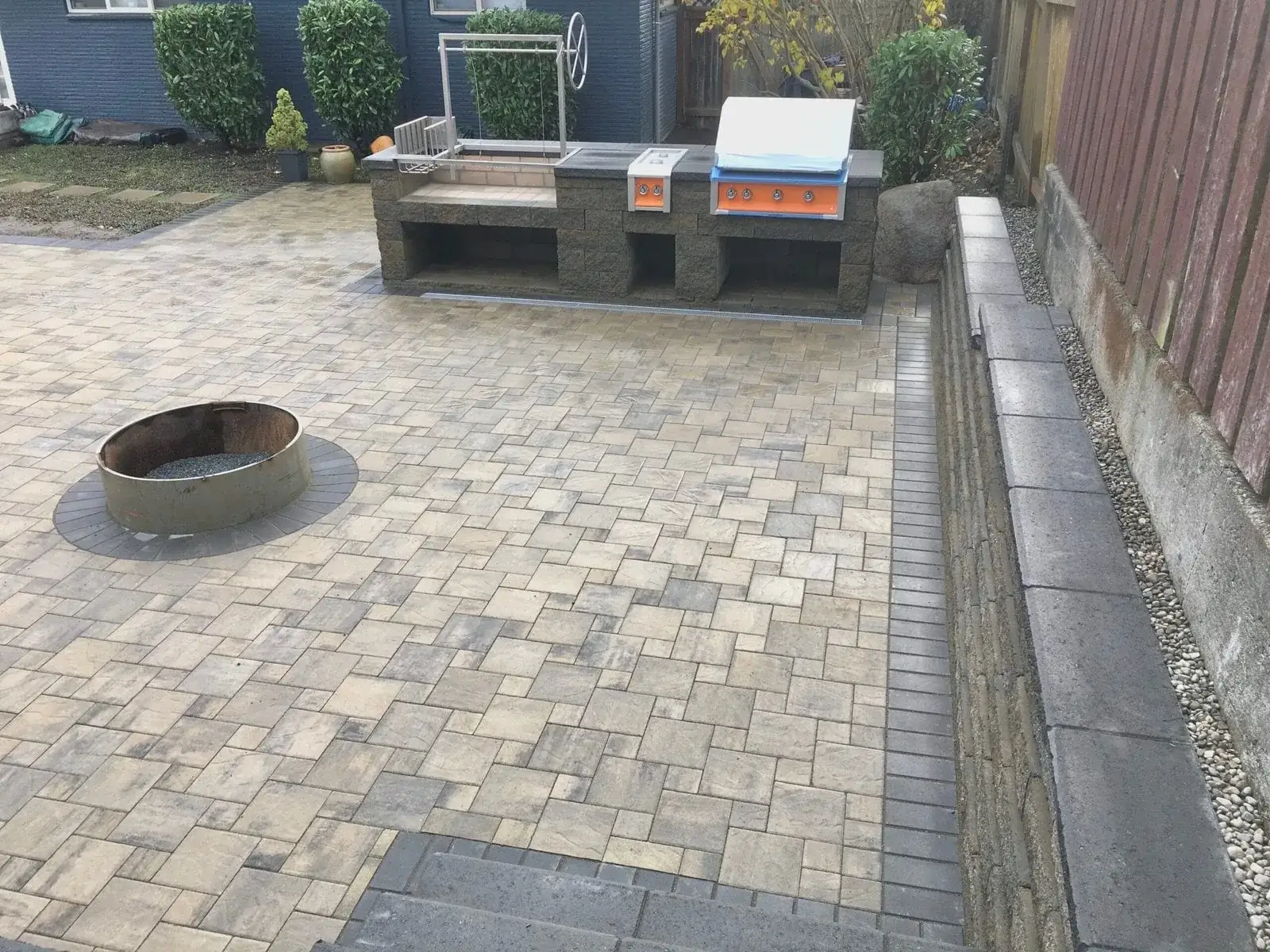
Paver steps and a cut border
Close on the junction that decides whether a patio looks built or looks bought: step nosing, soldier course and field, all arriving on one line.
No down payment. You pay when the project is finished.
Monday – Friday, 9:00 AM – 7:00 PM · Capitol Hill, Seattle
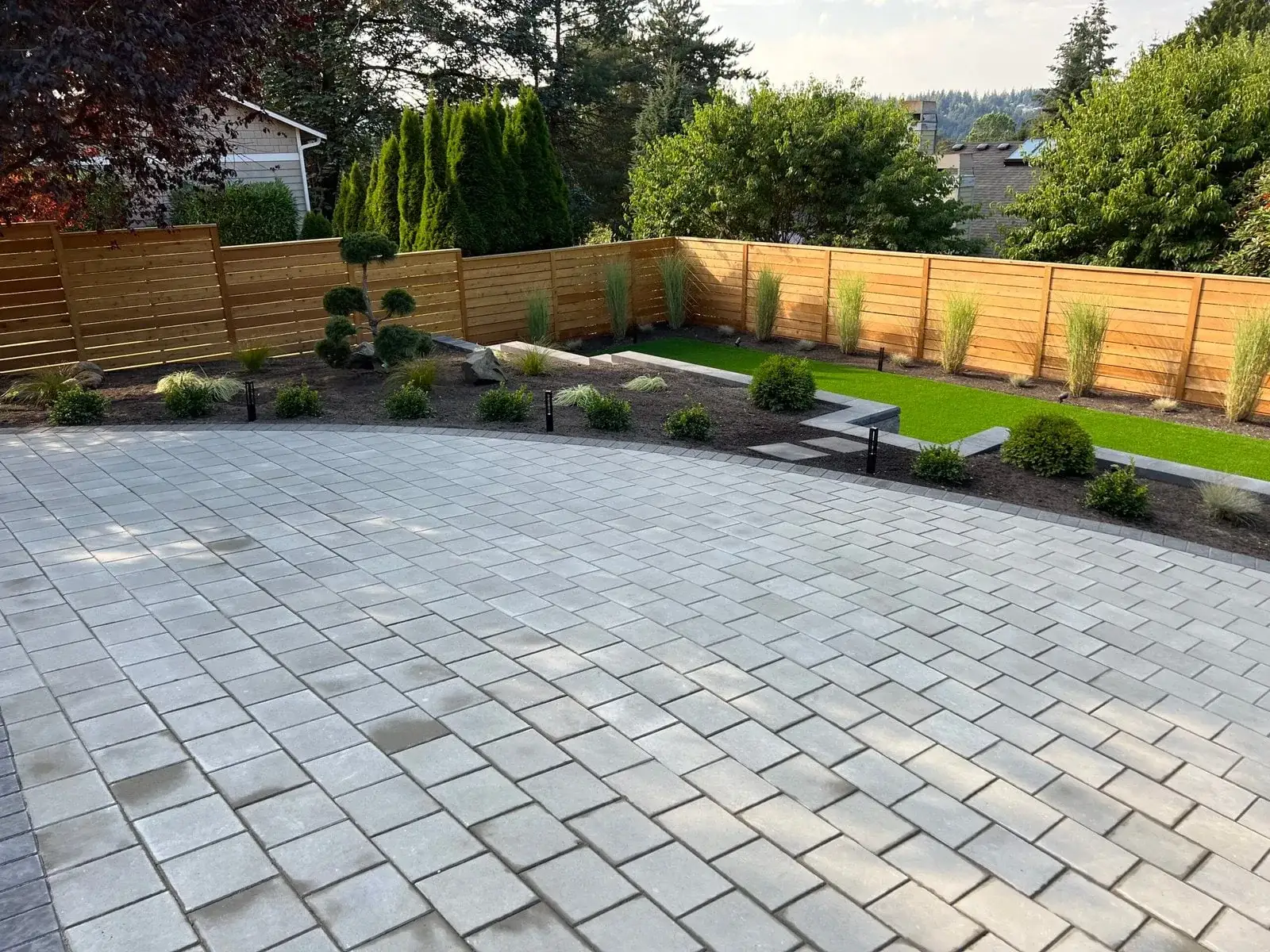
Paver Installation · Kirkland
Kirkland falls toward the lake, and a great many properties here paving a patio or a walkway are paving something that is not level and never will be. That changes the job in ways a flat-lot quote does not cover. A surface on a grade wants to creep downhill under its own weight and under everybody who walks on it, so the restraint at the low edge is carrying a real load rather than tidying an edge. Water arrives from uphill rather than only from the sky, so the base is a drainage route for the ground above it as well as for the surface. And the transitions — where paving meets steps, meets a wall, meets a lawn at a different level — are where a job on a slope is judged.
Large paver patio with artificial turf lawn, new planting beds and horizontal cedar fencing in Kirkland
What we get called about
Kirkland is a lake city built on a slope, and the closer to the water a property sits the more the fall dictates the work. Downtown and Houghton lots frequently need terracing and stairs to produce anything level, and on the tighter waterfront streets the access constraints look more like Seattle than like the rest of the Eastside. Up on Rose Hill and Finn Hill the lots open out, access improves and the work becomes about making a large space do something. The low ground around Juanita Bay is the drainage exception and needs checking.
Worth knowing in Kirkland
On a sloped lot, settle the levels before the materials. Where each terrace sits, how many steps connect them and where the water crosses are decisions that make a surface either usable or merely present, and all three are far harder to revise once the base is in.
Every paved surface needs a fall so water leaves it. On a flat lot that is a small deliberate slope built into an otherwise level plane. On a Kirkland slope the site already has more fall than a surface wants, and the problem inverts: the job is to take a steep natural grade and produce usable near-level areas from it without simply sending all the water to the bottom in a sheet.
That means terracing rather than following the ground. Each level gets its own modest fall in a chosen direction, and the change between levels gets a step or a wall rather than a ramp. It costs more than paving the slope as it lies, and it is the difference between an area you can put a table on and one you can only walk across.
The water then has to be handled between levels rather than allowed to cascade. A channel at the head of each terrace, or a fall that directs surface water to one side and into a piped run, stops the lowest part of the garden receiving everything the upper part sheds. On a slope with a hard surface at the top, that discharge point matters more than anything else in the specification.
The method
The sequence does not change between neighbourhoods — what changes is the ground it is applied to. Full detail on the paver installation service page.
What the subgrade is, how wet it gets, and where water currently goes. On a till lot those three answers change the build more than the choice of paver does.
Every surface gets a fall, including the ones that look flat. Where water leaves is decided before a shovel moves, not adjusted at the end once the levels no longer allow it.
Down to competent ground, then compacted before any rock goes in. A good base built on an uncompacted subgrade just moves the failure one layer down.
Layer by layer to the specified depth, with a plate or roller sized for the job rather than whatever is on the van. This stage decides whether the surface is still flat in ten years.
Bedding course screeded to depth, units laid off a string line, perimeter saw-cut, and edge restraint fixed before any joint is filled.
Polymeric sand swept in, the field compacted to seat the units, then the whole area washed off — the last step is the one a rushed crew skips.
What it costs in Kirkland
Kirkland paver installation runs $18 to $40 per square foot, and grade is the variable that moves it. A sloped site needs cut and fill rather than a single excavation depth, spoil moved uphill rather than wheeled out, and frequently a retaining element or a step run to break the fall into usable levels. Where a terrace is cut into a bank, the wall holding it is priced as its own item — it is a structure, not an edging.
You pay after the project is fully completed.
The estimate you sign is the price you pay.
Spread the cost with no interest.
Covers hardscape work; vegetation excluded.
Local questions
General questions about this service are on the service page. These are the ones that only come up here.
For a surface you intend to use rather than merely cross, gentler than most people assume. A walk can carry a noticeable grade comfortably; a terrace where you want a table and chairs cannot, because furniture and people both need something close to level. Beyond a modest grade the honest options are to terrace the slope into levels connected by steps, or to accept it as a route rather than a room. Where a slope is genuinely steep, there is also a stability question that comes before the paving one — adding load above a slope and changing where water goes are the two mechanisms that turn stable ground into moving ground, and both are things a hard surface does.
Because the restraint at the bottom edge was specified as an edging rather than as a structural element, and on a grade those are different jobs. Every unit on a slope is pushing on the one below it, and the whole field is bearing on whatever is at the low end. A plastic edging pinned into base rock will hold a flat patio indefinitely and will gradually lose an argument with a sloped one. The fix is a proper restraint at the low edge — a concrete haunch, a laid kerb or a low wall — and, where the movement has already opened joints at the top, lifting and resetting the units back up to their original line.
That depends on what is between you and it, and it is the question to resolve first on a downhill lot. Falling toward the lake is not by itself a discharge route; the water still has to reach somewhere it is entitled to go without crossing a neighbour or undermining anything on the way. Frequently the honest answer on these lots is a piped run to a legitimate point rather than allowing surface flow to find its own way, because uncontrolled sheet flow down a grade concentrates and erodes. On properties near the shoreline there are additional constraints on what can be discharged and where, which we confirm for your address rather than assuming.
They should be, and separating them is a common cause of the uneven risers people live with for years. Steps and the surfaces either side of them are one levels problem — riser height depends on where each paved level finishes, and paving laid first to a level that was not set with the steps in mind produces a first or last riser that is out of step with the rest. Built together, the run is set out as a whole, every riser matches, and the transitions at top and bottom land flush. It is also cheaper as one job than as two visits, because the setting out is done once.
Serving Kirkland and surrounding neighbourhoods
Downtown Kirkland · Juanita · Rose Hill · Houghton · Bridle Trails · Totem Lake · Finn Hill · Kingsgate · Norkirk · Market · Highlands
98033 · 98034
Recent work
Paver PatioView full sizeClose on the junction that decides whether a patio looks built or looks bought: step nosing, soldier course and field, all arriving on one line.
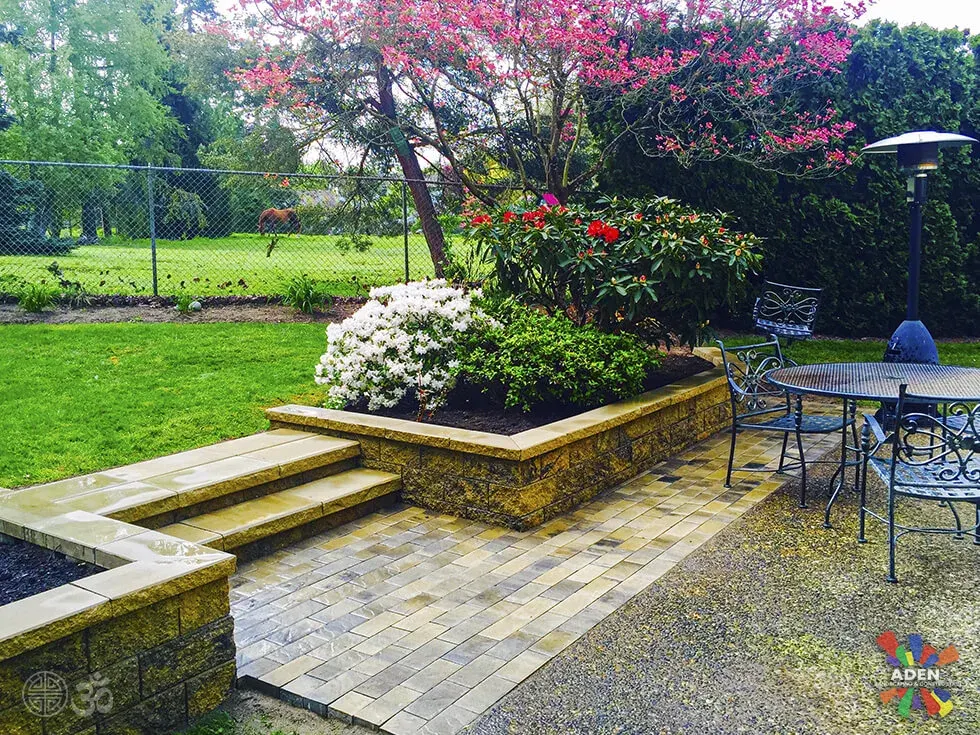 Paver PatioView full size
The bed wall doubles as the terrace edge and as somewhere to put a drink down. Two functions out of one course of stone is usually the cheapest line in the estimate.
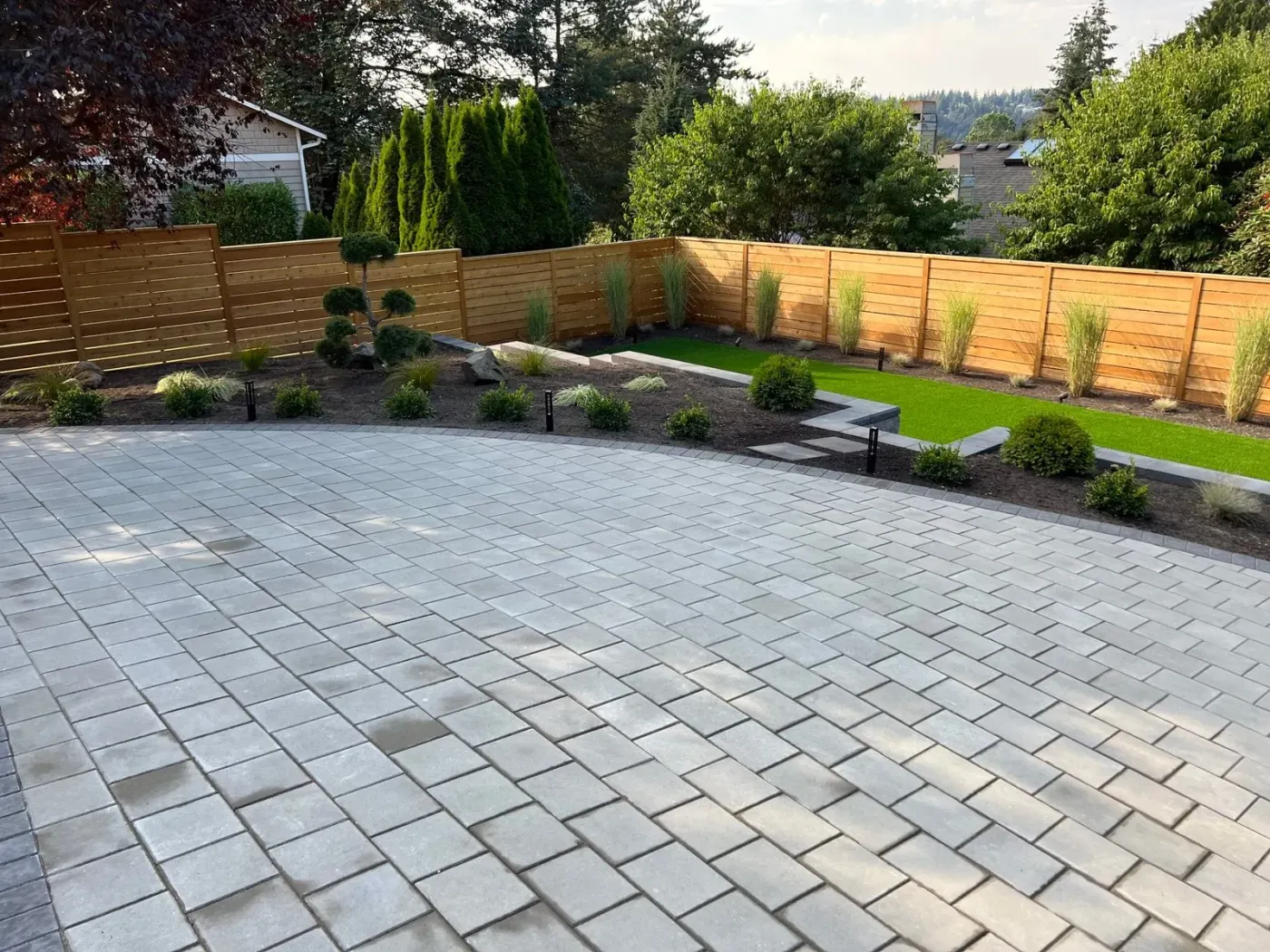 Paver PatioView full size
Patio, turf lawn, planting beds and a new cedar fence — the whole yard rebuilt as one project.
 HardscapingView full size
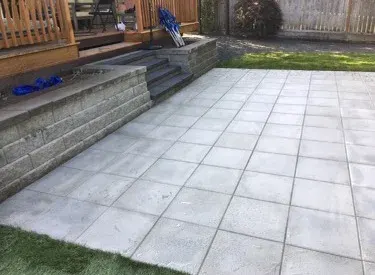
Large-format slabs filling the dead ground under the deck, with a low wall holding the bank behind them.
We come out, look at the ground, and put a fixed written price together. No deposit, and it does not change once agreed.
Free estimate
Three minutes on the form. We reply during office hours, Monday – Friday, 9:00 AM – 7:00 PM, and we come out and look at the site before quoting anything.
Or call (425) 533-9734
Thank you — we have your details. We reply during office hours, Monday – Friday, 9:00 AM – 7:00 PM. If it is urgent, call (425) 533-9734.