
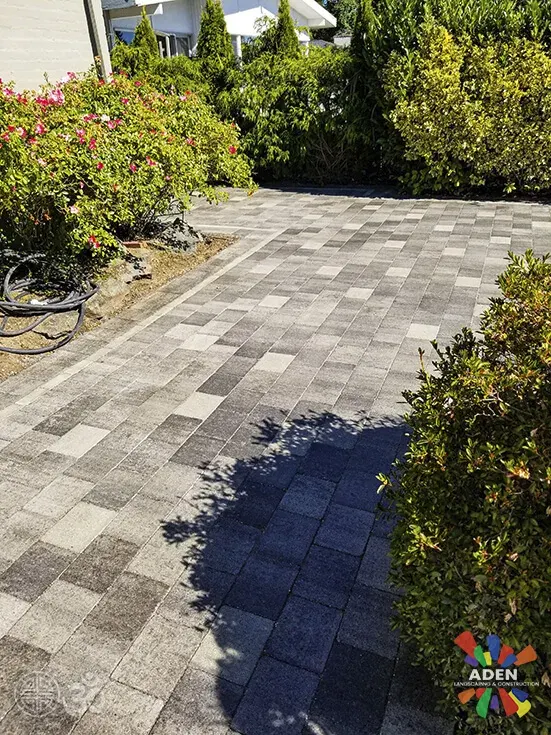
 Driveway PavingView full size
Grey drive, laid and jointed
Photographed before the edge planting went back, jointing sand still on the surface. The variation across the field is deliberate — units drawn from several pallets rather than one.
No down payment. You pay when the project is finished.
Monday – Friday, 9:00 AM – 7:00 PM · Capitol Hill, Seattle
Driveway Paving · Woodinville
Woodinville has the longest driveways we build, and length changes the arithmetic entirely. A two-hundred-foot approach at paver rates is a very different number from the same specification over thirty feet, which is why asphalt earns a serious hearing here that it would not get on a suburban frontage. Length also makes the drive a watercourse: a long sloping approach collects rainfall over its whole run and delivers all of it to the bottom, which is normally where the house is. And there is the constraint that shapes every Woodinville layout — a septic drainfield is ground you cannot excavate through, drive plant across, or pave over.
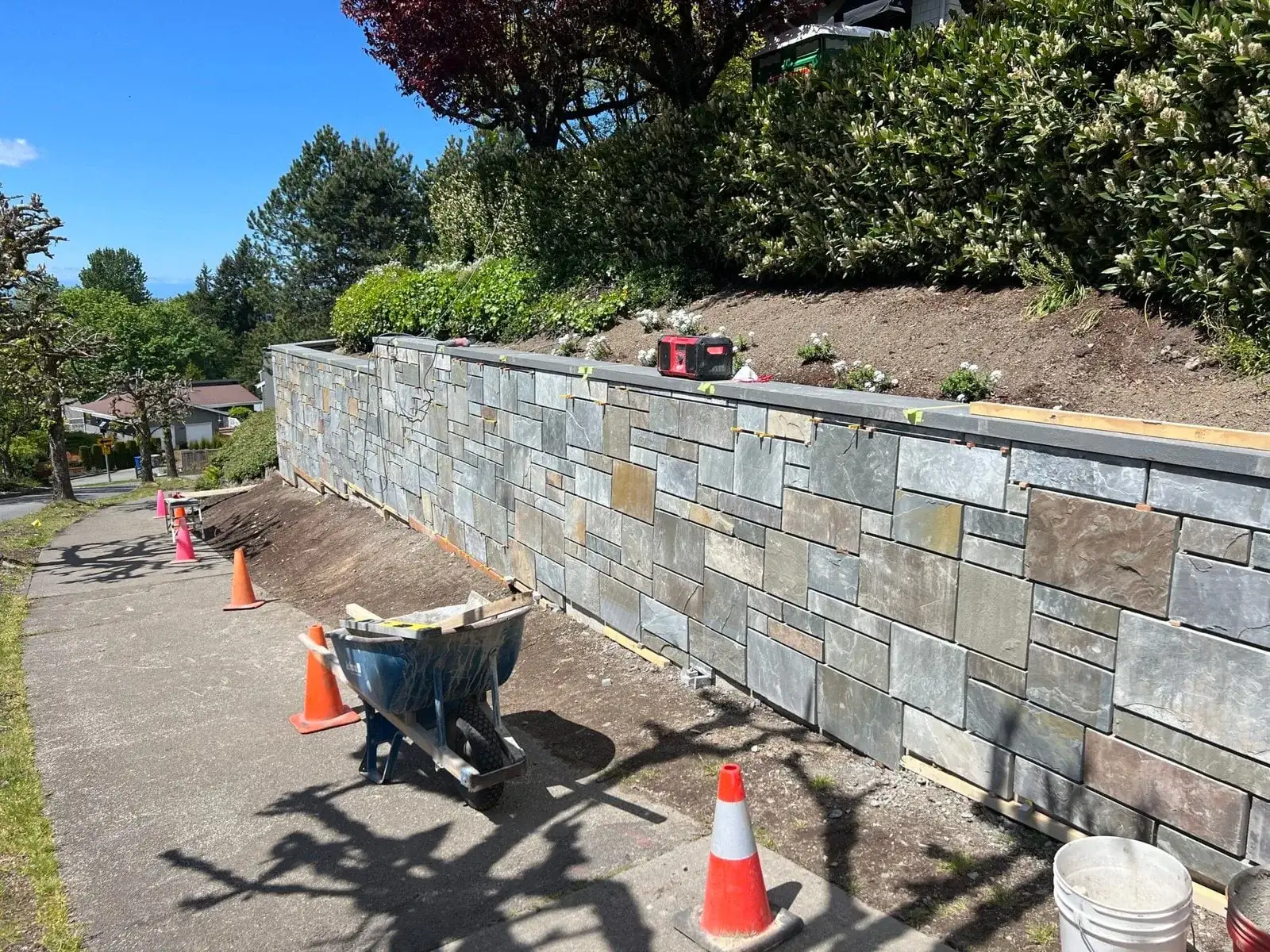
Natural stone veneer retaining wall under construction with tools and materials on a Woodinville site
What we get called about
Woodinville has the largest properties we work on, and acreage changes the nature of the job. The design problem stops being how to fit things into a small space and becomes how to give a large one structure — which usually means deciding what part of it is garden and letting the rest be landscape rather than trying to maintain all of it. Practically, several properties here are on wells and septic, which constrains irrigation design and dictates where you cannot excavate. And the valley floor is a different world from the hills: high water table, flat ground, slow drainage.
Worth knowing in Woodinville
A long driveway is an impermeable surface collecting rainfall along its entire length and, if it slopes, delivering the accumulated volume to the lowest point. On a two-hundred-foot approach that volume is substantial, and the lowest point is usually the house.
Putting a single channel drain at the bottom treats the symptom and has to handle everything at once — which means a large drain, a large outfall, and a system that is overwhelmed in exactly the conditions it was built for. It is also the most expensive way to solve it.
The better approach divides the problem. A cross-fall along the run sheds water sideways into planting or a swale rather than letting it travel the full length. Cross-drains partway down intercept what does accumulate and take it off before it gains volume. Each one handles a fraction of the total, so each can be modest, and the drive never carries enough water to undermine its own base — which on a gravel or asphalt approach is the second failure this prevents.
On a rural property there is usually somewhere legitimate for that water to go at several points along the route, which is a luxury a suburban lot does not have. Using it is cheaper than building one large system at the end.
The method
The sequence does not change between neighbourhoods — what changes is the ground it is applied to. Full detail on the driveway paving service page.
A drive that falls toward the house needs a drainage answer designed in, not added later. On a sloped Seattle lot that is the majority of them.
Substantially deeper than a patio. Undersized excavation is the single most common reason a driveway fails, and it is invisible once the surface is on.
Crushed rock, compacted layer by layer, with geotextile separation where the subgrade is soft. This is the layer carrying the car.
Pavers bedded, cut and edge-restrained; concrete formed, reinforced, poured and jointed; asphalt laid and rolled to compaction while hot.
Street apron, garage threshold and the joints against any path or step, which are the points that show wear first and the points a rushed job leaves rough.
What it costs in Woodinville
Length is the dominant factor here, which is why the $12 to $32 per square foot range spreads so widely on Woodinville jobs — asphalt at the bottom is often the difference between a project happening and not. Access for plant is excellent, so the labour is efficient. Routing around a septic system adds length and is worth pricing openly rather than discovering mid-build.
You pay after the project is fully completed.
The estimate you sign is the price you pay.
Spread the cost with no interest.
Covers hardscape work; vegetation excluded.
Local questions
General questions about this service are on the service page. These are the ones that only come up here.
No. A drainfield disperses effluent into the soil around and below it, which requires that ground to stay undisturbed and uncompacted — and a driveway is the most compacting thing you can put on a piece of land, both during construction and every day afterwards. Excavating a vehicle base through a field or driving plant across it will damage the system. On a Woodinville property the first step is locating the tank and field from records, or by survey where records are poor, and routing the drive around them.
Frequently yes, and the case is mostly arithmetic. Over a long approach the per-square-foot gap between asphalt and pavers becomes a very large absolute figure, and asphalt handles a rural drive well — it is quick to lay, tolerant of a bit of movement, and easy to patch. The trade-offs are periodic resealing, softening in genuine summer heat, and repairs that show. A common compromise on these properties is asphalt for the length of the approach and pavers or concrete for the apron and parking area at the house, where it is actually seen.
Either contain it properly or replace it, depending on the gradient. Gravel moves because there is nothing holding it laterally and because water running along the drive carries it — so a proper edge restraint on both sides, a well-graded surfacing material rather than loose round stone, and cross-falls that get water off the run rather than along it will fix a lot of it. On a steep approach, though, gravel will always migrate to some degree, and at that point a bound surface is the honest answer.
Wide enough for what actually visits, which on an acreage property is more than a car. Delivery vehicles, a septic pump-out truck, occasionally a fire appliance — all of them need width, and more importantly they need turning space at the end so they are not reversing two hundred feet down a track. A passing point partway along a long single-width approach is a cheap addition at build time and solves a problem that otherwise recurs weekly. These are decisions to make on paper before the base goes in.
Serving Woodinville and surrounding neighbourhoods
Downtown Woodinville · Hollywood Hill · Wellington · Cottage Lake · Sammamish Valley wine district · Bear Creek edge
98072 · 98077
Recent work
Driveway PavingView full sizePhotographed before the edge planting went back, jointing sand still on the surface. The variation across the field is deliberate — units drawn from several pallets rather than one.
 StoneworkView full size
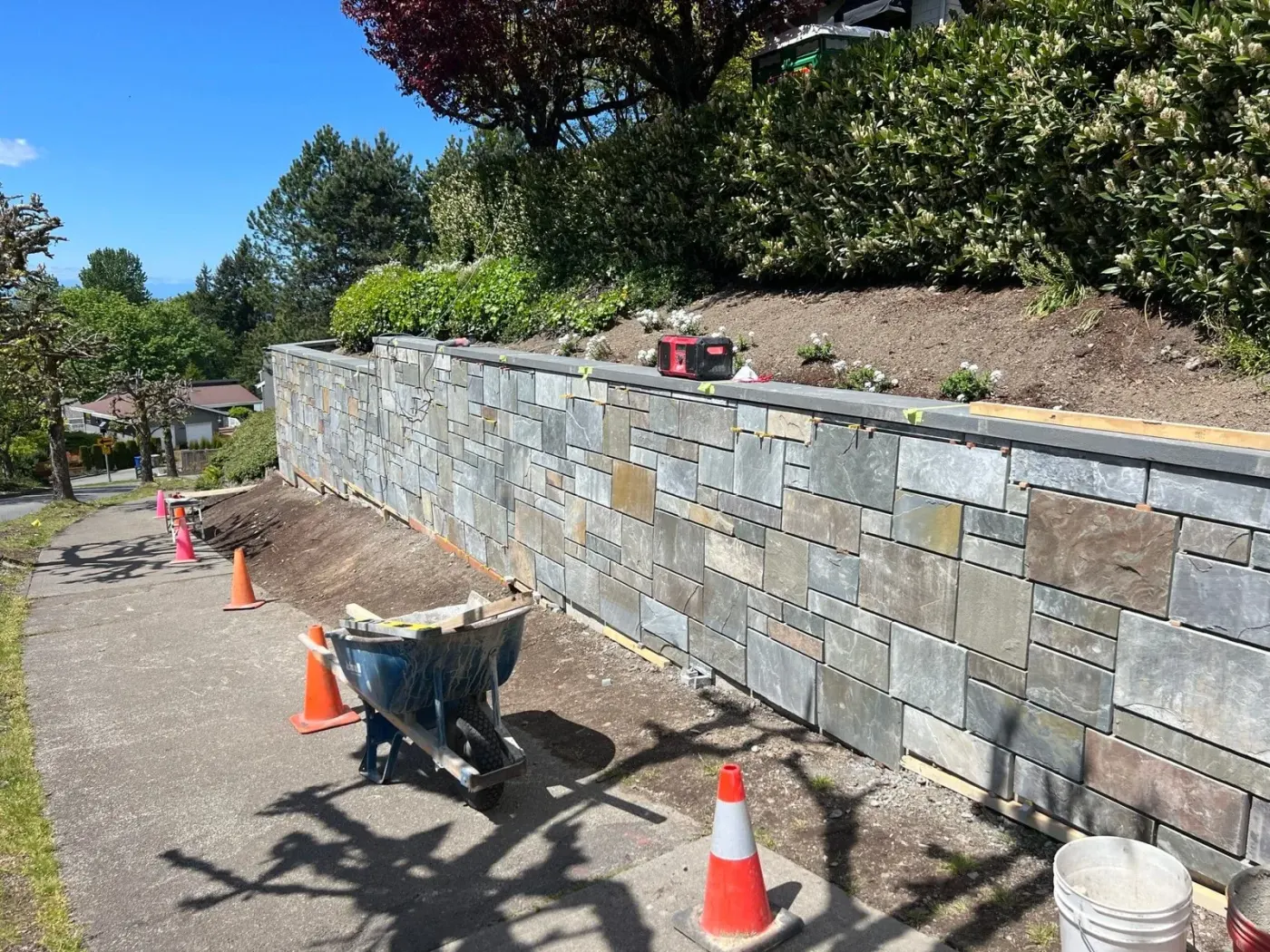
Stone veneer going up over a structural core — the part of the job nobody photographs, done properly.
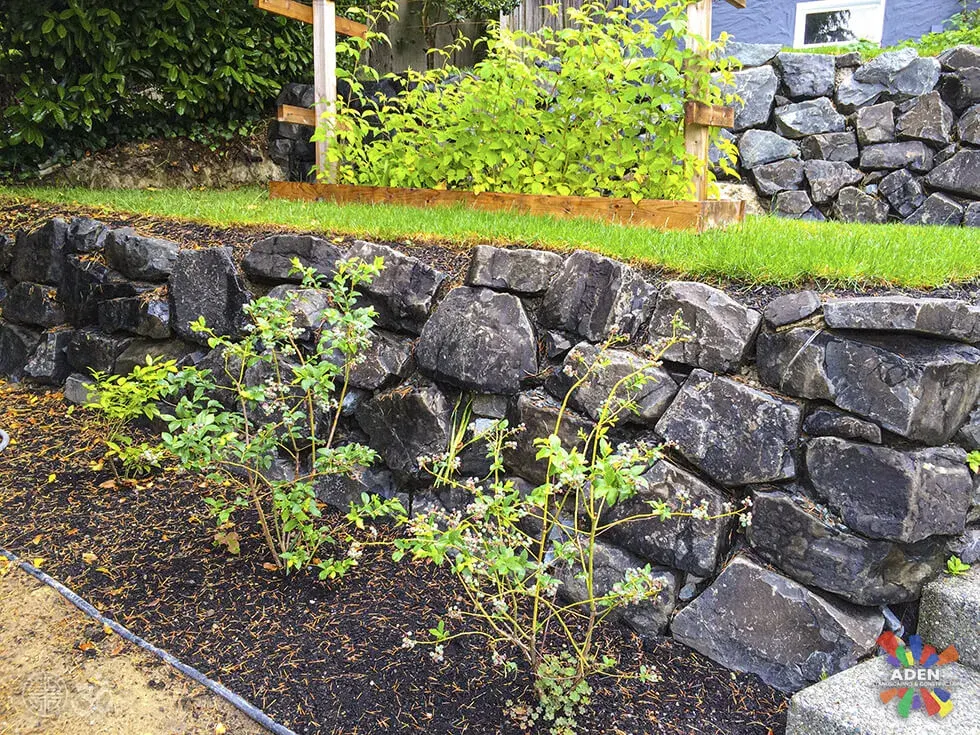 Retaining WallsView full size
Quarried basalt set as a rockery rather than laid as block. It suits a rural lot better, and it lets the planting run into the joints instead of stopping dead at a straight line.
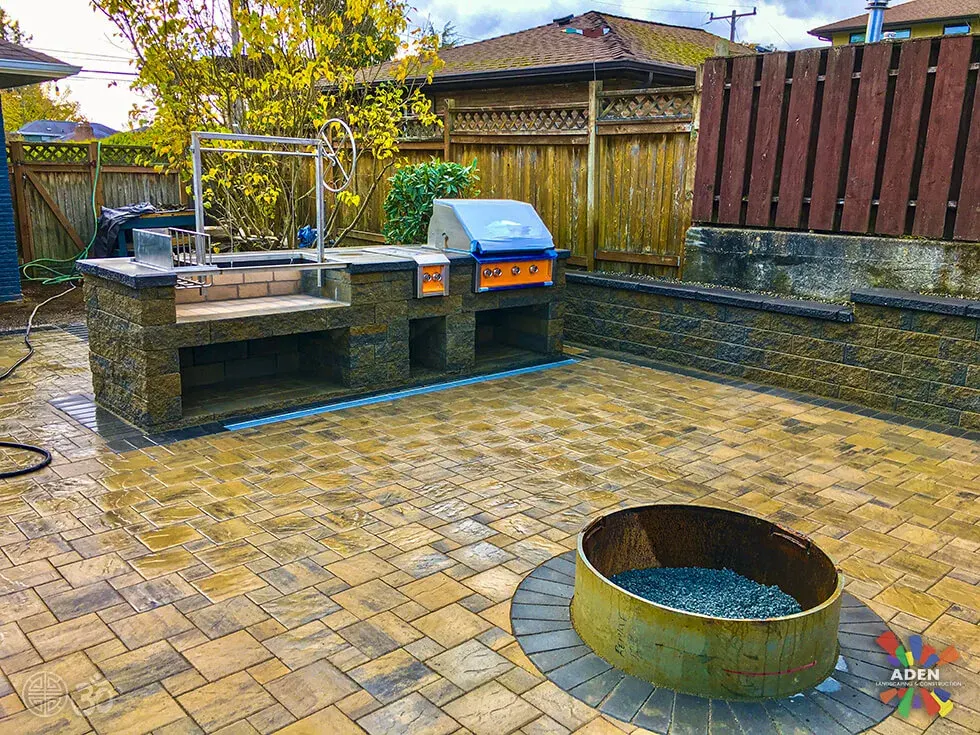 Outdoor LivingView full size
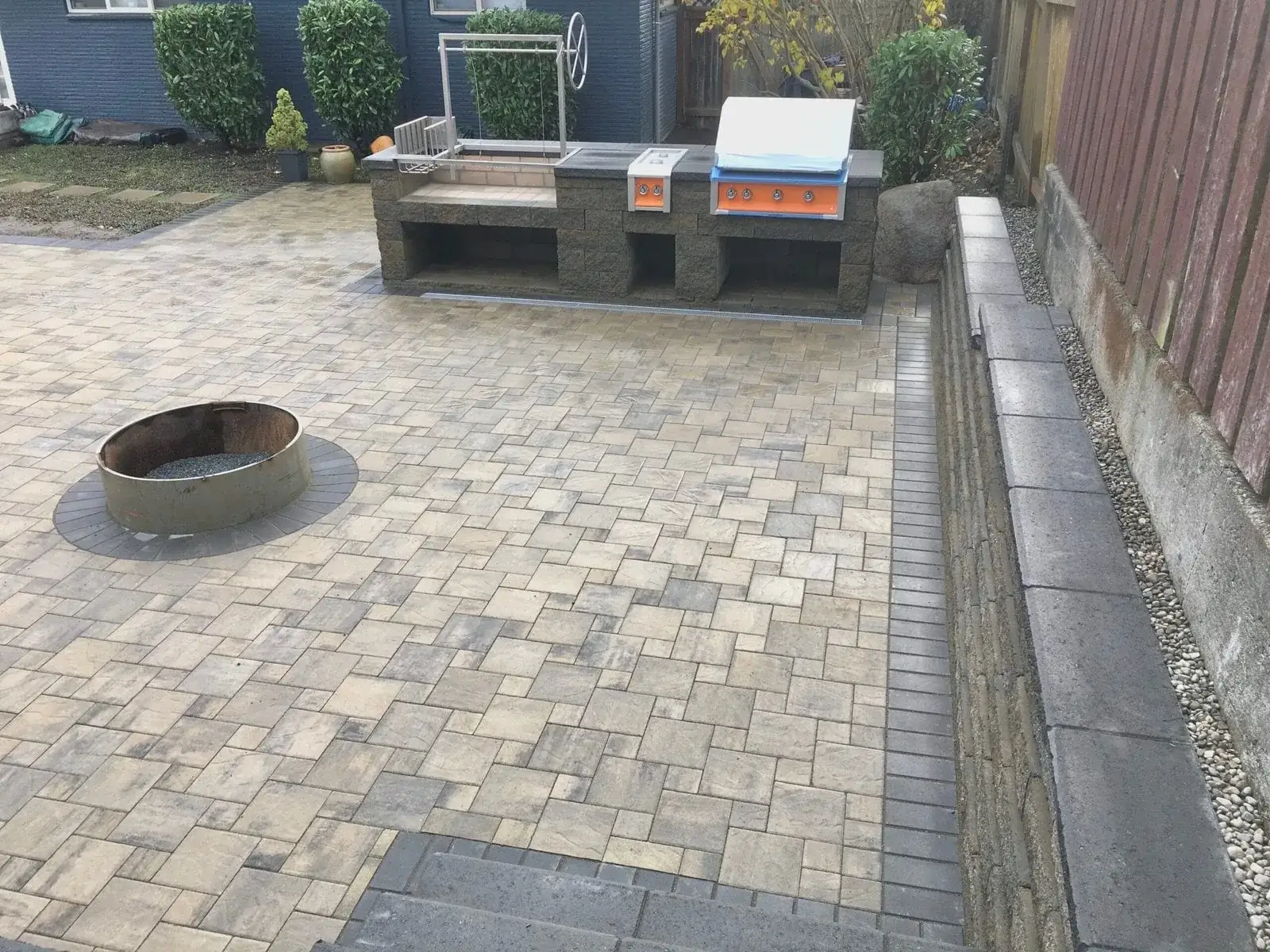
Two built-in grills, a run of stone-faced counter, and a copper fire bowl set into the paving. The gas line and the drainage went in before a single paver did — they always have to.
We come out, look at the ground, and put a fixed written price together. No deposit, and it does not change once agreed.
Free estimate
Three minutes on the form. We reply during office hours, Monday – Friday, 9:00 AM – 7:00 PM, and we come out and look at the site before quoting anything.
Or call (425) 533-9734
Thank you — we have your details. We reply during office hours, Monday – Friday, 9:00 AM – 7:00 PM. If it is urgent, call (425) 533-9734.