
 StoneworkView full size
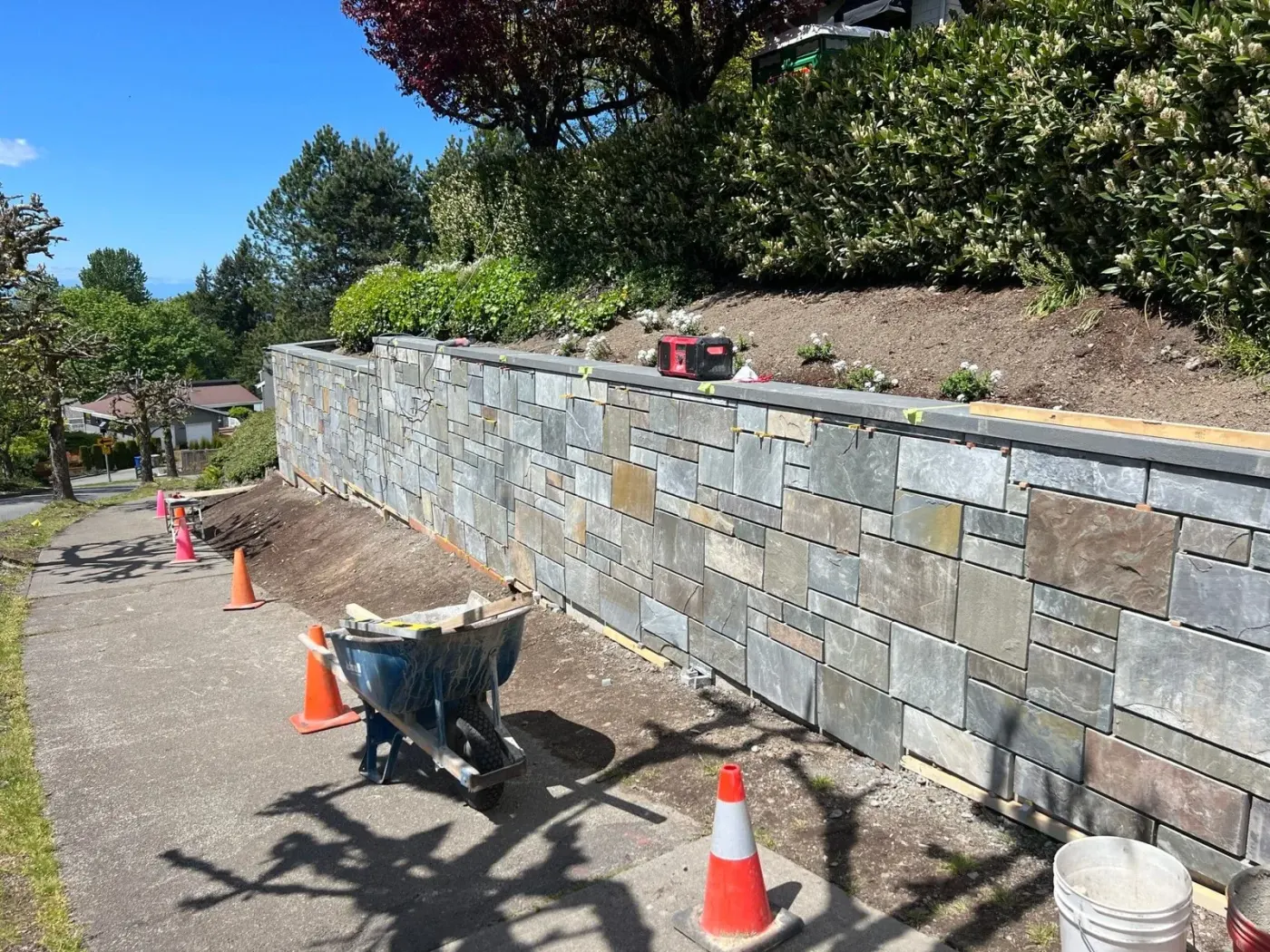
Natural stone wall, mid-build
Stone veneer going up over a structural core — the part of the job nobody photographs, done properly.
No down payment. You pay when the project is finished.
Monday – Friday, 9:00 AM – 7:00 PM · Capitol Hill, Seattle
Decks & Structures · Woodinville
Woodinville lots are larger, and the thing people most often want built here is not the deck but the enclosure around it. A big property has a long boundary, more of it visible, and frequently a neighbour or a road within sight of exactly the spot where you would want to sit. Screening that is a different problem from fencing a small city garden: the runs are long enough that cost per linear foot dominates, the posts are doing structural work against wind across open ground, and the visual decision is not whether to enclose but where — because fencing an entire perimeter on a large lot is expensive, unnecessary, and usually makes the property feel smaller than it is.
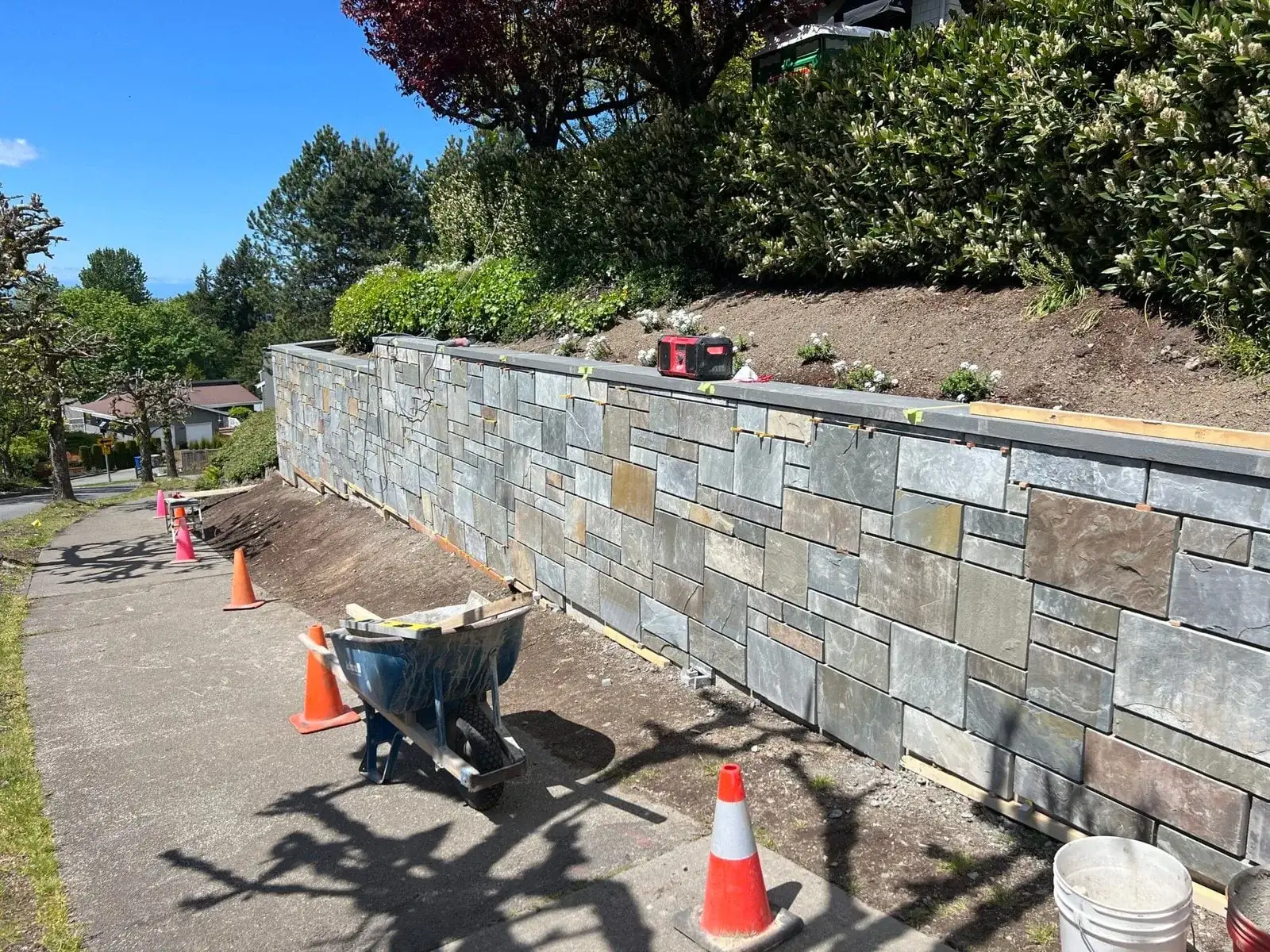
Natural stone veneer retaining wall under construction with tools and materials on a Woodinville site
What we get called about
Woodinville has the largest properties we work on, and acreage changes the nature of the job. The design problem stops being how to fit things into a small space and becomes how to give a large one structure — which usually means deciding what part of it is garden and letting the rest be landscape rather than trying to maintain all of it. Practically, several properties here are on wells and septic, which constrains irrigation design and dictates where you cannot excavate. And the valley floor is a different world from the hills: high water table, flat ground, slow drainage.
Worth knowing in Woodinville
Screen the sightline, not the boundary. Stand where you will actually sit and work out what you can see that you would rather not — it is usually one direction and a fraction of the perimeter, and solving that costs a fraction of enclosing the lot.
The method
The sequence does not change between neighbourhoods — what changes is the ground it is applied to. Full detail on the decks & structures service page.
A dining deck, a route between levels and a sun trap are different structures at different heights. Deciding that first is what stops a deck being the wrong size in the right place.
Footing depth, how posts meet the ground, and how the frame ties into the building. That connection is the most common failure point on decks we are called out to replace.
Structure first, then the details that let it dry: spacing, flashing where the frame meets the house, and drainage below where the deck is over usable space.
Boards run to suit the sightline rather than the shortest cut list, with border and inlay detail where a large deck needs the joint hidden.
Riser lights and rail detail go in once the levels are final, because both are fixed to the finished structure rather than the frame.
What it costs in Woodinville
Woodinville decks run $35 to $90 per square foot; screening and fencing are priced per linear foot and on a large lot that is where the money goes. Post spacing, depth and setting method matter more here than on a sheltered run because of wind exposure across open ground, and they are the part of a fence quote that varies most between contractors while looking identical on paper.
You pay after the project is fully completed.
The estimate you sign is the price you pay.
Spread the cost with no interest.
Covers hardscape work; vegetation excluded.
Local questions
General questions about this service are on the service page. These are the ones that only come up here.
Almost never, and doing so is the most common way to spend a lot of money making a large garden feel smaller. Privacy is about specific sightlines rather than about enclosure — what can be seen from where you sit, and from where a neighbour or a road looks in. On a large lot that is usually one direction and a modest run. A well-placed screen at the seating area, or a section of planting that breaks the line, does the job for a fraction of the cost and leaves the openness that made the property attractive. The time to work it out is standing in the garden, not looking at a plan.
Twenty years or more if it is built properly; eight to ten if it is not, and the difference is almost entirely below ground. Posts fail first, at the point where they meet the soil, because that zone is permanently damp and has oxygen. Post material, setting method and drainage around the base are what determine lifespan. Above ground the details matter more than the timber grade: end grain sealed, boards not in contact with the ground, and enough air movement that a wet fence dries between rainfalls. The boards themselves are rarely what fails, which is why a fence can look fine and be about to lean.
Wind, and the fact that a fence is a sail. A solid fence panel presents a large flat area to a gust, and on an open Woodinville lot with nothing upwind to break the flow, the load on each post is substantially higher than the same fence would see in a sheltered city garden. That means deeper post settings, closer spacing, or a design that lets some air through — a slatted or louvred screen with gaps takes far less wind load than a solid one and provides most of the same privacy. It is a specification decision that costs little at build and is expensive to correct.
Either is legitimate, but decide at the start and be consistent, because the two do not mix well. Left alone, cedar weathers to a grey that many people prefer to any stain — the difficulty on a large property is that it silvers unevenly, since a run in full sun weathers faster than one in shade, and after two years the difference between elevations can be marked. Staining keeps the tone consistent and commits you to redoing it periodically across the whole run. What looks worst is a garden where some runs were stained and some were not, which is usually how it happens rather than how it was intended.
Serving Woodinville and surrounding neighbourhoods
Downtown Woodinville · Hollywood Hill · Wellington · Cottage Lake · Sammamish Valley wine district · Bear Creek edge
98072 · 98077
Recent work
StoneworkView full sizeStone veneer going up over a structural core — the part of the job nobody photographs, done properly.
 Retaining WallsView full size
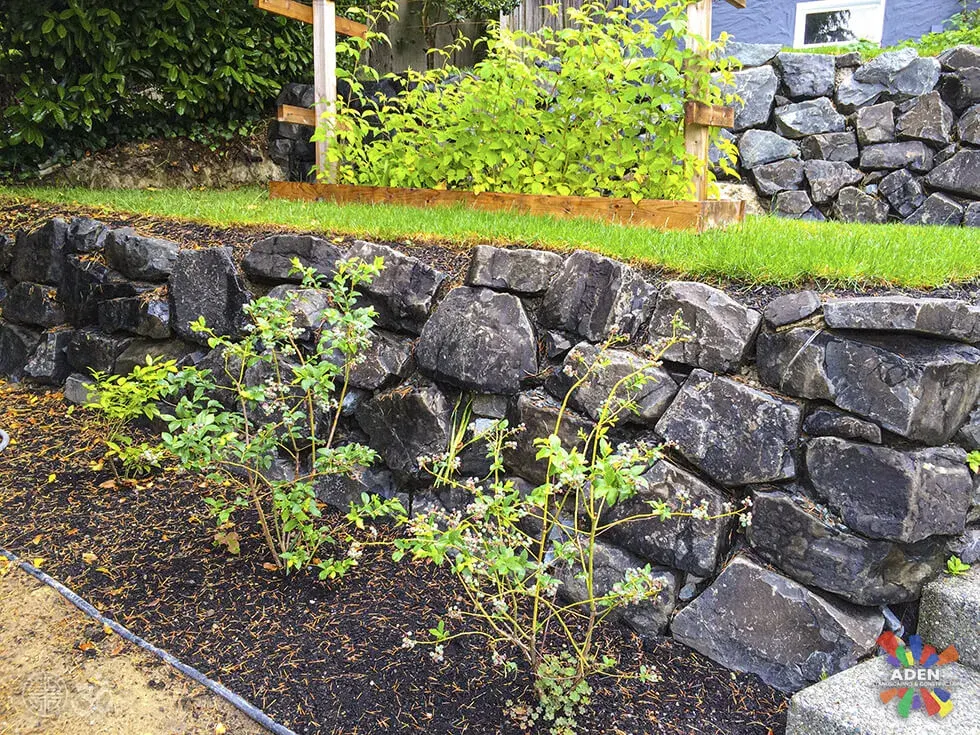
Quarried basalt set as a rockery rather than laid as block. It suits a rural lot better, and it lets the planting run into the joints instead of stopping dead at a straight line.
 Outdoor LivingView full size
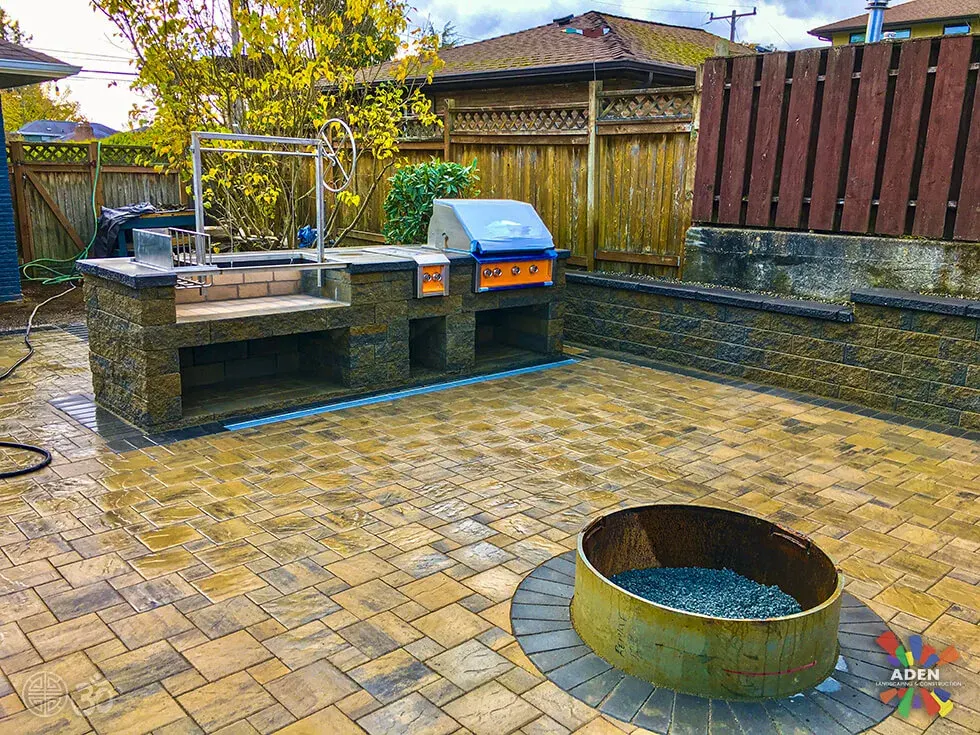
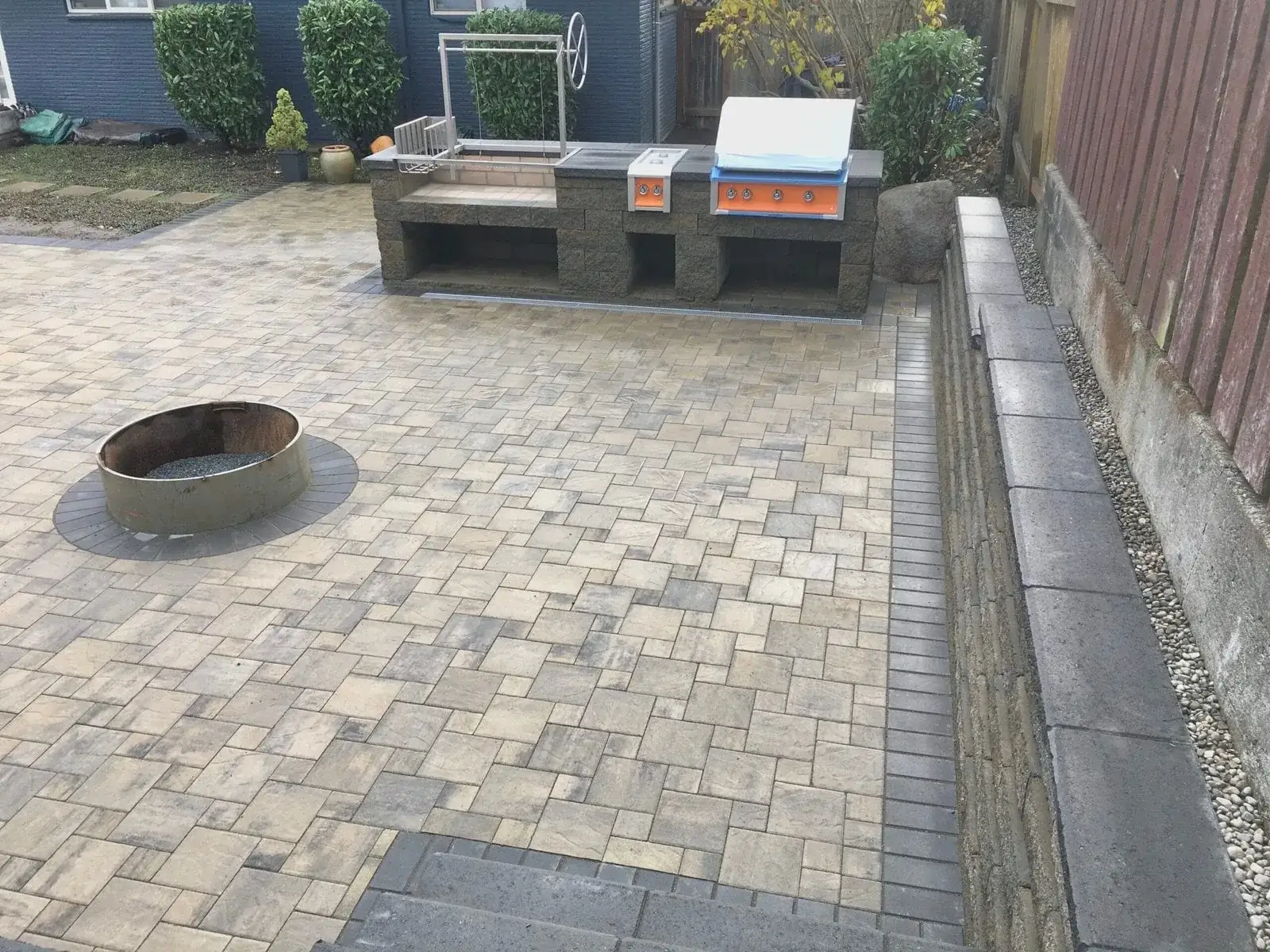
Two built-in grills, a run of stone-faced counter, and a copper fire bowl set into the paving. The gas line and the drainage went in before a single paver did — they always have to.
 Driveway PavingView full size
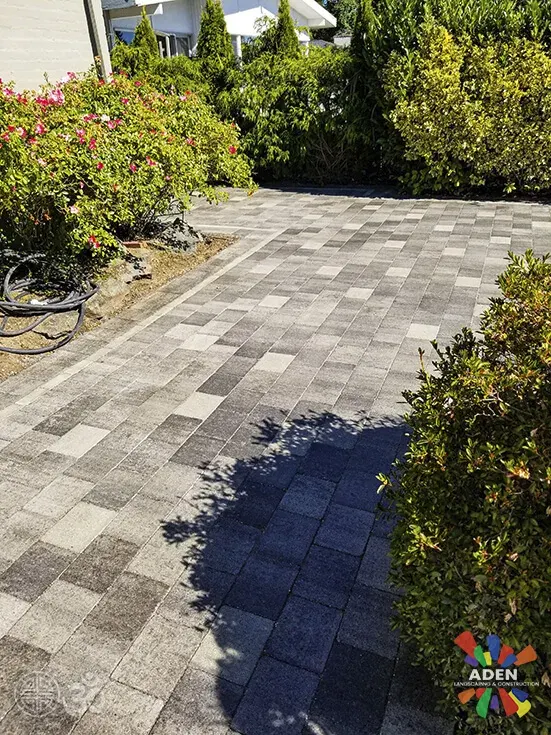
Photographed before the edge planting went back, jointing sand still on the surface. The variation across the field is deliberate — units drawn from several pallets rather than one.
We come out, look at the ground, and put a fixed written price together. No deposit, and it does not change once agreed.
Free estimate
Three minutes on the form. We reply during office hours, Monday – Friday, 9:00 AM – 7:00 PM, and we come out and look at the site before quoting anything.
Or call (425) 533-9734
Thank you — we have your details. We reply during office hours, Monday – Friday, 9:00 AM – 7:00 PM. If it is urgent, call (425) 533-9734.