
 Outdoor LivingView full size
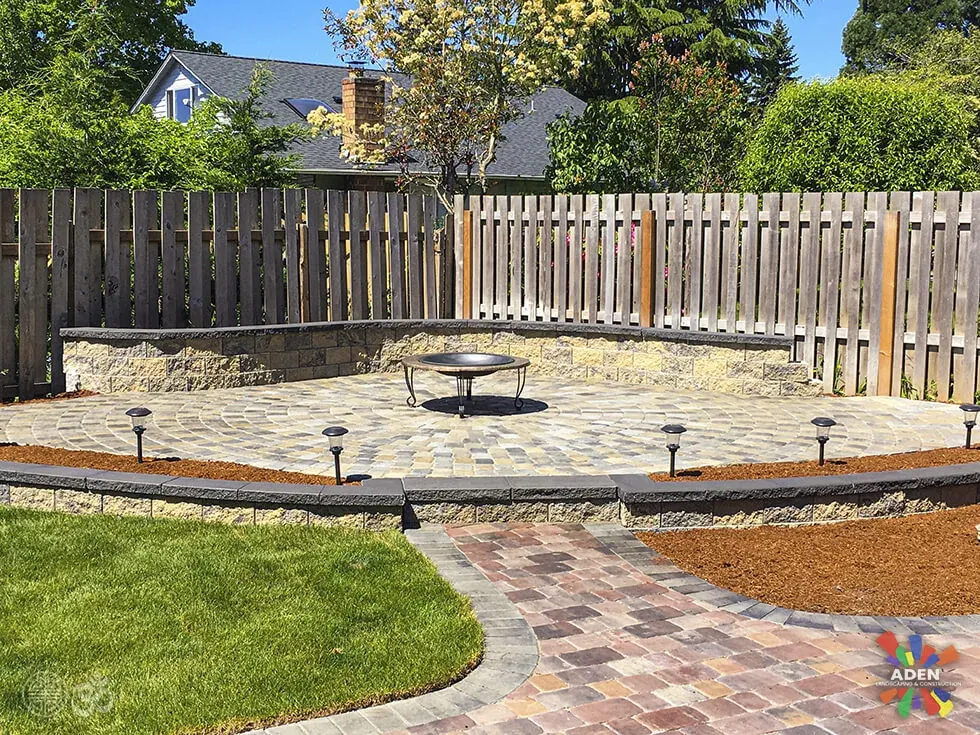
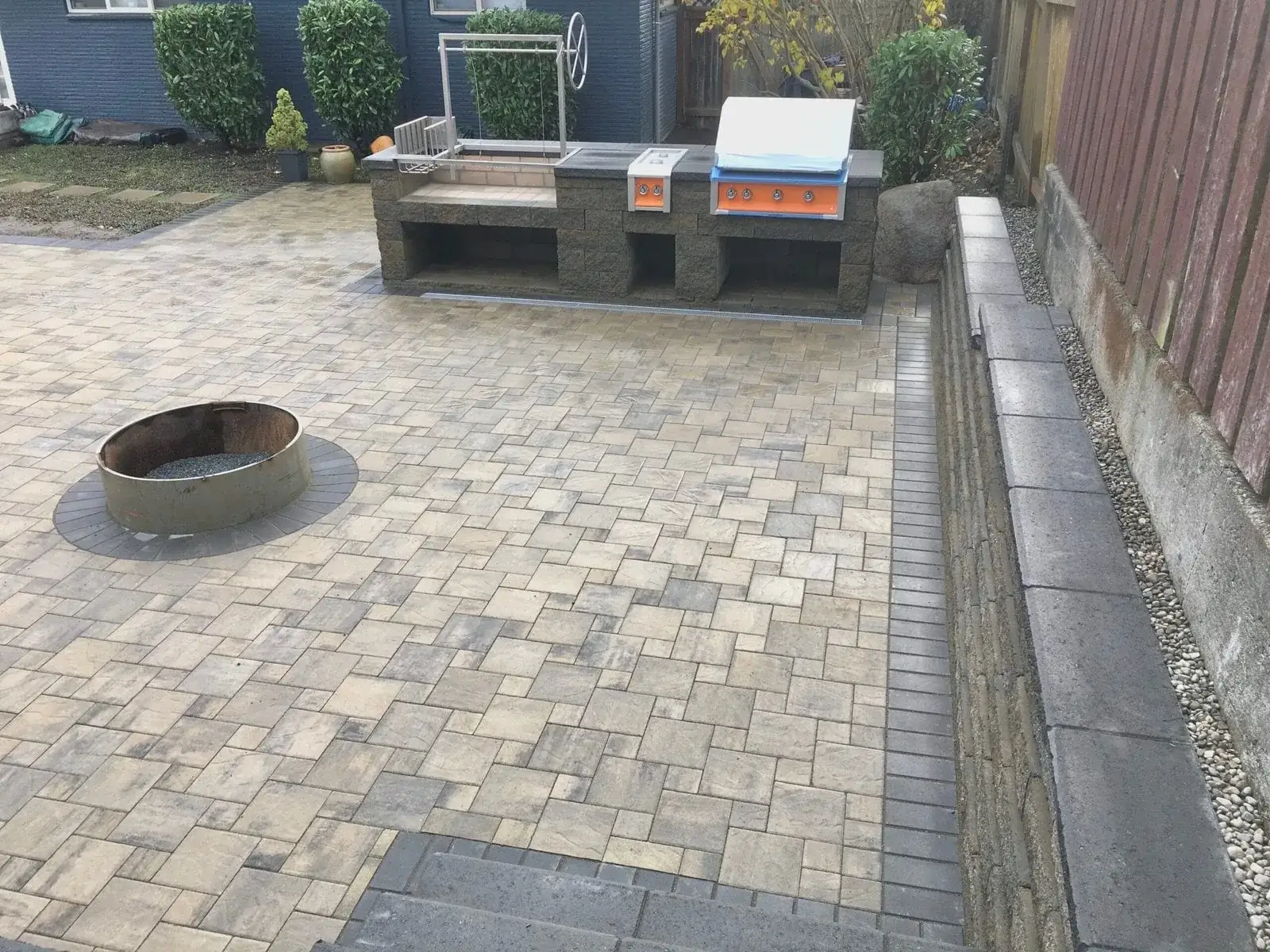
Fire pit terrace with its own path
The terrace sits away from the house, so it needed a route to it. The walk uses the same family of paver in a smaller unit, which reads as connected rather than as matching.
No down payment. You pay when the project is finished.
Monday – Friday, 9:00 AM – 7:00 PM · Capitol Hill, Seattle
Paver Installation · Bothell
Bothell spans two very different kinds of ground, and which one you are on changes the build before anything else does. The valley floor near the Sammamish River carries soft alluvial deposits — material laid down by water rather than pressed into place by ice — and it behaves nothing like the till on the slopes above it. Soft ground does not fail by refusing to drain; it fails by not holding still. A base built to a normal specification on alluvium will consolidate into it over a few seasons, and the surface follows. The answer is not simply digging deeper, which can make it worse, but separating the base from the subgrade so the two stop mixing, and spreading the load over a wider footprint.
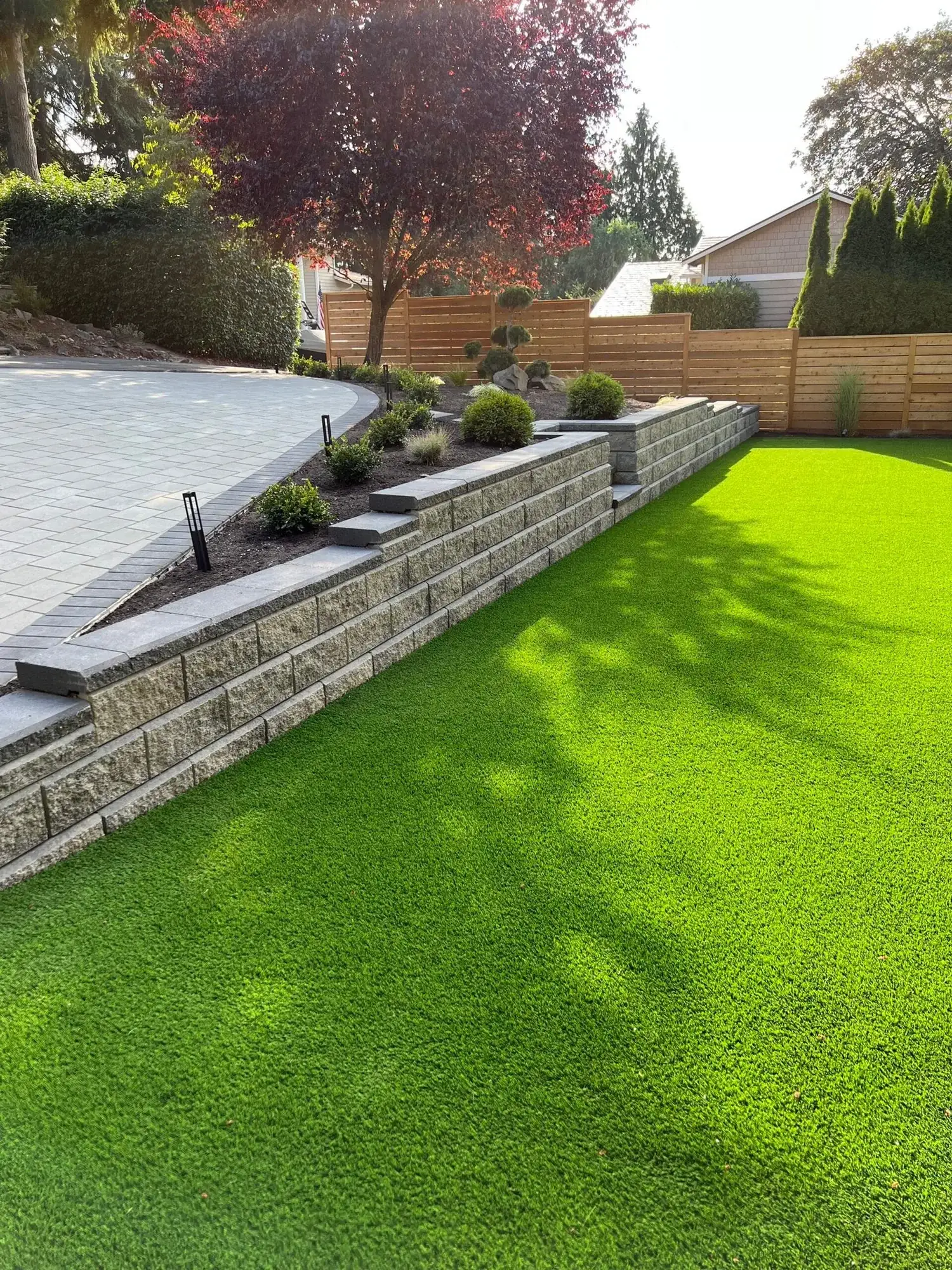
Block retaining wall holding a level artificial turf lawn against a cedar fence in Bothell
What we get called about
Bothell is a valley city with uplands either side, and which of the two you are on decides the work. Valley-floor properties along the Sammamish River and North Creek sit on alluvial ground with a high water table, so drainage is constrained by available fall and discharge rather than by design preference. Up on Norway Hill and the Canyon Park plateau you are on ordinary till with real grade, and the work is walls, terracing and design. Bothell also straddles a county line, so the jurisdiction — and the rules — depend on the address.
Worth knowing in Bothell
Test the ground in February, not August. Soft alluvial subgrade can feel entirely convincing in a dry month and behave completely differently when the water table is up, and the specification has to be written for the wet version because that is the one it lives in.
The method
The sequence does not change between neighbourhoods — what changes is the ground it is applied to. Full detail on the paver installation service page.
What the subgrade is, how wet it gets, and where water currently goes. On a till lot those three answers change the build more than the choice of paver does.
Every surface gets a fall, including the ones that look flat. Where water leaves is decided before a shovel moves, not adjusted at the end once the levels no longer allow it.
Down to competent ground, then compacted before any rock goes in. A good base built on an uncompacted subgrade just moves the failure one layer down.
Layer by layer to the specified depth, with a plate or roller sized for the job rather than whatever is on the van. This stage decides whether the surface is still flat in ten years.
Bedding course screeded to depth, units laid off a string line, perimeter saw-cut, and edge restraint fixed before any joint is filled.
Polymeric sand swept in, the field compacted to seat the units, then the whole area washed off — the last step is the one a rushed crew skips.
What it costs in Bothell
Bothell paver installation runs $18 to $40 per square foot, with soft-ground work at the upper end. What adds cost on the valley floor is geotextile separation, a deeper or wider base build-up to spread the load, and more spoil to remove. It is worth knowing that this is one of the few situations where a cheaper quote is not simply a thinner build — a contractor who has not tested the subgrade may genuinely not know the ground needs it.
You pay after the project is fully completed.
The estimate you sign is the price you pay.
Spread the cost with no interest.
Covers hardscape work; vegetation excluded.
Local questions
General questions about this service are on the service page. These are the ones that only come up here.
By testing rather than looking, because the surface tells you very little. The usual field checks are simple: dig a test hole and see what comes out, push a probe in and see how far it goes with hand pressure, and watch whether the hole holds water. Ground that a probe sinks into easily, or that produces a hole with water standing in it a few hours later, is telling you the base needs help. What we would not rely on is how the lawn feels underfoot in summer — alluvial ground drains and firms in a dry spell and softens again as soon as the water table rises, and the paving has to be built for the second condition.
It keeps two materials from becoming one. Clean base rock sitting directly on soft ground does not stay clean: under load, the stones press down into the subgrade and the fine soil works its way up into the voids between them, and over a few years you have a mixed layer that neither drains nor carries load. A separation fabric between them stops that exchange while still letting water pass. It costs very little relative to the job and it is the difference between a base that is still doing its job in fifteen years and one that has quietly turned into muddy gravel.
Not automatically, and occasionally that makes things worse. On soft alluvial ground, digging further can simply take you into wetter, weaker material and produce a hole that fills with water — at which point you have a deeper problem rather than a solved one. The more reliable approach is to separate and spread: geotextile between subgrade and base, a base wide enough to distribute the load beyond the edge of the surface, and where necessary a stabilising layer rather than more of the same rock. The right depth is a judgement made after seeing what is actually down there, not a number chosen in advance.
Yes, but the trench needs treating as its own condition rather than as part of the general ground. Backfilled trenches consolidate for years after the work, and they do it independently of the undisturbed ground on either side — which is why paving laid across one so often develops a dip that follows the trench line exactly. Where we know a trench runs under a proposed surface, the base gets extra depth and reinforcement across that band, and where the backfill is recent, the honest advice is sometimes to wait a season. Being told where your utilities were dug in is worth doing before design, not during excavation.
Serving Bothell and surrounding neighbourhoods
Downtown Bothell · Canyon Park · Thrashers Corner · Queensborough · Norway Hill · North Creek · Fitzgerald
98011 · 98012 · 98021
Recent work
Outdoor LivingView full sizeThe terrace sits away from the house, so it needed a route to it. The walk uses the same family of paver in a smaller unit, which reads as connected rather than as matching.
 Retaining WallsView full size
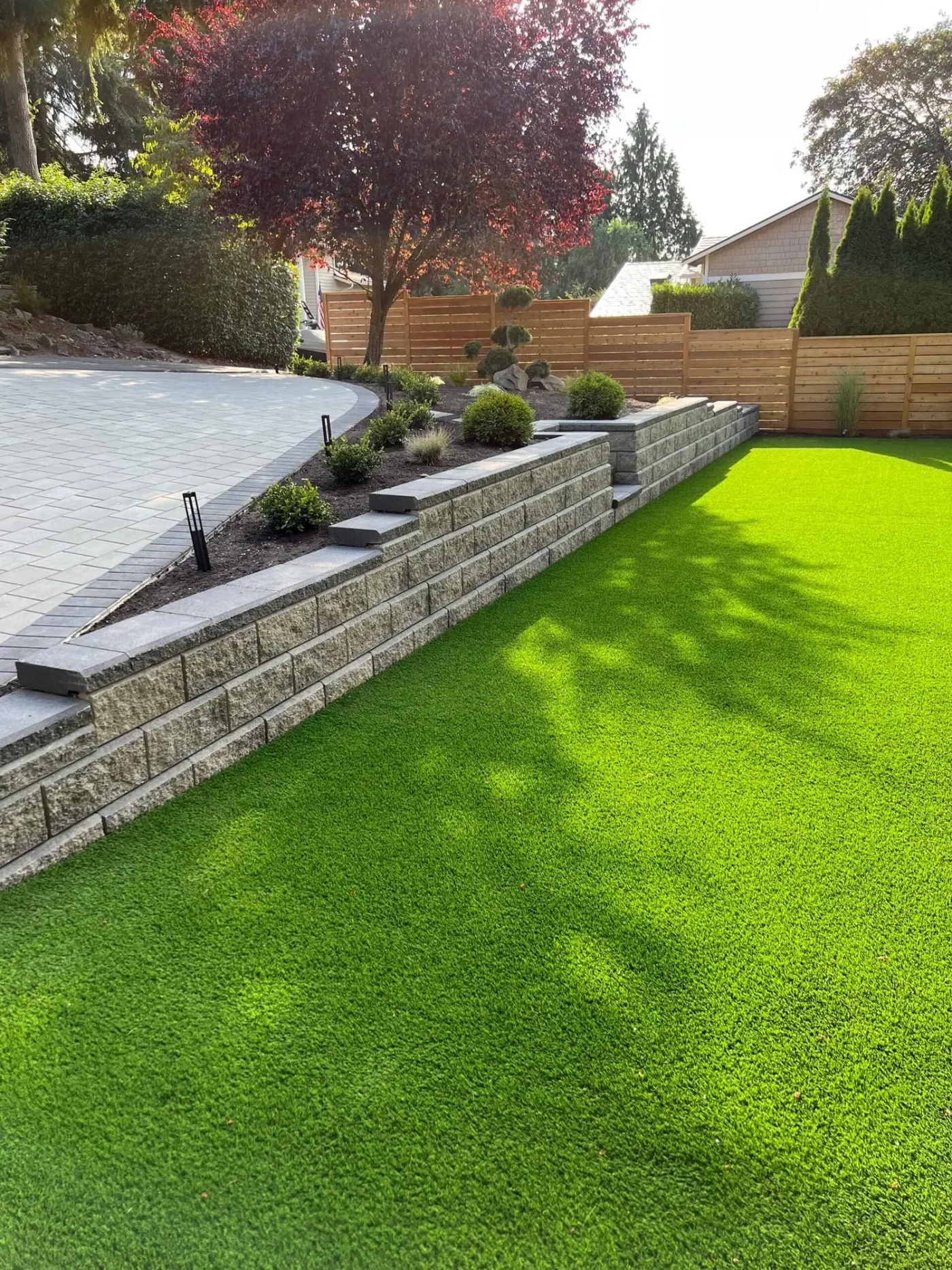
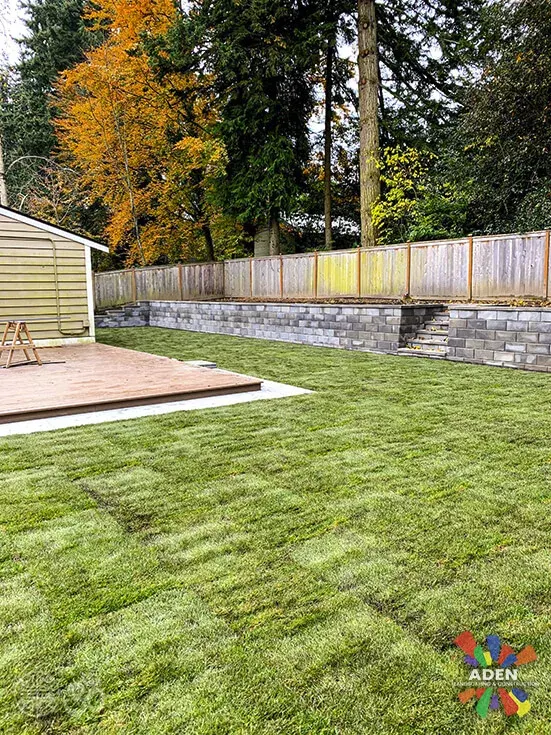
A retaining wall carved the flat lawn out of the slope; turf and planting finished it.
 DeckingView full size
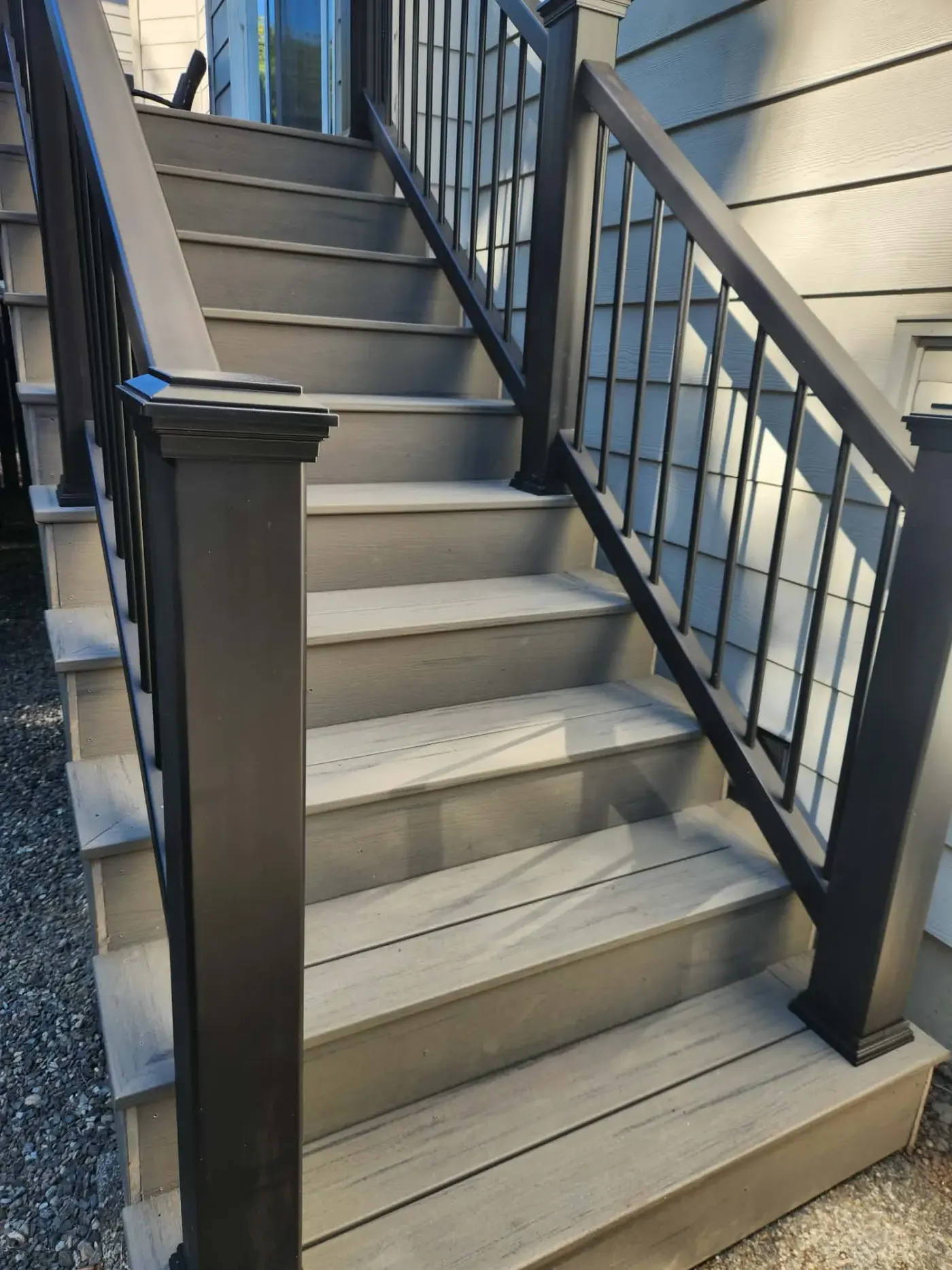
A run of stairs turning onto a landing at the side door, in composite boards with a powder-coated aluminium rail — the entrance that gets used every day rather than the one guests see.
 Design & BuildView full size
A whole back garden in one visit: wall in, grade corrected, deck framed, lawn laid onto it. Running it as one job is the reason the three levels agree with each other.
We come out, look at the ground, and put a fixed written price together. No deposit, and it does not change once agreed.
Free estimate
Three minutes on the form. We reply during office hours, Monday – Friday, 9:00 AM – 7:00 PM, and we come out and look at the site before quoting anything.
Or call (425) 533-9734
Thank you — we have your details. We reply during office hours, Monday – Friday, 9:00 AM – 7:00 PM. If it is urgent, call (425) 533-9734.