
 StoneworkView full size
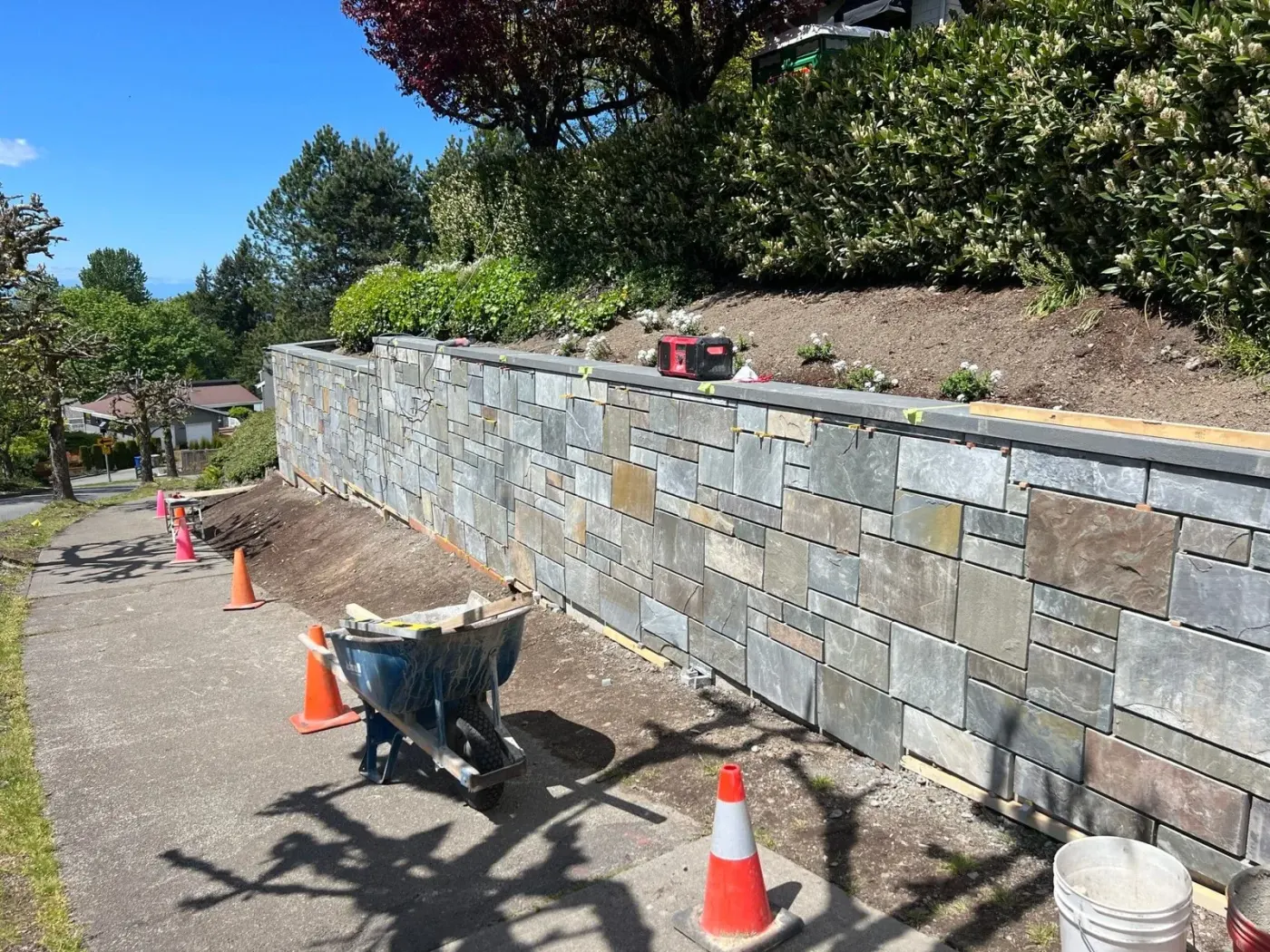
Natural stone wall, mid-build
Stone veneer going up over a structural core — the part of the job nobody photographs, done properly.
No down payment. You pay when the project is finished.
Monday – Friday, 9:00 AM – 7:00 PM · Capitol Hill, Seattle
Drainage · Woodinville
Drainage on a Woodinville acreage property is a different scale of problem from a suburban one, and the mistakes are correspondingly larger. A drain at the foot of a several-acre slope is intercepting the surface and shallow subsurface water from all of it, which is a catchment most residential systems are never sized for. There is also a constraint that barely exists elsewhere on this list: a large share of these properties run on septic, and a drainfield needs the ground above and around it undisturbed — you cannot trench through it, drive a machine across it or route water into it. On the Sammamish Valley floor below Hollywood Hill the picture changes again, with a high water table limiting depth and fall.
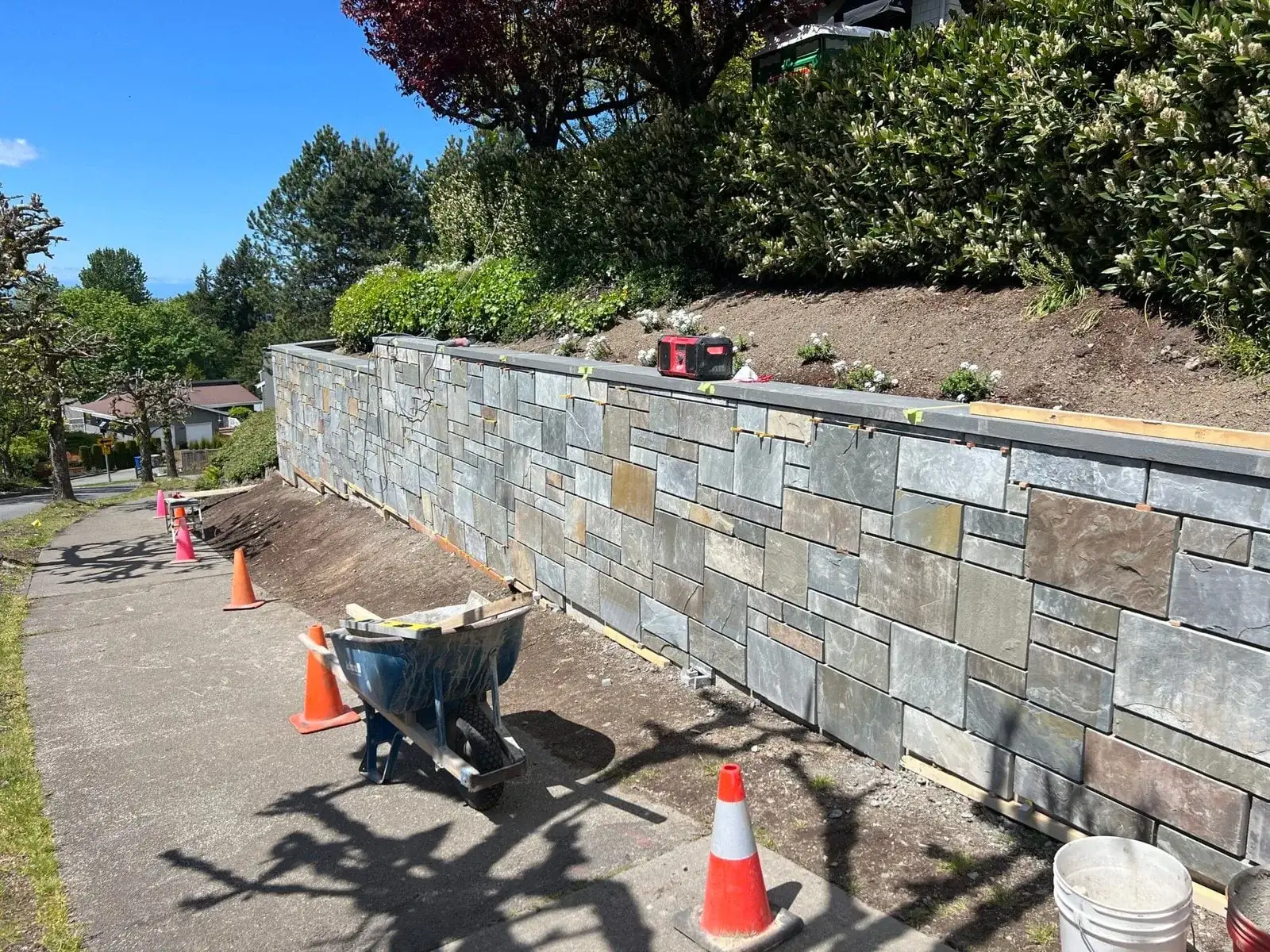
Natural stone veneer retaining wall under construction with tools and materials on a Woodinville site
What we get called about
Woodinville has the largest properties we work on, and acreage changes the nature of the job. The design problem stops being how to fit things into a small space and becomes how to give a large one structure — which usually means deciding what part of it is garden and letting the rest be landscape rather than trying to maintain all of it. Practically, several properties here are on wells and septic, which constrains irrigation design and dictates where you cannot excavate. And the valley floor is a different world from the hills: high water table, flat ground, slow drainage.
Worth knowing in Woodinville
On a property with an on-site septic system, drainage design starts with locating the tank and drainfield, and that is not a formality. A drainfield works by dispersing effluent into the soil around and below it, which means the ground there has to stay undisturbed, uncompacted and — importantly — not saturated by anything else.
Three things follow. You cannot excavate a drainage trench through a drainfield. You cannot drive an excavator across one. And you should not route collected surface water toward it, because a drainfield in saturated ground stops dispersing and the system backs up.
On a large Woodinville lot the drainfield is frequently in the flattest, most accessible part of the property, which is exactly where a drain run wants to go. Working around it usually means a longer route and occasionally a different outfall. That is a real cost and we would rather show it in the estimate than find the system with a bucket. Where records are poor, locating it properly before the design is a small expense against the alternative.
The method
The sequence does not change between neighbourhoods — what changes is the ground it is applied to. Full detail on the drainage service page.
Roof, surface runoff, a neighbouring property's grade, or groundwater sitting on the till. These need different answers and guessing wastes the whole job.
A drain needs somewhere legal and physical to go — daylight at a lower point, or an approved connection. A drain that terminates in a hole is a soakaway on ground that does not soak.
Continuous fall along the whole run. A trench that dips holds water and silts up, which is the most common reason a retrofit drain stops working.
Perforated pipe bedded in clean washed rock, wrapped in geotextile so the surrounding soil cannot migrate in and clog the void.
Turf, planting or hard surface put back so the finished job does not read as a scar across the garden.
What it costs in Woodinville
Woodinville drainage is priced on catchment and length rather than on the size of the wet patch, and on acreage that difference is substantial. Access is excellent, so the machine work is efficient and the per-foot cost sits comfortably inside $10 to $25 — but the runs are long and the outfall has to have real capacity. Where a system has to be routed around a septic drainfield, that constraint adds length and is worth pricing openly rather than discovering mid-dig.
You pay after the project is fully completed.
The estimate you sign is the price you pay.
Spread the cost with no interest.
Covers hardscape work; vegetation excluded.
Local questions
General questions about this service are on the service page. These are the ones that only come up here.
By mapping where water enters the property and where it concentrates, then sizing pipe, run and outfall for that catchment rather than for the area where standing water appears. On several acres the difference between those two numbers is large. A system built for the visible wet patch will be overwhelmed during any sustained wet spell, and the failure mode is water travelling around the end of the run and reappearing somewhere new. It is also why an acreage drainage quote is not comparable with a suburban one on a per-foot basis — the systems are doing different jobs.
Usually a combination of cross-fall and interception rather than a drain at the bottom. A long sloping driveway is an impermeable surface collecting rainfall along its whole length and delivering all of it to the lowest point, which is normally right where you least want it. Putting a channel drain at that low point treats the symptom and has to handle the entire volume. Breaking the run up — a cross-drain partway down, and a cross-fall that sheds water sideways into planting rather than letting it run the full length — divides the problem into manageable parts and usually costs less.
That needs establishing rather than assuming, and it is one of the few drainage questions where getting it wrong has consequences beyond a wet garden. Creek corridors and wetlands carry critical area regulations with buffers attached, and discharging collected surface water into one is regulated rather than discretionary. On a large property there is frequently a legitimate alternative — daylight elsewhere on your own ground, or attenuation and dispersal rather than a point discharge. We establish what applies to the parcel before designing an outfall.
Substantially. Up on the hill you are on glacial till with real grade, where water perches on hardpan and a routed drain to daylight works well. Down on the Sammamish Valley floor the soil is alluvial, the ground is flat and the water table is close to the surface, which limits both the depth a trench can usefully reach and the fall available to move water along it. A property at the bottom of the hill and one at the top can need genuinely opposite work, so which one you have is the first thing we establish.
Serving Woodinville and surrounding neighbourhoods
Downtown Woodinville · Hollywood Hill · Wellington · Cottage Lake · Sammamish Valley wine district · Bear Creek edge
98072 · 98077
Recent work
StoneworkView full sizeStone veneer going up over a structural core — the part of the job nobody photographs, done properly.
 Retaining WallsView full size
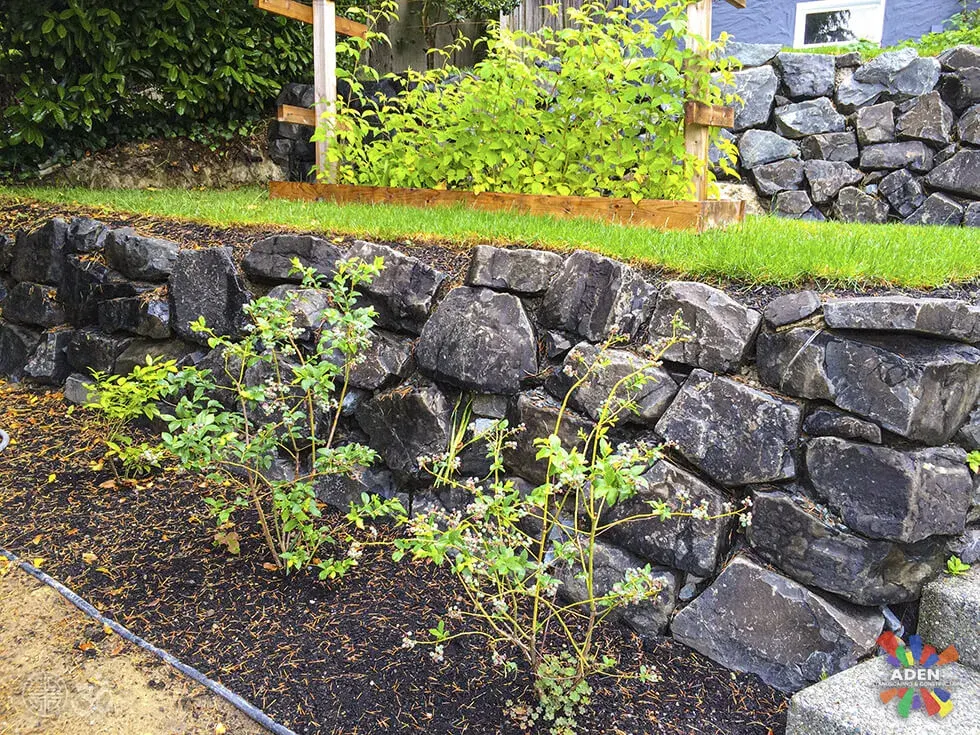
Quarried basalt set as a rockery rather than laid as block. It suits a rural lot better, and it lets the planting run into the joints instead of stopping dead at a straight line.
 Outdoor LivingView full size
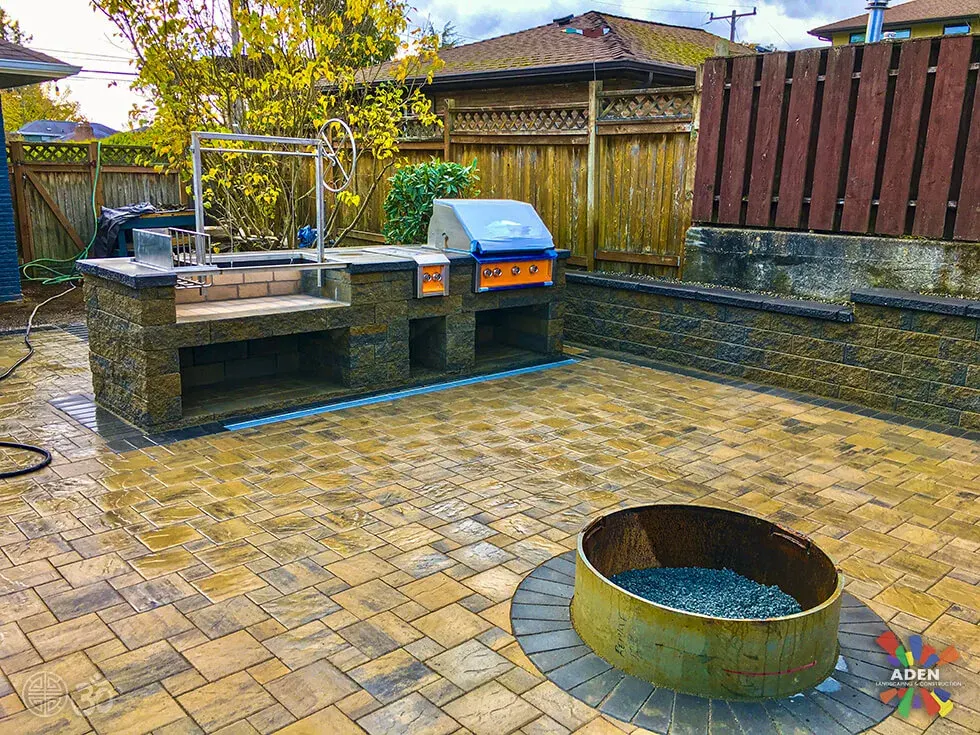
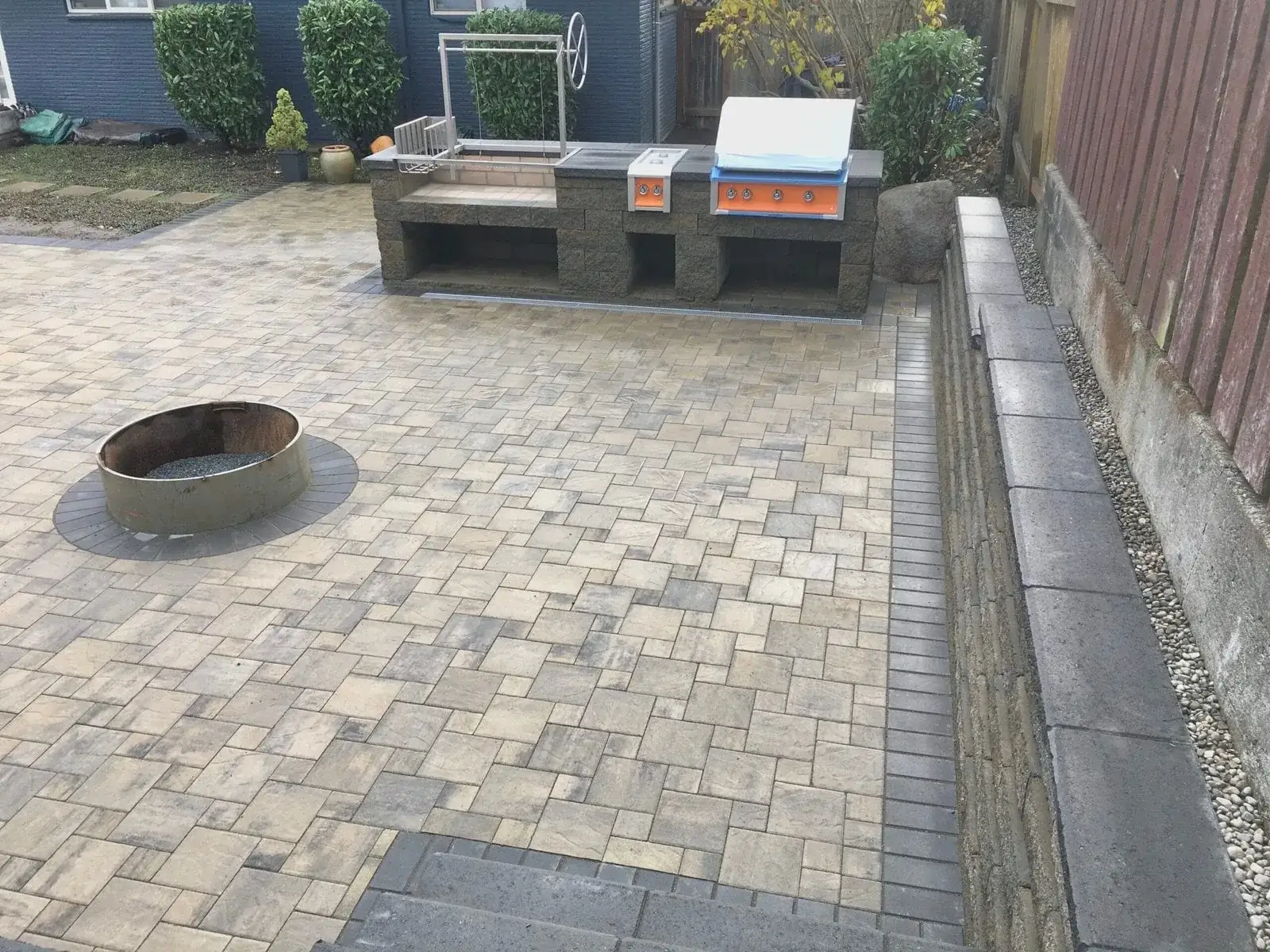
Two built-in grills, a run of stone-faced counter, and a copper fire bowl set into the paving. The gas line and the drainage went in before a single paver did — they always have to.
 Driveway PavingView full size
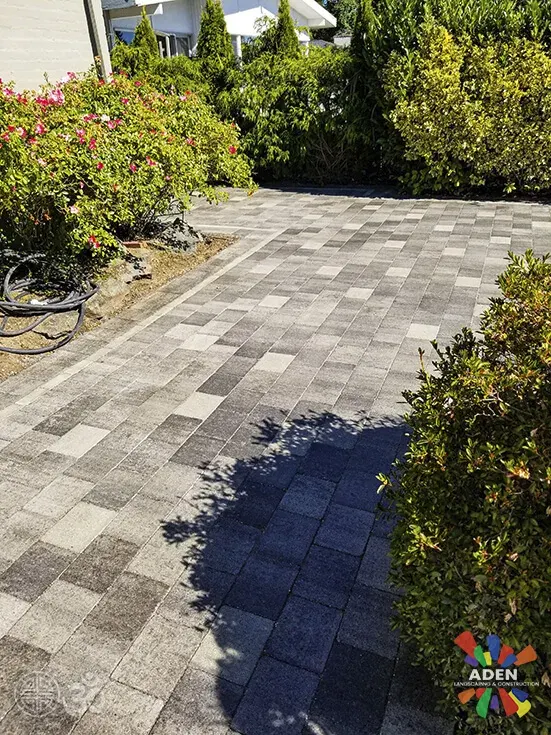
Photographed before the edge planting went back, jointing sand still on the surface. The variation across the field is deliberate — units drawn from several pallets rather than one.
We come out, look at the ground, and put a fixed written price together. No deposit, and it does not change once agreed.
Free estimate
Three minutes on the form. We reply during office hours, Monday – Friday, 9:00 AM – 7:00 PM, and we come out and look at the site before quoting anything.
Or call (425) 533-9734
Thank you — we have your details. We reply during office hours, Monday – Friday, 9:00 AM – 7:00 PM. If it is urgent, call (425) 533-9734.