
 DeckingView full size
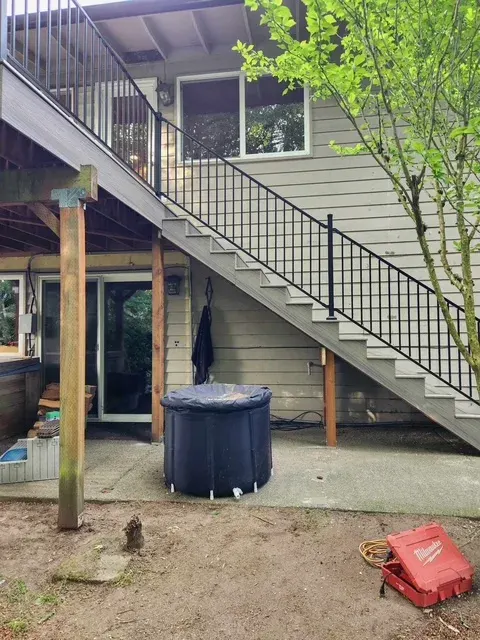
New stairs down to the lower patio
A West Seattle split-level where the only way to the bottom of the garden was through the house. A full-height run of stairs off the deck fixed that.
No down payment. You pay when the project is finished.
Monday – Friday, 9:00 AM – 7:00 PM · Capitol Hill, Seattle
Decks & Structures · West Seattle
On the West Seattle bluff, a deck is frequently not just the nicer option but the more responsible one. The ground on the western and southern edges of the peninsula is looser than the plateau behind it, carries documented movement in living memory, and a large share of those parcels sit inside steep slope or landslide-prone designations. The two things that destabilise ground like that are adding weight above the slope and changing where surface water goes — and a terrace does both, while a deck does neither in the same way. Its load arrives at a few points rather than as a continuous mass, and rain passes through the boards to the ground rather than being collected and sent somewhere new.
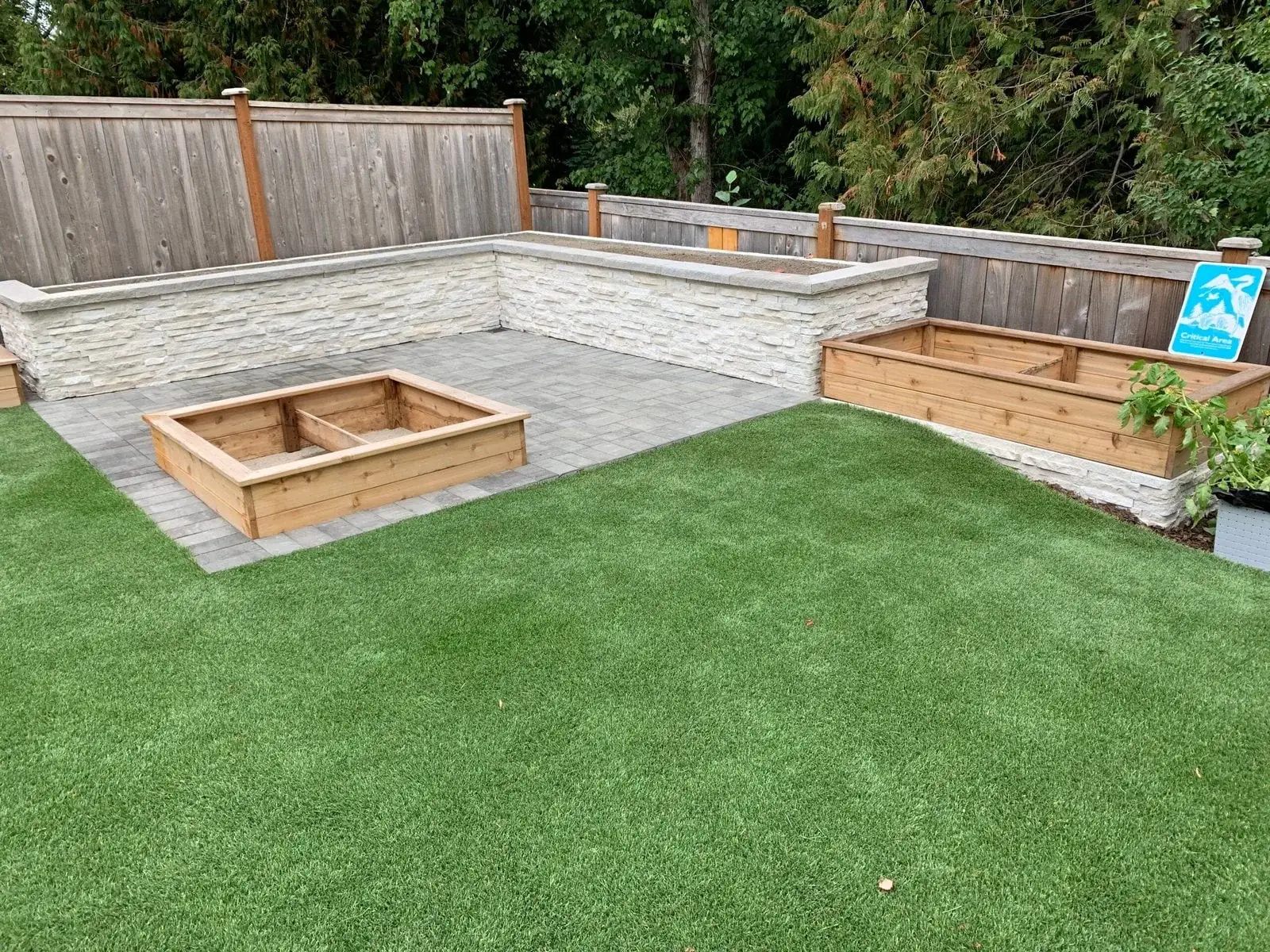
Artificial turf lawn framed by cedar raised planter beds and a paved seating area in West Seattle
What we get called about
West Seattle is a plateau with cliffs around it, and which of those two you are on decides the whole job. Plateau lots in the Junction and Westwood are straightforward, level and fast to build on. Bluff lots toward Alki, Fauntleroy and Delridge sit on ground with real landslide history, and a lot of them fall inside Environmentally Critical Area designations where the usual four-foot wall exemption does not apply. The view lots are the ones that need engineering, not just building.
Worth knowing in West Seattle
Check your parcel for a critical-area designation before commissioning anything. On the bluff it changes what is exempt, what assessment is needed and occasionally what can be built — and it is public information you can look up in minutes.
The method
The sequence does not change between neighbourhoods — what changes is the ground it is applied to. Full detail on the decks & structures service page.
A dining deck, a route between levels and a sun trap are different structures at different heights. Deciding that first is what stops a deck being the wrong size in the right place.
Footing depth, how posts meet the ground, and how the frame ties into the building. That connection is the most common failure point on decks we are called out to replace.
Structure first, then the details that let it dry: spacing, flashing where the frame meets the house, and drainage below where the deck is over usable space.
Boards run to suit the sightline rather than the shortest cut list, with border and inlay detail where a large deck needs the joint hidden.
Riser lights and rail detail go in once the levels are final, because both are fixed to the finished structure rather than the frame.
What it costs in West Seattle
West Seattle decks run $35 to $90 per square foot on the plateau. On bluff parcels the structure is rarely what moves the number — the footings do, because they have to reach competent ground and how far down that is cannot be known from the surface. Where a designation applies, professional assessment comes before design and is priced separately from the deck.
You pay after the project is fully completed.
The estimate you sign is the price you pay.
Spread the cost with no interest.
Covers hardscape work; vegetation excluded.
Local questions
General questions about this service are on the service page. These are the ones that only come up here.
Because of load and water, which are the two mechanisms behind slope failure. A paved terrace is a continuous mass sitting on the ground above a slope, and it converts absorbing soil into a surface that sheds nearly all its rainfall — so the same storm delivers considerably more water, faster, to whatever is downhill. A deck adds far less weight, delivers what it does add through posts to footings at discrete points, and lets rain pass between the boards to the soil as it did before. On stable plateau ground the difference is academic. On the bluff it is the whole argument, and it is why we frequently recommend a deck where somebody arrived asking about a patio.
Past whatever is loose, to something that will carry the load reliably — and on this ground that depth is a finding rather than a specification. Bluff material is looser than the till behind it and frequently has a layer of surface material or old fill over something firmer, with the depth varying across a single lot. That means testing rather than assuming, and a footing schedule produced after investigation. Where the parcel carries a designation, that determination generally needs a professional assessment, and we would rather establish it before design than discover it partway through construction.
It affects the metal more than the timber. Fixings, connectors, railing components and any structural hardware are what corrode in a salt-laden environment, and a deck built with standard fixings on an exposed west-facing site will show it sooner than the same deck two streets inland. The answer is straightforward and worth specifying rather than assuming: appropriately rated stainless or coated hardware throughout, including the connectors nobody sees. Composite decking is unaffected, and cedar weathers rather than corrodes. Where a cable railing is used, the tensioning hardware is the component most worth upgrading.
Yes, and the choice of infill matters far more than anything else you decide. A railing is required above a certain height and there is no negotiating that, but what fills it is open: stainless cable, slim metal picket and glass all meet the requirement while taking far less of the outlook than a traditional picket run at seated eye level. Cable gives the most open view for the money and needs re-tensioning periodically. Glass gives the least obstruction and, within reach of salt air, needs cleaning constantly to stay worth having. Sit down at deck height before choosing — the view that matters is the one from a chair.
Serving West Seattle and surrounding neighbourhoods
Alki · Admiral District · The Junction · North Admiral · Fauntleroy · Gatewood · Morgan Junction · Delridge · Highland Park · Arbor Heights · Roxhill · Westwood
98106 · 98116 · 98126 · 98136 · 98146
Recent work
DeckingView full sizeA West Seattle split-level where the only way to the bottom of the garden was through the house. A full-height run of stairs off the deck fixed that.
 DeckingView full size
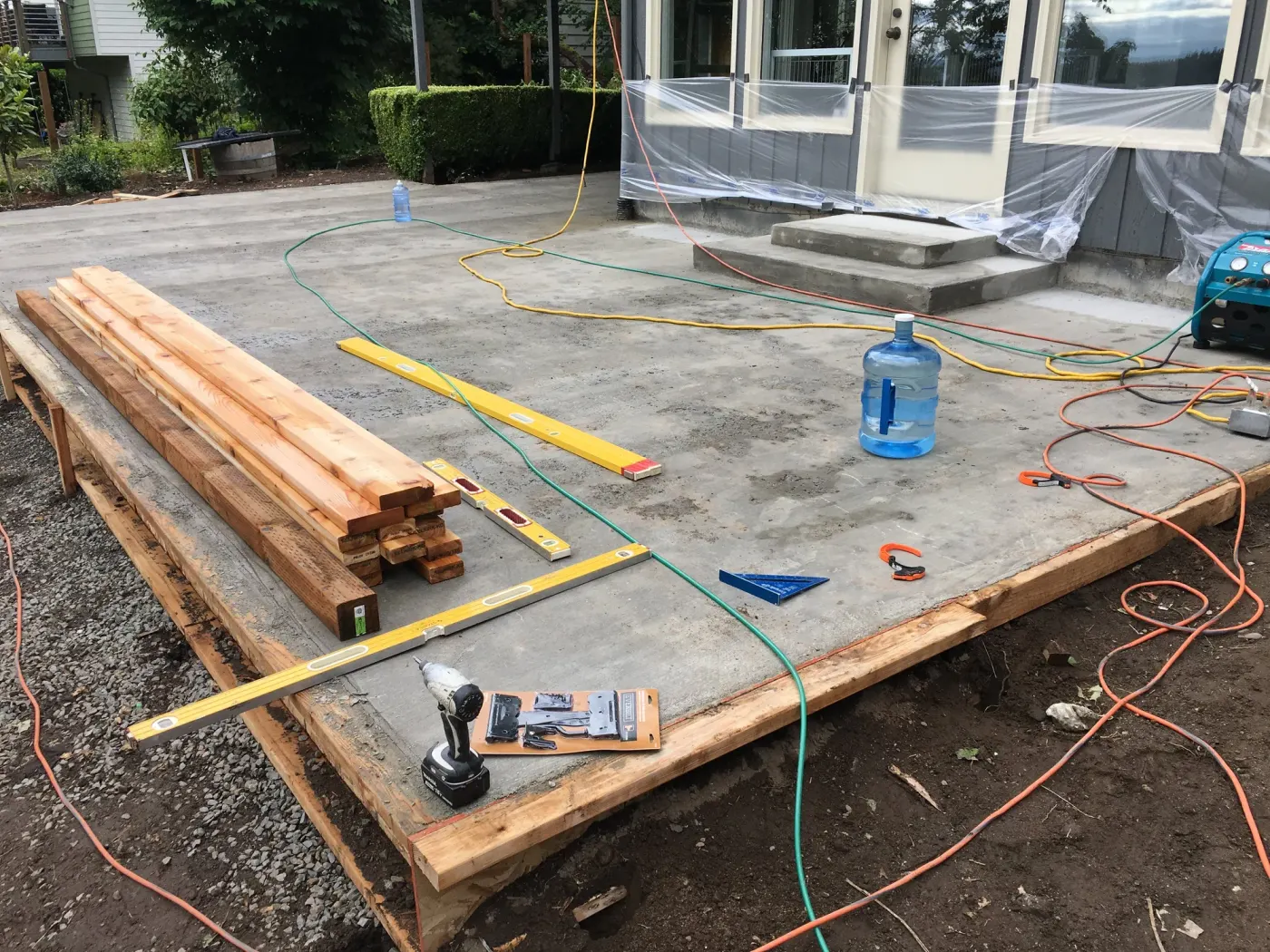
Timber cut and laid out on the old slab, edges masked, hoses run. The photograph nobody asks for, of the day that decides whether the finished deck is level.
 Artificial TurfView full size
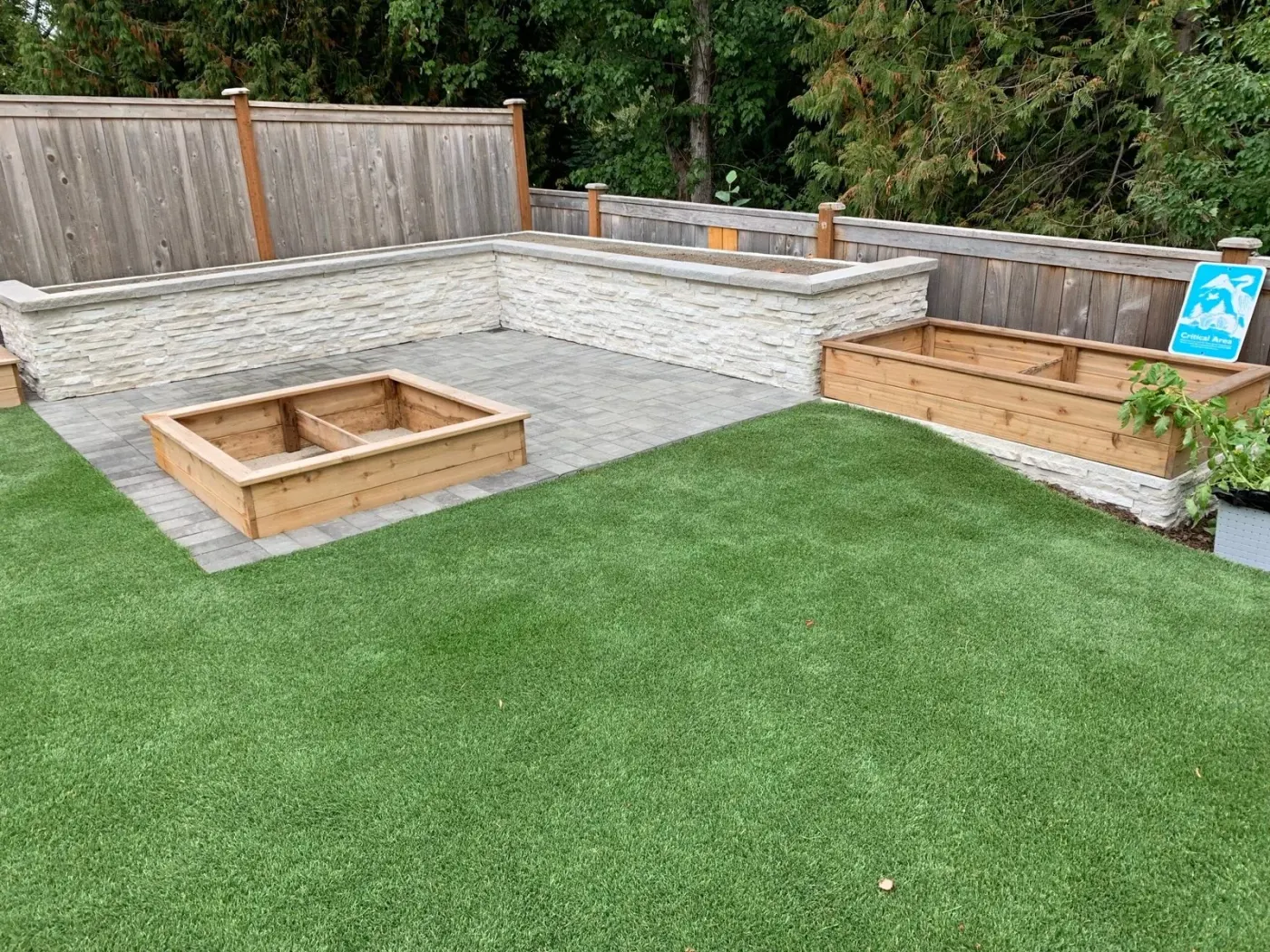
A no-mow lawn for a small city yard, with cedar planters and a paved seating edge.
 HardscapingView full size
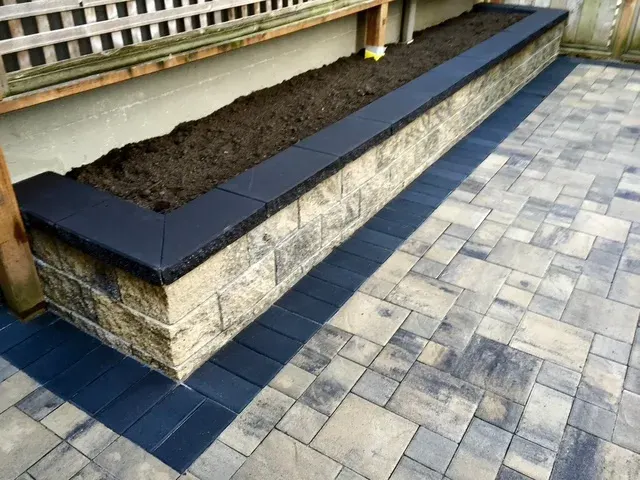
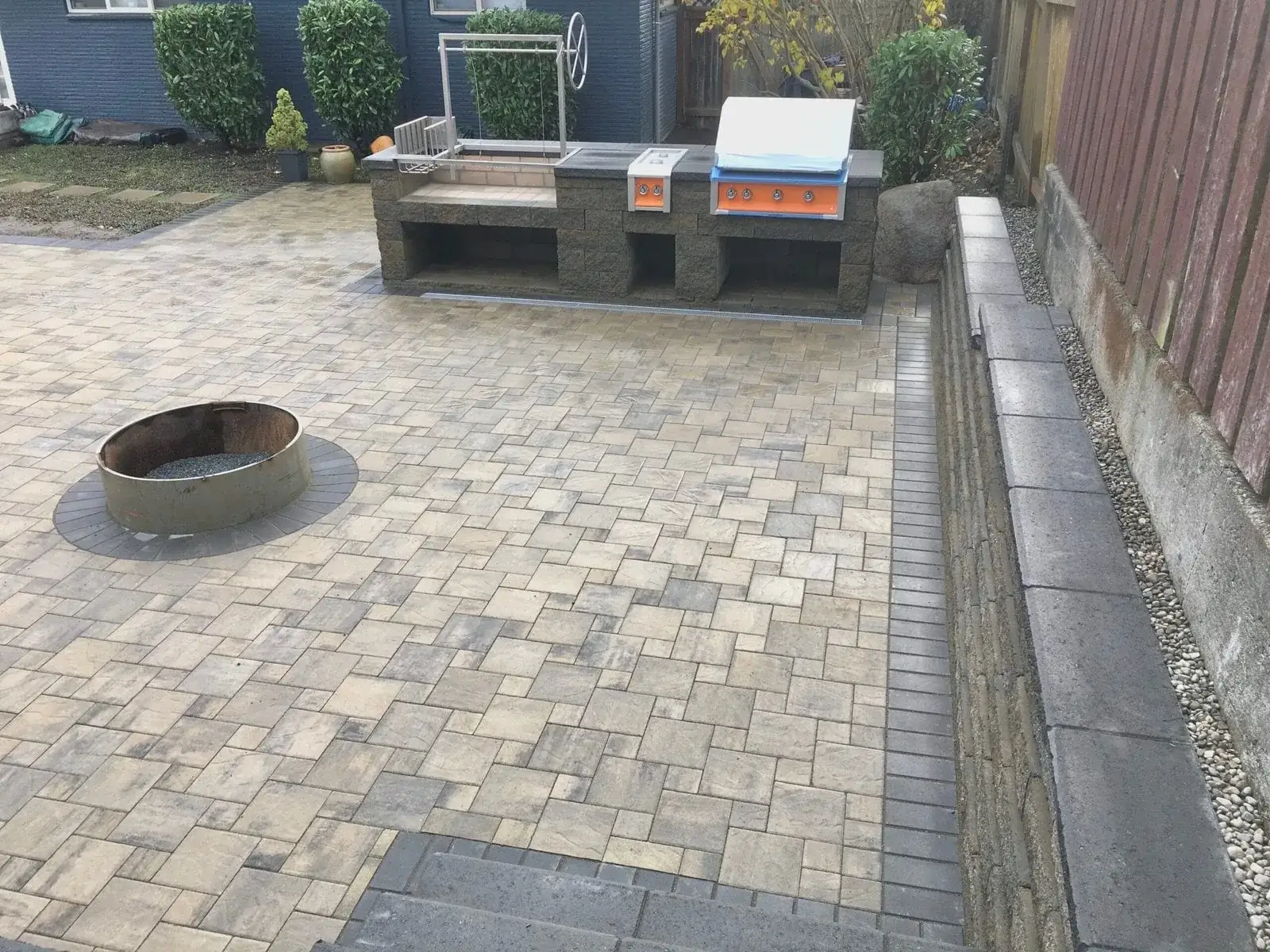
A raised planter running the length of the terrace, capped in charcoal to pick up the darker banding in the paving.
We come out, look at the ground, and put a fixed written price together. No deposit, and it does not change once agreed.
Free estimate
Three minutes on the form. We reply during office hours, Monday – Friday, 9:00 AM – 7:00 PM, and we come out and look at the site before quoting anything.
Or call (425) 533-9734
Thank you — we have your details. We reply during office hours, Monday – Friday, 9:00 AM – 7:00 PM. If it is urgent, call (425) 533-9734.