
 Retaining WallsView full size
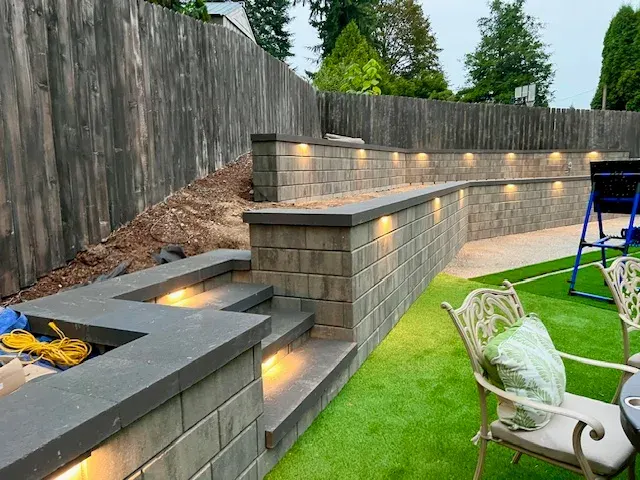
Lit seat wall, steps and turf lawn
Lighting recessed into the wall face and the step risers, so the garden still works through eight months of dark Seattle evenings. Photographed the night it was commissioned.
2 photos
No down payment. You pay when the project is finished.
Monday – Friday, 9:00 AM – 7:00 PM · Capitol Hill, Seattle
Retaining Walls · Seattle
Seattle is a city of walls because it is a city of hills, and a large share of the ones already standing were built before anyone thought hard about where water goes. That is what we are usually called about: a rockery on a north-end street shedding stone, a block wall in Mount Baker leaning a little further each winter, a bank in Magnolia that has started arriving on the patio. The failure mechanism is almost always the same. Thirty-eight inches of rain, nearly all of it between October and March, saturates soil sitting on glacial till that will not let it through, and saturated soil pushes far harder than the wall was ever built to hold. We build the drainage first and the wall on top of it.
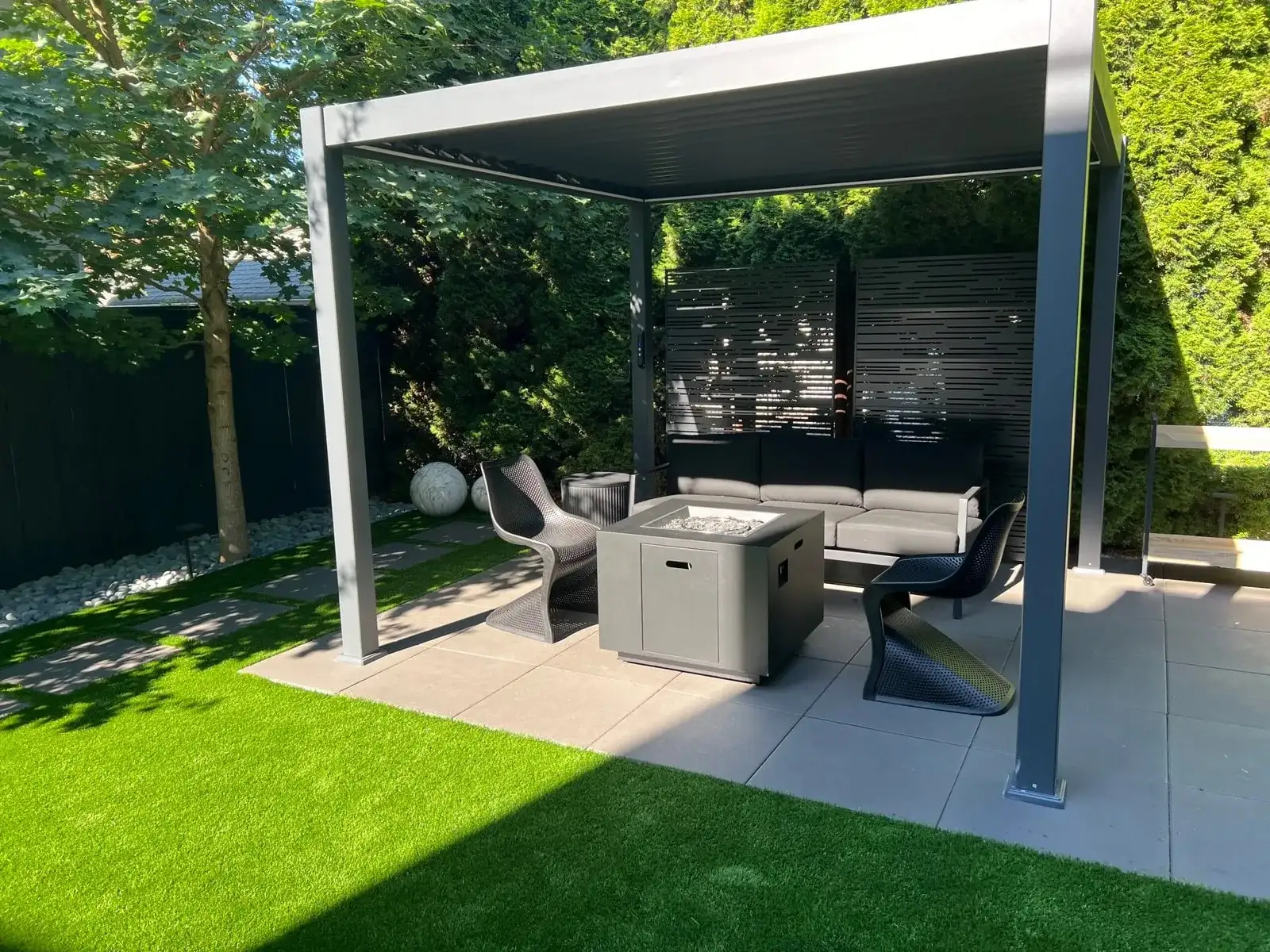
Covered outdoor lounge with a fire table beside an artificial turf lawn on a Seattle property
What we get called about
Seattle takes 38+ inches of rain a year and almost all of it arrives October to March. That single fact decides more landscaping outcomes here than plant choice ever does — a patio without a drainage plan is a patio that heaves, and a lawn on undisturbed till is a lawn that sits under water all winter.
Worth knowing in Seattle
Measure from the bottom of the footing, not from the ground you can see. Seattle's four-foot exemption is measured footing-to-top, so a wall that looks three feet from the garden is frequently over the threshold once the buried course is counted — which is how homeowners end up with an unpermitted wall they did not know they had built.
A rockery is a wall built from stacked natural boulders rather than manufactured units, and this city has a great many of them. Whole streets in the north end and across the older hillside neighbourhoods are held up by rockeries built decades ago, frequently by whoever was clearing the lot at the time, and they are now reaching the end of a working life nobody ever specified.
They fail differently from block walls, which is why they get misdiagnosed. Individual stones work loose rather than the whole face tipping. Soil washes out through the gaps between boulders, so the face bulges where the fill behind has migrated. The toe creeps outward a few inches at a time. None of it looks urgent in any single year, and all of it compounds.
The honest position on any given rockery is that sometimes resetting the failing section is enough and sometimes the whole run has moved too far to be worth patching. A rockery that has spread along its full length has lost the interlock that was holding it, and repairing part of it buys a couple of years. We look at the whole run before quoting a section of it, and we will tell you which of the two you have.
The method
The sequence does not change between neighbourhoods — what changes is the ground it is applied to. Full detail on the retaining walls service page.
We look up whether the property sits in an Environmentally Critical Area and what the grade actually is, because that decides the permit position before it decides anything else.
A level, compacted base trench below finished grade. This is the step that gets rushed on a cheap job and it is the step that determines whether the wall stays straight.
Levelled unit by unit. Every course above copies the first one, so an error here multiplies all the way up.
Perforated pipe at the footing, clean rock backfill placed course by course rather than dumped at the end, and geotextile separating rock from soil so it does not silt up.
Compacted in layers, not filled in one go. Settled backfill is what pulls a wall out of line a year later.
Capping units, any planting above, and the ground reinstated so the wall reads as part of the garden rather than an intervention.
What it costs in Seattle
Seattle walls run $5 to $45 per square foot of face, and a four-foot by fifty-foot wall with proper drainage typically lands between $8,000 and $24,000. What moves the number here more than anywhere else on this list is access: on a city lot where every block and every yard of drainage rock goes through a three-foot side gate, the labour can exceed the materials. We walk the access route before quoting.
You pay after the project is fully completed.
The estimate you sign is the price you pay.
Spread the cost with no interest.
Covers hardscape work; vegetation excluded.
Local questions
General questions about this service are on the service page. These are the ones that only come up here.
The city publishes an ECA map and we check your specific parcel against it before quoting anything. The designations that matter for walls are steep slope, landslide-prone and potential slide area, and they are far more widespread than most homeowners expect — large parts of West Seattle, Magnolia, Leschi, Madrona and the Mount Baker hillside are covered. Inside an ECA the four-foot exemption does not apply at all, so a wall of any height may require a permit. Finding this out at quote stage costs nothing; finding it out mid-build is expensive.
Often yes, and on the older Seattle streets it is frequently the better answer visually. Rockeries fail progressively — individual stones work loose, the face bulges where soil has washed out through the gaps, and the toe spreads outward — which means a single failing section can sometimes be reset without touching the rest of the run. The honest limit is that a rockery which has moved along its whole length has usually lost the interlock that held it, and patching it buys a couple of years rather than fixing anything. We tell you which case yours is before quoting, not after.
It has to leave the site, and on till it will not leave downward. Behind every wall we build there is perforated pipe sitting at the footing, at least twelve inches of clean free-draining rock against the face, and geotextile keeping the surrounding soil out of that rock so it cannot silt up. That collected water then needs a discharge route — daylight at a lower point on the lot, or an approved connection. On a sloped Seattle lot daylight is usually achievable; where it is not, the discharge question gets answered before the wall is designed rather than after it is built.
That depends on where the property line runs and what has been agreed, and it is worth establishing before anyone builds. What we can say technically is that a wall retaining soil is doing work for whoever benefits from the level ground it creates, and that Seattle's exemption test includes causing no damage to adjoining property — so a wall built badly on one side of a boundary is a problem for both. In practice the workable path on a shared slope is a conversation with the neighbour first, then a design that puts the structure and its drainage clearly on one side of the line.
Serving Seattle and surrounding neighbourhoods
Capitol Hill · Ballard · Queen Anne · Magnolia · West Seattle · Green Lake · Wedgwood · Madison Park · Laurelhurst · Mount Baker · Seward Park · Fremont · Wallingford · Columbia City
98101 · 98102 · 98103 · 98104 · 98105 · 98106 · 98107 · 98108 · 98109 · 98112 · 98115 · 98116 · 98117 · 98118 · 98119 · 98121 · 98122 · 98125 · 98126 · 98133 · 98134 · 98136 · 98144 · 98146 · 98177 · 98199
Recent work
Retaining WallsView full sizeLighting recessed into the wall face and the step risers, so the garden still works through eight months of dark Seattle evenings. Photographed the night it was commissioned.
2 photos
 Outdoor LivingView full size
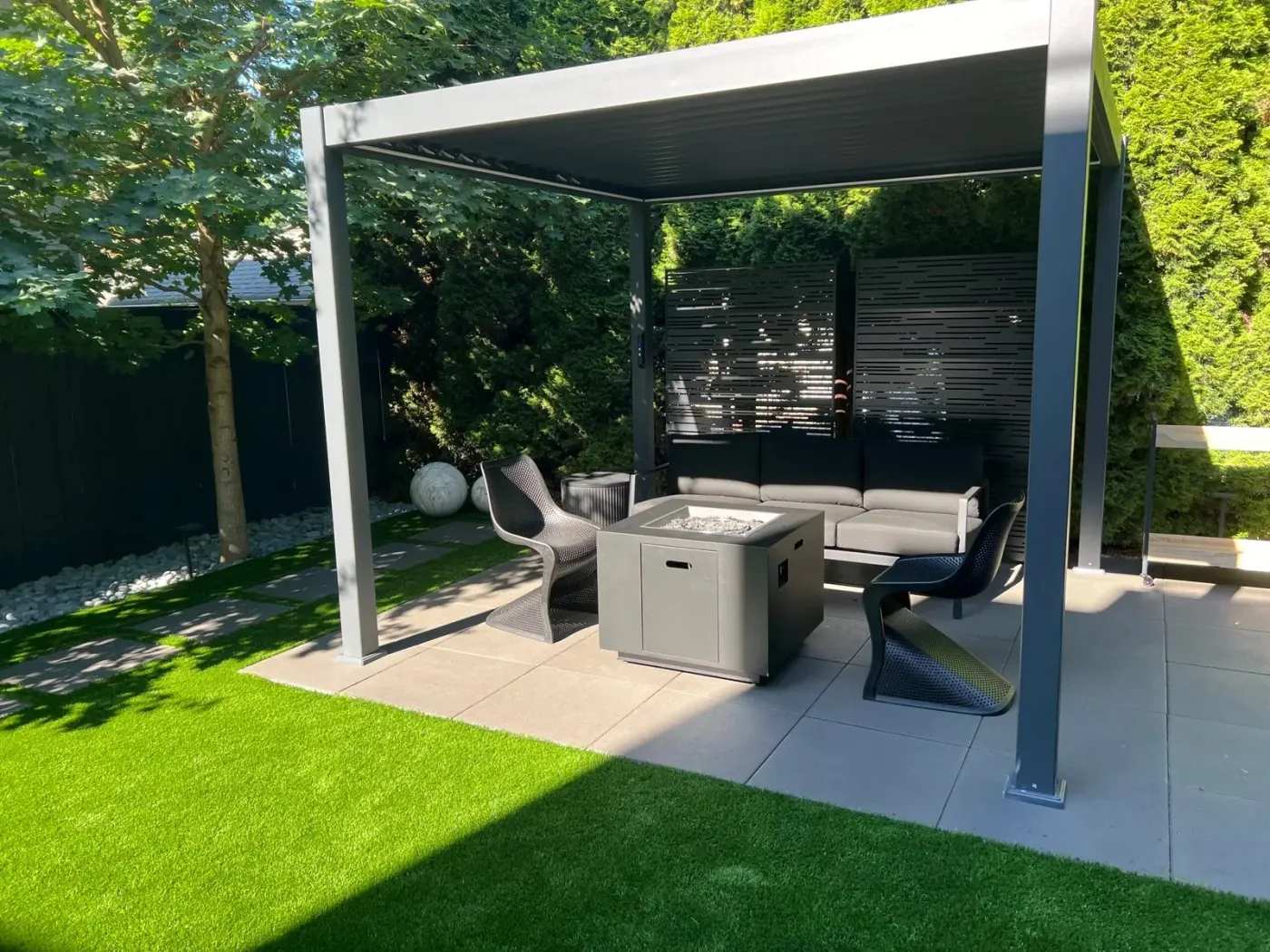
A modern pergola over a paved lounge, edged straight into a turf lawn that stays green all winter, with a plank path running the length of the lot.
2 photos
 FlagstoneView full size
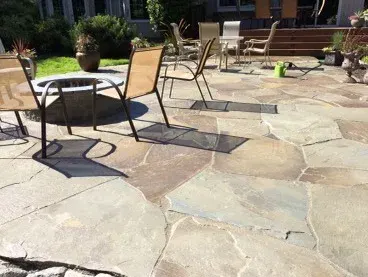
Hand-fitted flagstone laid tight, with a fire bowl and seating where the lawn used to sit wet.
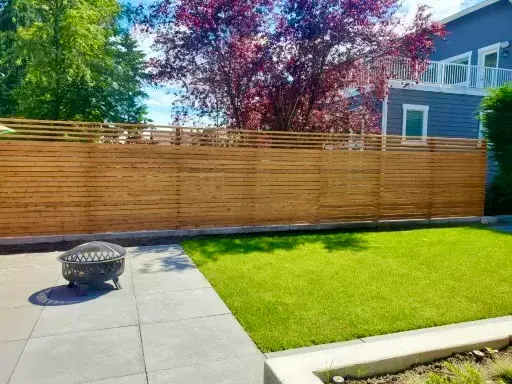 Design & BuildView full size
A small city garden done as one job — horizontal cedar screen for privacy from the neighbours, a concrete patio, and turf that stays green through the winter.
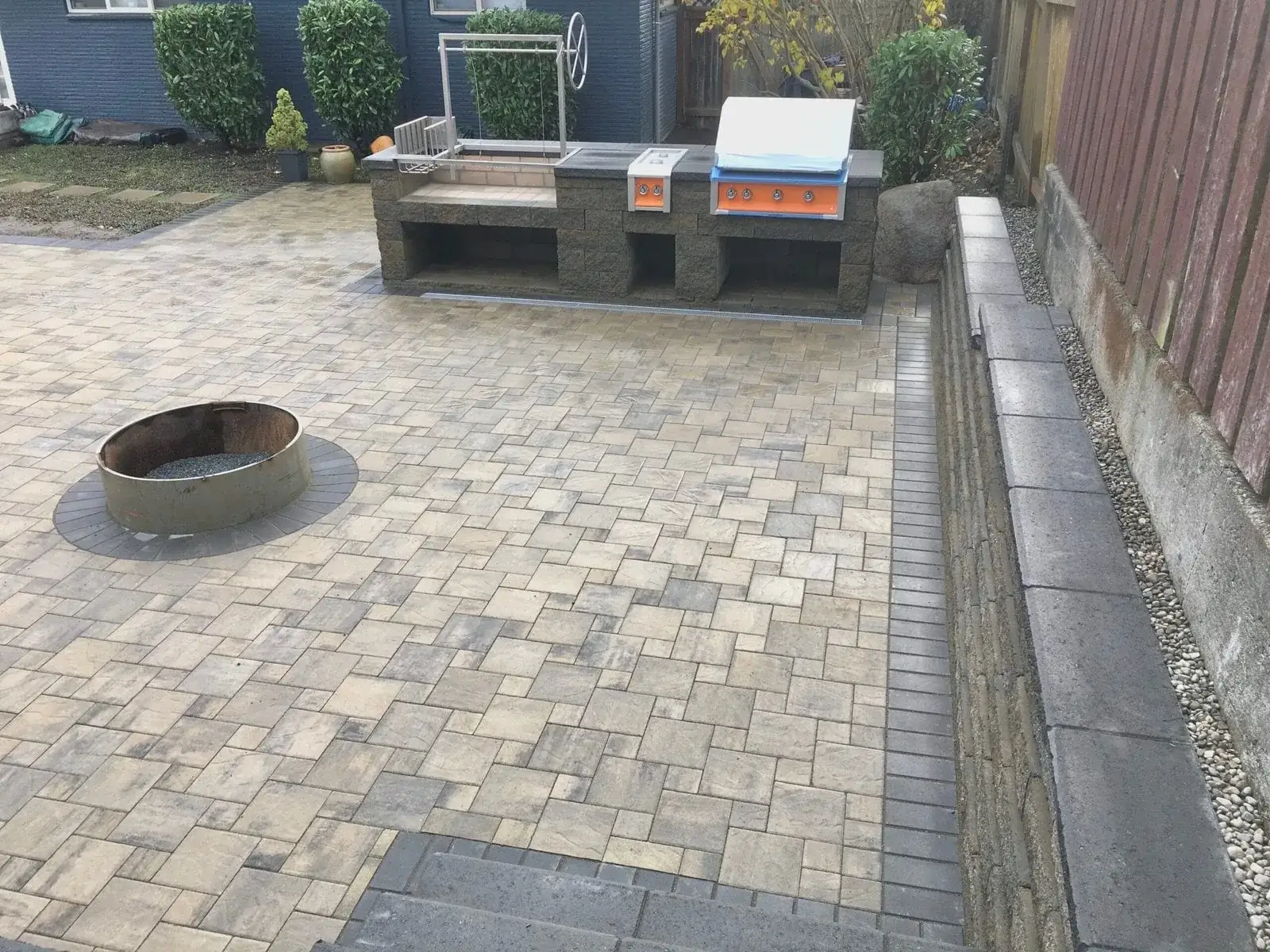
We come out, look at the ground, and put a fixed written price together. No deposit, and it does not change once agreed.
Free estimate
Three minutes on the form. We reply during office hours, Monday – Friday, 9:00 AM – 7:00 PM, and we come out and look at the site before quoting anything.
Or call (425) 533-9734
Thank you — we have your details. We reply during office hours, Monday – Friday, 9:00 AM – 7:00 PM. If it is urgent, call (425) 533-9734.