
 Outdoor LivingView full size
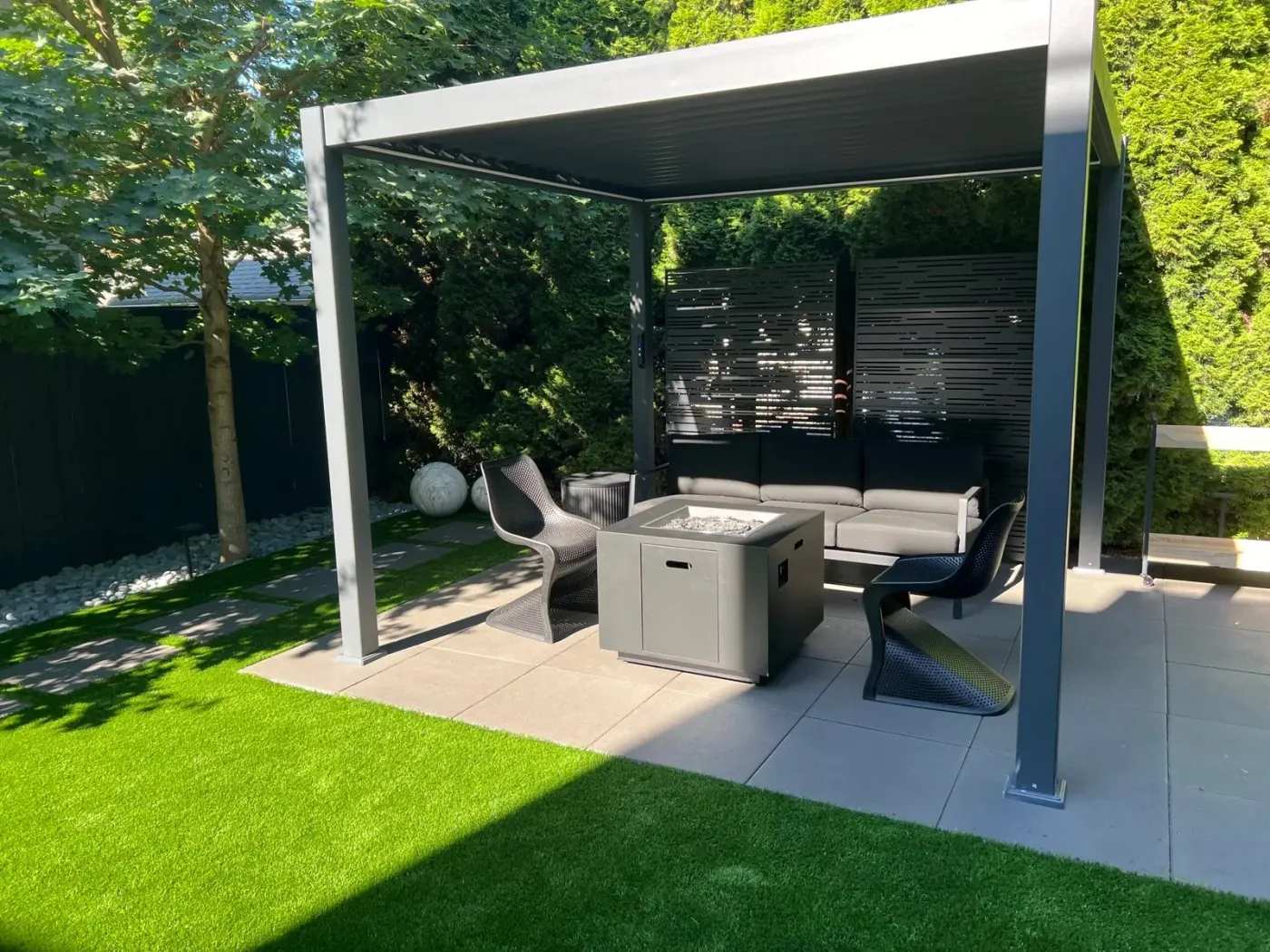
Covered lounge, fire table & turf lawn
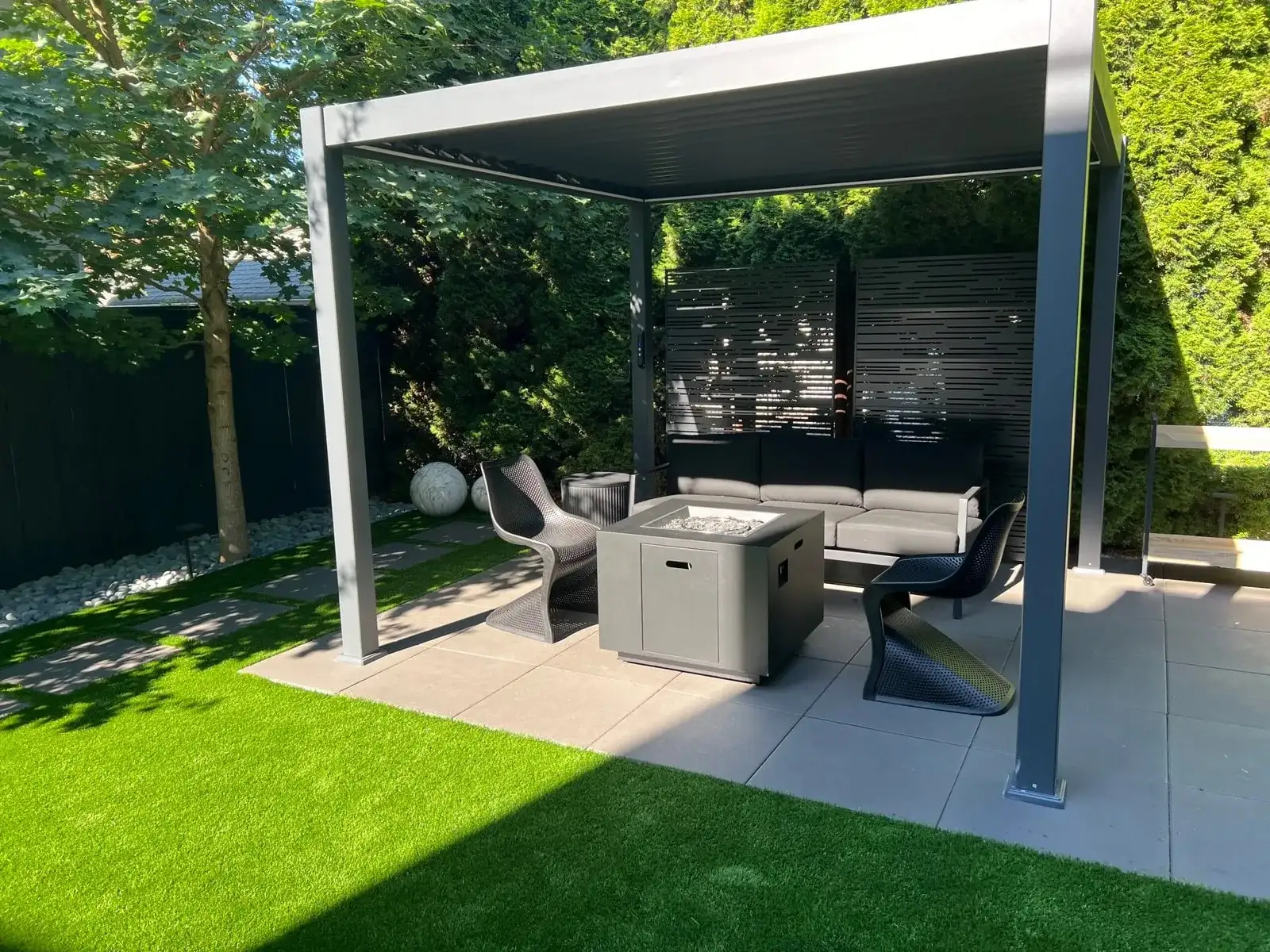
A modern pergola over a paved lounge, edged straight into a turf lawn that stays green all winter, with a plank path running the length of the lot.
2 photos
No down payment. You pay when the project is finished.
Monday – Friday, 9:00 AM – 7:00 PM · Capitol Hill, Seattle
Irrigation · Seattle
Seattle's rainfall figure is one of the most misleading numbers in American gardening. We take 38 inches a year and nearly all of it lands between October and March. July and August are genuinely dry — frequently for weeks — and that is exactly when new planting, lawns and containers are under most stress. That mismatch is why irrigation matters here despite the reputation, and why the systems that actually work are zoned rather than uniform. A lawn, a bed of established shrubs and a row of containers want completely different volumes on completely different schedules, and one controller running everything for twenty minutes waters all three badly.
Covered outdoor lounge with a fire table beside an artificial turf lawn on a Seattle property
What we get called about
Seattle takes 38+ inches of rain a year and almost all of it arrives October to March. That single fact decides more landscaping outcomes here than plant choice ever does — a patio without a drainage plan is a patio that heaves, and a lawn on undisturbed till is a lawn that sits under water all winter.
Worth knowing in Seattle
Install in spring, not summer. A system commissioned in March has its coverage problems show up in June when they are cheap to fix, rather than during a hot week in August when the planting is already stressed and you need it working.
Thirty-eight inches of rain a year sounds like a garden that never needs watering, and it produces more dead planting in this city than almost any other assumption.
The figure describes the winter. Nearly all of that rainfall arrives between October and March, when plants are dormant or barely growing and the ground is already saturated. Through those months the water is not doing much except sitting on glacial till.
July and August are the other half of the picture. They routinely go weeks without meaningful rain, and they land precisely when transpiration is highest and when a plant put in the previous autumn has not yet rooted far enough to find moisture on its own. That is the window that kills new planting, and it is the reason a garden which looked effortless in May can look ruined by mid-August.
The practical consequence is that irrigation here is not about total volume, it is about timing. Established, well-chosen planting frequently needs none. Anything in its first two or three years, any lawn, and any container almost certainly does — for perhaps eight to ten weeks of the year. A system designed around that is a far smaller and cheaper thing than one designed as though this were a dry climate.
The method
The sequence does not change between neighbourhoods — what changes is the ground it is applied to. Full detail on the irrigation service page.
Everything downstream depends on this. A design drawn without knowing what the supply actually delivers produces zones that cannot run properly, and it is the most common fault in existing systems.
Lawn, beds, containers and any shaded area separated, because they want different volumes and different frequencies. This is where most retrofits earn their money.
Sprinkler spacing calculated for head-to-head coverage; drip laid to the planting rather than in a grid that ignores where the roots are.
Lines trenched to depth and sleeved under any hard surface. Where a patio or drive is being built at the same time, the sleeves go in then — it costs almost nothing and saves a great deal later.
Zones timed, seasonal schedule set, and you shown how to adjust it. A system nobody knows how to change gets left on the install setting for a decade.
What it costs in Seattle
A typical Seattle residential system runs $3,000 to $9,000, driven by zone count rather than lot size — each zone carries a valve, wiring, piping and heads. Drip to beds is cheaper per area covered than lawn sprinklers. On a city lot, retrofitting and rezoning an existing system is frequently a fraction of a new install and is the more common recommendation where the pipework in the ground is sound.
You pay after the project is fully completed.
The estimate you sign is the price you pay.
Spread the cost with no interest.
Covers hardscape work; vegetation excluded.
Local questions
General questions about this service are on the service page. These are the ones that only come up here.
For established, well-chosen planting, often not. For anything in its first two or three years, for lawns and for containers, usually yes — and the reason is the shape of our rainfall rather than its total. Nearly all of the 38 inches falls October to March, and July and August routinely go weeks without meaningful rain. That dry window lands precisely when plants transpire hardest and when new roots have not reached far enough to find moisture. A garden that looks effortless in May is the one that had water in August.
Both, on separate zones, in most gardens. Sprinklers are right for lawns and turf where you need even coverage across an open area, and they need head-to-head spacing to avoid the dry patches that plague badly designed systems. Drip is right for everything planted, because it delivers water at the root, loses almost nothing to evaporation, and keeps foliage dry — which matters more in a damp climate than a dry one, since wet leaves overnight is how a lot of fungal problems start here. The mistake we most often correct is one system doing both jobs on one schedule.
Not routinely in a normal year, but conservation is worth designing for regardless. Seattle Public Utilities does not impose routine summer restrictions in a typical year, though voluntary curtailment is common in a dry August and regional conservation messaging runs through the Saving Water Partnership. Rather than quote a programme or a rebate that may change, we design for lower consumption directly: correct zoning so beds and lawn are separate, drip on planted areas, and weather-responsive control that skips a cycle after rain — which in this climate is not a gimmick.
Yes, and skipping it is a gamble people lose roughly one winter in three. Our winters are mild on average, which is exactly what makes them dangerous — systems get left charged because it rarely freezes hard, then a cold snap arrives, water expands in a backflow device or an above-ground component, and something cracks. The damage is not discovered until spring startup, by which point it may have been leaking underground for weeks. Blowing the lines out with compressed air in October is inexpensive and is the difference between a system lasting twenty years and needing repairs every other spring.
Serving Seattle and surrounding neighbourhoods
Capitol Hill · Ballard · Queen Anne · Magnolia · West Seattle · Green Lake · Wedgwood · Madison Park · Laurelhurst · Mount Baker · Seward Park · Fremont · Wallingford · Columbia City
98101 · 98102 · 98103 · 98104 · 98105 · 98106 · 98107 · 98108 · 98109 · 98112 · 98115 · 98116 · 98117 · 98118 · 98119 · 98121 · 98122 · 98125 · 98126 · 98133 · 98134 · 98136 · 98144 · 98146 · 98177 · 98199
Recent work
Outdoor LivingView full sizeA modern pergola over a paved lounge, edged straight into a turf lawn that stays green all winter, with a plank path running the length of the lot.
2 photos
 Retaining WallsView full size
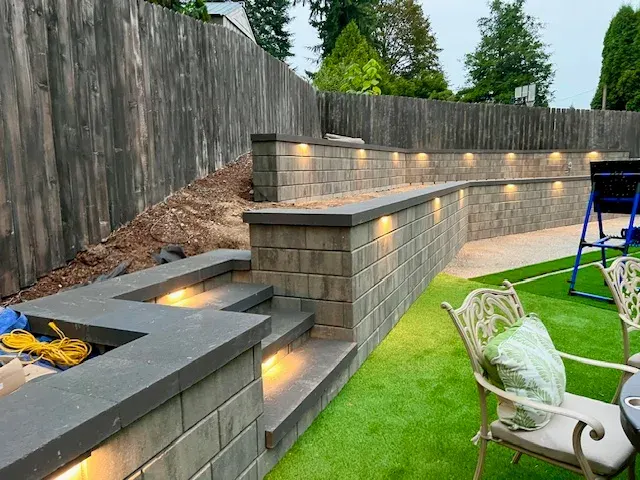
Lighting recessed into the wall face and the step risers, so the garden still works through eight months of dark Seattle evenings. Photographed the night it was commissioned.
2 photos
 FlagstoneView full size
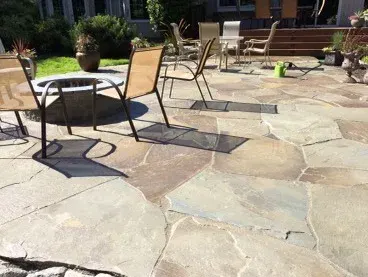
Hand-fitted flagstone laid tight, with a fire bowl and seating where the lawn used to sit wet.
 Design & BuildView full size
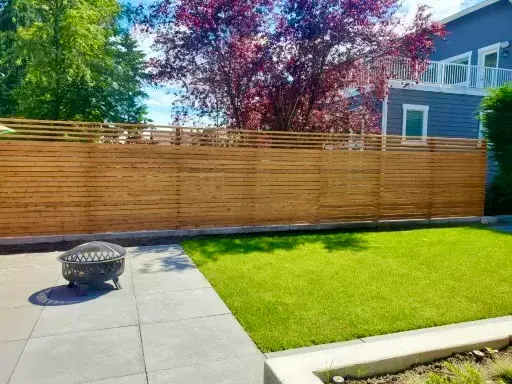
A small city garden done as one job — horizontal cedar screen for privacy from the neighbours, a concrete patio, and turf that stays green through the winter.
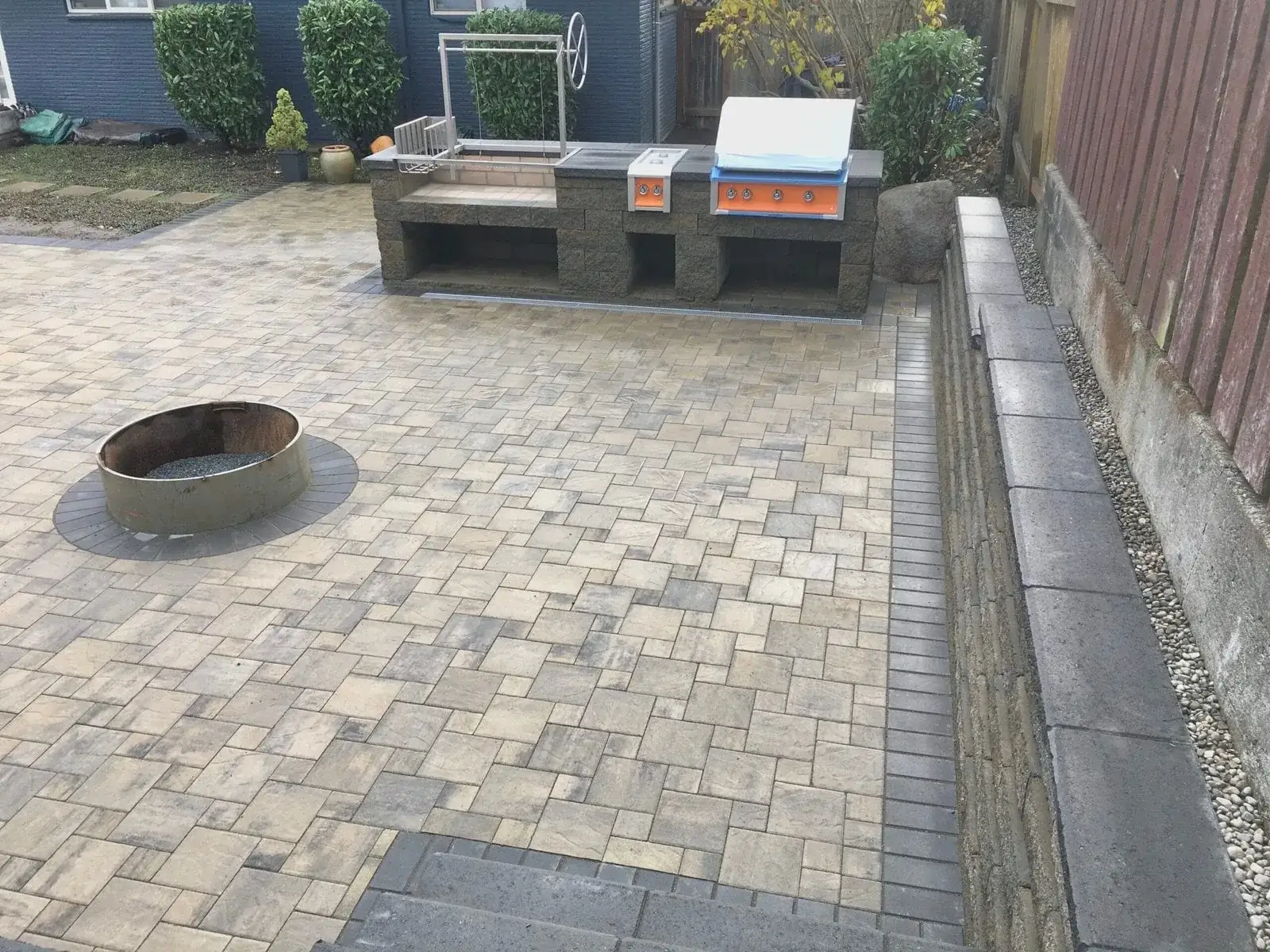
We come out, look at the ground, and put a fixed written price together. No deposit, and it does not change once agreed.
Free estimate
Three minutes on the form. We reply during office hours, Monday – Friday, 9:00 AM – 7:00 PM, and we come out and look at the site before quoting anything.
Or call (425) 533-9734
Thank you — we have your details. We reply during office hours, Monday – Friday, 9:00 AM – 7:00 PM. If it is urgent, call (425) 533-9734.