
 Outdoor LivingView full size
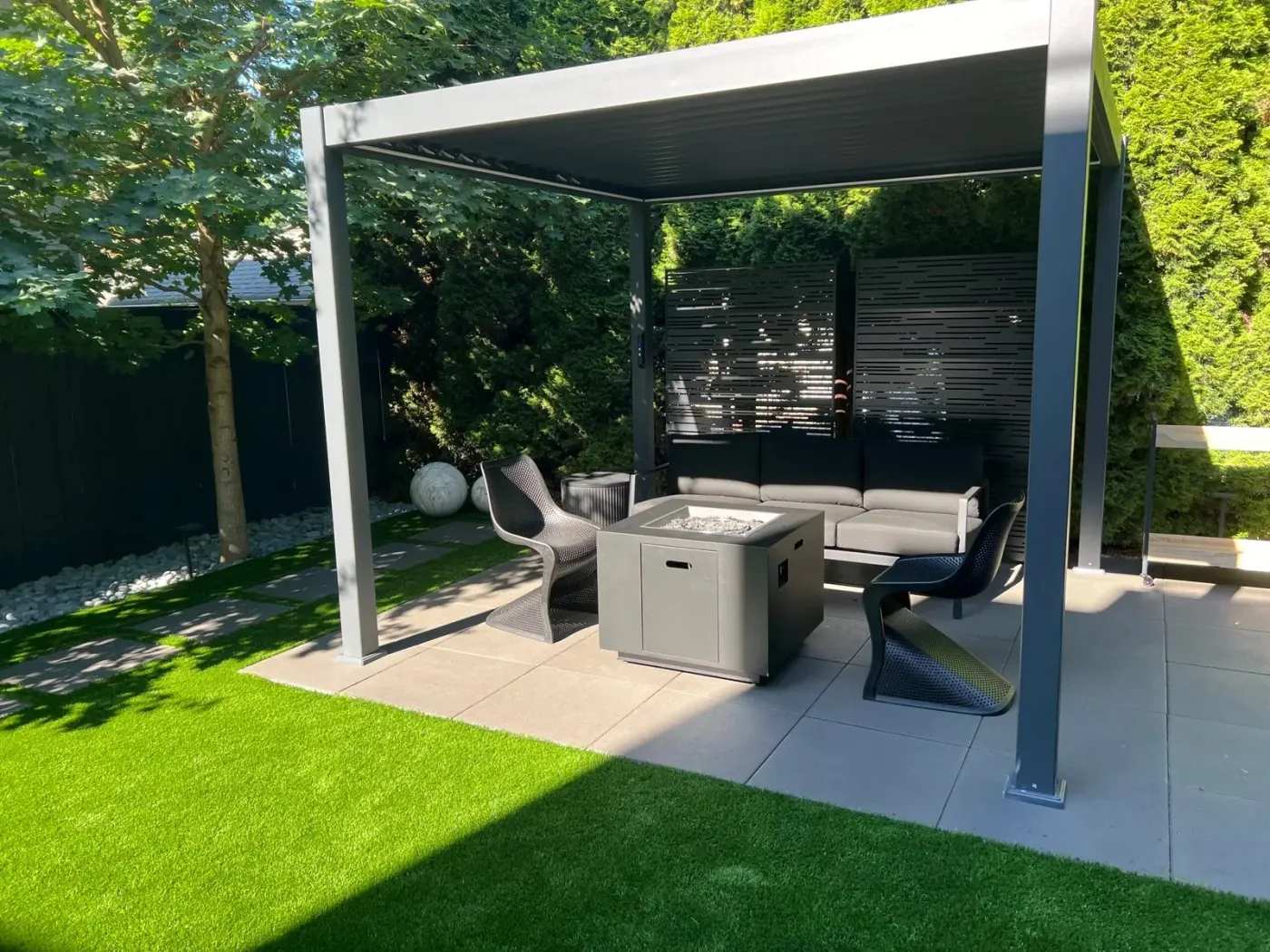
Covered lounge, fire table & turf lawn
A modern pergola over a paved lounge, edged straight into a turf lawn that stays green all winter, with a plank path running the length of the lot.
2 photos
No down payment. You pay when the project is finished.
Monday – Friday, 9:00 AM – 7:00 PM · Capitol Hill, Seattle
Paver Patios · Seattle
The difference between a Seattle patio that is still flat in ten years and one that rocks by the third winter is entirely underneath it, and the reason is the ground. On glacial till, water does not drain away downward — it reaches the hardpan, stops, and moves sideways through whatever base was put down. A patio built on four inches of loosely tipped gravel pumps, settles and heaves. The base here has to do two jobs at once: spread the load and provide the drainage path the subgrade cannot. That is why we excavate deeper than most quotes assume, and why customers keep telling us the base prep was what they noticed — which is a strange compliment for the part of the job nobody sees.
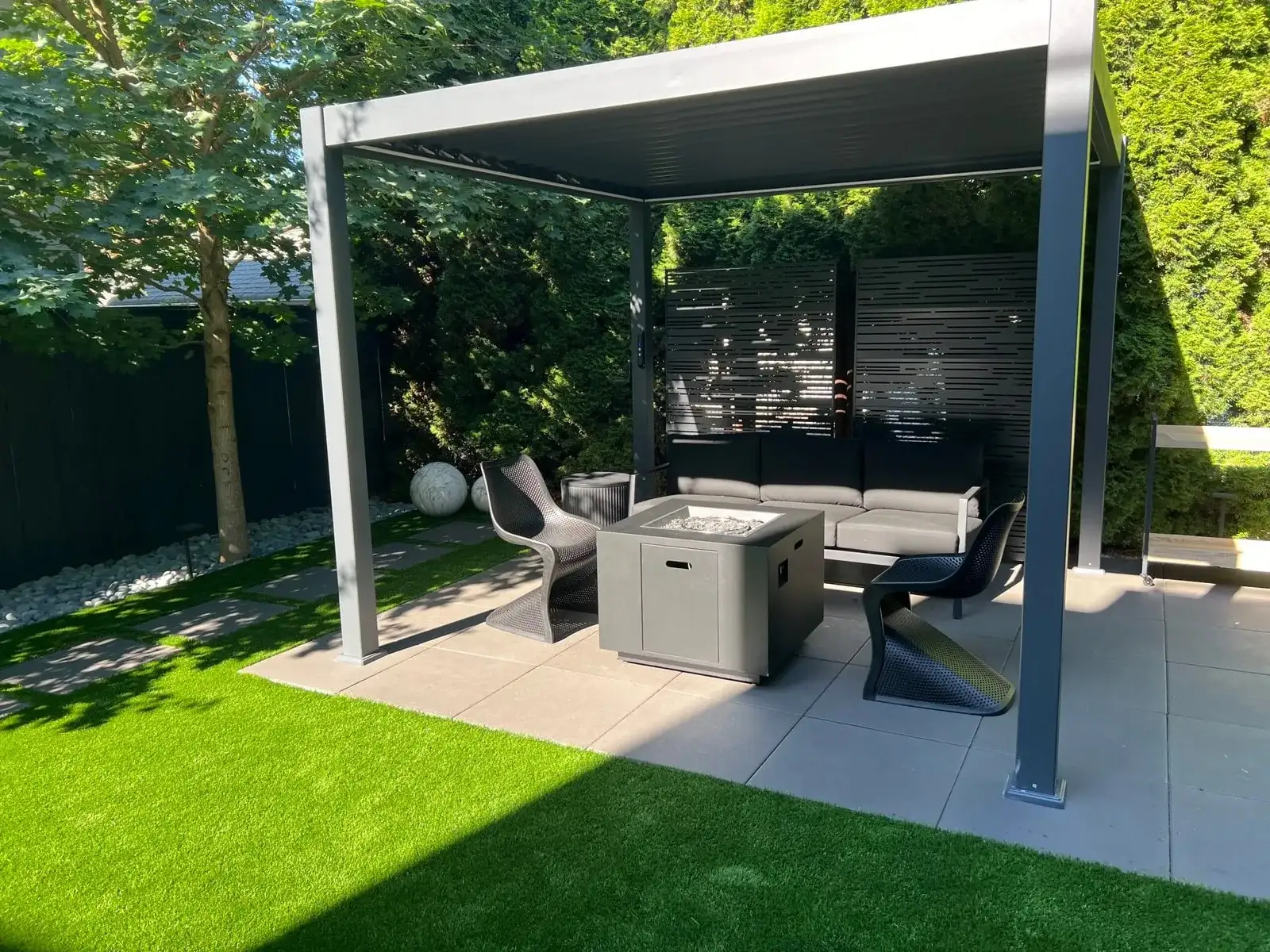
Covered outdoor lounge with a fire table beside an artificial turf lawn on a Seattle property
What we get called about
Seattle takes 38+ inches of rain a year and almost all of it arrives October to March. That single fact decides more landscaping outcomes here than plant choice ever does — a patio without a drainage plan is a patio that heaves, and a lawn on undisturbed till is a lawn that sits under water all winter.
Worth knowing in Seattle
Ask any contractor how deep they are excavating and how many lifts the base goes in. On Seattle till, six to eight inches compacted in layers is the honest answer for a pedestrian patio. A quote saying four inches is describing a different product, and the difference shows up in year three rather than year one.
Base material has to be placed in shallow layers and compacted layer by layer. This sounds like a detail and it is the single largest quality variable in the job.
A plate compactor transmits meaningful force only a limited distance into loose material. Run one over twelve inches of freshly tipped crushed rock and you produce a firm crust with uncompacted fill underneath it. On the day the job finishes, that patio is indistinguishable from a properly built one. Over the following two winters the uncompacted layer consolidates, the surface follows it down unevenly, and the field starts to rock.
Lifts take more machine time and more crew hours, which is a substantial part of why two quotes for the same finished surface can differ by thousands while describing the same thing in the same words. It is worth asking the question explicitly, because it is one of the few ways to compare two bids on something other than price.
The method
The sequence does not change between neighbourhoods — what changes is the ground it is applied to. Full detail on the paver patios service page.
Before anything is dug we work out where the water is going to go. A patio should shed water away from the house at a fall you cannot feel underfoot but the rain can find.
Deeper than most people expect — the finished surface is the top of a build-up, not a layer laid on the lawn.
Crushed rock in compacted lifts. This is where the job is won or lost and it is the layer a cheap quote thins down.
A consistent bedding course over the compacted base, screeded rather than eyeballed.
Units laid to the pattern, cut cleanly at the edges, and locked in with edge restraint so the field cannot creep outward over time.
Jointing sand vibrated in so the surface acts as one interlocked field rather than a collection of loose units.
What it costs in Seattle
Seattle patios run $20 to $50 per square foot installed, with typical projects between roughly $2,500 and $7,200. Two things move it more here than elsewhere: excavation depth, because till needs a deeper build-up than free-draining ground, and access. On a city lot where every yard of base material goes through a side gate, the labour of moving it can exceed the cost of the material itself.
You pay after the project is fully completed.
The estimate you sign is the price you pay.
Spread the cost with no interest.
Covers hardscape work; vegetation excluded.
Local questions
General questions about this service are on the service page. These are the ones that only come up here.
Deeper than the four inches often quoted. On our glacial till the subgrade does not drain, so the base has to handle the drainage and the load spreading at once. For a pedestrian patio we are typically excavating six to eight inches below the finished surface for the base build-up, plus the bedding layer and the paver itself. It goes deeper where the ground is soft, where a vehicle will cross it, or where the lot sits at the bottom of a slope taking water from uphill — and in those cases it usually gains a geotextile separation layer as well.
Almost always an inadequate base rather than a problem with the surface itself. If the base was too shallow, was not compacted in layers, or was laid straight onto undisturbed clay-heavy till with no drainage, water gets underneath, the fines wash out and voids form. The patio then moves under load, which is the classic rocking slab. Re-laying the surface without addressing the base buys a year or two. The real fix is lifting the units, rebuilding the base properly with a free-draining compacted build-up, and re-laying — and on a decent original the pavers themselves are usually fine and get reused.
Pavers are the default recommendation here and it is not a close call. They tolerate the small ground movement that our wet winters and till subsoil produce, and if a section settles or a unit is damaged you lift and reset that part rather than breaking out a slab. Poured concrete looks cleaner and costs a little less to install, but it will crack eventually and repairs are visible forever. Flagstone is the most characterful and the most expensive, because every stone is cut and fitted by hand. If you want something unlike your neighbour's garden and have the budget, flagstone; otherwise pavers.
More than on an open lot, and the honest answer is that it is mostly about material movement rather than noise. Base rock, sand and pavers arrive by the pallet and have to be cleared from the kerb the same day on streets with no off-street parking, then moved to the back garden by hand or barrow. We time deliveries to what can be cleared in a day, arrange any street occupation permission needed, and sequence the work so the frontage is not obstructed longer than necessary. Expect the side return to be a working route for the duration.
Serving Seattle and surrounding neighbourhoods
Capitol Hill · Ballard · Queen Anne · Magnolia · West Seattle · Green Lake · Wedgwood · Madison Park · Laurelhurst · Mount Baker · Seward Park · Fremont · Wallingford · Columbia City
98101 · 98102 · 98103 · 98104 · 98105 · 98106 · 98107 · 98108 · 98109 · 98112 · 98115 · 98116 · 98117 · 98118 · 98119 · 98121 · 98122 · 98125 · 98126 · 98133 · 98134 · 98136 · 98144 · 98146 · 98177 · 98199
Recent work
Outdoor LivingView full sizeA modern pergola over a paved lounge, edged straight into a turf lawn that stays green all winter, with a plank path running the length of the lot.
2 photos
 FlagstoneView full size
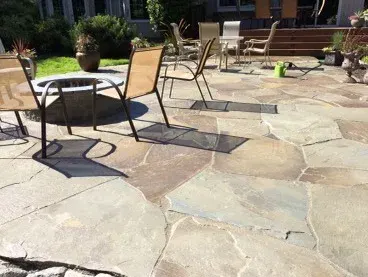
Hand-fitted flagstone laid tight, with a fire bowl and seating where the lawn used to sit wet.
 Design & BuildView full size
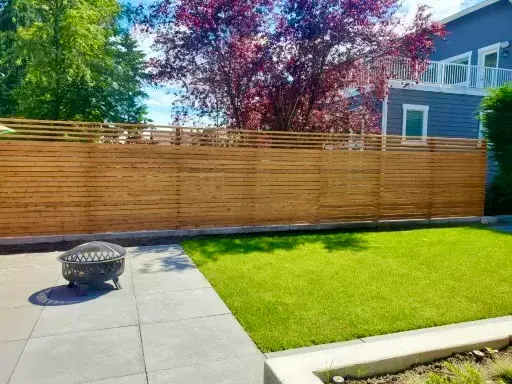
A small city garden done as one job — horizontal cedar screen for privacy from the neighbours, a concrete patio, and turf that stays green through the winter.
 Paver PatioView full size
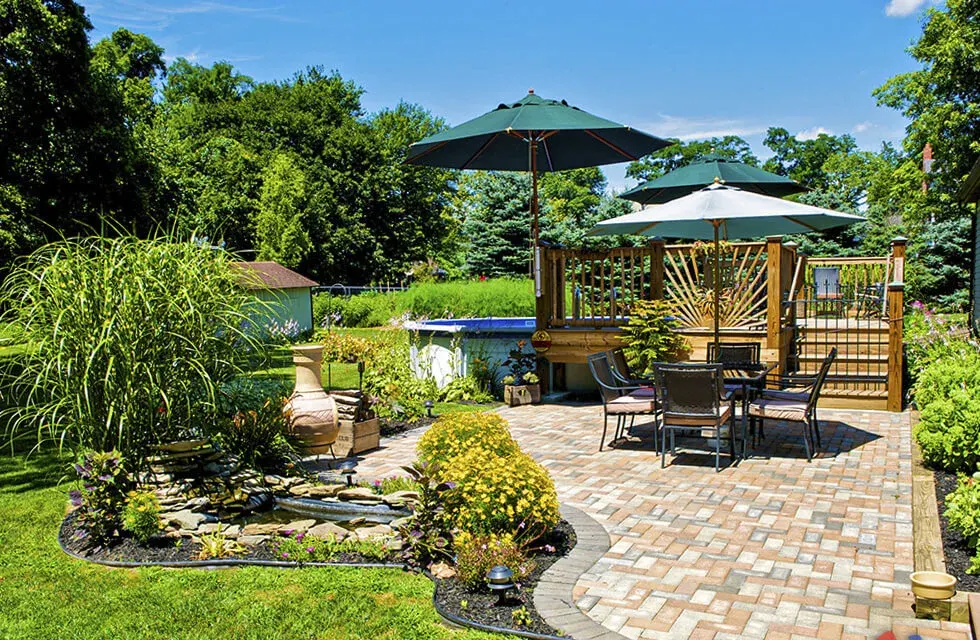
The dining patio, the water and the raised deck are one continuous route rather than three features dropped on a lawn — the curve of the patio edge sets up the planted bed and the pond sits inside it.
We come out, look at the ground, and put a fixed written price together. No deposit, and it does not change once agreed.
Free estimate
Three minutes on the form. We reply during office hours, Monday – Friday, 9:00 AM – 7:00 PM, and we come out and look at the site before quoting anything.
Or call (425) 533-9734
Thank you — we have your details. We reply during office hours, Monday – Friday, 9:00 AM – 7:00 PM. If it is urgent, call (425) 533-9734.