
 Outdoor LivingView full size
Covered lounge, fire table & turf lawn
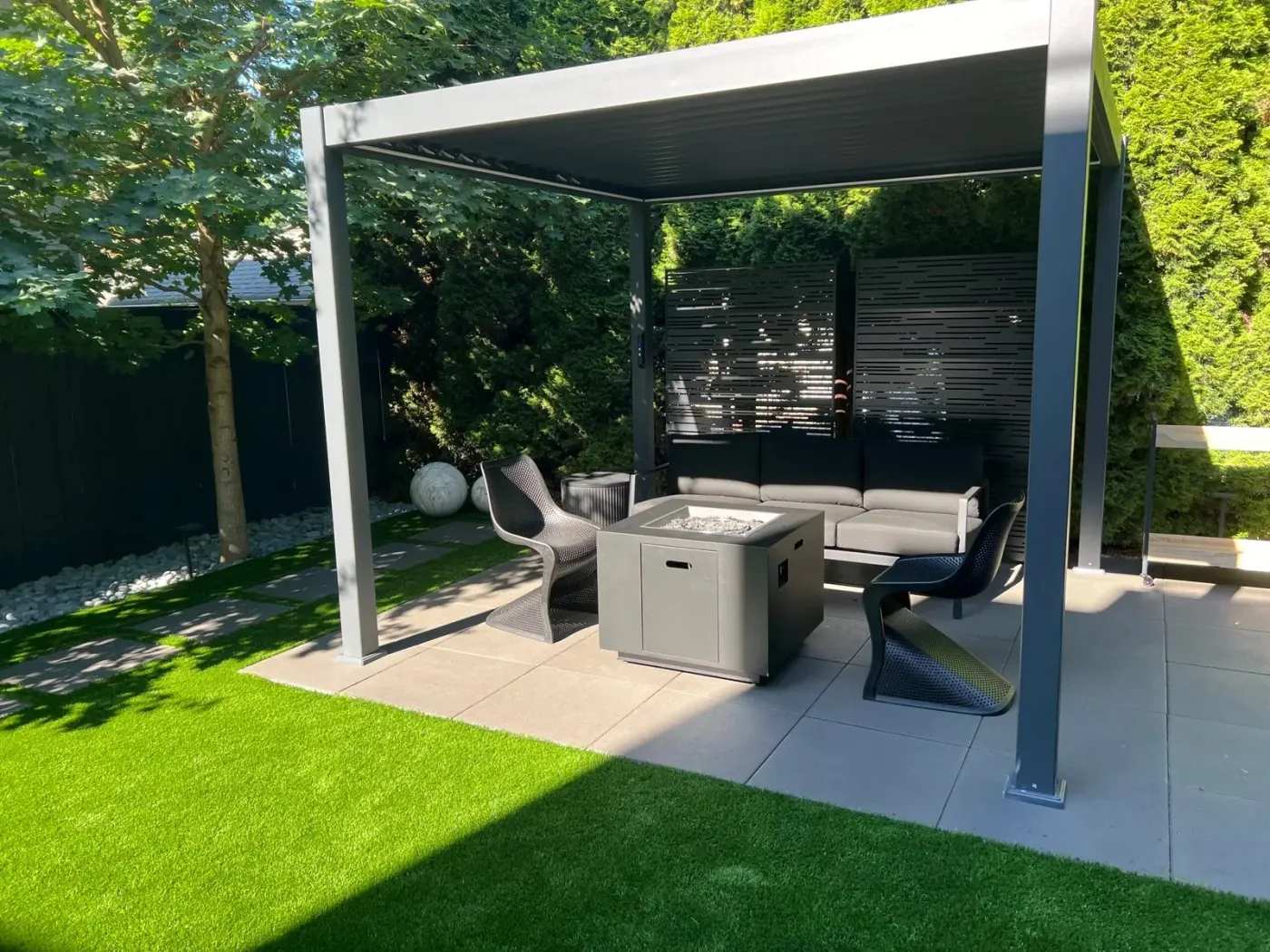
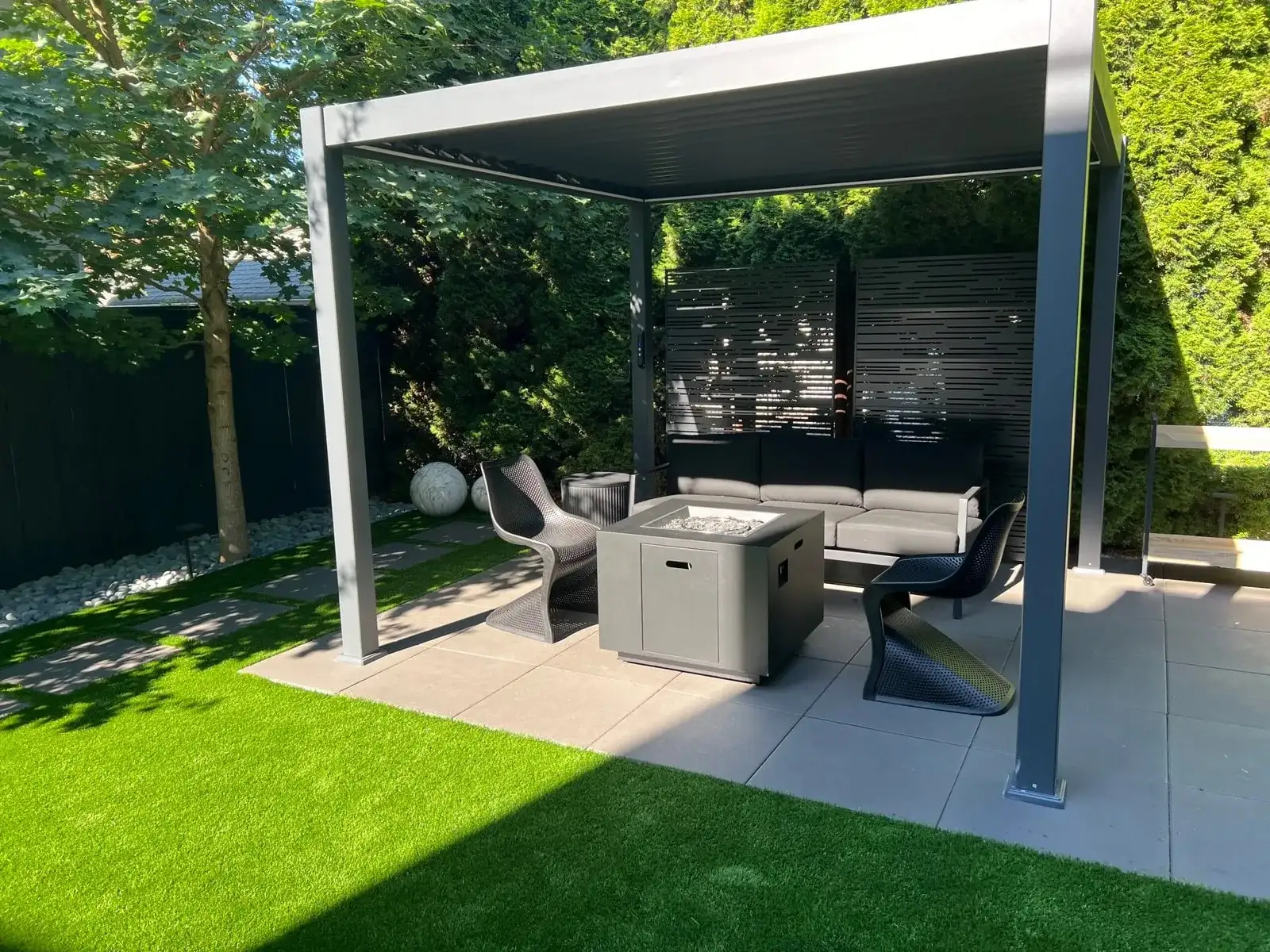
A modern pergola over a paved lounge, edged straight into a turf lawn that stays green all winter, with a plank path running the length of the lot.
2 photos
No down payment. You pay when the project is finished.
Monday – Friday, 9:00 AM – 7:00 PM · Capitol Hill, Seattle
Landscape Design · Seattle
Most disappointing Seattle gardens are not badly built — they are built in the wrong order by people who were never in the room together. A patio poured before anyone established where the water went. Planting installed before the wall that later had to be dug in behind it. Lighting added last and trenched through both. On this ground that sequencing problem is more expensive than elsewhere, because the buried work matters more: glacial till that will not drain, 38 inches of rain concentrated into six months, and lots where a machine may not physically reach the back garden. Designing the whole property first costs less than any one of those mistakes.
Covered outdoor lounge with a fire table beside an artificial turf lawn on a Seattle property
What we get called about
Seattle takes 38+ inches of rain a year and almost all of it arrives October to March. That single fact decides more landscaping outcomes here than plant choice ever does — a patio without a drainage plan is a patio that heaves, and a lawn on undisturbed till is a lawn that sits under water all winter.
Worth knowing in Seattle
Book design and estimating in January or February. By April the good crews in this city are committed for the season, and a design produced in winter has time to resolve permits, ECA checks and material lead times before the build window opens in March.
On a phased project the sequence matters more than the timing, and getting it wrong is the most expensive avoidable mistake in residential landscaping here.
Everything buried goes in first: drainage, irrigation sleeves under any hard surface, conduit for lighting. While the ground is open and a machine is on site, these cost very little. Once there is a finished patio, a turf lawn and mature planting above them, the same work means excavating through everything you have already paid for. Empty conduit is close to free at stage one and is the single best insurance a phased garden can buy.
Structural work comes next — clearing, grade, walls, terracing — because everything above depends on the levels being right and nothing above can be installed twice. Then surfaces. Then planting and lighting last, when there is no more machinery coming through.
It is the least satisfying way to spend a first-phase budget: at the end of stage one on a Seattle hillside lot you may have a drain, a wall and bare ground. It is also the only sequence in which you pay for each piece of the garden once.
The method
The sequence does not change between neighbourhoods — what changes is the ground it is applied to. Full detail on the landscape design service page.
What you want to use it for, who else uses it, what you hate about it now. Most of the useful information comes out of the second half of that conversation.
Grade, drainage, soil, existing trees and where a machine can get in. This is the half of design that never appears in a photograph and decides most of what is possible.
Where the paved area goes, how big it really needs to be, what the route through the garden is. Getting these wrong cannot be fixed with better planting.
Real products, real quantities, and a fixed written price with the assumptions stated so you can see what is included.
Clearing, drainage, structural, surfaces, irrigation and lighting sleeves, then planting and finishes. The order is the difference between a build and a rework.
What it costs in Seattle
A full Seattle design and installation typically runs $8,000 to $70,000, and the spread is mostly structural work rather than planting. A flat lot with reasonable access needing surfaces, beds and lighting sits at the bottom. A sloped city lot needing drainage and retaining before anything visible can be built sits at the top. Design-only engagements are priced separately and credited against the build.
You pay after the project is fully completed.
The estimate you sign is the price you pay.
Spread the cost with no interest.
Covers hardscape work; vegetation excluded.
Local questions
General questions about this service are on the service page. These are the ones that only come up here.
A layout you can build from and price against: zones and levels set out, surfaces and materials specified, planting areas defined with species suited to each aspect, and the buried work — drainage runs, irrigation sleeves, lighting conduit — positioned before anything covers them. It is a working document rather than an artist's impression. Where a rendering helps you picture a specific area we will produce one, but what decides whether you like the finished garden is the dimensions and the levels, not the illustration.
Less than most people assume, and the reason is climate rather than fashion. A lawn here is shaded for much of the day on a typical city lot, wet from October to April, and worn through wherever people walk. Under roughly 400 square feet it rarely thrives and always looks tired. The gardens that work in this city tend to hold a smaller, well-drained lawn or turf area with a genuine purpose, more paved surface than instinct suggests, and planting deep enough to give the boundary structure. That is a recommendation rather than a rule — if you want a big lawn we will build one that drains.
Yes, and for a lot of budgets it is the sensible route — with one non-negotiable rule. Everything buried goes in during the first stage, because retrofitting drainage, irrigation sleeves or lighting conduit means excavating through work you have already paid for. Beyond that, staging follows structure first: clearing, grade and walls in year one, surfaces in year two, planting and lighting in year three. We plan it that way from the outset rather than pretending a phased build is the same as a full one, because the phasing changes the design decisions.
Both, and the planting is specified rather than decorated. Plants get chosen for the aspect, soil and exposure of the specific spot — a west-facing West Seattle bed and a shaded north-facing Capitol Hill side return want almost nothing in common. Worth knowing where the warranty sits: hardscape work is covered, vegetation is excluded, because whether a plant lives depends on watering and conditions after we leave. We will tell you what each planting needs to survive its first two summers, and we would rather specify something that lives than something that photographs well in June.
Serving Seattle and surrounding neighbourhoods
Capitol Hill · Ballard · Queen Anne · Magnolia · West Seattle · Green Lake · Wedgwood · Madison Park · Laurelhurst · Mount Baker · Seward Park · Fremont · Wallingford · Columbia City
98101 · 98102 · 98103 · 98104 · 98105 · 98106 · 98107 · 98108 · 98109 · 98112 · 98115 · 98116 · 98117 · 98118 · 98119 · 98121 · 98122 · 98125 · 98126 · 98133 · 98134 · 98136 · 98144 · 98146 · 98177 · 98199
Recent work
Outdoor LivingView full sizeA modern pergola over a paved lounge, edged straight into a turf lawn that stays green all winter, with a plank path running the length of the lot.
2 photos
 Paver PatioView full size
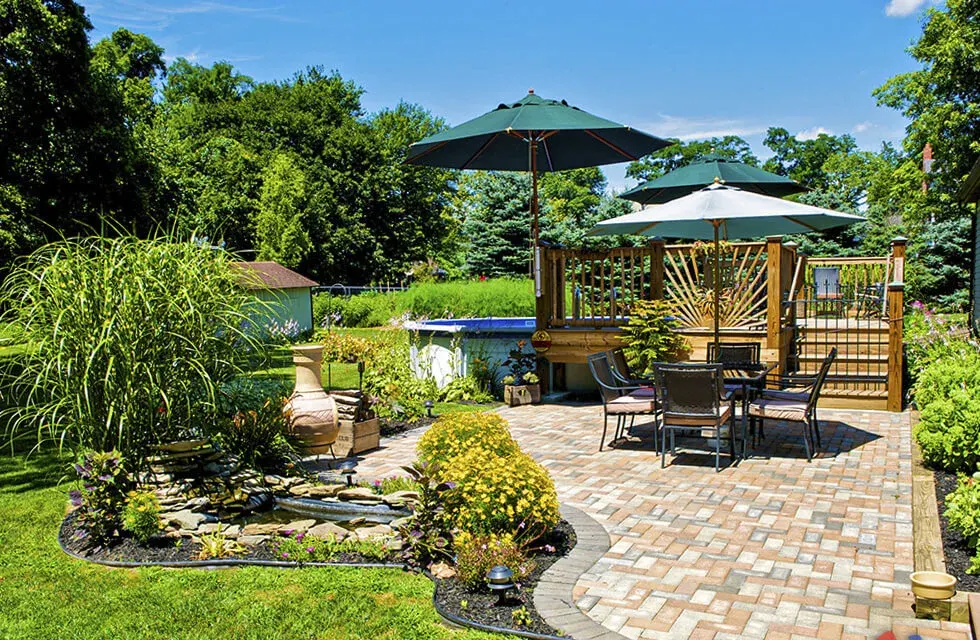
The dining patio, the water and the raised deck are one continuous route rather than three features dropped on a lawn — the curve of the patio edge sets up the planted bed and the pond sits inside it.
 Design & BuildView full size
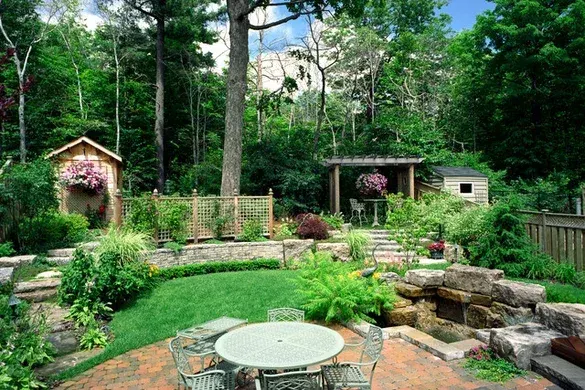
A whole garden built in one go on a wooded lot: brick terrace at the bottom, stone rockery holding the bank, a waterfall running through it, and a pergola marking the top level.
 Retaining WallsView full size
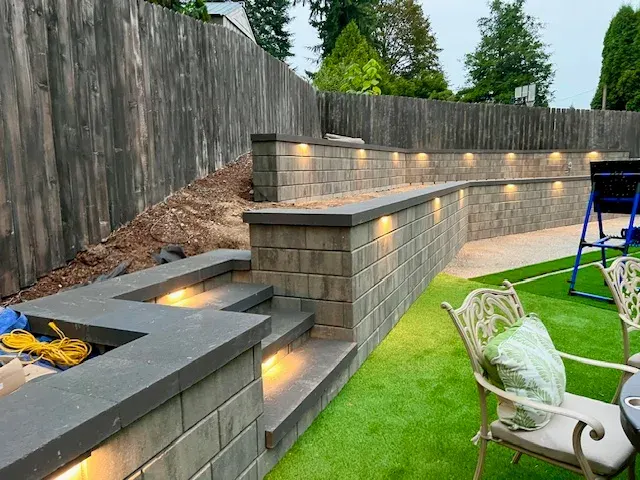
Lighting recessed into the wall face and the step risers, so the garden still works through eight months of dark Seattle evenings. Photographed the night it was commissioned.
2 photos
We come out, look at the ground, and put a fixed written price together. No deposit, and it does not change once agreed.
Free estimate
Three minutes on the form. We reply during office hours, Monday – Friday, 9:00 AM – 7:00 PM, and we come out and look at the site before quoting anything.
Or call (425) 533-9734
Thank you — we have your details. We reply during office hours, Monday – Friday, 9:00 AM – 7:00 PM. If it is urgent, call (425) 533-9734.