
 Artificial TurfView full size
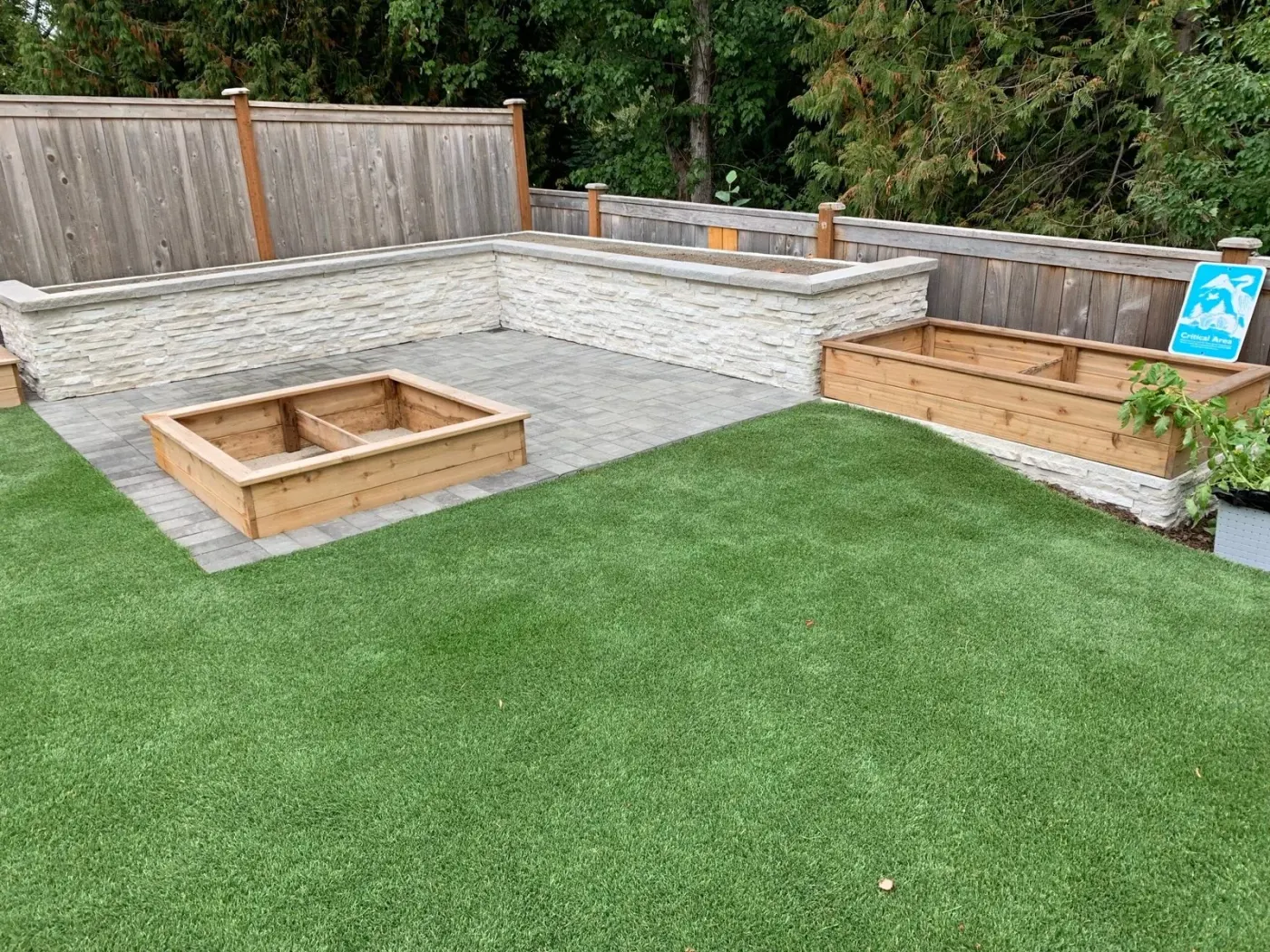
Turf lawn with cedar raised beds
A no-mow lawn for a small city yard, with cedar planters and a paved seating edge.
No down payment. You pay when the project is finished.
Monday – Friday, 9:00 AM – 7:00 PM · Capitol Hill, Seattle
Irrigation · West Seattle
West Seattle needs irrigation more than most of the city, and the reason is exposure rather than rainfall. A west-facing plateau or bluff garden here takes the strongest afternoon sun and the most wind of anywhere in Seattle, and both accelerate moisture loss through July and August — the two months that are genuinely dry despite the reputation. The result is gardens that are waterlogged from November and scorched by mid-August, which is a harder combination to plant for than either condition alone. On the bluff side there is a second consideration: where irrigation water goes on slide-sensitive ground is worth thinking about.
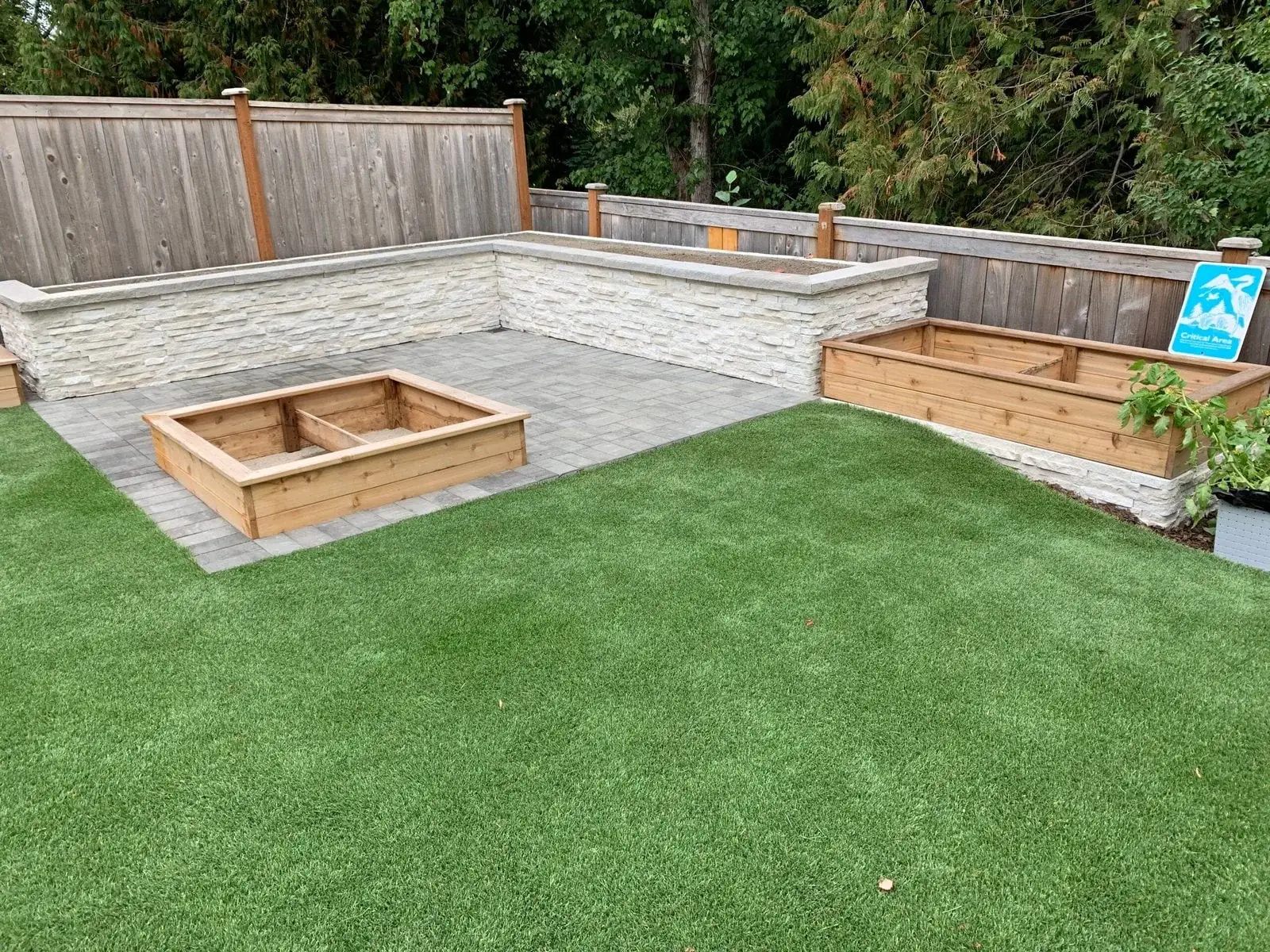
Artificial turf lawn framed by cedar raised planter beds and a paved seating area in West Seattle
What we get called about
West Seattle is a plateau with cliffs around it, and which of those two you are on decides the whole job. Plateau lots in the Junction and Westwood are straightforward, level and fast to build on. Bluff lots toward Alki, Fauntleroy and Delridge sit on ground with real landslide history, and a lot of them fall inside Environmentally Critical Area designations where the usual four-foot wall exemption does not apply. The view lots are the ones that need engineering, not just building.
Worth knowing in West Seattle
Zone the exposed side separately from the sheltered side. On a West Seattle lot the difference between a west-facing bed and a north-facing one in August is larger than the difference between two gardens in different neighbourhoods — one schedule cannot serve both.
The method
The sequence does not change between neighbourhoods — what changes is the ground it is applied to. Full detail on the irrigation service page.
Everything downstream depends on this. A design drawn without knowing what the supply actually delivers produces zones that cannot run properly, and it is the most common fault in existing systems.
Lawn, beds, containers and any shaded area separated, because they want different volumes and different frequencies. This is where most retrofits earn their money.
Sprinkler spacing calculated for head-to-head coverage; drip laid to the planting rather than in a grid that ignores where the roots are.
Lines trenched to depth and sleeved under any hard surface. Where a patio or drive is being built at the same time, the sleeves go in then — it costs almost nothing and saves a great deal later.
Zones timed, seasonal schedule set, and you shown how to adjust it. A system nobody knows how to change gets left on the install setting for a decade.
What it costs in West Seattle
West Seattle systems run $3,000 to $9,000, with exposed gardens usually needing an extra zone or two so that the harshest aspects can be scheduled separately from sheltered ones. On sloped bluff-side lots, zoning by elevation adds circuits for the same reason it does anywhere on a gradient.
You pay after the project is fully completed.
The estimate you sign is the price you pay.
Spread the cost with no interest.
Covers hardscape work; vegetation excluded.
Local questions
General questions about this service are on the service page. These are the ones that only come up here.
Exposure, and it is the specific thing that makes this side of the water different. Almost all of Seattle's 38 inches falls between October and March, so July and August are genuinely dry everywhere here — but a west-facing plateau or bluff garden also takes the strongest afternoon sun and the most wind in the city, and wind removes moisture from both soil and foliage faster than sun alone. The result is a garden that loses water considerably faster than a sheltered inland equivalent on the same schedule. It is the main reason we specify zoned irrigation more often here.
Somewhat, and it is worth being deliberate about it. On slide-sensitive ground, adding water is not a neutral act — saturated soil is the mechanism that moves a slope, so over-watering a bluff-side garden is worth avoiding for reasons beyond the bill. That does not mean avoiding irrigation, which is a modest volume compared with a Seattle winter. It means efficient delivery: drip rather than spray on planted areas so nothing runs off, sensible scheduling, and weather-responsive control so the system is not adding water during a wet spell.
Species chosen for exposure rather than for a catalogue, and it is the more durable answer than watering against the conditions. Planting that tolerates wind, copes with summer drought once established and does not object to wet winter soil is a narrower palette than a sheltered garden allows, but it looks considerably better than replanting the wrong choices annually. Where irrigation genuinely earns its place is the first two or three years while that planting establishes, plus any lawn and containers — after which a well-chosen scheme here needs remarkably little.
In shorter, repeated cycles with zones split by elevation. Water applied to a slope faster than the soil can absorb it runs downhill, so a single long cycle leaves the upper ground dry and the toe saturated while the controller believes the right volume was delivered. Two or three shorter applications with a gap between let each one soak in. Drip rather than spray on any planted area on a real gradient makes a substantial difference too, because it delivers water at the root instead of onto a surface it will run off.
Serving West Seattle and surrounding neighbourhoods
Alki · Admiral District · The Junction · North Admiral · Fauntleroy · Gatewood · Morgan Junction · Delridge · Highland Park · Arbor Heights · Roxhill · Westwood
98106 · 98116 · 98126 · 98136 · 98146
Recent work
Artificial TurfView full sizeA no-mow lawn for a small city yard, with cedar planters and a paved seating edge.
 HardscapingView full size
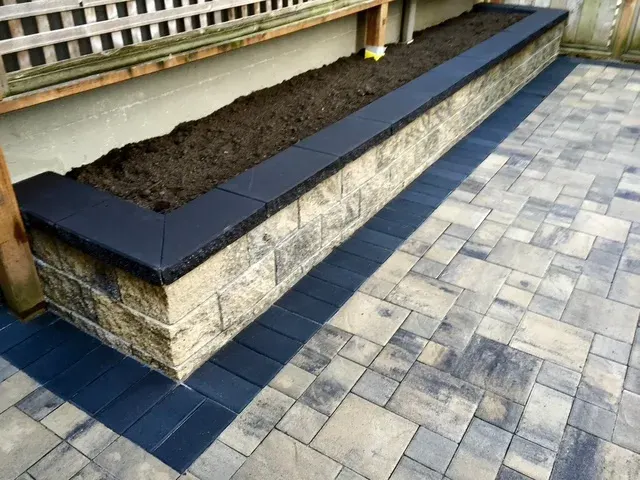
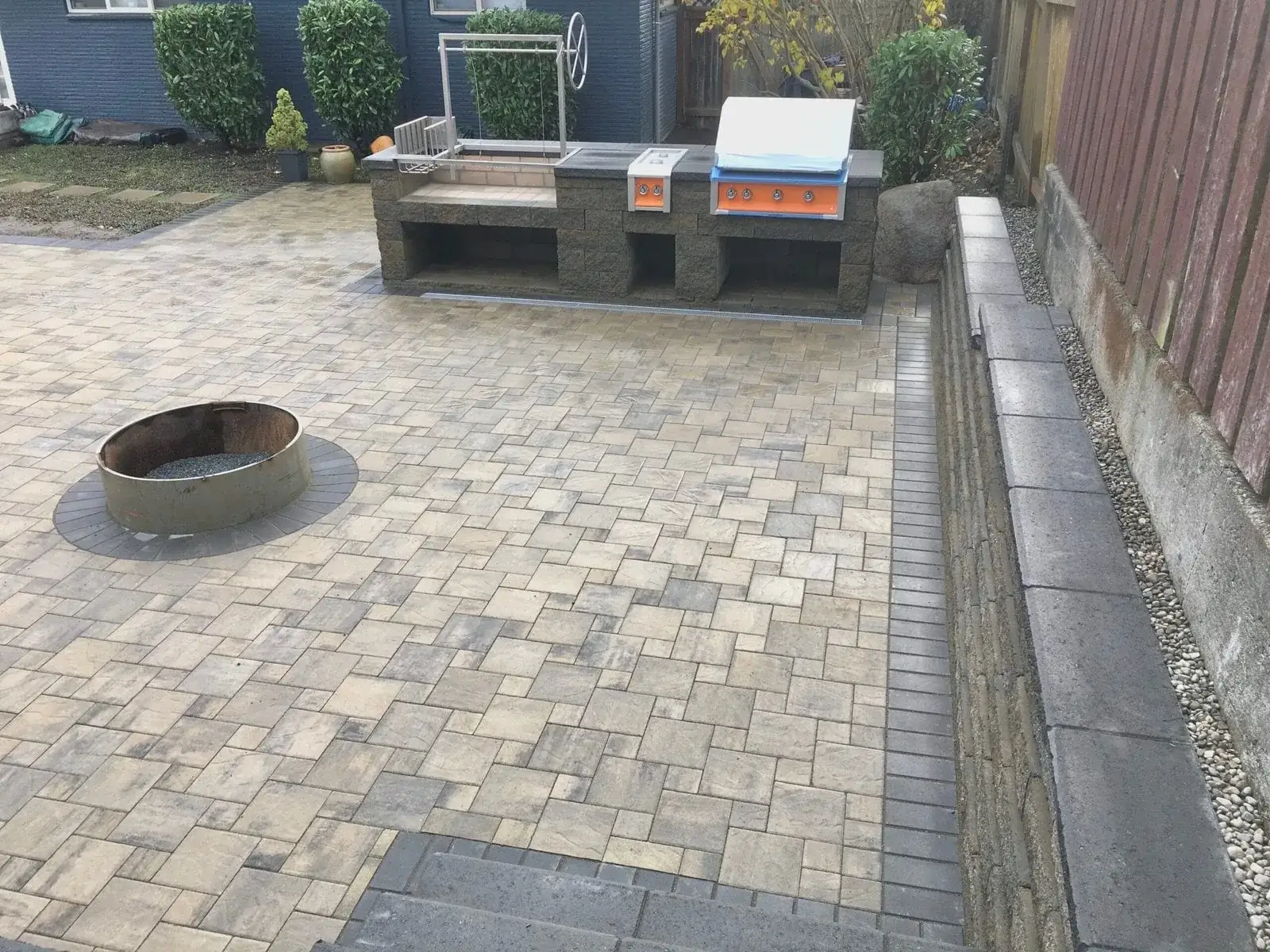
A raised planter running the length of the terrace, capped in charcoal to pick up the darker banding in the paving.
 DeckingView full size
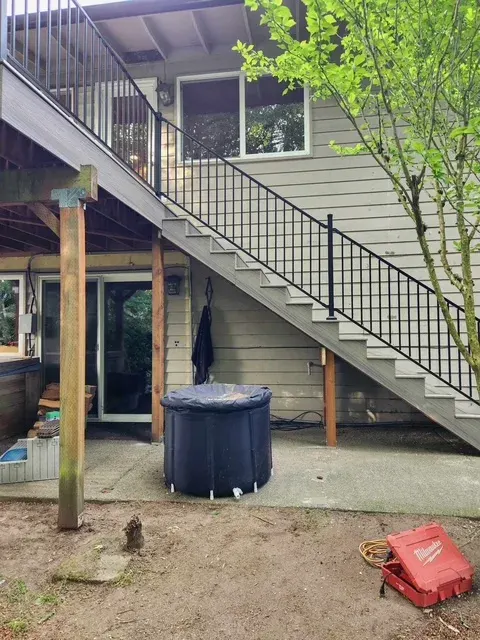
A West Seattle split-level where the only way to the bottom of the garden was through the house. A full-height run of stairs off the deck fixed that.
 Retaining WallsView full size
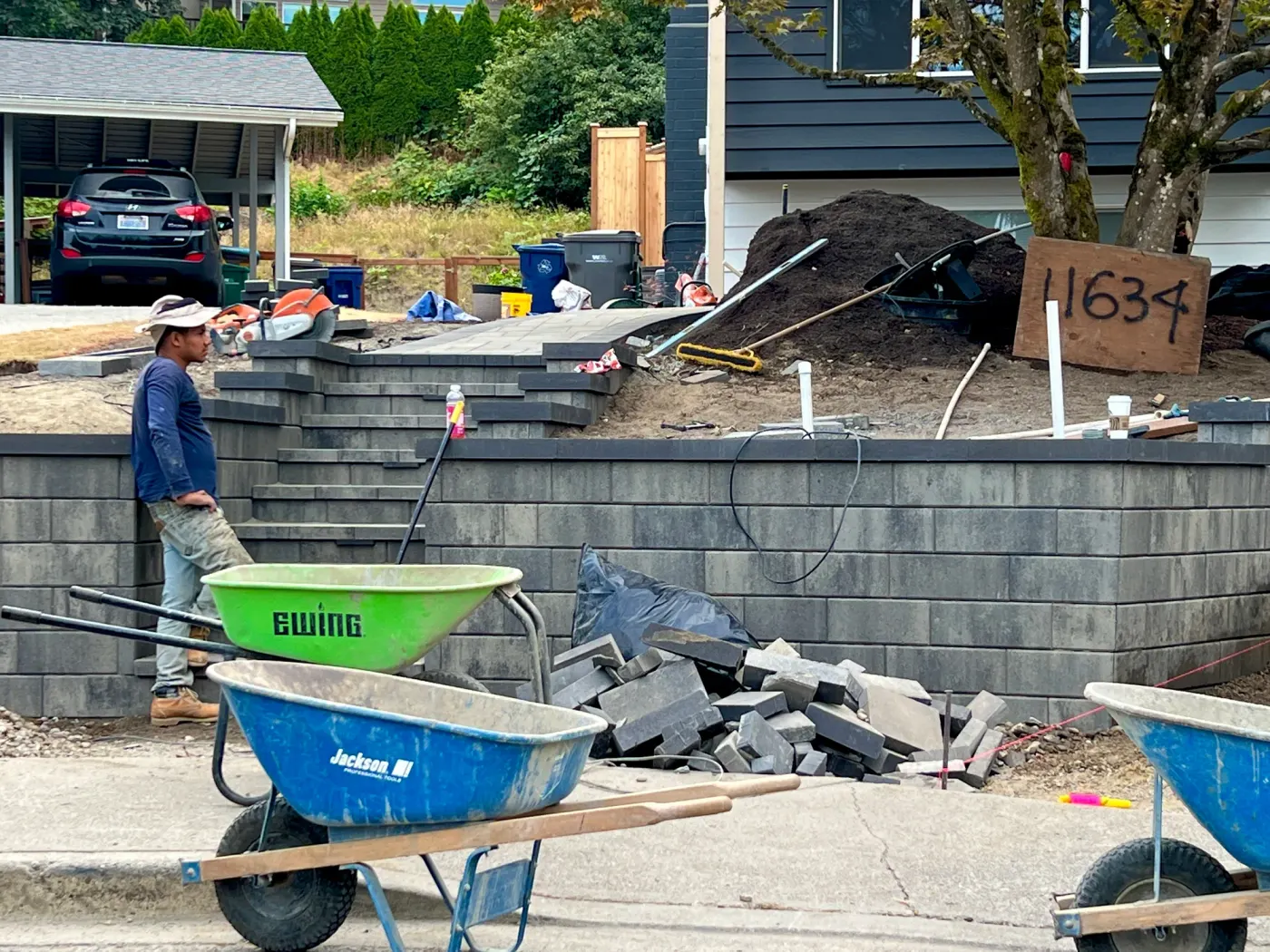
Mid-build on a West Seattle slope: block stacked, barrows running, the old surface still down. One crew on one site until it is finished, which is the only way the levels stay honest.
We come out, look at the ground, and put a fixed written price together. No deposit, and it does not change once agreed.
Free estimate
Three minutes on the form. We reply during office hours, Monday – Friday, 9:00 AM – 7:00 PM, and we come out and look at the site before quoting anything.
Or call (425) 533-9734
Thank you — we have your details. We reply during office hours, Monday – Friday, 9:00 AM – 7:00 PM. If it is urgent, call (425) 533-9734.